

P0172 on 2018 Jeep Wrangler: "System Too Rich" Causes and Fixes
P0172 on a 2018 Jeep Wrangler means the engine is running rich. The most common causes are a faulty upstream oxygen (O2) sensor or a failing MAP sensor. Start by checking for other codes and inspecting the O2 sensor data with a scanner. For the 2.0L JL, a PCM software update should also be considered per a TSB.
- P0172 means your 2018 Wrangler's engine is running with too much fuel in Bank 1.
- The most likely culprits are a bad upstream O2 sensor or a faulty MAP sensor.
- Do not ignore this code, as it can lead to reduced fuel efficiency and costly damage to your catalytic converter.
- The 2018 model year spans two generations (JK and JL); ensure you are buying parts for the correct one.
- If you have a 2.0L engine, a software update might be a potential fix, as noted in a TSB.
What's Unique About the 2018-2018 Jeep WRANGLER

The 2018 model year is unique as it was a transition period for the Wrangler, featuring both the last of the 'JK' generation and the first of the new 'JL' generation. Both generations primarily used the 3.6L Pentastar V6, but the JL also introduced a new 2.0L Turbo engine. While the causes for P0172 are similar across engines (O2 sensors, MAP sensor, injectors), it's important to identify your specific model and engine, as parts are not interchangeable. A Technical Service Bulletin (TSB #18-036-21) specifically lists P0172 for the 2.0L engine in the JL, linking it to a required software update, though it notes the issue is primarily for the Latin American (LATAM) market. However, the bulletin also includes other software enhancements for North American vehicles, making a PCM flash a valid diagnostic step if no mechanical faults are found.
Diagnostic Flowchart

Tap your situation to follow the diagnostic path that matches what you're seeing on this vehicle.
Generation note: The 2018 model year includes two distinct generations: the Wrangler JK (2007-2018) and the all-new Wrangler JL (2018-present). The JK in 2018 was only available with the 3.6L V6 engine. The JL was available with either an updated 3.6L V6 or a new 2.0L Turbo I4. Diagnostic procedures are similar, but part numbers differ significantly. For example, the MAP sensor on the 3.6L is a different part from the T/MAP sensor on the 2.0L.
Symptoms You May Notice
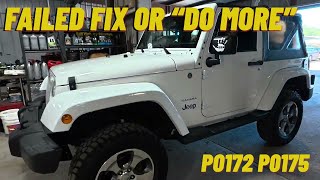
- Check Engine Light is on 🎬 Watch: A breakdown of common P0172 causes and fixes.
- Poor fuel economy
- Rough or unstable idle
- Engine hesitation or stumbling on acceleration
- Strong smell of gasoline from the exhaust
- Black smoke coming from the exhaust pipe
- Sluggish acceleration or deceleration
- Oil smells like gasoline (fuel dilution)
- Replacing the catalytic converter. A rich condition can damage a converter, but the converter itself does not cause a rich condition.
- Replacing downstream O2 sensors. The upstream O2 sensor (Sensor 1) is used for fuel trim adjustments; the downstream sensor (Sensor 2) primarily monitors catalytic converter efficiency.
Most Likely Causes

- Faulty Upstream Oxygen (O2) Sensor 🔴 High Probability O2 sensors are wear items that degrade over time. A failing sensor can send incorrect, 'rich' readings to the ECM, causing it to incorrectly reduce fuel delivery. The sensor's heater circuit can also fail, causing it to read incorrectly when cold, which can also lead to a rich code.
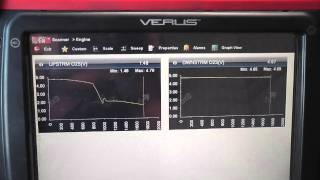
How to confirm: Use a scan tool to monitor the live data for the Bank 1, Sensor 1 O2 sensor. A healthy sensor's voltage should fluctuate rapidly between approximately 0.1V and 0.9V. If it's stuck high (above 0.8V) or is slow to respond, it is likely faulty. Also check for any O2 sensor heater circuit codes.
Typical fix: Replace the Bank 1 upstream oxygen sensor.
Est. part cost: $40-$90 - Faulty Manifold Absolute Pressure (MAP) Sensor 🟡 Medium Probability Wrangler engines use a MAP sensor (or T/MAP on the 2.0L) to measure engine load. If the sensor is dirty or failing, it can provide incorrect pressure readings to the ECM, leading to an improper fuel calculation. This is a known issue across many Jeep models.
How to confirm: Check the MAP sensor reading with a scan tool at KOEO (Key On, Engine Off) and compare it to the barometric pressure reading. They should be nearly identical. Also, check for smooth changes in the reading as the throttle is applied. A failing sensor may provide erratic or illogical readings.
Typical fix: Clean the MAP sensor port or replace the MAP sensor if it's faulty. The 2.0L engine uses a combined Temperature/MAP sensor (T/MAP).
Est. part cost: $30-$80 - Leaking Fuel Injector(s) 🟡 Medium Probability A fuel injector can get stuck partially open or develop a leak from a bad seal, allowing excess fuel to drip into a cylinder, especially after the engine is shut off.
How to confirm: Perform a fuel pressure leak-down test. If pressure drops quickly after the engine is off, it may indicate a leaking injector. You can also pull the spark plugs on Bank 1 and check for one that is wet with fuel or excessively black and sooty. A misfire code (e.g., P0301) accompanying P0172 would strongly point to an injector issue in that specific cylinder.
Typical fix: Replace the faulty fuel injector(s). It is often recommended to replace them as a set on higher mileage vehicles.
Est. part cost: $50-$150 per injector - Faulty EVAP Purge Valve ⚪ Low Probability The EVAP purge valve can stick open, allowing unmetered fuel vapor from the charcoal canister to enter the intake manifold at the wrong time, creating a rich condition.
How to confirm: With the engine running at idle, disconnect the vapor line from the purge valve and feel for suction. There should be no vacuum when the valve is commanded closed by a scan tool. You can also apply vacuum with a hand pump to see if it holds.
Typical fix: Replace the EVAP purge valve.
Est. part cost: $25-$50
Rare But Worth Checking
- Excessive Fuel Pressure: A failing fuel pressure regulator (which is often part of the fuel pump module in Wranglers) can cause system-wide high pressure, leading to rich codes on both banks (P0172 & P0175). Check this if both codes are present.
- Engine Coolant Temperature (ECT) Sensor Fault: If the ECT sensor is faulty and tells the ECM the engine is cold when it's not, the computer will command a richer fuel mixture, which can trigger P0172. This is usually accompanied by other symptoms like cooling fan issues or incorrect temperature gauge readings.
- Blown O2 Sensor Heater Fuse: The O2 sensor heater is critical for getting the sensor to operating temperature quickly. If the fuse for the heater circuit blows, the sensor will be cold and read a high bias voltage, which the ECU interprets as a rich condition, causing it to lean out the mixture excessively. This can happen if wiring shorts out, for example.
Diagnosis Steps
- Read all fault codes with an OBD-II scanner. Note any other codes, especially P0175 or misfire codes.
- Inspect the air intake system for a dirty or clogged air filter. A severely restricted filter can reduce airflow and cause a rich condition.
- Using the scanner's live data, monitor the Short-Term (STFT) and Long-Term Fuel Trim (LTFT) values for Bank 1. For P0172, you will see highly negative numbers (e.g., -15% to -30%) as the ECM tries to remove fuel.
- Observe the Bank 1, Sensor 1 (upstream) O2 sensor voltage. It should fluctuate rapidly between ~0.1V and ~0.9V. If it's stuck high (e.g., >0.8V) or is slow, it's a primary suspect.
- Check the MAP sensor reading at KOEO (Key On, Engine Off) and compare it to the BARO reading on your scan tool. They should be nearly identical. Ensure it responds correctly to engine vacuum when running.
- Inspect for a strong fuel smell from the oil dipstick, which could indicate fuel-diluted oil from leaking injectors.
- Test fuel pressure to ensure it is within the manufacturer's specifications (typically 45-55 PSI for the 3.6L PFI system).
- If a specific cylinder is suspected (e.g., from a P030X code), inspect its spark plug for signs of being fuel-fouled (black, sooty, and possibly wet with gas).
- Test the EVAP purge solenoid for proper operation by checking for vacuum at idle when it should be closed.
- For 2.0L JL models, check with a dealer if TSB #18-036-21 or a newer software update applies to your vehicle's VIN.
Parts You'll Likely Need

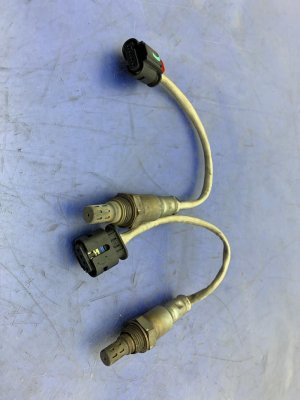
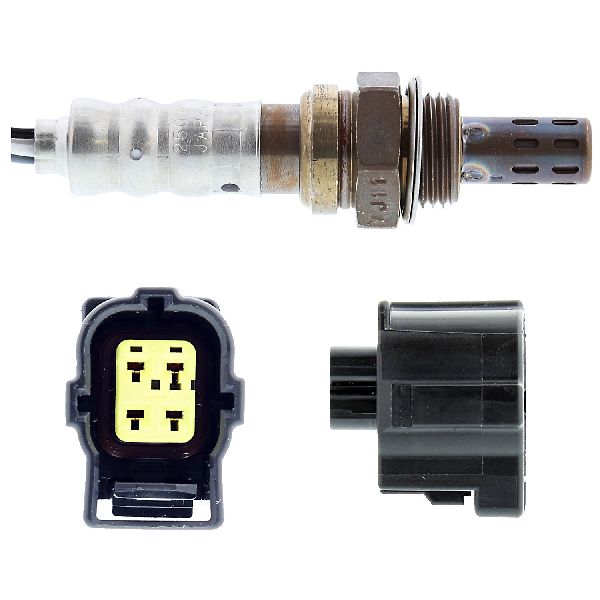
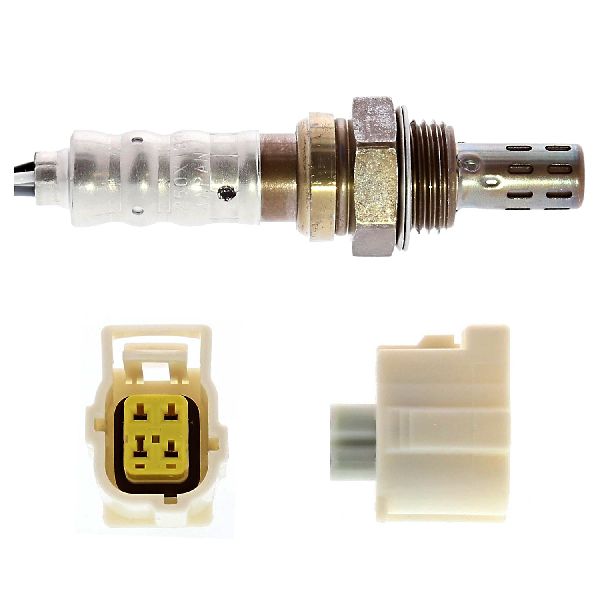
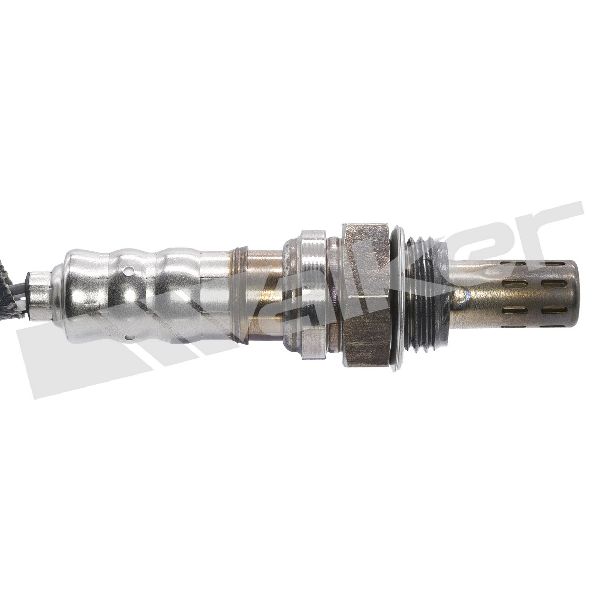
- Upstream Oxygen Sensor (Bank 1, Sensor 1)
(OEM #5149171AB (Fits 3.6L and other Mopar engines))— This is the primary sensor for fuel mixture control and a common failure point that directly causes a P0172 code.
Trusted brands: Mopar, Bosch, Denso, NGK
OEM price range: $70-$130
Aftermarket price range: $40-$80 - MAP Sensor
(OEM #68313570AB (For 2018 JK 3.6L) / 68364659AB (T/MAP Sensor for 2018 JL 2.0L))— A faulty MAP sensor provides incorrect engine load information, leading the ECM to miscalculate the required fuel.
Trusted brands: Mopar, Standard Motor Products, NGK, Crown Automotive
OEM price range: $60-$100
Aftermarket price range: $30-$80
Related Codes That Often Appear With This One
- P0175 — This is the same 'System Too Rich' code but for Bank 2. If both P0172 and P0175 are present on a 3.6L V6, it points to a problem common to both sides of the engine, such as a MAP sensor, fuel pressure issue, or EVAP problem, rather than a single O2 sensor or injector.
- P0300-P0306 — Misfire codes. An overly rich mixture can foul spark plugs and cause incomplete combustion, leading to misfires in one or more cylinders. A misfire code for a specific cylinder can help pinpoint a leaking injector.
- P0456 — EVAP System Small Leak. This code is mentioned alongside P0172 in TSB #18-036-21 for the 2.0L engine, suggesting a potential link within the system or a common software fix.
Technical Service Bulletins (TSBs) & Recalls

- 18-036-21
Platform-Specific Known Issues
- For the 2.0L Turbo engine in the Wrangler JL, TSB #18-036-21 suggests that a PCM software update may be required to address several codes, including P0172. While the bulletin notes this is primarily for LATAM market vehicles, it also contains general software enhancements for North American models, making a reflash a valid repair step if no physical faults are found.
- On the 3.6L Pentastar engine, a repair of the oil filter housing/cooler assembly, which requires removing the intake manifold, can sometimes lead to P0172/P0175 codes if a vacuum line is not reconnected properly or if the intake manifold gaskets are not seated correctly. A forum user reported this exact scenario, which was ultimately traced to a leaking PCV hose.
Mechanic-Grade Diagnostic Values
- MAP Sensor Voltage (KOEO) — expected: ~4.5 Volts. Failure: Significantly lower voltage may indicate a wiring or PCM issue.
- MAP Sensor Voltage (Engine Idling) — expected: ~1.0 - 1.5 Volts. Failure: Voltage that is too high at idle (e.g., >2.0V) indicates low engine vacuum, which the PCM interprets as high load, causing a rich mixture. This can be caused by a vacuum leak or an internal mechanical engine problem.
- Fuel Pressure (3.6L V6 PFI System) — expected: 45-60 PSI (regulated system pressure). Failure: Pressure significantly above this range indicates a faulty fuel pressure regulator, which is often integrated into the fuel pump module.
- Long-Term Fuel Trim (LTFT) — expected: Close to 0%, within +/- 10%. Failure: A strongly negative value, such as -20% or more, confirms the PCM is compensating for a persistent rich condition.
Scan Tool Commands That Help
- wiTECH or equivalent professional scanner: Injector Balance Test — To isolate a single leaking or over-fueling injector. The tool systematically pulses each injector while a fuel pressure gauge is monitored for an excessive pressure drop on one cylinder.
- wiTECH or equivalent professional scanner: Fuel Trim Reset — After a repair has been completed (e.g., replacing an O2 sensor or injector), this function should be used to clear the learned long-term fuel trim values, allowing the PCM to relearn the correct fuel strategy immediately.
- wiTECH or equivalent professional scanner: Purge Valve Actuation — To test the EVAP purge valve. Command the valve closed at idle and check for vacuum on the canister side. If vacuum is present, the valve is stuck open and is a source of unmetered fuel vapor.
Wiring & Ground Locations
- Vehicle Wiring Diagrams — A full set of PDF wiring diagrams, including connector maps and locations, is available for the JL Wrangler on forums such as JLWranglerForums.com.. These diagrams are essential for tracing the wiring of the O2 sensors, MAP sensor, and fuel injectors back to the PCM. They help identify connector pin numbers for testing voltage, ground integrity, and signal continuity, which is critical for ruling out a wiring fault as the cause of P0172.
"I Checked Everything" — The Actual Cause
- On speed-density systems like the Wrangler's, an internal mechanical engine problem (e.g., worn camshaft, poor valve seating) can reduce engine vacuum. The MAP sensor correctly reads this as higher pressure (lower vacuum) and signals the PCM to add more fuel, triggering a P0172 code. This type of fault will not be found with a smoke test, which only checks for external air leaks.
OEM Part Supersession History
5149171AA, 68066160AA→5149171AB— Part revision by manufacturer.
Heads up: This is the common upstream/downstream O2 sensor for the 3.6L engine.N/A→N/A— Part variation on 3.6L JL models.
Heads up: For the 3.6L JL engine, three of the four O2 sensors are part number 68224424AA. However, the driver's side downstream sensor is part number 68291423AB, which has a longer wiring harness and is not interchangeable with the other three.
Model Year Variations Within This Range
- 2018: The 2018 model year had a staggered production launch for the new JL generation. The 4-door JLU with the 3.6L V6 began production in November 2017. Production of the 2-door JL and models with the 2.0L Turbo engine did not begin until February 2018. Therefore, an 'early' 2018 JL is almost certainly a 4-door with the 3.6L engine.
Helpful Videos

Used OEM Parts in Stock

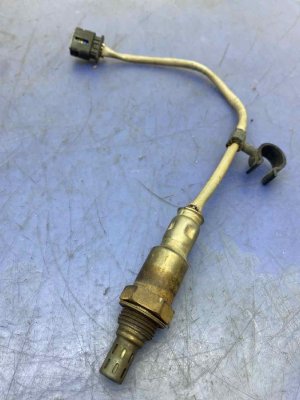
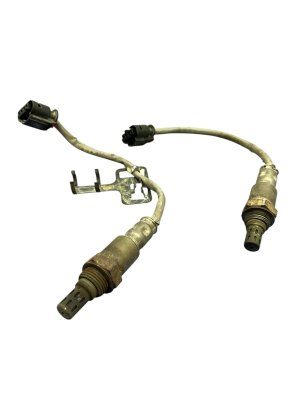
New Aftermarket Parts Available


The information in this article is provided for general reference and educational purposes only. Vehicle specifications, procedures, and part compatibility can vary by production date, trim level, and region. Always consult your vehicle's factory service manual and verify part numbers before purchasing or performing repairs. Safety-critical components such as airbags, seat belts, and braking systems should be installed by a qualified professional.
- Jeep WRANGLER:
- 🎬 Helpful Videos
- 🛍️ Shop This Part
- What's Unique About the 2018-2018 Jeep WRANGLER
- Diagnostic Flowchart
- Symptoms You May Notice
- Most Likely Causes
- Rare But Worth Checking
- Diagnosis Steps
- Parts You'll Likely Need
- Related Codes That Often Appear With This One
- Technical Service Bulletins (TSBs) & Recalls
- Platform-Specific Known Issues
- Mechanic-Grade Diagnostic Values
- Scan Tool Commands That Help
- Wiring & Ground Locations
- "I Checked Everything" — The Actual Cause
- OEM Part Supersession History
- Model Year Variations Within This Range
- 🎟️ Get 5% Off