

P0172 on 2017-2020 Genesis G80 5.0L: Causes and Fixes for a Rich Fuel Condition
This code means the engine is running too rich on Bank 1 (passenger side). The most common causes are a leaking GDI fuel injector or a faulty upstream oxygen (A/F) sensor. A key diagnostic step is checking the engine oil for a gasoline smell, which strongly points to a leaking injector. An injector replacement can be costly, while an O2 sensor is more affordable.
- P0172 on your G80 5.0L means the passenger-side bank of the engine is getting too much fuel.
- The most likely culprits are a leaking fuel injector or a bad upstream oxygen sensor on Bank 1.
- Check your engine oil for a gasoline smell. If present, a leaking injector is highly probable and should be addressed immediately to prevent engine damage.
- If you also have a P0175 code (Bank 2 rich), the problem is likely a component that affects both banks, like the MAF sensor or overall fuel pressure.
- Driving for an extended period with this code can lead to costly damage to your catalytic converter.
What's Unique About the 2017-2020 Genesis G80
The Genesis G80's 5.0L Tau V8 engine uses a sophisticated Gasoline Direct Injection (GDI) system. This system operates at very high pressures and uses two high-pressure fuel pumps (one for each bank) and a low-pressure pump in the tank. While this allows for impressive power and efficiency, it also means that fuel system components, particularly the high-pressure injectors, can be a primary source of rich conditions if they begin to leak internally. Unlike simpler port injection systems, a leaking GDI injector can also lead to fuel diluting the engine oil, which can cause severe engine damage if not addressed promptly. This risk of oil dilution makes a P0172 code on this GDI engine more critical than on a port-injected engine. GDI engines like the Tau V8 are also susceptible to carbon buildup on intake valves over time, which can affect airflow and contribute to performance issues, though this is more commonly associated with lean codes.
Symptoms You May Notice
- Check Engine Light is on
- Poor fuel economy
- Rough or unstable idle
- Strong smell of gasoline from the exhaust
- Black smoke from the tailpipe
- Engine hesitation or stumbling during acceleration
- Engine misfires
- Engine oil level rising or smelling strongly of gasoline
- Replacing spark plugs without diagnosing the root cause. While a rich condition will foul the spark plugs, they are the symptom, not the cause.
- Replacing the downstream (Sensor 2) oxygen sensor. The downstream sensor's primary role is to monitor catalytic converter efficiency and it has minimal impact on fuel trim adjustments.
Most Likely Causes
- Leaking Fuel Injector(s) 🔴 High Probability The 5.0L Tau V8 uses a high-pressure GDI fuel system. Over time, the internal seals on the injectors can fail, or the injector can get stuck partially open, causing it to leak fuel directly into the cylinder even when not commanded to fire. This is a known failure mode for GDI engines in general.
How to confirm: A definitive sign is a strong smell of gasoline on the engine oil dipstick, indicating fuel is bypassing the piston rings and diluting the oil. Another method is to remove the spark plugs on Bank 1; a plug from a cylinder with a leaking injector will be black, sooty, and wet with fuel. A mechanic can also perform a fuel pressure leak-down test or use a scan tool to perform a cylinder balance test.
Typical fix: Replace the faulty fuel injector(s) on Bank 1. It is highly recommended to replace all four injectors on that bank at the same time, along with their seals. An oil and filter change is mandatory if fuel dilution is suspected.
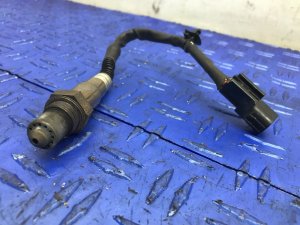
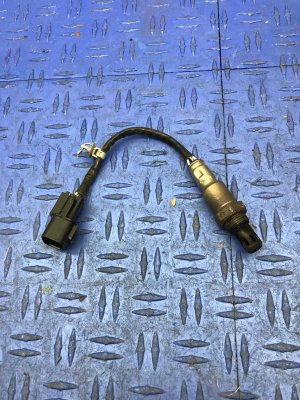
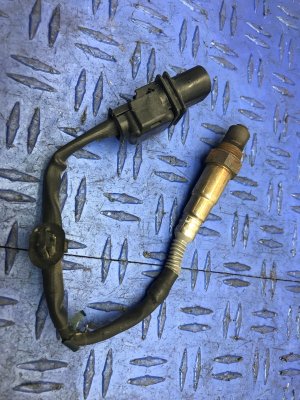
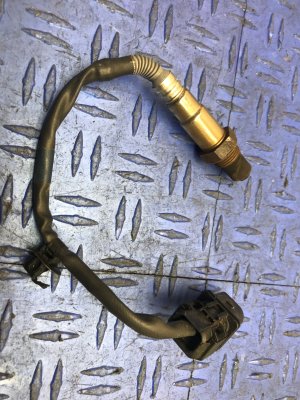
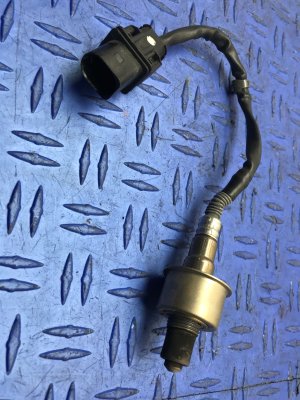
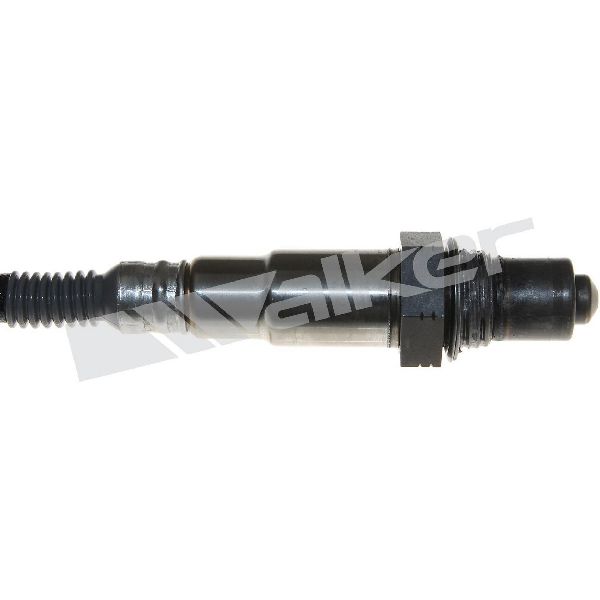
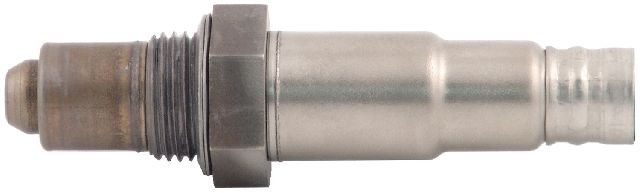
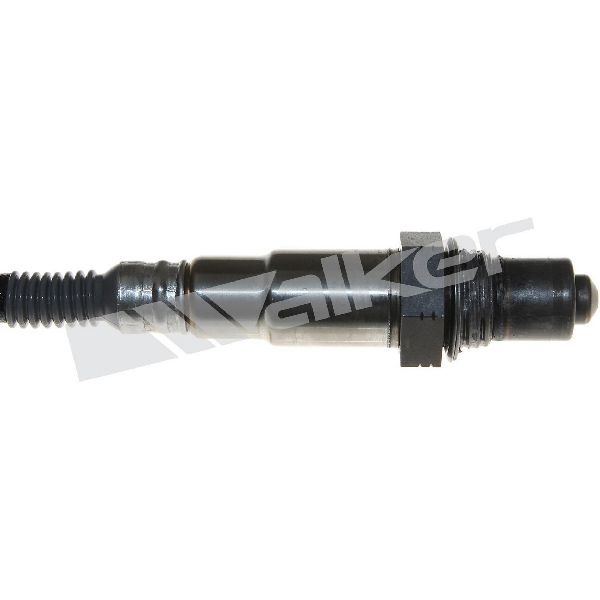
Est. part cost: $100-$200 per injector - Faulty Air/Fuel Ratio Sensor (Bank 1, Sensor 1) 🟡 Medium Probability This sensor, also known as an upstream oxygen sensor, is located in the exhaust manifold and is a primary input for fuel control. If it becomes slow, biased, or fails, it can send an incorrect signal (reading lean) to the ECU, causing the computer to compensate by adding too much fuel, which creates a rich condition.
How to confirm: Use an OBD-II scanner with live data capabilities to graph the sensor's voltage. A healthy sensor should fluctuate rapidly between approximately 0.1 and 0.9 volts. A sensor that is stuck high, stuck low, or has a slow, lazy response time compared to the sensor on Bank 2 is faulty.
Typical fix: Replace the Bank 1, Sensor 1 Air/Fuel Ratio sensor. The sensor for the 5.0L V8 is often listed as fitting the right (passenger) side, upstream position.
Est. part cost: $80-$180 - Faulty Mass Airflow (MAF) Sensor ⚪ Low Probability The MAF sensor measures the amount of air entering the engine. If it becomes dirty or fails, it can provide inaccurate readings to the ECU. While a dirty MAF sensor more commonly causes a lean code, a faulty one can sometimes report incorrect airflow, leading to a rich mixture. This would typically affect both banks, causing P0172 and P0175.
How to confirm: Inspect the sensor for contamination. It can be cleaned with a dedicated MAF sensor cleaner. If cleaning doesn't resolve the issue, monitor its readings with a scan tool to see if they are within the expected range for the given RPM and compare to specification.
Typical fix: Clean the MAF sensor with a specialized cleaner. If the problem persists, replace the sensor.
Est. part cost: $70-$150
Rare But Worth Checking
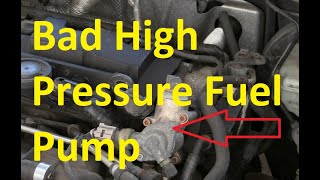
- Failing Fuel Pressure Regulator or High-Pressure Fuel Pump: The Tau V8 has two high-pressure fuel pumps. A failure in the pump or an associated regulator for Bank 1 could theoretically cause excessive fuel pressure. However, this would often be accompanied by other specific fuel pressure diagnostic codes and would likely affect both banks if the low-pressure system were at fault.
- Stuck Open EVAP Purge Valve: If the evaporative emissions purge valve sticks open, it can allow unmetered fuel vapors from the charcoal canister to enter the intake manifold, creating a rich condition. This can be tested by applying vacuum to the valve with the engine off to see if it holds.
Diagnosis Steps
- Scan for Codes: Use an OBD-II scanner to confirm P0172 and check for any other related codes (e.g., P0175, P030x). Note the freeze frame data.
- Analyze Fuel Trims: Observe Short-Term Fuel Trim (STFT) and Long-Term Fuel Trim (LTFT) for both banks. For P0172, you will see highly negative numbers on Bank 1 (e.g., -15% to -25%) as the ECU tries to subtract fuel. Bank 2 should be relatively normal if the problem is isolated.
- CRITICAL - Inspect for Fuel in Oil: Remove the oil filler cap and dipstick. A strong gasoline odor is a significant indicator of a leaking GDI fuel injector and means the vehicle should not be driven.
- Test the Air/Fuel Sensor (Bank 1, Sensor 1): Graph the sensor's voltage using a scan tool. It should fluctuate quickly. Compare its reading and switching speed to the sensor on Bank 2. A lazy or biased sensor needs replacement.
- Inspect Spark Plugs (Bank 1): Remove and inspect the spark plugs from the passenger side cylinders. Black, sooty, or fuel-wet plugs indicate a rich condition. If one is significantly worse than the others, it points to a specific leaking injector in that cylinder.
- Inspect MAF Sensor: Visually inspect the MAF sensor wires for contamination. If dirty, clean with MAF sensor cleaner. Check live data to ensure readings increase smoothly with RPM.
- Test Fuel Pressure: If both banks are running rich (P0172 & P0175), test the fuel pressure to ensure the low-pressure pump and high-pressure pumps are operating within specification.
- Check EVAP Purge Valve: Disconnect the hose from the purge valve that leads to the intake manifold and check for vacuum at idle. There should be no vacuum/flow when the valve is not commanded on by the ECU.
Parts You'll Likely Need
- Fuel Injector
(OEM #35310-3F700)— This is a common failure point on the GDI Tau V8 engine that directly causes a rich condition on a specific bank. A leaking injector is a high-probability cause for a single-bank rich code on this engine.
Trusted brands: Hyundai/Genesis OE
OEM price range: $105-$150
Aftermarket price range: $80-$120 - Air/Fuel Ratio Sensor (Bank 1, Sensor 1)
(OEM #39210-3C200 (Verify with VIN))— A faulty A/F sensor can send incorrect data to the ECU, causing it to command an overly rich fuel mixture. It is a common wear item. Brands like NGK/NTK are often the original equipment manufacturer.
Trusted brands: Bosch, Denso, NGK/NTK
OEM price range: $150-$220
Aftermarket price range: $85-$180
Related Codes That Often Appear With This One
- P0175 — System Too Rich (Bank 2). If both P0172 and P0175 are present, it points to a problem affecting the entire engine, such as a faulty MAF sensor, fuel pressure issue, or a stuck open EVAP purge valve, rather than a component isolated to one bank (like a single injector or O2 sensor).
- P0300-P0308 — Cylinder misfire codes (e.g., P0301 for cylinder 1). A severely rich condition from a leaking injector can foul the spark plug and cause that specific cylinder to misfire.
Technical Service Bulletins (TSBs) & Recalls
- TSB 18-AT-017-1: Addresses a coolant leak at the ATF warmer connector, which can be confused with other engine bay leaks but is not directly related to P0172.
Platform-Specific Known Issues
- The 5.0L Tau V8 engine is known for carbon buildup on the intake valves due to its GDI design. While this more commonly causes lean codes or misfires, severe buildup could potentially alter airflow characteristics and contribute to fuel trim issues.
- There is a recall (NHTSA 21V-160) for the ABS module which can short circuit and cause an engine compartment fire. This is unrelated to P0172 but is a critical safety issue for all owners of this vehicle.
Mechanic-Grade Diagnostic Values
- Low-Pressure Fuel Pump Pressure (at idle) — expected: 40-75 PSI. Failure: Pressure below 40 PSI indicates a weak in-tank pump or clogged filter.
- Upstream Oxygen (A/F) Sensor Voltage — expected: Rapidly fluctuating between 0.1V and 0.9V. Failure: Voltage is stuck high (near 0.9V), stuck low, or switches very slowly (more than 1 second between transitions).
- Engine Coolant Temperature (after 10+ min warm-up) — expected: 185°F - 210°F (85°C - 99°C). Failure: Scan tool shows a temperature below 160°F (71°C) after a full warm-up, indicating a faulty sensor causing the ECU to stay in a rich open-loop mode.
- GDI Fuel Injector Coil Resistance — expected: Approximately 1.9 - 2.1 Ohms. Failure: A reading of high resistance (e.g., 9.7 kOhms) or an open circuit indicates a failed injector coil.
Scan Tool Commands That Help
- Genesis GDS (or equivalent professional scanner): Fuel Injector Kill / Power Balance Test — This active test allows a technician to disable one injector at a time. If disabling an injector on Bank 1 causes no change in engine RPM, it confirms that cylinder wasn't contributing correctly, strongly pointing to a faulty injector. This is a definitive way to isolate the problem cylinder.
- Advanced OBD-II Scan Tool (like GDS): Reset Fuel Adaptations / Learned Values — After replacing a fuel injector or A/F sensor, this function should be used to clear the old, incorrect long-term fuel trim data from the ECU's memory. This forces the ECU to start fresh and re-learn the fuel maps with the new components, preventing the old adjustments from interfering with the new parts.
Wiring & Ground Locations
- Bank 1 Engine Ground — The primary engine-to-chassis ground straps are crucial for stable sensor readings. While specific diagrams are scarce, look for braided straps from the cylinder heads or engine block to the firewall or frame rails on the passenger side.. A poor or corroded ground connection can introduce electrical noise and voltage offsets, causing sensors like the A/F sensor to send inaccurate data to the ECU. The ECU might interpret a faulty ground as a lean signal and incorrectly add fuel, causing a P0172.
- Engine Wiring Harness (5.0L RWD) — The main engine wiring harness routes across the top and sides of the engine, connecting all sensors and injectors to the ECU.. While not a common cause, chafing or damage to the wiring for the Bank 1 A/F sensor or fuel injectors could cause short circuits or intermittent signals, leading to incorrect fuel control and a P0172 code. Inspect the harness where it is secured by clips or passes near hot exhaust components.
OEM Part Supersession History
35310-3F500→35310-3F700— Likely an internal revision for improved reliability or manufacturing process. The 3F500 was used in earlier 5.0L Tau engines (e.g., 2015 model year).
Heads up: For a 2017-2020 G80, the correct part is 35310-3F700. While the older part may physically fit, using the specified revision is critical for correct flow rates and ECU compatibility.
Model Year Variations Within This Range
- 2015-2021 (Engine Family): The 5.0L Tau V8 engine received an update around 2015, which included an increase in the compression ratio from 11.5:1 to 11.8:1 and optimized intake runners. While this change predates the 2017 G80, it's an important distinction within the Tau V8 family and highlights that software and component calibrations may differ across the engine's lifespan.
Diagnostic Flowchart
Other Known Issues on This Vehicle
Issues unrelated to this code that are worth knowing about as an owner of this generation:
- ABS Module Internal Short / Fire Risk 🔴 High — Affects a large number of 2017-2020 G80 models, leading to a major safety recall. (Ref: NHTSA Recall 21V-160)
- Engine Oil Consumption (Earlier Tau V8 issue) 🟠 Medium — More prevalent on earlier (pre-2014) 5.0L Tau engines due to piston ring design, but can still occur on later models, especially with poor maintenance. Some owners report consumption of 1 quart per 1000-2000 miles.
- Carbon Buildup on Intake Valves 🟠 Medium — A common issue for all GDI engines, including the Tau V8. Over 60,000-80,000 miles, buildup can become significant enough to affect performance and efficiency.
- Coolant Leak at ATF Warmer O-Rings 🟡 Low — A known small coolant leak can develop from the O-rings at the automatic transmission fluid warmer connector. (Ref: TSB 18-AT-017-1)
- Low-Pressure Fuel Pump Failure (Later Models) 🔴 High — Primarily affects 2022+ models but highlights a potential weakness in the fuel delivery system. A recall was issued for impeller deformation causing fuel pump failure. (Ref: NHTSA Campaign 23V630000 (Recall 022G))
Used vs. New Parts: Buying Guide for This Vehicle
When a used part is the smart pick: For this repair, used parts are generally not recommended for the primary components. However, if a larger component like an engine wiring harness were needed, a used OEM part from a low-mileage, accident-free donor car would be a cost-effective choice over a new one.
Donor-vehicle mileage cap: roughly under 60000 miles for the part to have meaningful remaining life.
What to inspect on the donor part:
- For a wiring harness, check for intact connectors, no cut wires, and flexible, non-brittle insulation.
- Verify the donor vehicle's VIN to ensure it matches the engine and model year range.
- Avoid parts from vehicles with signs of fire, flood, or major front-end collision damage.
OEM-only on this vehicle (don't cheap out):
- GDI Fuel Injectors: Aftermarket GDI injectors are a significant gamble. The precision, flow rate, and spray pattern are critical and often not matched by cheaper alternatives. Use only Genuine Hyundai/Genesis parts.
- Air/Fuel Ratio Sensor: While high-quality aftermarket brands exist, the ECU is calibrated for the OEM sensor. Using a cheap, no-name sensor can cause persistent fuel trim issues. Stick with the OEM manufacturer (often NGK/NTK or Denso) or a genuine Genesis part.
Aftermarket brands forum-validated for this vehicle:
- NGK/NTK (for Air/Fuel Ratio Sensors)
- Denso (for Air/Fuel Ratio Sensors)
- Bosch (for Air/Fuel Ratio Sensors)
Brands owners have reported issues with on this vehicle:
- Unbranded, generic 'white-box' fuel injectors or oxygen sensors from online marketplaces. These often lack the quality control and precise calibration required for a GDI engine, leading to repeat failures or different codes.
Real Owner Stories
Aggregated from forums and TSBs cited above. Mileages and costs reflect what owners reported in those sources.
2018 Genesis G80 5.0L
Symptoms: Engine vibration, stalling, and delayed starting after the vehicle was run low on oil.
What fixed it: The source highlights the platform's sensitivity to proper oil levels and maintenance, though a specific P0172 fix was not detailed in this instance of engine health issues.
Source hint: Reddit r/GenesisMotors - GENESIS G80 5.0 2018
2012-2015 Hyundai Equus 5.0L Tau V8 (Platform Mate) — 94000 miles
Symptoms: Extreme sludge from neglected oil changes, carbon buildup in intake ports, and metal in the oil filter.
What fixed it: Teardown revealed the engine was destroyed due to neglected maintenance, illustrating how poor oil quality affects GDI injectors and timing components.
Source hint: YouTube - Importapart - 'NEGLECTED HYUNDAI MUSCLE!? EQUUS 5.0L TAU V8 Destroyed'
Related OBD-II Codes
Frequently Asked Questions
I smell gasoline on my dipstick and the oil level seems to be rising. Is this related to P0172?
Does the ABS module recall (NHTSA 21V-160) cause the P0172 code on my 2017 G80?
Can I just clean the MAF sensor to fix this code on my Genesis?
Is there a TSB for coolant leaks that might be confused with P0172 issues?
Why is my 5.0L Tau V8 prone to this rich condition?
Helpful Videos

Used OEM Parts in Stock

New Aftermarket Parts Available



The information in this article is provided for general reference and educational purposes only. Vehicle specifications, procedures, and part compatibility can vary by production date, trim level, and region. Always consult your vehicle's factory service manual and verify part numbers before purchasing or performing repairs. Safety-critical components such as airbags, seat belts, and braking systems should be installed by a qualified professional.
- Genesis G80:
- 🎬 Helpful Videos
- 🛍️ Shop This Part
- What's Unique About the 2017-2020 Genesis G80
- Symptoms You May Notice
- Most Likely Causes
- Rare But Worth Checking
- Diagnosis Steps
- Parts You'll Likely Need
- Related Codes That Often Appear With This One
- Technical Service Bulletins (TSBs) & Recalls
- Platform-Specific Known Issues
- Mechanic-Grade Diagnostic Values
- Scan Tool Commands That Help
- Wiring & Ground Locations
- OEM Part Supersession History
- Model Year Variations Within This Range
- Diagnostic Flowchart
- Other Known Issues on This Vehicle
- Used vs. New Parts: Buying Guide for This Vehicle
- Real Owner Stories
- 2018 Genesis G80 5.0L
- 2012-2015 Hyundai Equus 5.0L Tau V8 (Platform Mate) — 94000 miles
- Related OBD-II Codes
- Frequently Asked Questions
- 🎟️ Get 5% Off