

P0172 on 2011-2020 Dodge Grand Caravan 3.6L: System Too Rich Causes and Fixes
On the 3.6L Pentastar, code P0172 is most often caused by a failing upstream oxygen (O2) sensor or a leaking fuel injector on Bank 1. Using non-OEM fuel injectors is a very common cause of this code. Bank 1 is the cylinder bank closer to the firewall. Expect to pay $40-$130 for an O2 sensor or $50-$100 per injector, plus labor.
- P0172 means the engine is running rich on Bank 1 (the cylinder bank near the firewall).
- The most likely causes are a bad upstream O2 sensor or a leaking fuel injector.
- If you have recently replaced fuel injectors with anything other than genuine Mopar parts, they are the most probable cause of the code.
- Check the engine oil for a strong fuel smell, as this is a classic sign of a leaking fuel injector.
- Do not ignore this code, as it will hurt your gas mileage and can damage your catalytic converter over time.
What's Unique About the 2011-2020 Dodge Grand Caravan
The 3.6L Pentastar V6 in the Grand Caravan is a reliable engine, but it is notoriously sensitive to the parts used for fuel system repairs. A very common cause for a persistent P0172 code on this specific engine is the use of aftermarket or refurbished fuel injectors that do not meet the precise flow rate of the original Mopar parts. Many owners and shops have chased this code, replacing numerous parts, only to find the issue was caused by non-OEM injectors that were recently installed. Bank 1 on this transverse-mounted engine is the bank closer to the firewall, which makes access to its components more difficult than Bank 2 (front).
Symptoms You May Notice
- Check Engine Light is on
- Poor fuel economy
- Rough or shaky idle
- Smell of raw fuel from the exhaust
- Black smoke from the exhaust pipe
- Hesitation during acceleration
- Engine stalling
- Strong smell of gasoline in the engine oil
- Replacing downstream (post-catalyst) O2 sensors. The upstream sensors are the primary sensors for fuel control.
- Assuming a new aftermarket fuel injector is good. On this engine, non-OEM injectors are a frequent cause of P0172. 🎬 Watch: Why aftermarket injectors often fail on this engine.
- Replacing the PCM. While a faulty PCM is theoretically possible, it is extremely rare and should only be considered after all other possibilities have been exhausted.
Most Likely Causes
- Leaking or Incorrect Fuel Injector(s) 🔴 High Probability The 3.6L Pentastar engine's computer is very sensitive to fuel injector flow rates. Aftermarket or even 'refurbished OEM' injectors often flow too much fuel, immediately causing a P0172/P0175 code. This is a widely documented issue in owner forums and mechanic videos.
How to confirm: If injectors were recently replaced, this is the prime suspect. Check fuel trims (STFT/LTFT) with a scanner; they will be highly negative (e.g., -20% or more). A fuel pressure leak-down test can confirm a leak. Pulling spark plugs on Bank 1 may show black, sooty deposits on the affected cylinder(s). A strong fuel smell in the engine oil is also a key indicator of a leaking injector.
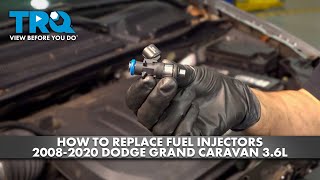
Typical fix: Replace the faulty fuel injector(s) with genuine OEM Mopar parts. It is strongly recommended to replace all three injectors on Bank 1 (or all six) at the same time to ensure balanced performance and avoid future failures. Do not use cheap aftermarket injectors. 🎬 See this step-by-step guide to replacing your fuel injectors.
Est. part cost: $50-$120 per injector - Faulty Upstream Oxygen (O2) Sensor 🔴 High Probability O2 sensors are wear items that degrade over time. A sensor can fail by sending a persistently high voltage signal, tricking the PCM into thinking the engine is rich when it isn't. Also, a blown fuse for the O2 sensor heater circuit can cause the sensor to send an incorrect signal.
How to confirm: Use a scan tool to graph the voltage of the Bank 1, Sensor 1 O2 sensor. A healthy sensor will fluctuate rapidly between approximately 0.1 and 0.9 volts. A sensor that is stuck high (e.g., above 0.8V) or is slow to respond indicates a problem. Check fuses for the O2 heater circuit (e.g., F22, F32, F63, F64 in some models) in the under-hood fuse box.
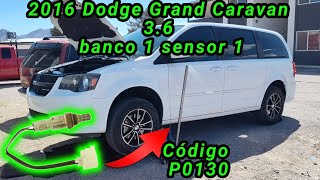
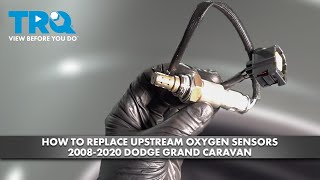
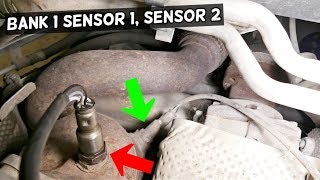
Typical fix: Replace the Bank 1, Sensor 1 (upstream) oxygen sensor. Bank 1 is on the firewall side of the engine and can be difficult to access. Using a quality brand like NTK or Denso is recommended. 🎬 Watch: How to replace the upstream oxygen sensors yourself.
Est. part cost: $40-$130 - Faulty MAP Sensor 🟡 Medium Probability The Pentastar engine uses a Manifold Absolute Pressure (MAP) sensor instead of a MAF sensor. If the MAP sensor incorrectly reports high engine load (low vacuum), the PCM will command more fuel, leading to a rich condition.
How to confirm: With a scan tool, check the MAP sensor reading with the key on, engine off. It should be close to the barometric pressure reading. At idle, it should read a low pressure (high vacuum), typically 1.0-1.5 volts. A voltage that is too high at idle suggests a faulty sensor or a vacuum leak.
Typical fix: Replace the MAP sensor. It is an inexpensive and easy part to replace, located on the upper intake manifold.
Est. part cost: $30-$70 - Stuck Open EVAP Purge Valve ⚪ Low Probability The EVAP purge valve/solenoid can fail and get stuck open, allowing un-metered fuel vapors from the charcoal canister to enter the intake manifold at the wrong time (like at idle), creating a rich mixture.
How to confirm: With the engine running at idle, disconnect the vapor line from the purge valve. Feel for vacuum at the valve's port. If you feel suction, the valve is stuck open and needs to be replaced.
Typical fix: Replace the EVAP purge valve.
Est. part cost: $25-$60
Rare But Worth Checking
- High Fuel Pressure: Caused by a faulty fuel pump or a restricted fuel return line (if equipped). This would typically affect both banks and set a P0175 code as well, but it's worth checking fuel pressure to rule it out. Expected pressure is 45-60 PSI.
- Fuel-Contaminated Engine Oil: This can happen if a fuel injector is leaking raw fuel into the cylinder, which then washes past the piston rings into the crankcase. The fuel-laden oil vapors are then pulled into the intake via the PCV system, creating a rich condition. An oil change is necessary after fixing the root cause (the injector).
- Stuck-Open Thermostat: If the engine doesn't reach proper operating temperature, the PCM may remain in 'open loop' mode, running a richer fuel mixture by default. This would typically set a P0128 code (Coolant Temp Below Thermostat Regulating Temp) but can sometimes be accompanied by P0172.
Diagnosis Steps
- Check for other stored trouble codes. If P0175 is also present, focus on causes that affect both banks (MAP, fuel pressure, EVAP, incorrect injectors).
- Using a scan tool, observe the Long-Term Fuel Trim (LTFT) and Short-Term Fuel Trim (STFT) for Bank 1. For P0172, you will see significant negative numbers (e.g., -15% to -33%), indicating the PCM is aggressively removing fuel.
- Inspect the air filter and intake tube for any restrictions.
- Check the engine oil dipstick for a strong smell of raw gasoline, which points to leaking injectors.
- Check fuses for the O2 sensor heater circuits in the main fuse box.
- Test the Bank 1, Sensor 1 (upstream) O2 sensor's operation by graphing its voltage. Look for a signal stuck high (above 0.8V) or a slow response.
- Test the MAP sensor to ensure it is reading correctly at KOEO (Key On, Engine Off) and at idle.
- Test the EVAP purge valve for leakage at idle.
- If injectors were recently replaced with non-OEM parts, they are the most likely cause.
- As a final step, perform a fuel pressure test to rule out an over-pressure condition, looking for pressure above 60 PSI.
Parts You'll Likely Need
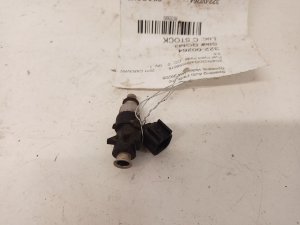
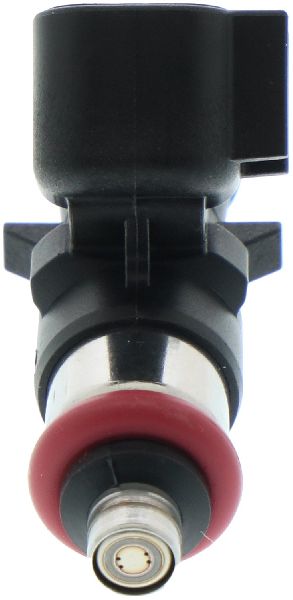
- Fuel Injector
(OEM #05184085AC (Bosch P/N: 0280158233))— A leaking or incorrect-spec injector is a primary cause of P0172 on the 3.6L Pentastar. Using genuine OEM Mopar or Bosch parts is critical for a successful repair.
Trusted brands: Mopar, Bosch (OEM supplier)
OEM price range: $80-$120
Aftermarket price range: $40-$80 - Upstream Oxygen Sensor (Bank 1, Sensor 1)
(OEM #Mopar #5149171AB (supersedes 5149171AA))— This sensor provides the primary data for air-fuel ratio control on Bank 1. A faulty sensor can send incorrect rich signals to the PCM. Bank 1 is the rear bank, near the firewall.
Trusted brands: Mopar, NTK (OEM quality), Denso (OEM quality)
OEM price range: $80-$130
Aftermarket price range: $40-$90 - MAP Sensor
(OEM #Mopar #05149229AA)— A faulty MAP sensor can report incorrect engine load, causing the PCM to add too much fuel.
Trusted brands: Mopar, Standard Motor Products
OEM price range: $50-$80
Aftermarket price range: $30-$70
Related Codes That Often Appear With This One
- P0175 — System Too Rich (Bank 2). If both codes are present, it points to a common cause affecting the entire engine, like a faulty MAP sensor, high fuel pressure, a stuck purge valve, or the installation of incorrect aftermarket fuel injectors.
- P0300, P0301, P0303, P0305 — Cylinder misfire codes. A severely rich condition or a leaking injector can foul the spark plug on a specific cylinder (1, 3, or 5 are on Bank 1), causing a misfire.
- P0132 — O2 Sensor Circuit High Voltage (Bank 1, Sensor 1). This code often appears with P0172 because the underlying fault (like a bad sensor or shorted wiring) causes the O2 sensor to send a continuous high voltage signal, which the PCM interprets as a rich condition.
Platform-Specific Known Issues
- A well-documented issue for this engine is the P0172/P0175 codes appearing immediately after installing non-Mopar fuel injectors. The PCM is not tolerant of even slight variations in flow rate from the OEM specification.
Mechanic-Grade Diagnostic Values
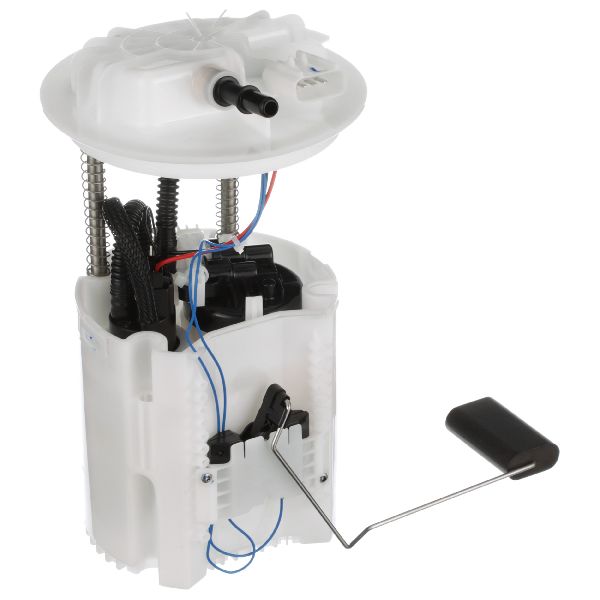
- Fuel Pressure — expected: 58 psi +/- 2 psi (400 kPa +/- 14 kPa).. Failure: Pressure significantly above 64 PSI suggests a faulty fuel pressure regulator, which is part of the fuel pump module.
- Long-Term Fuel Trim (LTFT) Bank 1 — expected: Within +/- 10% of zero.. Failure: A P0172 code is typically set when LTFT is consistently more negative than -20% to -25%.
- Upstream O2 Sensor (Bank 1, Sensor 1) Voltage — expected: Fluctuates rapidly and constantly between 0.1 and 0.9 volts on a warm engine.. Failure: Voltage is stuck high (consistently above 0.8V) or responds very slowly.
- Fuel Injector Coil Resistance — expected: 12 to 16 Ohms.. Failure: A reading of infinity (OL) indicates an open circuit, near zero indicates a short, or a value significantly outside the 12-16 Ohm range.
- O2 Sensor Heater Circuit Resistance — expected: Typically between 4 and 30 Ohms.. Failure: Infinite resistance (OL) or zero resistance indicates a failed internal heater.
- MAP Sensor Voltage (Key On, Engine Off) — expected: Approximately 4.5 Volts, should correlate with barometric pressure.. Failure: Significantly lower voltage can indicate a wiring or sensor issue.
- MAP Sensor Voltage (Warm Idle) — expected: 1.0 - 1.5 Volts.. Failure: Voltage above 2.0V at idle indicates low vacuum, which the PCM interprets as high engine load, causing it to add more fuel.
Scan Tool Commands That Help
- wiTECH or equivalent professional scanner: Injector Balance Test — This function allows a technician to systematically disable one injector at a time to see the effect on fuel trims or engine performance, helping to isolate a single leaking or over-fueling injector without having to remove the intake manifold first.
- wiTECH or equivalent professional scanner: Fuel System Test — This command actuates the fuel pump to build pressure for a static fuel pressure test or a leak-down test, allowing diagnosis without starting the engine.
Wiring & Ground Locations
- Bank 1 O2 Sensor (1/1) Signal Wire — Runs from the upstream O2 sensor on the rear exhaust manifold to the PCM.. The signal wire for the Bank 1 upstream O2 sensor is designated as circuit K41 in wiring diagrams. A short to ground or voltage on this wire can cause false rich readings.
- O2 Sensor Return Upstream Wire — Shared return/ground wire for the upstream O2 sensors running to the PCM.. This wire is designated as circuit K902. A short to ground on this common return wire can affect sensor readings.
Real Owner Repair Stories
- YouTube video comment section (2012 Dodge Grand Caravan 3.6L) — P0172 and P0175 codes (both banks rich) after replacing all fuel injectors.
❌ Tried (didn't work) Replacing MAP sensor, Replacing PCV valve, Replacing O2 sensors
✅ What actually fixed it The owner had installed cheap aftermarket fuel injectors from an online marketplace. After trying multiple other fixes, they replaced the aftermarket injectors with genuine Bosch OEM injectors (P/N: 0280158233), which immediately resolved both rich codes. - NHTSA ODI #11534233 — An owner reported that their van started shaking during a trip, with codes P0172 and P0175 remaining active for nearly two months. Despite replacing spark plugs, O2 sensors, fuel injectors, and ignition components, the rich condition persisted.
OEM Part Supersession History
05184085AC→05184085AD— Standard part revision by Mopar.
Heads up: Both parts are interchangeable for this application. The OEM supplier is Bosch, with part number 0280158233.5149171AA→5149171AB— Standard part revision by Mopar.
Heads up: Both parts are interchangeable. This part number is also used for other Chrysler/Dodge/Jeep applications and may be listed as left/right or upstream/downstream depending on the vehicle, but it is the correct upstream sensor for the Grand Caravan.
Model Year Variations Within This Range
- 2011-2020: The Dodge Grand Caravan used the original 'first-generation' 3.6L Pentastar V6 for its entire 2011-2020 production run. Unlike other Chrysler/Dodge/Jeep models that received an upgraded Pentastar (PUG) around 2016 with different injectors and coils, the Grand Caravan did not. Therefore, parts like fuel injectors and ignition coils are consistent across all model years in this range.
Diagnostic Flowchart
Other Known Issues on This Vehicle
Issues unrelated to this code that are worth knowing about as an owner of this generation:
- Cracked Oil Filter Housing / Cooler Assembly 🔴 High — Extremely common, often occurring between 60,000 and 120,000 miles. The plastic housing becomes brittle from heat cycles and can crack, causing significant oil and/or coolant leaks into the engine valley.
- Rocker Arm / Cam Follower Failure ('Pentastar Tick') 🔴 High — A well-documented issue, particularly in earlier (2011-2014) models, but can occur at any mileage. Needle bearings in the rocker arms fail, causing a distinct ticking noise, misfires, and potential camshaft damage if not addressed. (Ref: A class-action lawsuit was filed regarding this issue.)
- Faulty Totally Integrated Power Module (TIPM) 🟠 Medium — Common across many Chrysler/Dodge vehicles of this era. Can cause a wide range of bizarre electrical issues, including the fuel pump not shutting off (draining the battery) or failing to engage (no-start condition). (Ref: Recalls were issued for some vehicles, and bypass kits for the fuel pump relay are a common repair.)
- Cooling System Failures (Water Pump, Thermostat) 🟠 Medium — The water pump is a known weak point, with bearing failure leading to noise and leaks. The plastic thermostat housing is also a common failure item that can cause overheating or a P0128 code.
- Harmonic Balancer Failure 🟡 Low — The rubber isolator in the harmonic balancer can degrade, causing belt squeal, shredding belts, and a wobbling pulley.
Used vs. New Parts: Buying Guide for This Vehicle
When a used part is the smart pick: For this repair, using used parts is generally not recommended for the primary electronic and fuel components. However, if a larger component like an intake manifold or wiring harness is damaged during repair, a used part from a reputable salvage yard is a viable option.
Donor-vehicle mileage cap: roughly under 80000 miles for the part to have meaningful remaining life.
What to inspect on the donor part:
- For wiring, check for any signs of brittleness, previous repairs (splices), or oil contamination.
- For hard parts like manifolds, ensure all mounting points are intact and there are no visible cracks.
OEM-only on this vehicle (don't cheap out):
- Fuel Injectors: This is the most critical OEM-only part. Aftermarket or even refurbished injectors are widely reported to have incorrect flow rates for the Pentastar's sensitive PCM, causing persistent P0172/P0175 codes. Only use genuine Mopar or the direct OEM supplier, Bosch.
- MAP Sensor: While less critical than injectors, using an OEM Mopar sensor is highly advised to ensure accurate load readings for the PCM.
Aftermarket brands forum-validated for this vehicle:
- NTK (for Oxygen Sensors)
- Denso (for Oxygen Sensors)
Brands owners have reported issues with on this vehicle:
- Unbranded or 'white-box' fuel injectors from online marketplaces (e.g., Amazon, eBay) are a very common cause of this code.
Real Owner Stories
Aggregated from forums and TSBs cited above. Mileages and costs reflect what owners reported in those sources.
2011-2020 Dodge Grand Caravan 3.6L
Symptoms: The mechanic chased P0172 and P0175 codes, replacing multiple parts without success.
What fixed it: Swapping out recently installed aftermarket fuel injectors for used OEM injectors, which immediately resolved the codes.
Source hint: YouTube: DODGE GRAND CARAVAN - REPLACING FUEL INJECTORS? WARNING (P0172 / P0175)
2015 Dodge Grand Caravan 3.6L
Symptoms: Owner experienced a P0172 code accompanied by a P0300 multi-cylinder misfire code.
What fixed it: A diagnostic process of elimination involving checking spark plugs and other ignition components.
Source hint: DodgeForum.com: 2015 with P0300 and P0172 codes
2011-2020 Dodge Grand Caravan 3.6L
Symptoms: Vehicle exhibited hesitation during acceleration and engine stalling.
What fixed it: Diagnostic focus on the fuel filter and O2 sensors as suggested by community members.
Source hint: DodgeForum.com: Hesitation and P0172 code (bank 1 rich)
2011-2020 Dodge Grand Caravan 3.6L
Symptoms: An owner reported the vehicle started shaking on a trip, and codes P0172 and P0175 remained on for nearly two months despite multiple parts being replaced.
What fixed it: The owner noted that many parts including spark plugs, O2 sensors, fuel injectors, and ignition components had been replaced in an attempt to resolve the persistent rich codes.
Source hint: NHTSA ODI #11534233
Related OBD-II Codes
Frequently Asked Questions
Why did my 3.6L Pentastar throw a P0172 code immediately after I replaced my fuel injectors?
Can a blown fuse cause a P0172 rich condition on my Grand Caravan?
Where is the Bank 1 O2 sensor located on the 3.6L Grand Caravan?
My engine oil smells like gasoline; is this related to the P0172 code?
Does the 3.6L Pentastar use a MAF sensor to regulate fuel mixture?
Should I replace just one injector or all of them to fix this code?
Helpful Videos

Used OEM Parts in Stock
New Aftermarket Parts Available



The information in this article is provided for general reference and educational purposes only. Vehicle specifications, procedures, and part compatibility can vary by production date, trim level, and region. Always consult your vehicle's factory service manual and verify part numbers before purchasing or performing repairs. Safety-critical components such as airbags, seat belts, and braking systems should be installed by a qualified professional.
- Dodge Grand Caravan:
- 🎬 Helpful Videos
- 🛍️ Shop This Part
- What's Unique About the 2011-2020 Dodge Grand Caravan
- Symptoms You May Notice
- Most Likely Causes
- Rare But Worth Checking
- Diagnosis Steps
- Parts You'll Likely Need
- Related Codes That Often Appear With This One
- Platform-Specific Known Issues
- Mechanic-Grade Diagnostic Values
- Scan Tool Commands That Help
- Wiring & Ground Locations
- Real Owner Repair Stories
- OEM Part Supersession History
- Model Year Variations Within This Range
- Diagnostic Flowchart
- Other Known Issues on This Vehicle
- Used vs. New Parts: Buying Guide for This Vehicle
- Real Owner Stories
- 2011-2020 Dodge Grand Caravan 3.6L
- 2015 Dodge Grand Caravan 3.6L
- 2011-2020 Dodge Grand Caravan 3.6L
- 2011-2020 Dodge Grand Caravan 3.6L
- Related OBD-II Codes
- Frequently Asked Questions
- 🎟️ Get 5% Off