

P0171 on 2009-2017 Volvo XC60 2.0T: Causes and Fixes for System Too Lean
Code P0171 on a Volvo XC60 2.0L Turbo most often means the PCV oil trap assembly has failed, causing a significant vacuum leak. A loud, high-pitched whistling or humming noise from the engine at idle is the most definitive symptom. Replacing the entire PCV oil trap assembly is the common fix, with the part costing around $150-$250. This is a well-documented issue on Volvo's 2.0L 'Drive-E' engines.
- For the 2.0L Turbo engine, a P0171 code is most likely caused by a failed PCV oil trap assembly.
- A loud whistling or humming noise at idle is a strong indicator of PCV failure.
- Before replacing any parts, perform simple diagnostic checks: listen for noise, check for suction at the oil cap, and inspect for obvious hose damage.
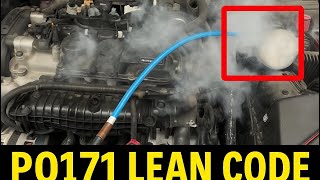
- A smoke test is the most reliable method to diagnose vacuum leaks, which are the second most common cause.
- Avoid immediately replacing the O2 sensor, as it is often just reporting the lean condition caused by an air leak.
What's Unique About the 2009-2017 Volvo XC60
On the Volvo 2.0L 4-cylinder turbocharged "Drive-E" engines, which became common in the XC60 lineup around the 2014/2015 model year, the P0171 code is overwhelmingly caused by a failed PCV oil trap assembly. The internal rubber diaphragm is known to tear or degrade, creating a large, unmetered vacuum leak. This failure is so common that a loud whistling or humming sound at idle is widely recognized by owners and technicians as the tell-tale sign of a bad PCV system, which can be confirmed by removing the oil cap to see if the noise stops.
Generation note: The 2009-2017 XC60 is the first generation. The 2.0L 4-Cylinder Turbo engine, part of Volvo's 'Drive-E' family, was introduced around the 2014.5 model year, phasing out the older 5-cylinder and 6-cylinder engines. While P0171 can occur on any engine, the specific and extremely common failure of the PCV oil trap is a hallmark issue for the 2.0L Drive-E engines in this chassis.
Symptoms You May Notice
- Check Engine Light is on
- Loud, high-pitched whistling or humming noise from the engine bay, especially at idle
- Rough, unstable, or high idle
- Hesitation or lack of power during acceleration
- Reduced fuel economy
- In some cases, an 'Oil Level Low' warning may appear alongside the check engine light
- Replacing the oxygen sensor first. The O2 sensor is usually just doing its job by reporting the lean mixture. The root cause is almost always an unmetered air leak, especially the PCV system on this engine.
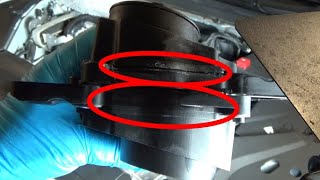
- Replacing only the PCV diaphragm. While cheaper, the plastic housing of the oil trap can warp from heat cycles, meaning a new diaphragm may not seal properly. A complete assembly is the recommended long-term fix.
Most Likely Causes
- Failed PCV Oil Trap Assembly 🔴 High Probability The rubber diaphragm inside the PCV assembly is a well-documented weak point on the 2.0L Drive-E engine. It tears or degrades over time, creating a significant vacuum leak that the engine cannot compensate for. This issue is widely discussed in owner forums as the most common cause for P0171.
How to confirm: Listen for a loud whistling noise at idle. A definitive test is to carefully remove the oil filler cap while the engine is running; if the noise stops and you feel very strong suction on the cap, the PCV diaphragm is torn. A smoke test will also show smoke leaking from the PCV assembly or oil cap area.
Typical fix: Replace the entire PCV oil trap assembly. While diaphragm-only repair kits are available, many sources recommend replacing the complete unit because the plastic housing can warp, leading to continued leaks. The job is considered a straightforward DIY for many owners.
Est. part cost: $150 - $250 - Vacuum Leak (other than PCV) 🟡 Medium Probability Turbocharged engines feature a complex network of hoses, gaskets, and seals for the intake and vacuum systems. Over time, these components can become brittle and crack, allowing unmetered air to enter the engine.
How to confirm: Perform a smoke test. This is the most effective method, involving injecting smoke into the intake system to visually pinpoint leaks from cracked hoses, intake manifold gaskets, or intercooler piping. A video guide for a Volvo S90 with the same engine shows a smoke test identifying a leak at the oil cap, caused by a warped PCV housing.
Typical fix: Replace the specific leaking hose or gasket. Common culprits include cracked vacuum lines or intake hoses.
Est. part cost: $20 - $150 - Dirty or Faulty Mass Airflow (MAF) Sensor ⚪ Low Probability Oil vapor from a failing PCV system or an over-oiled aftermarket air filter can contaminate the MAF sensor, causing it to under-report airflow. This leads the ECM to inject too little fuel, creating a lean condition.
How to confirm: First, attempt to clean the sensor using a dedicated MAF sensor cleaner spray. Do not touch the delicate sensor elements. If cleaning doesn't resolve the issue, monitor MAF sensor readings via an OBD-II scanner to see if they correspond correctly with engine RPM.
Typical fix: Clean the sensor. If the code returns, replacement of the MAF sensor may be necessary.
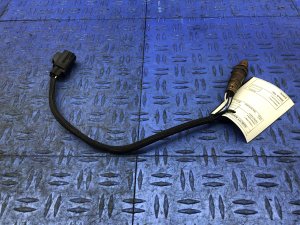
Est. part cost: $100 - $200 - Faulty Front Oxygen (O2) Sensor ⚪ Low Probability
How to confirm: A failing upstream O2 sensor (also called an Air/Fuel ratio sensor) can become slow or biased, sending an inaccurate lean signal to the ECM. Use a scanner to graph the sensor's voltage. It should fluctuate rapidly. A sensor that is stuck at a low voltage may be faulty. However, it is more likely the sensor is correctly reporting a lean condition caused by something else.
Typical fix: Replace the front (upstream) O2 sensor. This should only be done after ruling out all potential vacuum leaks.
Est. part cost: $120 - $250
Rare But Worth Checking
- Leaking Fuel Injectors or Low Fuel Pressure: Less common than air leaks, but a lean condition can be caused by insufficient fuel delivery. This could stem from a weak fuel pump, a clogged fuel filter, or dirty/leaking fuel injectors.
- Stuck Open Purge Valve: The EVAP system's purge valve can fail and stick open, creating a vacuum leak that may trigger a P0171 code. This can be tested by checking for vacuum on the valve when it should be closed.
- Leaking Supercharger Seals: On T6 models which are both supercharged and turbocharged, a smoke test may reveal leaks from the supercharger seals, as documented by one owner on a 2016 XC90.
Diagnosis Steps
- Read fault codes with an OBD-II scanner. Note the P0171 code and check long-term fuel trim (LTFT) values. A high positive number (e.g., +25% or more) confirms the ECM is adding significant fuel to compensate for a lean condition.
- Start the engine and listen for a loud, distinct whistling or humming sound from the engine bay.
- With the engine running at idle, carefully try to lift the oil filler cap. If the whistling noise immediately stops and you feel strong vacuum pulling the cap down, this is a near-certain confirmation of a failed PCV diaphragm.
- If no noise is present, perform a thorough visual inspection of all vacuum hoses and intake ducting between the MAF sensor and the cylinder head for obvious cracks, loose fittings, or disconnections.
- Perform a smoke test on the intake system. This is the most reliable way to find hidden vacuum leaks. Pay close attention to the PCV assembly, intake manifold gaskets, and intercooler hoses.
- If no vacuum leaks are found, inspect and clean the Mass Airflow (MAF) sensor with a dedicated cleaner spray.
- If the code persists, check fuel pressure to ensure the fuel pump and regulator are functioning correctly.
- As a final diagnostic step, use a scan tool to graph the voltage of the upstream O2 sensor to ensure it is responding correctly and not stuck in a lean reading.
Parts You'll Likely Need
- PCV Oil Trap / Oil Separator Assembly
(OEM #32140004, 32242753 (superseded))— This is the most frequent cause of P0171 on the 2.0L Drive-E engine due to a common diaphragm failure. Part number 32242753 is a newer, updated version.
Trusted brands: Genuine Volvo, Bosch, MTC
OEM price range: $200-$280
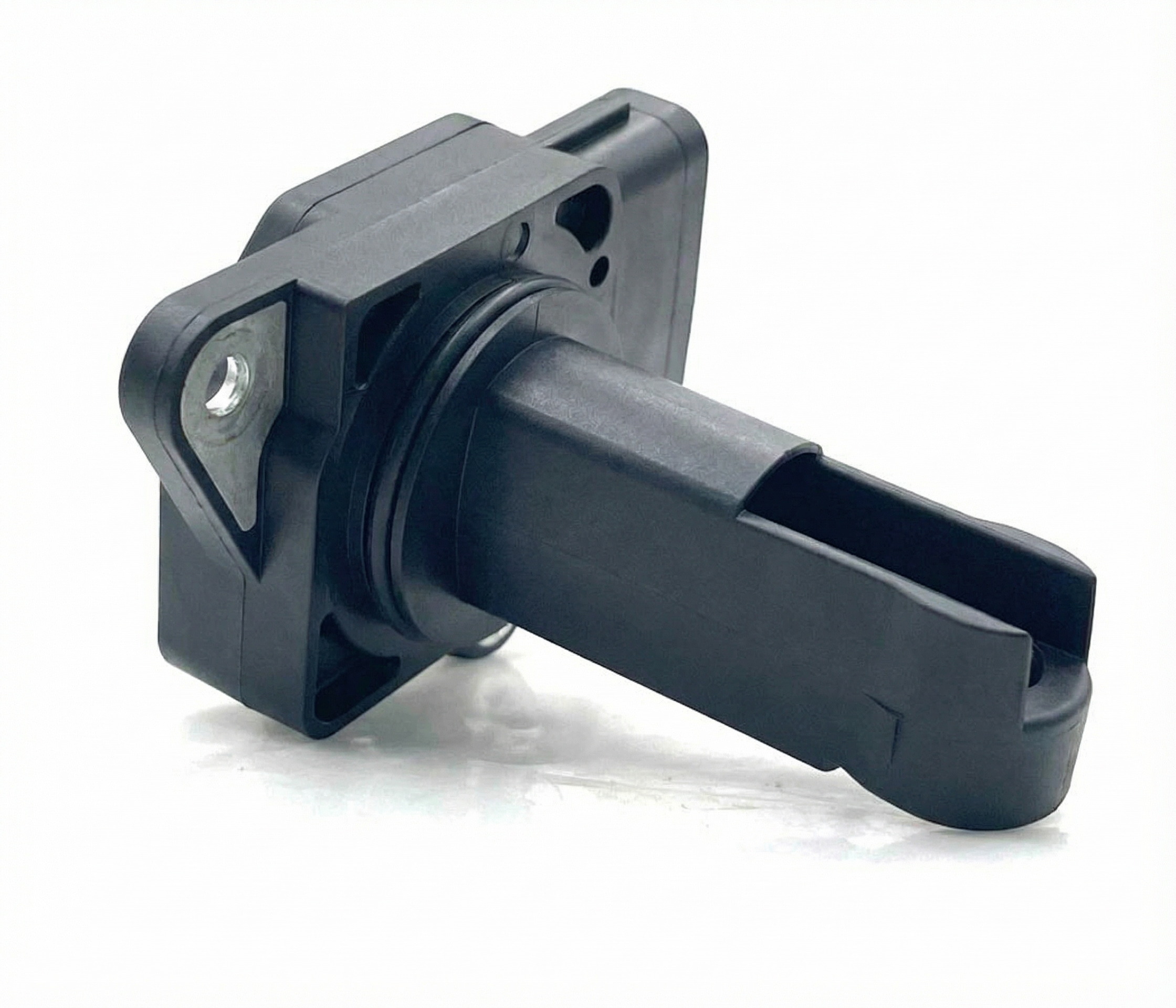
Aftermarket price range: $150-$220 - Mass Airflow (MAF) Sensor — A dirty or failed MAF sensor can cause incorrect air-fuel mixture calculations, though it's a much less common cause than the PCV system.
Trusted brands: Bosch, Denso
OEM price range: $200-$250
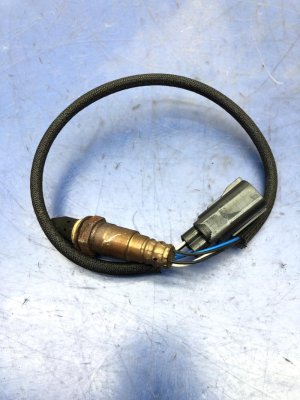
Aftermarket price range: $100-$180 - Front Oxygen Sensor (Upstream) — A lazy or failed sensor can send incorrect lean signals to the ECM, but this should be diagnosed last after ruling out all air leaks.
Trusted brands: Bosch, Denso
OEM price range: $200-$250
Aftermarket price range: $120-$180
Related Codes That Often Appear With This One
- P0300 — A severe lean condition starves the cylinders of the proper fuel mixture, which can lead to incomplete combustion and trigger random/multiple cylinder misfire codes.
- P0507 — A large vacuum leak from a failed PCV or other source allows excess air into the engine, which can cause the idle speed to be higher than the ECM expects, triggering this code.
- P0170 — This is a more generic Fuel Trim Malfunction code that is often triggered alongside the more specific P0171 code, indicating a problem with the air-fuel mixture management.
Technical Service Bulletins (TSBs) & Recalls
- While no specific TSB for P0171 was found, Volvo has issued extended warranties (P10207) for some 2.0L Drive-E engines related to excessive oil consumption, which can be linked to PCV system issues and piston ring problems.
Platform-Specific Known Issues
- The PCV oil trap assembly on the 2.0L Drive-E engine is known to fail, causing a loud whistling noise and a significant vacuum leak that triggers the P0171 code.
- The plastic housing of the oil trap itself can warp over time, meaning that simply replacing the internal diaphragm may not create a proper seal.
Mechanic-Grade Diagnostic Values
- Long-Term Fuel Trim (LTFT) at idle — expected: Close to 0% (+/- 10%). Failure: A value consistently at or above +25% indicates the ECM is compensating for a significant lean condition.
- Short-Term Fuel Trim (STFT) at idle — expected: Fluctuating near 0%. Failure: A value consistently high (e.g., +20% or more) points to an immediate lean condition. If LTFT is high and STFT is highly negative, it means a correction has been learned but a new, opposite issue may be present.
- Upstream O2 Sensor (A/F Sensor) Voltage — expected: On these Volvos, it's an Air/Fuel Ratio sensor, so the voltage should be steady around 3.3V for a stoichiometric mixture (14.7:1).. Failure: A voltage stuck significantly lower than 3.3V indicates a lean reading. If it's stuck and doesn't fluctuate with engine load changes, the sensor may be faulty, but this usually confirms a real lean condition from a vacuum leak.
Hidden / Shadow Codes Worth Checking
- ECM-P017100: This is the Volvo-specific fault code for 'System Too Lean (Bank 1)'. The '00' suffix indicates it's a general failure with no specific subtype information, which is common for this code. (see via Volvo's VIDA software or advanced scanners like Autel or YOUCANIC that can read manufacturer-specific codes.)
Scan Tool Commands That Help
- VIDA, YOUCANIC, or other advanced scanners: Resetting adaptation of fuel and air mixture / Reset Fuel Trims — This is critical after replacing a component that affects the air-fuel mixture, such as a MAF sensor, O2 sensor, fuel injectors, or fixing a major vacuum leak. Failing to reset adaptations can cause the P0171 code to return even after the repair, as the ECM is still using the old, incorrect compensation values.
Real Owner Repair Stories
- YouTube channel 'Mechanical Jobs Done' (2018 Volvo XC60 Petrol (2.0L Turbo)) — P0171 code, check engine light returned instantly on startup.
❌ Tried (didn't work) Initial diagnosis considered the common PCV oil trap failure.
✅ What actually fixed it The EVAP purge valve solenoid was stuck open, creating a vacuum leak. The technician confirmed this by disconnecting the valve electrically and feeling for suction where there should have been none. Replacing the purge valve resolved the code. - Volvo Forums user 'jacek_canada' (2016 XC90 (Same engine family and PCV design)) — P0171 Check Engine Light.
❌ Tried (didn't work) Initial inspection of PCV diaphragm showed no tear.
✅ What actually fixed it Upon removing the entire PCV oil trap box, the user found that two internal metal plates/valves had become dislodged and were lying at the bottom of the housing. Putting them back in place and securing them made the P0171 code go away, although it later returned, suggesting the fix was temporary or another issue was present. This points to a rare internal failure mode of the oil trap assembly itself. - CarKiller forum user 'lxTX' (2015 Volvo XC60 2.0L T5 with 45k miles) — P0171 code returned after 1,000 miles.
❌ Tried (didn't work) Replaced Mass Airflow (MAF) sensor and air filter., Checked for vacuum leaks with starting fluid, found none.
✅ What actually fixed it After being unable to remove the upstream O2 sensor, a mechanic confirmed the sensor was faulty and was the cause of the lean condition. Replacing the upstream O2 sensor fixed the issue.
"I Checked Everything" — The Actual Cause
- In some cases, a smoke test may not reveal a leak if it is intermittent or only occurs under specific temperature or pressure conditions. One documented fix, after a smoke test presumably passed, was a faulty EVAP purge valve solenoid that was stuck open. This acts as a vacuum leak but might be missed if not specifically tested by checking for vacuum at its port while it's commanded off.
OEM Part Supersession History
31430923, 31670210, 32140004→32242753— These are successive part numbers for the PCV Oil Trap Assembly. The latest number, 32242753, represents the most current revision from Volvo, likely with improvements to address the common diaphragm failure or housing warpage.
Heads up: All parts are generally interchangeable for the 2.0L Drive-E engine, but it is always recommended to use the latest part number (32242753) for the most durable repair.
Model Year Variations Within This Range
- 2009-2014 (Pre-Drive-E engines): Early first-generation XC60s used 5-cylinder and 6-cylinder engines. While they can still get a P0171 code, the extremely common PCV oil trap diaphragm failure with the signature whistling noise is specific to the 2.0L 4-cylinder 'Drive-E' engine introduced around 2014.5. On older engines, causes for P0171 are more varied and less concentrated on a single part failure.
Diagnostic Flowchart
Other Known Issues on This Vehicle
Issues unrelated to this code that are worth knowing about as an owner of this generation:
- Excessive Oil Consumption 🔴 High — Common on 2013-2016 2.0L Drive-E engines, often linked to piston ring design. Can manifest around 80k-100k miles. (Ref: Volvo issued an extended warranty (P10207) for oil consumption tests and potential piston ring replacement.)
- Automatic Transmission Problems 🟠 Medium — Owners report issues like rough/jerky shifting, hesitation, or outright failure, particularly on earlier first-gen models. Fluid degradation is a common cause, and 'lifetime fluid' claims are often disputed by specialists.
- EGR System Clogging (Diesel Models) 🟠 Medium — While the focus is on the 2.0L petrol turbo, it's notable that the diesel D4 engines of the same era are known for clogged EGR systems, leading to performance issues.
- Electrical Gremlins 🟡 Low — More common on early first-generation models (pre-facelift 2014). Issues can range from infotainment glitches to electronic handbrake malfunctions.
Used vs. New Parts: Buying Guide for This Vehicle
When a used part is the smart pick: For this specific P0171 issue, using a used PCV Oil Trap assembly is strongly discouraged. The part fails due to wear and tear on a rubber diaphragm and heat-induced warping of the plastic housing. A used part has unknown remaining life and is very likely to fail soon, if it hasn't already.
Donor-vehicle mileage cap: roughly under 20000 miles for the part to have meaningful remaining life.
What to inspect on the donor part:
- If forced to consider a used part, look for one from a very low-mileage, late-model-year donor vehicle.
- Inspect the rubber diaphragm (if visible) for any signs of discoloration, stretching, or tears.
- Check the plastic housing for any signs of warping, especially around the oil cap seal and mounting surfaces.
OEM-only on this vehicle (don't cheap out):
- PCV Oil Trap Assembly: While aftermarket options exist, Genuine Volvo or OEM-supplier (e.g., Bosch) parts are highly recommended for longevity, as cheap aftermarket versions may use lower-quality diaphragms or have poor housing tolerances.
Aftermarket brands forum-validated for this vehicle:
- Bosch (Often the OEM supplier for sensors and engine management components)
- Denso (For Oxygen Sensors and MAF sensors)
Brands owners have reported issues with on this vehicle:
- Unnamed, low-cost PCV assemblies from online marketplaces like Amazon or eBay are a gamble. While some users report short-term success, failure rates are high, and they often do not solve the problem long-term.
Real Owner Stories
Aggregated from forums and TSBs cited above. Mileages and costs reflect what owners reported in those sources.
2016 Volvo XC90 2.0L Turbo
Symptoms: Check engine light P0171 and a loud whistling noise.
What fixed it: Replacement of the PCV oil trap assembly.
Source hint: SwedeSpeed Forums: A user on SwedeSpeed describes the classic P0171 symptoms and fix: '2016 XC90 - p0171'
2016 Volvo XC90 2.0L Turbo
Symptoms: Loud whistling noise and P0171 code; auto parts store suggested a bad MAF sensor.
What fixed it: PCV failure diagnosis confirmed via the oil cap test.
Source hint: Reddit (r/AskMechanics): A post titled '2016 Volvo XC90 - loud whistling noise - P0171 code'
2013-2016 Volvo 2.0L Drive-E — ~90000 miles
Symptoms: Excessive oil consumption and P0171 lean code symptoms.
What fixed it: Oil consumption test and potential piston ring replacement under extended warranty P10207.
Source hint: TSB/Extended Warranty P10207 cited in context
2017 Volvo S90 2.0L Turbo
Symptoms: P0171 code present; smoke test identified a leak at the oil cap.
What fixed it: Replacement of the PCV assembly due to a warped housing.
Source hint: YouTube video guide for a Volvo S90 with the same engine
Related OBD-II Codes
Frequently Asked Questions
Is there a TSB or extended warranty for the oil consumption and PCV issues on my 2.0L Drive-E XC60?
Why is my XC60 making a loud whistling noise at idle along with the P0171 code?
Can I just replace the diaphragm in the PCV assembly to fix the P0171 code?
How can I quickly test if the PCV system is causing my lean condition?
Could a dirty air filter cause the P0171 code on my Volvo?
What are the typical fuel trim values for a P0171 on this vehicle?
Helpful Videos
We Have This Part in Stock



The information in this article is provided for general reference and educational purposes only. Vehicle specifications, procedures, and part compatibility can vary by production date, trim level, and region. Always consult your vehicle's factory service manual and verify part numbers before purchasing or performing repairs. Safety-critical components such as airbags, seat belts, and braking systems should be installed by a qualified professional.
- Volvo XC60:
- 🎬 Helpful Videos
- 🛍️ Shop This Part
- What's Unique About the 2009-2017 Volvo XC60
- Symptoms You May Notice
- Most Likely Causes
- Rare But Worth Checking
- Diagnosis Steps
- Parts You'll Likely Need
- Related Codes That Often Appear With This One
- Technical Service Bulletins (TSBs) & Recalls
- Platform-Specific Known Issues
- Mechanic-Grade Diagnostic Values
- Hidden / Shadow Codes Worth Checking
- Scan Tool Commands That Help
- Real Owner Repair Stories
- "I Checked Everything" — The Actual Cause
- OEM Part Supersession History
- Model Year Variations Within This Range
- Diagnostic Flowchart
- Other Known Issues on This Vehicle
- Used vs. New Parts: Buying Guide for This Vehicle
- Real Owner Stories
- 2016 Volvo XC90 2.0L Turbo
- 2016 Volvo XC90 2.0L Turbo
- 2013-2016 Volvo 2.0L Drive-E — ~90000 miles
- 2017 Volvo S90 2.0L Turbo
- Related OBD-II Codes
- Frequently Asked Questions
- 🎟️ Get 5% Off