

P0171 on 2011-2018 Volvo S60 2.5T: Causes and Fixes for System Too Lean
On the 2011-2018 Volvo S60 with the 2.5L 5-cylinder turbo, the P0171 code is most often caused by a vacuum leak from a failed PCV oil trap system. A loud whistling, humming, or 'dying turkey' sound from the engine is a key symptom. Replacing the PCV oil trap assembly (Part No. 31319642) is the most common and reliable fix.
- For a P0171 code on a 2011-2018 Volvo S60 2.5T, the first thing to check is the PCV oil trap system.
- A loud whistling or squealing sound from the engine at idle is a strong indicator of a failed PCV diaphragm.
- Do not replace the oxygen sensor first; it is almost always reporting the problem, not causing it.
- If the PCV system is not the cause, a smoke test is the next essential step to find other vacuum leaks.
- Cleaning the MAF sensor is a simple, low-cost diagnostic step to perform if no vacuum leaks are found.
What's Unique About the 2011-2018 Volvo S60
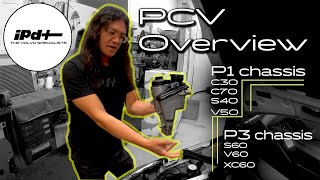
The 2.5L 5-cylinder turbo engine in this generation of Volvo S60 is well-known for issues with its Positive Crankcase Ventilation (PCV) system, often called the "oil trap." The rubber diaphragm inside this unit can tear, creating a significant unmetered vacuum leak that directly causes the P0171 code. This failure is so common that a loud whistling or squealing noise from the engine bay at idle is a tell-tale sign pointing directly to a bad PCV diaphragm. Many owners in forums like Swedespeed and VolvoForums have documented this exact failure.
Symptoms You May Notice
- Check Engine Light is on
- Rough or unstable idle, sometimes hunting up and down.
- Loud whistling, squealing, or humming noise from the engine, especially at idle. Some owners describe it as a 'dying turkey' sound.
- Hesitation or loss of power during acceleration.
- Poor fuel economy.
- Engine stalling, especially at low speeds or when stopping.
- Replacing the oxygen (O2) sensor first. The O2 sensor is usually just reporting the lean condition accurately; it is rarely the cause of it. On this platform, the cause is almost always an unmetered air leak.
Most Likely Causes
- Failed PCV Oil Trap Diaphragm 🔴 High Probability The rubber diaphragm inside the PCV oil separator assembly is a known weak point on this engine. Over time, it becomes brittle from heat and oil vapors and tears, creating a large, unmetered vacuum leak.
How to confirm: With the engine running, listen for a loud whistling or squealing noise. Carefully try to remove the oil filler cap or the oil dipstick. If the noise immediately stops and you feel strong suction pulling the cap/dipstick back down, the PCV diaphragm has failed. This is the most definitive and common diagnostic test. A smoke test will also show smoke being drawn into the PCV assembly.
Typical fix: Replace the entire PCV oil trap assembly. While some sell just the diaphragm repair kit, the plastic housing can become brittle or warped, so replacing the complete assembly (Part No. 31319642) is the most reliable long-term repair.
Est. part cost: $120-$220 - Vacuum Leak (Other) 🟡 Medium Probability Beyond the PCV system, vacuum hoses can become cracked and brittle with age and heat cycles. The intake manifold gasket can also fail.
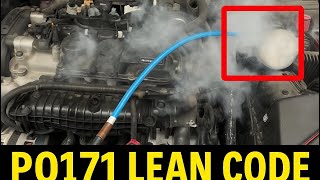
How to confirm: Perform a smoke test on the intake system to identify any leaks from hoses, the intake manifold gasket, or other connections. This is the most reliable way to find leaks that are not from the PCV system.
Typical fix: Replace the cracked or leaking hose or gasket.
Est. part cost: $10-$100 - Faulty Mass Airflow (MAF) Sensor 🟡 Medium Probability The MAF sensor can become contaminated with dirt or oil, causing it to under-report the amount of air entering the engine. The ECM then injects too little fuel, creating a lean condition.
How to confirm: First, try cleaning the MAF sensor with a dedicated MAF sensor cleaner. If the problem persists, monitor the sensor's readings with an OBD-II scanner to see if they are erratic or out of specification at idle and under load. If cleaning doesn't work, replacement is the next step.
Typical fix: Clean or replace the MAF sensor. The OEM part is made by Bosch.
Est. part cost: $100-$250 - Faulty Fuel Pressure Sensor ⚪ Low Probability The fuel pressure sensor on the end of the fuel rail can fail, sending incorrect low-pressure data to the ECM, which can contribute to lean conditions. This failure is often accompanied by code P0193 (Fuel Rail Pressure Sensor Circuit High).
How to confirm: Diagnosis is best done by monitoring fuel pressure readings with an advanced OBD-II scanner or a Volvo-specific tool like VIDA. Compare the sensor's reported pressure to actual pressure measured with a mechanical gauge if possible.
Typical fix: Replace the fuel pressure sensor located on the fuel rail.
Est. part cost: $50-$100 - Leaking Oil Filler Cap ⚪ Low Probability The rubber O-ring on the oil filler cap can degrade over time, creating a small, unmetered vacuum leak directly into the crankcase.
How to confirm: During a smoke test, smoke may be seen escaping from around the oil filler cap. Sometimes, simply ensuring the cap is tight or replacing the cap's seal can resolve a minor lean condition.
Typical fix: Replace the oil filler cap or its rubber gasket.
Est. part cost: $15-$40
Rare But Worth Checking
- Weak Fuel Pump: If the engine hesitates under heavy load or high RPM, a failing fuel pump may not be providing enough volume to meet demand, causing a lean condition.
- Clogged Fuel Injectors: If one or more injectors are dirty, they won't deliver the commanded amount of fuel, leading to a lean mixture. This may also be accompanied by misfire codes.
- Exhaust Leak (before O2 sensor): A crack in the exhaust manifold or a bad gasket before the primary oxygen sensor can allow outside air to be pulled into the exhaust stream, making the O2 sensor falsely report a lean condition.
Diagnosis Steps
- Read the codes with an OBD-II scanner and check for any other accompanying codes like P0507 or P0300.
- Start the engine and listen for a distinct whistling, humming, or squealing noise at idle.
- If a whistle is present, carefully remove the oil filler cap. If the noise stops and you feel strong suction, the PCV oil trap diaphragm is torn. This is the most common failure.
- If no noise is present or the oil cap test is inconclusive, perform a smoke test on the intake system to find any hidden vacuum leaks. Check around the oil filler cap seal, intake manifold gaskets, and all vacuum hoses.
- If no vacuum leaks are found, locate the Mass Airflow (MAF) sensor and clean it using a dedicated MAF sensor cleaner. Do not touch the sensor wires. Let it dry completely before reinstalling.
- Check fuel pressure using a scanner to monitor the fuel pressure sensor data. If the pressure is low or erratic, investigate the fuel pump and fuel filter.
- Inspect the front (upstream) oxygen sensor's operation via a scanner. A lazy or biased sensor could be a cause, but it's much less common than vacuum or fuel delivery issues.
Parts You'll Likely Need
- PCV Oil Trap / Oil Separator Assembly
(OEM #31319642)— This is the most frequent failure point on the 2.5T engine leading to a P0171 code. The internal diaphragm tears, creating a massive vacuum leak.
Trusted brands: Volvo (Genuine), URO Parts, CCiyu
OEM price range: $180-$220
Aftermarket price range: $100-$150 - Mass Airflow (MAF) Sensor
(OEM #Volvo: 31342363 / Bosch: 0280218446)— A dirty or faulty MAF sensor can provide incorrect airflow readings to the computer, causing a lean mixture. It's a common secondary cause after vacuum leaks are ruled out.
Trusted brands: Bosch (OEM), Denso
OEM price range: $200-$250
Aftermarket price range: $80-$150
Related Codes That Often Appear With This One
- P0300 — A lean air-fuel mixture can fail to ignite properly, leading to random misfires across the cylinders. This is a common secondary code with P0171.
- P0507 — 'Idle Air Control System RPM Higher Than Expected.' A large vacuum leak, such as from a failed PCV diaphragm, allows excess air into the engine, causing the idle speed to be uncontrollably high.
- P0174 — This code is 'System Too Lean (Bank 2)'. On an inline-5 engine like this one, there is only one bank, so P0174 is not applicable. However, on V-engines, seeing P0171 and P0174 together often points to a vacuum leak or MAF issue affecting both banks.
Technical Service Bulletins (TSBs) & Recalls
- Volvo Technical Journal (TJ) 25803: This document may contain information related to diagnosing lean conditions or P0171 codes on these engines.
Platform-Specific Known Issues
- The PCV oil trap system is a well-documented weak point. The diaphragm's failure is so common that many owners can diagnose it by the distinct whistling sound alone.
- A real-world repair story from the VolvoForums ('2015 S60 T5 Premier P0171 Fault Code') describes the sound as a 'dying turkey' that immediately stopped when the oil cap was removed, confirming the PCV failure.
- In NHTSA complaint ODI #11607823, a P0171 code on a Volvo was confirmed to be a vacuum leak found with a smoke test, reinforcing this as a primary diagnostic step.
Mechanic-Grade Diagnostic Values
- Fuel Pressure at Fuel Rail Schrader Valve — expected: 40-55 PSI at idle.. Failure: Consistently below 35 PSI suggests a weak fuel pump or clogged filter. Readings of 20-25 PSI are definitively too low.
- Long Term Fuel Trim (LTFT) Bank 1 — expected: Close to 0%, typically within +/- 5%.. Failure: A P0171 code will be set when LTFT is consistently and highly positive (e.g., > +20%) as the ECM tries to compensate for the lean condition by adding fuel.
- Upstream O2 Sensor Voltage (Bank 1, Sensor 1) — expected: Fluctuating rapidly between 0.1V (lean) and 0.9V (rich) on a healthy, warm engine in closed loop.. Failure: A sensor that is stuck low (e.g., < 0.2V) may indicate a lean condition or a failed sensor. However, do not replace the sensor until vacuum leaks and fuel delivery are ruled out.
Hidden / Shadow Codes Worth Checking
- ECM-21E0 or ECM-21E1: Long-term fuel trim, lower/upper limit. This is the Volvo-specific manufacturer code for the condition that triggers the generic P0171. (see via Volvo-specific diagnostic tools like VIDA or high-end professional scanners.)
Scan Tool Commands That Help
- VIDA or equivalent advanced scanner: Resetting adaptation of fuel and air mixture / A/F Adaptation — This is critical after replacing a component that affects the air-fuel ratio, such as the PCV assembly, MAF sensor, or fuel injectors. Failing to reset adaptations can cause the P0171 code to return even if the mechanical fault is fixed, as the ECM is still using the old, incorrect learned values.
- N/A - Manual Procedure: Fuel Trim Manual Reset — If a capable scanner is not available, some technicians and owners report that clearing the codes with a basic scanner and then disconnecting the battery or locking the car and leaving it undisturbed overnight may force the ECM to reset its long-term fuel trim adaptations.
Wiring & Ground Locations
- Main Engine Ground Strap — A primary ground strap connects the top of the engine, often near the timing cover/camshaft cover area, to the chassis on the passenger side strut tower.. A corroded or loose main engine ground can cause erratic behavior from various sensors (MAF, O2, Fuel Pressure) that rely on a stable ground reference, potentially leading to incorrect readings and lean codes.
- G2 Ground Point — Located on the fender in the left side (driver's side in US) of the engine compartment.. This is a chassis ground distribution point. Multiple components in the engine management system may use this point as a reference. Corrosion here can cause widespread electrical issues.
- Under-Hood Jump Start Ground Post — In the engine compartment, there is a dedicated negative (-) terminal post for jump-starting, separate from the battery itself (which may be elsewhere).. This provides a known-good, easily accessible ground point for performing voltage and resistance tests on sensors and wiring with a multimeter.
Real Owner Repair Stories
- VolvoForums user 'yoyoman' (2015 Volvo V60 (same 2.5T platform)) — P0171 code, rough idle that would jump to 4k RPM, and a sound like a bad pulley or 'dying turkey'.
❌ Tried (didn't work) Initial diagnosis pointed towards a bad pulley due to the noise.
✅ What actually fixed it The user diagnosed a failed PCV system when they removed the oil cap and the noise immediately stopped. They replaced the PCV oil trap assembly, which resolved the noise and the rough idle. The user noted the Check Engine Light did not turn off immediately after the repair but did resolve.
OEM Part Supersession History
31319642→N/A— This remains the primary part number for the PCV oil trap assembly.
Heads up: Part number 31319643 is also frequently associated with this component, possibly as part of a larger kit or a minor revision; however, 31319642 is the most commonly cited number for the assembly itself. Ensure the part is specified for the 2.5T engine, as a similar part exists for the 3.2L I6 engine.
Model Year Variations Within This Range
- 2015-2016: Starting with the 2015 model year, Volvo began phasing out the 2.5L 5-cylinder engine in the S60 T5. For 2015 and 2016, the T5 FWD (Front-Wheel Drive) models were equipped with the new 2.0L 4-cylinder 'Drive-E' engine, while the T5 AWD (All-Wheel Drive) models retained the 2.5L 5-cylinder turbo. It is crucial to verify which engine the vehicle has before ordering parts.
Diagnostic Flowchart
Other Known Issues on This Vehicle
Issues unrelated to this code that are worth knowing about as an owner of this generation:
- Excessive Oil Consumption 🔴 High — More common on 2012-2016 models with B5254T12/B5254T5 engines. Can start around 70k-100k miles. Caused by a piston ring design defect. (Ref: Volvo has addressed this with service bulletins for piston ring replacement, though many vehicles are now out of the extended warranty period.)
- Aisin TF-80SC Automatic Transmission Issues 🟠 Medium — Can occur at various mileages, often presenting as harsh shifting ('shift flare') or thumps when engaging gears. Exacerbated by Volvo's 'sealed for life' fluid recommendation. (Ref: Fix often involves replacing the valve body and performing a fluid flush; software updates from Volvo also exist.)
- Prematurely Warped Brake Rotors 🟡 Low — A commonly reported issue by owners, leading to steering wheel vibration during braking. Not a critical failure but an annoyance.
Used vs. New Parts: Buying Guide for This Vehicle
When a used part is the smart pick: For this specific repair, sourcing used parts is not recommended. The primary failure points are wear-and-tear items (rubber diaphragms, sensors) that have a finite lifespan.
What to inspect on the donor part:
- Not applicable as used parts are not advised.
OEM-only on this vehicle (don't cheap out):
- PCV Oil Trap Assembly: While not strictly 'OEM-only', the failure rate of cheap aftermarket units is high due to inferior diaphragm material. Using a Genuine Volvo part or a direct OEM supplier is strongly recommended for long-term reliability. A warped housing on a used part also presents a risk.
Aftermarket brands forum-validated for this vehicle:
- Bosch (for MAF Sensor - this is the original equipment manufacturer)
- Denso (for MAF Sensor)
Brands owners have reported issues with on this vehicle:
- Unbranded, no-name PCV oil trap assemblies from online marketplaces. The cost savings are often negated by premature failure of the internal diaphragm.
Real Owner Stories
Aggregated from forums and TSBs cited above. Mileages and costs reflect what owners reported in those sources.
2015 Volvo S60 T5 Premier
Symptoms: Check engine light with a 'dying turkey' sound that immediately stopped when the oil cap was removed.
What fixed it: Replacing the oil trap assembly.
Source hint: VolvoForums: In thread '2015 S60 T5 Premier P0171 Fault Code'
2011-2018 Volvo S60 2.5L 5-Cyl Turbo
Symptoms: P0171 code and a whistling sound; owner performed the 'whistle and dipstick pull' test to confirm suction.
What fixed it: Identifying and replacing the failed PCV system components.
Source hint: VolvoForums: Thread titled 'P0171 Nightmare finally diagnosed!'
2012-2016 Volvo S60 (B5254T12/B5254T5) — ~85000 miles
Symptoms: Excessive oil consumption issues alongside engine performance concerns.
What fixed it: Piston ring replacement as per Volvo service bulletins.
Source hint: Known Issues: Excessive Oil Consumption (citing TSBs 9, 12, 16, 18)
Related OBD-II Codes
Frequently Asked Questions
What is the 'dying turkey' sound my Volvo S60 is making at idle?
Should I buy a diaphragm repair kit or the whole PCV assembly (Part No. 31319642)?
Does Volvo Technical Journal (TJ) 25803 apply to my P0171 code?
Can a faulty fuel pressure sensor cause a P0171 on the 2.5L 5-cylinder engine?
Is the P0171 code related to the oil consumption issues on 2012-2016 models?
How can I tell if my oil filler cap is causing the lean code?
Helpful Videos
We Have This Part in Stock



The information in this article is provided for general reference and educational purposes only. Vehicle specifications, procedures, and part compatibility can vary by production date, trim level, and region. Always consult your vehicle's factory service manual and verify part numbers before purchasing or performing repairs. Safety-critical components such as airbags, seat belts, and braking systems should be installed by a qualified professional.
- Volvo S60:
- 🎬 Helpful Videos
- 🛍️ Shop This Part
- What's Unique About the 2011-2018 Volvo S60
- Symptoms You May Notice
- Most Likely Causes
- Rare But Worth Checking
- Diagnosis Steps
- Parts You'll Likely Need
- Related Codes That Often Appear With This One
- Technical Service Bulletins (TSBs) & Recalls
- Platform-Specific Known Issues
- Mechanic-Grade Diagnostic Values
- Hidden / Shadow Codes Worth Checking
- Scan Tool Commands That Help
- Wiring & Ground Locations
- Real Owner Repair Stories
- OEM Part Supersession History
- Model Year Variations Within This Range
- Diagnostic Flowchart
- Other Known Issues on This Vehicle
- Used vs. New Parts: Buying Guide for This Vehicle
- Real Owner Stories
- 2015 Volvo S60 T5 Premier
- 2011-2018 Volvo S60 2.5L 5-Cyl Turbo
- 2012-2016 Volvo S60 (B5254T12/B5254T5) — ~85000 miles
- Related OBD-II Codes
- Frequently Asked Questions
- 🎟️ Get 5% Off