

P0171 on 2009-2013 Toyota Corolla: Lean Condition Causes and Fixes
On a 2009-2013 Corolla, code P0171 is most often caused by a leaking intake manifold gasket. This is a very common and well-documented issue. Replacing the gasket with the updated orange version (part #17171-22060) is an inexpensive DIY fix, with the part costing around $10-$20.
- Code P0171 on a 2009-2013 Corolla almost always points to a vacuum leak.
- The most likely culprit is a failed intake manifold gasket, a known weak point. The replacement part is inexpensive.
- Before replacing any parts, perform a simple diagnostic test by spraying carb cleaner around the intake manifold gasket to check for leaks.
- The second most likely cause is a dirty Mass Airflow (MAF) sensor, which can often be fixed by cleaning it with a dedicated spray.
- Do not replace the oxygen sensor unless all other potential causes, especially vacuum leaks, have been ruled out.
What's Unique About the 2009-2013 Toyota Corolla

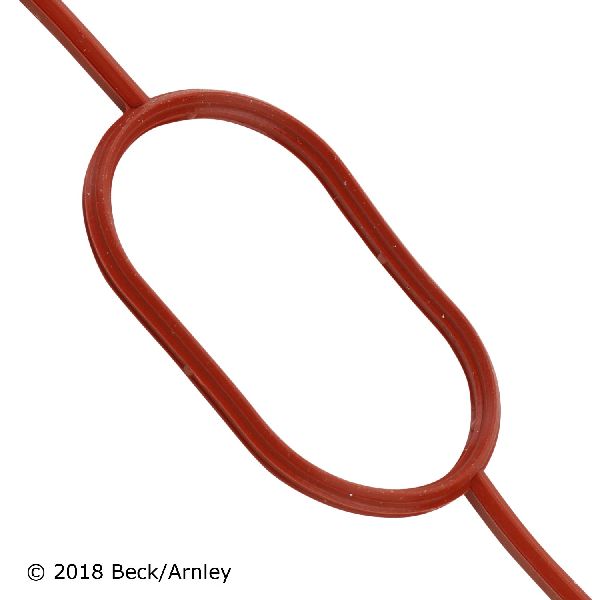
The 10th generation Corolla, particularly models with the 1.8L (2ZR-FE) and the previous generation's 1.8L (1ZZ-FE) engine, is widely known for developing a vacuum leak at the intake manifold gasket. Over time, the original black rubber gasket hardens, flattens like a pancake, and shrinks, allowing unmetered air to enter the engine, which directly causes this lean code. Toyota issued a technical service bulletin (TSB EG045-07) for the previous generation for this issue in cold weather, and the problem persists as a common failure on these 2009-2013 models, making it the first thing to check. The updated gasket is orange, indicating a revised material.
Symptoms You May Notice
- Check Engine Light is on
- Rough or unstable idle, especially when cold or at a stop
- Hesitation or lack of power during acceleration
- Reduced fuel economy
- Engine may stall when stopped
- Hard starting, especially after refueling
- A hissing sound from the engine bay, indicating a vacuum leak
- Immediately replacing the oxygen sensor. The P0171 code is set based on the A/F sensor's reading, but the sensor itself is often just doing its job by reporting a real lean condition caused by a vacuum leak or MAF issue. Diagnose other causes first.
Most Likely Causes


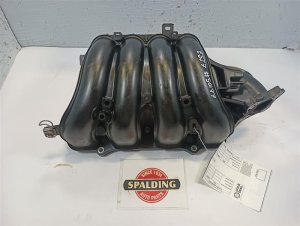
- Leaking Intake Manifold Gasket 🔴 High Probability The original equipment black rubber gasket material is known to degrade, harden, and shrink with heat cycles and age, creating a vacuum leak. This is the most common failure point for the 1ZZ-FE and 2ZR-FE engine families.
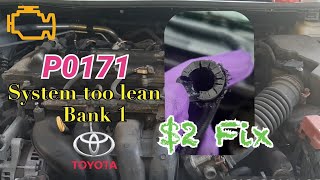
How to confirm: With the engine running, spray carburetor cleaner, brake cleaner, or an unlit propane torch around the area where the intake manifold meets the cylinder head. If the engine's idle speed changes or stumbles, a leak is present. A more definitive method is using a smoke machine to visually pinpoint the leak. 🎬 Watch: A step-by-step guide to diagnosing and resolving the P0171 code.
Typical fix: Replace the intake manifold gasket. The improved replacement part is orange in color, indicating the updated material. The OEM part number for the revised gasket is 17171-22060.
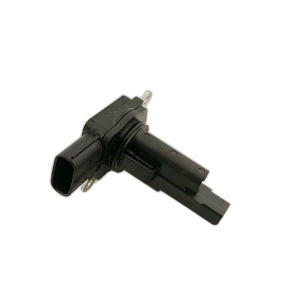
Est. part cost: $10-$25 - Dirty or Faulty Mass Airflow (MAF) Sensor 🟡 Medium Probability The MAF sensor measures the amount of air entering the engine. If its sensing wire is contaminated with dirt, oil, or debris, it will under-report the amount of air, causing the computer to command too little fuel, creating a lean condition.
How to confirm: Remove the sensor (held by two Phillips screws) and inspect the small wires inside. If they appear dirty, clean them ONLY with dedicated MAF sensor cleaner spray; do not touch the wires. A scan tool can also be used to monitor the MAF reading at idle, which should be around 2.0-2.5 grams/second for a healthy 1.8L engine.
Typical fix: Clean the MAF sensor. If cleaning does not resolve the issue, the sensor must be replaced. Ensure the O-ring gasket for the sensor is in good condition to prevent a new leak.
Est. part cost: $5-$10 for cleaner, $70-$150 for a new sensor - Cracked or Disconnected Vacuum Hose ⚪ Low Probability Rubber hoses in the engine bay can become brittle and crack with age and heat cycles. A common failure point is the vacuum hose running to the EVAP purge solenoid. A crack here creates a significant unmetered air leak. A manufacturer service bulletin, TSB Bulletin #TSB000923, notes that vehicles may exhibit a hard start or MIL ON condition with P0171, and Techstream data analysis may reveal positive fuel trims.
How to confirm: Visually inspect all vacuum lines connected to the intake manifold, throttle body, and PCV system for cracks, splits, or loose connections. A YouTuber diagnosed their P0171 on a 2010 Corolla by finding a large crack in the EVAP purge solenoid hose.
Typical fix: Replace the damaged hose. This can be a very inexpensive fix if the hose is easily accessible.
Est. part cost: $5-$30
Rare But Worth Checking
- Failing Upstream Oxygen (A/F) Sensor: While the A/F sensor reports the lean condition, it can sometimes fail and give a false lean reading. However, it's more common for it to be accurately reporting a problem caused by something else. It should be one of the last parts replaced after verifying no vacuum leaks or MAF issues exist.
- Low Fuel Pressure: A weak fuel pump or clogged fuel filter can cause insufficient fuel delivery, leading to a lean condition. This is less common than vacuum leaks but can happen, especially on higher mileage vehicles. Fuel pressure should be checked with a gauge at the fuel rail.
- Stuck Open PCV Valve or Cracked PCV Hose: If the Positive Crankcase Ventilation (PCV) valve sticks open, it can create a significant vacuum leak. The hose connected to it can also become cracked and leak.
- Clogged Fuel Injectors: Slightly clogged fuel injectors can restrict fuel flow, causing a lean condition. This can be a frustrating cause to diagnose. One owner on a GenVibe forum fixed their P0171 by cleaning the fuel injectors after replacing the MAF, intake gasket, and O2 sensors without success.
Diagnosis Steps
- Read the code with an OBD-II scanner and check for any other stored codes. Note the freeze frame data.
- Check long-term fuel trim (LTFT) data with a scan tool. A high positive number (e.g., +20% or higher) at idle that decreases as RPMs increase strongly suggests a vacuum leak.
- Perform a diagnostic test for the intake manifold gasket leak. With the engine idling, carefully spray short bursts of brake cleaner or carb cleaner around the gasket mating surface. If the engine RPM changes, the gasket is leaking.
- Visually inspect the engine bay for other obvious vacuum leaks, such as cracked or disconnected hoses, particularly the PCV hose and the EVAP purge solenoid hose.
- If no leak is found, remove and inspect the Mass Airflow (MAF) sensor. If it looks dirty, clean it with dedicated MAF sensor cleaner and re-install. Do not touch the sensor wires. Check the MAF reading at idle; it should be stable around 2.0-2.5 g/s.
- If the problem persists, perform a smoke test to find harder-to-detect vacuum leaks. This is the most reliable way to find the source of unmetered air.
- If no vacuum leaks are found, investigate fuel delivery by checking fuel pressure to ensure the fuel pump and filter are functioning correctly.
- As a final step, test the upstream oxygen (A/F) sensor's response using a scan tool to ensure it is not faulty or slow to respond.
Parts You'll Likely Need

- Intake Manifold Gasket
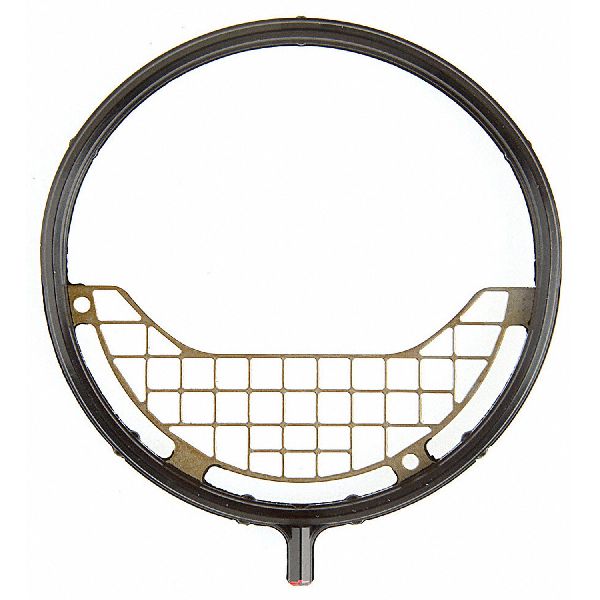
(OEM #17171-22060)— This is the most frequent cause of P0171 on this vehicle due to the original gasket material degrading over time. This is the updated, orange-colored part.
Trusted brands: Toyota (OEM), Fel-Pro, Mahle
OEM price range: $15-$25
Aftermarket price range: $5-$15 - Mass Airflow (MAF) Sensor
(OEM #22204-37010 (also seen as 22204-0T020))— A dirty or failed MAF sensor is the second most likely cause, as it provides incorrect airflow data to the engine computer.
Trusted brands: Denso (OEM), Hitachi, Delphi
OEM price range: $120-$180
Aftermarket price range: $60-$120 - Upstream Air/Fuel Ratio Sensor (Bank 1, Sensor 1)
(OEM #89467-12030)— If vacuum leaks and MAF issues are ruled out, a lazy or failed sensor could be the cause. The direct Denso equivalent is part number 234-9052.
Trusted brands: Denso (OEM), Bosch
OEM price range: $150-$220
Aftermarket price range: $80-$150
Related Codes That Often Appear With This One
- P0174: On V-twin or V6/V8 engines, P0174 (System Too Lean Bank 2) is often seen with P0171, usually pointing to a vacuum leak or MAF issue affecting both banks. The Corolla's inline-four engine only has one bank, so P0174 will not appear.
Technical Service Bulletins (TSBs) & Recalls

- TSB EG045-07 (for 2003-2008 models, but highly relevant as the issue persists) - details the P0171 code caused by a leaking intake manifold gasket, particularly in cold weather. It specifies replacing the original gasket with an updated part.
- TSB Bulletin #TSB000923 - Notes that various Toyota vehicles may exhibit a hard start and/or MIL ON condition with DTC P0171 and/or P0174, often accompanied by low fuel rail pressure (P0087).
Platform-Specific Known Issues
- A TSB (Technical Service Bulletin EG045-07) was issued for the previous generation Corolla (2003-2008) with the 1ZZ-FE engine for P0171 in sub-freezing temperatures caused by a leaking intake manifold gasket. This problem is known to carry over to the 2009-2013 models with the 2ZR-FE engine, even in warmer climates, due to the same gasket design flaw.
Mechanic-Grade Diagnostic Values
- Mass Airflow (MAF) Sensor Reading at Idle — expected: 1.8L Engine: Approximately 2.0 to 2.5 g/s at normal operating temperature with A/C off. Some sources state a broader range of 2-7 g/s for gasoline engines in general.. Failure: A reading significantly lower than 2.0 g/s at idle can indicate a vacuum leak (unmetered air entering after the sensor). A reading that doesn't increase linearly with RPM can indicate a faulty sensor.
- Mass Airflow (MAF) Sensor Reading at 2,500 RPM — expected: Approximately 6.0 to 7.0 g/s. Some service data gives a wider range of 2 to 6 g/s, but a healthy 1.8L should be near the top of that.. Failure: Readings that are sluggish to respond or do not increase significantly from idle point to a dirty or failing sensor.
- Long-Term Fuel Trim (LTFT) and Short-Term Fuel Trim (STFT) — expected: Ideally, the sum of LTFT and STFT should be close to 0%, within a range of +/- 20%.. Failure: A P0171 code is typically set when the combined fuel trim value exceeds +25% to +35% as the ECM tries to compensate for the lean condition.
- Upstream A/F Sensor (Bank 1, Sensor 1) Voltage — expected: On these Toyota models, the A/F sensor is a wideband type. Its voltage should remain fairly steady, often around 3.3V, under stable conditions.. Failure: A high voltage reading (e.g., above 3.6V) indicates a lean mixture. If the voltage is stuck high and doesn't respond to induced rich conditions (like adding propane to the intake), the sensor may be faulty, but it's more likely accurately reporting a lean condition.
Hidden / Shadow Codes Worth Checking
- Mode 6 Data: Mode 6 is not a specific code but a diagnostic mode that provides test results for non-continuously monitored systems. For P0171, a technician can look at Test ID $81 (Fuel System Monitoring Bank 1) to see the raw fuel trim data and test limits that led to the code being set. This can confirm how severely the trim values exceeded the threshold. (see via Advanced OBD-II scan tools that support Mode 6 diagnostics.)
Scan Tool Commands That Help
- Toyota Techstream: Active Test: A/F Control — This function allows a technician to manually command the fuel injection volume to be richer (+25%) or leaner (-12.5%). By observing the A/F sensor and O2 sensor voltage response, a technician can confirm if the sensors are responding correctly to changes in the air/fuel mixture, helping to isolate a faulty sensor from an actual lean condition.
- Toyota Techstream: Utility: Reset Memory — After performing a repair, such as replacing an intake gasket or MAF sensor, this command should be used to clear the long-term fuel trim values from the ECM's memory. This forces the computer to relearn the fuel strategy immediately with the new, correct parts, rather than slowly adjusting from the old, incorrect values.
Real Owner Repair Stories
- YouTube channel 'Eazi DIY' (2010 Toyota Corolla) — P0171 code present, rough idle after filling the gas tank, hesitation when pressing the brake pedal.
❌ Tried (didn't work) The owner suspected multiple issues based on symptoms.
✅ What actually fixed it The owner found a large, visible crack in the vacuum hose that connects the EVAP purge solenoid to the intake. Replacing this hose resolved the P0171 code and the associated symptoms. - Reddit user in r/MechanicAdvice (2007 Toyota Matrix (shares 1.8L engine and platform)) — P0171 code, rough idle when cold that improves as the engine warms up.
❌ Tried (didn't work) Initial diagnosis was uncertain.
✅ What actually fixed it The problem was a leaking intake manifold gasket. The user noted the leak was present when the engine was cold but would partially seal as the engine heat caused parts to expand. Replacing the gasket with the updated OEM part fixed the issue. - NHTSA ODI #11653942 — An owner reported that the vehicle required the gas pedal to be pumped while starting. A mechanic retrieved DTC P0171 and informed the contact that the EVAP valves and system were faulty and required replacement.
- NHTSA ODI #10904385 — One owner experienced an illuminated engine indicator and a P0171 diagnosis. While the exhaust manifold gaskets were replaced, the failure reportedly recurred numerous times.
- NHTSA ODI #10299799 — A driver reported that the vehicle would stall or lose power at random times, including while driving 60 MPH on the freeway, with the check engine light reporting codes P0171 and P2716.
- NHTSA ODI #10551666 — Following a computer replacement, an owner found five new readiness codes including P0171, P0606 (ECM/PCM processor error), and P0303 (random misfire).
"I Checked Everything" — The Actual Cause
- An often-overlooked cause for a P0171, even after a smoke test on the intake system comes back clean, is an exhaust leak upstream of the primary Air/Fuel Ratio sensor. A crack or a bad gasket in the exhaust manifold can pull in fresh air during the negative-pressure pulses of the exhaust stream. This extra oxygen crosses the A/F sensor, which interprets it as a lean engine condition and commands the ECM to add fuel, eventually triggering the P0171 code. Technicians may miss this because they focus solely on vacuum leaks on the intake side.
Model Year Variations Within This Range
- 2009-2015: The 1.8L 2ZR-FE engine was the standard engine. However, some later or international models received the 2ZR-FAE, which includes the Valvematic system. While the core P0171 causes (intake gasket, MAF) are the same, the Valvematic system adds another layer of complexity to the intake side, though it is not a common failure point for this code.
Diagnostic Flowchart
Real Owner Stories
Aggregated from forums and TSBs cited above. Mileages and costs reflect what owners reported in those sources.
2007 Toyota Corolla
Symptoms: Check engine light with P0171 code, but car runs perfectly fine.
What fixed it: Replacing the intake manifold gasket resolved the issue. The owner also noted needing new spark plugs and an ignition coil to fix a sputtering issue.
Cost: $160
Source hint: Reddit r/COROLLA
2008 Toyota Corolla 1.8L
Symptoms: Check engine light (P0171), difficulty starting. Seemed like it wasn't getting enough fuel.
What fixed it: Took it to the dealership where the air intake manifold gasket, PCV hose + valve, O2 sensor, and fuel injector O-rings were replaced to resolve multiple vacuum leaks.
Cost: $150 for diagnosis
Source hint: Reddit r/MechanicAdvice
Related OBD-II Codes
Frequently Asked Questions
Does TSB EG045-07 apply to my 2009-2013 Toyota Corolla?
What is the correct part number to fix the leaking intake manifold gasket on the 1.8L engine?
Why does my Corolla only throw the P0171 code when it is cold outside?
What should the MAF sensor reading be on my 1.8L Corolla at idle?
How can I tell if my P0171 is caused by a vacuum leak using a scan tool?
My friend has a Pontiac Vibe with the same P0171 code. Is it the same issue?
Helpful Videos
Used OEM Parts in Stock



New Aftermarket Parts Available


The information in this article is provided for general reference and educational purposes only. Vehicle specifications, procedures, and part compatibility can vary by production date, trim level, and region. Always consult your vehicle's factory service manual and verify part numbers before purchasing or performing repairs. Safety-critical components such as airbags, seat belts, and braking systems should be installed by a qualified professional.
- Toyota Corolla:
- 🎬 Helpful Videos
- 🛍️ Shop This Part
- What's Unique About the 2009-2013 Toyota Corolla
- Symptoms You May Notice
- Most Likely Causes
- Rare But Worth Checking
- Diagnosis Steps
- Parts You'll Likely Need
- Related Codes That Often Appear With This One
- Technical Service Bulletins (TSBs) & Recalls
- Platform-Specific Known Issues
- Mechanic-Grade Diagnostic Values
- Hidden / Shadow Codes Worth Checking
- Scan Tool Commands That Help
- Real Owner Repair Stories
- "I Checked Everything" — The Actual Cause
- Model Year Variations Within This Range
- Diagnostic Flowchart
- Real Owner Stories
- 2007 Toyota Corolla
- 2008 Toyota Corolla 1.8L
- Related OBD-II Codes
- Frequently Asked Questions
- 🎟️ Get 5% Off