

P0171 on 2022-2025 Ram 1500: System Too Lean Causes and Fixes
P0171 on a 2022-2025 Ram 1500, especially the 5.7L Hemi, is most often caused by an exhaust leak from a cracked exhaust manifold due to broken factory bolts (the 'Hemi tick') or a vacuum leak from a failed intake manifold gasket. A thorough smoke test is the most reliable way to find the leak before replacing any parts, which is a common misstep.
- P0171 on a 2022-2025 Ram 1500 means Bank 1 has too much air or not enough fuel.
- For the 5.7L Hemi, the most likely cause is a cracked exhaust manifold or broken exhaust manifold bolts.
- For both the 5.7L Hemi and 3.6L V6, a leaking intake manifold gasket is another very common cause.
- Do NOT replace the O2 sensor without first performing a smoke test to rule out air leaks, which are the root cause in the majority of cases.
- Ignoring the code can lead to poor performance, bad gas mileage, and eventual damage to the catalytic converter.
What's Unique About the 2022-2025 Ram 1500

On the 2022-2025 Ram 1500, particularly models with the 5.7L Hemi engine, P0171 is very frequently linked to specific, well-documented issues. The most notorious is the "Hemi tick," a ticking noise from the engine bay caused by broken exhaust manifold bolts leading to a warped or cracked manifold. This exhaust leak, occurring before the oxygen sensor, introduces extra air into the exhaust stream, tricking the sensor into reporting a false lean condition. TSB 09-019-23 directly addresses this issue. Additionally, both the 5.7L Hemi and 3.6L V6 engines are known to develop vacuum leaks from failing intake manifold gaskets, another primary cause of this code.
Diagnostic Flowchart

Tap your situation to follow the diagnostic path that matches what you're seeing on this vehicle.
Symptoms You May Notice
- Check Engine Light is on
- Rough or unstable idle
- Engine hesitation or stumbling during acceleration
- Reduced engine power, feels like it 'has no balls' or struggles to accelerate.
- Decreased fuel economy
- Ticking or hissing noise from the engine bay, especially when cold.
- In some cases, the engine may die at startup or when coming to a stop.
- Replacing the oxygen sensor is a very common misdiagnosis. The O2 sensor is often correctly reporting the lean condition, which is actually caused by a vacuum or exhaust leak. One owner on DodgeForum.com replaced the O2 sensor as instructed by the code reader, only for the problem to persist because the root cause was a leak. Always test for leaks before replacing sensors.
Most Likely Causes

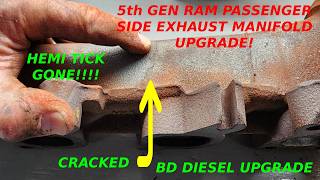
- Exhaust Leak (Cracked Manifold / Broken Bolts) 🔴 High Probability This is a very common issue on the 5.7L Hemi engine, addressed by TSB 09-019-23. The factory exhaust manifold bolts are prone to snapping due to constant heat cycles from the heavy cast iron manifolds bolted to aluminum heads. This causes the manifold to warp or crack and leak, creating the infamous 'Hemi tick'.
How to confirm: Listen for a distinct ticking noise from the engine bay (near the wheel wells) that is loudest on a cold start and may quiet down as the engine warms up. A visual inspection may reveal broken bolt heads (especially the rearmost ones) or black soot trails near the manifold-to-head connection. A smoke test of the exhaust system is the most definitive way to confirm.
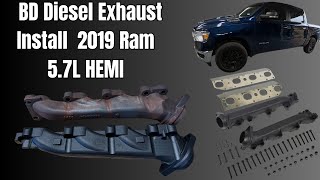
Typical fix: Replace the cracked exhaust manifold, the gasket, and all mounting bolts. It is highly recommended to use upgraded aftermarket manifolds (e.g., from BD Diesel) or at least 🎬 Watch: Step-by-step passenger side manifold replacement with BD Diesel upgrade. upgraded stainless steel bolts/studs (e.g., from ARP) to prevent recurrence. Some owners have the warped but uncracked original manifold resurfaced at a machine shop.
Est. part cost: $250-$700 for an aftermarket manifold kit; $600-$1000+ for OEM. An OEM right-side manifold kit is P/N 68591585AA. - Vacuum Leak (Intake Manifold Gasket) 🔴 High Probability The intake manifold gaskets on both the 5.7L Hemi and 3.6L Pentastar engines can become brittle and fail over time, allowing unmetered air to enter the engine and causing lean codes P0171 and P0174.
How to confirm: Perform a smoke test. This involves introducing smoke into the intake system and watching for where it escapes, often around the intake runner ports on the cylinder head. You may also hear a hissing sound at idle.
Typical fix: Replace the intake manifold gaskets. While the manifold is off, it's wise to inspect the plastic manifold itself for any warping or cracks. The torque sequence and specification are critical for 🎬 See this walkthrough on how to install new intake gaskets. a good seal.
Est. part cost: $40-$80 for a gasket set. The 5.7L Hemi uses a set of 8 individual seals (OEM P/N 53022143AB) or a full kit (OEM P/N 68545089AA). The 3.6L V6 uses P/N 5184331AC. - Faulty Upstream Oxygen (O2) Sensor 🟡 Medium Probability
How to confirm: Use a scan tool to monitor the live voltage data from the Bank 1, Sensor 1 O2 sensor. A healthy sensor will show rapidly fluctuating voltage between ~0.1V and ~0.9V. A lazy or stuck sensor (e.g., stuck below 0.45V) often indicates failure. This should only be considered after ruling out all leaks, as the sensor is often correctly reporting a real lean condition.
Typical fix: Replace the Bank 1, Sensor 1 (upstream) oxygen sensor.
Est. part cost: $50-$150 - PCV System Leak ⚪ Low Probability The PCV valve or its connecting hoses can crack, become disconnected, or stick open, creating a vacuum leak. TSB 09-025-25 for 2025 models points to a disconnected purge line as a cause for P0171, P0174, and misfires.
How to confirm: Visually inspect the PCV valve and all associated hoses for cracks or damage. A smoke test will also reveal leaks in this system. Pinching off the PCV hose with pliers while monitoring short-term fuel trims can show a change if the valve is leaking excessively.
Typical fix: Replace the faulty PCV valve or hose.
Est. part cost: $20-$60
Rare But Worth Checking
- Weak Fuel Pump or Clogged Fuel Filter: While less common for a single-bank lean code, low fuel pressure can cause lean conditions. If P0174 (Bank 2 Lean) is also present, this becomes more likely. A user on RamForum.com chased P0171/P0174 for weeks, replacing many parts before a new fuel pump finally resolved the issue.
- Clogged Fuel Injector on Bank 1: A single dirty or failing fuel injector can cause a lean condition on just one bank, but this will often be accompanied by a misfire code for a specific cylinder (e.g., P0301, P0303). An owner story on RamForumz detailed how a misfire on cylinder 5 was traced to a bad injector, which was also causing lean codes.
Diagnosis Steps
- Read the code with an OBD-II scanner and check for any other stored codes. Note the freeze frame data.
- Inspect the engine bay for obvious signs of vacuum leaks, such as cracked, disconnected, or brittle hoses.
- On a cold engine, start it and listen carefully for a 'ticking' sound near the exhaust manifolds, which would indicate an exhaust leak.
- Perform a smoke test. This is the most effective way to pinpoint the exact location of any vacuum 🎬 Watch: How to find a vacuum leak using a smoke machine. or exhaust leaks.
- If no leaks are found, use a scan tool to observe the long-term and short-term fuel trims (LTFT/STFT). High positive numbers for Bank 1 (e.g., LTFT > +10%) confirm the lean condition. If the numbers improve (get closer to zero) as RPMs increase from idle to ~2500 RPM, a vacuum leak is highly likely.
- Inspect the upstream O2 sensor on Bank 1 for physical damage or contamination. Watch its live voltage data; it should fluctuate rapidly.
- If leaks are ruled out, test the fuel pressure to ensure the fuel pump and regulator are functioning correctly. Pressure should be stable and within spec (e.g., 40-50 PSI for some models).
- Only after confirming there are no leaks and fuel pressure is good should you consider replacing the O2 sensor.
Parts You'll Likely Need

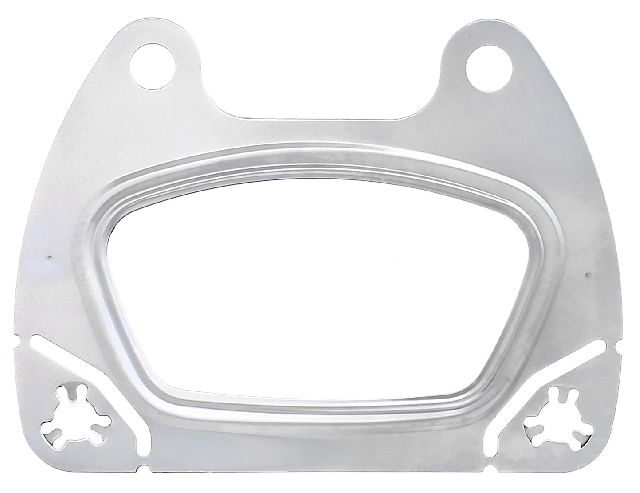
- Exhaust Manifold Kit (5.7L Hemi)
(OEM #68591585AA (Right Side Kit), 68365739AA (Left Manifold))— Due to the high failure rate of bolts and subsequent warping/cracking, replacing the manifold, gasket, and bolts is the definitive fix for the common 'Hemi tick' exhaust leak.
Trusted brands: Mopar (OEM), Dorman, BD Diesel, ARP (for upgraded bolts)
OEM price range: $600-$1000
Aftermarket price range: $250-$700 - Intake Manifold Gasket Set
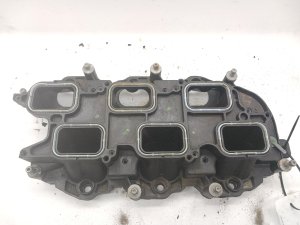
(OEM #53022143AB (5.7L Hemi, set of 8 seals), 5184331AC (3.6L V6 Lower))— These gaskets are a primary source of vacuum leaks on both the 3.6L and 5.7L engines, causing a lean condition.
Trusted brands: Mopar (OEM), Fel-Pro, Victor Reinz
OEM price range: $30-$60
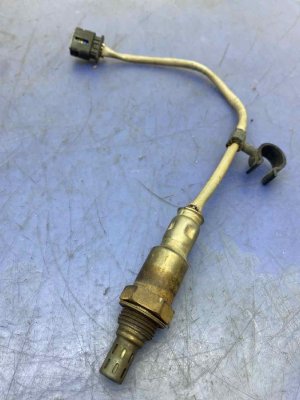
Aftermarket price range: $20-$50 - Upstream Oxygen Sensor (Bank 1, Sensor 1)
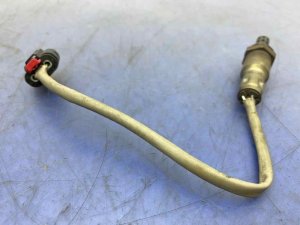
(OEM #5149171AB)— If the sensor itself fails, it can send incorrect lean readings to the PCM. It is often replaced incorrectly when the real issue is a leak.
Trusted brands: Mopar, Denso, NTK
OEM price range: $100-$180
Aftermarket price range: $50-$120
Related Codes That Often Appear With This One
- P0174 — System Too Lean (Bank 2). If both P0171 and P0174 are present, it strongly suggests a problem affecting the entire engine, such as a large vacuum leak at the intake manifold, a faulty MAP sensor, or low fuel pressure.
- P0300 — Random/Multiple Cylinder Misfire. A lean air-fuel mixture can fail to ignite properly, causing misfires. This is confirmed by manufacturer TSB #09-025-25, which links P0171 and P0300 to a disconnected purge line on 2025 models.
- P0507 — Idle Air Control System RPM Higher Than Expected. A vacuum leak allows extra, unmetered air into the engine, which can cause the idle speed to be too high as the PCM struggles to maintain control.
Technical Service Bulletins (TSBs) & Recalls
- Bulletin #09-019-23 (NHTSA ID 10246309): Supersedes older bulletins and directly addresses the 'ticking noise from exhaust manifold' on 2019-2022 Ram 1500s (and platform mates) with the 5.7L Hemi. The fix is replacing the manifold, gasket, and fasteners with an updated kit.
- Bulletin #09-025-25: Mentions P0171-00 (System Too Lean Bank 1) occurring with misfire codes (P0300) and rough running conditions on 2025 models, pointing to a disconnected purge line as the cause.
Platform-Specific Known Issues
- Cracked Exhaust Manifolds (5.7L Hemi): A technical service bulletin (TSB 09-019-23) exists for 2019-2022 models for a cold-start ticking
Mechanic-Grade Diagnostic Values
- Upstream O2 Sensor (Bank 1, Sensor 1) Voltage — expected: Rapidly fluctuating between ~0.1V and ~0.9V.. Failure: Stuck low (e.g., < 0.45V) or slow to respond.
- Downstream O2 Sensor (Bank 1, Sensor 2) Voltage — expected: Relatively steady voltage, typically between 0.7V and 0.8V when the catalytic converter is hot and working.. Failure: Fluctuating similarly to the upstream sensor (indicates a bad catalytic converter) or holding steady above 0.8V.
- Long-Term Fuel Trim (LTFT) — expected: Between -5% and +5% at idle and under load.. Failure: Sustained high positive values (e.g., > +10%, often hitting +25% or more to set the code) indicate the PCM is adding fuel to compensate for a lean condition.
- Fuel Pressure (5.7L Hemi) — expected: Approximately 59 psi +/- 5 psi (407 kPa +/- 34 kPa).. Failure: Pressure significantly below the specified range indicates a weak fuel pump or clogged filter.
- MAP Sensor Voltage (KOEO - Key On, Engine Off) — expected: Approximately 4.6V - 4.9V, corresponding to atmospheric pressure.. Failure: Voltage significantly different from the expected range.
Scan Tool Commands That Help
- Professional Scan Tool (e.g., wiTECH): Reset Fuel Trims / Adaptive Memory — After a repair (like fixing a vacuum leak or replacing an O2 sensor), the learned long-term fuel trim values should be reset. This forces the PCM to relearn the fuel strategy immediately with the new/repaired components, rather than slowly adapting over many drive cycles.
- Manual Procedure: PCM Reset — To clear learned values and codes after a repair. This can be done by disconnecting the negative battery terminal for 20 minutes or by pulling the specific PCM fuse in the power distribution center, turning the key to 'ON' (not start) until chimes are heard, then turning off and reinstalling the fuse.
Wiring & Ground Locations
- PCM Ground Wires — On a 96-pin PCM connector, pins 52 and 53 are often designated as grounds (Z908 circuit, Black wire).. A poor ground connection at the PCM can cause erratic sensor readings and incorrect calculations, potentially leading to false lean codes. Verifying a clean, tight ground is a crucial step in advanced electrical diagnosis.
- O2 Sensor Connector (Upstream) — The upstream O2 sensor is located on the exhaust manifold or downpipe before the catalytic converter. The connector is a 4-wire female plug.. Damaged wiring or a corroded connector can disrupt the sensor's signal to the PCM. The four wires typically include a signal wire, a ground, and two wires for the internal heater element.
Real Owner Repair Stories
- RamForum.com user 'mrtama48' (2006 Ram 1500 5.7L, 160,000 miles) — Persistent P0171 code for over a year, but the truck runs and drives great.
❌ Tried (didn't work) Replaced all O2 sensors, New exhaust from manifold to tailpipe, New manifold gaskets, New MAP sensor, New air temp sensor, New fuel injectors, Cleaned fuel rail, New fuel pump, Smoke tested with no leaks found
✅ What actually fixed it The user did not post a final resolution, highlighting how difficult this code can be to diagnose even after replacing all common culprits. The thread suggests checking freeze frame data and verifying fuel pressure with a mechanical gauge as next steps.
"I Checked Everything" — The Actual Cause
- In some cases where a smoke test reveals no intake or exhaust leaks, the root cause can be a faulty brake booster or its check valve. A leak in the booster diaphragm allows unmetered air into the intake manifold, causing a lean condition. Symptoms may include a hissing sound when the brake pedal is pressed or a hard brake pedal.
Model Year Variations Within This Range
- 2023-2024: For the 2023 model year, the 5.7L Hemi with the eTorque mild-hybrid system became standard on Ram 1500 models, phasing out the non-eTorque version. While the base engine is the same, the eTorque system (which replaces the alternator with a motor/generator) could introduce different diagnostic paths for electrical or charging system-related issues that might indirectly affect engine operation, though it is not a common cause for P0171.
- 2025: The 2025 Ram 1500 introduced the new 3.0L twin-turbo "Hurricane" inline-six engine, replacing the 5.7L Hemi V8. While P0171 can still occur, the common causes will shift away from Hemi-specific issues like manifold bolt failure. TSB #09-025-25 was issued for 2025 models, specifically linking P0171 to a disconnected purge line, indicating a focus on the EVAP system for this new powertrain.
Helpful Videos


Used OEM Parts in Stock



New Aftermarket Parts Available

The information in this article is provided for general reference and educational purposes only. Vehicle specifications, procedures, and part compatibility can vary by production date, trim level, and region. Always consult your vehicle's factory service manual and verify part numbers before purchasing or performing repairs. Safety-critical components such as airbags, seat belts, and braking systems should be installed by a qualified professional.
- Ram 1500:
- 🎬 Helpful Videos
- 🛍️ Shop This Part
- What's Unique About the 2022-2025 Ram 1500
- Diagnostic Flowchart
- Symptoms You May Notice
- Most Likely Causes
- Rare But Worth Checking
- Diagnosis Steps
- Parts You'll Likely Need
- Related Codes That Often Appear With This One
- Technical Service Bulletins (TSBs) & Recalls
- Platform-Specific Known Issues
- Mechanic-Grade Diagnostic Values
- Scan Tool Commands That Help
- Wiring & Ground Locations
- Real Owner Repair Stories
- "I Checked Everything" — The Actual Cause
- Model Year Variations Within This Range
- 🎟️ Get 5% Off