

P0171 on 2014-2021 Ram 1500: System Too Lean Causes and Fixes
Code P0171 on a Ram 1500 most often means there is a vacuum leak, commonly from a failed intake manifold gasket on the 5.7L Hemi. Another very common cause on the Hemi is an exhaust leak from broken manifold bolts. Other likely causes include a faulty upstream oxygen sensor or a cracked PCV hose. A smoke test is the best way to confirm leaks before replacing parts. Fixing a vacuum leak can range from a simple hose replacement to a more involved gasket or exhaust manifold job.
- P0171 on a 2014-2021 Ram 1500 means Bank 1 is running too lean.
- The most probable cause, especially on the 5.7L Hemi, is a vacuum leak from a failed intake manifold gasket.
- Always perform a smoke test or another method to check for vacuum leaks before replacing expensive parts like O2 sensors.
- Other common causes include a faulty upstream O2 sensor or a cracked PCV hose.
- Ignoring this code can lead to reduced fuel economy, poor performance, and costly catalytic converter damage over time.
What's Unique About the 2014-2021 Ram 1500

On the 2014-2021 Ram 1500, particularly those with the 5.7L Hemi engine, the P0171 code is frequently traced back to two main issues: vacuum leaks at the intake manifold gaskets and exhaust leaks from broken exhaust manifold bolts. The intake gaskets can become brittle, and the steel exhaust manifold bolts often snap when threaded into the aluminum cylinder heads due to different thermal expansion rates. The vehicle range also spans two distinct generations—the fourth-gen 'DS' (including the 'Classic' models sold after 2019) and the fifth-gen 'DT' (2019+)—which may have slight differences in component design but share the same fundamental causes for this code.
Diagnostic Flowchart

Tap your situation to follow the diagnostic path that matches what you're seeing on this vehicle.
Generation note: This range covers the fourth generation (2014-2018 'DS' and 2019+ 'Classic') and the fifth generation (2019-2021 'DT'). While the primary causes for P0171 are consistent, intake manifold designs, PCV hose routing, and sensor part numbers may differ slightly. The 5.7L Hemi issues are present in both generations.
Symptoms You May Notice
- Check Engine Light is on
- Rough idle or stalling
- Hesitation or surging during acceleration
- Reduced engine power and sluggish performance
- Poor fuel economy
- A hissing sound from the engine bay, indicating a vacuum leak
- A ticking noise from the engine, especially when cold, that goes away as the engine warms up (classic sign of an exhaust manifold leak)
- Replacing the oxygen sensor when the root cause is a vacuum leak from the intake manifold gaskets. Always check for vacuum leaks before replacing sensors.
- Replacing the oxygen sensor when the root cause is an exhaust manifold leak. The ticking sound on cold start is a key differentiator. 🎬 Watch: Hear the difference between a lifter tick and exhaust leak.
Most Likely Causes


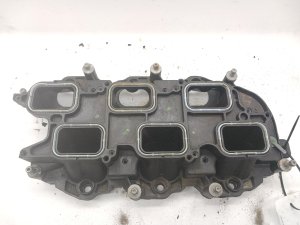
- Leaking Intake Manifold Gaskets (5.7L Hemi) 🔴 High Probability This is a well-documented issue on the 5.7L Hemi engine. The gaskets degrade from heat cycles, causing unmetered air to leak into the intake ports. Many owners have confirmed this was the ultimate fix after trying other parts.
How to confirm: Perform a smoke test on the intake system. Alternatively, with the engine running, carefully spray short bursts of brake cleaner or a propane torch (unlit) around the intake manifold sealing area. A change in engine RPM indicates a leak.
Typical fix: Replace the intake manifold gaskets. This is a moderately difficult job that requires removing the intake manifold. 🎬 See this step-by-step guide to replacing your intake manifold gaskets.
Est. part cost: $25-$80 - Cracked Exhaust Manifold / Broken Bolts (5.7L Hemi) 🔴 High Probability The steel exhaust manifold bolts on the Hemi are notorious for breaking, especially the rear-most bolts. This creates a leak that allows outside air to be sucked into the exhaust stream, which fools the upstream O2 sensor into reporting a false lean condition.
How to confirm: Listen for a distinct 'ticking' sound on a cold start that fades as the engine warms up and the metal expands to seal the gap. Visually inspect the manifold bolts, particularly those at the rear of the cylinder head, for missing heads.
Typical fix: Replace the exhaust manifold gaskets and all of the manifold bolts. Often requires extracting the broken bolt(s), which may require welding a nut onto the broken stud to remove it.
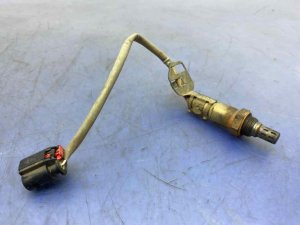
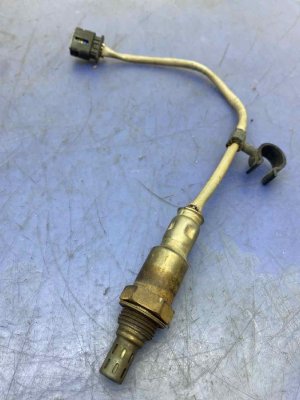
Est. part cost: $50-$200 (for gaskets and upgraded bolts/studs) - Faulty Upstream Oxygen (O2) Sensor 🟡 Medium Probability An aging O2 sensor can become 'lazy' or biased, sending an incorrect low-voltage signal to the PCM that mimics a lean condition. This is often replaced first but may not be the root cause.
How to confirm: Use an OBD-II scanner to monitor the live voltage data from the Bank 1, Sensor 1 O2 sensor. A healthy sensor will show rapidly fluctuating voltage between approximately 0.1 and 0.9 volts. A sensor that is stuck low or responds slowly needs replacement.
Typical fix: Replace the Bank 1, Sensor 1 (upstream) oxygen sensor.
Est. part cost: $40-$130 - Vacuum Leak (Other) 🟡 Medium Probability Rubber and plastic vacuum lines, especially the PCV hose and its connections, can become brittle and crack over time, creating a source of unmetered air. On the 3.6L Pentastar, a cracked oil filter housing can also be a source of a vacuum leak.
How to confirm: Visually inspect all vacuum hoses connected to the intake manifold for cracks or disconnection. A smoke test is the most effective way to find small leaks.
Typical fix: Replace the cracked or broken vacuum hose or component.
Est. part cost: $10-$150
Rare But Worth Checking
- Weak Fuel Pump or Clogged Fuel Filter: If the truck is also setting a P0174 code (Lean Bank 2), a fuel delivery issue is more likely as it would affect both sides of the engine. Check fuel pressure at the rail to confirm it's within spec.
- Dirty or Clogged Fuel Injectors: Less common, but a clogged injector on Bank 1 can restrict fuel flow to one or more cylinders, causing a lean condition on that bank.
- Failed EGR Cooler/Valve (3.0L EcoDiesel): On the EcoDiesel engine, P0171 is often linked to failures in the EGR system. A cracked EGR cooler can leak coolant into the intake or cause other sensor readings to be skewed, leading to lean codes. This is a known safety recall issue.
Diagnosis Steps
- Scan for Codes: Use an OBD-II scanner to confirm P0171 and check for any other related codes.
- Check Fuel Trims: Observe Short-Term (STFT) and Long-Term (LTFT) fuel trim data. Consistently high positive LTFT values (e.g., >15-20%) on Bank 1 confirm the PCM is adding fuel to correct a lean condition. If the trims improve (get closer to zero) at higher RPM, a vacuum leak is likely.
- Inspect for Leaks (Audible/Visual): Listen for a hissing sound (vacuum leak) or a ticking sound when cold (exhaust leak). Visually inspect all vacuum hoses, the air intake tube, and the PCV system for obvious cracks or damage. Check for missing exhaust manifold bolt heads on the 5.7L Hemi.
- Perform a Smoke Test: This is the most reliable method for finding vacuum leaks. Pressurize the intake system with smoke and look for where it escapes, paying close attention to the intake manifold gaskets. 🎬 Watch: How to find hidden vacuum leaks using a smoke machine.
- Test the O2 Sensor: Graph the Bank 1 Sensor 1 voltage. It should fluctuate rapidly between approximately 0.1 and 0.9 volts. If it's stuck low or slow to respond, it is likely faulty.
- Check Fuel Pressure: Connect a fuel pressure gauge to the fuel rail. Ensure the pressure is within the manufacturer's specified range to rule out a weak fuel pump or clogged filter.
Parts You'll Likely Need
- Intake Manifold Gasket Set
(OEM #68545089AA)— A very common failure point on the 5.7L Hemi engine leading to vacuum leaks and a P0171 code. Also applies to the 3.6L Pentastar.
Trusted brands: Mopar, Fel-Pro (MS97204 for 3.6L/5.7L), Mahle
OEM price range: $25-$40
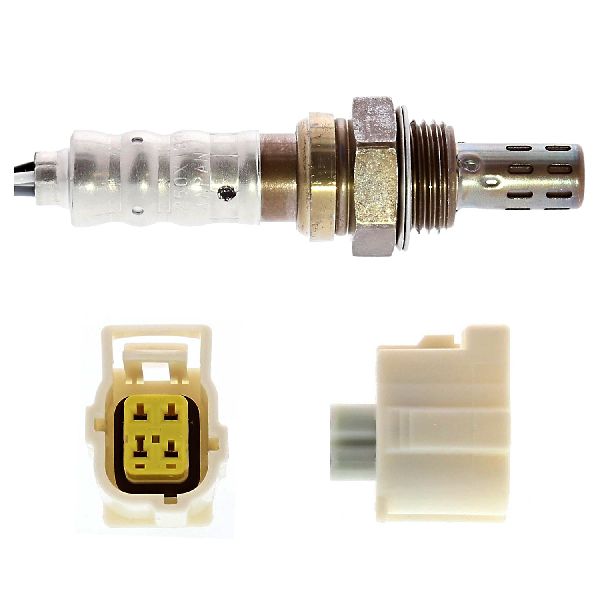
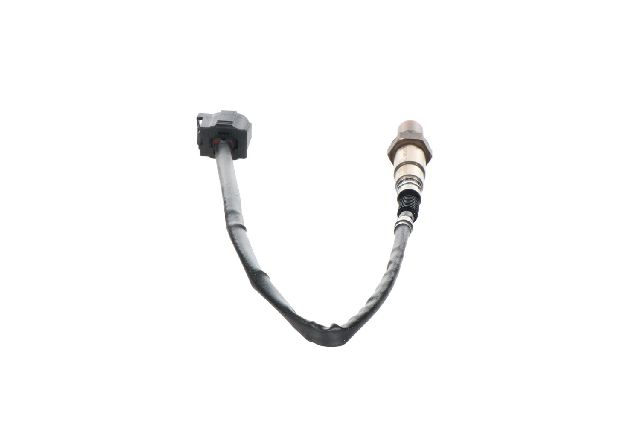
Aftermarket price range: $20-$60 - Upstream Oxygen Sensor (Bank 1, Sensor 1)
(OEM #5149171AB)— The sensor that measures the air-fuel ratio for Bank 1. A faulty sensor can incorrectly trigger a P0171 code.
Trusted brands: Mopar, Bosch, NTK, Denso
OEM price range: $60-$130
Aftermarket price range: $40-$90 - Exhaust Manifold Gasket & Bolt Kit — For 5.7L Hemi engines, broken exhaust manifold bolts are a primary cause of P0171. Replacing gaskets and all bolts (preferably with upgraded studs or bolts) is the correct repair.
Trusted brands: Mopar, Fel-Pro, Dorman, ARP (for upgraded bolts)
OEM price range: $40-$80
Aftermarket price range: $30-$150 - PCV Valve and Hose — A cracked or stuck PCV valve or hose is a common source of unmetered air (vacuum leak) that can cause a lean condition.
Trusted brands: Mopar, Standard Motor Products, Gates
OEM price range: $15-$50
Aftermarket price range: $10-$40
Related Codes That Often Appear With This One
- P0174 — System Too Lean (Bank 2). This code indicates the lean condition is affecting both engine banks, pointing towards a cause common to both, like a major vacuum leak near the throttle body, low fuel pressure, or a faulty MAP sensor.
- P0300 — Random/Multiple Cylinder Misfire. A lean air-fuel mixture can fail to ignite properly, causing misfires. The 'Hemi tick' from an exhaust leak is often misdiagnosed as a lifter tick, which also causes misfires.
- P0133 — O2 Sensor Circuit Slow Response (Bank 1 Sensor 1). This code often appears with P0171, indicating the sensor itself is failing and may be the cause of the lean reading. Multiple TSBs confirm this association.
Technical Service Bulletins (TSBs) & Recalls
- 1814522: Notes P0171 can be set along with various O2 sensor and cylinder misfire codes.
- 18-021-15 REV. E: Associates P0171 with several other codes on 2014 diesel models, pointing to a required PCM software update and potential O2 sensor replacement.
- 1802814REVD: Also for the 3.0L Diesel, this TSB involves a PCM reflash to address P0171 and other DTCs related to emissions system performance.
Platform-Specific Known Issues
- Extremely prone to both intake manifold gasket leaks and broken exhaust manifold bolts, both of which are primary causes for P0171.
- Commonly sees P0171 from a cracked PCV valve or hose. A leaking oil filter housing assembly, a known issue on this engine, can also sometimes manifest as a vacuum leak.
- P0171 is often a secondary code related to a failing EGR cooler or valve. TSBs #18-021-15 REV. E and #1802814REVD point to software updates and potential EGR/O2 sensor replacement to resolve a variety of codes including P0171.
Mechanic-Grade Diagnostic Values
- Long-Term Fuel Trim (LTFT) — expected: Within +/- 10%. Ideally close to 0%.. Failure: Sustained positive values greater than +10% to +12.5% indicate the PCM is adding fuel to compensate for a lean condition. Values can reach as high as +25% or +30% in severe cases.
- Upstream Oxygen Sensor (Bank 1, Sensor 1) Voltage — expected: Rapidly fluctuating between approximately 0.1V (lean) and 0.9V (rich) on a warmed-up engine in closed loop.. Failure: Voltage is stuck low (e.g., < 0.2V), responds very slowly, or does not cross-count between high and low values.
- Downstream Oxygen Sensor (Bank 1, Sensor 2) Voltage — expected: A relatively steady voltage, typically between 0.7V and 0.8V, on a warmed-up engine with a healthy catalytic converter.. Failure: Voltage fluctuates rapidly, mimicking the upstream sensor, which indicates a failing catalytic converter. A very low or erratic reading could point to an exhaust leak before the sensor.
- Fuel Pressure (5.7L Hemi) — expected: Typically 58 psi +/- 5 psi at the fuel rail with the key on, engine off.. Failure: Pressure below the specified range indicates a weak fuel pump, clogged filter, or faulty regulator, which can cause a lean condition.
Scan Tool Commands That Help
- wiTECH or equivalent professional scanner: O2 Sensor Test — To force the system rich and lean and observe if the O2 sensor voltage responds accordingly. This directly tests the sensor's ability to react, helping to differentiate a bad sensor from an actual lean condition.
- wiTECH or equivalent professional scanner: Fuel Injector Balance Test — To individually test fuel injectors to see if one is clogged or failing on Bank 1, causing a lean condition isolated to that bank. This is useful after vacuum and exhaust leaks have been ruled out.
Wiring & Ground Locations
- PCM Ground Circuits — The PCM has multiple ground pins (e.g., pins 31 and 32 on some older models) that typically ground to the chassis or engine block near the PCM's location.. A poor PCM ground can cause incorrect sensor readings and erratic behavior. Verifying a solid ground connection with a test light connected to battery positive is a crucial step in diagnosing elusive electronic issues.
- O2 Sensor Heater and Signal Wires — The wiring harness for the upstream O2 sensor runs from the sensor on the exhaust manifold down towards the main engine harness.. This harness can be damaged by heat from the exhaust or chafing against the engine block or frame. A short or open in the signal wire or ground can cause the exact symptoms of a failed sensor, leading to a P0171 code.
Real Owner Repair Stories
- RamForumZ.com user (2012 Ram 1500 Laramie Longhorn) — Check Engine Light with P0171 and P0174, poor performance and mileage.
❌ Tried (didn't work) Purge solenoid replacement, EVAP system detector replacement, Fuel vapor sensor replacement, Fuel pump replacement, Tune-up (spark plugs)
✅ What actually fixed it The dealer replaced the intake gaskets, which were noted to be in "bad shape," and both upstream O2 sensors. After this, they suspected a bad ECM, but the owner traded the truck before this was confirmed. The intake gasket replacement was the most likely solution given the symptoms and codes. - RamForum.com user (2006 Ram 1500 5.7L with 160,000 miles) — Persistent P0171 code for over a year, but the truck runs well.
❌ Tried (didn't work) All O2 sensors replaced, New exhaust from manifold to tailpipe, New manifold gaskets, New MAP sensor, New air temp sensor, New fuel injectors, Cleaned fuel rail, New fuel pump, Smoke test (found no leaks)
✅ What actually fixed it The user did not post a final resolution, but another user suggested checking fuel pressure directly at the rail despite the new pump and looking for a subtle exhaust leak at the manifold flange that a smoke test might miss. This highlights that even after replacing many parts, a fundamental fuel delivery or leak issue could persist.
"I Checked Everything" — The Actual Cause
- A stuck-open EVAP purge valve can act as a significant vacuum leak but may not be identified during a standard intake smoke test. The definitive test is to feel for vacuum at the valve's intake port while the engine is idling; there should be none. This issue is particularly common right after refueling, as the open valve has a direct path to outside air through the filler neck.
OEM Part Supersession History
Various older exhaust manifold bolts→Mopar 6510140AA (Bolt), Mopar 6507746AA (Stud/Bolt)— Original bolts were prone to stretching and breaking due to heat cycles.
Heads up: Aftermarket companies like Dorman offer stainless steel (e.g., 03309HP) or Grade 10.9 hardware as an upgrade to resist breakage, which many owners prefer over OEM replacements.Plastic OEM Oil Filter Housing (3.6L Pentastar)→Dorman 926-959 (Aluminum)— The original plastic housing is prone to cracking from heat and over-torquing the filter cap, causing both oil and vacuum leaks.
Heads up: The Dorman aluminum housing is a popular, more durable direct-fit replacement for the failure-prone OEM plastic part.
Model Year Variations Within This Range
- 2019-2021: Starting in 2019, Ram produced two different 1500s: the new fifth-generation 'DT' platform and the fourth-generation 'DS' platform, sold as the 'Ram 1500 Classic'. The 'DT' has a 6-lug wheel pattern, while the 'Classic' retains the 5-lug pattern. While they share engine options and similar causes for P0171, body panels, interior design, and some harness/component locations are different.
Helpful Videos

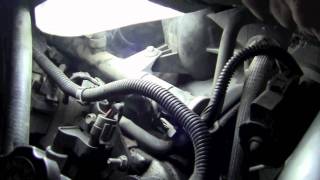
Used OEM Parts in Stock



New Aftermarket Parts Available


The information in this article is provided for general reference and educational purposes only. Vehicle specifications, procedures, and part compatibility can vary by production date, trim level, and region. Always consult your vehicle's factory service manual and verify part numbers before purchasing or performing repairs. Safety-critical components such as airbags, seat belts, and braking systems should be installed by a qualified professional.
- Ram 1500:
- 🎬 Helpful Videos
- 🛍️ Shop This Part
- What's Unique About the 2014-2021 Ram 1500
- Diagnostic Flowchart
- Symptoms You May Notice
- Most Likely Causes
- Rare But Worth Checking
- Diagnosis Steps
- Parts You'll Likely Need
- Related Codes That Often Appear With This One
- Technical Service Bulletins (TSBs) & Recalls
- Platform-Specific Known Issues
- Mechanic-Grade Diagnostic Values
- Scan Tool Commands That Help
- Wiring & Ground Locations
- Real Owner Repair Stories
- "I Checked Everything" — The Actual Cause
- OEM Part Supersession History
- Model Year Variations Within This Range
- 🎟️ Get 5% Off