

P0171 on 2001-2006 Mazda Tribute 3.0L V6: Lean Code Causes and Fixes
On the 2001-2006 Mazda Tribute 3.0L V6, code P0171 is most often caused by vacuum leaks from failed upper and lower intake manifold gaskets. A cracked PCV hose is another very common culprit. Expect to pay $40-$100 for gaskets, with DIY difficulty at 4/5 due to the labor involved.
- P0171 on a 2001-2006 Mazda Tribute 3.0L V6 almost always points to a vacuum leak.
- The most likely source of the vacuum leak is failed upper and lower intake manifold gaskets.
- If you also have code P0174, it makes a vacuum leak an even more certain diagnosis.
- Always use a smoke machine for the most accurate diagnosis of a vacuum leak.
- When replacing the intake gaskets, it's cost-effective to also replace the PCV valve and all six spark plugs at the same time.
What's Unique About the 2001-2006 Mazda Tribute
The 2001-2006 Mazda Tribute with the 3.0L V6 is a mechanical twin to the Ford Escape from the same era, using the Ford Duratec engine. This specific engine is notorious for vacuum leaks caused by the degradation of its upper and lower intake manifold gaskets over time. While many vehicles can get a P0171 for various reasons, on this platform, the intake gaskets are the primary and most well-documented suspect, often failing and causing lean codes for one or both banks.
Symptoms You May Notice
- Check Engine Light is on
- Rough or shaking idle
- Hesitation or stumbling during acceleration
- General loss of engine power
- Reduced fuel economy
- Audible hissing sound from the engine bay at idle
- Replacing the oxygen sensor first. The O2 sensor is usually just the messenger reporting the problem; replacing it rarely fixes a P0171 code unless it has been specifically tested and confirmed to be faulty.
- Replacing the fuel injectors. While a clogged injector can cause a lean condition, it's more likely to cause a misfire on a single cylinder (e.g., P0301-P0306). It is not a primary cause for a bank-wide lean code on this engine.
Most Likely Causes
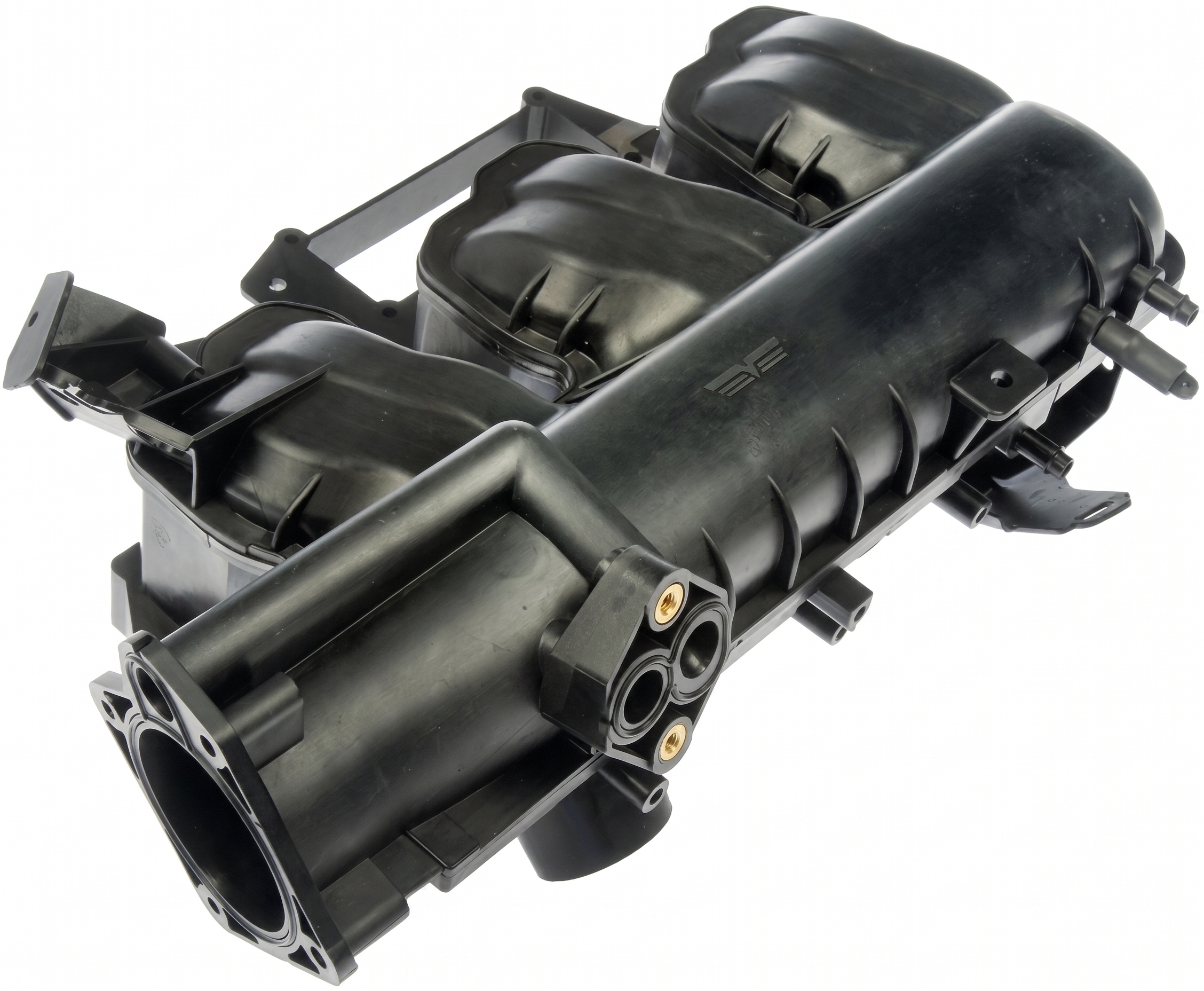
- Leaking Upper and Lower Intake Manifold Gaskets 🔴 High Probability The original rubber and plastic gaskets for the 3.0L V6 engine are a known weak point. They become hard, brittle, and compress over time, failing to seal the intake manifold from the cylinder heads, which allows unmetered air to enter the engine.
How to confirm: The most definitive method is to perform a smoke test on the intake system. Smoke will visibly escape from the gasket area. A less precise method is to carefully spray carburetor cleaner around the intake manifold mating surfaces with the engine idling; a change in idle speed indicates a leak.
Typical fix: Replace both the upper and lower intake manifold gaskets. This is a labor-intensive job that provides access to other components; it's wise to also replace the PCV valve and rear spark plugs at the same time.
Est. part cost: $40 - $100 for a full gasket set from brands like Victor Reinz or Fel-Pro. - Cracked or Disconnected PCV Hose/Elbow 🟡 Medium Probability The rubber hoses and elbows in the Positive Crankcase Ventilation (PCV) system are exposed to oil vapor and high engine temperatures, causing them to become brittle and crack, creating a significant vacuum leak.
How to confirm: Visually inspect all PCV hoses, especially any rubber elbows at the back of the intake manifold, for cracks, splits, or mushiness. Listen for a distinct hissing sound in that area while the engine is running.
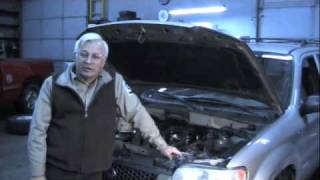
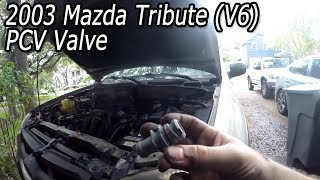
Typical fix: Replace the damaged PCV hose or elbow. Dorman and other aftermarket brands offer direct replacements. 🎬 Watch: Step-by-step guide to replacing the PCV valve and hose.
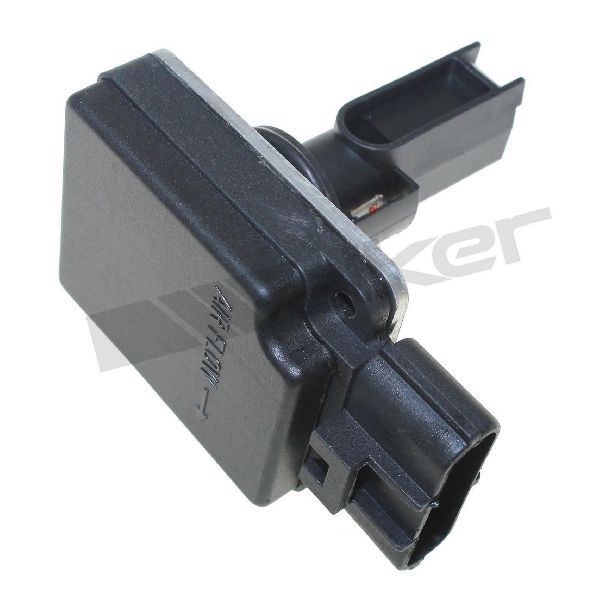
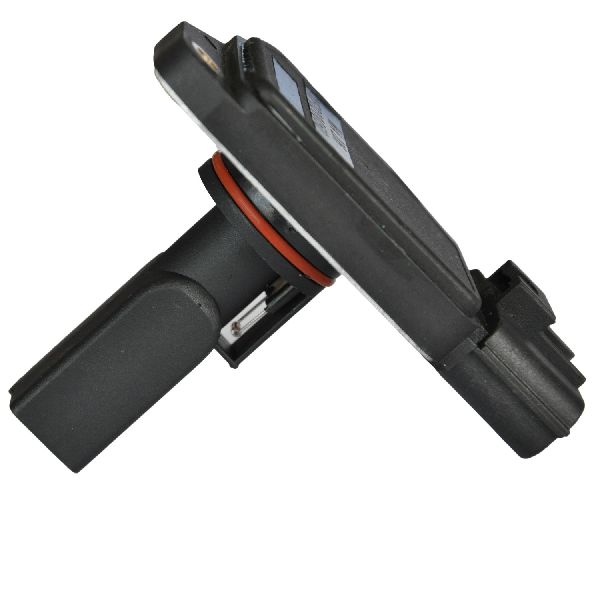
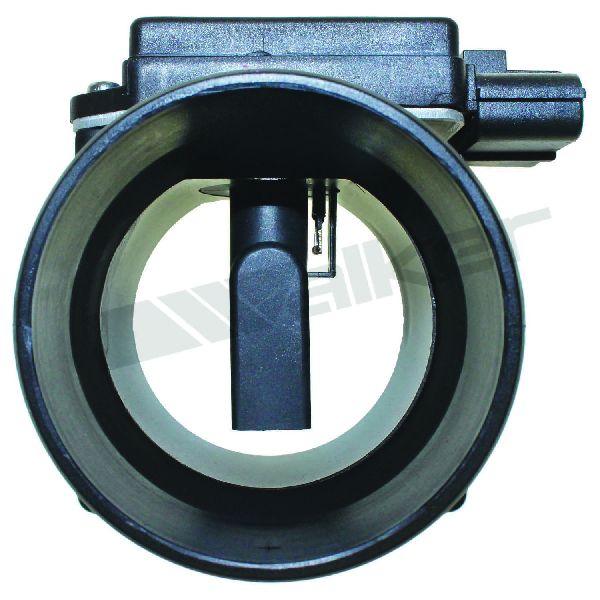
Est. part cost: $10 - $30 - Dirty or Faulty Mass Airflow (MAF) Sensor ⚪ Low Probability While not as common as vacuum leaks on this engine, a MAF sensor contaminated with dirt or oil can under-report the amount of air entering the engine, causing the computer to command less fuel than needed.
How to confirm: Remove the MAF sensor from the intake tube and inspect the delicate wires for any debris or film. A scan tool can also show irrational MAF readings. Cleaning is a good first step before replacement.
Typical fix: Clean the sensor using only a dedicated MAF sensor cleaner spray. Do not touch the sensor wires. If cleaning does not resolve the issue, replace the sensor with a quality part from a brand like Motorcraft or Hitachi.
Est. part cost: $10 for cleaner, $60 - $150 for a new sensor. - Weak Fuel Pump or Clogged Fuel Filter ⚪ Low Probability If the fuel system cannot deliver adequate pressure or volume, the engine will run lean. This is less common than vacuum leaks but becomes more likely on higher-mileage vehicles. In some Mazda vehicles, a damaged fuel pump has been known to send debris into the high-pressure pump, triggering P0171 as noted in NHTSA ODI #11517077.
How to confirm: Connect a fuel pressure gauge to the fuel rail's test port (Schrader valve), if equipped. Note that some models may not have a test port, requiring an adapter. Check that the pressure remains stable under load (snap throttle test); a significant drop indicates a problem.
Typical fix: Replace the fuel filter first, as it is a routine maintenance item. If pressure is still low, the fuel pump assembly likely needs to be replaced.
Est. part cost: $20 - $40 for a fuel filter, $150 - $300 for a fuel pump assembly.
Rare But Worth Checking
- Faulty Upstream Oxygen Sensor (O2 Sensor): A lazy or failing O2 sensor can incorrectly report a lean condition, causing the computer to add fuel unnecessarily. However, the O2 sensor is often working correctly and reporting a real lean condition caused by something else. It should be tested, not replaced outright.
- Exhaust Leak Before the O2 Sensor: A crack in the exhaust manifold or a leaking exhaust gasket can allow outside air to be pulled into the exhaust stream. The O2 sensor will detect this extra oxygen and incorrectly report a lean mixture.
Diagnosis Steps
- Check for other stored trouble codes. The presence of P0174 is a major clue pointing towards a vacuum leak.
- With the engine running, listen for an audible hissing sound around the intake manifold and vacuum hoses.
- Visually inspect the air intake tube between the air filter box and the throttle body for cracks or loose clamps.
- Inspect all accessible vacuum lines and PCV hoses for cracks, especially rubber elbows connected to the intake manifold.
- Perform a smoke test. This is the most effective way to find vacuum leaks. Feed smoke into the intake system and look for it escaping from the intake manifold gaskets, PCV system, or other hoses.
- If no vacuum leaks are found, clean the Mass Airflow (MAF) sensor with dedicated MAF cleaner.
- If the code persists, test the fuel pressure to rule out a weak fuel pump or clogged filter.
- As a final step, use a scan tool to observe the upstream O2 sensor's voltage to ensure it is fluctuating properly and not stuck in a lean reading.
Parts You'll Likely Need
- Intake Manifold Gasket Set (Upper and Lower) — This is the most common failure point on the 3.0L V6 engine that causes code P0171, often along with P0174. 🎬 Watch: Diagnosing P0171 and P0174 lean codes on this engine. The original gaskets degrade and leak unmetered air.
Trusted brands: Fel-Pro, Victor Reinz, Mahle
OEM price range: $80-$150
Aftermarket price range: $40-$100 - PCV Hose / Elbow — These rubber components frequently crack due to heat and age, creating a significant vacuum leak that is a common cause of lean codes.
Trusted brands: Dorman, Motorcraft
OEM price range: $25-$50
Aftermarket price range: $10-$30 - Mass Airflow (MAF) Sensor Cleaner — Used to clean a potentially dirty MAF sensor, which is a low-cost diagnostic step before considering replacement of the sensor itself.
Trusted brands: CRC, WD-40 Specialist
Aftermarket price range: $10-$15
Related Codes That Often Appear With This One
- P0174 — System Too Lean (Bank 2). This is the sister code to P0171. When both P0171 and P0174 are present, it strongly indicates a large vacuum leak (like intake gaskets or a PCV hose) that is affecting the entire engine, not just one bank.
- P0300 — Random/Multiple Cylinder Misfire. A severe lean condition starves the cylinders of the proper fuel mixture, which can lead to incomplete combustion and misfires across multiple cylinders. Manufacturer Bulletin #MT-004-22 notes that P0171 may frequently be accompanied by P030X misfire codes.
Technical Service Bulletins (TSBs) & Recalls
- While no TSB is specifically for the Mazda Tribute P0171, Ford issued TSB 03-16-1 for similar engines, acknowledging intake gasket leaks as a cause for P0171/P0174, indicating it was a known issue on this engine family.
- Manufacturer Bulletin #MT-004-22 for other Mazda models also addresses the Check Engine Light being on with DTC P0171 and possibly P030X misfire codes, providing a standardized inspection and repair procedure.
Platform-Specific Known Issues
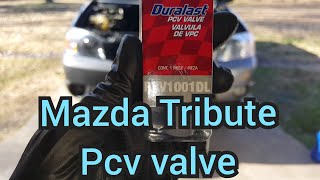
- The design of the 3.0L V6 requires removal of the upper intake manifold to access the rear bank of spark plugs. Because of this, it is highly recommended to replace the spark plugs and the PCV valve when replacing the intake gaskets to save on future labor. 🎬 See this video to locate the PCV valve on your V6.
Mechanic-Grade Diagnostic Values
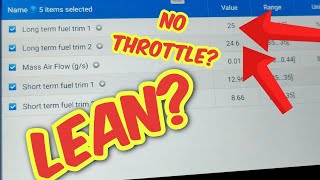
- Long-Term Fuel Trim (LTFT) and Short-Term Fuel Trim (STFT) — expected: Should be close to 0% on a healthy engine.. Failure: The PCM will typically set code P0171 when total fuel trim (LTFT + STFT) exceeds +25%. High positive trims at idle that decrease with RPM suggest a vacuum leak. High trims that worsen with RPM point to a fuel delivery or MAF issue.
- Mass Airflow (MAF) Sensor Reading at Idle — expected: Approximately 3.0 to 4.5 grams/second (g/s) for a 3.0L engine at normal operating temperature.. Failure: A reading significantly below the engine's displacement in liters (e.g., < 3.0 g/s) at idle suggests the sensor is under-reporting airflow, which can be caused by contamination or a failing sensor.
- Upstream Oxygen Sensor (O2S11) Voltage — expected: Should fluctuate rapidly and consistently between approximately 0.1 volts (lean) and 0.9 volts (rich) once the engine is in closed loop.. Failure: A sensor that is stuck low (e.g., below 0.2V) and does not fluctuate is indicating a constant lean condition. This could be a failed sensor or it could be accurately reporting a major vacuum leak or fuel delivery problem.
- Fuel Pressure — expected: While specific PSI values are not readily available, this returnless system's pressure should remain stable during a snap throttle test (revving the engine in park).. Failure: A significant drop in fuel pressure when the engine is revved indicates a weak fuel pump or a clogged fuel filter that cannot keep up with demand. NHTSA ODI #11523568 describes a scenario where a vehicle lacked RPM power and threw both P0171 and P0192 (low fuel rail pressure).
Hidden / Shadow Codes Worth Checking
- Mode $06 Data: This is not a trouble code but a set of test results from the PCM's self-diagnostics. For a P0171, check test IDs related to the O2 sensors (e.g., TID $01 for sensor response) and the EGR system. A failing value in Mode $06 can indicate a component is on the verge of failure before a specific DTC is set, providing valuable diagnostic clues. (see via A scan tool with Mode $06 viewing capability is required.)
Scan Tool Commands That Help
- Ford IDS, FORScan, or other professional scan tool: Clear/Reset KAM (Keep Alive Memory) — After replacing a part like an intake gasket or MAF sensor, resetting the KAM is crucial. This action erases the long-term fuel trim adjustments the PCM has learned to compensate for the old fault. It forces the system to start fresh, allowing you to immediately see if the new part has corrected the fuel trims, rather than waiting several drive cycles.
Wiring & Ground Locations
- G108 — Located on the firewall in the rear of the engine compartment.. This is a primary engine ground. A corroded or loose connection here can affect the PCM and various sensors, potentially causing erratic readings that could contribute to a lean code.
- G105 / G106 / G107 — Located in the left and right front corners of the engine compartment.. These grounds serve various components in the engine bay. Poor grounding for sensors like the MAF or O2 sensor heaters can lead to incorrect signals being sent to the PCM.
- PCM Ground — The Powertrain Control Module (PCM) has its own dedicated ground wires within the harness, often terminating at a major chassis or engine ground point like G108.. The PCM is the brain of the engine management system. If its ground reference is unstable, all of its calculations for fuel injection and air measurement will be unreliable, potentially leading to false lean codes.
Documented NHTSA Reports
- NHTSA ODI #11505265 — An owner reported that their vehicle stalled while driving and would not restart. Diagnostics revealed P0171 and P0192 (low fuel rail pressure), which the owner attributed to a defective fuel pump.
- NHTSA ODI #11523568 — A report describes a vehicle lacking RPM power where a mechanic found P0171 and P0192 codes, indicating a lean condition coupled with low fuel rail pressure.
- NHTSA ODI #11517077 — In this report, a dealership informed an owner that P0171 was caused by a damaged fuel pump that sent debris into the high-pressure pump.
Real Owner Repair Stories
- mazdatribute.us forum user (2006 Mazda Tribute) — Check Engine Light with P0171, audible hissing noise from engine bay.
❌ Tried (didn't work) Initial visual inspection did not immediately reveal the leak.
✅ What actually fixed it The user was advised that the symptoms strongly pointed to a vacuum leak. The common culprits on this vehicle are the intake manifold gaskets or a cracked air intake hose between the air filter box and the throttle body. - YouTube video by 'Fix It Angel' (2005 Ford Escape 3.0L V6) — P0171 and P0174 (both banks lean), rough idle.
❌ Tried (didn't work) The owner was about to perform the labor-intensive intake manifold gasket replacement.
✅ What actually fixed it Before tearing down the engine, a final inspection revealed a large, disconnected PCV vacuum hose at the back of the engine. Reconnecting the hose provided an immediate fix, resolving the massive vacuum leak and clearing the codes after a reset.
"I Checked Everything" — The Actual Cause
- In a documented case on a similar Ford engine, a persistent P0171 code remained after replacing the MAF sensor, fuel injectors, O2 sensors, and fuel pump. A smoke test of the intake showed no leaks. The actual root cause was an exhaust leak from a rusted and broken upstream O2 sensor bung. This allowed outside air to be sucked into the exhaust pipe *before* the O2 sensor, causing the sensor to read a false lean condition and command the PCM to add fuel it didn't need.
OEM Part Supersession History
YF1Z-9439-AC→3F1Z-9439-AA— This is the part number for the lower intake manifold gasket. Ford often updates part numbers to reflect minor revisions in material or design for improved longevity.
Model Year Variations Within This Range
- 2001-2004: These earlier model years were subject to a recall for premature subframe rust, which could cause a major structural failure. While not directly related to the P0171 code, it is a critical inspection point for any owner or potential buyer of these specific years.
- 2005-2006: For the 2005 model year, the 3.0L V6 engine was modified to improve fuel consumption by over 10%. While the core design and common P0171 causes (intake gaskets) remained the same, there may be minor differences in some components or PCM software compared to the 2001-2004 models.
Diagnostic Flowchart
Used vs. New Parts: Buying Guide for This Vehicle
When a used part is the smart pick: For this repair, used parts are generally not recommended for the primary failure items. However, if a more expensive component is suspected, a used part from a junkyard can be a cost-effective diagnostic tool. For example, a used MAF sensor or fuel injector can be swapped in to see if the problem is resolved before purchasing a new, expensive part.
Donor-vehicle mileage cap: roughly under 100000 miles for the part to have meaningful remaining life.
What to inspect on the donor part:
- Check the vehicle for signs of a major collision; avoid parts from wrecked front-ends.
- Look at the overall condition of the donor vehicle; a clean, well-maintained car is a better source.
- For a MAF sensor, ensure the connector pins are clean and the sensor housing isn't cracked.
- Ask the salvage yard if they offer a short warranty or exchange policy.
OEM-only on this vehicle (don't cheap out):
- Intake Manifold Gaskets: Always buy new. These are single-use wear items and the cause of the problem.
- PCV Hoses/Elbows: Always buy new. The rubber degrades with heat and age.
- Fuel Filter: Always buy new. This is a routine maintenance item.
Aftermarket brands forum-validated for this vehicle:
- Intake Gaskets: Fel-Pro, Victor Reinz, Mahle
- MAF Sensor: Motorcraft (OEM), Hitachi, Delphi
- PCV Components: Dorman, Motorcraft
Brands owners have reported issues with on this vehicle:
- Unbranded or 'white box' electronic sensors (like MAF or O2 sensors) from online marketplaces. While cheap, they have a high failure rate and can cause incorrect diagnostic readings, making the problem harder to solve.
Real Owner Stories
Aggregated from forums and TSBs cited above. Mileages and costs reflect what owners reported in those sources.
2003 Mazda Tribute LX V6 3.0L
Symptoms: Check engine light with codes P0171 and P0300 (random misfire); rough idle and stalling at stops on a cold engine.
What fixed it: Replaced the cracked air intake hose between the air filter and the throttle body.
Source hint: Mazdas247 forum thread titled 'FIXED - On cold engine start: rough idle, stalling at stop, low RPMs, high STFT'
Ford Escape 3.0L V6 (Tribute equivalent)
Symptoms: Persistent P0171 and P0131 codes that remained after replacing the oxygen sensor.
What fixed it: Replaced the upper and lower intake manifold gaskets to resolve a vacuum leak.
Source hint: Escape City / Go-Parts Aggregation forum post regarding P0131 on 2001-2007 Ford Escape 3.0L V6
Mazda Tribute
Symptoms: Check engine light with codes P0171 and P0455; engine ran better but not perfect after initial repairs.
What fixed it: Replaced a ripped intake tube with an aftermarket part and cleaned the MAF and throttle body.
Source hint: Mazdas247 forum post in 'Canadian EGR valve exposed'
2004 Mazda Tribute — 100000 miles
Symptoms: Stumbling at idle while stopped at traffic lights; Check Engine Light with codes P0171 and P0174.
What fixed it: Inspection of the air intake tube from the air cleaner to the throttle body for cracks.
Source hint: Mazda Forum owner report
Related OBD-II Codes
Frequently Asked Questions
Is there a TSB for the P0171 code on my Mazda Tribute 3.0L V6?
What is the most common cause of a lean condition on the Tribute 3.0L V6?
I hear a hissing sound from the engine bay at idle; what could that be?
Should I replace any other parts while fixing the intake manifold gaskets?
Can I just clean the MAF sensor to fix the P0171 code?
How can I confirm if my intake gaskets are leaking without a smoke machine?
Helpful Videos
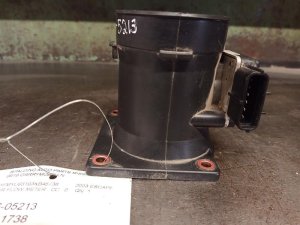
Used OEM Parts in Stock
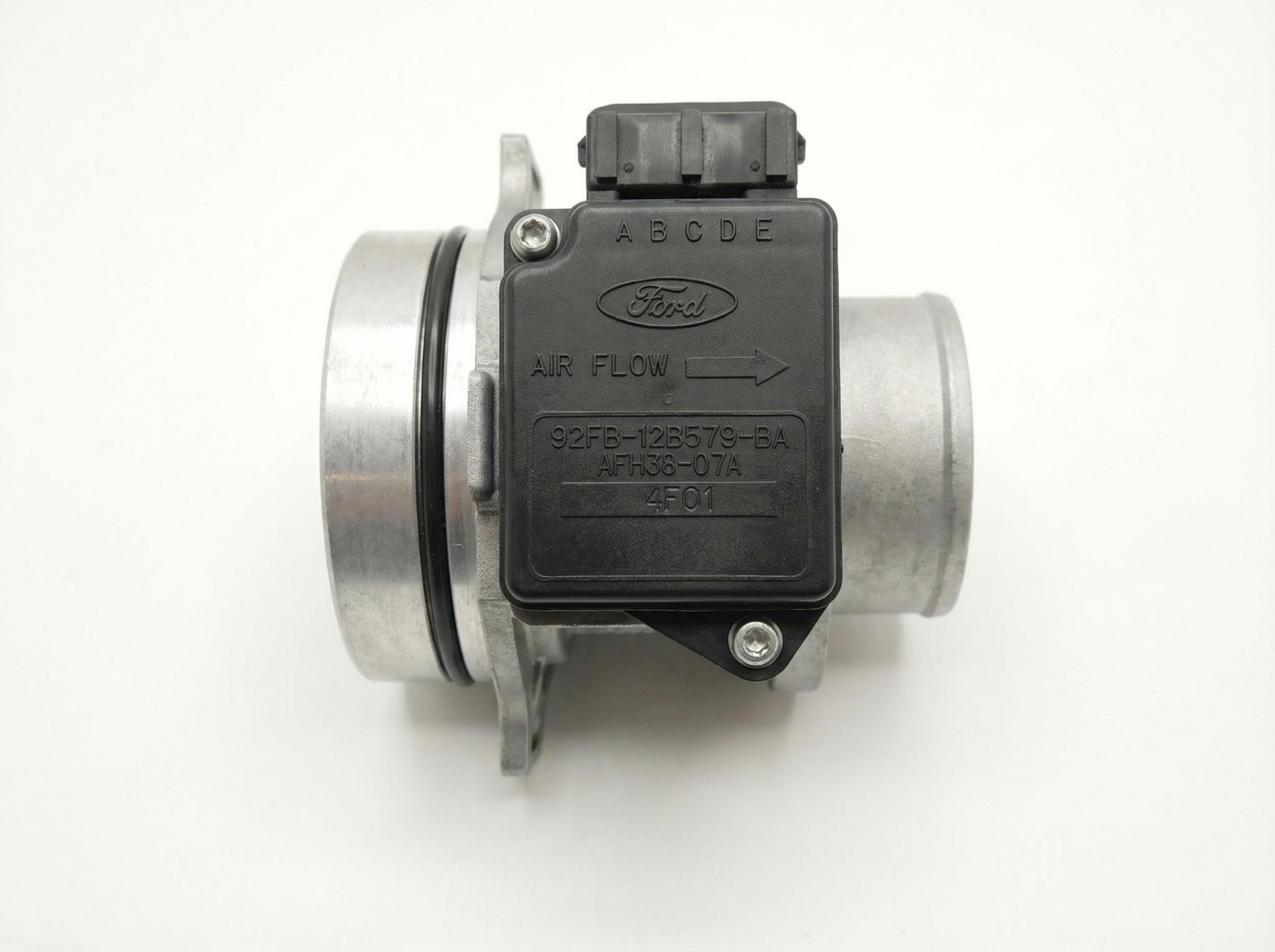


New Aftermarket Parts Available



The information in this article is provided for general reference and educational purposes only. Vehicle specifications, procedures, and part compatibility can vary by production date, trim level, and region. Always consult your vehicle's factory service manual and verify part numbers before purchasing or performing repairs. Safety-critical components such as airbags, seat belts, and braking systems should be installed by a qualified professional.
- Mazda Tribute:
- 🎬 Helpful Videos
- 🛍️ Shop This Part
- What's Unique About the 2001-2006 Mazda Tribute
- Symptoms You May Notice
- Most Likely Causes
- Rare But Worth Checking
- Diagnosis Steps
- Parts You'll Likely Need
- Related Codes That Often Appear With This One
- Technical Service Bulletins (TSBs) & Recalls
- Platform-Specific Known Issues
- Mechanic-Grade Diagnostic Values
- Hidden / Shadow Codes Worth Checking
- Scan Tool Commands That Help
- Wiring & Ground Locations
- Documented NHTSA Reports
- Real Owner Repair Stories
- "I Checked Everything" — The Actual Cause
- OEM Part Supersession History
- Model Year Variations Within This Range
- Diagnostic Flowchart
- Used vs. New Parts: Buying Guide for This Vehicle
- Real Owner Stories
- 2003 Mazda Tribute LX V6 3.0L
- Ford Escape 3.0L V6 (Tribute equivalent)
- Mazda Tribute
- 2004 Mazda Tribute — 100000 miles
- Related OBD-II Codes
- Frequently Asked Questions
- 🎟️ Get 5% Off