

P0171 on 2002-2005 Kia Sedona 3.5L V6: Causes and Fixes for a Lean Engine
For a 2002-2005 Kia Sedona, code P0171 is most often caused by a vacuum leak from failed intake manifold gaskets. This is a labor-intensive but common repair for the 3.5L V6 engine. Other common causes include cracked vacuum hoses (especially the PCV hose) and a dirty MAF sensor. Expect to pay a professional for the intake gasket repair, as it requires significant disassembly.
- P0171 on this Sedona is almost always caused by a vacuum leak.
- The most likely source of the vacuum leak is a failed intake manifold gasket, a known weak point on this engine.
- Before replacing any sensors, perform a smoke test to check for leaks. This will save you from buying unnecessary parts.
- If you have both P0171 and P0174 codes, it's a near certainty that the problem is a major vacuum leak affecting the entire engine.
- Replacing the intake manifold gaskets is a difficult job (DIY Difficulty 4/5) and may be best left to a professional.
What's Unique About the 2002-2005 Kia Sedona
The first-generation Kia Sedona with the 3.5L V6 (a variant of the Hyundai Sigma engine family) is well-known for developing vacuum leaks as it ages. The primary culprit is the intake manifold gasket system. These gaskets, made of rubber and plastic, become hard and brittle over many heat cycles, leading to cracks that allow unmetered air to enter the engine. This issue is so prevalent that it's one of the first things experienced owners and mechanics suspect when a P0171 code appears on this specific vehicle, often accompanied by P0174 for the second bank.
Symptoms You May Notice
- Check Engine Light is on
- Rough or unstable idle
- Hesitation or stumbling during acceleration
- Loss of engine power
- Hissing or whistling sound from the engine bay
- Reduced fuel economy
- Difficulty starting
- Engine stalling, especially at idle or when stopping
- Replacing the front oxygen sensor without first checking for vacuum leaks or fuel delivery issues. The sensor is usually just doing its job of reporting the lean condition.
Most Likely Causes
- Leaking Intake Manifold Gaskets 🔴 High Probability The original gaskets on the 3.5L V6 are made of materials that degrade over time with heat, becoming brittle and cracking. This allows unmetered air to leak into the intake, which is a direct cause of lean codes P0171 and P0174. Coolant also passes through the manifold, so a failed gasket can lead to coolant leaks and overheating.
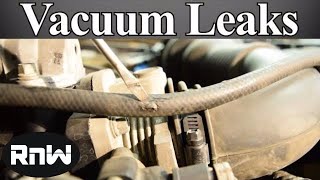
How to confirm: Perform a smoke test by injecting smoke into the intake system and watching for leaks around the intake manifold sealing surfaces. Alternatively, with the engine running, carefully spray short bursts of brake cleaner or an unlit propane torch around the gasket area; a change in engine idle indicates a leak. This is the most definitive way 🎬 See how to find and fix vacuum leaks fast. to confirm a vacuum leak.
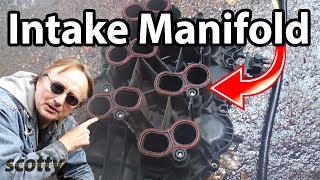
Typical fix: Replace the upper (plenum) and lower intake manifold gaskets. This is a labor-intensive job. 🎬 Watch this walkthrough on replacing an intake manifold gasket. While the manifold is off, it is wise to also replace the spark plugs, spark plug wires, and valve cover gaskets to save on future labor costs.
Est. part cost: $40-$100 for a full gasket set - Cracked or Disconnected Vacuum Hoses 🟡 Medium Probability Rubber hoses become brittle and crack with age and exposure to engine heat. The PCV (Positive Crankcase Ventilation) hose is a common failure point on this engine, leading to a significant vacuum leak.
How to confirm: Visually inspect all vacuum lines connected to the intake manifold for cracks, splits, or loose connections. Listen for a hissing sound. A smoke test will definitively reveal any leaks.
Typical fix: Replace the damaged hose section. The PCV hose is often a pre-formed part and should be replaced with an OEM or equivalent part for proper fit.
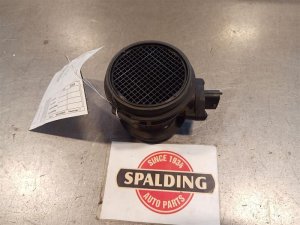
Est. part cost: $10-$30 for a specific hose like the PCV hose - Dirty or Faulty Mass Airflow (MAF) Sensor ⚪ Low Probability The MAF sensor can become contaminated with dirt and oil over time, causing it to inaccurately measure the air entering the engine. This leads the computer to calculate the wrong amount of fuel. This is a common issue across many vehicles, not just the Sedona.
How to confirm: Remove the sensor from the intake tube and inspect the hot wire elements. If they appear dirty, clean them ONLY with dedicated MAF sensor cleaner. Do not touch the wires. If cleaning doesn't help, the sensor may need to be replaced. Monitoring the sensor's output with a scan tool can also help diagnose a failure.
Typical fix: Clean the MAF sensor with a specialized cleaner. If the problem persists, replace the MAF sensor. The OEM part is made by Bosch.
Est. part cost: $10 for cleaner, $60-$150 for a new aftermarket sensor, $250+ for OEM - Low Fuel Pressure ⚪ Low Probability A weak fuel pump or a clogged fuel filter can restrict fuel flow, preventing the engine from getting the amount of fuel it needs. On this vehicle, the fuel filter is part of the fuel pump assembly inside the gas tank. While not exceptionally common, fuel pump failure can occur on any vehicle.
How to confirm: Connect a fuel pressure gauge to the fuel rail and check if the pressure is within the manufacturer's specifications (typically 35-45 psi for this era of vehicle, but verify specific specs). The reading should be stable and not drop under load.
Typical fix: If pressure is low, the entire fuel pump module (which includes the filter) typically needs to be replaced.
Est. part cost: $150-$300
Rare But Worth Checking
- Faulty Front Oxygen (O2) Sensor: The O2 sensor's job is to report the air/fuel mixture. While it can fail, it's more often correctly reporting a lean condition caused by something else. It is a common misdiagnosis to replace the O2 sensor first.
- Clogged Fuel Injectors: If injectors on Bank 1 become partially clogged, they won't deliver enough fuel. This is less common than vacuum leaks but can happen over time, especially if fuel quality has been poor.
- Exhaust Leak: An exhaust leak before the upstream O2 sensor can pull in outside air, tricking the sensor into thinking the engine is running lean. This is less common than an intake leak but is possible.
Technical Service Bulletins (TSBs) & Recalls
While specific to other models in the Kia lineup, manufacturer service bulletins often highlight recurring software or sensor issues that can trigger lean codes. For instance, TSB Bulletin #TSB-ENG160R1 provides information regarding an ECU software upgrade for vehicles with MIL on and DTC P0171.
Diagnosis Steps
- Read the freeze frame data with an OBD-II scanner to see the engine conditions when the code was set. Pay close attention to Long Term Fuel Trim (LTFT) 🎬 Watch: A professional guide to diagnosing P0171 lean codes. and Short Term Fuel Trim (STFT) values. High positive numbers (e.g., >15%) confirm the lean condition.
- Visually inspect the engine bay for any obvious issues, like cracked or disconnected vacuum hoses (especially the PCV and brake booster lines) or a cracked air intake boot.
- Listen for a hissing sound at idle, which indicates a vacuum leak.
- Perform a smoke test to definitively identify the source of any vacuum leaks. Pay close attention to the intake manifold gaskets, as this is the most common failure point.
- If no vacuum leaks are found, inspect and clean the Mass Airflow (MAF) sensor using dedicated MAF sensor cleaner.
- If the issue persists, test the fuel pressure at the fuel rail to check for a weak fuel pump or clogged filter.
- As a final step, you can monitor the live data from the front O2 sensor to see if it is responding correctly, but only after ruling out all other causes.
Parts You'll Likely Need
- Intake Manifold Gasket Set
(OEM #Lower: 28411-39002; Upper (Plenum): 29215-39010)— This is the most frequent cause of P0171 on the 3.5L V6 due to the original gaskets degrading over time and causing vacuum leaks.
Trusted brands: Fel-Pro, Victor Reinz, Kia/Hyundai Genuine
OEM price range: $30-$50 for the set
Aftermarket price range: $20-$40 for the set - Mass Air Flow (MAF) Sensor
(OEM #28100-39450 (Bosch is the OEM manufacturer, part 0280218090))— Can become dirty or fail, providing incorrect airflow data to the computer, leading to a lean mixture.
Trusted brands: Bosch, Delphi, NGK, Spectra Premium
OEM price range: $250-$300
Aftermarket price range: $60-$150 - Fuel Pump Assembly — A failing pump or clogged integrated filter can cause low fuel pressure, leading to a lean condition.
Trusted brands: Delphi, Denso, Carter
OEM price range: $300-$450
Aftermarket price range: $150-$300
Related Codes That Often Appear With This One
- P0174 — System Too Lean (Bank 2). This code is the counterpart for the other engine bank. When both P0171 and P0174 are present, it strongly suggests a 'global' problem affecting both banks, such as a large vacuum leak (like the intake manifold gasket), a faulty MAF sensor, or low fuel pressure.
Platform-Specific Known Issues
- The intake manifold gaskets on the 3.5L V6 are a known, high-probability failure item that directly causes codes P0171 and P0174.
- The labor to replace the intake gaskets is significant, so it is highly recommended to replace other 'while you're in there' parts like spark plugs, spark plug wires, and valve cover gaskets to save on future labor costs.
- The 3.5L Sigma V6 engine is a clone of the Mitsubishi 6G74 engine, and many internal parts are interchangeable.
Mechanic-Grade Diagnostic Values
- Fuel Injector Coil Resistance — expected: 13 - 16 Ohms. Failure: A reading outside of this range indicates a faulty injector coil.
- Long Term Fuel Trim (LTFT) at Idle — expected: Close to 0%, typically within +/- 10%. Failure: Sustained positive values greater than +15% to +25% confirm a significant lean condition that the PCM is trying to correct. One technician reported seeing LTFT values at +38% on a Kia with a lean code.
Real Owner Repair Stories
- iATN (International Automotive Technicians Network) (2002 Kia Sedona EX 3.5L) — Persistent P0171 and P0174 lean codes.
❌ Tried (didn't work) Cleaned the MAF sensor., Performed a smoke test which revealed no vacuum leaks.
✅ What actually fixed it The technician suspected a bad MAF sensor despite the clean smoke test, but the final fix was not posted in the thread. This highlights that even with a negative smoke test, other components are still suspect. - YouTube video by Artistry Photography (2005 Kia Sedona 3.5L) — P0171 and P0172 (likely meant P0174) system lean codes.
❌ Tried (didn't work) Initial visual inspection did not reveal the leak source.
✅ What actually fixed it The root cause was a leak in the intake plenum gasket. The video demonstrates how spraying cleaner on the plenum seam caused it to seep out, indicating a path for unmetered air to enter. The fix was to remove the intake manifold and replace the gaskets. - NHTSA ODI #11579942 — An owner reported that the check engine light came on with code P0171, which measures air in the fuel system and stated "bank 1 running lean."
- NHTSA ODI #11581569 — Multiple reports indicate that P0171 can appear alongside P0138 (O2 sensor circuit high), P0087 (fuel pressure too low), and P0036, often related to frequent fuel issues.
- NHTSA ODI #11716465 — An owner expressed concern over warning lights P0171, P0174, and P0191, noting online reports of engine issues related to carbon buildup.
- NHTSA ODI #11597574 — A report describes a recurring issue where codes P0171 and P0191 popped into the vehicle's system shortly after leaving a service facility.
"I Checked Everything" — The Actual Cause
- In a documented case on the International Automotive Technicians Network, a technician working on a 2002 Kia Sedona 3.5L with persistent P0171/P0174 codes performed a smoke test and found no vacuum leaks. Despite the negative smoke test, the lean condition persisted, leading the technician to suspect a faulty MAF sensor as the next logical step.
Diagnostic Flowchart
Other Known Issues on This Vehicle
Issues unrelated to this code that are worth knowing about as an owner of this generation:
- Crankshaft Position Sensor (CKP) Failure 🔴 High — Common failure item. Can cause intermittent stalling or a no-start condition, often when the engine is warm. Onset can be anywhere from 75,000 miles onward.
- Automatic Transmission Problems 🔴 High — Reported by numerous owners, often manifesting as harsh shifting, slipping, or complete failure, typically over 100,000 miles.
- Electrical System Issues 🟠 Medium — This is one of the most complained-about areas for this generation, with 108 complaints logged with the NHTSA.
- Brake System Complaints 🟠 Medium — A high number of NHTSA complaints (97) relate to the braking system. Early models used a front disc/rear drum setup that was prone to issues. (Ref: 03V158000 (Recall for potential brake booster issue))
Used vs. New Parts: Buying Guide for This Vehicle
When a used part is the smart pick: For this repair, obtaining used parts is generally not recommended for the common failure items. Gaskets, hoses, and sensors should be purchased new. A used intake manifold assembly might be considered if the original is physically cracked, but it must be fitted with new gaskets.
Donor-vehicle mileage cap: roughly under 100000 miles for the part to have meaningful remaining life.
What to inspect on the donor part:
- For a used intake manifold, inspect for any cracks, especially around mounting points.
- Ensure all threaded holes are intact and not stripped.
- Check for warping by placing a straightedge across the mating surfaces.
OEM-only on this vehicle (don't cheap out):
- While not strictly required, using OEM (Kia/Hyundai) or OEM-supplier (Bosch for the MAF) parts is highly recommended for sensors like the Mass Airflow Sensor to ensure correct calibration and avoid compatibility issues.
Aftermarket brands forum-validated for this vehicle:
- Fel-Pro and Victor Reinz are well-regarded for intake manifold gasket sets.
- Bosch, Delphi, and NGK are reputable brands for Mass Airflow Sensors.
Brands owners have reported issues with on this vehicle:
- Avoid unbranded, 'white-box' electronic sensors like MAF sensors from online marketplaces, as they often have high failure rates or incorrect calibrations that can make diagnosis more difficult.
Real Owner Stories
Aggregated from forums and TSBs cited above. Mileages and costs reflect what owners reported in those sources.
2003 Hyundai XG350 3.5L V6
Symptoms: The owner experienced a long-term battle with a P0171 code and engine misfiring.
What fixed it: The owner attempted to fix the issue by replacing numerous parts including the MAF sensor, fuel pump, and ignition coils.
Source hint: Hyundai-Forums.com: A user with a 2003 Hyundai XG350 (same engine) details a long battle with P0171, replacing numerous parts including the MAF, fuel pump, and coils
Related OBD-II Codes
Frequently Asked Questions
Why is my 2002-2005 Kia Sedona 3.5L V6 prone to P0171 and P0174 codes?
I hear a hissing sound from the engine bay of my Sedona; is this related to the P0171 code?
Should I replace other parts while fixing the intake manifold gaskets on my 3.5L V6?
Can a dirty MAF sensor cause P0171 on the Sedona, and how should I clean it?
Is the fuel filter a separate serviceable part on the 2002-2005 Sedona?
Are there other vehicles that share this same P0171 issue with the Sedona?
Helpful Videos
Used OEM Parts in Stock


New Aftermarket Parts Available


The information in this article is provided for general reference and educational purposes only. Vehicle specifications, procedures, and part compatibility can vary by production date, trim level, and region. Always consult your vehicle's factory service manual and verify part numbers before purchasing or performing repairs. Safety-critical components such as airbags, seat belts, and braking systems should be installed by a qualified professional.
- Kia Sedona:
- 🎬 Helpful Videos
- 🛍️ Shop This Part
- What's Unique About the 2002-2005 Kia Sedona
- Symptoms You May Notice
- Most Likely Causes
- Rare But Worth Checking
- Technical Service Bulletins (TSBs) & Recalls
- Diagnosis Steps
- Parts You'll Likely Need
- Related Codes That Often Appear With This One
- Platform-Specific Known Issues
- Mechanic-Grade Diagnostic Values
- Real Owner Repair Stories
- "I Checked Everything" — The Actual Cause
- Diagnostic Flowchart
- Other Known Issues on This Vehicle
- Used vs. New Parts: Buying Guide for This Vehicle
- Real Owner Stories
- 2003 Hyundai XG350 3.5L V6
- Related OBD-II Codes
- Frequently Asked Questions
- 🎟️ Get 5% Off