

P0171 on 2004-2008 Ford F-150: System Too Lean (Bank 1) Causes and Fixes
Code P0171 on a 2004-2008 F-150 almost always points to a vacuum leak from a cracked rubber PCV hose elbow at the back of the intake manifold. If not the PCV hose, check for a corroded Fuel Pump Driver Module (FPDM) located on the frame crossmember above the spare tire, a very common failure on these trucks.
- For a P0171 on a 2004-2008 F-150, immediately suspect a vacuum leak from a cracked PCV hose elbow at the back of the engine.
- If P0171 is accompanied by P0174 (both banks lean), the cause is almost certainly a vacuum leak, a dirty MAF sensor, or a fuel delivery problem.
- Before replacing the fuel pump, always inspect the Fuel Pump Driver Module (FPDM) above the spare tire for corrosion and damage, as it is a very common failure point.
- Do not replace the O2 sensor first; it is typically reporting the problem correctly, not causing it.
- Cleaning the MAF sensor and performing a smoke test are highly effective, low-cost diagnostic steps.
What's Unique About the 2004-2008 Ford F-150

The 11th generation F-150 (2004-2008) is particularly known for two common failures that cause a P0171 code. The first is a vacuum leak from a specific rubber PCV (Positive Crankcase Ventilation) hose elbow that deteriorates and cracks. This hose is located in a hard-to-see spot on the back of the intake manifold, where intense heat causes it to become brittle. The second major issue is the Fuel Pump Driver Module (FPDM), which Ford mounted directly to a steel frame crossmember above the spare tire. Galvanic corrosion between the module's aluminum body and the steel frame causes the module to crack, allowing water inside and leading to erratic fuel pressure or a no-start condition that sets lean codes.
🎬 Watch: Common causes for P0171 and P0174 lean codesSymptoms You May Notice
- Rough idle, especially when warm
- Hesitation or stumbling during acceleration
- Reduced engine power
- Shuddering during acceleration
- Whistling or hissing noise from the engine bay, indicating a vacuum leak
- Decreased fuel economy
- Engine missing between 1500-2000 RPM under light acceleration
- Replacing the oxygen (O2) sensor. The O2 sensor is usually doing its job correctly by detecting the lean condition. The P0171 code means the sensor is working; the problem lies with the air or fuel delivery that it is measuring.
Most Likely Causes

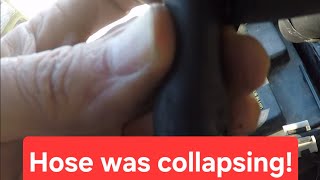
- Cracked or Disconnected PCV Vacuum Hose 🔴 High Probability The rubber elbow on the PCV vacuum line, especially on the 5.4L V8, is located at the back of the intake manifold where it is exposed to high heat. Over time, the rubber becomes brittle, cracks, and creates a significant vacuum leak. This is widely cited in owner forums as the most common cause.
How to confirm: Visually inspect and feel the vacuum hoses connected to the rear of the intake manifold. A hissing sound is a strong indicator. A smoke test is the most effective way to confirm a hard-to-see leak. High positive fuel trims at idle that decrease as RPMs increase strongly suggest a vacuum leak.
Typical fix: Replace the damaged PCV hose assembly. This is often a pre-formed hose with specific bends. The elbow itself is the most common failure point. 🎬 See this walkthrough on replacing the PCV hose assembly
Est. part cost: $20-$50 - Corroded/Failed Fuel Pump Driver Module (FPDM) 🔴 High Probability The FPDM is made of aluminum and was mounted directly to a steel frame crossmember without any insulation. This leads to galvanic corrosion, which cracks the module's housing, allowing water intrusion and causing failure. This results in erratic fuel pressure or no fuel pressure at all, leading to lean codes or a no-start condition.
How to confirm: Lower the spare tire and locate the module on the frame crossmember above where the tire sits. Visually inspect the back of the module for white, powdery corrosion and cracks in the aluminum housing. The module may be physically broken.
Typical fix: Replace the Fuel Pump Driver Module. Aftermarket kits (like Dorman 590-001) include new bolts and rubber standoffs to mount the new module away from the frame, preventing future corrosion.
Est. part cost: $60-$120 - Dirty Mass Airflow (MAF) Sensor 🟡 Medium Probability Oil vapors from the PCV system or fine dust that gets past the air filter can coat the MAF sensor's delicate wires. This is especially noted if using an over-oiled aftermarket air filter. This contamination causes the sensor to under-report the amount of air entering the engine, leading the PCM to command too little fuel.
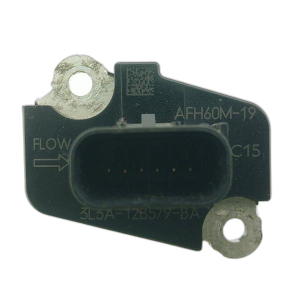
How to confirm: Remove the MAF sensor from the air intake tube and inspect the small wires inside. If they appear dirty, cleaning is warranted. This is a good first step before replacing parts. 🎬 Watch: How to clean the MAF sensor on your truck A faulty MAF may also show a voltage reading with the key on, engine off.
Typical fix: Clean the sensor with a dedicated MAF sensor cleaner spray. Do not touch the wires or use other chemicals like brake cleaner. If cleaning doesn't resolve the issue, the sensor may need to be replaced.
Est. part cost: $10 (cleaner) - $100 (new sensor) - Leaking Intake Manifold Gaskets ⚪ Low Probability While less common than PCV hoses, the intake manifold gaskets (specifically the o-rings) can shrink and harden with age and heat cycles, creating a vacuum leak. This is more common on higher-mileage trucks and can be difficult to detect even with a smoke test.
How to confirm: A smoke test is the most reliable method. You can also try spraying brake cleaner or a propane torch (unlit) around the gasket mating surfaces while monitoring for changes in engine idle speed or fuel trims. A leak here often gets worse when the engine is cold and may seem to improve as the engine warms up and the parts expand.
Typical fix: Replace the intake manifold gaskets. This is a more labor-intensive job.
Est. part cost: $50-$100
Rare But Worth Checking
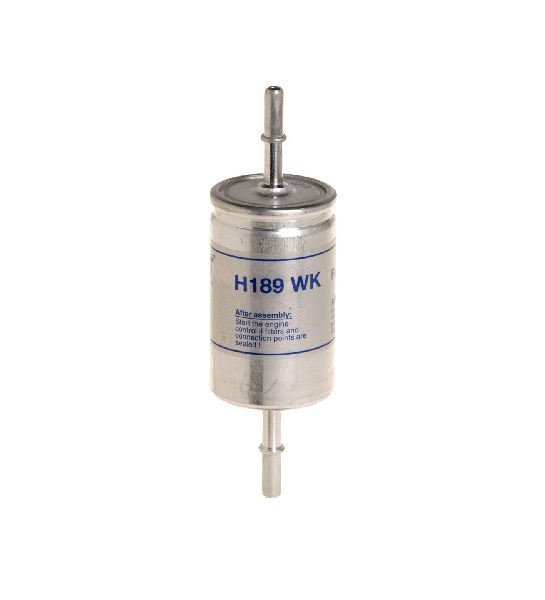
- Weak Fuel Pump or Clogged Fuel Filter: While the FPDM is a more common failure point, a weak fuel pump or a clogged fuel filter can also cause low fuel pressure, leading to a lean condition. Always check the FPDM first on these trucks before condemning the pump.
- Exhaust Leak Before the O2 Sensor: A crack in the exhaust manifold or a leaking manifold gasket can allow outside air to be sucked into the exhaust stream. This extra oxygen crosses the upstream O2 sensor, which incorrectly reports a lean condition to the PCM.
- Failing Fuel Injector: A single clogged or failing fuel injector on Bank 1 can cause a lean condition isolated to that bank. This is less common than a vacuum leak that affects the whole engine but can happen.
- Failing/Stuck Open EVAP Purge Valve: The EVAP purge valve can sometimes stick open, creating a constant vacuum leak that can trigger lean codes P0171 and P0174.
- PCM Software Parameters: In some instances, the Powertrain Control Module (PCM) software itself may cause an illuminated MIL with P0171. Manufacturer records such as TSB 25-2342 and TSB 21-2443 indicate that software level updates may be required to correct lean conditions.
Diagnosis Steps

- Check for other stored trouble codes. If P0174 is also present, focus on causes common to both banks like the MAF, FPDM, or a large vacuum leak.
- Perform a thorough visual and physical inspection of all vacuum hoses in the engine bay, especially the PCV hose assembly at the back of the intake manifold. Listen for a hissing sound.
- If no obvious leaks are found, clean the Mass Airflow (MAF) sensor with dedicated cleaner as a low-cost, high-impact diagnostic step.
- Use a scan tool to monitor short-term (STFT) and long-term (LTFT) fuel trims. High positive numbers at idle (e.g., >20%) that decrease when you raise the engine RPM point strongly to a vacuum leak.
- If fuel trims don't indicate a vacuum leak, inspect the Fuel Pump Driver Module (FPDM). Lower the spare tire and check the module on the frame crossmember for white, powdery corrosion and physical damage.
- If the FPDM appears intact, test fuel pressure at the fuel rail to rule out a weak fuel pump or clogged fuel filter. Expected pressure is around 55 PSI.
- If a vacuum leak is suspected but cannot be found visually, perform a smoke test to inject smoke into the intake system. Smoke will emerge from any leak points, especially around the intake manifold gaskets or PCV hoses.
- As a final step, inspect the exhaust manifolds for cracks or signs of leaking gaskets, which could allow unmetered air to reach the O2 sensor.
Parts You'll Likely Need
- PCV Hose Assembly
(OEM #Motorcraft KM4853 (Varies by year/engine))— This is the most frequent cause of vacuum leaks on the 4.6L and 5.4L engines in this generation due to heat degradation of the rubber elbows.
Trusted brands: Motorcraft, Dorman
OEM price range: $40-$70
Aftermarket price range: $20-$40 - Fuel Pump Driver Module
(OEM #4L3Z-9D370-A, 5L8Z-9D370-A)— The original module corrodes and fails due to its mounting location. This is a very common no-start or lean condition cause for this F-150 generation.
Trusted brands: Motorcraft, Dorman (P/N: 590-001)
OEM price range: $100-$150
Aftermarket price range: $60-$120 - Mass Air Flow Sensor Cleaner — A low-cost first step to eliminate a dirty MAF sensor as the cause before replacing more expensive parts.
Trusted brands: CRC, WD-40 Specialist
OEM price range: N/A
Aftermarket price range: $10-$15 - Intake Manifold Gasket Set
Related Codes That Often Appear With This One
- P0174 — P0174 is "System Too Lean (Bank 2)". When both P0171 and P0174 are present, it strongly indicates a problem that affects the entire engine, such as a major vacuum leak (PCV hose, intake gaskets), a dirty MAF sensor, or a fuel delivery issue (FPDM, fuel pump). Manufacturer TSB 22-2393 notes that P0171 and P0174 can also appear alongside timing or sensor codes like P0364.
- P0300-P0308 — These are misfire codes (P0300 for random misfire, P0301-P0308 for specific cylinders). A severe lean condition can prevent proper combustion, leading to misfires on the affected bank(s). TSB 20-2324 confirms that P0171 and P0174 are frequently stored alongside misfire codes P0300 and P0301-P0306.
Technical Service Bulletins (TSBs) & Recalls
- While no TSB is issued specifically for code P0171, the common cause of a failed Fuel Pump Driver Module (FPDM) is well-documented. Ford acknowledged issues with the FPDM on various models, and while a specific TSB for the F-150's corrosion issue is elusive, its widespread failure is recognized as a primary cause of fuel delivery problems leading to lean codes. TSB 07-21-2014 is also relevant to these engines, addressing spark plug thread repair, which can be related to misfires that sometimes accompany lean codes.
- Manufacturer Bulletin #TSB 25-2342 notes that some vehicles may exhibit an illuminated MIL with DTC P0171 due to the software level of the PCM.
- Bulletin #TSB 21-2443 describes a condition where F-150 vehicles may exhibit P0171 and P0174 due to software parameters in the powertrain control module (PCM).
- Bulletin #TSB 20-2324 addresses a range of codes including P0171, P0174, and P0300, attributing the condition to PCM software.
Platform-Specific Known Issues

- Fuel Pump Driver Module (FPDM) Corrosion: The design flaw of mounting the aluminum FPDM directly to the steel frame causes it to corrode, crack, and fail, leading to fuel delivery problems.
- PCV Hose Elbow Failure: The rubber elbow on the PCV hose at the rear of the intake manifold is a notorious failure point, causing a large vacuum leak that triggers P0171 and P0174.
- PCM Software Calibration: As noted in manufacturer records, the software level of the PCM can be a factor in triggering P0171, sometimes requiring a reflash to correct the issue.
Mechanic-Grade Diagnostic Values
- Mass Airflow (MAF) Sensor Voltage (Key On, Engine Off) — expected: 0.00 Volts. Failure: Any voltage reading above 0.00V (e.g., 0.03V) indicates a faulty MAF sensor that is skewed and needs replacement.
- Mass Airflow (MAF) Sensor Voltage (Engine at Idle) — expected: ~0.6 - 1.0 Volts. Failure: Voltage that is erratic, does not rise smoothly with throttle application, or is significantly outside the expected range.
- Long Term Fuel Trim (LTFT) at Idle vs. 2500 RPM — expected: Close to 0% (+/- 8%). For an older truck, up to 10% is acceptable.. Failure: If LTFT is high at idle (e.g., +20% or more) but drops significantly closer to 0% at 2500 RPM, this strongly indicates a vacuum leak.
- Total Fuel Correction (LTFT + STFT) — expected: Should not exceed +/- 25%. Failure: A sustained positive value of +25% or more will trigger the P0171/P0174 codes.
Hidden / Shadow Codes Worth Checking
- Mode 6, Test ID $81 (and others): While not a 'hidden code,' professional technicians use Mode 6 data to view misfire counts per cylinder before they are high enough to set a P030x code. This can help identify if the lean condition is causing misfires on a specific cylinder. (see via Advanced scan tools like FORScan or professional-grade scanners that can display Mode 6 data.)
Scan Tool Commands That Help
- Ford IDS, FORScan, or equivalent: Reset Keep Alive Memory (KAM) — This must be performed after replacing a major sensor like the MAF, fixing a significant vacuum leak, or replacing fuel system components. It erases the old learned fuel trim adjustments and forces the PCM to create a new fuel map with the corrected parts, preventing the old faulty data from causing persistent issues.
- Ford IDS, FORScan, or equivalent: EVAP Purge Valve Command — To diagnose a suspected stuck-open EVAP purge valve. By commanding the valve closed with the scan tool, you can block that potential vacuum source. If fuel trims improve immediately, the valve is faulty and leaking when it shouldn't be.
Wiring & Ground Locations

- MAF Sensor Connector — On the air intake tube, after the air filter box.. Provides specific wires for testing the MAF sensor circuit. Pin 2 (Black/Light Green wire) is the signal wire to check for correct voltage at idle and under load. Pin 3 (Gray/Black wire) is the ground.
- Vacuum Reservoir — Black plastic box located behind the battery.. This box can develop cracks or split along its seams, creating a hard-to-find vacuum leak that will cause lean codes.
- Brake Booster Vacuum Hose Connection — Connects to a port on the bottom rear of the intake manifold, a location that is very difficult to see.. On early 2004-2005 models, the rubber hose connection did not have a clamp and was prone to swelling from oil vapor and falling off, creating a massive vacuum leak.
Real Owner Repair Stories
- f150forum.com user (2002 F-150 5.4L 2V (similar engine family)) — Persistent P0171 code for over a year, ran poorly as it drove.
❌ Tried (didn't work) Replacing MAF sensor, Replacing upstream O2 sensor, Replacing two coil packs, Performing a smoke test which showed only minor, typical leaks
✅ What actually fixed it The rubber elbow at the 'T' connector for the EGR vacuum regulator (EVR) and the rubber connector to the 4x4 actuator line had become soft, squishy, and porous with age, allowing unmetered air to enter. Replacing these small rubber pieces caused long-term fuel trims to drop from over +25% to +3% at idle, resolving the code. - f150forum.com user (2012 F-150 (different generation, but same principle)) — Recurring P0171 code, pinging under acceleration.
❌ Tried (didn't work) Cleaning MAF sensor, Replacing air filter, Replacing spark plugs and wires, Checking vacuum lines with a hand pump
✅ What actually fixed it A leaking brake booster. The internal diaphragm had a tear, creating a vacuum leak primarily when the brakes were applied. The user confirmed this by observing short-term fuel trims maxing out at +25% when pressing the brake pedal. Replacing the brake booster fixed the lean code and pinging. - NHTSA ODI #11655798 — An owner reported an illuminated MIL with code P0171 stored in the powertrain control module. The report suggests this may be due to the software level of the PCM and requires a correction to the software parameters.
"I Checked Everything" — The Actual Cause
- A leaking brake booster diaphragm. A standard smoke test is performed with the engine off and brakes not applied. The leak inside the booster may only manifest when the brake pedal is depressed, creating a vacuum leak that the smoke test would miss.
- A stuck-open EVAP canister purge valve. This valve is designed to be a controlled vacuum leak at certain times. A smoke test may not reveal it as a fault unless the valve is specifically commanded closed with a bidirectional scan tool before performing the test.
- A deteriorated foam gasket on the air filter box lid. This allows unmetered air to enter the system *before* the MAF sensor, so the MAF reading itself is correct for the air passing it, but the total air entering the engine is higher. A smoke test pressurizes the intake *after* the MAF sensor and will not detect this leak.
Model Year Variations Within This Range
- 2004-2005: Early models were built without clamps on the brake booster vacuum hose where it connects to the back of the intake manifold. This rubber fitting could swell and fall off, causing a major vacuum leak. A recall/TSB was issued to install an updated hose with clamps.
- Late 2007-2008: The 5.4L 3V engine received a cylinder head redesign for engines with a build date of October 9, 2007, and later. This primarily changed the spark plug design to a less problematic one-piece version but represents a significant running change within the generation.
Diagnostic Flowchart
Real Owner Stories
Aggregated from forums and TSBs cited above. Mileages and costs reflect what owners reported in those sources.
2004-2008 Ford F-150
Symptoms: Check engine light code P0171.
What fixed it: Replaced a bad PCV hose or a leaking hose by the throttle body.
Source hint: f150forum.com thread titled 'check engine light code P0171'
2004-2008 Ford Expedition 5.4L V8
Symptoms: Rough idle accompanied by P0171 and P0174 codes.
What fixed it: Replaced a cracked rubber PCV elbow at the back of the intake manifold.
Cost: $800 (saved dealer quote)
Source hint: ford-trucks.com thread titled 'Rough idle? P0171, P0174? Here's what you need to check first!!!'
2004-2008 Ford F-150 — ~150000 miles
Symptoms: Persistent P0171 and P0174 codes that wouldn't go away even after performing smoke tests and replacing the MAF sensor.
What fixed it: Replaced hardened intake manifold o-rings, which are a hard-to-find cause of vacuum leaks on higher-mileage trucks.
Source hint: f150forum.com thread titled 'P0171 and P0174 wont go away.'
Related OBD-II Codes
Frequently Asked Questions
Is there a specific TSB for the P0171 code on my 2004-2008 F-150?
Where is the PCV vacuum hose located on the 5.4L V8?
How do I check if my Fuel Pump Driver Module (FPDM) is causing the P0171 code?
Can an aftermarket air filter cause a P0171 on my F-150?
What is the part number for the replacement FPDM to fix the corrosion issue?
Why does my F-150 have both P0171 and P0174 codes at the same time?
Helpful Videos


Used OEM Parts in Stock

New Aftermarket Parts Available


The information in this article is provided for general reference and educational purposes only. Vehicle specifications, procedures, and part compatibility can vary by production date, trim level, and region. Always consult your vehicle's factory service manual and verify part numbers before purchasing or performing repairs. Safety-critical components such as airbags, seat belts, and braking systems should be installed by a qualified professional.
- Ford F-150:
- 🎬 Helpful Videos
- 🛍️ Shop This Part
- What's Unique About the 2004-2008 Ford F-150
- Symptoms You May Notice
- Most Likely Causes
- Rare But Worth Checking
- Diagnosis Steps
- Parts You'll Likely Need
- Related Codes That Often Appear With This One
- Technical Service Bulletins (TSBs) & Recalls
- Platform-Specific Known Issues
- Mechanic-Grade Diagnostic Values
- Hidden / Shadow Codes Worth Checking
- Scan Tool Commands That Help
- Wiring & Ground Locations
- Real Owner Repair Stories
- "I Checked Everything" — The Actual Cause
- Model Year Variations Within This Range
- Diagnostic Flowchart
- Real Owner Stories
- 2004-2008 Ford F-150
- 2004-2008 Ford Expedition 5.4L V8
- 2004-2008 Ford F-150 — ~150000 miles
- Related OBD-II Codes
- Frequently Asked Questions
- 🎟️ Get 5% Off