

P0158 on 2019-2024 Jeep Wrangler: O2 Sensor Circuit High Voltage Fixes
This code means the downstream oxygen sensor on the driver's side (Bank 2, Sensor 2) is sending a high voltage signal. The most common cause is a faulty O2 sensor itself. Replacing it costs about $30-$80 for an aftermarket part and is a common DIY fix. However, on JL/JT models, this code is often linked to systemic overvoltage issues that can also damage the sensor's heater circuit, sometimes requiring a PCM software update per Jeep TSBs.
- P0158 points to the downstream O2 sensor on the driver's side (Bank 2, Sensor 2).
- The most probable cause is a faulty O2 sensor, which is a relatively inexpensive and DIY-friendly replacement.
- Before buying parts, double-check the wiring harness for any visible damage, as this is a common issue on Wranglers used off-road.
- Always confirm you are working on the correct sensor: Bank 2 = Driver's Side, Sensor 2 = Downstream (after the catalytic converter).
- If a new sensor doesn't fix the code, the problem is likely in the wiring harness (short to power) or, rarely, the PCM.
What's Unique About the 2019-2024 Jeep WRANGLER

On Jeep Wranglers (JL) and Gladiators (JT), the O2 sensors are particularly susceptible to damage from off-roading. The wiring can be snagged, submerged in water, or melted by exhaust components. For V6 and V8 engines in the Wrangler, Bank 2 is always the driver's side. More importantly, multiple Jeep TSBs link P0158 with system-wide high voltage codes (P0563, P2504), indicating a potential PCM software issue or charging system fault that can repeatedly destroy O2 sensors by damaging their internal heaters. This is not just a simple sensor failure; it can be a symptom of a larger electrical problem that requires a dealer-level software update to fix permanently.
Diagnostic Flowchart
Tap your situation to follow the diagnostic path that matches what you're seeing on this vehicle.
Generation note: The 2019-2024 year range covers the Jeep Wrangler JL generation. While the fundamental meaning of P0158 is the same across all engines, the specific OEM part numbers differ. For the 3.6L V6, the downstream sensors are often Mopar #68224424AA. For the 2.0L 4xe PHEV, the downstream sensor is Mopar #68504056AA. The diagnostic principles are consistent, but the link to systemic overvoltage and PCM software updates is particularly noted in TSBs for this generation.
Symptoms You May Notice
- Check Engine Light is on
- Decreased fuel economy
- Engine running rough or uneven idle
- Smell of fuel or rotten eggs from the exhaust
- Failing an emissions test
- Vehicle may surge or sputter, especially under load
- Replacing the wrong O2 sensor. A common mistake is replacing the passenger side (Bank 1) or upstream (Sensor 1) sensor instead of the driver's side, downstream (Bank 2, Sensor 2) sensor.
- Replacing the catalytic converter. This code points to a sensor or circuit issue, not a bad catalytic converter. A bad converter would typically set a P0420 or P0430 efficiency code.
- Repeatedly replacing the O2 sensor without addressing the root cause. On JL/JT models, if the code returns, the underlying issue may be a wiring short or a PCM software issue causing system overvoltage, as noted by forum members and TSBs.
Most Likely Causes

- Faulty Bank 2, Sensor 2 Oxygen Sensor 🔴 High Probability Heat cycles, moisture, and off-road impacts cause the sensor to wear out. More specific to the JL/JT platform, forum members report that a systemic overvoltage condition can repeatedly burn out the sensor's internal heater, causing premature failure. This is the most common part to replace, but may not be the root cause.
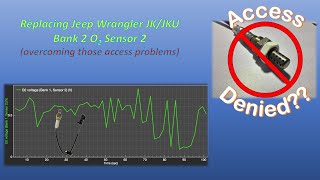
How to confirm: Use an OBD-II scanner with live data. Observe the voltage for 'O2S22' (or similar). If it is stuck high (e.g., >0.9V) and doesn't fluctuate, the sensor is likely bad. A working downstream sensor should show a relatively steady voltage, typically between 0.5V and 0.8V on a warm engine. 🎬 Watch: This diagnostic guide shows how to confirm a P0158 code.
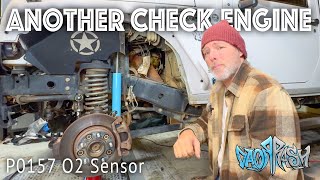
Typical fix: Replace the Bank 2, Sensor 2 oxygen sensor. This is the downstream sensor on the driver's side. Use of an O2 sensor socket is highly recommended. 🎬 See this walkthrough for replacing the driver's side downstream sensor.
Est. part cost: $30-$80 - Damaged Wiring or Connector 🟡 Medium Probability The wiring harness is routed near hot exhaust pipes and is exposed underneath the vehicle, making it vulnerable to melting, corrosion, or physical damage from road debris or off-roading. A short circuit between the signal wire and the heater power wire is a common failure mode that will cause a high voltage reading.
How to confirm: Visually inspect the wiring harness from the O2 sensor to the main connector. Look for melted plastic, frayed wires, or corrosion in the connector pins. With the sensor unplugged and key on, check for voltage on the signal wire; if it's high, there's a short to power in the harness. If the voltage reads high with the sensor plugged in but drops to near zero when the signal wire is jumpered to ground at the connector, the sensor is confirmed bad.
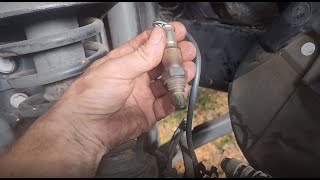
Typical fix: Repair or replace the damaged section of the wiring harness. Clean or replace the connector if corroded. Solder and heat shrink are recommended for a durable repair. 🎬 Watch: A helpful guide for accessing and swapping Jeep O2 sensors.
Est. part cost: $10-$100
Rare But Worth Checking
- PCM Software or Hardware Fault: This is more common on the JL/JT platform than on older vehicles. Multiple TSBs (e.g., 18-050-24 REV. A) call for a PCM software update to correct issues that cause P0158, often in conjunction with system high voltage codes like P0563. In rare cases, the PCM's internal driver circuit can fail, requiring PCM replacement.
- Exhaust Leak: An exhaust leak before the O2 sensor can introduce outside air, causing erratic readings. While this more commonly causes lean codes, a significant leak could potentially disrupt sensor operation enough to trigger a fault. This should be considered if you hear an exhaust leak.
- Engine Running Rich: If the engine is running excessively rich due to another issue (like a leaking fuel injector), it can cause the downstream O2 sensor voltage to read high. However, this will almost always be accompanied by other trouble codes, such as P0172 (System Too Rich Bank 2) or misfire codes.
Diagnosis Steps
- Connect an OBD-II scanner and confirm the P0158 code is present. Note any other codes, especially P0058, P0563, or P2504.
- View live data on the scanner. Focus on the voltage for 'O2S B2S2' (or similar PID). On a warm, running engine, if it's stuck high (above 0.9V) and unresponsive, this confirms the fault condition.
- Visually inspect the O2 sensor on the driver's side, downstream of the catalytic converter. Follow its wiring harness as far as possible, looking for signs of melting, chafing, corrosion, or physical damage.
- Perform a wiring harness check. Unplug the sensor. Turn the ignition to 'ON' (engine off). Use a multimeter to check the harness-side connector. You should have battery voltage on one heater wire and a good ground on the other. The signal wire should read a low voltage. If the signal wire shows high voltage with the sensor unplugged, there is a short to power in the harness.
- To definitively rule out wiring, use a jumper wire to connect the signal wire pin to the ground pin on the harness-side connector. The live data on your scan tool should drop to near 0V. If it does, the wiring and PCM are good, and the original sensor was faulty.
- If wiring and the sensor are confirmed good but the problem persists, check for relevant TSBs (like 18-050-24 REV. A) by your vehicle's VIN. A PCM software update may be required to fix an underlying overvoltage condition.
- After any repair, clear the codes with the scanner and perform a complete drive cycle to ensure the Check Engine Light does not return.
Parts You'll Likely Need
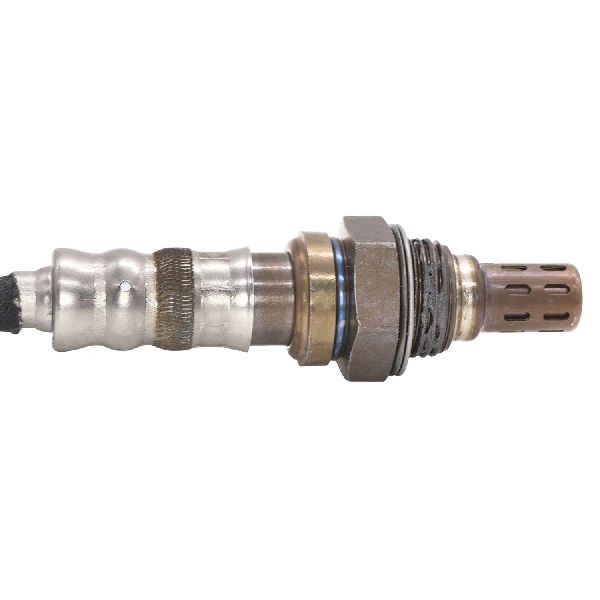
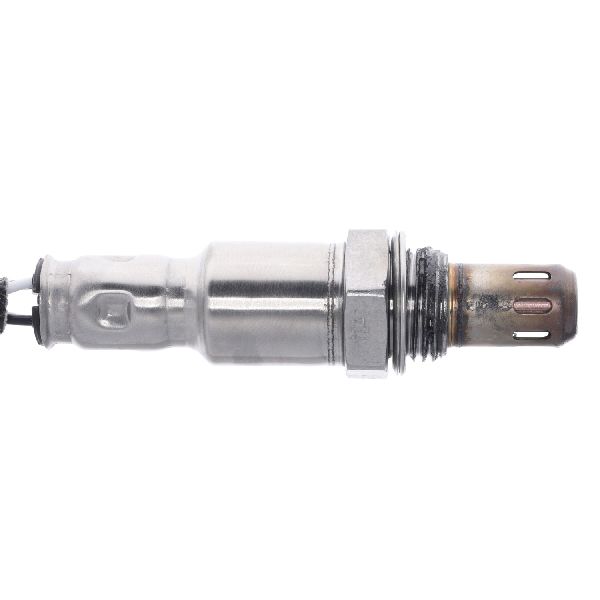
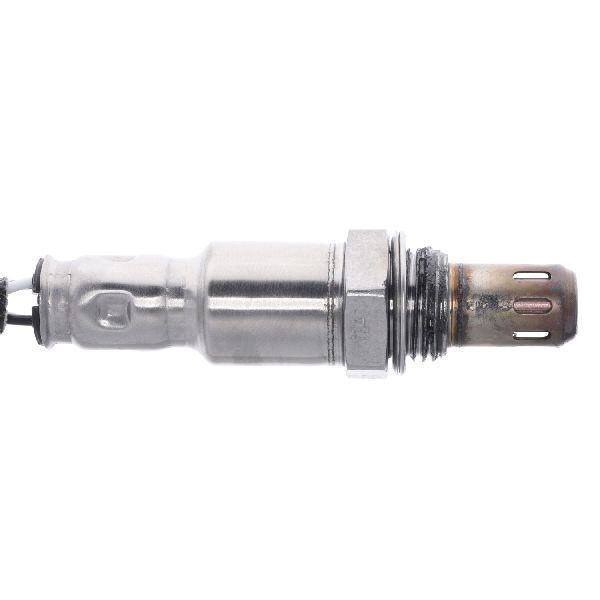
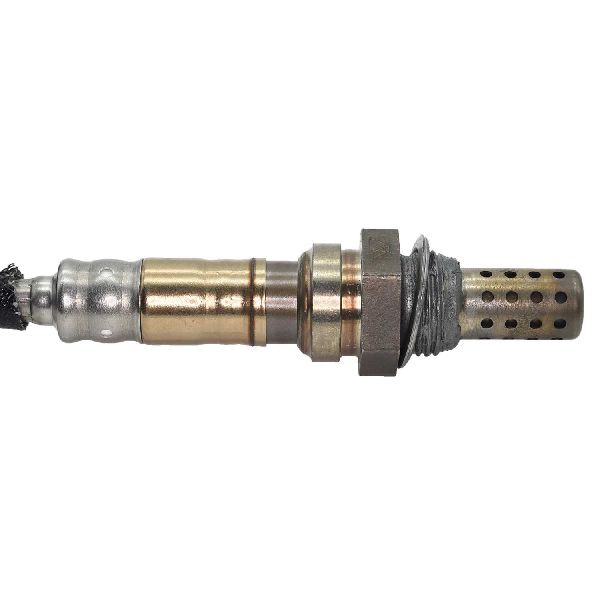
- Oxygen Sensor (Bank 2, Sensor 2)
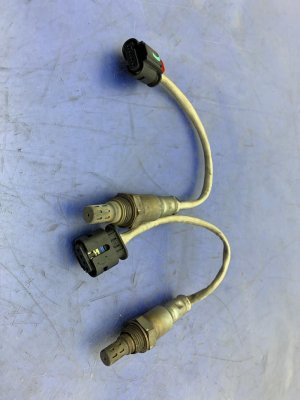
(OEM #68224424AA (for 3.6L V6), 68504056AA (for 2.0L 4xe PHEV))— This is the downstream sensor on the driver's side. It is the most common failure point for code P0158 due to wear, damage, or systemic electrical issues burning out the sensor.
Trusted brands: Mopar (OEM), NTK/NGK, Denso
OEM price range: $60-$120
Aftermarket price range: $30-$80
Related Codes That Often Appear With This One
- P0058 — This code is for 'O2 Sensor 2/2 Heater Circuit High'. The O2 sensor has a built-in heater. A systemic overvoltage issue, a short in the harness, or an internal sensor failure can affect both the heater and signal circuits, causing both codes to appear together. This is a key indicator of the electrical issues mentioned in Jeep TSBs.
- P0563 / P2504 — P0563 is 'System Voltage High' and P2504 is 'Charging System Output High'. The appearance of these codes alongside P0158 is strong evidence of the systemic electrical issue described in TSBs #18-003-26 and #18-050-24 REV. A. The vehicle's charging system may be producing excessive voltage, which in turn damages the O2 sensor's heater element and causes the signal circuit to read high. A PCM reflash is often the prescribed fix.
- P0152 — This code is for 'O2 Sensor 2/1 Circuit High', which is the upstream sensor on the same bank (driver's side). If there is a widespread wiring issue or a problem affecting the entire engine bank, you might see codes for both sensors on that side.
Technical Service Bulletins (TSBs) & Recalls

- 18-003-26: Lists P0158 as part of a group of potential electrical system DTCs.
- S2108000025 Rev.: Specifically calls out 'CEL Check Engine Lamp On, DTC P0158 O2 Sensor 2/2 Circuit High'.
- 18-050-24 REV. A: This is a key TSB. It involves reprogramming the PCM with updated software to address P0158, along with other O2 sensor and system high voltage codes (P0563, P2504), and notes it can fix issues like 'O2 heater crack improvements'.
- 08-142-24: Includes P0158 as one of several possible power train-related DTCs that may be resolved with a PCM software update.
Platform-Specific Known Issues
- Multiple Technical Service Bulletins (TSBs) from Jeep, including #18-003-26, #S2108000025 Rev., and #18-050-24 REV. A, list P0158 as a potential DTC that may set. Crucially, these TSBs often group P0158 with charging system high voltage codes (P0563, P2504), indicating a known software or charging system issue that can damage the O2 sensor.
Mechanic-Grade Diagnostic Values
- Downstream O2 Sensor (B2S2) Live Data Voltage — expected: Relatively steady voltage between 0.5V and 0.8V on a warm, running engine.. Failure: Voltage is stuck high, consistently above 0.9V, or maxed out at 1.27V on the scan tool.
- O2 Sensor Heater Circuit Resistance — expected: Typically between 2-10 ohms, but check vehicle-specific manual. Some sources cite 5-7 ohms as a common range for older Jeeps.. Failure: Resistance is infinite (open circuit) or significantly outside the specified range.
- O2 Sensor Heater Circuit Voltage (at harness connector) — expected: Should have battery voltage (approx. 12V) with the key on, engine off.. Failure: No voltage indicates a problem with the power supply, fuse, or wiring.
- O2 Sensor Signal Wire Voltage (harness-side, sensor unplugged) — expected: Should be a low reference voltage, often around 0.45V.. Failure: High voltage (approaching battery voltage) indicates a short to power in the wiring harness.
Scan Tool Commands That Help

- wiTECH (or advanced generic OBD-II): O2 Sensor Live Data Graphing — Used to visually confirm if the B2S2 voltage is stuck high and not fluctuating as it should. A flat line near the top of the voltage range confirms the fault condition described by P0158.
Wiring & Ground Locations
- Bank 2 Sensor 2 PCM Pins (for JK, likely similar for JL) — On the Powertrain Control Module (PCM) connectors.. For advanced diagnosis, you can test continuity directly from the PCM. For Bank 2 Sensor 2: Signal Out is on connector C1, pin 33. Signal Return is on C1, pin 32. Heater Out is on C3, pin 10. This allows bypassing all vehicle wiring to rule out a harness issue.
- G104 (on JK models) — On the passenger side of the engine block, behind the heat shields for the catalytic converters.. On the older JK Wrangler, this ground point served the O2 sensors. While the JL architecture is different, a faulty ground connection is a common cause for erratic sensor behavior. If multiple sensor codes are present, checking the main engine-to-chassis grounds is a valid diagnostic step.
- Bank 2 Sensor 2 Connector — On the driver's side, following the exhaust pipe downstream from the catalytic converter. Access is difficult due to proximity to the frame rail and a skid bar, often requiring removal of the inner fender liner and skid bar.. This is the primary point for visual inspection of melted wires or corrosion and for performing electrical tests with a multimeter.
Real Owner Repair Stories
- Reddit user in r/MechanicAdvice (2014 Jeep Wrangler (JK, but diagnosis is identical for JL)) — Check Engine Light with code P0158.
❌ Tried (didn't work) Visual inspection of the harness showed no obvious damage.
✅ What actually fixed it The user observed the B2S2 voltage was stuck at 1.27V. Crucially, the voltage remained at 1.27V even after unplugging the sensor. This confirmed the issue was not the sensor itself, but a short-to-voltage in the wiring harness or a faulty PCM driver. The final fix was not posted, but the diagnosis correctly isolated the problem to the circuit, not the part. - JK-Forum.com user (Jeep Wrangler JK) — P0158 code returned after replacing the O2 sensor.
❌ Tried (didn't work) Replacing the Bank 2 Sensor 2 O2 sensor., Clearing the code via battery disconnect.
✅ What actually fixed it In one thread, a user with recurring O2 sensor codes ultimately had the dealer replace the PCM and the downstream O2 sensor, which resolved the issue permanently, suggesting an internal PCM fault was the root cause.
When the Usual Fixes Don't Work
- While a faulty O2 sensor is the most frequent cause, the high number of TSBs linking P0158 to systemic high voltage codes (P0563, P2504) on the JL/JT platform strongly indicates that simply replacing the sensor may not be a permanent fix. If these other codes are present, the root cause is more likely a charging system or PCM software issue that is destroying the sensor. In these cases, the actual fix is a dealer-level software update or further electrical system diagnosis, not just another O2 sensor replacement.
OEM Part Supersession History
Unknown→68224424AA— Standard part evolution and consolidation.
Heads up: Part number 68224424AA is listed for a wide range of Chrysler/Jeep/Dodge/Ram vehicles with various engines (2.0L, 3.6L, 5.7L). It can serve as an upstream or downstream sensor depending on the specific application. It's critical to verify fitment by VIN, as using it in the wrong position could cause issues even if it physically connects.
Helpful Videos


Used OEM Parts in Stock

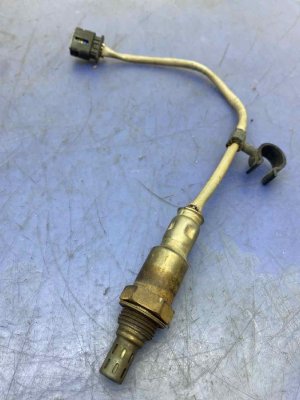
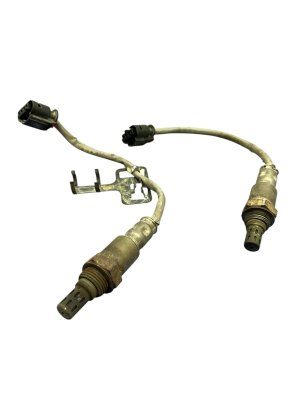
New Aftermarket Parts Available

The information in this article is provided for general reference and educational purposes only. Vehicle specifications, procedures, and part compatibility can vary by production date, trim level, and region. Always consult your vehicle's factory service manual and verify part numbers before purchasing or performing repairs. Safety-critical components such as airbags, seat belts, and braking systems should be installed by a qualified professional.
- Jeep WRANGLER:
- 🎬 Helpful Videos
- 🛍️ Shop This Part
- What's Unique About the 2019-2024 Jeep WRANGLER
- Diagnostic Flowchart
- Symptoms You May Notice
- Most Likely Causes
- Rare But Worth Checking
- Diagnosis Steps
- Parts You'll Likely Need
- Related Codes That Often Appear With This One
- Technical Service Bulletins (TSBs) & Recalls
- Platform-Specific Known Issues
- Mechanic-Grade Diagnostic Values
- Scan Tool Commands That Help
- Wiring & Ground Locations
- Real Owner Repair Stories
- When the Usual Fixes Don't Work
- OEM Part Supersession History
- 🎟️ Get 5% Off