

P0153 on 2006-2010 Hyundai Sonata 3.3L V6: Slow O2 Sensor Response Causes and Fixes
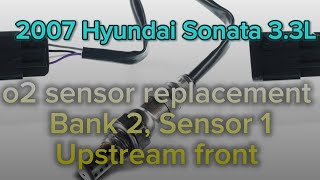
This code almost always points to a failing Bank 2, Sensor 1 oxygen sensor. On the 3.3L V6, this is the upstream sensor on the cylinder bank closer to the radiator. A known issue on this platform is a leaking front valve cover gasket, which can drip oil onto the sensor's wiring and cause the fault. Expect to pay around $50-$120 for a quality aftermarket sensor and it's a straightforward DIY replacement for most.
- P0153 on this Sonata almost always means the front, upstream oxygen sensor (Bank 2, Sensor 1) is failing.
- This sensor is located on the exhaust manifold closest to the radiator, making it relatively easy to access and replace.
- CRITICALLY, check for oil leaks from the front valve cover gasket before replacing the sensor. This is a known issue that will destroy the new sensor's wiring if not fixed.
- A quality replacement sensor from a brand like Denso or NGK/NTK is recommended for longevity.
- Ignoring this code will hurt your gas mileage and can lead to more expensive catalytic converter damage down the road.
What's Unique About the 2006-2010 Hyundai Sonata
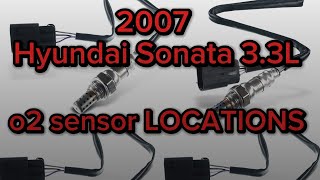
The 2006-2010 Hyundai Sonata (codenamed 'NF') with the 3.3L V6 'Lambda' engine is generally a reliable vehicle, but this code is a common maintenance item as the car ages. Bank 2 is the cylinder bank closer to the radiator, making the upstream O2 sensor (Sensor 1) relatively easy to access compared to Bank 1, which is against the firewall. 🎬 Watch: Locate all four O2 sensors on the 3.3L engine. A well-documented issue on this platform is valve cover gasket leaks, which can drip oil onto wiring and sensors. This oil contamination can damage the O2 sensor's connector or the alternator, which is also in the path of the leak, potentially causing this code or other electrical issues. While the sensor itself is the most common failure point, it's critical to check for oil leaks from the front valve cover during diagnosis.
Symptoms You May Notice
- Check Engine Light is on
- Decreased fuel economy
- Rough or unstable idle
- Slightly sluggish acceleration
- Failed emissions test
- Replacing the wrong oxygen sensor (e.g., the downstream sensor, B2S2, or a sensor on Bank 1).
- Replacing the catalytic converter when the issue is just a slow sensor.
- Replacing the O2 sensor without fixing the underlying oil or exhaust leak that caused it to fail.
Most Likely Causes
- Failing Bank 2, Sensor 1 Oxygen Sensor 🔴 High Probability Oxygen sensors are wear-and-tear items that degrade over time and with mileage (typically over 80,000 miles). Contamination from oil, coolant, or carbon buildup accelerates this process, causing them to become 'lazy' or slow to respond.
How to confirm: Use an OBD-II scanner with live data to monitor the B2S1 voltage. A healthy sensor's voltage should fluctuate rapidly and consistently between approximately 0.1V and 0.9V. A slow or lazy sensor will show delayed or flattened voltage swings, taking more than 100ms to switch.
Typical fix: Replace the Bank 2, Sensor 1 oxygen sensor. This is the upstream sensor located on the exhaust manifold of the front cylinder bank (closest to the radiator).
Est. part cost: $50-$120 - Damaged Wiring or Connector Due to Oil Leak 🟡 Medium Probability The front valve cover gasket on the 3.3L V6 is known to leak oil directly onto the O2 sensor's wiring harness and the alternator. This oil saturation can degrade the wire insulation, cause corrosion in the connector pins, or lead to short circuits, triggering P0153.
How to confirm: Visually inspect the wiring harness and connector for the Bank 2, Sensor 1 O2 sensor. Look for signs of fresh or caked-on oil, melted plastic, frayed wires, or corroded pins. The source of the leak on the front valve cover above the sensor should be apparent.
Typical fix: First, fix the source of the oil leak by replacing the valve cover gasket. Then, clean the oil residue from the harness and connector with an appropriate electrical cleaner. If the connector or wiring is damaged, it will need to be repaired or replaced.
Est. part cost: $20-$80 for gasket and cleaner, plus sensor cost if needed. - Exhaust Leak ⚪ Low Probability Corrosion can cause leaks at the exhaust manifold gaskets or the flex pipe, especially in regions with heavy road salt usage. An exhaust leak between the cylinder head and the O2 sensor can introduce outside oxygen, skewing the sensor's readings and causing it to respond slowly.
How to confirm: Perform a visual inspection of the exhaust system from the engine to the catalytic converter for any cracks, holes, or black soot stains. A cold start may reveal audible ticking or puffing sounds from the leak that diminish as the metal expands. A smoke test is the most definitive way to find small leaks.
Typical fix: Replace the leaking gasket or repair/replace the cracked exhaust component.
Est. part cost: $20-$150
Rare But Worth Checking
- Vacuum Leak: A significant vacuum leak (e.g., from a deteriorated intake manifold gasket) can cause a lean condition that the O2 sensor struggles to read, potentially triggering a slow response code. This would typically be accompanied by other lean codes (like P0174, P0171) and multiple misfire codes.
- Failing Powertrain Control Module (PCM): This is extremely rare. The PCM itself can fail, but all other potential causes must be exhaustively ruled out before considering PCM replacement. Sometimes a PCM software update (reflash) from the dealer can fix overly sensitive code triggers, as noted in TSBs for other models.
Diagnosis Steps
- Verify the code with an OBD-II scanner.
- Using the scanner's live data stream, observe the voltage graph for 'O2S21' or 'B2S1'. At a steady 2500 RPM, the voltage should switch rapidly between below 0.2V and above 0.8V multiple times per second. If the switching is slow, lazy, or the graph looks more like a rolling hill than a jagged peak, the sensor is likely faulty.
- Perform a thorough visual inspection of the Bank 2 area. Look directly above the O2 sensor at the valve cover for any signs of an oil leak. Also inspect the exhaust manifold for black soot trails indicating an exhaust leak.
- Inspect the sensor's electrical connector for damage, corrosion, or oil saturation. Clean with electrical contact cleaner as necessary. If oil is present, the valve cover gasket must be replaced to prevent repeat failure.
- If no wiring or leak issues are found and the live data confirms a slow response, the sensor itself is the most probable cause.
- Before replacing the sensor, check for any exhaust leaks between the cylinder head and the sensor. A shop can perform a smoke test to find small, hard-to-see leaks.
- If all other steps fail to identify the issue, the problem may lie with the PCM, but this is highly unlikely.
Parts You'll Likely Need
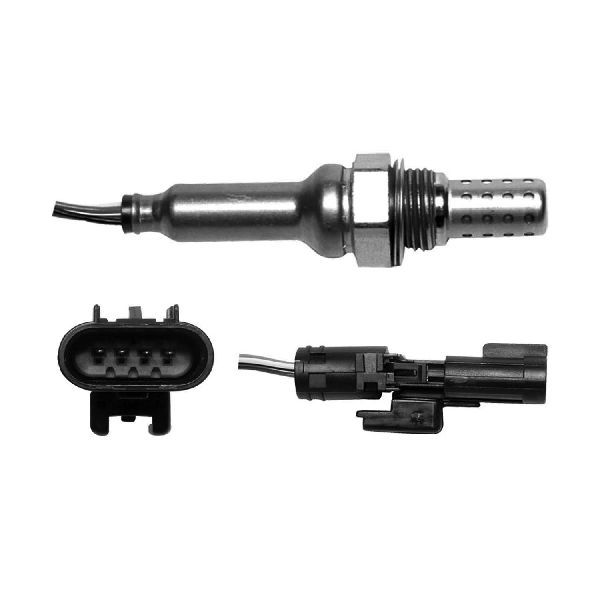
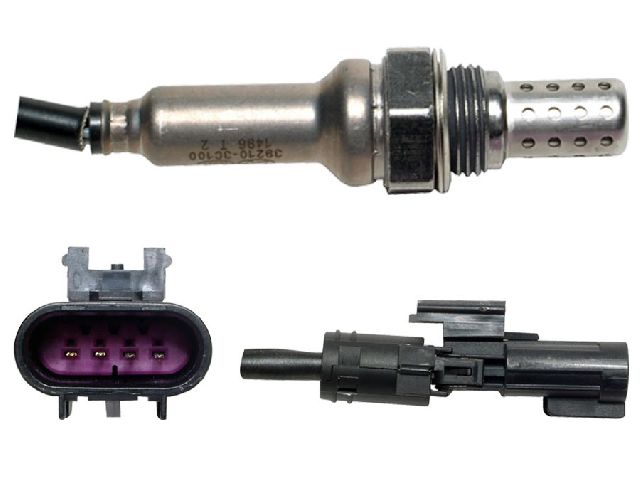
- Oxygen Sensor (Bank 2, Sensor 1)
(OEM #39210-3C200)— This is the upstream sensor for the front cylinder bank. It is a primary wear item in the emissions system and is the most common failure point for code P0153.
Trusted brands: Denso (e.g., 234-4428), NGK/NTK, Bosch, Delphi
OEM price range: $180-$275
Aftermarket price range: $50-$120 - Valve Cover Gasket (Front/Bank 2)
(OEM #22441-3C110)— Often needs to be replaced concurrently if it is found to be leaking oil onto the O2 sensor wiring, which is a very common cause of the electrical fault.
Trusted brands: Fel-Pro, Mahle, Genuine Hyundai
OEM price range: $25-$40
Aftermarket price range: $15-$30
Related Codes That Often Appear With This One
- P0174 — If an exhaust or vacuum leak is the root cause, the system may also detect a 'System Too Lean (Bank 2)' condition.
- P0133 — This is the equivalent code for Bank 1, Sensor 1. Seeing both codes together might point to a systemic issue like low fuel pressure, a contaminated fuel source, or a major vacuum leak affecting both banks.
- P0300, P0302, P0304, P0306 — If a large vacuum leak from the intake manifold is the cause, random or bank-specific misfires are common companions to the O2 sensor code.
Technical Service Bulletins (TSBs) & Recalls
- TSB #09-FL-003-2 (December 2009): While not for the Sonata specifically, this TSB was issued for 3.3L engines in other models (like the Santa Fe) for DTCs P0133 and P0153, indicating Hyundai is aware of issues with S1 oxygen sensors on this engine family. It provides inspection and repair procedures.
Platform-Specific Known Issues
- The valve cover gaskets on the 3.3L V6 engine are known to develop oil leaks. The front valve cover (Bank 2) can leak oil directly onto the Bank 2 O2 sensor wiring and the alternator, leading to electrical faults that can trigger P0153. Owners on forums frequently report replacing the alternator due to oil saturation from this specific leak.
Mechanic-Grade Diagnostic Values
- O2 Sensor Heater Element Resistance — expected: 5 to 25 Ohms. Failure: A reading of infinite resistance (OL - Open Loop) or a value significantly outside the expected range.
- O2 Sensor Signal Voltage (Live Data) — expected: Rapidly fluctuating between 0.1V and 0.9V on a warm engine at steady RPM.. Failure: Voltage is slow to change, flat-lined, or stuck at a specific value (e.g., 0.45V).
- PCM to O2 Heater Control Circuit Resistance — expected: Less than 1.0 Ohm. Failure: Higher resistance indicates a problem in the wiring harness between the PCM and the sensor connector.
- ECM Ground Circuit Resistance — expected: 1Ω or less. Failure: Resistance higher than 1Ω indicates a poor ground connection for the ECM, which can cause incorrect sensor readings.
Scan Tool Commands That Help
- Hyundai GDS (Global Diagnostic System): DTC Guide & Analysis — To access OEM-specific diagnostic procedures, component locations, and wiring diagrams directly linked to the P0153 fault code.
- Hyundai GDS (Global Diagnostic System): Current Data (Live Data) — To monitor the live voltage graph and heater duty cycle of Bank 2 Sensor 1 to confirm a slow response, and compare it directly against the healthy Bank 1 Sensor 1.
- Hyundai GDS (Global Diagnostic System): Actuation Test — Can be used to command the O2 sensor heater circuit on/off to verify the PCM driver, relay, and wiring are functioning, helping to isolate the fault to the sensor itself.
Wiring & Ground Locations
- O2 Sensor Heater Fuse — In the engine compartment fuse box, typically a 15A fuse labeled 'SNSR 1' or 'SENSOR 1'.. A blown fuse will cut power to the O2 sensor's internal heater, preventing it from reaching operating temperature quickly. This will cause a slow response and trigger P0153 or a specific heater circuit code.
- ECM Ground Pins — At the main ECM harness connector, typically pins 1, 2, and 3 are grounds.. A poor ECM ground can cause a variety of incorrect sensor readings, including a slow or erratic O2 sensor signal, as the reference voltage for the sensor circuit may be unstable.
- Engine Ground Straps — Multiple locations, but a key one connects the engine block to the chassis, often near the transmission or engine mounts.. The O2 sensor relies on a solid engine ground that is shared with the PCM. Corrosion or a loose connection on a main ground strap can introduce electrical noise and resistance, potentially affecting sensor readings.
- B2S1 Connector Pinout (Typical 4-wire) — On the sensor pigtail and corresponding harness connector, near the front exhaust manifold.. Knowing the pin functions (two heater wires, one signal wire, one ground wire) is essential for testing. The two wires of the same color are for the heater circuit. Testing for 12V power at the heater pin and continuity to ground on the ground pin can quickly diagnose wiring issues.
Real Owner Repair Stories
- YouTube channel 'Auto Tech Diagnostics & Programming' (2006 Hyundai Tucson 2.7L V6 (similar Lambda engine family)) — Check Engine Light with codes P0052 (Heater Circuit High) and P0150 (O2 Sensor Circuit Malfunction B2S1). Live data showed B2S1 was flat-lined.
❌ Tried (didn't work) Initial diagnosis pointed towards a bad sensor or wiring based on the codes.
✅ What actually fixed it The connectors for the Bank 2 Sensor 1 (upstream) and Bank 2 Sensor 2 (downstream) had been accidentally swapped. After correcting the connectors, the upstream sensor began switching correctly. The technician also found the original downstream sensor had a failed heater element, which was replaced.
OEM Part Supersession History
39210-3C200→N/A, still current— This is the long-standing OEM part number for the Bank 2 Sensor 1 on this vehicle.
Heads up: While this part number is listed for the B2S1 position, it is sometimes also listed as a rear/downstream sensor for other Hyundai models. Always verify the specific position (Upstream, Front Bank) when ordering for the Sonata 3.3L to avoid confusion.
Model Year Variations Within This Range
- 2009-2010: For the 2009 model year, the Sonata received a facelift with revised interior/exterior styling. The 3.3L V6 engine's power was increased from ~235 hp to 249 hp. While the fundamental engine architecture and sensor locations remained the same, be aware of potential minor wiring harness or connector changes post-facelift.
- 2006-2008: These earlier models of the 'NF' generation had the initial 235 hp version of the 3.3L V6 engine.
Diagnostic Flowchart
Other Known Issues on This Vehicle
Issues unrelated to this code that are worth knowing about as an owner of this generation:
- Timing Chain Tensioner Rattle on Startup 🔴 High — Very common, especially on 2006-2008 models. The rattle is most noticeable on a cold start and lasts for a few seconds as oil pressure builds. (Ref: No specific recall, but it is a widely documented problem.)
- Leaking Valve Cover Gaskets 🟠 Medium — Common as the vehicle ages (over 70,000 miles). The front leak can damage the alternator, and the rear is labor-intensive to fix.
- Suspension Noise / Component Wear 🟠 Medium — Owners frequently report clunking from front suspension and a bouncy ride, often traced to worn struts, control arms, or sway bar links. (Ref: Recall 113 for rear crossmember corrosion on 2006-2010 models.)
- Failing Sun Visors 🟡 Low — Extremely common. The internal mechanism fails, causing the visor to droop and not stay in place.
- Malfunctioning Stop Lamp Switch 🟠 Medium — Widespread enough to trigger a major recall. Can cause brake lights to not work or stay on, and may prevent shifting out of Park. (Ref: Hyundai Recall Campaign 092 / NHTSA 09V122000.)
- Peeling Exterior Paint 🟡 Low — Particularly noted on 2010 models, where owners report paint peeling in large sheets, especially white and silver colors.
Used vs. New Parts: Buying Guide for This Vehicle
When a used part is the smart pick: A used part is almost never a smart choice for this repair. Oxygen sensors are wear items with a finite lifespan, typically 80,000-100,000 miles. A used sensor from a junkyard has unknown remaining life and may fail shortly after installation, wasting time and money.
Donor-vehicle mileage cap: roughly under 30000 miles for the part to have meaningful remaining life.
What to inspect on the donor part:
- If forced to buy used, source from a vehicle with the lowest possible mileage.
- Inspect the sensor tip for heavy, black carbon deposits or a white, chalky appearance, which indicate engine problems on the donor car.
- Ensure the wiring pigtail and connector are completely intact with no cuts, melting, or oil contamination.
Aftermarket brands forum-validated for this vehicle:
- Denso
- NGK / NTK
- Bosch
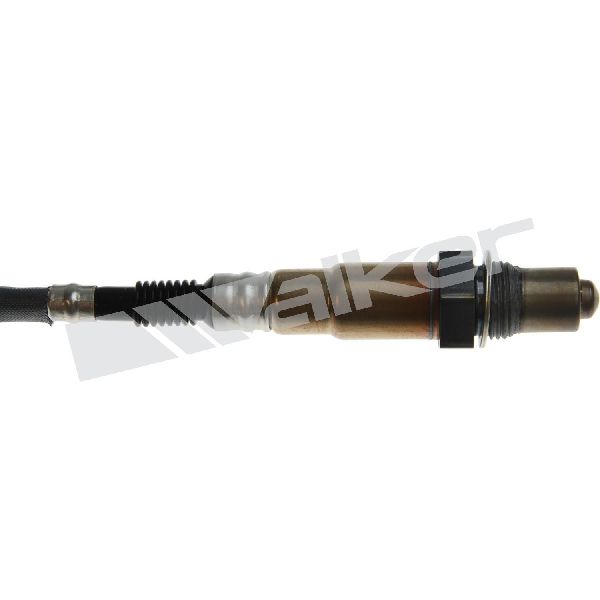
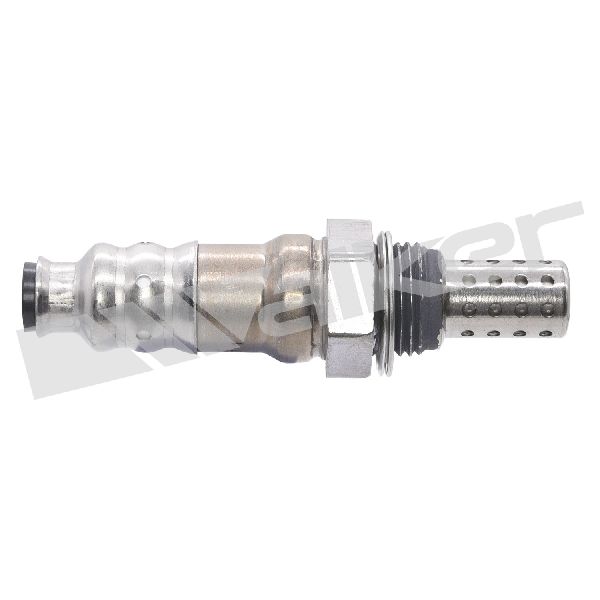
- Walker Products
Brands owners have reported issues with on this vehicle:
- Avoid unbranded, no-name 'universal' sensors that require splicing wires. These often have incorrect heater resistance or slow response times out of the box, causing the code to return immediately.
Real Owner Stories
Aggregated from forums and TSBs cited above. Mileages and costs reflect what owners reported in those sources.
2006-2010 Hyundai Sonata 3.3L V6
Symptoms: Check Engine Light on with code P0153. Some owners also noted a valve cover leak.
What fixed it: Replacing the front (radiator side) upstream O2 sensor was the typical fix.
Source hint: hyundai-forums.com
2006-2010 Hyundai Sonata 3.3L V6 — ~95000 miles
Symptoms: Check Engine Light for P0153 caused by oil leaking from the front valve cover directly onto the O2 sensor wiring and alternator.
What fixed it: Replacing the leaking valve cover gasket and then cleaning or repairing the oil-saturated wiring harness and connector.
Source hint: Vehicle Specific Issues section regarding leaking valve cover gaskets.
2006 Hyundai Sonata 3.3L V6
Symptoms: Owner reported leaking valve cover gaskets, which is a known cause of electrical issues for the Bank 2 O2 sensor.
What fixed it: The owner described it as a significant repair job, which involves replacing the valve cover gaskets.
Source hint: reddit.com/r/CarRepair
Related OBD-II Codes
Frequently Asked Questions
Where is the Bank 2, Sensor 1 oxygen sensor located on my 2007 Sonata 3.3L?
My mechanic says my front valve cover is leaking oil onto the O2 sensor. Is this a common issue on these Sonatas?
I saw TSB #09-FL-003-2 mentioned for this code. Does that apply to my Hyundai Sonata?
What should the voltage for the Bank 2, Sensor 1 O2 sensor look like on a scanner?
Could an exhaust leak be the cause of my P0153 code?
Is it a good idea to buy a used oxygen sensor from a junkyard to save money?
Helpful Videos
We Have This Part in Stock



The information in this article is provided for general reference and educational purposes only. Vehicle specifications, procedures, and part compatibility can vary by production date, trim level, and region. Always consult your vehicle's factory service manual and verify part numbers before purchasing or performing repairs. Safety-critical components such as airbags, seat belts, and braking systems should be installed by a qualified professional.
- Hyundai Sonata:
- 🎬 Helpful Videos
- 🛍️ Shop This Part
- What's Unique About the 2006-2010 Hyundai Sonata
- Symptoms You May Notice
- Most Likely Causes
- Rare But Worth Checking
- Diagnosis Steps
- Parts You'll Likely Need
- Related Codes That Often Appear With This One
- Technical Service Bulletins (TSBs) & Recalls
- Platform-Specific Known Issues
- Mechanic-Grade Diagnostic Values
- Scan Tool Commands That Help
- Wiring & Ground Locations
- Real Owner Repair Stories
- OEM Part Supersession History
- Model Year Variations Within This Range
- Diagnostic Flowchart
- Other Known Issues on This Vehicle
- Used vs. New Parts: Buying Guide for This Vehicle
- Real Owner Stories
- 2006-2010 Hyundai Sonata 3.3L V6
- 2006-2010 Hyundai Sonata 3.3L V6 — ~95000 miles
- 2006 Hyundai Sonata 3.3L V6
- Related OBD-II Codes
- Frequently Asked Questions
- 🎟️ Get 5% Off