

P0149 on 2019-2023 Ford Ranger 2.0L EcoBlue: Fuel Timing Error Explained
P0149 on a 2.0L EcoBlue Ranger indicates a fuel timing error, most often caused by a failing high-pressure fuel pump or an issue with the fuel timing solenoid. This is a serious code that requires immediate attention to prevent further engine damage. On this platform, it is critical to investigate the health of the high-pressure fuel pump, as failure can contaminate the entire fuel system with metal debris.
- P0149 is a serious code indicating a fuel timing error that requires immediate diagnosis.
- The most likely cause on the 2.0L EcoBlue engine is a failing high-pressure fuel pump.
- A critical diagnostic step is to check the fuel filter for metal debris, which indicates a severe pump failure.
- Do not continue to drive the vehicle, as it could stall or cause catastrophic damage to the entire fuel system.
- Due to the complexity and high cost of potential repairs, professional diagnosis is strongly recommended.
What's Unique About the 2019-2023 Ford Ranger
The 2.0L EcoBlue diesel engine, also known as the "Panther" engine, is a sophisticated design that uses a high-pressure common-rail fuel system. A unique and critical aspect of this engine is its "wet belt" design, where the timing belt runs in engine oil. 🎬 Watch: Ford EcoBlue wet timing belt failure and repair guide While not a direct cause, degradation of this belt from incorrect oil, extended service intervals, or fuel dilution from DPF regeneration can release particles that clog the oil pickup strainer, leading to oil starvation and catastrophic engine failure. More directly, problems with the high-pressure fuel pump are a known issue on these engines, sometimes leading to catastrophic failure that contaminates the entire fuel system with metallic debris (swarf).
Symptoms You May Notice
- Decreased engine performance and power
- Rough or uneven idle
- Hesitation or stumbling during acceleration
- Engine misfires
- Increased fuel consumption
- Engine may not start or is difficult to start
- Check Engine Light (CEL) is illuminated
- Engine stalls unexpectedly, especially at low RPMs
- Excessive black smoke from the exhaust
- Replacing fuel injectors when the issue is with the high-pressure pump or air in the system.
- Replacing the fuel pressure sensor without verifying its readings against a mechanical gauge.
- Assuming a timing belt issue is the cause, when it is more likely a fuel delivery component.
Most Likely Causes
- Failing High-Pressure Fuel Pump (HPFP) 🔴 High Probability High-pressure fuel pumps on modern diesels operate under extreme pressure (up to 2000 bar on the EcoBlue) and are a common failure point. The 2.0L EcoBlue engine family, used in the Ranger and Transit, has documented issues with HPFP failures.
How to confirm: A technician will use a scan tool to monitor commanded vs. actual fuel rail pressure. A significant discrepancy points to the pump. A crucial step is to check the fuel filter for metallic debris (swarf), which confirms internal pump failure. The presence of any shiny metal flakes necessitates a full fuel system replacement.
Typical fix: Replacement of the high-pressure fuel pump. If metal debris is found, the entire fuel system (injectors, rails, lines) must be replaced and the tank cleaned to prevent repeat failure.
Est. part cost: $500-$1500 - Faulty Fuel Timing Solenoid / Fuel Control Actuator (FCA) 🟡 Medium Probability This solenoid, often mounted on the HPFP, directly controls fuel timing and pressure. It's an electronic component that can fail internally or suffer from wiring issues. It is a common point of failure on many modern diesel engines.
How to confirm: A diagnostic scan tool can sometimes activate the solenoid to test its function. A multimeter can be used to check the resistance of the solenoid; it should typically be between 10 and 20 ohms.
Typical fix: Replacement of the fuel timing solenoid or fuel control actuator.
Est. part cost: $150-$400 - Air in the Fuel System or Fuel Leaks 🟡 Medium Probability Air can enter the system through loose fittings, a cracked fuel filter housing, or failing seals, disrupting the precise pressure needed for correct timing. This is a common issue in diesel fuel systems.
How to confirm: Visually inspect all fuel lines and connections for leaks. A technician may install a clear hose on the low-pressure supply side to watch for air bubbles. Check for related low-pressure fuel codes like P008A. 🎬 Watch: Diagnosing diesel surging and fuel pressure issues
Typical fix: Locate and repair the source of the leak or air ingress. This may involve replacing fuel lines, seals, or the fuel filter housing.
Est. part cost: $50-$300 - Defective Fuel Pressure Sensor ⚪ Low Probability While not exceptionally common, the fuel rail pressure sensor can fail, sending incorrect data to the PCM and causing it to set a timing code. On some EcoBlue engines, the sensor body has been known to work itself loose.
How to confirm: The sensor's readings on a scan tool are compared against known specifications and the actual pressure measured with a mechanical gauge. If the readings are erratic or incorrect, the sensor is likely faulty.
Typical fix: Replacement of the fuel pressure sensor.
Est. part cost: $80-$200 - Failing or Leaking Fuel Injectors ⚪ Low Probability The 2.0L EcoBlue engine has known issues with fuel injectors. A service action was issued for a bad batch of Continental injectors on some 2019 models. A leaking injector can cause a drop in rail pressure that the PCM may interpret as a timing fault.
How to confirm: Perform an injector leak-off test to measure the return flow from each injector. Excessive return flow indicates an internal failure. A scan tool can also be used to check cylinder balance rates.
Typical fix: Replacement of the faulty fuel injector(s). It is often recommended to replace them as a set.
Est. part cost: $300-$600 per injector
Rare But Worth Checking
- Incorrect Mechanical Timing: This is unlikely unless recent work, such as a timing belt replacement, has been performed. If the timing marks for the high-pressure fuel pump are not perfectly aligned, it can trigger a P0149 code.
- Powertrain Control Module (PCM) Fault: A faulty PCM or a software programming error is a rare but possible cause. This should only be considered after all other mechanical and electrical components have been thoroughly tested and ruled out.
Diagnosis Steps
- Connect a professional OBD-II scanner to read the P0149 code and check for any other related codes, especially P0087.
- Monitor live data, specifically comparing the commanded fuel rail pressure with the actual fuel rail pressure. Note any significant lag or discrepancy.
- Perform a thorough visual inspection of the entire fuel system, looking for any signs of leaks from lines, the filter housing, or the high-pressure pump.
- Crucially, inspect the fuel filter for any signs of metallic particles or a metallic sheen. The presence of metal confirms a catastrophic failure of the high-pressure fuel pump.
- If no leaks or metal are found, test the fuel timing solenoid/actuator. Check its wiring and connector for damage. Use a multimeter to check the solenoid's resistance, which should be between 10-20 ohms.
- Check for air in the fuel system by observing the low-pressure lines for bubbles.
- Test the fuel pressure sensor to ensure it is reading accurately.
- Perform an injector leak-off test to rule out faulty injectors.
- If recent engine work was performed, verify the mechanical timing of the high-pressure fuel pump sprocket to ensure it is correctly aligned.
- If all other components test correctly, the issue may lie with the PCM, which would require advanced diagnostics.
Parts You'll Likely Need
- High-Pressure Fuel Pump
(OEM #GK2Q-9B395-AA, HG9Q-9B395-AB, 2011886 (cross-reference with VIN))— This is the most common and most serious cause of a P0149 code on this engine. It is responsible for generating the high fuel pressure required for direct injection, and its failure directly impacts timing.
Trusted brands: Bosch, Motorcraft
OEM price range: $800-$1500
Aftermarket price range: $500-$1000 - Fuel Timing Solenoid / Volume Control Valve — This solenoid, often located on the high-pressure pump, is the electronic actuator for fuel timing. Electrical failure of this part is a common cause of timing errors.
Trusted brands: Bosch, Motorcraft
OEM price range: $250-$400
Aftermarket price range: $150-$300 - Fuel Injector
(OEM #JB3Z9E527D)— A known failure point on this engine, a leaking or faulty injector can cause pressure drops that trigger P0149. A bad batch from supplier Continental affected some 2019 models.
Trusted brands: Motorcraft, Continental/VDO
OEM price range: $400-$600
Aftermarket price range: $250-$450
Related Codes That Often Appear With This One
- P0087 — Stands for "Fuel Rail/System Pressure - Too Low." This code often appears with P0149 because a failing high-pressure pump cannot generate the commanded pressure, which the PCM interprets as both a pressure and a timing fault.
- P1564 — A Ford-specific code for "Injection Pump Control Module Requesting Reduced Fuelling." This indicates the pump's own control module has detected an internal fault.
Platform-Specific Known Issues
- A Reddit user with a 2019 2.0L Bi-Turbo Wildtrak described a complex failure that began with a failed vacuum pump (causing loss of brakes), followed by power loss. A Ford master mechanic diagnosed it as oil starvation caused by a degrading wet belt, which clogged the oil pump. This led to a full engine rebuild costing the owner £8,000. This illustrates how wet belt issues can cascade into other system failures. - Source: r/fordranger, 'The Infamous Wet Belt Issue'
- A service action/stop-sale was issued by Ford in Australia and New Zealand in late 2019 for Ranger, Everest, and Transit models equipped with the 2.0L EcoBlue engine due to a batch of faulty high-pressure fuel injectors supplied by Continental. The affected vehicles were built between April and August 2019. Symptoms included misfires and reduced engine performance.
Mechanic-Grade Diagnostic Values
- Fuel Timing Solenoid / Fuel Control Actuator Resistance — expected: 10 Ω to 20 Ω across the coil. Failure: A reading outside this range, or over 10 kΩ to ground, indicates a faulty solenoid.
- PCM Power Supply Voltage (Key On, Engine Off) — expected: ~12.6 V. Failure: Significantly lower voltage can cause calculation errors within the PCM.
- PCM Power Supply Voltage (Engine Running) — expected: 13.8 V - 14.4 V. Failure: Voltage outside this range indicates a charging system issue that can affect module performance.
- PCM Ground Resistance — expected: Below 0.1 Ω. Failure: Resistance above 0.1 Ω indicates a poor ground, which can cause erratic behavior and incorrect timing calculations.
Scan Tool Commands That Help
- Ford IDS (Integrated Diagnostic System): High Pressure Fuel System Test — This function commands the fuel system to build and hold pressure without the engine running, which is useful for checking for leaks and monitoring the health of the HPFP and injectors.
- Ford IDS (Integrated Diagnostic System): Reset High Pressure Fuel System Learned Values / Clear Fuel Injector and HP Pump Adaptive Tables — This is a mandatory step after replacing the high-pressure fuel pump or fuel injectors. It clears the adaptive learning tables in the PCM so it can learn the characteristics of the new components.
OEM Part Supersession History
GK2Q-9B395-AA→GK2Q-9B395-AB, HG9Q-9B395-AA, HG9Q-9B395-AB— Standard part evolution for design improvements or manufacturing changes.
Heads up: Always verify the correct part number with the vehicle's VIN. While these numbers are often interchangeable for the 2.0L EcoBlue platform, slight variations may exist for specific applications (e.g., Ranger vs. Transit).
Model Year Variations Within This Range
- 2019: A specific batch of Continental-supplied fuel injectors was known to be faulty, causing a dealer service action for vehicles built within a certain timeframe in 2019. This makes injectors a higher probability cause for 2019 models exhibiting P0149 or other fuel-related codes.
- 2026 (Future Change): Ford has announced plans to discontinue the 2.0L EcoBlue diesel engine in the Ranger for some markets (like the UK and Australia) starting in early 2026, replacing it with a plug-in hybrid and focusing on the 3.0L V6 diesel. This will affect future parts availability and service information.
Diagnostic Flowchart
Other Known Issues on This Vehicle
Issues unrelated to this code that are worth knowing about as an owner of this generation:
- Premature Wet Timing Belt Degradation & Failure 🔴 High — Can occur as early as 50,000-70,000 miles, well before the scheduled 150,000 mile / 10-year interval. Failures are accelerated by incorrect oil, fuel dilution from DPF cycles, and short-trip driving.
- Fuel Injector Failure 🔴 High — Common across the EcoBlue engine line. A specific bad batch from Continental affected 2019 models, but general failures are reported frequently, sometimes at low mileage (under 20,000 miles). (Ref: Dealer Service Action (2019))
- Oil Pump / Oil Starvation Issues 🔴 High — Often a direct consequence of wet belt degradation. Belt material clogs the oil pump pickup strainer, leading to loss of oil pressure and catastrophic engine damage.
- Turbocharger Failures 🟠 Medium — Particularly noted on the bi-turbo variants. Failures can be caused by lubrication issues (related to the oil pump/wet belt problem) or inherent complexity.
- Frequent DPF Regeneration Cycles 🟡 Low — Owners report frequent DPF regeneration, especially with city driving. This can lead to increased fuel consumption and contributes to oil/fuel dilution, which accelerates wet belt wear.
Used vs. New Parts: Buying Guide for This Vehicle
When a used part is the smart pick: For this specific repair, using used parts is highly discouraged for core fuel system components. The risk of receiving a contaminated or near-failure High-Pressure Fuel Pump (HPFP) or injector is extremely high. A used HPFP could quickly fail and contaminate your newly cleaned fuel system, repeating the entire expensive repair. Used parts should only be considered for external, non-wearing components like brackets or sensor connectors if damaged.
Donor-vehicle mileage cap: roughly under 30000 miles for the part to have meaningful remaining life.
What to inspect on the donor part:
- For any fuel component, demand proof that the donor vehicle did NOT suffer an HPFP failure.
- Ask for the vehicle's history to ensure it wasn't salvaged due to engine failure.
- Inspect any used part for signs of metallic debris or contamination before installation.
- Ensure the part comes with a warranty from a reputable salvage yard.
OEM-only on this vehicle (don't cheap out):
- High-Pressure Fuel Pump (HPFP)
- Fuel Injectors
- Fuel Rail Pressure Sensor
Aftermarket brands forum-validated for this vehicle:
- Bosch (Often the OEM supplier)
- Continental/VDO (OEM supplier for injectors)
Brands owners have reported issues with on this vehicle:
- Unnamed, no-brand 'white box' parts from online marketplaces. The precision required for high-pressure diesel components is not met by cheap alternatives, and failure is highly likely.
Real Owner Stories
Aggregated from forums and TSBs cited above. Mileages and costs reflect what owners reported in those sources.
2019 Ford Ranger 2.0L Bi-Turbo Wildtrak
Symptoms: The failure began with a failed vacuum pump causing a loss of brakes, followed by a significant loss of power.
What fixed it: A full engine rebuild was required after a degrading wet belt clogged the oil pump, leading to oil starvation.
Cost: $10,000-$11,000 (£8,000)
Source hint: r/fordranger - 'The Infamous Wet Belt Issue'
2019 Ford Ranger 2.0L EcoBlue
Symptoms: Engine misfires and reduced engine performance.
What fixed it: Replacement of a batch of faulty high-pressure fuel injectors supplied by Continental as part of a 2019 service action.
Source hint: Vehicle-specific issues: 2019 service action/stop-sale (Australia/New Zealand)
2019-2023 Ford Ranger 2.0L EcoBlue
Symptoms: Non-running condition; engine would not start.
What fixed it: Investigation found teeth from the wet belt had broken off and were located in the sump, blocking the oil pickup.
Source hint: PistonHeads UK - 'Ford ranger 2.0 ecoblue fault'
Related OBD-II Codes
Frequently Asked Questions
Was there a recall or service action for the fuel system on my 2019 Ford Ranger 2.0L EcoBlue?
My mechanic found metal shavings in the fuel filter of my Ranger; what does this mean for a P0149 code?
Can a problem with the 'wet belt' cause fuel timing issues like P0149 on the 2.0L EcoBlue?
What is the correct resistance for the fuel timing solenoid on the Ranger 2.0L EcoBlue?
Is the P0149 code on my Ranger related to the fuel pressure sensor coming loose?
Helpful Videos

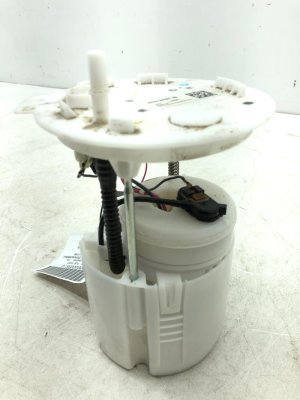
Used OEM Parts in Stock

New Aftermarket Parts Available


The information in this article is provided for general reference and educational purposes only. Vehicle specifications, procedures, and part compatibility can vary by production date, trim level, and region. Always consult your vehicle's factory service manual and verify part numbers before purchasing or performing repairs. Safety-critical components such as airbags, seat belts, and braking systems should be installed by a qualified professional.
- Ford Ranger:
- 🎬 Helpful Videos
- 🛍️ Shop This Part
- What's Unique About the 2019-2023 Ford Ranger
- Symptoms You May Notice
- Most Likely Causes
- Rare But Worth Checking
- Diagnosis Steps
- Parts You'll Likely Need
- Related Codes That Often Appear With This One
- Platform-Specific Known Issues
- Mechanic-Grade Diagnostic Values
- Scan Tool Commands That Help
- OEM Part Supersession History
- Model Year Variations Within This Range
- Diagnostic Flowchart
- Other Known Issues on This Vehicle
- Used vs. New Parts: Buying Guide for This Vehicle
- Real Owner Stories
- 2019 Ford Ranger 2.0L Bi-Turbo Wildtrak
- 2019 Ford Ranger 2.0L EcoBlue
- 2019-2023 Ford Ranger 2.0L EcoBlue
- Related OBD-II Codes
- Frequently Asked Questions
- 🎟️ Get 5% Off