

P0141 on 2014-2018 Subaru Forester XT: O2 Sensor Heater Circuit Causes and Fixes
On a 2014-2018 Forester XT, code P0141 almost always means the rear oxygen sensor's internal heater has failed. A DIY replacement with an OEM or Denso part costs around $150. This fault will also disable cruise control, VDC, and EyeSight until it's fixed. Before replacing, check the 20A 'A/F Heater' fuse in the engine bay fuse box.
- P0141 on a 2014-2018 Forester XT points directly to a problem with the rear oxygen sensor's heater circuit.
- The most likely cause is a failed sensor, which is a common and DIY-friendly repair.
- This code will disable cruise control, VDC, and EyeSight, so fixing it restores full vehicle functionality.
- Always check the 'A/F Heater' fuse in the engine bay before replacing the sensor.
- Use a high-quality OEM, Denso, or NTK replacement sensor to avoid the code returning.
What's Unique About the 2014-2018 Subaru Forester
On many vehicles, a P0141 code is a minor annoyance. However, on the 2014-2018 (SJ generation) Subaru Forester, the vehicle's safety logic responds by disabling several key features. When this code is active, cruise control, Vehicle Dynamics Control (VDC), Hill Start Assist, and the EyeSight driver assist system (if equipped) are all deactivated as a precaution. This makes the repair more urgent for owners who rely on these features.
Symptoms You May Notice
- Check Engine Light is on
- Cruise control is disabled
- Vehicle Dynamics Control (VDC) system is disabled
- EyeSight system is disabled (if equipped)
- Hill Start Assist warning light is on
- Vehicle will fail an emissions test.
- Slightly decreased fuel economy (often not noticeable by the driver).
- Replacing the front (upstream) Air/Fuel Ratio sensor. P0141 is specific to the rear (downstream) sensor, Bank 1 Sensor 2.
- Replacing the catalytic converter. A bad converter typically sets a P0420 'Catalyst Efficiency' code, not a P0141 heater circuit code.
- Using a cheap, universal, or incorrect brand of oxygen sensor. Forum users across multiple Subaru models strongly advise against generic or Walker brand parts, as they often fail quickly or are not calibrated correctly for the sensitive Subaru ECU.
Most Likely Causes
- Failed Rear Oxygen Sensor 🔴 High Probability The internal heater element within the oxygen sensor is a very common failure point over time, similar to a light bulb burning out. Repeated heat cycles cause the delicate internal circuit to break. While TSB 09-115-24R addresses this with a redesigned part for newer models, it confirms a pattern of this specific failure mode on Subarus.
How to confirm: After confirming the fuse and wiring are intact, test the resistance of the heater circuit at the sensor's connector using a multimeter. The two heater pins are typically the same color. A healthy sensor should have a resistance between 4 and 10 Ohms when cold. An open circuit (infinite resistance or 'OL') confirms the internal heater has failed and the sensor must be replaced.
Typical fix: Replace the rear (downstream) oxygen sensor. Soaking the sensor's threads with a penetrating oil like PB Blaster beforehand is highly recommended. A 22mm or 7/8" oxygen sensor socket is the proper tool for removal.
Est. part cost: $75-$225 - Blown A/F Heater Fuse 🟡 Medium Probability
How to confirm: Check the main fuse box in the engine bay for a fuse labeled 'A/F Heater', which is typically a 20A fuse for this model. Visually inspect if the fuse is blown or test for continuity with a multimeter.
Typical fix: Replace the blown fuse. If the fuse blows again immediately, it indicates a short circuit in the wiring that needs to be traced.
Est. part cost: $1-$5 - Damaged Wiring or Connector ⚪ Low Probability The wiring harness for the rear O2 sensor runs under the vehicle and can be susceptible to damage from road debris, heat from the exhaust, or improper routing after other repairs. On the WRX platform mate, the harness is known to sometimes rub against the driveshaft.
How to confirm: Visually inspect the entire wiring harness from the sensor to its main connector for any signs of melting, chafing, corrosion, or breaks. Check for 12V power at the connector with the ignition on. One forum user with a similar Subaru noted their P0141 was caused by only receiving ~7V at the harness, indicating a wiring fault.
Typical fix: Repair the damaged section of wire or replace the connector pigtail. Ensure the repair is sealed against moisture.
Est. part cost: $10-$50
Rare But Worth Checking
- Faulty Engine Control Module (ECM): This is extremely rare. The ECM should only be considered a potential cause after all other possibilities (sensor, fuse, wiring) have been definitively ruled out.
Diagnosis Steps
- Read the trouble codes with an OBD-II scanner to confirm P0141 is the primary code.
- Locate the main fuse box in the engine compartment and check the fuse labeled 'A/F Heater' (typically 20A). Replace it if it's blown.
- Safely raise the vehicle and locate the rear oxygen sensor (Sensor 2) in the exhaust pipe, downstream of the catalytic converter. On the Forester XT, it's often accessible from behind the driver's side front wheel after removing a plastic shield.
- Visually inspect the sensor's wiring harness and connector for any signs of melting, chafing, or physical damage.
- Disconnect the sensor. Use a multimeter set to Ohms to test for resistance between the two heater circuit pins on the sensor itself (they are often the same color). A reading between 4-10 Ohms is good; an open circuit ('OL' or infinite resistance) confirms the heater is broken and the sensor must be replaced. 🎬 Watch: How to properly test oxygen sensor heater circuits.
- With the key in the 'ON' position (engine off), use a multimeter to check for battery voltage (~12V) and a good ground at the vehicle-side connector pins that supply the heater circuit. No voltage points to a fuse or wiring issue.
- If the fuse is good, power and ground are present at the connector, and the sensor's heater circuit has continuity, the problem may be intermittent or, in very rare cases, an issue with the ECM driver.
Parts You'll Likely Need
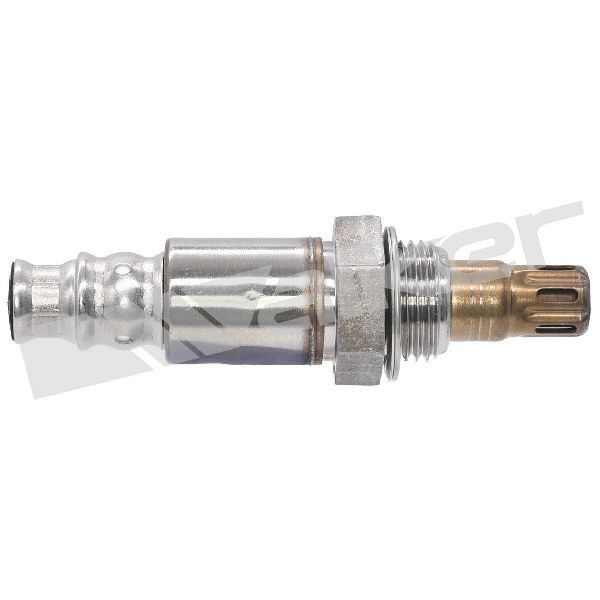
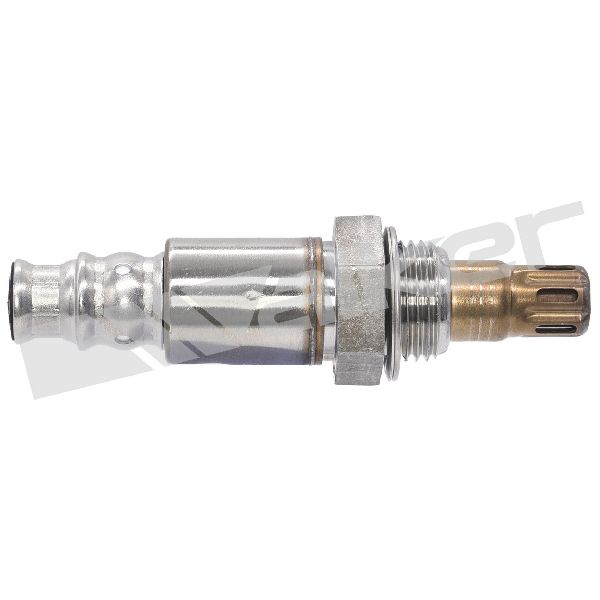
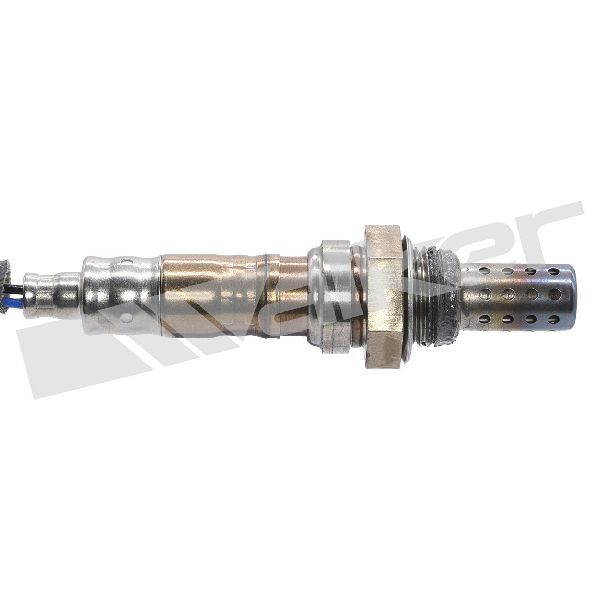
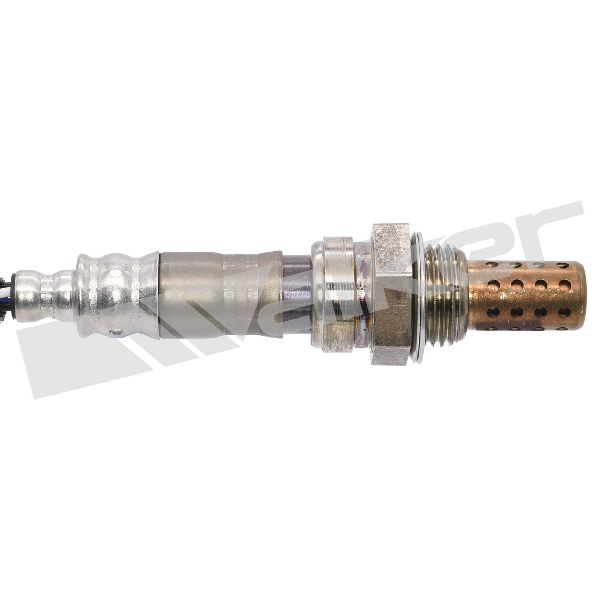
- Rear Oxygen Sensor
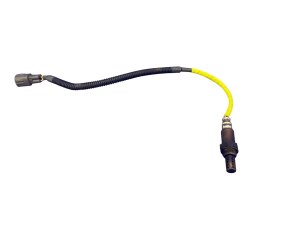
(OEM #22690AB010)— The internal heater element fails, which is the most common cause of code P0141.
Trusted brands: Subaru (Genuine OEM), Denso (OEM Supplier), NTK
OEM price range: $150-$225
Aftermarket price range: $75-$150
Related Codes That Often Appear With This One
- P0137 — Both codes relate to the rear oxygen sensor (Bank 1, Sensor 2). P0137 indicates low voltage from the sensor, which can sometimes accompany a heater fault and is mentioned in the same TSBs.
- P0138 — Both codes relate to the rear oxygen sensor (Bank 1, Sensor 2). P0138 indicates high voltage from the sensor and is also covered by the same TSBs.
- P0140 — Both codes relate to the rear oxygen sensor (Bank 1, Sensor 2). P0140 indicates no activity from the sensor circuit, another failure mode of the same component.
Technical Service Bulletins (TSBs) & Recalls
- 09-115-24R: While for newer model years (2019+ Forester), this TSB acknowledges frequent failures of the rear O2 sensor heater circuit causing P0141 and provides an updated part number. It confirms a known pattern of failure due to internal cracking.
- 09-115-24: The original TSB identifying the rear O2 sensor heater circuit as the cause for P0141 on other Subaru models.
Platform-Specific Known Issues
- A known issue on Subarus of this era is the disabling of cruise control, VDC, and EyeSight when a Check Engine Light is triggered by an emissions fault like P0141.
- Owners and mechanics strongly recommend using a genuine Subaru or OEM-supplier (like Denso or NTK) replacement sensor. Cheaper aftermarket brands, particularly Walker, are known to cause the code to return due to the ECU's sensitivity to heater circuit resistance.
- A Reddit user on r/SubaruForester confirmed the location on a '14 XT is behind the driver's side front wheel and a plastic shield, and that an NTK sensor from Rock Auto for ~$75 fixed the issue.
Mechanic-Grade Diagnostic Values
- Rear O2 Sensor Heater Element Resistance — expected: 4 to 10 Ohms when cold. Some sources cite a tighter range of 5.5 to 8 Ohms.. Failure: Infinite resistance ('OL' on a multimeter) or a reading over 50 Ohms.
- Voltage at Harness Connector (Heater Power Pin to Ground) — expected: ~12V (battery voltage) with Key On, Engine Off.. Failure: 0V or significantly low voltage (e.g., 7V) indicates a problem in the power supply wiring, fuse, or relay.
- Live Data: O2 Sensor Heater Current (B1S2) — expected: 0.4 - 2.0 Amps when the heater is commanded on by the ECM.. Failure: 0.0 A, which, combined with a good voltage supply, confirms an open circuit in the sensor's heater element.
Hidden / Shadow Codes Worth Checking
- Mode $06, Test ID $81: This manufacturer-defined test ID corresponds to the O2 Sensor Heater Circuit monitor for Bank 1, Sensor 2. A 'Fail' result can indicate a problem with the heater circuit, sometimes before the P0141 DTC is officially set. (see via An advanced OBD-II scanner capable of displaying Mode $06 data.)
Scan Tool Commands That Help
- Subaru Select Monitor (SSM) or advanced aftermarket scanner: Heater Actuation Test (e.g., PCM -> Actuation Test -> Heater Bank 1 Sensor 2) — This bidirectional command allows a technician to manually activate the O2 sensor's heater circuit. It is used to confirm if the heater element works when commanded and to verify the integrity of the wiring and ECM driver by observing voltage and current changes, without waiting for a full drive cycle.
Wiring & Ground Locations
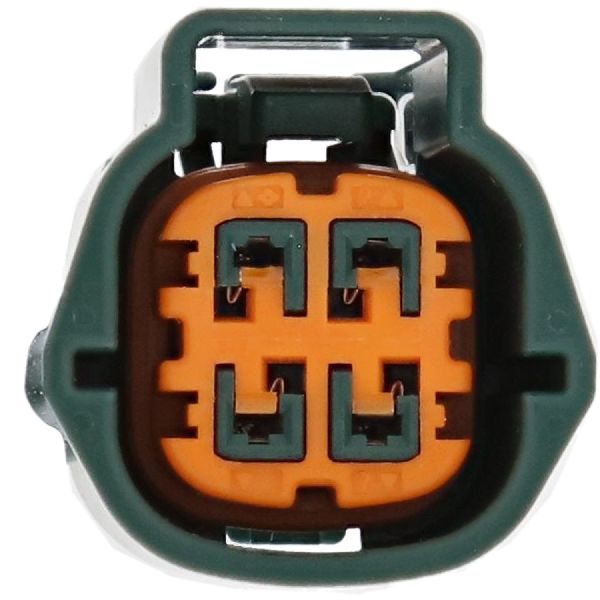
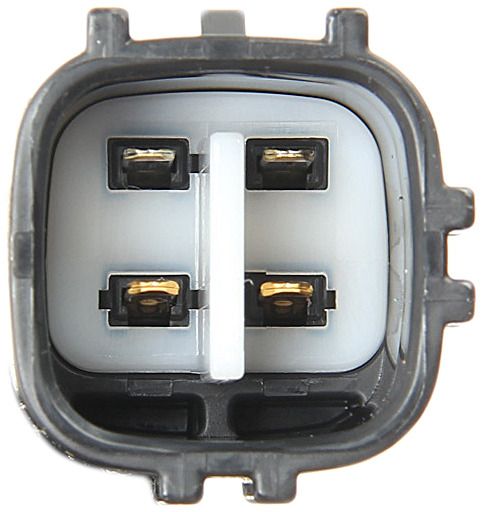
- E25 — The 4-pin rear O2 sensor connector, located under the vehicle. The harness is often clipped to the underbody or frame rail near the catalytic converter.. This is the primary connection point to test for power, ground, and sensor resistance. Corrosion or damage here will directly cause a P0141 code.
- GE1 / GE2 — Main engine block grounds, typically bolted to the top rear of the engine block under the intake manifold area.. While not a direct cause, a poor engine ground can introduce electrical noise and voltage irregularities that can lead to erroneous sensor fault codes. Ensuring these grounds are clean and tight is a good practice when diagnosing any electrical fault on a Subaru.
Real Owner Repair Stories
- Reddit user on r/SubaruForester (2014 Subaru Forester XT) — Check Engine Light, VDC light, Hill Assist light, and other warnings on the dash with code P0141.
❌ Tried (didn't work) N/A, user went straight to the common fix.
✅ What actually fixed it Replaced the rear (downstream) oxygen sensor with an NTK brand part from RockAuto. The sensor was located behind the driver's side front wheel and a plastic shield. The repair cost ~$75 and took about an hour. - YouTube video by 'Project Dan' (2015 Subaru Forester XT (at 60,000 miles)) — Check Engine Light with an O2 sensor-related code.
❌ Tried (didn't work) Cleaning the old sensor was considered but rejected due to mileage.
✅ What actually fixed it Replaced the rear O2 sensor (OEM Part # 22690AB010) with an OEM-equivalent part. The repair was straightforward, involving removing an underbody cover and using an open-end wrench. - Aggregated from forum reports for similar Subarus (2021 Subaru Outback 2.5L (similar electrical system)) — P0141 code returned after replacing the rear O2 sensor.
❌ Tried (didn't work) Replacing the rear oxygen sensor.
✅ What actually fixed it The root cause was a wiring issue. The user measured only 6.7-7V at the heater circuit harness instead of the required ~12V. The voltage drop, likely from corrosion or a partial short, was preventing the new sensor's heater from working correctly.
OEM Part Supersession History
22690AB010→22690AB010 (current)— This part number remains current for the 2014-2018 Forester XT. While TSB 09-115-24R mentions a redesigned sensor for newer models to address cracking, the part number for this specific application has not been superseded. Newer stock of the same part number may incorporate design improvements.
Diagnostic Flowchart
Other Known Issues on This Vehicle
Issues unrelated to this code that are worth knowing about as an owner of this generation:
- Intake Valve Carbon Buildup 🟠 Medium — Becomes a potential issue every 60,000-100,000 miles, especially with city driving. Can cause rough idle, hesitation, and misfires.
- CVT (Continuously Variable Transmission) Concerns 🔴 High — While not universal, failures can be costly. Symptoms include shuddering and hesitation. Subaru issued a warranty extension for the CVT on 2014-2018 Foresters (including the 2.0L Turbo) to 10 years/100,000 miles. (Ref: TSB 16-107-17R (CVT Warranty Extension))
- Excessive Oil Consumption 🟠 Medium — More prevalent on the 2.5L non-turbo engine, but some FA20F owners also report oil consumption. Regular oil level checks between changes are recommended. (Ref: Class-action lawsuit primarily focused on 2.5L engines.)
Used vs. New Parts: Buying Guide for This Vehicle
When a used part is the smart pick: For this repair, a used part is almost never a smart choice. The failure is due to the internal heater element burning out after repeated heat cycles, which is a wear-and-tear item. The labor to install a used sensor that could fail shortly after is not worth the small cost savings.
What to inspect on the donor part:
- Not applicable, as used oxygen sensors are not recommended for this repair.
OEM-only on this vehicle (don't cheap out):
- While not strictly 'OEM-only', it is strongly recommended to use either the genuine Subaru part or a part from the original equipment manufacturer (Denso or NTK). The Subaru ECU is known to be sensitive to the specific resistance and performance characteristics of the O2 sensor heater circuit.
Aftermarket brands forum-validated for this vehicle:
- Denso (OEM supplier, P/N: 234-4445)
- NTK (P/N: 24642)
Brands owners have reported issues with on this vehicle:
- Generic, unbranded sensors from online marketplaces (e.g., Amazon, eBay)
- Walker (specifically mentioned in forums as problematic for this application)
Real Owner Stories
Aggregated from forums and TSBs cited above. Mileages and costs reflect what owners reported in those sources.
2014 Forester XT
Symptoms: Check engine light with P0141 code. The dealer quoted $644 for the repair.
What fixed it: Replaced the downstream O2 sensor (Bank 1, Sensor 2) with an NTK brand sensor from Rock Auto. The code cleared within one or two starts.
Cost: $75
Source hint: r/SubaruForester - "P0141 code ($644!?!?!)"
2015-2021 Subaru WRX (VA)
Symptoms: P0141 failure mode including the disabling of VDC and cruise control. Harness was known to sometimes rub against the driveshaft.
What fixed it: Repairing the wiring harness or replacing the rear oxygen sensor (Subaru part #22690AB010).
Source hint: Platform mate data for 2015-2021 Subaru WRX (VA) sharing the FA20F engine
2014-2018 Subaru Forester
Symptoms: Check engine light, VDC, and Hill Assist lights disabled on the dash.
What fixed it: Replacement of the oxygen sensor using a 22mm wrench.
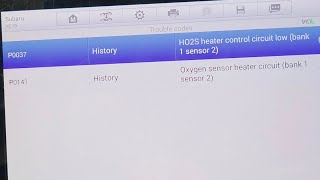
Source hint: YouTube - "2014 to 2018 Subaru Forester P0037, P0141 Oxygen Sensor Replacement."
Related OBD-II Codes
Frequently Asked Questions
Why are my Cruise Control, VDC, and EyeSight systems disabled just because of a P0141 code?
Does TSB 09-115-24R apply to my 2014-2018 Forester XT?
Can I use a cheaper aftermarket sensor like Walker to fix this code?
Where is the rear oxygen sensor located on the 2.0L Turbo Forester XT?
Is there a warranty extension that covers my 2014-2018 Forester XT?
What resistance should I see when testing the heater circuit on my Forester's O2 sensor?
Helpful Videos
Used OEM Parts in Stock
New Aftermarket Parts Available

The information in this article is provided for general reference and educational purposes only. Vehicle specifications, procedures, and part compatibility can vary by production date, trim level, and region. Always consult your vehicle's factory service manual and verify part numbers before purchasing or performing repairs. Safety-critical components such as airbags, seat belts, and braking systems should be installed by a qualified professional.
- Subaru Forester:
- 🎬 Helpful Videos
- 🛍️ Shop This Part
- What's Unique About the 2014-2018 Subaru Forester
- Symptoms You May Notice
- Most Likely Causes
- Rare But Worth Checking
- Diagnosis Steps
- Parts You'll Likely Need
- Related Codes That Often Appear With This One
- Technical Service Bulletins (TSBs) & Recalls
- Platform-Specific Known Issues
- Mechanic-Grade Diagnostic Values
- Hidden / Shadow Codes Worth Checking
- Scan Tool Commands That Help
- Wiring & Ground Locations
- Real Owner Repair Stories
- OEM Part Supersession History
- Diagnostic Flowchart
- Other Known Issues on This Vehicle
- Used vs. New Parts: Buying Guide for This Vehicle
- Real Owner Stories
- 2014 Forester XT
- 2015-2021 Subaru WRX (VA)
- 2014-2018 Subaru Forester
- Related OBD-II Codes
- Frequently Asked Questions
- 🎟️ Get 5% Off