

P0141 on 2017-2019 Kia Soul 1.6L: O2 Sensor Heater Fixes & Causes
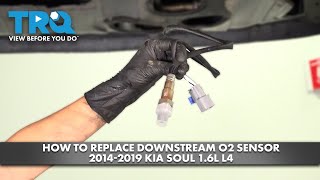
This code almost always means the heater element inside the downstream oxygen sensor (Bank 1, Sensor 2) has failed. The most likely fix is replacing the sensor, which costs about $40-$100 for an aftermarket part and is a straightforward DIY job. A video from TRQ shows the exact process for this vehicle.
- P0141 on a 2017-2019 Kia Soul points specifically to a problem with the heater inside the downstream O2 sensor (after the catalytic converter).
- The most common and likely fix is to replace the downstream O2 sensor. This is a DIY-friendly job for many home mechanics, as shown in repair videos.
- Before buying a new sensor, perform a quick visual inspection of the wiring underneath the car for any obvious damage and check the 'SNSR 1' 15A fuse in the engine bay fuse box.
- This code will cause an automatic failure of an emissions test, so it must be resolved to pass inspection.
- Do not replace the catalytic converter to fix this code; the problem lies with the sensor or its circuit.
What's Unique About the 2017-2019 Kia Soul
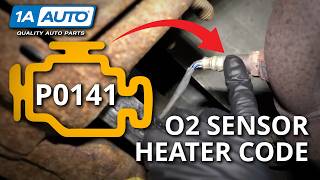
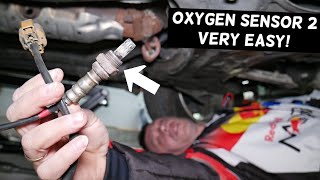
For the second-generation Kia Soul (2014-2019) with the 1.6L GDI engine, the P0141 code is a very common and straightforward issue. There are no widespread design flaws that cause this code; it's typically just the result of the sensor's heating element failing after years of heat cycles and exposure to the elements. The exhaust layout is simple, with one upstream and one downstream oxygen sensor, making diagnosis easy. The downstream sensor is relatively easy to access from underneath the vehicle, just after the catalytic converter, and its electrical connector is located at the back of the engine bay.
🎬 See this video to locate the downstream sensor and connector.Symptoms You May Notice
- Check Engine Light is on
- Vehicle fails emissions test
- Slightly reduced fuel economy (though often not noticeable)
- Replacing the catalytic converter. A P0141 code is specific to the sensor's heater circuit and is not caused by a failing catalytic converter. A bad converter would typically set a P0420 code.
Most Likely Causes
- Failed Downstream O2 Sensor 🔴 High Probability The internal heater element is a common failure point on oxygen sensors after many heat cycles. This is a normal wear-and-tear item and the most frequent cause for P0141. 🎬 Watch: A breakdown of the most common P0141 causes.
How to confirm: Unplug the sensor and use a multimeter to test the resistance between the two heater circuit wires (typically the two wires of the same color, often white). A good sensor should have a resistance between 4-10 ohms. An 'OL' or infinite resistance reading confirms the heater has failed.
Typical fix: Replace the Bank 1, Sensor 2 (downstream) oxygen sensor.
Est. part cost: $40 - $180 - Damaged Wiring or Connector 🟡 Medium Probability The sensor and its wiring are located underneath the car, making them susceptible to damage from road debris, corrosion from road salt, or melting if they contact hot exhaust components. The harness runs up the back of the engine, so it's important to check the full length.
How to confirm: Visually inspect the entire wiring harness from the sensor to its connection point at the top rear of the engine. Look for frayed wires, corrosion in the connector pins, or any signs of melting or physical damage.
Typical fix: Repair the damaged section of wiring or replace the connector pigtail.
Est. part cost: $10 - $30 - Blown Fuse ⚪ Low Probability
How to confirm: Check the fuse box in the engine bay for a 15A fuse, often labeled 'SNSR 1' or similar. The fuse panel cover has a diagram. Visually inspect the fuse or use a multimeter to check for continuity. A blown fuse often indicates a short circuit in the wiring that must be fixed.
Typical fix: Replace the blown fuse after diagnosing the underlying short circuit.
Est. part cost: $1 - $5
Rare But Worth Checking
- Faulty Powertrain Control Module (PCM): This is extremely rare. The PCM driver that controls the heater circuit can fail, but all other potential causes, especially the sensor and wiring, should be exhaustively ruled out before considering PCM replacement.
Diagnosis Steps
- Read the code with an OBD-II scanner to confirm P0141 is the primary code.
- Visually inspect the downstream O2 sensor's wiring harness from the exhaust pipe up to the connector at the back of the engine bay. Look for any obvious signs of damage, melting, or corrosion.
- Locate and inspect the fuse for the O2 sensor heater circuit (e.g., 'SNSR 1' 15A) in the engine bay fuse box.
- If the wiring and fuse are good, disconnect the O2 sensor connector.
- Using a multimeter, measure the resistance across the two heater pins on the sensor itself (usually the two same-colored wires). A reading of infinite resistance (OL) confirms a failed heater element. A good sensor should read roughly 4-10 ohms.
- If resistance is good, check for 12V power and ground at the vehicle-side connector with the key in the 'On' position. If either is missing, there is a wiring issue between the connector and the PCM/fuse box.
- If the sensor's heater element tests good and power/ground are present at the connector, the issue is intermittent or, in very rare cases, a faulty PCM.
Parts You'll Likely Need
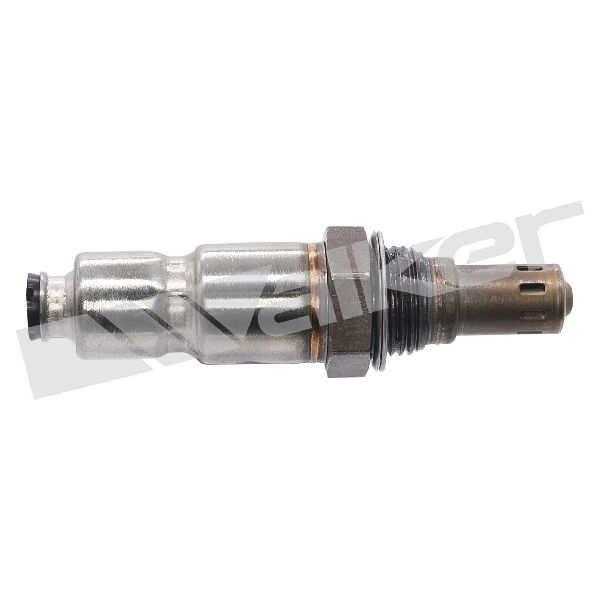
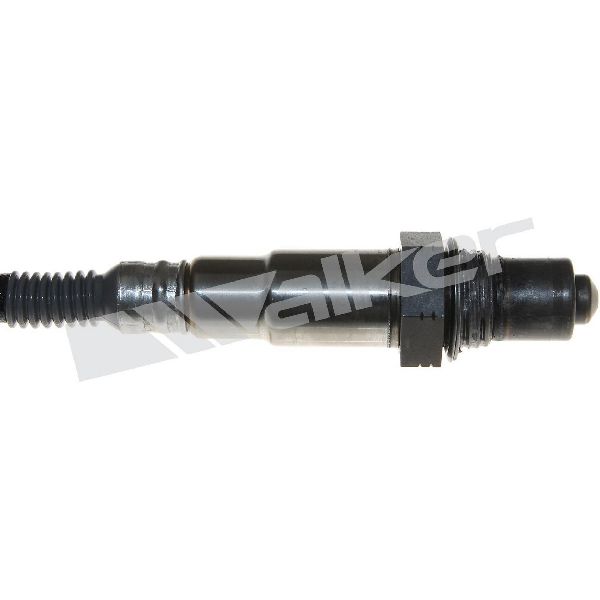
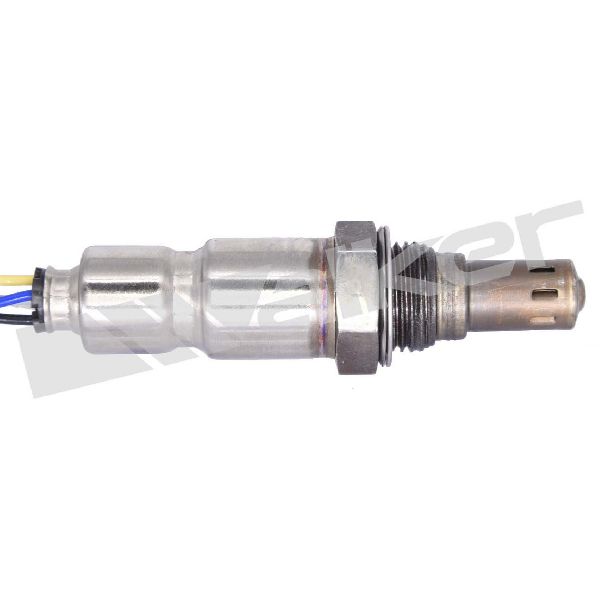
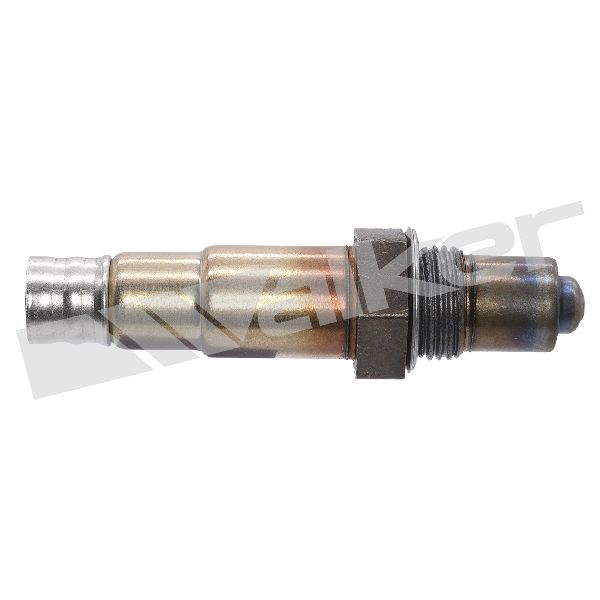
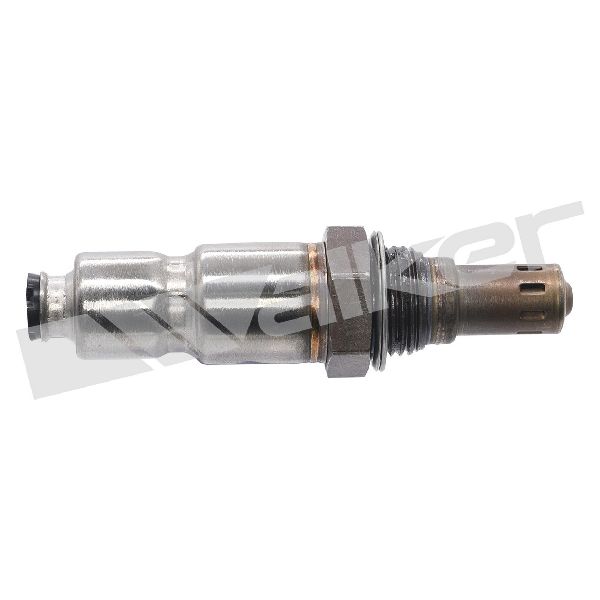
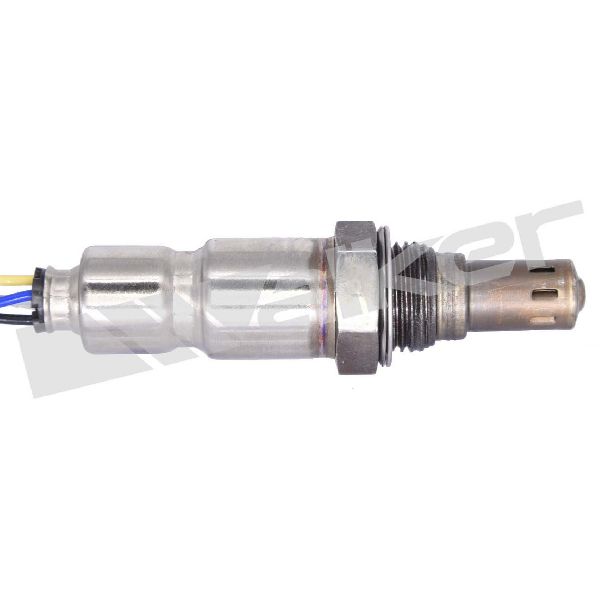
- Downstream Oxygen Sensor (Bank 1, Sensor 2)
(OEM #392102B365)— This is the most common cause of P0141, as the internal heater element fails over time.
Trusted brands: NGK/NTK, Bosch, Denso, TRQ
OEM price range: $120-$190
Aftermarket price range: $40-$100
Related Codes That Often Appear With This One
- P0137 — Indicates low voltage from the same sensor. This can appear with P0141 if wiring is severely damaged or corroded, affecting both the heater and signal circuits.
- P0138 — Indicates high voltage from the same sensor. This might occur if the wiring harness melts against the exhaust, causing a short circuit that affects multiple wires.
Platform-Specific Known Issues
- While not directly causing P0141, 2012-2016 Kia Souls with the 1.6L GDI engine were subject to a safety recall (SC176) for high exhaust temperatures that could damage the catalytic converter. This issue highlights the high-heat environment these sensors operate in, contributing to their eventual failure.
- The connector for the downstream sensor is not under the vehicle's carpet as in some earlier models. For the 2014-2019 generation, the sensor is in the exhaust pipe, and the wire routes up to a connector on a bracket at the back of the engine.
Mechanic-Grade Diagnostic Values
- Downstream O2 Sensor Heater Element Resistance — expected: Approx. 9.0 Ω at 68°F (20°C). General acceptable range is often cited as 4-10 Ω.. Failure: A reading of infinite resistance (OL - Open Loop) or near zero ohms (short circuit). A reading slightly out of spec, like 11.1 Ω, is also a strong indicator of a failing heater.
- Heater Circuit Power Supply Voltage — expected: Battery voltage (approx. 12V) at the harness-side connector with Key On, Engine Off.. Failure: 0V or significantly less than battery voltage indicates a problem with the fuse or wiring from the power source.
- Heater Circuit Ground Signal (PCM controlled) — expected: When tested with a test light connected to battery positive, the light should pulse when the engine is started. The PCM provides a pulsing ground to control the heater.. Failure: No light or a steady light indicates a problem with the wiring to the PCM or the PCM driver itself.
Scan Tool Commands That Help
- Kia GDS (Global Diagnostic System): Actuation Test for O2 Sensor Heater — This function, available on dealer-level tools, allows a technician to command the heater circuit on and off to verify its operation. It can be used to confirm if the PCM driver is functioning and if the circuit is complete without having to physically access the sensor connector for initial testing.
Wiring & Ground Locations
- Downstream O2 Sensor Connector — Mounted on a bracket at the rear of the engine, near the firewall. The harness runs up from the sensor in the exhaust pipe.. This is the primary test point for checking sensor resistance and verifying power/ground from the vehicle harness. Corrosion or damage here is a common cause of the code.
- Engine Block Ground — A primary ground strap connects the engine block to the chassis, often near the strut tower or a dedicated grounding point on the frame rail.. While not specific to the O2 sensor circuit, a poor main engine ground can cause a variety of strange electrical issues, including incorrect sensor readings or fault codes. Ensuring this connection is clean and tight is a good practice during any electrical diagnosis.
- ECM Ground — The Engine Control Module (ECM) has multiple ground pins that connect to the chassis.. The O2 sensor heater is controlled by the ECM providing a ground path. A fault in the ECM's own ground can affect its ability to control components, though this is a very rare cause for a single P0141 code.
Real Owner Repair Stories
- Car Talk Community (2014 Kia Soul, 1.6L, 126,xxx miles) — Check Engine Light with code P0141.
❌ Tried (didn't work) The owner was in the process of diagnosing and had not yet tried any fixes.
✅ What actually fixed it The owner tested the resistance of the downstream O2 sensor's heater circuit (two white wires) and measured 11.1 ohms. The specified value was approximately 9.0 ohms. Forum veterans confirmed that this deviation was enough to trigger the code and that the heater element failing is a very common issue. The clear consensus and recommended fix was to replace the downstream O2 sensor.
OEM Part Supersession History
Not specified, but multiple parts fit this generation.→39210-2B365— Standard part evolution and consolidation.
Heads up: The OEM part 39210-2B365 is listed for the 2020-2022 Kia Soul 1.6L but is also the correct service replacement for the 2017-2019 models. It is also used on the Kia Forte and Hyundai Veloster with the same engine family. Using a generic or universal sensor that requires splicing wires is strongly discouraged, as slight differences in heater resistance can cause the code to return.
Model Year Variations Within This Range
- 2017-2019: A facelift occurred in 2017, but for the base 1.6L GDI engine, the core components related to the P0141 code (engine, exhaust, O2 sensor) remained consistent through 2019. The primary variation in these years was the introduction of a 1.6L Turbo engine option, which uses different components. This guide is specific to the non-turbo 1.6L GDI.
Diagnostic Flowchart
Other Known Issues on This Vehicle
Issues unrelated to this code that are worth knowing about as an owner of this generation:
- Excessive Oil Consumption 🔴 High — Common across GDI engines, particularly as mileage exceeds 60,000-80,000 miles. Some owners report consuming over 1 quart per 1,000 miles. (Ref: No specific recall for the 1.6L GDI, but part of a wider trend of oil consumption issues in Hyundai/Kia GDI engines.)
- Engine Failure / Knocking 🔴 High — A significant number of owners have reported engine knocking which can progress to catastrophic engine failure, sometimes around 100,000 miles. This is a known issue across many Hyundai/Kia engines of this era. (Ref: While other Kia engines were part of major recalls and a class-action lawsuit for engine failures (e.g., Theta II), the 1.6L GDI in the Soul has numerous owner complaints but less formal recall activity for this specific failure mode.)
- Intake Valve Carbon Buildup 🟠 Medium — Inherent to GDI (Gasoline Direct Injection) engines. Becomes a potential issue after 60,000-100,000 miles, causing reduced performance, rough idle, and potential misfires.
- Steering Column Clunk 🟡 Low — A clicking or clunking noise from the steering column when turning was a common complaint on first and early second-generation Souls. It is often caused by a failing flexible steering coupler.
Used vs. New Parts: Buying Guide for This Vehicle
When a used part is the smart pick: For this repair, a used part is almost never a smart choice. The primary failure is the heater element, which is a wear-and-tear item. A used sensor has an unknown amount of life left and could fail shortly after installation. The only time a used part might be considered is if you need the wiring harness connector pigtail due to damage and can't find a new one.
Donor-vehicle mileage cap: roughly under 30000 miles for the part to have meaningful remaining life.
What to inspect on the donor part:
- If sourcing a connector pigtail, ensure the plastic is not brittle and the locking tab is intact.
- Check for any signs of corrosion on the pins.
- Ensure there is enough wire length to splice into your vehicle's harness.
Aftermarket brands forum-validated for this vehicle:
- NGK/NTK
- Denso
- Bosch
- TRQ
Brands owners have reported issues with on this vehicle:
- Unnamed, 'white-box' generic parts from online marketplaces. Owners frequently report that ultra-cheap sensors either fail quickly or have incorrect heater resistance, causing the P0141 code to return immediately.
Real Owner Stories
Aggregated from forums and TSBs cited above. Mileages and costs reflect what owners reported in those sources.
2014 Kia Soul 1.6L GDI
Symptoms: Owner measured the resistance of the downstream O2 sensor and found it was 11.1 ohms, which was slightly out of the expected specification of approximately 9 ohms.
What fixed it: Replacing the sensor was determined to be the correct and expected fix for the failed heater element.
Source hint: Car Talk Community - '2014 Kia Soul P0141'
2017 Kia Soul 1.6L GDI
Symptoms: Check Engine Light on with code P0141; owner noted the repair was a simple DIY task.
What fixed it: Replacing the downstream (Sensor 2) O2 sensor.
Source hint: Kia-Forums.com - 'P0141 Code'
Related OBD-II Codes
Frequently Asked Questions
Does the safety recall SC176 for high exhaust temperatures apply to my 2017-2019 Kia Soul 1.6L GDI?
Where is the downstream O2 sensor connector located on the 2014-2019 Kia Soul?
Can I use a used O2 sensor from a salvage yard to fix P0141?
What resistance should I see when testing the O2 sensor heater on my Kia Soul?
Which fuse should I check for the P0141 code on this vehicle?
Are there specific aftermarket brands recommended for the 1.6L Gamma GDI engine?
Helpful Videos
We Have This Part in Stock

The information in this article is provided for general reference and educational purposes only. Vehicle specifications, procedures, and part compatibility can vary by production date, trim level, and region. Always consult your vehicle's factory service manual and verify part numbers before purchasing or performing repairs. Safety-critical components such as airbags, seat belts, and braking systems should be installed by a qualified professional.
- Kia Soul:
- 🎬 Helpful Videos
- 🛍️ Shop This Part
- What's Unique About the 2017-2019 Kia Soul
- Symptoms You May Notice
- Most Likely Causes
- Rare But Worth Checking
- Diagnosis Steps
- Parts You'll Likely Need
- Related Codes That Often Appear With This One
- Platform-Specific Known Issues
- Mechanic-Grade Diagnostic Values
- Scan Tool Commands That Help
- Wiring & Ground Locations
- Real Owner Repair Stories
- OEM Part Supersession History
- Model Year Variations Within This Range
- Diagnostic Flowchart
- Other Known Issues on This Vehicle
- Used vs. New Parts: Buying Guide for This Vehicle
- Real Owner Stories
- 2014 Kia Soul 1.6L GDI
- 2017 Kia Soul 1.6L GDI
- Related OBD-II Codes
- Frequently Asked Questions
- 🎟️ Get 5% Off