

P0141 on 2007-2009 Hyundai Santa Fe 3.3L: O2 Sensor Heater Circuit Fixes
This code almost always means the heater inside the rear-most oxygen sensor (Bank 1, Sensor 2) has failed. Replacing this sensor is the most common fix. Expect to pay $40-$90 for an aftermarket sensor and $150+ for an OEM part. It's a DIY-friendly job if the sensor isn't rusted in place.
- P0141 specifically points to a problem with the heater in the O2 sensor, not the sensor's ability to read oxygen levels.
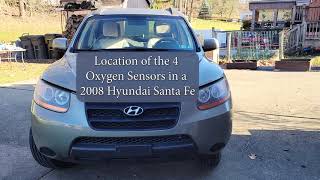
- The most likely cause is a failed O2 sensor (Bank 1, Sensor 2), which is located after the catalytic converter on the firewall side of the engine.
- This is a safe DIY repair. The biggest challenge is often removing the old sensor if it is seized by rust. Using penetrating oil and a special O2 sensor socket is highly recommended.
- Do not replace the catalytic converter for this code; it is almost certainly not the cause.
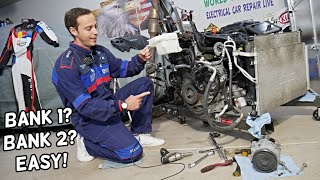
- Always verify you are replacing the correct sensor: Bank 1 (rear/firewall side), Sensor 2 (downstream/after catalyst).
- Before replacing the sensor, check the 15A 'SENSOR #2' fuse in the engine bay fuse box.
What's Unique About the 2007-2009 Hyundai Santa Fe
For the 3.3L V6 engine in the Santa Fe, which is mounted transversely, 'Bank 1' refers to the cylinder bank against the firewall, making it slightly harder to access than Bank 2, which is near the radiator. The code P0141 itself is a standard diagnostic code with no unique interpretation for Hyundai. The most common failure point is simply the oxygen sensor itself reaching the end of its service life due to age and heat cycles.
Symptoms You May Notice
- Check Engine Light is on
- Failing a state emissions inspection
- No other noticeable drivability issues are typically present with this code alone.
- Slight decrease in fuel economy.
- Replacing the wrong oxygen sensor (e.g., Sensor 1, or a sensor on Bank 2). Bank 1 is the rear bank (firewall side); Sensor 2 is downstream (after the catalytic converter).
- Replacing the catalytic converter (A bad catalytic converter typically sets a P0420 or P0430 code, not P0141).
Most Likely Causes
- Failed Oxygen Sensor 🔴 High Probability The internal heater element is a common failure point on O2 sensors as they age. With the vehicle's age, sensor failure is the most probable cause.
How to confirm: Disconnect the sensor and measure the resistance between the two heater circuit pins (usually the two same-colored wires, often black or white). A healthy sensor should read between 9 and 16 ohms at room temperature (approx. 20°C/68°F). An infinite resistance reading (OL) means the circuit is open and the sensor is bad.
Typical fix: Replace the Bank 1, Sensor 2 oxygen sensor. This is the downstream sensor on the firewall side of the engine.
Est. part cost: $40-$180 - Damaged Wiring or Connector 🟡 Medium Probability The sensor is located under the vehicle, exposed to road debris, moisture, and exhaust heat, which can damage the wiring or corrode the connector pins over time.
How to confirm: Visually inspect the wiring harness leading to the sensor for any signs of melting, chafing, or breaks. Check the electrical connector for corrosion, moisture, or backed-out pins.
Typical fix: Repair the damaged section of the wiring harness or clean/replace the connector.
Est. part cost: $5-$50 - Blown Fuse ⚪ Low Probability A short in the heater circuit wiring or in the sensor itself can cause the corresponding fuse to blow.
How to confirm: In the engine compartment fuse box, locate and check the 15A fuse labeled 'SENSOR #2'. This fuse protects the heater circuits for the oxygen sensors.
Typical fix: Replace the blown fuse. If it blows again immediately, a short circuit exists that must be diagnosed and repaired before replacing the fuse again.
Est. part cost: $1-$5
Rare But Worth Checking
- Faulty Engine Control Module (ECM): This is extremely rare. The ECM's driver circuit for the heater could fail, but all other possibilities should be exhausted before considering ECM replacement.
Diagnosis Steps
- Read the code with an OBD-II scanner to confirm P0141 is the only code present.
- Locate the Bank 1, Sensor 2 oxygen sensor. It is on the exhaust pipe after the catalytic converter on the firewall side of the engine.
- Visually inspect the sensor's wiring and connector for any obvious damage, such as burns, chafing, or corrosion.
- Check the 15A 'SENSOR #2' fuse in the engine compartment fuse box.
- If the fuse and wiring are okay, disconnect the sensor. Use a multimeter to measure the resistance across the two heater circuit pins on the sensor side. A reading of 'OL' or infinite resistance indicates a failed heater element. A good sensor should read approximately 9-16 ohms.
- If resistance is within spec, check for power at the vehicle's harness connector. With the key in the 'ON' position, one pin of the heater circuit should have 12V power, and the other should be the ground controlled by the ECM.
- If power and ground are present and the sensor's resistance is good, there may be an intermittent connection issue. If there is no 12V power, trace the circuit back from the fuse. If power is present but the ground signal from the ECM is missing, the problem may lie in the wiring to the ECM or, rarely, the ECM itself.
Parts You'll Likely Need
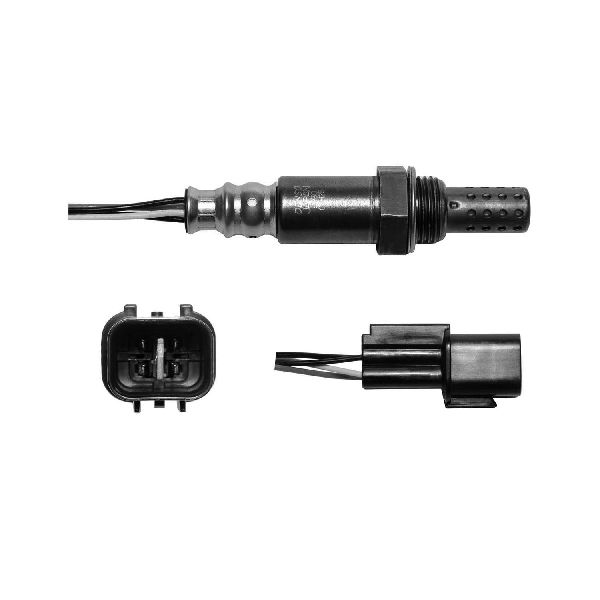
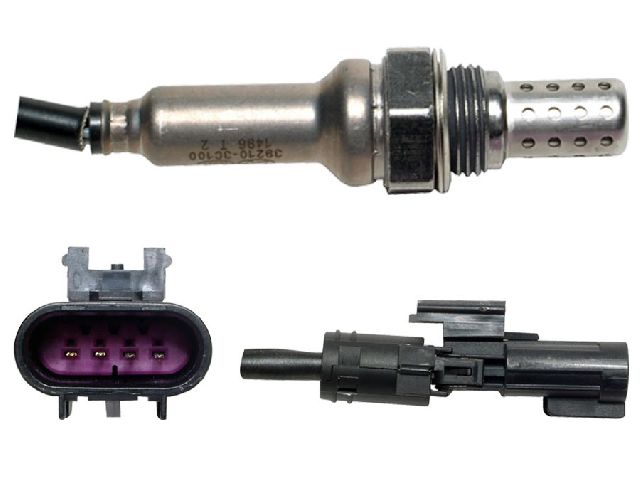
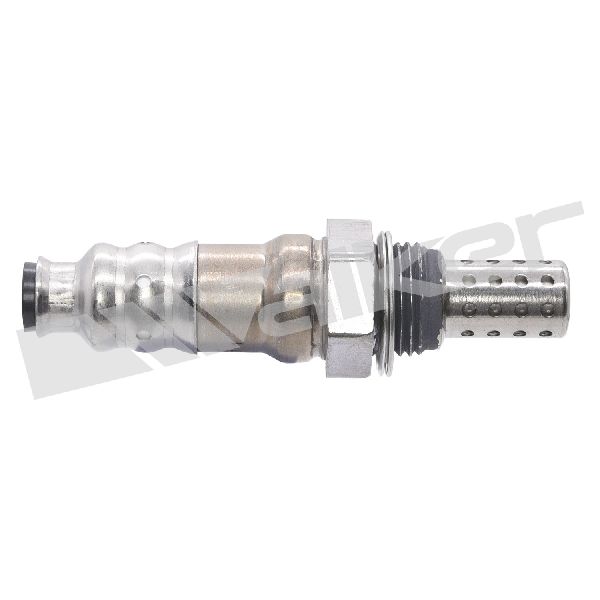
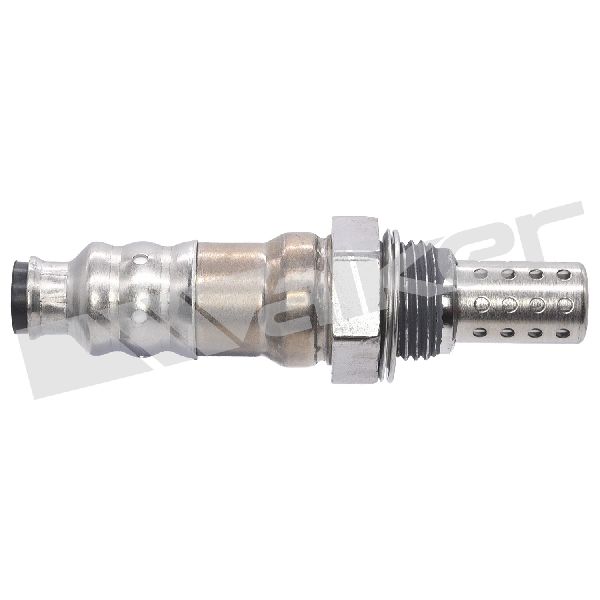
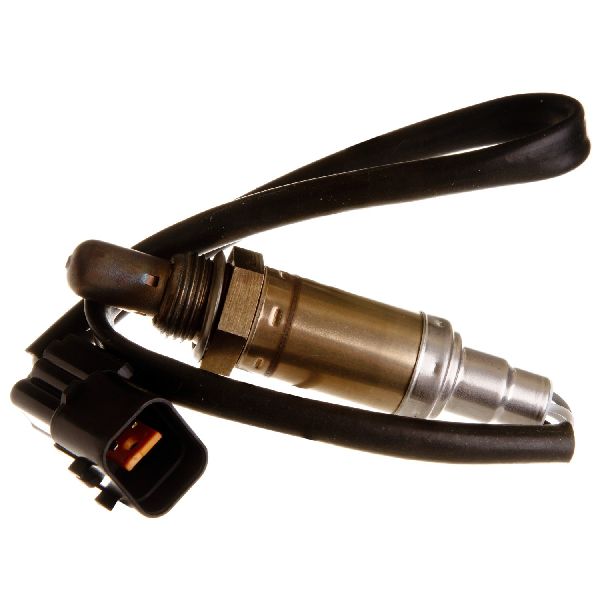
- Oxygen Sensor (Bank 1, Sensor 2)
(OEM #39210-3C600)— This is the downstream (post-catalyst) sensor for the rear cylinder bank. The internal heater circuit is the component that fails, triggering the P0141 code.
Trusted brands: Hyundai (OEM), Denso (P/N: 234-4279), Bosch (P/N: 15283), NTK (P/N: 24348)
OEM price range: $150-$200
Aftermarket price range: $40-$90
Technical Service Bulletins (TSBs) & Recalls
- No specific TSBs for the P0141 code on this platform were found. The issue is typically handled as a standard component failure and replacement.
Platform-Specific Known Issues
- Repair Story from Hyundai-Forums.com: A user on Hyundai-Forums with a 2007 Santa Fe 3.3L reported a P0141 code. After confirming the location of Bank 1 Sensor 2 (downstream, firewall side) with other forum members, the owner replaced the sensor. The replacement resolved the check engine light and the code did not return, confirming the sensor was the point of failure.
Mechanic-Grade Diagnostic Values
- O2 Sensor Heater Element Resistance — expected: 9.0 Ω at 20°C (68°F). Failure: Infinite resistance (OL) or a value significantly outside the specification indicates a failed heater.
- O2 Sensor Heater Power Supply Voltage — expected: 9 - 14 V with ignition ON. Failure: 0V indicates a blown fuse or a break in the power supply wire.
- O2 Sensor Heater Control Duty Cycle (Live Data) — expected: Should show a duty cycle percentage that changes as the ECM commands the heater on. A healthy circuit will show active control.. Failure: A static 0% or 100% reading can indicate an open/short in the control circuit or a faulty ECM driver.
- ECM Bias Voltage on Heater Control Circuit (KOEO, Connector Unplugged) — expected: Approximately 2.9 V to 4.2 V. Failure: 0V could indicate a short to ground in the harness. Battery voltage could indicate a short to power. No voltage may point to an issue within the ECM.
Scan Tool Commands That Help
- Hyundai GDS (Global Diagnostic System): O2 Sensor Heater Control (Live Data) — Use this to monitor the ECM's commanded duty cycle for the B1S2 heater. This helps determine if the ECM is attempting to control the heater, which is crucial for differentiating between a sensor/wiring failure and an ECM control problem.
Wiring & Ground Locations
- B1S2 Heater Power Wire — At the 4-pin sensor connector, this wire receives power from the 'SENSOR #2' 15A fuse via the main relay.. This is the power supply for the heater element. A lack of 12V here points to a problem upstream of the sensor (fuse, relay, or wiring).
- B1S2 Heater Control Wire (ECM Ground) — Runs from the 4-pin sensor connector directly to a specific pin on the Engine Control Module (ECM). For a similar Lambda V6, the B2S2 ground is Pin 78, suggesting the B1S2 pin is in a similar block.. The ECM provides a pulsed ground on this wire to control the heater's temperature. A break in this wire or a faulty ECM driver will prevent the heater from working, setting P0141.
Real Owner Repair Stories
- Hyundai-Forums.com user (2007 Hyundai Santa Fe 3.3L) — Check Engine Light with code P0141.
❌ Tried (didn't work) Initial confusion about which sensor was Bank 1, Sensor 2.
✅ What actually fixed it After correctly identifying the sensor as the downstream (post-catalyst) one on the firewall side, the owner replaced the oxygen sensor, which resolved the code.
Model Year Variations Within This Range
- 2007-2009: No significant variations related to the P0141 code, the 3.3L engine, or the associated emissions components have been documented for this model year range. The engine and systems were consistent before the 2010 facelift.
Diagnostic Flowchart
Other Known Issues on This Vehicle
Issues unrelated to this code that are worth knowing about as an owner of this generation:
- Valve Cover Gasket Oil Leak 🔴 High — Very common. Oil often leaks from the front valve cover onto the alternator, causing alternator failure and potential vehicle shutdown. (Ref: Service Campaign 936 / TSB# 15-01-031)
- Erratic Fuel Gauge / Failed Fuel Level Sensor 🟠 Medium — A widespread problem where the fuel gauge reads incorrectly or shows empty. Requires replacing one or both fuel level sending units inside the gas tank. (Ref: Related to TSB 09-FL-003-2 for some models.)
- Timing Chain Tensioner Wear 🟠 Medium — Less common than on earlier Lambda engines, but can still occur. Presents as a rattling noise on cold startups. The Lambda V6 is generally considered reliable.
- Leaking Oil Pressure Switch 🟡 Low — A common but minor issue. The switch can develop a leak, causing a small but messy oil drip. The part is inexpensive and relatively easy to replace.
- Premature Suspension Component Wear 🟡 Low — Owners frequently report worn-out front sway bar end links and strut assemblies, leading to clunking noises over bumps.
Used vs. New Parts: Buying Guide for This Vehicle
When a used part is the smart pick: For this repair, buying a used oxygen sensor is strongly discouraged. O2 sensors are wear items with a finite lifespan (typically 30,000-50,000 miles for older styles). A used sensor has an unknown history and is likely to fail sooner, if it works at all. It is not a cost-effective choice.
What to inspect on the donor part:
- Not applicable as used sensors are not recommended.
OEM-only on this vehicle (don't cheap out):
- While not strictly 'OEM-only', using a reputable OEM supplier like Denso or NTK is highly recommended over generic, unbranded parts for guaranteed fitment and longevity.
Aftermarket brands forum-validated for this vehicle:
- Denso (often the OEM supplier)
- NTK / NGK
- Bosch
Brands owners have reported issues with on this vehicle:
- Unbranded, 'no-name' sensors from online marketplaces. These often have high failure rates, incorrect resistance values, or use lower-quality materials, leading to the code returning shortly after installation.
Real Owner Stories
Aggregated from forums and TSBs cited above. Mileages and costs reflect what owners reported in those sources.
2007 Hyundai Santa Fe 3.3L V6
Symptoms: Check engine light was on with code P0141 present.
What fixed it: The owner replaced the Bank 1 Sensor 2 (downstream, firewall side) oxygen sensor, which resolved the check engine light.
Source hint: hyundai-forums.com: Thread titled 'P0141 - O2 Sensor Heater Circuit Malfunction (Bank 1 Sensor 2)'
2008 Hyundai Santa Fe 3.3L V6
Symptoms: Vehicle triggered a P0141 code.
What fixed it: The owner resolved the code by replacing the specified downstream O2 sensor.
Source hint: hyundai-forums.com: Thread titled 'Help with P0141 code'
Related OBD-II Codes
Frequently Asked Questions
Where is the Bank 1 Sensor 2 oxygen sensor located on my 2007-2009 Santa Fe 3.3L?
Is there a specific fuse I should check for the P0141 code on this vehicle?
What resistance reading should I see when testing the O2 sensor heater on my Santa Fe?
Are there any TSBs for P0141 on the 2007-2009 Hyundai Santa Fe 3.3L?
Can I use a used O2 sensor from a salvage yard to fix this code?
Which aftermarket brands are recommended for replacing the O2 sensor on this engine?
Helpful Videos


We Have This Part in Stock


The information in this article is provided for general reference and educational purposes only. Vehicle specifications, procedures, and part compatibility can vary by production date, trim level, and region. Always consult your vehicle's factory service manual and verify part numbers before purchasing or performing repairs. Safety-critical components such as airbags, seat belts, and braking systems should be installed by a qualified professional.
- Hyundai Santa Fe:
- 🎬 Helpful Videos
- 🛍️ Shop This Part
- What's Unique About the 2007-2009 Hyundai Santa Fe
- Symptoms You May Notice
- Most Likely Causes
- Rare But Worth Checking
- Diagnosis Steps
- Parts You'll Likely Need
- Technical Service Bulletins (TSBs) & Recalls
- Platform-Specific Known Issues
- Mechanic-Grade Diagnostic Values
- Scan Tool Commands That Help
- Wiring & Ground Locations
- Real Owner Repair Stories
- Model Year Variations Within This Range
- Diagnostic Flowchart
- Other Known Issues on This Vehicle
- Used vs. New Parts: Buying Guide for This Vehicle
- Real Owner Stories
- 2007 Hyundai Santa Fe 3.3L V6
- 2008 Hyundai Santa Fe 3.3L V6
- Related OBD-II Codes
- Frequently Asked Questions
- 🎟️ Get 5% Off