

OBD-II Code P0147: O2 Sensor Heater Circuit Malfunction (Bank 1, Sensor 3)
What P0147 means, why it triggers, and how to fix it
- The most common cause for code P0147 is a burned-out internal heater element inside the Bank 1, Sensor 3 oxygen sensor.
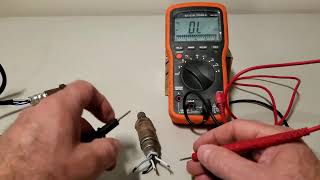
- Test the sensor's heater pins with a multimeter; a healthy sensor reads between 2 and 20 Ohms, while an 'OL' reading confirms it must be replaced.
- Check the O2 sensor heater circuit fuse before buying parts, as a single blown $5 fuse triggers this code.
- Always install an OEM-equivalent replacement sensor (like Denso, NTK, or AC Delco) to prevent the code from returning prematurely.
What Does P0147 Mean?
The Powertrain Control Module (PCM) detected a failure in the heater circuit of the third oxygen (O2) sensor on engine bank 1. Located after the catalytic converter, this sensor monitors converter efficiency. Its built-in heater warms the sensor to 600°F (300°C) rapidly, ensuring accurate emissions monitoring during cold starts.
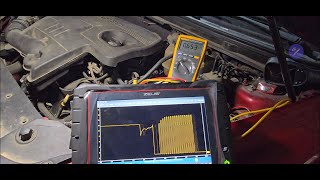
Technical definition: SAE/ISO defines P0147 as "O2 Sensor Heater Circuit Malfunction (Bank 1, Sensor 3)". 🎬 Watch: A complete guide to fixing the P0147 code. The PCM tests the circuit at startup and sets this code upon detecting excessive current draw, an open circuit (no current), or a short circuit in the heater element.
Can I Drive With P0147?
Yes, But With Caution. You can drive, but limit it to short trips directly to a repair shop. Ignoring this code for hundreds of miles damages your catalytic converter, a repair costing $1,000 to $3,000. The vehicle's computer defaults to a richer fuel mixture, decreasing fuel economy by 10-15% and guaranteeing a failed emissions test.
Common Causes
- Faulty Bank 1, Sensor 3 Oxygen Sensor (Very Common) — The internal heater element inside the oxygen sensor burns out or breaks over time, creating an open circuit.
- Blown Fuse or Faulty Relay (Common) — A short in the circuit blows the O2 sensor heater fuse, cutting power. Always locate the short before replacing the fuse.
- Damaged Wiring or Connectors (Common) — Extreme heat, moisture, and road debris melt, fray, or break the wiring harness. Corroded connector pins also block the electrical signal.
- Contamination of Sensor or Connector (Less Common) — Engine oil or coolant leaks seep into the wiring harness or connector, shorting the heater circuit.
- Thermal Shock to Sensor (Rare) — Driving through deep water rapidly cools the hot sensor element, cracking the internal ceramic and breaking the heater circuit.
- Low Voltage or Faulty PCM (Very Rare) — A failing voltage regulator or cracked solder joint inside the PCM drops the supplied voltage below the 12V threshold, or the internal driver circuit fails entirely.
Symptoms
- Check Engine Light is On — The light illuminates immediately after the PCM completes its startup check and detects the electrical fault.
- Failed Emissions Test — The catalyst monitor cannot run without a functioning sensor heater, resulting in an automatic emissions inspection failure.
- Decreased Fuel Economy — The PCM defaults to a richer fuel map to protect the engine, dropping fuel efficiency by 10-15%.
- Delayed Sensor Readiness (scan-tool only — no driver-felt sign) — Live data shows the O2 sensor taking significantly longer than the expected 1-2 minutes to reach 600°F and send a valid voltage signal.
Diagnostic Flowchart
Tap your situation to follow the diagnostic path that matches what you're seeing on this code.
Common Fixes & Costs
- Replace the Bank 1, Sensor 3 Oxygen Sensor — Parts: $70-$280, Labor: $100-$250, ~0.8 hr book time (DIY)
- Replace Blown O2 Sensor Heater Fuse — Parts: $1-$5, Labor: $0-$50, ~0.2 hr book time (DIY)
- Repair Damaged Wiring or Connector — Parts: $10-$50, Labor: $100-$200, ~1.5 hr book time (Intermediate)
- Perform PCM/ECM Software Update — Parts: $0, Labor: $150-$250, ~1.0 hr book time (Professional)
Used vs. New Parts: Buying Guide
When a used part is worth it: Never buy a used oxygen sensor. They are wear-and-tear items with a finite lifespan, and a used part carries a high risk of immediate failure.
Donor-vehicle mileage cap: roughly under 30000 miles for the part to have meaningful remaining life.
Donor quality checklist:
- Verify the part is from a low-mileage vehicle not scrapped for emissions issues.
- Inspect for physical damage, corrosion, or contamination on the connector.
- Ensure the part number is an exact match.
Decision logic:
- If The cost of a new OEM sensor is affordable. → Always buy new to ensure reliability.
- If Budget is extremely tight. → A used sensor from a low-mileage donor is a temporary fix, but carries a high risk of premature failure.
Warranty tradeoff: Used parts have a 30-day warranty at best. New aftermarket sensors include a 1-3 year warranty.
Worst-case if a used part fails: $150-300 for repeat labor costs when the used sensor fails.
What Happens If You Wait — Timeline
- 0-2 weeks: Check Engine Light is on. The vehicle automatically fails an OBD-II emissions test. (MPG impact: 0-3%% · Added cost: $0)
- 2 weeks - 3 months: Fuel economy drops as the PCM defaults to a richer fuel mixture. (MPG impact: 5-15%% · Added cost: $50-150 in wasted fuel)
- 3-8 months: The consistently rich fuel mixture overheats the catalytic converter, cracking the internal ceramic substrate. (MPG impact: 10-15%% · Added cost: $1000-3000 for catalytic converter replacement)
- 8+ months: Complete catalytic converter failure causes severe backpressure, power loss, and engine overheating. (MPG impact: 15-25%% · Added cost: $2500-4000+ for exhaust and engine repairs)
Cost of Not Fixing It
- 0-1 month: Failed emissions test and a 10-15% decrease in fuel economy. (Added cost: $20-$50 in wasted fuel)
- 1-6 months: The engine running rich overheats and damages the catalytic converter. (Added cost: $1000-$3000 for catalytic converter replacement)
- 6+ months: Prolonged rich fuel conditions cause severe carbon buildup on valves and pistons. (Added cost: $3000+ for catalytic converter and engine repairs)
Diagnosis Steps
- Read the Code and Freeze Frame Data
Use an OBD-II scanner to confirm P0147 is present and check for related codes. Analyze the freeze frame data to identify the exact engine coolant temperature and RPM when the fault occurred.
Tools: OBD-II Scanner (Beginner) - Check the Heater Circuit Fuse
Locate the O2 sensor heater fuse in the owner's manual. If blown, replace it with the exact same amperage. Immediate failure of the new fuse confirms a hard short in the wiring.
Tools: Owner's Manual, Fuse Puller (Beginner) - Visually Inspect the Sensor and Wiring
Raise the vehicle and locate Bank 1, Sensor 3 (after the final catalytic converter). Inspect the harness for melted plastic, frayed wires, or oil contamination.
Tools: Jack and Jack Stands, Flashlight (Beginner) - Test the Heater Circuit Resistance
Disconnect the sensor. Measure resistance across the two heater pins (usually the same color wires). A healthy sensor reads 2-20 Ohms. An 'OL' (infinity) reading confirms a burned-out heater requiring replacement.
Tools: Multimeter (Intermediate) - Check for Power and Ground at the Connector
Turn the ignition 'On' (engine off). Measure the harness-side power pin; it must show 10-14 volts. Test the ground pin for continuity to the chassis (less than 0.1 Ohms).
Tools: Multimeter (Intermediate) - Analyze Live Data PIDs
Monitor 'O2S13 Heater Status' and 'O2S13 Voltage' on an advanced scanner. The heater must show 'On' during cold starts, and voltage should stabilize around 0.45V after warmup.
Tools: Advanced OBD-II Scanner with Live Data (Advanced) - Heater Circuit Current Draw Test
Clamp the ammeter around the heater power wire with the engine running. A healthy circuit draws 0.5-1.5 amps. 0 amps means an open circuit; over 1.5 amps indicates a short.
Tools: DC Clamp-On Ammeter (Professional) - Clear the Code and Test Drive
Clear the P0147 code and drive for 15 minutes at mixed speeds to run the PCM self-tests and verify the repair.
Tools: OBD-II Scanner (Beginner)
When This Code Triggers (Freeze-Frame Conditions)
- Engine Coolant Temp: < 122°F (50°C) (During a cold start)
- Time Since Engine Start: < 2 minutes (Shortly after starting the engine)
- Engine Load: 20-40% (Light to moderate acceleration)
- Ambient Air Temperature: Close to Engine Coolant Temp (Confirms a true cold start)
Related Codes
- P0141 — Indicates a heater circuit malfunction on Bank 1, Sensor 2. If both appear, check for a shared power or ground issue.
- P0161 — The exact same heater circuit malfunction code, but for Bank 2, Sensor 2 on V6 or V8 engines.
- P0167 — Indicates a heater circuit malfunction for Bank 2, Sensor 3, the direct equivalent of P0147 on the opposite engine bank.
- P0135 — Points to a heater circuit malfunction in the upstream sensor (Bank 1, Sensor 1). Seeing multiple heater codes together strongly suggests a blown fuse.
Climate & Environmental Factors
- Cold Weather: The P0147 code triggers most often during cold starts. The heater's primary function is warming the sensor rapidly; a failing heater is immediately flagged during this cold-start diagnostic routine.
- High Humidity / Water Exposure: Corrosion of wiring and connectors accelerates in wet climates. Driving through deep water causes thermal shock to the hot sensor, cracking the internal ceramic element and triggering the code.
- Altitude: Altitude has no effect on P0147. The code relates strictly to an electrical circuit failure, not the sensor's reading of oxygen content.
How to Talk to a Mechanic About This Code
Say this: "I have a P0147 code for the O2 sensor heater circuit on Bank 1, Sensor 3. Please check the sensor's heater resistance and verify power and ground at the connector before recommending a replacement."
This directs the technician to perform a proper electrical diagnosis rather than immediately replacing the most expensive part, saving you money on parts and labor.
Avoid saying:
- 'My check engine light is on, can you look at it?'
- 'Just fix whatever is wrong.'
- 'I think I need a new oxygen sensor.'
Questions to ask before authorizing the repair:
- What was the resistance reading on the O2 sensor's heater circuit?
- Did you confirm there is battery voltage and a good ground at the sensor's connector?
- Is the fuse for the O2 heater circuit intact?
- What is the warranty on the replacement part and the labor?
Where to Take It: Dealer vs Independent vs Chain
- Dealer:
Best for: Vehicles under a powertrain or emissions warranty, Known manufacturer-specific issues requiring a software update (Jaguar/Land Rover)
Downsides: Higher labor rates, Exclusive use of expensive OEM parts (Typical cost: +50% vs. baseline) - Independent Shop:
Best fit for most cases. A competent independent shop easily diagnoses and repairs a P0147 code at a lower cost than a dealership.
Best for: Out-of-warranty vehicles, Straightforward electrical diagnosis and part replacement
Downsides: Quality and expertise vary by shop (Typical cost: +0% vs. baseline) - Chain Shop:
Acceptable only if you are certain the O2 sensor itself is the problem.
Best for: Simple part replacements if the diagnosis is already confirmed
Downsides: Technician skill is inconsistent, High likelihood of upselling unrelated services (Typical cost: -10% vs. baseline)
When to Walk Away From the Repair
If the estimated repair cost for the P0147 code exceeds 50% of your car's private-party value, consider whether the investment is worthwhile.
- Car worth $4000, fix is $750: Fix it. This repair is well below the 50% threshold and is necessary to pass emissions.
- Car worth $3000, fix is $1800: Walk away. The repair cost is over 50% of the car's value.
What Scan Tool You Need for This Code
Minimum: A scanner that reads/clears codes and views live data for O2 sensors.
A basic code reader won't show live sensor voltage to confirm if the sensor is responding after replacement.
Budget: BlueDriver Pro (~$120) — Connects via Bluetooth to read/clear codes, view freeze frame data, and graph live O2 sensor data.
Mid-range: Foxwell NT510 Elite (~$180) — Offers manufacturer-specific diagnostics and bidirectional controls to command components during complex diagnoses.
Professional: Autel MaxiCOM MK808 (~$500) — Provides comprehensive all-system diagnostics, service functions, and full bidirectional control.
Rent vs buy: Auto parts stores read codes for free for a one-time fix. If you repair your own cars, buying the BlueDriver Pro offers excellent value.
How to Clear the Code After You Fix It
- Use an OBD-II scan tool to clear the P0147 code.
- Perform a complete drive cycle to allow the vehicle's readiness monitors to run.
Drive cycle (~15 minutes): Cold start the engine and idle for 3 minutes. Drive at a steady 55 mph for 7 minutes. Coast down to 20 mph without braking. Accelerate to 55 mph and hold for 3 minutes. Let the vehicle cool down completely.
Readiness monitors affected: Catalyst monitor, O2 sensor monitor, O2 sensor heater monitor
Before emissions retest: drive at least 50 miles to fully set monitors.
Watch out for:
- Clearing the code without a drive cycle fails the emissions test automatically.
- The Check Engine Light returns immediately if the electrical short was not repaired.
Will This Fail Emissions / State Inspection?
Yes — this code typically fails an OBD-II emissions inspection.
- California: A P0147 code results in an automatic smog check failure. All readiness monitors must be set to 'Ready'.
- New York: The NYS DMV emissions inspection includes an OBD-II scan. The presence of P0147 causes an automatic failure.
- Texas: In counties requiring emissions testing, a P0147 code leads to a failed inspection.
Most Commonly Affected Vehicles
- Jaguar / Land Rover XJ, XF, F-Type, Range Rover (2013-2016) — Documented in TSBs LTB00671NAS3 and JTB00392NAS1. A dealer software update is frequently required alongside sensor replacement.
- Ford F-150 (2010-2015) — Corroded wiring connectors or damaged harnesses are the root cause due to exposure under the truck.
- Chevrolet / GMC Silverado, Sierra, Blazer (1996-2007) — Using OEM (AC Delco) replacement sensors is mandatory to avoid repeat failures.
- Toyota Camry, Prius (2007-2018) — Ignoring the P0147 code on these models leads to premature catalytic converter failure.
- Honda Accord, Civic (2008-2015) — Typically resolved by replacing the Bank 1, Sensor 3 O2 sensor with an OEM-equivalent Denso unit.
- Nissan Altima, X-Trail (2009-2016) — The primary cause is a failed O2 sensor heater element.
- Subaru Outback, Forester (2005-2015) — Triggered by poor connections between control modules or blown fuses.
- Dodge / Chrysler / Jeep Grand Cherokee, Ram 1500 (2008-2017) — Technicians recommend using NTK (OEM) sensors to prevent compatibility issues.
Manufacturer-Specific Notes
- Jaguar / Land Rover: TSB JTB00392NAS1 addresses a software error in the Engine Control Module (ECM) causing a false P0147 code. The official fix requires replacing the sensor and performing an ECM re-flash at a dealership.
- General Motors (Chevrolet/GMC): Technicians mandate using original AC Delco brand oxygen sensors. Aftermarket sensors have a high rate of premature failure and cause heater circuit codes to return immediately.
- Toyota/Honda: These brands require Denso or NTK brand oxygen sensors. Using other aftermarket brands leads to compatibility issues.
- Ford: A 2023 recall for some F-150 models addresses a wiring harness defect causing a P0147 code, highlighting the vulnerability of the harness routing.
Real Owner Stories
2010 Ford F-150 with poor fuel economy
Owner experienced a persistent check engine light and noticeably worse gas mileage.
What they tried:
- Initial scan revealed code P0147.
Outcome: Technicians found corrosion at the sensor connector impeding the electrical signal. Replacing the damaged connector restored fuel efficiency and cleared the code.
Lesson: Inspect the wiring and connectors for corrosion before replacing the sensor. A bad connection is a common, inexpensive fix.
2002 Chevy Blazer with P0147
Check engine light appeared shortly after purchasing the vehicle. A code reader showed P0147.
What they tried:
- Owner researched the code and learned it was for the post-catalyst sensor.
Outcome: The owner replaced the sensor with an AC Delco (OEM) part, applied anti-seize to the threads, and torqued it correctly. The fix was successful.
Lesson: Using an OEM AC Delco sensor prevents compatibility issues on GM vehicles. Proper installation with anti-seize is critical.
2013 Jaguar XJ with recurring P0147
The check engine light for P0147 appeared intermittently despite finding no obvious faults.
What they tried:
- Visual inspection of sensor and wiring.
- Testing resistance of the sensor.
Outcome: The owner discovered TSB #JTB00392NAS1 indicating a software error in the Engine Control Module (ECM). The repair required replacing the sensor and performing a dealer ECM software update.
Lesson: Always check for TSBs related to the code. The root cause may be a software issue requiring a dealer re-flash.
How to Prevent This Code From Triggering
- Use high-quality, top-tier gasoline (Every fill-up) — Top-tier fuels contain detergents preventing carbon buildup on sensors. Poor quality fuel introduces contaminants that foul the O2 sensor.
- Address engine oil and coolant leaks promptly (As needed) — Leaking fluids contaminate the O2 sensor's electrical connector, causing it to short out and fail.
- Avoid frequent short trips (Daily habit) — The exhaust system must reach full operating temperature to burn off contaminants. Short trips allow moisture buildup, degrading sensor performance.
- Replace O2 sensors proactively (Every 100,000 miles) — O2 sensors are wear items. Replacing them at 100k miles restores response time and prevents trouble codes.
Frequently Asked Questions
What does Bank 1, Sensor 3 actually mean?
Bank 1 is the side of the engine containing cylinder #1. Sensor 3 refers to the third oxygen sensor in line on that bank, located after the final catalytic converter. Its job is to confirm the converter is working.
What's the biggest mistake when diagnosing a P0147 code?
The most common mistake is replacing the oxygen sensor without testing the electrical circuit. The problem is often a blown fuse, a damaged wire, or a corroded connector. Always test for 10-14V power and 2-20 Ohms resistance before buying parts.
Should I use an OEM or aftermarket O2 sensor?
Always use an OEM-spec sensor (like AC Delco, Denso, or NTK). Cheaper aftermarket sensors frequently cause compatibility issues and trigger the code to return.
Can a bad O2 sensor damage my engine?
The P0147 code won't cause immediate engine damage, but driving for an extended period harms the catalytic converter. Replacing a ruined catalytic converter costs over $1,000.
Will replacing the O2 sensor make the Check Engine Light go away?
Yes, if the sensor was the sole cause of the problem. You must use an OBD-II scanner to clear the code after installation. The light stays off once the vehicle completes a drive cycle.
Can I clean an O2 sensor to fix a P0147 code?
No. The P0147 code indicates an electrical failure within the sensor's internal heater circuit. Cleaning the sensor tip will not repair a broken electrical element.
Will the P0147 code clear itself?
No. The PCM runs the heater circuit test every time the vehicle starts. Because the fault is a permanent open or short circuit, the code reappears immediately until repaired.
How tight should a new O2 sensor be?
Tighten the O2 sensor to 30-35 ft-lbs (40-50 Nm). Over-tightening damages the threads, while under-tightening causes an exhaust leak. Always apply anti-seize compound to the threads before installation.
Key Takeaways
- The most common cause for code P0147 is a burned-out internal heater element inside the Bank 1, Sensor 3 oxygen sensor.
- Test the sensor's heater pins with a multimeter; a healthy sensor reads between 2 and 20 Ohms, while an 'OL' reading confirms it must be replaced.
- Check the O2 sensor heater circuit fuse before buying parts, as a single blown $5 fuse triggers this code.
- Always install an OEM-equivalent replacement sensor (like Denso, NTK, or AC Delco) to prevent the code from returning prematurely.
Helpful Videos


The information in this article is provided for general reference and educational purposes only. Vehicle specifications, procedures, and part compatibility can vary by production date, trim level, and region. Always consult your vehicle's factory service manual and verify part numbers before purchasing or performing repairs. Safety-critical components such as airbags, seat belts, and braking systems should be installed by a qualified professional.
- 🎬 Helpful Videos
- What Does P0147 Mean?
- Can I Drive With P0147?
- Common Causes
- Symptoms
- Diagnostic Flowchart
- Common Fixes & Costs
- Used vs. New Parts: Buying Guide
- What Happens If You Wait — Timeline
- Cost of Not Fixing It
- Diagnosis Steps
- When This Code Triggers (Freeze-Frame Conditions)
- Related Codes
- Climate & Environmental Factors
- How to Talk to a Mechanic About This Code
- Where to Take It: Dealer vs Independent vs Chain
- When to Walk Away From the Repair
- What Scan Tool You Need for This Code
- How to Clear the Code After You Fix It
- Will This Fail Emissions / State Inspection?
- Most Commonly Affected Vehicles
- Manufacturer-Specific Notes
- Real Owner Stories
- 2010 Ford F-150 with poor fuel economy
- 2002 Chevy Blazer with P0147
- 2013 Jaguar XJ with recurring P0147
- How to Prevent This Code From Triggering
- Frequently Asked Questions
- What does Bank 1, Sensor 3 actually mean?
- What's the biggest mistake when diagnosing a P0147 code?
- Should I use an OEM or aftermarket O2 sensor?
- Can a bad O2 sensor damage my engine?
- Will replacing the O2 sensor make the Check Engine Light go away?
- Can I clean an O2 sensor to fix a P0147 code?
- Will the P0147 code clear itself?
- How tight should a new O2 sensor be?
- Key Takeaways
- 🎟️ Get 5% Off