

P0141 on 1997 Ford F-250: O2 Sensor Heater Circuit Causes and Fixes
For a 1997 Ford F-250, code P0141 almost always means the downstream oxygen sensor (Bank 1, Sensor 2) has failed and needs to be replaced. This is a simple and affordable DIY fix, with the part costing between $25 and $70. It is critical to first identify if you have the F-250 Heavy Duty (OBS) or Light Duty (F-150 based) model, as parts are not interchangeable.
- P0141 points to a bad heater in the passenger-side, post-catalytic converter O2 sensor.
- Before buying parts, you MUST confirm if your 1997 F-250 is the Heavy Duty (OBS, 8-lug wheels) or Light Duty (NBS, 7-lug wheels) model, as they are different trucks.
- The most likely fix is replacing the O2 sensor, which is an accessible and affordable DIY job for most owners.
- Always check the fuse and inspect the wiring for damage before spending money on a new sensor.
What's Unique About the 1997-1997 Ford F-250
The 1997 model year is unique because Ford sold two completely different F-250 trucks. The F-250 Heavy Duty (HD) was the older, boxy 'Old Body Style' (OBS) with pushrod V8s (5.8L or 7.5L) and 8-lug wheels. The F-250 Light Duty (LD) was the new, rounded 'New Body Style' (NBS) based on the F-150 platform with modular Triton V8s (4.6L or 5.4L) and unique 7-lug wheels. While P0141 means the same thing for both, the exact O2 sensor part number, its location, and wire routing will differ between these two distinct platforms. Always confirm if you have the HD (8-lug wheels, squarer body) or the LD 🎬 Watch: See the unique features of the F-250 Heavy Duty (7-lug wheels, rounded F-150 body) before buying parts. The 8th digit of the VIN can identify the engine: 'H' for the 5.8L and 'G' for the 7.5L in the HD models, versus '6' for the 4.6L and 'L' for the 5.4L in the LD models.
Generation note: The 1997 F-250 was a crossover year. You could have the F-250 HD (Heavy Duty), which is a continuation of the 9th generation 'Old Body Style' (1992-1997), or the F-250 LD (Light Duty), which was a new 10th generation 'New Body Style' based on the F-150 platform. The HD model used the 5.8L and 7.5L V8s, while the LD model used the 4.6L and 5.4L Triton V8s. This guide applies to all gasoline engine variants, but you must identify your specific model to get the correct parts.
Symptoms You May Notice
- Check Engine Light is on
- Failing a state emissions inspection
- Slight decrease in fuel economy
- Rough idle on cold starts
- Replacing the wrong oxygen sensor (e.g., replacing the upstream Sensor 1 or the driver's side Bank 2 sensor). P0141 is specifically for Bank 1 Sensor 2.
- Assuming the sensor is bad without testing. A user on the Ford Truck Enthusiasts forum measured 4 ohms on his old sensor and 6 ohms on the new one, indicating the original sensor's heater was likely still functional and the problem was elsewhere.
Most Likely Causes
- Failed Oxygen Sensor 🔴 High Probability Oxygen sensors are wear-and-tear items that operate in a harsh exhaust environment. The internal heater element is often the first part to fail after many years and heat cycles, as the ceramic element can crack.
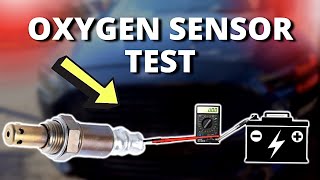
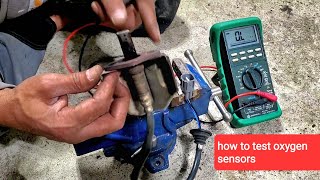
How to confirm: Disconnect the sensor and measure the resistance between the two same-colored wires (usually white on universal sensors, but check diagrams) on the sensor side of the connector. A reading of 'OL' (Open Loop) or infinite resistance on a multimeter means the heater is broken. A good heater should have a low resistance, typically between 3 and 30 ohms. 🎬 Watch: How to test O2 sensor resistance and voltage Some sources specify a tighter range of 4-6 ohms.
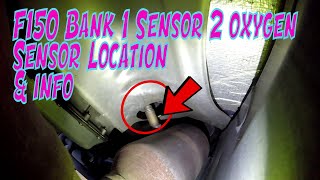
Typical fix: Replace the Bank 1, Sensor 2 oxygen sensor. This sensor is located on the passenger side, after the catalytic converter. 🎬 Watch: Locate the Bank 1 Sensor 2 on your Ford A special slotted socket for O2 sensors is highly recommended.
Est. part cost: $25-$70 - Damaged Wiring or Connector 🟡 Medium Probability The sensor wiring is routed under the truck near hot exhaust components and is exposed to road debris and moisture, which can cause wires to melt, break, or connectors to corrode. A user on F150forum.com reported fixing a P0141 code simply by cleaning white oxidation buildup from a connector pin.
How to confirm: Visually inspect the wiring harness leading to the O2 sensor for any signs of melting, chafing, or breaks. Unplug the connector and check for corrosion, moisture, or pushed-out pins. Pack the connector with dielectric grease upon reassembly to prevent future moisture intrusion.
Typical fix: Repair the damaged section of wire or clean/replace the connector pigtail.
Est. part cost: $10-$30 - Blown Fuse ⚪ Low Probability A short circuit in the heater element or its wiring can cause the associated fuse to blow.
How to confirm: Consult the owner's manual or a fuse box diagram to locate the fuse for the 'HEGO' (Heated Exhaust Gas Oxygen) sensor circuit. On 1997 F-series trucks, this is often located in the power distribution box in the engine compartment. For some models, it may be fuse #23 in the under-dash fuse box. Pull the fuse and visually inspect it or test for continuity with a multimeter.
Typical fix: Replace the blown fuse. If the fuse blows again immediately, it indicates a short circuit in the wiring or the sensor itself that must be found and fixed.
Est. part cost: $1-$5
Rare But Worth Checking
- Faulty Powertrain Control Module (PCM): This is extremely rare. The PCM's internal driver for the heater circuit can fail. All other possibilities, especially the sensor and wiring, should be exhaustively ruled out before considering PCM replacement. A technician on a YouTube repair video noted a case where the PCM was at fault after all other tests passed.
Diagnosis Steps
- Identify Your Vehicle: Determine if you have the F-250 HD (Old Body Style, 8-lug wheels) or F-250 LD (New Body Style, 7-lug wheels) to ensure you reference the correct parts and diagrams.
- Check the Fuse: Locate and inspect the fuse for the 'HEGO' (Heated Exhaust Gas Oxygen) sensor circuit in the engine compartment power distribution box or the passenger compartment fuse panel. Replace if blown.
- Inspect Wiring: Visually inspect the wiring harness and connector for the passenger-side downstream O2 sensor. Look for any obvious damage, melting, or corrosion. Check for moisture or oxidation inside the connector.
- Test for Power and Ground: With the key in the 'RUN' position (engine off), use a multimeter to check for 12V power on the vehicle-side connector. Then, check for a good ground provided by the PCM. A safe way to test the ground is to connect the red multimeter lead to the battery positive terminal and probe the ground wire pin with the black lead; it should read 10-12V.
- Test Sensor Heater Resistance: Disconnect the sensor. Set your multimeter to Ohms (Ω) and measure the resistance across the two heater pins (typically the two same-colored wires) on the sensor itself. A reading of OL (over-limit/open) indicates a failed heater. A good sensor will typically read between 3-30 ohms.
- Replace the Sensor: If the fuse, wiring, power, and ground are all good, but the sensor's heater resistance is out of spec, the sensor is faulty and must be replaced. Using a special O2 sensor socket will make removal easier.
Parts You'll Likely Need
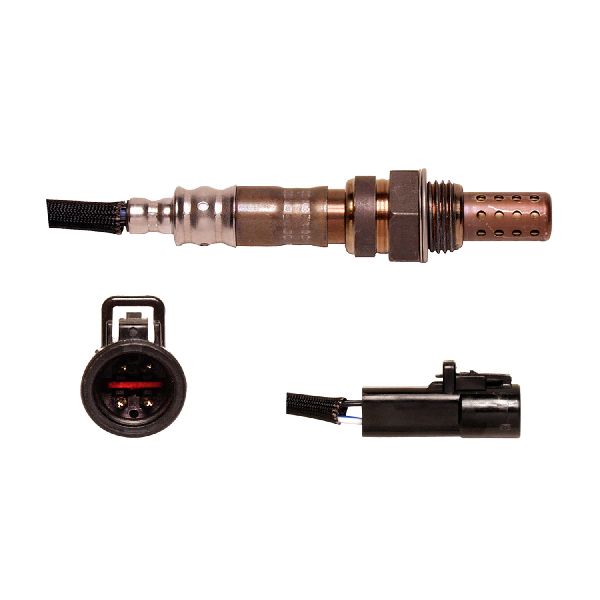
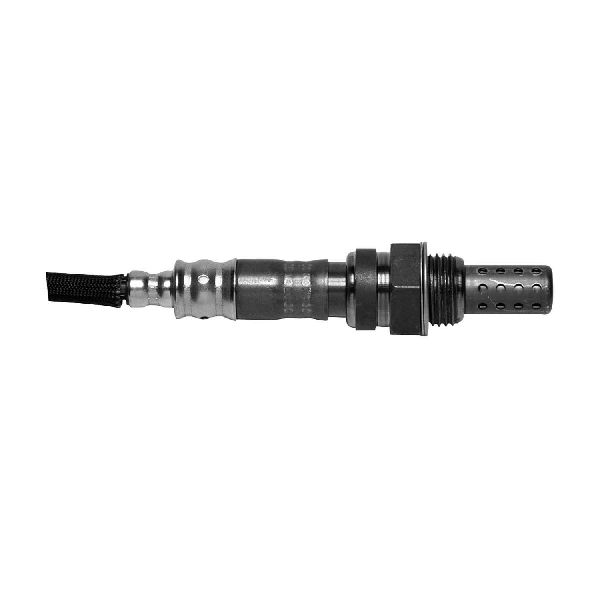
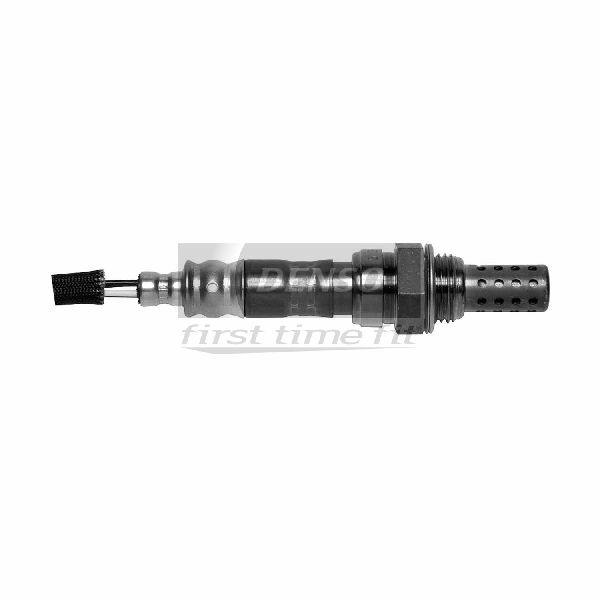
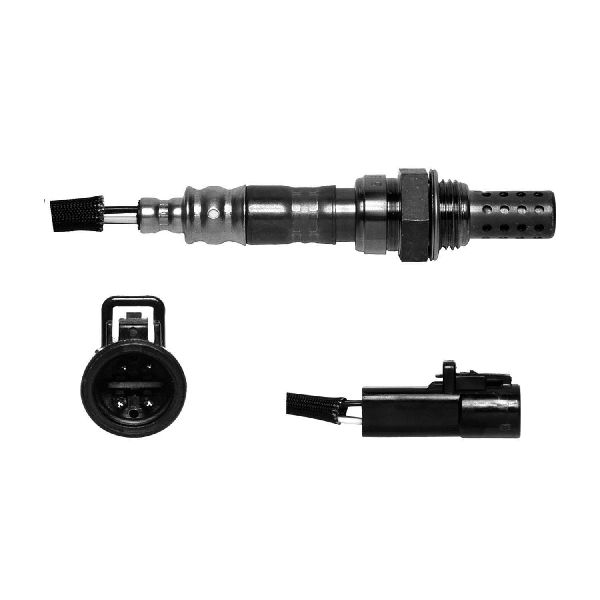
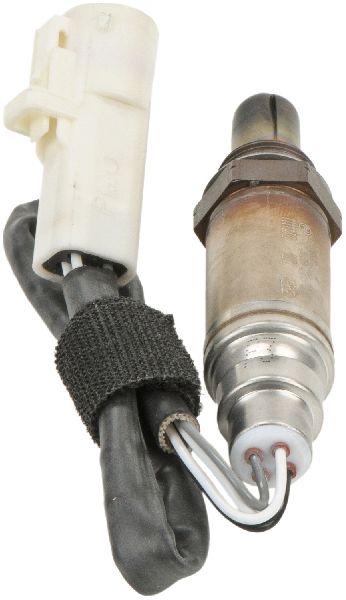
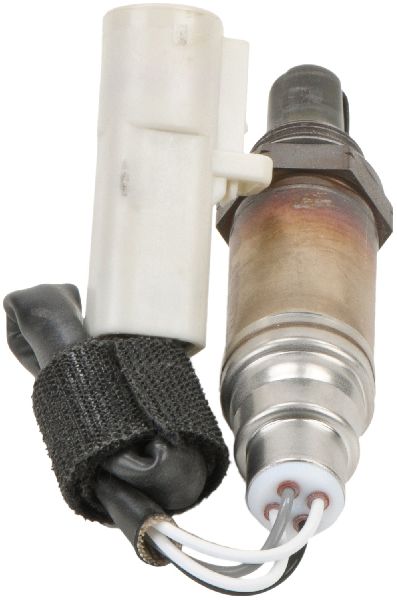
- Oxygen Sensor (Bank 1, Sensor 2)
(OEM #For F-250 HD (5.8L/7.5L): Motorcraft DY678 (or DY1097, check specific application). For F-250 LD (4.6L/5.4L): Varies, check VIN. Bosch 15717 is a common aftermarket part.)— This is the downstream (post-catalytic converter) sensor on the passenger side. The internal heater element is the most common failure point for code P0141.
Trusted brands: Motorcraft, Bosch, Denso, NGK/NTK
OEM price range: $50-$90
Aftermarket price range: $25-$70
Platform-Specific Known Issues
- Owner Experience: Connector Corrosion: A user on F150forum.com with a P0141 code found the issue was not the sensor itself, but white oxidation on the connector pins. After scraping the pin clean and spraying it with contact cleaner, the code was resolved. This highlights the importance of inspecting the connector before replacing the sensor.
- Owner Experience: Resistance Testing Anomaly: On the Ford Truck Enthusiasts forum, a 1997 F-250 owner with P0141 tested his original sensor and found it had 4 ohms of resistance, while the new replacement sensor had 6 ohms. Since both were within the acceptable range, it pointed to a potential wiring or PCM issue, as the PCM monitors current draw which is affected by resistance (Amps = Volts / Ohms).
Mechanic-Grade Diagnostic Values
- O2 Sensor Heater Element Resistance — expected: 3 to 30 Ohms (Ω) when cold. Some sources cite a tighter range of 4-6 Ohms.. Failure: An 'OL' (Open Loop/infinite resistance) reading on a multimeter, or a value close to 0 Ohms (short circuit).
- Voltage at Heater Power Wire (Vehicle Harness Side) — expected: 10 to 12 Volts DC with key on, engine off.. Failure: No voltage indicates a blown fuse or a break in the power wire from the fuse box.
- Voltage at Heater Ground Wire (Vehicle Harness Side) — expected: 10 to 12 Volts DC when testing between the battery positive terminal and the ground wire pin (this confirms the PCM is providing a path to ground).. Failure: No voltage indicates an open wire between the PCM and the sensor connector, or a faulty PCM driver.
Wiring & Ground Locations
- PCM Pin 95 (WHT/BLK wire) — At the 104-pin PCM connector, located on the right side of the engine compartment.. This is the specific pin on the PCM that controls the ground for the Bank 1, Sensor 2 (downstream passenger side) heater circuit on the 5.4L F-250 LD. A continuity test between this pin and the connector at the sensor can verify the wiring integrity.
- PCM Pin 93 (RED/WHT wire) — At the 104-pin PCM connector, located on the right side of the engine compartment.. This is the PCM pin for the Bank 1, Sensor 1 (upstream) heater. While not for P0141, its wire color is similar to the B1S2 and can be confused during testing.
- Fuse 5 (15A) or Fuse 9 (30A) - Power Distribution Box — In the Power Distribution Box in the engine compartment on the driver's side.. Fuse 5 (15A) is listed as powering the Oxygen Sensor Heater. Fuse 9 (30A) powers the Powertrain Control System, which includes the PCM that controls the heater ground. Checking both is prudent.
- G123 — Rear of the engine compartment, on the right side of the cowl panel.. This is a major ground point for multiple engine control sensors. While the O2 heater is grounded through the PCM, a poor main ground at G123 can cause erratic behavior in the entire engine management system.
Diagnostic Flowchart
Other Known Issues on This Vehicle
Issues unrelated to this code that are worth knowing about as an owner of this generation:
- Spark Plug Ejection (Triton Engines) 🔴 High — Common on 4.6L and 5.4L 2-valve engines. Can occur at any mileage, often due to insufficient thread engagement in the aluminum heads. (Ref: TSB 07-15-2 was issued for out-of-warranty repairs, authorizing specific thread insert kits.)
- E4OD/4R100 Transmission Failures 🟠 Medium — Common on both LD and HD models as they age. Symptoms include erratic shifting, hard shifts, flashing Overdrive light, and failure to downshift. Problems are often electrical, related to the solenoid pack, vehicle speed sensor (VSS), or wiring connectors.
- Cracked/Leaking Exhaust Manifolds 🟠 Medium — More common on the Triton V8 engines (F-250 LD), but can occur on all models. The cast iron manifolds are prone to cracking from heat cycles, causing an exhaust leak tick that is especially noticeable when cold.
- Deteriorating Vacuum Lines 🟡 Low — After 20+ years, the original rubber vacuum hoses become brittle and crack, leading to vacuum leaks. This can cause a variety of seemingly unrelated issues, including rough idle and EVAP system codes.
- Poor Fuel Economy (7.5L/460 Engine) 🟡 Low — This is a characteristic, not a failure. Owners of the F-250 HD with the 7.5L (460ci) V8 consistently report fuel economy in the range of 8-12 MPG, regardless of load or driving style.
Used vs. New Parts: Buying Guide for This Vehicle
When a used part is the smart pick: For this repair, a used part is generally not recommended. The primary failure part is the oxygen sensor itself, which is a wear-and-tear item with a finite lifespan. A used sensor from a junkyard is a gamble with an unknown remaining life. A used wiring harness pigtail could be a viable option if only the connector is damaged.
Donor-vehicle mileage cap: roughly under 50000 miles for the part to have meaningful remaining life.
What to inspect on the donor part:
- For a wiring pigtail, ensure the connector is free of corrosion, the locking tab is intact, and the wires are flexible with no signs of cracking or melting.
OEM-only on this vehicle (don't cheap out):
- No parts for this specific code are strictly OEM-only, as high-quality aftermarket sensors are widely available and perform well.
Aftermarket brands forum-validated for this vehicle:
- NGK/NTK
- Denso
- Bosch
- Motorcraft (OEM)
Brands owners have reported issues with on this vehicle:
- Generic, unbranded, or 'white-box' sensors are often cited on forums as having a higher failure rate or causing compatibility issues, even if they are direct-fit.
Real Owner Stories
Aggregated from forums and TSBs cited above. Mileages and costs reflect what owners reported in those sources.
1997 Ford F-150
Symptoms: P0141 code triggered, but the O2 sensor itself was found to be good.
What fixed it: The owner found white oxidation buildup on a connector pin. Cleaning the pin with contact cleaner and scraping it clean resolved the code.
Source hint: f150forum.com - [2023-11-09] P0141 Code - O2 sensor is good
1997 Ford F-250
Symptoms: P0141 code present; owner performed resistance testing on both the old and new sensors.
What fixed it: The original sensor showed 4 ohms and the new one showed 6 ohms; because both were within the 3-30 ohm spec, the diagnosis shifted toward a potential wiring or PCM issue regarding current draw.
Source hint: Ford Truck Enthusiasts - [2015-09-17] Code P0141
Related OBD-II Codes
Frequently Asked Questions
Where is the Bank 1, Sensor 2 oxygen sensor located on my 1997 F-250?
I have a 1997 F-250; does it matter if it is the 'Old Body Style' or the 'New Body Style' for P0141?
What should the resistance reading be for a healthy O2 sensor heater on this truck?
Which fuse should I check for the P0141 heater circuit on a 1997 F-series?
Can a cracked exhaust manifold cause issues on my 1997 F-250 LD?
Is there a TSB for the spark plug issues mentioned in the known issues for the 4.6L/5.4L engines?
Helpful Videos
![Engine Fault Code P0141 - O2 Sensor Heater Circuit [Symptoms, Causes, and Fixes]](https://img.youtube.com/vi/vBY3c_DON3Y/mqdefault.jpg)




We Have This Part in Stock

The information in this article is provided for general reference and educational purposes only. Vehicle specifications, procedures, and part compatibility can vary by production date, trim level, and region. Always consult your vehicle's factory service manual and verify part numbers before purchasing or performing repairs. Safety-critical components such as airbags, seat belts, and braking systems should be installed by a qualified professional.
- Ford F-250:
- 🎬 Helpful Videos
- 🛍️ Shop This Part
- What's Unique About the 1997-1997 Ford F-250
- Symptoms You May Notice
- Most Likely Causes
- Rare But Worth Checking
- Diagnosis Steps
- Parts You'll Likely Need
- Platform-Specific Known Issues
- Mechanic-Grade Diagnostic Values
- Wiring & Ground Locations
- Diagnostic Flowchart
- Other Known Issues on This Vehicle
- Used vs. New Parts: Buying Guide for This Vehicle
- Real Owner Stories
- 1997 Ford F-150
- 1997 Ford F-250
- Related OBD-II Codes
- Frequently Asked Questions
- 🎟️ Get 5% Off