

P0141 on 1997-2003 Ford F-150 4.6L: O2 Sensor Heater Circuit Causes and Fixes
On a 1997-2003 F-150, code P0141 almost always means the downstream oxygen sensor on the passenger side has failed. The internal heater element breaks, which is the most common point of failure. Replacing the sensor is the typical fix, costing around $30-$60 for a quality aftermarket part. Before replacing, it's wise to check the associated fuse as a shorted sensor can blow it.
- P0141 points to the passenger side, post-catalytic converter O2 sensor's heater.
- The most likely fix is to replace the sensor itself; it's a common wear-and-tear item.
- Before replacing, ALWAYS check fuse #23 in the under-hood box, especially if you also have code P0161.
- This issue will not leave you stranded but will cause an automatic failure on an emissions test.
- You will likely need a special slotted socket (7/8" or 22mm) to remove and install the oxygen sensor.
What's Unique About the 1997-2003 Ford F-150

For the 10th generation F-150 (1997-2003), the P0141 code is a straightforward and very common issue. These trucks have a simple and robust emissions system, and after many years of service, the heating element inside the original O2 sensors is simply prone to failing from age and countless heat cycles. The ceramic heater element can crack over time. There are no complex, platform-specific electronic modules causing this; it's almost always a worn-out sensor or, less commonly, damaged wiring near the hot exhaust and road debris.
Symptoms You May Notice
- Check Engine Light is on
- Failing a state emissions inspection
- Slightly reduced fuel economy in some cases
- Replacing the catalytic converter. A bad catalytic converter will typically trigger a P0420 'Catalyst Efficiency' code, not a P0141 heater circuit code.
- Replacing the wrong O2 sensor. Ensure you are replacing Bank 1 (passenger side), Sensor 2 (downstream/post-cat).
Most Likely Causes

- Failed Bank 1, Sensor 2 Oxygen Sensor 🔴 High Probability The internal heater element is a common failure point due to age and exposure to extreme exhaust temperatures over many years. The ceramic element inside can crack, leading to an open circuit.
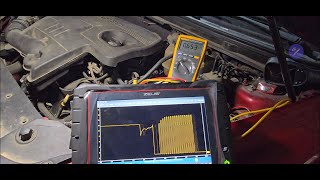
How to confirm: Disconnect the sensor and measure the resistance between the two same-colored wires 🎬 Watch: How to test oxygen sensor heater circuits with a multimeter (usually white) on the sensor side. A good heater circuit will typically have a resistance between 3 and 30 ohms, with many Ford sensors falling in the 5-15 ohm range. An open circuit (infinite resistance) indicates a failed heater.
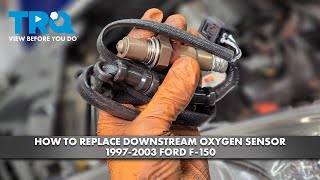
Typical fix: Replace the Bank 1, Sensor 2 (passenger side, downstream) oxygen sensor. 🎬 See this walkthrough for replacing the downstream sensor This often requires a special 7/8" (22mm) slotted socket to accommodate the sensor's wiring.
Est. part cost: $30-$70 - Damaged Wiring or Connector 🟡 Medium Probability The wiring harness runs underneath the truck near the hot exhaust and is exposed to road debris, moisture, and heat, which can cause wires to become brittle, frayed, or corroded over time. Water intrusion into the connector is a known issue that can short the circuit.
How to confirm: Visually inspect the wiring harness and connector leading to the sensor for any signs of melting, chafing, or corrosion on the pins. With the key on (engine off), use a multimeter to check for 12-volt power at the harness-side connector on the power supply wire. The PCM provides a ground to complete the circuit.
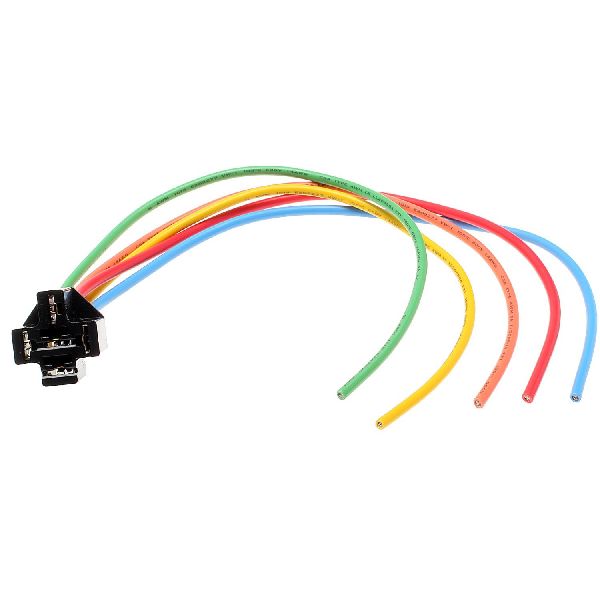
Typical fix: Repair the damaged section of the wiring harness or clean the connector pins. If corrosion is severe, the connector pigtail may need to be replaced.
Est. part cost: $5-$25 - Blown Fuse ⚪ Low Probability An internal short circuit in a failing oxygen sensor can sometimes draw excessive current and blow the corresponding fuse. This is a protective measure.
How to confirm: Check the fuse for the O2 sensor heater circuit. Forum members have consistently pointed to fuse #23 (a 15A fuse) in the under-hood fuse box as the correct one for the O2 heaters on this generation of F-150. Always verify with your owner's manual.
Typical fix: Replace the blown fuse. IMPORTANT: A blown fuse is often a symptom of a shorted O2 sensor. If the new fuse blows immediately, the O2 sensor must be disconnected and replaced to prevent further electrical issues.
Est. part cost: $1-$5
Rare But Worth Checking
- Powertrain Control Module (PCM) Fault: This is extremely rare. The PCM driver that provides the ground for the heater circuit can fail, but this should only be considered after all other possibilities (sensor, wiring, fuses) have been thoroughly ruled out by testing.
Diagnosis Steps

- Read the code with an OBD-II scanner to confirm P0141 is present. Note any other codes, especially P0161.
- Check the fuse for the O2 sensor heater circuit. On this generation F-150, this is very likely fuse #23 (15A) in the fuse box located in the engine compartment. If it's blown, replace it. If it blows again, disconnect the B1S2 O2 sensor and try again. If the fuse holds, the sensor is shorted and needs replacement.
- If the fuse is good, visually inspect the wiring harness and connector for the passenger-side downstream O2 sensor. Look for obvious signs of melting, corrosion, or physical damage from road debris.
- If the wiring appears intact, test the sensor's heater element. Disconnect the sensor and use a multimeter set to Ohms. Measure the resistance between the two same-colored wires on the sensor's connector. A reading between 5-15 ohms is typical for a good Ford sensor; infinite resistance (OL) means the heater is broken and the sensor must be replaced.
- If resistance is within spec, check for power at the vehicle's harness connector. With the ignition key in the 'ON' position (engine off), one pin should have battery voltage (~12V).
- If power is present and the sensor resistance is good, the issue may be in the ground-side control wire leading back to the PCM, though this is less common. At this point, if all other tests pass, the sensor itself is still the most probable cause due to intermittent failure or out-of-spec resistance when hot.
- Replace the Bank 1, Sensor 2 oxygen sensor, clear the codes, and perform a drive cycle to see if the code returns.
Parts You'll Likely Need

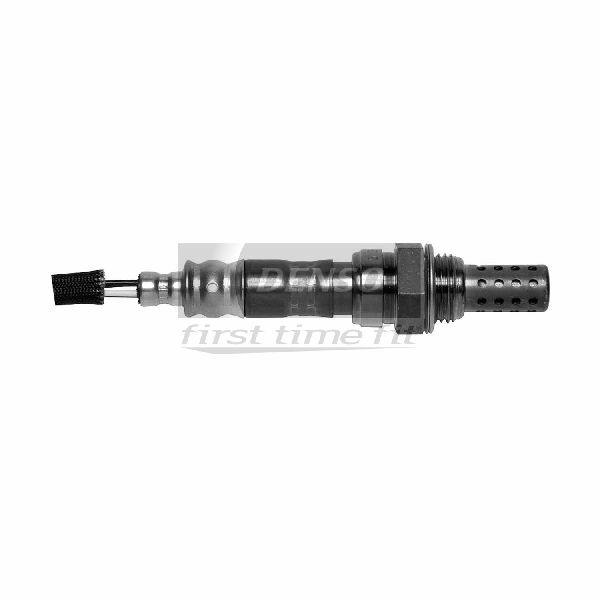
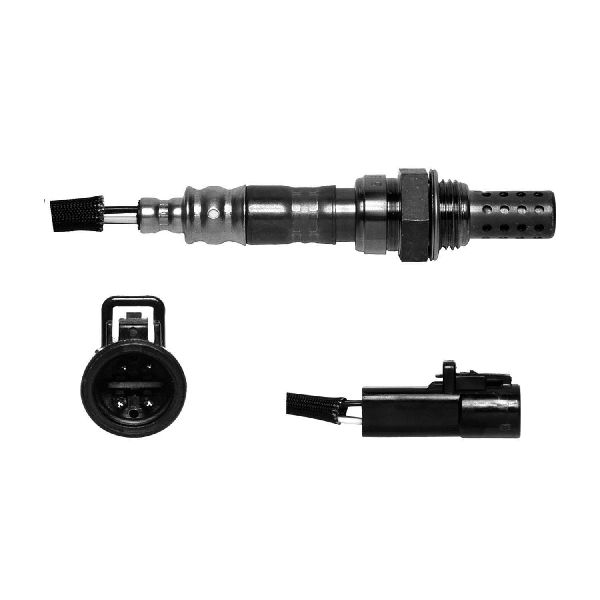
- Oxygen Sensor (Bank 1, Sensor 2)
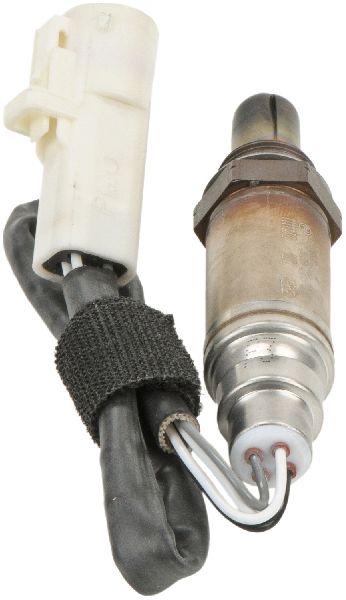
(OEM #F75Z9G444BA)— This is the downstream (post-catalytic converter) sensor for the passenger side. Its internal heater element is the most common failure point for code P0141.
Trusted brands: Motorcraft (DY-1401, supersedes older numbers), Bosch (15717), Denso (234-4127), Walker (250-24115)
OEM price range: $50-$70
Aftermarket price range: $30-$55 - Oxygen Sensor Socket — A special 7/8 inch (22mm) socket with a slot for the wire is often necessary to remove and install the O2 sensor without damaging the wiring, especially if access is tight.
Trusted brands: Lisle, OEMTools, GearWrench
Aftermarket price range: $10-$20
Related Codes That Often Appear With This One
- P0161 — P0161 is the identical heater circuit fault but for Bank 2, Sensor 2 (driver's side, downstream). Seeing P0141 and P0161 together strongly points to a shared power supply issue, most commonly a blown fuse #23 🎬 Watch: Diagnosing P0141 and P0161 codes together which powers both downstream heaters.
- P0135 & P0155 — If all four heater circuit codes (P0135, P0141, P0155, P0161) appear at once, it is almost certainly a common power or ground issue, such as a blown fuse or a major wiring harness problem, not four simultaneously failed sensors.
Platform-Specific Known Issues
- Real Owner Experience: Fuse #23: A user on f150forum.com with a '98 F-150 experiencing both P0141 and P0161 confirmed the issue was a blown fuse #23. After replacing the fuse, the codes were resolved, highlighting the importance of checking fuses when multiple heater codes are present.
- Real Owner Experience: Bad New Sensor: On Ford Truck Enthusiasts, a 2003 Expedition owner reported getting a P0141, replacing the correct sensor (passenger side, after converter), and having the code return after a few drive cycles. This serves as a reminder that new parts can occasionally be faulty out of the box.
Mechanic-Grade Diagnostic Values
- O2 Sensor Heater Element Resistance — expected: 5-15 ohms for a typical Ford sensor, with a general acceptable range of 3-30 ohms.. Failure: Infinite resistance (Open Loop/OL) indicates a broken heater element. A reading of zero ohms indicates a short circuit.
- Heater Circuit Power at Connector (Key On, Engine Off) — expected: ~12V (Battery Voltage) on the Red/Yellow wire.. Failure: 0V or significantly low voltage indicates a problem upstream, likely the fuse (#23) or the power wire itself.
- Heater Circuit Ground Check at Connector (Key On, Engine Off) — expected: ~12V (Battery Voltage) when measuring between the battery positive terminal and the ground control wire's pin at the harness connector.. Failure: 0V indicates the PCM is not providing ground or there is a break in the ground wire.
Wiring & Ground Locations

- Fuse #23 (Power Distribution Box) — In the under-hood fuse box, typically a 15A fuse.. This fuse provides the 12V power to the heater elements for the oxygen sensors. A shorted sensor can cause this fuse to blow, often triggering codes for multiple sensors (e.g., P0141 and P0161) simultaneously.
- G100 / G101 — On the lower right rear of the engine or the right side of the cowl panel in the engine compartment.. These are primary engine and chassis ground points. While the O2 heater is ground-controlled by the PCM, a poor main engine ground can cause a variety of strange electrical issues and floating grounds for sensor circuits that share a common reference, potentially affecting PCM operation.
- Heater Power Wire — A Red/Yellow (RD/YE) wire is commonly the shared power feed for the O2 sensor heaters on Fords of this era.. When testing for power at the O2 sensor connector, this is the wire color to check for 12V. A break in this wire between the fuse box and the sensor will cause the P0141 code.
Real Owner Repair Stories
- F150online Forums (1999 Ford F-150) — Fuse #23 kept blowing when the A/C was turned on.
❌ Tried (didn't work) Replacing the fuse without further diagnosis.
✅ What actually fixed it The root cause was a bad O2 sensor harness that had melted. The user was advised that a bad O2 sensor itself could also cause the fuse to blow. The fix was to repair or replace the damaged harness and likely the sensor that caused the short.
OEM Part Supersession History
F75Z-9G444-BA→GU2Z-9G444-A (Motorcraft DY-1401)— Part number consolidation and updates over time.
Heads up: The original F75Z-9G444-BA part number is one of many that have been superseded by the current GU2Z-9G444-A service part. While functionally identical, be aware that aftermarket parts may have different wire lengths or connector keying, though most are designed to be universal fit for the specified years.
Model Year Variations Within This Range
- 1999-2003: Starting in 1999 for trucks, the 4.6L V8 began using 'Performance Improved' (PI) heads and intake manifolds, which increased horsepower from 220hp to around 240hp. This engine change did not fundamentally alter the function or location of the downstream O2 sensors for a P0141 code, but when sourcing used parts like a complete engine, it's a critical distinction. The O2 sensors themselves remained largely the same in function and fitment across the PI and non-PI years.
- 1997-1998 vs 1999-2003: Fuse box layouts and numbering saw minor changes. For example, in 1997-1998 models, the power distribution box fuse #23 was a 10A fuse for trailer tow functions, while on 2001+ models, it is listed as a 15A fuse for the HEGO sensors (O2 sensors). It is critical to verify the fuse number and amperage with the owner's manual or the diagram on the fuse box cover for the specific model year.
Diagnostic Flowchart
Other Known Issues on This Vehicle
Issues unrelated to this code that are worth knowing about as an owner of this generation:
- Spark Plug Ejection 🔴 High — A widely known issue on 2-valve 4.6L/5.4L engines. Insufficient thread engagement in the aluminum heads can cause spark plugs to be forcibly ejected, damaging the coil and requiring a thread insert (like a Heli-Coil or Time-Sert) to repair.
- Cracked Plastic Intake Manifold 🟠 Medium — The original all-plastic intake manifold, particularly on early 1997-2001 models, is prone to cracking at the front coolant crossover passage, causing a coolant leak.
- Leaking Exhaust Manifolds 🟠 Medium — The exhaust manifold bolts are prone to rusting and breaking, causing an exhaust leak that creates a ticking noise, especially when the engine is cold. Repair is costly due to the difficulty of extracting the broken studs from the cylinder head.
- Idle Air Control (IAC) Valve Sticking 🟡 Low — The IAC valve can become clogged with carbon, causing a rough, high, or erratic idle. It's a common issue that can often be resolved by cleaning the valve rather than replacing it.
- Hood and Fender Rust/Corrosion 🟠 Medium — Particularly in rust belt states, the front edge of the hood and the bottom of the fenders behind the front wheels are very common areas for rust to develop.
Used vs. New Parts: Buying Guide for This Vehicle
When a used part is the smart pick: For this repair, obtaining a used part is not recommended. Oxygen sensors are wear items with a finite lifespan, similar to spark plugs or brake pads. A used sensor from a junkyard has an unknown history and is likely to fail sooner, if it works at all.
What to inspect on the donor part:
- Not applicable as used sensors are not advised.
OEM-only on this vehicle (don't cheap out):
- While not strictly 'OEM-only', many professional technicians and forum veterans strongly recommend using Motorcraft sensors for Ford vehicles. Some aftermarket sensors, even from reputable brands, have been reported to cause persistent or intermittent issues on these trucks.
Aftermarket brands forum-validated for this vehicle:
- Motorcraft (OEM)
- Bosch (often the OEM manufacturer for Motorcraft)
- NTK/NGK
- Denso
Brands owners have reported issues with on this vehicle:
- Generic, unbranded 'universal' sensors that require splicing wires are highly discouraged. These often lead to poor connections, incorrect readings, and premature failure.
Real Owner Stories
Aggregated from forums and TSBs cited above. Mileages and costs reflect what owners reported in those sources.
1998 Ford F-150
Symptoms: Check Engine Light on with both P0141 and P0161 codes present.
What fixed it: Replaced blown fuse #23 in the engine compartment fuse box.
Source hint: f150forum.com thread titled 'P0141 P0161'
2003 Ford Expedition 4.6L/5.4L V8
Symptoms: P0141 code returned after a few drive cycles even after the passenger side downstream sensor was replaced.
What fixed it: The owner noted that new parts can occasionally be faulty out of the box, requiring another sensor replacement or further circuit verification.
Source hint: Ford Truck Enthusiasts forum post cited in vehicle_specific_issues
1997-2003 Ford F-150 4.6L V8
Symptoms: P0141 and P0161 codes; owner was confused by voltage readings on the ground wire.
What fixed it: Diagnosis confirmed that the PCM supplies ground, not power, and that 12V on the ground wire with the sensor disconnected is normal open-circuit voltage.
Source hint: ford-trucks.com discussion titled 'codes-p0141-and-p0161'
Related OBD-II Codes
Frequently Asked Questions
Which fuse should I check for P0141 on my 1997-2003 F-150?
Where is the Bank 1, Sensor 2 oxygen sensor located on my 4.6L V8 F-150?
What tools do I need to replace the O2 sensor on this truck?
What resistance should I see when testing the heater circuit on a Ford O2 sensor?
If I have both P0141 and P0161, does that mean both sensors failed at once?
Can I just clean the sensor to fix the P0141 code?
Helpful Videos
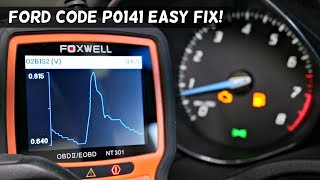
We Have This Part in Stock


The information in this article is provided for general reference and educational purposes only. Vehicle specifications, procedures, and part compatibility can vary by production date, trim level, and region. Always consult your vehicle's factory service manual and verify part numbers before purchasing or performing repairs. Safety-critical components such as airbags, seat belts, and braking systems should be installed by a qualified professional.
- Ford F-150:
- 🎬 Helpful Videos
- 🛍️ Shop This Part
- What's Unique About the 1997-2003 Ford F-150
- Symptoms You May Notice
- Most Likely Causes
- Rare But Worth Checking
- Diagnosis Steps
- Parts You'll Likely Need
- Related Codes That Often Appear With This One
- Platform-Specific Known Issues
- Mechanic-Grade Diagnostic Values
- Wiring & Ground Locations
- Real Owner Repair Stories
- OEM Part Supersession History
- Model Year Variations Within This Range
- Diagnostic Flowchart
- Other Known Issues on This Vehicle
- Used vs. New Parts: Buying Guide for This Vehicle
- Real Owner Stories
- 1998 Ford F-150
- 2003 Ford Expedition 4.6L/5.4L V8
- 1997-2003 Ford F-150 4.6L V8
- Related OBD-II Codes
- Frequently Asked Questions
- 🎟️ Get 5% Off