

P0141 on 1996-2001 Ford Explorer 5.0L V8: O2 Sensor Heater Fault Causes and Fixes
This code means the heater inside the Bank 1, Sensor 2 oxygen sensor has failed. On your 5.0L V8 Explorer, this is the downstream (post-catalytic converter) sensor on the passenger side. The most common fix is replacing the sensor itself, which costs about $25-$70 for an aftermarket part. Before replacing, check the fuse and wiring.
- P0141 specifically points to a failure in the heater circuit of the oxygen sensor located after the catalytic converter on the passenger side (Bank 1, Sensor 2).
- The most common cause by a wide margin is simply a failed oxygen sensor. They are a normal wear-and-tear item.
- You can continue driving, but your fuel economy may suffer and you will not pass an emissions test until it is fixed.
- Before buying a new sensor, it's wise to quickly check the fuse (labeled HEGO) and visually inspect the wiring for any obvious damage, especially over the transmission.
- Ensure you are replacing the correct sensor: passenger side, downstream of the catalytic converter. Accessing the connector may be easier by removing the interior center console.
What's Unique About the 1996-2001 Ford Explorer
For the second-generation Ford Explorer with the 5.0L V8, the P0141 code is a very common and straightforward issue. Bank 1 is consistently identified as the passenger side of the engine. The 'Sensor 2' designation means it's the downstream sensor, located after the catalytic converter, which primarily monitors the converter's efficiency. These sensors are exposed to extreme heat and road debris, making heater circuit failure a frequent occurrence as these vehicles age. A short in the sensor can also blow the shared 'HEGO system' fuse in the under-hood power distribution box, which may cause multiple O2 sensor heater codes (like P0135, P0155, P0161) to appear at once. On some Explorers/Mountaineers, the electrical connectors for the Bank 1 sensors are notoriously difficult to access, being located on top of the transmission. Some owners remove the center console from inside the truck for easier access.
Symptoms You May Notice
- Check Engine Light is on
- Failing a state emissions inspection.
- Slightly reduced fuel economy, potentially by 10-20%.
- Rough idle (rarely).
- Replacing the wrong oxygen sensor. It is crucial to identify Bank 1 (passenger side) and Sensor 2 (downstream, after the catalytic converter) correctly. Many people mistakenly replace the upstream (Sensor 1) sensor.
- Replacing the sensor when the actual fault is a damaged wire or blown fuse.
Most Likely Causes
- Failed Bank 1, Sensor 2 Oxygen Sensor 🔴 High Probability Oxygen sensors are wear items that operate in a harsh exhaust environment. The internal heating element is often the first component to fail due to age and countless heat cycles.
How to confirm: Disconnect the sensor and measure the resistance across the two heater wires (usually the same color, e.g., two white wires). A good heater should have a low resistance, typically between 3-30 ohms according to service data. An open circuit (infinite resistance) or a short (near-zero resistance) confirms the heater has failed.
Typical fix: Replace the Bank 1, Sensor 2 oxygen sensor. This is the downstream sensor on the passenger side. An O2 sensor socket is often required. 🎬 Watch: A quick guide on changing your oxygen sensor.
Est. part cost: $25-$70 - Damaged Wiring or Connector 🟡 Medium Probability The sensor wiring is routed underneath the vehicle where it is exposed to road debris, heat from the exhaust, and moisture. The harness for the Bank 1 sensors runs up over the transmission bellhousing, a common spot for chafing or melting.
How to confirm: Visually inspect the wiring harness and connector leading to the O2 sensor for any signs of melting, chafing, or corrosion on the pins. With the key on (engine off), use a multimeter to check for 12V battery voltage at the heater circuit power wire in the harness connector.
Typical fix: Repair or replace the damaged section of the wiring harness or the connector itself. Accessing the connector on top of the transmission may require removing the interior center console.
Est. part cost: $10-$40 - Blown Fuse ⚪ Low Probability A short circuit in the heater element of the O2 sensor can sometimes cause the related fuse to blow. This is less common than the sensor failing outright.
How to confirm: Locate the fuse for the O2 sensor heater circuit in the vehicle's Power Distribution Box under the hood. Consult the owner's manual for the specific fuse number, often labeled 'HEGO' (Heated Exhaust Gas Oxygen) sensor. For a 1996 Explorer, this is often fuse #24 (20A for the 5.0L engine).
Typical fix: Replace the blown fuse. If the new fuse blows immediately, it confirms a short circuit in the wiring or the sensor itself that must be found and fixed.
Est. part cost: $1-$5
Rare But Worth Checking
- Powertrain Control Module (PCM) Fault: This is extremely rare. All other possibilities, especially the sensor and its wiring, should be exhaustively ruled out before considering the PCM as the cause. A PCM failure is more likely if multiple O2 heater codes (e.g., P0135, P0155, P0161) appear simultaneously after confirming the fuse and wiring are good.
Diagnosis Steps
- Read the code with an OBD-II scanner to confirm P0141 is present. Check for any other codes.
- Locate the Bank 1, Sensor 2 O2 sensor on the passenger side, after the catalytic converter.
- Visually inspect the wiring harness leading to the sensor, especially where it runs over the transmission, for melting, chafing, or breaks. Check the connector for corrosion or damage.
- Check the fuse for the O2 sensor heater circuit (often labeled HEGO) in the under-hood Power Distribution Box. For a '96 5.0L, this is typically fuse #24 (20A).
- If the fuse and wiring appear intact, disconnect the sensor. Use a multimeter to test the resistance of the heater circuit within the sensor itself (across the two same-colored wires). A reading between 3-30 ohms is good; infinite or zero ohms means the sensor is bad.
- If the sensor's resistance is good, test the vehicle's harness connector. With the key on and engine off, check for 12V power between the heater power wire (often a Red wire) and a good ground.
- If there is no power and the fuse is good, there is a break in the wire between the fuse box and the sensor connector.
- If power and ground are good and the sensor resistance is within spec, the issue may be in the signal wire to the PCM, though this is less common.
Parts You'll Likely Need
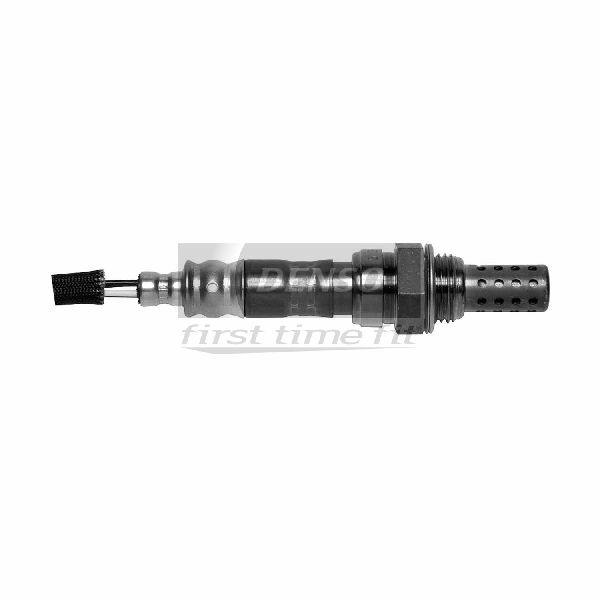
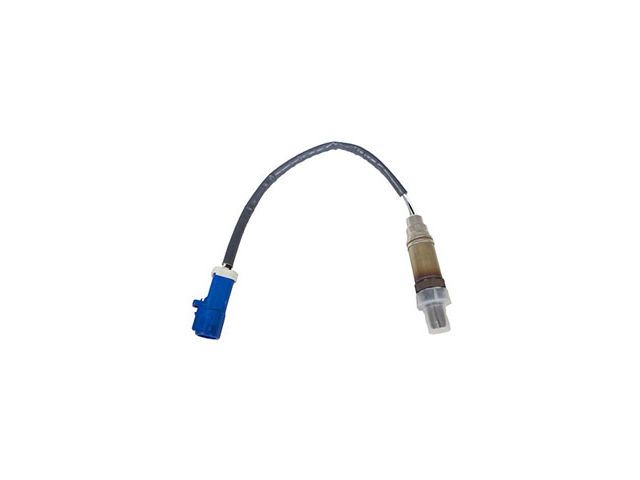
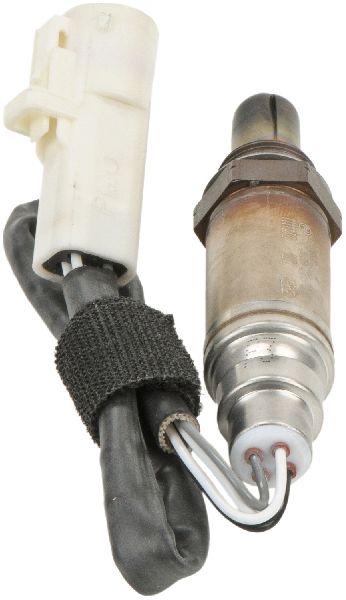
- Oxygen Sensor (Bank 1, Sensor 2)
(OEM #F6DZ9G444AA)— This is the downstream (post-catalytic converter) sensor on the passenger side. The internal heater element fails from age and heat cycles, which is the direct cause of the P0141 code. The OEM part is Motorcraft.
Trusted brands: Motorcraft, Bosch, Denso, NGK/NTK, Walker
OEM price range: $60-$100
Aftermarket price range: $25-$70
Platform-Specific Known Issues
- Difficult Connector Access: The electrical connectors for the Bank 1 (passenger side) O2 sensors are located on the top of the transmission bellhousing, making them very difficult to reach from underneath the vehicle. Many owners find it much easier to access them from inside the cabin by removing the center console and the transmission tunnel cover plate. 🎬 Watch: How to remove the console for easier connector access.
Mechanic-Grade Diagnostic Values
- O2 Sensor Heater Element Resistance — expected: 3 to 30 ohms. Failure: An open circuit (infinite ohms) or a direct short (near 0 ohms) indicates a failed heater element.
- Heater Circuit Power Supply (Key On, Engine Off) — expected: 12V+ (Battery Voltage). Failure: 0V indicates a blown fuse or a break in the power wire from the fuse box to the sensor connector.
- Heater Circuit Ground Control (Engine Running) — expected: Pulsing ground signal from the PCM, which can be observed with a test light connected to battery positive.. Failure: A steady light or no light indicates a problem with the PCM driver or the wiring between the PCM and the sensor.
Hidden / Shadow Codes Worth Checking
- Mode 6, Test ID for HO2S Heaters: While Ford's Mode 6 often uses Test ID $53 for misfire monitoring, heater circuit diagnostics are typically performed by observing live data PIDs. A technician would monitor PIDs for 'HO2S Heater Status' or 'Heater Fault'. A 'Fault' or 'Off' status when the heater should be active confirms the problem detected by the PCM. (see via An advanced OBD-II scan tool capable of viewing Ford-specific live data or Mode 6 test results.)
Wiring & Ground Locations
- Bank 1 HO2S Heater Power Wire — At the 4-pin O2 sensor harness connector.. This wire, often Red, should have 12V+ with the key in the START/RUN position. No voltage here points to a blown fuse or a wiring break upstream.
- Bank 1 HO2S Heater Control Wire — At the 4-pin O2 sensor harness connector.. This wire, potentially Yellow/Light Blue, is the ground path controlled by the PCM. The PCM pulses the ground to activate the heater. A break in this wire will prevent the heater from working.
- Engine to Firewall Ground Strap — Typically located on the back of the passenger side cylinder head, connected to a double-threaded stud that also holds the heater tube bracket.. A poor or missing main engine ground can cause a variety of strange electrical issues, including erratic sensor behavior. While not a direct cause of a single heater code, ensuring this ground is clean and tight is a crucial step in any electrical diagnosis.
- Fuse #24 (1996 5.0L) — In the Power Distribution Box in the engine compartment.. This 20A fuse specifically powers the HEGO (Heated Exhaust Gas Oxygen) sensor system. If it blows due to a shorted sensor, all heater circuits will lose power.
OEM Part Supersession History
F6DZ-9G444-AA→GU2Z-9G444-A— Standard part number consolidation and updates over time.
Heads up: The new part number GU2Z-9G444-A is a widely used Ford/Motorcraft sensor that replaces dozens of older part numbers and should be fully compatible.
Model Year Variations Within This Range
- 1998-2001: Beginning in 1998, Ford implemented the PATS (Passive Anti-Theft System), which integrated the PCM more deeply with the vehicle's security. While this doesn't directly affect the P0141 diagnosis, it's a significant system change within the generation.
- 1999-2001: Models from 1999-2001 switched to a non-return fuel system with a different fuel rail and higher pressure injectors. This does not impact the P0141 fault but is a key engine management difference from earlier 5.0L models.
Diagnostic Flowchart
Other Known Issues on This Vehicle
Issues unrelated to this code that are worth knowing about as an owner of this generation:
- Cracked Plastic Intake Manifold 🔴 High — Very common on 1996-2001 V8 models. The front plastic coolant crossover is prone to cracking, causing a major coolant leak and potential engine overheating.
- 5R55E Automatic Transmission Failures 🔴 High — Common across this generation. Symptoms include harsh shifting, delayed engagement, loss of gears, and fluid leaks. Worn servo bores are a frequent cause.
- Worn Timing Chain Cassettes/Tensioners 🟠 Medium — More famous on the 4.0L SOHC V6, but the 5.0L V8 can also experience timing chain tensioner wear, leading to rattling noises, especially on startup.
- Broken Blend Door 🟡 Low — Extremely common issue where the HVAC blend door breaks, causing the system to be stuck on full heat. The repair is labor-intensive, often requiring dashboard removal.
Used vs. New Parts: Buying Guide for This Vehicle
When a used part is the smart pick: For this repair, a used part is almost never a smart choice. The primary failure is the internal heating element, which is a wear-and-tear item. A used sensor from a junkyard has unknown remaining life and may fail shortly after installation, wasting time and money.
Donor-vehicle mileage cap: roughly under 20000 miles for the part to have meaningful remaining life.
What to inspect on the donor part:
- If forced to use a donor part, source it from a vehicle with the lowest possible mileage.
- Visually inspect the sensor for heavy carbon buildup, physical damage, or oil contamination.
- Check the wiring pigtail for any signs of melting, brittleness, or previous repairs.
OEM-only on this vehicle (don't cheap out):
- While not strictly 'OEM-only', using a reputable brand is critical. Avoid generic, unbranded 'white box' sensors as they have a high failure rate and can cause performance issues.
Aftermarket brands forum-validated for this vehicle:
- NTK (often the OE manufacturer)
- Denso
- Bosch (also a frequent OE supplier for Ford)
Brands owners have reported issues with on this vehicle:
- Unbranded or generic parts from online marketplaces with no warranty or brand reputation.
Real Owner Stories
Aggregated from forums and TSBs cited above. Mileages and costs reflect what owners reported in those sources.
1997 Mercury Mountaineer 5.0L — 235000 miles
Symptoms: Check Eng light came on.
What fixed it: The owner identified the O2 sensor behind the catalytic converter was bad. It was recommended to replace the sensor, and potentially all O2 sensors given the high mileage.
Source hint: Ford Truck Enthusiasts Forums - O2 Sensor Heater Circuit Bank 1 Sensor 2 Help.
2000 Ford Explorer 5.0L
Symptoms: Difficulty reaching the Bank 1 O2 sensor connectors from underneath the vehicle.
What fixed it: Removing the interior center console to access the connectors on top of the transmission.
Source hint: YouTube: 2000 mountaineer/explorer 5.0 o2 sensor replacement center console removal
1997 Ford Explorer 5.0L
Symptoms: Multiple heater circuit codes (P0135, P0155, P0141, P0161) occurring at the same time.
What fixed it: Diagnostic process involved checking resistance of all sensors at the PCM connector (all read 7 ohms) to determine if the fault was in the wiring or the PCM.
Source hint: Ford-Trucks.com: P0135, P0155, P0141, P0161 all at the same time
Related OBD-II Codes
Frequently Asked Questions
Where exactly is the Bank 1, Sensor 2 oxygen sensor located on my 5.0L Explorer?
I can't reach the O2 sensor connector from under my Explorer; is there an easier way?
Which fuse should I check for a P0141 code on my 1996 5.0L Explorer?
What are the specific resistance specs for the O2 sensor heater on this vehicle?
Could my Explorer's transmission issues be related to the O2 sensor wiring?
Will a P0141 cause my Explorer to fail an emissions test?
Helpful Videos
We Have This Part in Stock


The information in this article is provided for general reference and educational purposes only. Vehicle specifications, procedures, and part compatibility can vary by production date, trim level, and region. Always consult your vehicle's factory service manual and verify part numbers before purchasing or performing repairs. Safety-critical components such as airbags, seat belts, and braking systems should be installed by a qualified professional.
- Ford Explorer:
- 🎬 Helpful Videos
- 🛍️ Shop This Part
- What's Unique About the 1996-2001 Ford Explorer
- Symptoms You May Notice
- Most Likely Causes
- Rare But Worth Checking
- Diagnosis Steps
- Parts You'll Likely Need
- Platform-Specific Known Issues
- Mechanic-Grade Diagnostic Values
- Hidden / Shadow Codes Worth Checking
- Wiring & Ground Locations
- OEM Part Supersession History
- Model Year Variations Within This Range
- Diagnostic Flowchart
- Other Known Issues on This Vehicle
- Used vs. New Parts: Buying Guide for This Vehicle
- Real Owner Stories
- 1997 Mercury Mountaineer 5.0L — 235000 miles
- 2000 Ford Explorer 5.0L
- 1997 Ford Explorer 5.0L
- Related OBD-II Codes
- Frequently Asked Questions
- 🎟️ Get 5% Off