

P0141 on 1999-2007 Chevrolet Silverado: O2 Sensor Heater Circuit Causes and Fixes
On a 1999-2007 Silverado, P0141 almost always means the Bank 1, Sensor 2 oxygen sensor has failed. This is the downstream sensor on the driver's side. Before replacing it, check the 15-amp fuse labeled 'O2B' in the under-hood fuse block and inspect the wiring harness for damage, especially for chafing against the front driveshaft on 4WD models, which is a very common failure.
- P0141 points to a problem with the heater in the O2 sensor on the driver's side, after the catalytic converter.
- ALWAYS check the 15A 'O2A'/'O2B' fuse in the under-hood fuse box before buying parts.
- On 4x4 models, carefully inspect the sensor's wiring harness for damage where it passes the front driveshaft.
- If the fuse and wiring are good, the sensor itself has likely failed and needs to be replaced.
- Use a quality brand like ACDelco or Denso, as some GM trucks can be sensitive to other aftermarket brands.
What's Unique About the 1999-2007 Chevrolet Silverado

For the GMT800 generation Silverado (1999-2007 Classic), a very common and specific point of failure is the O2 sensor wiring harness rubbing against the front driveshaft on 4x4 models, causing a short or open circuit. Additionally, the O2 sensor heater circuits are protected by dedicated 15-amp fuses in the under-hood fuse block, often labeled 'O2A' and 'O2B'. A short in the Bank 1 Sensor 2 wiring can blow the 'O2B' fuse, which often also powers the Bank 2 Sensor 2 heater, potentially causing a P0161 code to appear simultaneously. Checking these two specific, common failure points before buying a new sensor can save time and money.
Generation note: This range covers two Silverado generations: the GMT800 (1999-2006 and 2007 'Classic') and the GMT900 (2007 new body style). While the code's meaning is the same, the exact oxygen sensor part numbers and connector styles can differ between these generations and even by engine type within the same year. For example, some early GMT800s used a different connector keying than later models. Always verify the part number for your specific VIN.
Symptoms You May Notice
- Check Engine Light is on
- Failing an emissions or smog test
- Slightly reduced fuel economy (often not noticeable to the driver)
- In some cases, electrical interference may cause the dashboard to go blank while driving, as noted in broader manufacturer reports like NHTSA ODI #11221744.
- Replacing the oxygen sensor without first checking the 'O2B' fuse and inspecting the wiring harness. A $1 fuse or a simple wire repair can often solve the problem.
- Replacing the wrong oxygen sensor. P0141 is specifically for Bank 1 (driver's side) and Sensor 2 (downstream, after the catalytic converter).
- Assuming a bad catalytic converter caused the code. A failing converter typically triggers an efficiency code like P0420, not a P0141 heater circuit code.
- Using an incompatible or low-quality aftermarket sensor. Some owners report issues with certain brands like Bosch, while ACDelco (OEM) or Denso (often the original supplier) are generally recommended for reliability on these trucks.
Most Likely Causes

- Failed Bank 1, Sensor 2 Oxygen Sensor 🔴 High Probability The internal heater element simply burns out over time from thousands of heating and cooling cycles, creating an open circuit.
How to confirm: After confirming the fuse and wiring are intact, test the resistance of the heater circuit at the sensor's connector (usually the two same-colored wires, often black or white). An ohmmeter should show a specific resistance, typically between 4 and 20 ohms when cold for this platform. An open circuit (infinite resistance or 'OL') or zero resistance confirms the heater has failed.
Typical fix: Replace the Bank 1, Sensor 2 (driver's side, downstream) oxygen sensor. An O2 sensor socket is highly recommended for removal. 🎬 See this step-by-step guide for replacing your Silverado O2 sensors
Est. part cost: $40-$90 - Damaged Wiring Harness 🟡 Medium Probability On 4WD models, the wiring harness for the downstream O2 sensor is often routed near the front driveshaft and can chafe through, causing a short to ground. The harness is also exposed to road debris and high exhaust heat, which can melt the insulation.
How to confirm: Visually inspect the entire length of the wiring harness from the sensor to the main loom. Pay extremely close attention to the area where it passes the front driveshaft. Look for bare wires, melting, or breaks. A user on SilveradoSS.com found their wire was being 'chewed up' by the driveshaft, which was the root cause of their P0141 code.
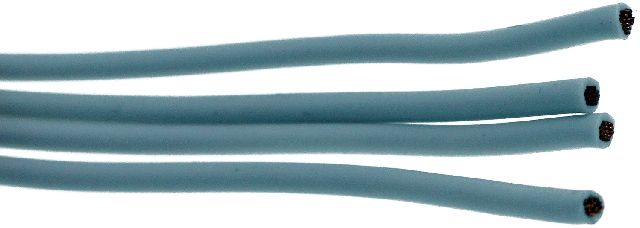
Typical fix: Repair the damaged section of wire using solder and heat-shrink tubing. If the damage is at the connector, replace the connector pigtail.
Est. part cost: $5-$25 - Blown O2 Heater Fuse ⚪ Low Probability A short circuit in the wiring (often from chafing on the driveshaft) or a faulty sensor can cause the fuse to blow as a protective measure.
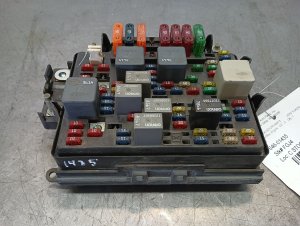
How to confirm: Locate the under-hood fuse box. Check the 15-amp fuse labeled 'O2B'. A visual inspection or a multimeter/test light will confirm if the fuse is blown. The 'O2A' fuse typically powers the upstream sensors.
Typical fix: Replace the blown 15-amp mini fuse. If the fuse blows again immediately, it indicates a persistent short circuit in the wiring or within a sensor that must be found and repaired.
Est. part cost: $1-$5
Rare But Worth Checking
- Faulty Engine Control Module (ECM): This is very rare. The ECM's internal driver for the heater circuit can fail. This should only be considered after all other possibilities (sensor, wiring, fuse) have been definitively ruled out through testing.
Diagnosis Steps

- Read the code with an OBD-II scanner to confirm P0141 is present.
- Open the under-hood fuse box and locate the fuse for the downstream oxygen sensor heaters, typically a 15A fuse labeled 'O2B'. Visually inspect the fuse and test with a multimeter. Replace if blown.
- If the fuse is good, safely raise the vehicle and locate the Bank 1, Sensor 2 oxygen sensor. It is on the driver's side exhaust pipe, after the catalytic converter.
- Thoroughly inspect the sensor's wiring harness for any signs of melting, chafing, or damage. On 4x4 models, pay special attention to the area around the front driveshaft, as this is a known point of failure.
- Disconnect the sensor. Inspect the connector for corrosion, moisture, or damaged pins.
- With the key in the 'On' position (engine off), use a multimeter to verify there are 12 volts at the power wire on the vehicle's harness side (this is typically a pink wire on GM trucks). 🎬 Watch: A professional walkthrough of O2 heater circuit electrical testing
- If power is present, switch the multimeter to the Ohms (Ω) setting. Measure the resistance across the two heater circuit pins on the sensor itself (usually the two wires of the same color, e.g., two black wires). A good sensor usually reads between 4 and 20 Ohms. A reading of 'OL' or infinite resistance means the internal heater is broken and the sensor must be replaced.
- If 12V power is missing and the fuse is good, there is an open circuit in the pink power wire between the fuse box and the sensor connector that must be traced.
- If power is present and the sensor resistance is good, the issue may be on the ground control side (typically a tan or brown/white wire) leading back to the ECM, which requires more advanced diagnostics.
- After repair or replacement, clear the code with the scanner and perform a drive cycle to ensure the Check Engine Light does not return.
Parts You'll Likely Need

- Oxygen Sensor (Bank 1, Sensor 2)
(OEM #ACDelco 213-2857 (Supersedes older numbers, verify by VIN))— This is the most common cause of P0141, as the internal heater element fails with age. It is the driver's side, post-catalytic converter sensor.
Trusted brands: ACDelco (OEM), Denso (Often OE Supplier, e.g., 234-4668), NTK/NGK
OEM price range: $60-$110
Aftermarket price range: $40-$90 - 15 Amp Mini Fuse — If the O2 heater circuit shorts out (often due to chafed wiring), it will blow the corresponding 'O2B' fuse in the under-hood fuse block.
Trusted brands: Bussmann, Littlefuse
OEM price range: $1-$5
Aftermarket price range: $1-$5
Related Codes That Often Appear With This One
- P0161 — P0161 is the identical heater circuit fault but for Bank 2, Sensor 2 (passenger side). If both appear together, it strongly suggests a common cause. The 'O2B' fuse often powers the heaters for BOTH downstream sensors, so a short on either side can blow the fuse and trigger both codes. 🎬 Watch: How to diagnose shared heater circuit faults on Chevy trucks
- P0135 — P0135 is for the Bank 1, Sensor 1 (upstream) heater circuit. Seeing it with P0141 could point to a broader wiring or power supply issue on the Bank 1 side, although they are often on separate fuses ('O2A' for upstream, 'O2B' for downstream).
Platform-Specific Known Issues
- On 4WD models, the wiring harness for the Bank 1 Sensor 2 is known to rub against the front driveshaft, causing the wires to chafe and short out, which can blow the 'O2B' 15A fuse and/or trigger code P0141. This is the most common vehicle-specific issue for this code on this platform.
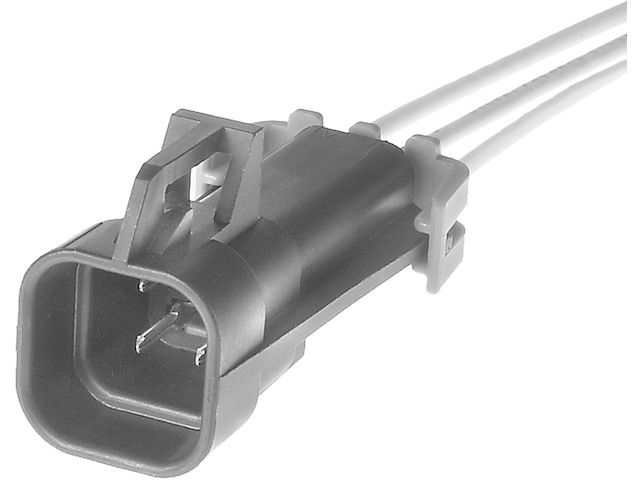
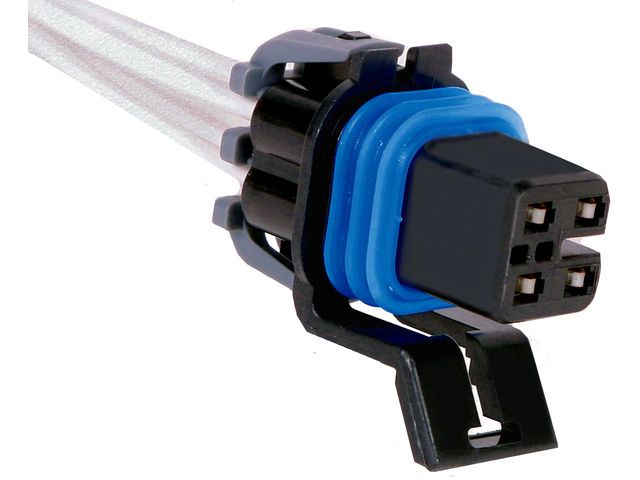
- Some early models may have different O2 sensor electrical connectors (e.g., case-grounded vs. isolated ground) depending on the assembly plant (US/Mexico vs. Canada), leading to part incompatibilities even if the sensor threads in. A user on GM-Trucks.com reported this issue.
Mechanic-Grade Diagnostic Values
- O2 Sensor Heater Element Resistance — expected: 4 to 20 Ohms when cold. A common value for a good sensor is around 6 Ohms.. Failure: Infinite resistance (Open Line/OL) or near-zero resistance (short circuit).
- O2 Sensor Heater Circuit Current Draw — expected: 0.25 to 1.375 amps.. Failure: Current draw outside the specified range for more than 10 seconds will trigger the code.
- Heater Circuit Power Supply Voltage — expected: 12V (Battery Voltage) at the pink wire on the harness-side connector with Key On, Engine Off.. Failure: No voltage indicates a blown fuse or an open in the power wire from the fuse block.
Scan Tool Commands That Help
- Tech2 / GDS2: O2 Heater On/Off Command — A professional scan tool can command the heater circuit on and off to verify the PCM driver is working and to monitor current draw in real-time. The PCM pulses the ground to control the heater, and this can be observed.
Wiring & Ground Locations

- O2B Fuse — In the under-hood fuse block, typically a 15A mini fuse.. This fuse provides the 12V power to the heater circuits for both downstream oxygen sensors (Bank 1 Sensor 2 and Bank 2 Sensor 2). A short in either sensor or its wiring will blow this fuse.
- PCM Connector C2 (Blue/Green depending on year) — At the Powertrain Control Module (PCM), firewall or inner fender location.. The ground for the heater circuit is controlled by the PCM. For B1S2, this is typically a Brown wire. On 2003+ models with Blue/Green connectors, the B1S2 heater control wire is in Pin 52 of the Green connector.
- G103 / G104 — G103 is on the front of the passenger side cylinder head. G104 is on the rear of the driver's side cylinder head.. These are primary engine ground points. While the O2 heater has a dedicated control wire, poor engine grounding can cause a host of electrical issues and voltage discrepancies that can affect sensor operation. Verifying these grounds are clean and tight is a good practice when chasing electrical faults.
Real Owner Repair Stories
- GM-Trucks.com forum user 'alz' (1999-2006 Silverado/Sierra (based on forum section)) — Persistent P0141 code returning a couple of weeks after clearing.
❌ Tried (didn't work) Replaced original O2 sensor with a new Bosch sensor.
✅ What actually fixed it The user confirmed 11.88V at the heater circuit and 7 ohms resistance on the new sensor, indicating the sensor and power supply were good. The persistent code despite a new sensor strongly pointed to an intermittent wiring issue (like the known driveshaft chafe) or a problem on the PCM ground control side of the circuit, which was the next step in diagnosis. The thread highlights that replacing the part doesn't always fix the code. - GM-Trucks.com forum user 'Zamar' (1999 Suburban 5.7L) — Recurring P0141 code.
❌ Tried (didn't work) Replaced O2 sensor (driver's side past cat)., Replaced the sensor a second time under warranty., Hardwired the sensor by cutting off the connectors and using butt connectors after seeing the voltage meter go 'loopy' when wiggling the wire.
✅ What actually fixed it Even after hardwiring the sensor, the code returned. This is a classic example of the fault being further up the harness than the connector. The problem was likely an intermittent open or short in the wiring between the hardwired connection and the PCM or fuse block, requiring a full circuit trace to find the damaged section. - NHTSA ODI #11221744 — An owner reported an ongoing issue where the P0141 code appeared alongside several other codes (P0036, P0037, P0138). In this instance, the dashboard would go blank while driving, and the throttle harness and accelerator pedal required multiple replacements.
OEM Part Supersession History
ACDelco 213-1676→ACDelco 213-4282— Part consolidation and design updates.
Heads up: While superseded, always verify the part number with the vehicle's VIN. There were mid-generation changes to connector types (flat vs. square/rhombus) and sensor grounding schemes (case-grounded vs. isolated ground) that can cause issues.
Model Year Variations Within This Range
- 1999-2002 (approx.): Early GMT800 trucks, particularly those built in the US and Mexico, often used 'case-grounded' oxygen sensors with flat black connectors. The sensor body itself was part of the ground circuit.
- 2003-2007 (approx.): Later models, and those built in Canada, tended to use 'isolated ground' sensors. These often have a different, square-shaped or rhombus-shaped connector. The PCM strategy also changed, with the 2003+ PCMs directly controlling the heater ground via a driver circuit.
Diagnostic Flowchart
Used vs. New Parts: Buying Guide for This Vehicle
When a used part is the smart pick: A used part is a reasonable choice for a replacement wiring harness pigtail if the original connector is damaged. It is NOT recommended for the oxygen sensor itself.
Donor-vehicle mileage cap: roughly under 100000 miles for the part to have meaningful remaining life.
What to inspect on the donor part:
- For a pigtail, ensure the connector body is not cracked or brittle.
- Check that the locking tab is intact.
- Inspect the wire insulation for at least 6 inches back from the connector for any signs of cracking, melting, or previous repairs.
OEM-only on this vehicle (don't cheap out):
- While not strictly 'OEM-only', it is highly recommended to use either the OEM ACDelco sensor or the original equipment supplier (Denso/NTK) for this repair. Some aftermarket brands, particularly Bosch, have been reported by forum users to cause persistent issues on this platform.
Aftermarket brands forum-validated for this vehicle:
- Denso
- NTK (NGK)
Brands owners have reported issues with on this vehicle:
- Bosch (some forum users report incompatibility or premature failure on GMT800 trucks)
Real Owner Stories
Aggregated from forums and TSBs cited above. Mileages and costs reflect what owners reported in those sources.
1999-2013 Silverado & Sierra
Symptoms: Check engine light with P0141 code that keeps returning. Owner also noted, 'When the truck starts cold, the temp rises to 1/2 the gauge and then falls back to 1/4 where it remains while driving.'
What fixed it: The original poster did not report a final fix in the thread, but other users suggested checking fuses, looking for vacuum leaks, and considering that the new Bosch sensor could be faulty out of the box.
Source hint: GM-Trucks.com - Dtc P0141
Chevrolet Silverado (1999-2007)
Symptoms: Check Engine Light with code P0141.
What fixed it: The owner found the wiring harness was being 'chewed up' by the front driveshaft. Repairing the damaged wires resolved the code.
Source hint: SilveradoSS.com - Thread 'P0141'
Early model Chevrolet Silverado
Symptoms: Persistent P0141 code after replacing the oxygen sensor.
What fixed it: The issue was an incompatible replacement sensor. The owner had to find a sensor with the correct electrical connector type (case-grounded vs. isolated ground) that matched their vehicle's specific build plant.
Source hint: GM-Trucks.com user report
Related OBD-II Codes
Frequently Asked Questions
On my 4WD Silverado, is there a common spot to check first for a P0141 code?
Where is the Bank 1, Sensor 2 oxygen sensor located on a 1999-2007 Silverado?
Which fuse should I check for the P0141 code?
I'm testing my O2 sensor. What should the resistance of the heater circuit be?
I replaced the sensor with a Bosch part and the code came back. Could the new sensor be the issue?
Does this P0141 problem also affect the GMC Sierra or Chevrolet Tahoe?
Helpful Videos


Used OEM Parts in Stock



New Aftermarket Parts Available


The information in this article is provided for general reference and educational purposes only. Vehicle specifications, procedures, and part compatibility can vary by production date, trim level, and region. Always consult your vehicle's factory service manual and verify part numbers before purchasing or performing repairs. Safety-critical components such as airbags, seat belts, and braking systems should be installed by a qualified professional.
- Chevrolet Silverado:
- 🎬 Helpful Videos
- 🛍️ Shop This Part
- What's Unique About the 1999-2007 Chevrolet Silverado
- Symptoms You May Notice
- Most Likely Causes
- Rare But Worth Checking
- Diagnosis Steps
- Parts You'll Likely Need
- Related Codes That Often Appear With This One
- Platform-Specific Known Issues
- Mechanic-Grade Diagnostic Values
- Scan Tool Commands That Help
- Wiring & Ground Locations
- Real Owner Repair Stories
- OEM Part Supersession History
- Model Year Variations Within This Range
- Diagnostic Flowchart
- Used vs. New Parts: Buying Guide for This Vehicle
- Real Owner Stories
- 1999-2013 Silverado & Sierra
- Chevrolet Silverado (1999-2007)
- Early model Chevrolet Silverado
- Related OBD-II Codes
- Frequently Asked Questions
- 🎟️ Get 5% Off