

P0139 on 2007-2017 Toyota Camry 3.5L V6: Slow O2 Sensor Causes and Fixes
This code means the rear-most oxygen sensor on the engine bank near the firewall is responding too slowly, almost always due to age. The fix is typically replacing the Bank 1, Sensor 2 O2 sensor, which costs about $50-$70 for a quality aftermarket part (Denso) and is a 2/5 difficulty DIY job.
- P0139 on your Camry V6 almost always means the rear downstream O2 sensor has failed from old age.
- The part is located on the back of the engine (near the firewall), after the catalytic converter.
- Before buying a new sensor, perform a quick visual and audio check for exhaust leaks, as this is the next most likely cause.
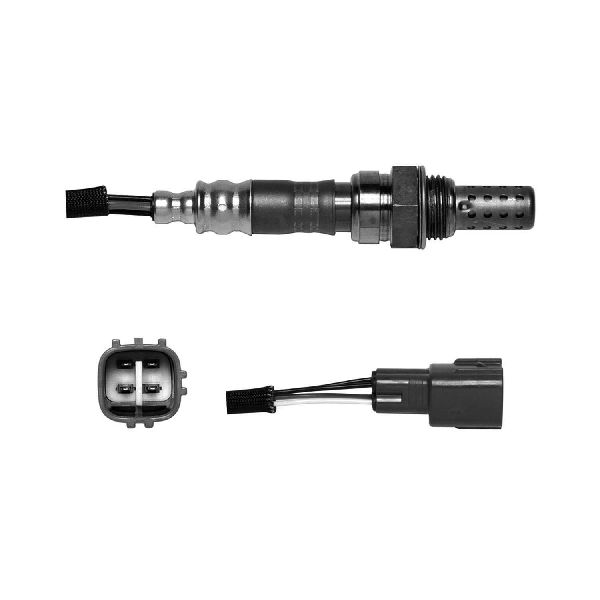
- A quality aftermarket sensor from Denso (the OEM), specifically part number 234-4064, is a cost-effective and reliable fix.
- This is a manageable DIY repair with an O2 sensor socket, but the sensor can be difficult to remove if it's rusted in place. Soaking it with penetrating oil beforehand is recommended.
What's Unique About the 2007-2017 Toyota Camry
On the famously reliable 2GR-FE V6 engine, the P0139 code is a very common and straightforward issue that typically appears after 100,000 miles. There are no widespread design flaws; it's simply a case of a consumable sensor reaching the end of its service life. Because Toyota uses Denso as its original equipment supplier, a high-quality aftermarket Denso sensor often provides an identical-to-OEM fix for a fraction of the dealer price.
Generation note: This guide covers the Toyota Camry XV40 (2007-2011) and XV50 (2012-2017) generations, both of which used the 2GR-FE 3.5L V6. 🎬 Watch: A guide to O2 sensor replacement on the V6 engine. The cause, diagnosis, and fix for P0139 are consistent across both generations as the engine and downstream O2 sensor design remained largely the same.
Symptoms You May Notice
- Check Engine Light is on
- Failing a state emissions or smog inspection
- Slightly reduced fuel economy (often not noticeable)
- Engine may hesitate upon acceleration after a deceleration phase (rare).
- Replacing the catalytic converter. P0139 points to the sensor's response time, not the converter's efficiency (which would typically be a P0420 or P0430 code).
- Replacing the wrong O2 sensor. It is critical to identify Bank 1 (rear/firewall side) and Sensor 2 (downstream/post-catalyst) correctly. Bank 2 is on the radiator side of the engine.
Most Likely Causes
- Failing or Worn-Out Oxygen Sensor 🔴 High Probability Oxygen sensors are consumable parts that degrade over time from exposure to heat and contaminants. After 100,000+ miles, the internal sensing element becomes less reactive, which is the direct cause of the 'slow response'.
How to confirm: Use a scan tool to graph the voltage of 'Bank 1 Sensor 2'. During deceleration or by creating a rich/lean condition (e.g., with propane), the voltage should change rapidly. A healthy downstream sensor should swing between approximately 0.1V and 0.9V. If the graph shows a lazy, slow-to-react waveform or a flat line, the sensor is bad. You can also test the sensor's internal heater resistance with a multimeter; it should typically be between 2-4 ohms when the sensor is warm.
Typical fix: Replace the Bank 1, Sensor 2 oxygen sensor.
Est. part cost: $50-$70 - Exhaust Leak 🟡 Medium Probability Gaskets at the manifold or flanges, as well as flex pipes, can develop small leaks over time due to corrosion and vibration. A leak anywhere before the O2 sensor allows un-metered outside air into the exhaust stream, which skews the sensor's readings and makes it appear slow to respond to actual exhaust gas changes.
How to confirm: Visually inspect the exhaust manifold, gaskets, and flex pipe for black soot trails. Listen for a 'ticking' or 'hissing' sound, especially on a cold start, that may quiet down as the metal expands when hot. A smoke test is the most definitive way to find a small leak.
Typical fix: Replace the leaking exhaust gasket or repair/replace the leaking section of the exhaust pipe.
Est. part cost: $10-$50 - Wiring or Connector Damage ⚪ Low Probability
How to confirm: Visually inspect the wiring harness leading to the Bank 1, Sensor 2 O2 sensor. Look for signs of melting from contact with the exhaust, chafing against the chassis, or corrosion inside the connector plug. Check for continuity and resistance with a multimeter from the sensor connector to the PCM; resistance above 5 ohms can indicate a problem.
Typical fix: Repair the damaged section of wire or clean/replace the connector. Apply dielectric grease to the connector to prevent future moisture intrusion.
Est. part cost: $5-$25
Rare But Worth Checking
- Powertrain Control Module (PCM) Fault: This is extremely rare. Before condemning the PCM, all other possibilities, including the sensor, wiring, and exhaust leaks, must be definitively ruled out by a professional. A PCM issue could be a software glitch needing an update or a hardware failure in the sensor's input circuit.
- Contaminated Fuel or Additives: Using poor quality fuel or certain fuel additives can lead to contamination that fouls the oxygen sensor, impeding its ability to react quickly. Biofuels like E10 may also accelerate sensor fouling in some cases.
Diagnosis Steps
- Read the code with an OBD-II scanner to confirm P0139 is present and note any other codes.
- Visually inspect the exhaust system from the rear exhaust manifold back. Look for soot marks indicating a leak at gaskets or flex pipes.
- On a cold engine, start the car and listen for any audible 'ticking' or 'hissing' that might indicate an exhaust leak.
- Safely raise the vehicle and locate the Bank 1, Sensor 2 O2 sensor. It is on the rear side of the engine (firewall side), screwed into the exhaust pipe after the catalytic converter.
- Inspect the sensor's wiring harness and connector for any signs of melting, fraying, or corrosion. Ensure the connector is securely plugged in.
- If no physical issues are found, connect a scan tool capable of graphing live data. Graph the voltage for 'B1S2'.
- Observe the voltage graph while the engine is warm and running. It should show slow, lazy switching. A completely flat line indicates a dead sensor or wiring issue. Force a rich/lean condition by snapping the throttle or introducing a vacuum leak and watch the sensor's reaction time. If it moves, but very slowly compared to the upstream sensor (B1S1), it confirms a slow response.
- If the sensor appears faulty, disconnect it and test the resistance of the heater circuit. A reading outside the typical 2-4 ohm range suggests the sensor has failed.
- If the sensor and exhaust are confirmed to be good, the issue may be with the wiring harness or, in very rare cases, the PCM, which requires professional diagnosis.
Parts You'll Likely Need
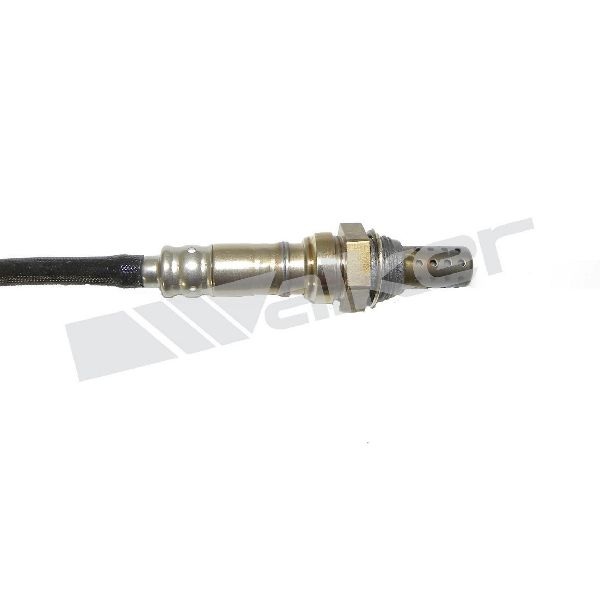
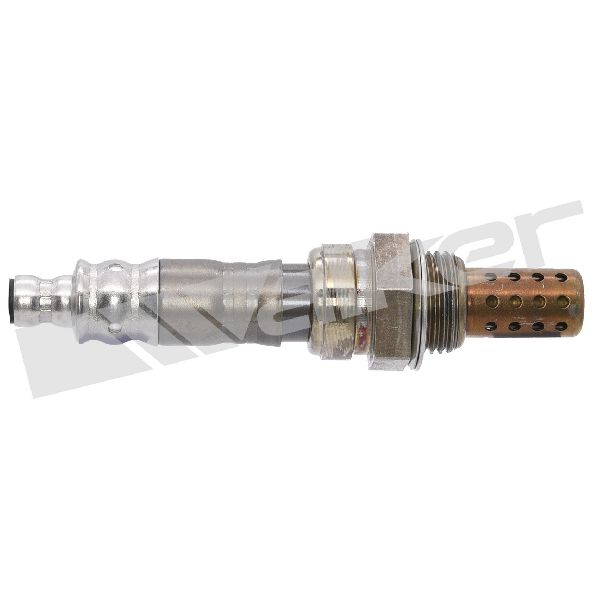
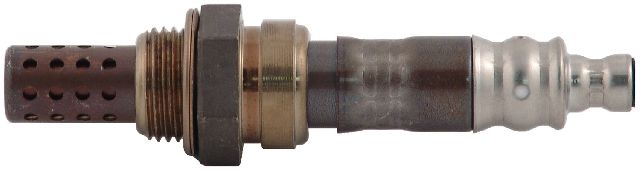
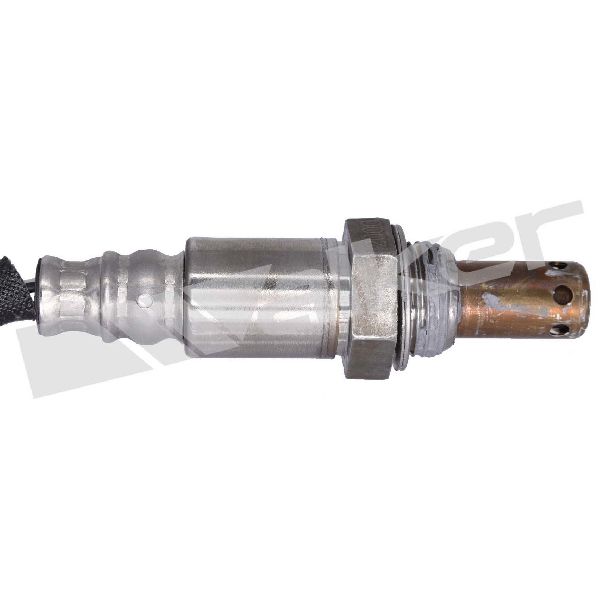
- Oxygen Sensor (Bank 1, Sensor 2)
(OEM #89465-06070, 89465-07060, 89465-33370)— This is the component that has degraded and is causing the slow response time. Replacing it is the direct fix in over 80% of cases.
Trusted brands: Denso (OEM supplier), NTK, Bosch
OEM price range: $180-$220
Aftermarket price range: $50-$70
Technical Service Bulletins (TSBs) & Recalls
- T-SB-0041-10: While not directly for P0139, this TSB addresses MIL ON for P0138/P0158 (O2 Sensor Circuit High Voltage) on some 2007-2010 models and involves an updated diagnosis procedure, showing that Toyota has addressed downstream sensor logic.
Platform-Specific Known Issues
- Real-World Repair Story: An owner of a 2011 Camry V6 on a forum reported getting P0139 at 130,000 miles. After visually checking for exhaust leaks and finding none, they replaced the Bank 1, Sensor 2 O2 sensor with a Denso 234-4064. The most difficult part of the job was reported to be accessing the sensor on the firewall side of the engine and getting enough leverage to break the old, rusted sensor free. Using an O2 sensor socket and a long breaker bar was essential. After replacement, the code was cleared and did not return.
Mechanic-Grade Diagnostic Values
- Downstream O2 Sensor (H02S) Heater Resistance — expected: The Pass 2 value of 2-4 ohms is a general estimate. A more precise, though wider, range for Toyota A/F and O2 sensors is 0.8 - 1.4 ohms at 68°F (20°C) for the heater circuit, though some sources cite up to 15 ohms as acceptable depending on the specific sensor generation.. Failure: An open circuit (infinite resistance) or a dead short (near zero ohms) indicates a failed heater element. A value significantly outside the specified range also points to a failing sensor.
- Downstream O2 Sensor (B1S2) Voltage during Deceleration Fuel Cut — expected: During a hard deceleration where the ECM initiates fuel cut, the voltage should drop below 0.2 volts.. Failure: If the voltage fails to drop below 0.2 volts for more than 7 seconds during fuel cut, the ECM will flag the sensor as slow and set P0139.
- Wiring Harness Resistance (Sensor Connector to ECM) — expected: Less than 1.0 ohm.. Failure: Resistance greater than 5 ohms can cause signal delays and trigger the code, indicating corrosion or a damaged wire.
Scan Tool Commands That Help
- Toyota Techstream: Active Test: Control the Injection Volume / A/F Control — This function allows a technician to manually force the engine rich or lean (-12% to +12%) while monitoring the 'O2S B1S2' data PID. It is the most definitive way to test the sensor's real-time responsiveness. A healthy sensor will show a voltage swing, while a lazy sensor will react very slowly or not at all. Note there can be a delay of up to 20 seconds for the downstream sensor to show a change.
Wiring & Ground Locations
- Engine Harness Grounds — The 2GR-FE has critical grounding points for the engine harness on top of both valve covers, with wires going from the valve cover to a bolt on the chassis near the strut towers. Another key ground is on the side of the cylinder head, under the throttle body area.. A poor or corroded ground connection at these points can introduce electrical noise and resistance into the sensor circuits, potentially causing a slow response code even if the sensor itself is good. These should be checked for cleanliness and tightness, especially on high-mileage or salt-belt vehicles.
- ECM Connector (B1S2 Pins) — The ECM is located on the firewall. The specific pins for Bank 1 Sensor 2 (HO2S) are HT1B (Heater), OX1B (Signal), and E2 (Ground). For a 2011+ model, these would be on connector D1, with pins such as Pin 1 (HT1B) and Pin 2 (OX1B).. When diagnosing a persistent P0139 after sensor replacement, checking for voltage and continuity directly at these ECM pins is the final step to rule out a wiring issue between the sensor and the computer. A wiring diagram for the specific model year is essential for this step.
Real Owner Repair Stories
- TacomaWorld Forum user 'Nixinus' (Toyota with 2GR-FE V6, 85,000 miles) — Rough idle, poor performance, multiple sensor codes.
❌ Tried (didn't work) Initially debated between OEM and aftermarket sensors due to significant price differences.
✅ What actually fixed it Replaced all four oxygen/AF sensors with Denso parts from RockAuto, along with spark plugs and an air filter. The user noted the old sensors looked bad, with one's threads disintegrating upon removal. The final result was a smooth idle and restored engine pep. This confirms the viability and success of using quality Denso aftermarket sensors to resolve sensor-related issues.
OEM Part Supersession History
89465-33260→89465-06070— Part number consolidation and update by Toyota. The parts are functionally identical.
Heads up: While the core sensor is the same, some OEM part numbers for Bank 1 vs Bank 2 may differ only by harness length. The aftermarket Denso 234-4064 is widely confirmed to fit and function correctly for the Bank 1 Sensor 2 position on the 2GR-FE.
Model Year Variations Within This Range
- 2007-2011 (XV40) vs 2012-2017 (XV50): The core 2GR-FE engine and the function of the downstream O2 sensor for P0139 remained the same. However, the XV50 generation (2012+) received a redesigned body and interior. While part numbers for the sensor may have slight variations or supersessions over the entire 2007-2017 span, the diagnostic procedure and common fix (replacing B1S2 with a Denso sensor) are identical. There are no significant mechanical differences relevant to this specific trouble code between the generations.
Diagnostic Flowchart
Other Known Issues on This Vehicle
Issues unrelated to this code that are worth knowing about as an owner of this generation:
- VVT-i Oil Line Rupture 🔴 High — Common on early models (approx. 2007-2010). A rubber section of the Bank 1 VVT-i oil line can degrade and burst, causing rapid and catastrophic oil loss. (Ref: Limited Service Campaign (LSC) 90K was issued to replace the rubber hose with an all-metal line (Part No. 15772-31030).)
- Water Pump Failure 🟠 Medium — A known wear item, particularly on earlier 2GR-FE engines (pre-2010 update). Failure typically occurs between 80,000-150,000 miles, often presenting as a coolant leak from the weep hole or a grinding/whining noise from the front of the engine.
- U660E Transmission Shift Quality Issues 🟡 Low — More prevalent in the XV40 generation (2007-2011). Owners report harsh downshifts, shuddering under light throttle, or shift flares. Often related to fluid condition, the torque converter, or case bearing bore wear in high-mileage examples. (Ref: T-SB-0061-08 (Torque converter shudder), TC007-07 (Shift flare).)
- Ignition Coil Failure (Rear Bank) 🟡 Low — Ignition coils can fail over the life of the vehicle, causing misfires. The rear bank (Bank 1) is significantly more labor-intensive to access, as it requires removing the intake manifold.
Used vs. New Parts: Buying Guide for This Vehicle
When a used part is the smart pick: For this repair, a used part almost never makes sense. The primary cause of P0139 is the oxygen sensor reaching the end of its natural service life. A used sensor from a junkyard is likely to have similar mileage and wear, offering no guarantee of longevity and a high probability of failing again soon.
Donor-vehicle mileage cap: roughly under 25000 miles for the part to have meaningful remaining life.
What to inspect on the donor part:
- If forced to use a used sensor in an emergency, look for one from a very low-mileage, collision-damaged vehicle.
- Inspect the sensor tip for heavy black carbon fouling or white contamination, both of which are signs of a worn or damaged sensor.
- Ensure the wiring and connector are not brittle, melted, or damaged.
OEM-only on this vehicle (don't cheap out):
- While not strictly 'OEM-only', using a sensor from the original equipment manufacturer (Denso) is strongly recommended. Avoid no-name or generic 'universal' sensors, as their voltage response and heater characteristics may not match the ECM's expectations, leading to the code returning.
Aftermarket brands forum-validated for this vehicle:
- Denso (specifically part #234-4064 for this application)
- NTK/NGK
Brands owners have reported issues with on this vehicle:
- Generic 'universal fit' sensors that require splicing wires.
- Unbranded, low-cost sensors from online marketplaces, which often have poor quality control and short lifespans.
Real Owner Stories
Aggregated from forums and TSBs cited above. Mileages and costs reflect what owners reported in those sources.
2011 Toyota Camry V6 — 130000 miles
Symptoms: Check engine light on; owner visually checked for exhaust leaks and found none.
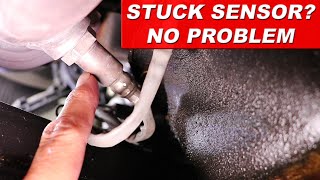
What fixed it: Replaced the Bank 1, Sensor 2 O2 sensor with a Denso 234-4064 using an O2 sensor socket and a long breaker bar 🎬 See this walkthrough for removing and installing the sensor. to break the rusted sensor free.
Source hint: Real-World Repair Story
2007-2017 Toyota Camry 2GR-FE 3.5L V6 — ~100000 miles
Symptoms: Multiple owners confirm the rear bank's downstream O2 sensor causes the code; difficulty noted in accessing the sensor due to location and rust.
What fixed it: Replacing the rear bank's downstream O2 sensor with a Denso part.
Source hint: ToyotaNation Forum - Thread 'P0139 Bank 1 Sensor 2'
Related OBD-II Codes
Frequently Asked Questions
Does TSB-0041-10 apply to my 2007-2010 Camry V6 if I have a downstream sensor code?
Which specific replacement part is recommended for the Bank 1 Sensor 2 on the Camry V6?
Where exactly is the Bank 1 Sensor 2 located on my 3.5L V6 engine?
Why is the P0139 code common on Camrys with over 100,000 miles?
Can an exhaust leak cause a P0139 code on my Camry?
What should the resistance of the O2 sensor heater be for a 2GR-FE engine?
Helpful Videos


We Have This Part in Stock

The information in this article is provided for general reference and educational purposes only. Vehicle specifications, procedures, and part compatibility can vary by production date, trim level, and region. Always consult your vehicle's factory service manual and verify part numbers before purchasing or performing repairs. Safety-critical components such as airbags, seat belts, and braking systems should be installed by a qualified professional.
- Toyota Camry:
- 🎬 Helpful Videos
- 🛍️ Shop This Part
- What's Unique About the 2007-2017 Toyota Camry
- Symptoms You May Notice
- Most Likely Causes
- Rare But Worth Checking
- Diagnosis Steps
- Parts You'll Likely Need
- Technical Service Bulletins (TSBs) & Recalls
- Platform-Specific Known Issues
- Mechanic-Grade Diagnostic Values
- Scan Tool Commands That Help
- Wiring & Ground Locations
- Real Owner Repair Stories
- OEM Part Supersession History
- Model Year Variations Within This Range
- Diagnostic Flowchart
- Other Known Issues on This Vehicle
- Used vs. New Parts: Buying Guide for This Vehicle
- Real Owner Stories
- 2011 Toyota Camry V6 — 130000 miles
- 2007-2017 Toyota Camry 2GR-FE 3.5L V6 — ~100000 miles
- Related OBD-II Codes
- Frequently Asked Questions
- 🎟️ Get 5% Off