

P0139 on 2012-2017 Hyundai Accent: Slow O2 Sensor Causes and Fixes
On a 2012-2017 Hyundai Accent, code P0139 almost always means the downstream oxygen sensor (Sensor 2) has failed. It's a common wear item and replacing it is the most likely fix. The OEM part number is 39210-2B210. Expect to pay $40-$90 for an aftermarket sensor and $115-$225 for an OEM part. Before replacing, check for exhaust leaks and wiring damage.
- P0139 on your Accent means the downstream (post-catalytic converter) O2 sensor is responding too slowly.
- The most common and likely fix is to replace the downstream O2 sensor itself. The OEM part number is 39210-2B210.
- Before replacing the sensor, perform a quick visual inspection of the exhaust for leaks and check the sensor's wiring for any obvious damage.
- Do not confuse the downstream sensor (Sensor 2) with the upstream sensor (Sensor 1). Replacing the wrong one will not fix the issue.
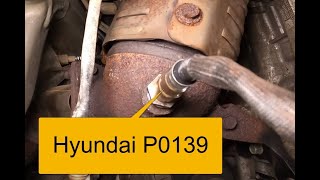
- This is a DIY-friendly repair for those with basic tools, including an O2 sensor socket. A video guide is available showing the process.
What's Unique About the 2012-2017 Hyundai Accent
The 1.6L GDI engine in the fourth-generation (RB) Accent is generally reliable, but like any modern engine, its emissions components have a finite lifespan. For this specific vehicle, the P0139 code is a straightforward indicator that the downstream O2 sensor, a component exposed to extreme heat and exhaust gases, has likely reached the end of its service life. There are no widespread, unique design flaws that cause this code; it's typically a result of normal wear and tear on the sensor itself. The most common OEM part number for this sensor is 39210-2B210.
Symptoms You May Notice
- Check Engine Light is on
- Failing a state emissions test
- Slightly reduced fuel economy
- Occasional engine hesitation or stumbling when cruising at a steady speed (rare)
- Replacing the upstream O2 sensor (Sensor 1). The code P0139 is specific to Sensor 2, which is located after the catalytic converter.
- Replacing the catalytic converter. A bad converter usually triggers a P0420 (Catalyst System Efficiency Below Threshold) code. While a bad O2 sensor can mask a converter issue, P0139 by itself points to the sensor's response time, not the converter's efficiency.
Most Likely Causes
- Failing or Aged Downstream O2 Sensor 🔴 High Probability Oxygen sensors are wear-and-tear items that degrade over time due to constant exposure to high temperatures and exhaust contaminants. After 60,000-100,000 miles, their ability to respond quickly diminishes as they get coated in carbon and soot.
How to confirm: Use a scan tool to graph the voltage of Sensor 2 (B1S2). A healthy downstream sensor on a warm engine should show a relatively stable voltage, typically holding steady between 0.6V and 0.8V. If the voltage is stuck, flat-lined near 0.45V, or takes more than a second to change after revving the engine, the sensor is 'lazy' and has failed.
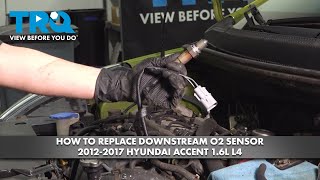
Typical fix: Replace the Bank 1, Sensor 2 (downstream) oxygen sensor. The sensor is located after the catalytic converter. A video guide from 1A Auto shows the exact location and replacement procedure. 🎬 Watch: Step-by-step guide to replacing the downstream O2 sensor. Ensure you use a small amount of anti-seize on the threads of the new sensor if not pre-applied.
Est. part cost: $40 - $90 - Exhaust Leak 🟡 Medium Probability Exhaust components like gaskets and flex pipes can develop cracks or leaks over time from corrosion and vibration. A leak before the sensor allows outside oxygen into the exhaust stream, which skews the sensor's readings and can slow its perceived response time.
How to confirm: Visually inspect the exhaust system from the manifold to the downstream sensor for any cracks, holes, or broken gaskets. A common sign is black soot around a flange or crack. Listen for a ticking or hissing sound from the exhaust, especially when the engine is cold, as the noise may diminish as the metal expands with heat.
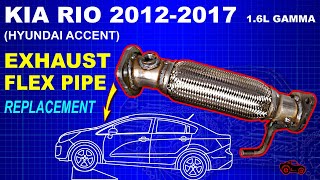
Typical fix: Repair the leak by replacing the faulty gasket or welding the cracked component. The flex pipe is a common failure point on similar Hyundai models and should be inspected closely. 🎬 See how to replace a damaged exhaust flex pipe.
Est. part cost: $10 - $150 - Damaged Wiring or Corroded Connector ⚪ Low Probability The sensor's wiring harness runs under the vehicle and is exposed to road debris, moisture, and salt, which can lead to corrosion or physical damage over time. The plastic connector can also become brittle and crack.
How to confirm: Visually inspect the O2 sensor's wiring harness from the sensor to where it connects in the engine bay. Check for any signs of fraying, melting against the exhaust, corrosion in the connector pins, or loose pins. Use a multimeter to check for continuity and resistance; resistance over 5 ohms suggests a wiring problem.
Typical fix: Clean the connector terminals with electrical contact cleaner or repair/replace the damaged section of the wiring harness.
Est. part cost: $5 - $30
Rare But Worth Checking
- Leaking Fuel Injector: If an injector is leaking, it can cause unburnt fuel to enter the exhaust, which can foul the O2 sensor and affect its readings. This is less common and would likely be accompanied by other symptoms like a rough idle, other trouble codes (like misfire codes), or the smell of gasoline.
- PCM Software Issue: Very rarely, the vehicle's Powertrain Control Module may have outdated software with overly sensitive parameters for the O2 sensor response time. A dealership can check for and apply any available updates, though no specific TSB for P0139 on this platform is widely reported.
Diagnosis Steps
- Connect an OBD-II scanner to confirm the P0139 code is present and check for any other codes.
- Inspect the downstream O2 sensor's wiring harness and connector for any visible damage, melting, or corrosion. The connector is located in the engine bay; follow the wire up from the sensor.
- With the engine cold, start the car and listen for any hissing or ticking sounds from the exhaust system that would indicate a leak. Pay close attention to the exhaust manifold and the flex pipe section before the sensor.
- Use a scan tool with live data capability to monitor the voltage of 'O2S12' (Oxygen Sensor, Bank 1, Sensor 2).
- On a fully warmed-up engine, the voltage should be relatively stable, holding between 0.6V and 0.8V. Force a lean condition by creating a small, temporary vacuum leak; the voltage should drop quickly. Snap the throttle to create a rich condition; the voltage should spike towards 0.9V. If the sensor responds very slowly (taking several seconds to change) or is stuck, it is faulty.
- If the wiring appears good and no exhaust leaks are found, the most probable cause is a worn-out O2 sensor that needs replacement.
Parts You'll Likely Need
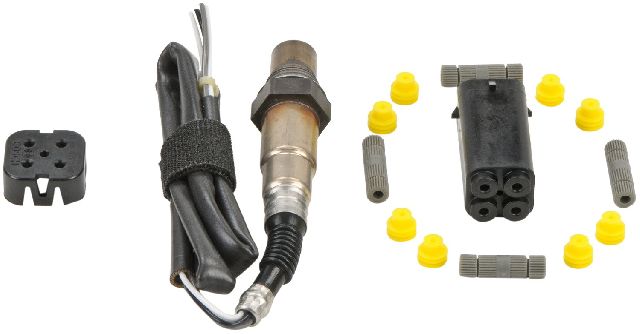
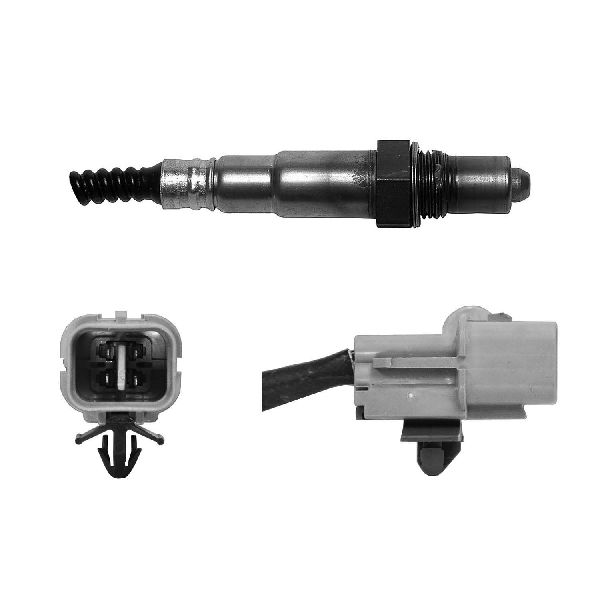
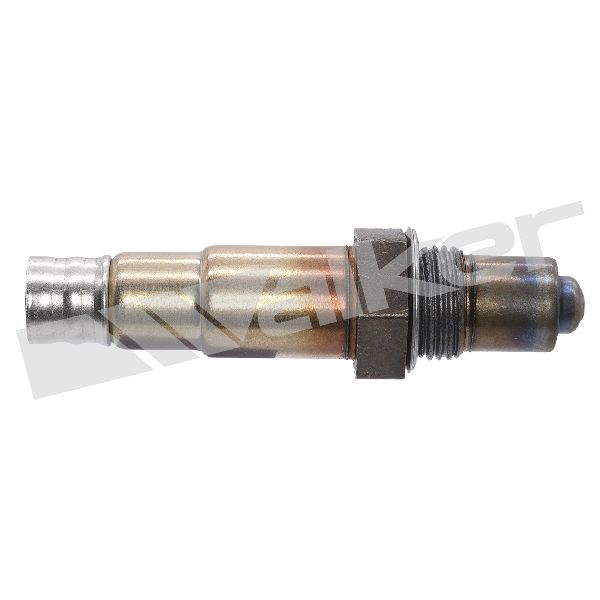
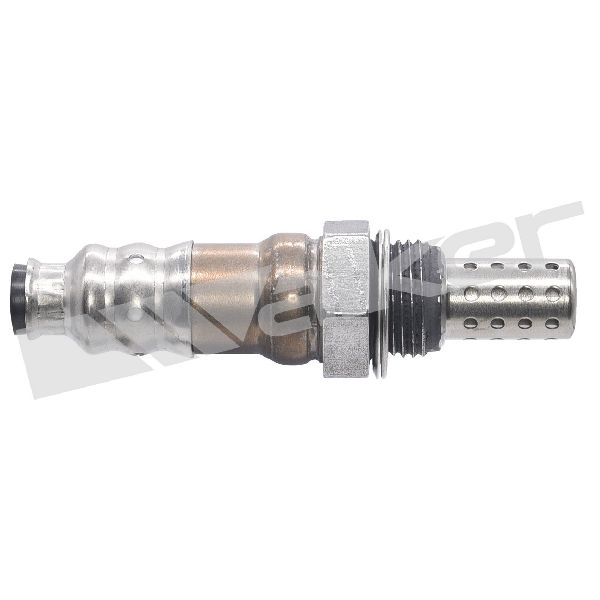
- Downstream Oxygen Sensor (Bank 1, Sensor 2)
(OEM #39210-2B210)— This is the most common cause of code P0139. The sensor becomes 'lazy' from age and contamination, slowing its response time to the ECM. This part number is widely confirmed for the 2012-2017 Accent 1.6L.
Trusted brands: Denso, NGK / NTK, Bosch, Walker, TRQ
OEM price range: $115-$225
Aftermarket price range: $40-$90
Platform-Specific Known Issues
- Owner Experience: Straightforward Replacement: Multiple owners on forums and in repair videos for the 2012-2017 Accent and its platform-mate, the Kia Rio, confirm that P0139 is a very common code as the vehicle ages. In the vast majority of cases, simply replacing the downstream O2 sensor (Part No. 39210-2B210) resolves the issue and clears the Check Engine Light.
Mechanic-Grade Diagnostic Values
- Downstream O2 Sensor (B1S2) Voltage during Deceleration Fuel Cut-Off — expected: Should drop below 0.2 volts.. Failure: If the voltage fails to drop below 0.2 volts for 7 seconds or more, the ECM will flag the sensor as slow and set P0139.
- O2 Sensor Heater Element Resistance — expected: 2.0 to 30.0 Ohms at room temperature.. Failure: A reading outside this range (open circuit or shorted) indicates a faulty heater element within the sensor, requiring sensor replacement.
- O2 Sensor Heater Circuit Voltage — expected: Approximately 12V with key on, engine off. Can be 13.5V - 14.7V with the engine running.. Failure: No voltage suggests a blown fuse or a break in the wiring between the fuse and the sensor connector.
Scan Tool Commands That Help
- Hyundai GDS (or equivalent advanced scan tool): O2 Heater Test Actuation — This command forces the O2 sensor's internal heater to turn on. By monitoring the sensor's warm-up time and voltage during this test, a technician can confirm if the heater circuit (power, ground, and the element itself) is functioning correctly. A faulty heater will prevent the sensor from reaching operating temperature quickly, causing a slow response.
Wiring & Ground Locations
- Engine to Chassis Ground Strap — A primary ground strap connects the transmission case to the chassis. A secondary, smaller ground strap is often found under the hood, connecting the engine block to the driver's side strut tower or inner fender.. Corrosion or breakage of these main grounds can introduce electrical noise and resistance into the entire system, potentially affecting the O2 sensor's reference ground and signal integrity, leading to erratic or slow readings.
- GM01, GM02, GM03 — For a 2013 Accent: GM01 is at the center of the dash, while GM02 and GM03 are at the top left side of the dash, behind the instrument panel/trim.. These are key interior grounding points for various modules and harnesses. While less likely to be the direct cause than an engine bay ground, a fault here could affect the ECM or junction box that processes the O2 sensor signal.
- O2 Sensor Connector Pins — On the 4-wire downstream O2 sensor connector.. The four pins are typically: Heater Power (12V), Heater Ground (controlled by ECM), Sensor Signal (0.1-0.9V), and Sensor Ground (reference ground). Knowing the function of each pin is crucial for testing power, ground, and signal directly at the sensor harness.
Real Owner Repair Stories
- YourMechanic Q&A (Hyundai with approx. 57,000 miles) — Check Engine Light with code P0139.
❌ Tried (didn't work) Replacing the downstream oxygen sensor at the dealership.
✅ What actually fixed it The code returned the very next day after sensor replacement. A consulting mechanic suggested the actual cause could be a leaking EVAP vent solenoid, which allows fuel vapor into the engine during the O2 sensor test phase (deceleration fuel cut-off), preventing the sensor from detecting the expected lean condition and thus flagging it as 'slow'. - Car Talk Community Forum (2003 Hyundai Elantra (similar system logic)) — Check Engine Light with code P0139.
❌ Tried (didn't work) The owner was quoted $820 by a dealer for a new sensor AND an exhaust manifold leak repair.
✅ What actually fixed it A contributor to the thread reported that on their daughter's Elantra with the exact same code, simply replacing the rear O2 sensor resolved the problem, suggesting the exhaust leak diagnosis might have been incorrect or secondary.
When the Usual Fixes Don't Work
- While the vast majority of P0139 codes are fixed by replacing the downstream O2 sensor, there are documented cases where the code returns immediately. In one such instance, a technician pointed to a leaking EVAP vent solenoid as the true culprit. This fault introduces fuel vapor during the ECM's diagnostic phase (deceleration fuel cut), making the sensor appear 'slow' because it never sees the expected lean condition. This highlights that if a new, quality sensor doesn't fix the code and no exhaust leaks are present, the root cause may be outside the exhaust system entirely.
OEM Part Supersession History
39210-2B210→N/A— No direct supersession found. This part number remains active for the specified model years.
Heads up: Part number 39210-2B410 is sometimes listed as an alternative, but its exact compatibility or relation (e.g., for a different region or trim) is not clearly defined. Always verify the part number with the vehicle's VIN.
Diagnostic Flowchart
Other Known Issues on This Vehicle
Issues unrelated to this code that are worth knowing about as an owner of this generation:
- Worn Steering Coupler 🟠 Medium — Very common on most Hyundai/Kia models from this era, typically noticeable after 60,000 miles. Causes a clicking or knocking sound in the steering column when turning. (Ref: Hyundai extended the warranty for this part to 10 years/100,000 miles under campaign TXX7 (TSB 17-ST-002).)
- Connecting Rod Bearing Failure 🔴 High — While more prominent on the larger 2.0L/2.4L Theta II engines, the 1.6L GDI (Gamma) engine is also included in class-action lawsuits for premature connecting rod bearing wear, which can lead to engine knocking and catastrophic failure. (Ref: Related to Hyundai Service Campaign T3G (TSB 19-01-006H) for knock sensor detection software, and various oil consumption TSBs like 21-EM-003H.)
- Ignition Coil Failure 🟡 Low — A common failure item causing engine misfires, rough idling, and a flashing Check Engine Light. Often occurs between 30,000 and 60,000 miles.
- Carbon Buildup on Intake Valves 🟠 Medium — As a Gasoline Direct Injection (GDI) engine, the intake valves are not cleaned by fuel spray, leading to carbon deposits over time. This can cause hesitation, reduced performance, and misfires, especially on vehicles used for frequent short trips.
Used vs. New Parts: Buying Guide for This Vehicle
When a used part is the smart pick: It is strongly recommended to NEVER use a used oxygen sensor. They are a wear-and-tear component with a finite lifespan determined by mileage and exposure to contaminants. The labor to install a used sensor that may fail shortly after is not worth the small cost savings.
What to inspect on the donor part:
- Not applicable, as used purchase is not advised.
OEM-only on this vehicle (don't cheap out):
- While not strictly 'OEM-only', using a reputable brand is critical. Cheap, unbranded sensors are notorious for failing quickly or being out-of-spec from the factory, causing the code to return.
Aftermarket brands forum-validated for this vehicle:
- NTK
- Denso
- NGK
- TRQ
- Bosch
Brands owners have reported issues with on this vehicle:
- Unbranded, no-name sensors from online marketplaces are frequently cited in forums as being problematic.
Real Owner Stories
Aggregated from forums and TSBs cited above. Mileages and costs reflect what owners reported in those sources.
2012-2017 Hyundai Accent 1.6L GDI
Symptoms: Check Engine Light is on; the code is very common as the vehicle ages.
What fixed it: Simply replacing the downstream O2 sensor (Part No. 39210-2B210) resolved the issue and cleared the light.
Source hint: vehicle_specific_issues: Owner Experience: Straightforward Replacement
2012-2017 Kia Rio (UB) 1.6L GDI
Symptoms: Emissions-related codes on an older vehicle sharing the Accent platform.
What fixed it: Replacement of the downstream oxygen sensor (P/N 39210-2B210).
Source hint: platform_mates: 2012-2017 Kia Rio (UB)
Related OBD-II Codes
Frequently Asked Questions
What is the specific part number for the downstream O2 sensor on my 2012-2017 Hyundai Accent?
Is there a TSB for steering noises that I might notice while fixing my P0139 code?
Could my P0139 code be related to the engine knocking issues mentioned in Hyundai Service Campaigns?
Which aftermarket brands are recommended for replacing the O2 sensor on a Hyundai Accent?
Can a leak in the flex pipe cause a P0139 code on my Accent?
Where is the downstream O2 sensor connector located on the 2012-2017 Accent?
Helpful Videos

We Have This Part in Stock


The information in this article is provided for general reference and educational purposes only. Vehicle specifications, procedures, and part compatibility can vary by production date, trim level, and region. Always consult your vehicle's factory service manual and verify part numbers before purchasing or performing repairs. Safety-critical components such as airbags, seat belts, and braking systems should be installed by a qualified professional.
- Hyundai Accent:
- 🎬 Helpful Videos
- 🛍️ Shop This Part
- What's Unique About the 2012-2017 Hyundai Accent
- Symptoms You May Notice
- Most Likely Causes
- Rare But Worth Checking
- Diagnosis Steps
- Parts You'll Likely Need
- Platform-Specific Known Issues
- Mechanic-Grade Diagnostic Values
- Scan Tool Commands That Help
- Wiring & Ground Locations
- Real Owner Repair Stories
- When the Usual Fixes Don't Work
- OEM Part Supersession History
- Diagnostic Flowchart
- Other Known Issues on This Vehicle
- Used vs. New Parts: Buying Guide for This Vehicle
- Real Owner Stories
- 2012-2017 Hyundai Accent 1.6L GDI
- 2012-2017 Kia Rio (UB) 1.6L GDI
- Related OBD-II Codes
- Frequently Asked Questions
- 🎟️ Get 5% Off