

P0139 on 2013-2020 Ford Fusion Hybrid: Slow O2 Sensor Response Causes and Fixes
This code almost always means the downstream oxygen sensor (Bank 1, Sensor 2) is failing due to age. Replacing the sensor is the typical fix. Expect to pay around $70-$120 for an OEM Motorcraft part. It's a straightforward DIY job for those with basic tools and an O2 sensor socket.
- P0139 on your Fusion Hybrid points directly to a slow-responding downstream O2 sensor (Bank 1, Sensor 2).
- The most probable cause is simply that the original sensor has aged and needs to be replaced. This is a common wear item.
- Before replacing the sensor, perform a quick visual check of the exhaust for leaks and the sensor's wiring for damage.
- This is a manageable DIY repair with a jack, stands, and a special 22mm (7/8") O2 sensor socket. Opt for a quality replacement brand like Motorcraft, Bosch, or NTK to avoid premature failure.
What's Unique About the 2013-2020 Ford Fusion Hybrid
On the 2.0L Atkinson-Cycle engine in the Fusion Hybrid, the P0139 code is a very common and straightforward issue. There are no widespread design flaws or complex diagnostic trees associated with it. The most frequent cause is simply the downstream O2 sensor wearing out over time. Owner experiences on forums and video platforms confirm that replacing the sensor is usually a direct fix.
Symptoms You May Notice
- Check Engine Light is on.
- Potential for slightly reduced fuel economy.
- Failure to pass an emissions inspection.
- The code may appear as 'stored' or 'pending' before triggering a persistent Check Engine Light, with no other noticeable symptoms.
- Replacing the upstream (Bank 1, Sensor 1) oxygen sensor. This code specifically points to the downstream (Sensor 2) sensor.
- Replacing the catalytic converter. While a P0420 code often points to the converter, a P0139 code is almost always related to the sensor itself or a leak, not the converter.
Most Likely Causes
- Failing Downstream Oxygen Sensor 🔴 High Probability Oxygen sensors are wear items that degrade over time from heat and contaminants. After 60,000 to 100,000 miles, their ability to react quickly diminishes, which is a common failure pattern.
How to confirm: Use a scan tool to graph the voltage of 'O2S12' (Bank 1, Sensor 2). While the upstream sensor (O2S11) should fluctuate rapidly, the downstream sensor should show slow, lazy voltage switches. If the voltage is stuck or barely moving when the engine is warm, the sensor is bad.
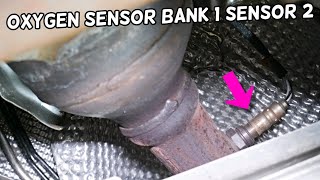
Typical fix: Replace the downstream (post-catalyst) oxygen sensor. A special 22mm (or 7/8") O2 sensor socket is requ 🎬 Watch this video to see the exact sensor location and replacement.ired.
Est. part cost: $50-$120 - Exhaust System Leak 🟡 Medium Probability Corrosion can cause leaks at exhaust flanges or in the flex pipe, especially in regions that use road salt.
How to confirm: Visually inspect the exhaust pipes and flanges from the catalytic converter back for any signs of cracks, rust holes, or gasket failure. You may hear a ticking or hissing sound from the leak, especially when the engine is cold. An exhaust leak before the sensor can introduce outside air, causing incorrect readings.
Typical fix: Repair the leak by replacing the damaged pipe section or gasket.
Est. part cost: $20-$200 - Damaged Wiring or Connector ⚪ Low Probability The sensor wiring runs under the vehicle and is exposed to heat, moisture, and potential road debris, which can cause corrosion or physical damage to the harness or connector pins.
How to confirm: Visually inspect the wiring harness and connector for the downstream O2 sensor. Look for any signs of melting, chafing, corrosion in the pins, or breaks in the wires. The connector is black and located near the back of the engine.
Typical fix: Repair the damaged section of the harness or clean/replace the connector.
Est. part cost: $10-$50
Rare But Worth Checking
- Powertrain Control Module (PCM) Fault: In very rare cases, a software glitch or internal failure in the PCM can cause it to process the sensor's signal incorrectly, triggering the code even with a good sensor and wiring. This should only be considered after all other possibilities have been exhaustively ruled out.
Diagnosis Steps
- Read the code with an OBD-II scanner to confirm P0139 is the primary code present.
- Visually inspect the downstream O2 sensor's wiring harness and connector for any obvious damage, melting, or corrosion. The connector is black and can be accessed from the top of the engine bay.
- Inspect the exhaust system for any leaks between the catalytic converter and the downstream O2 sensor. Listen for hissing or ticking noises when the engine is cold.
- Use a scan tool with live data capability to monitor the voltage of Bank 1 Sensor 2. At operating temperature, it should have a slow, steady switching pattern. If it's flat, stuck, or erratic, the sensor has likely failed.
- If the sensor and wiring appear good, carefully re-check for a small, hard-to-find exhaust leak.
- If no other cause is found, replace the downstream oxygen sensor. 🎬 See a helpful breakdown of P0139 causes and common fixes. This is the most common resolution.
Parts You'll Likely Need
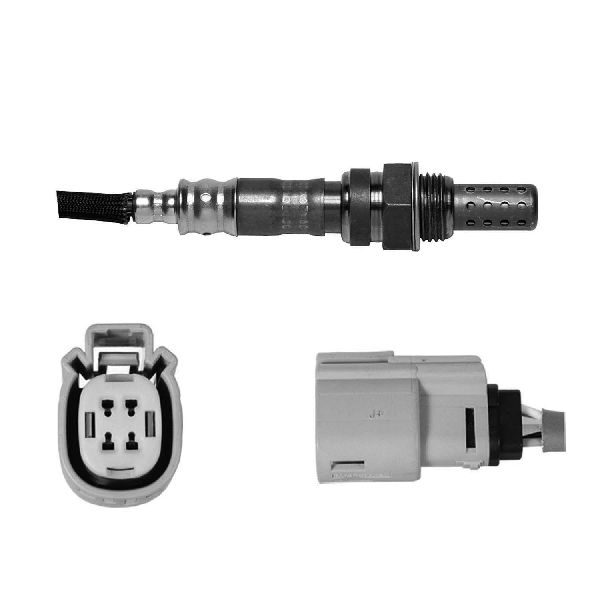
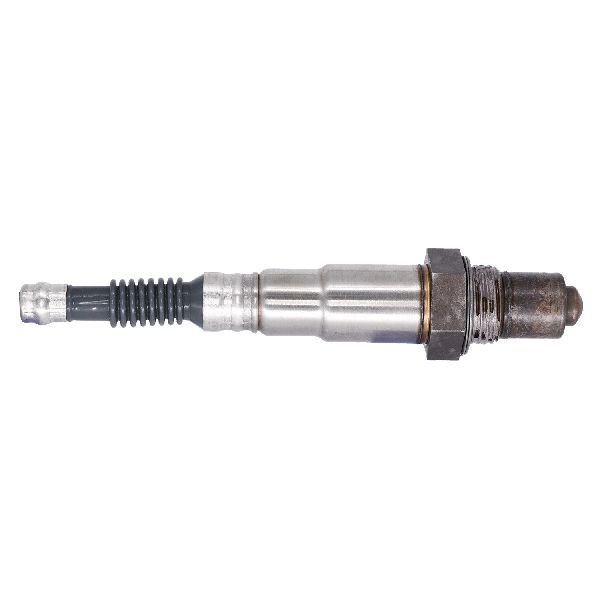
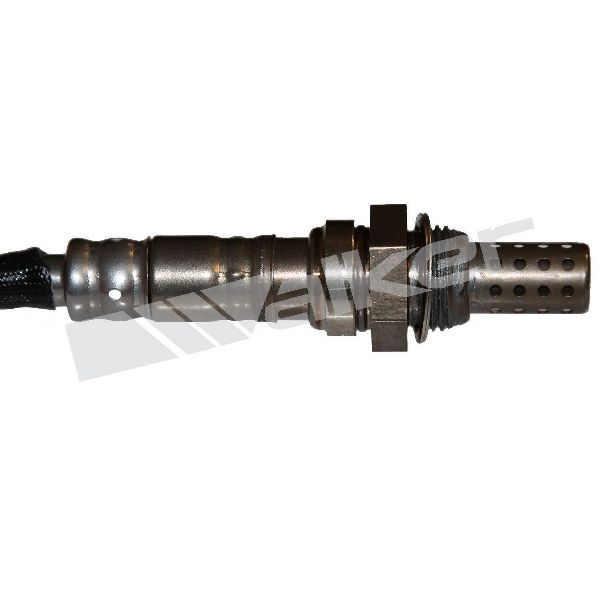
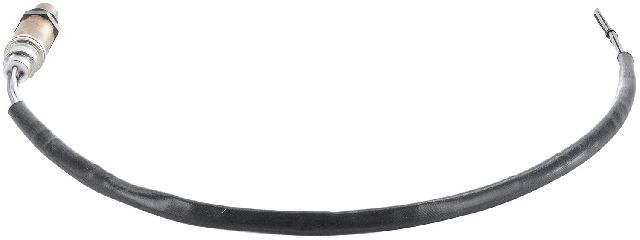
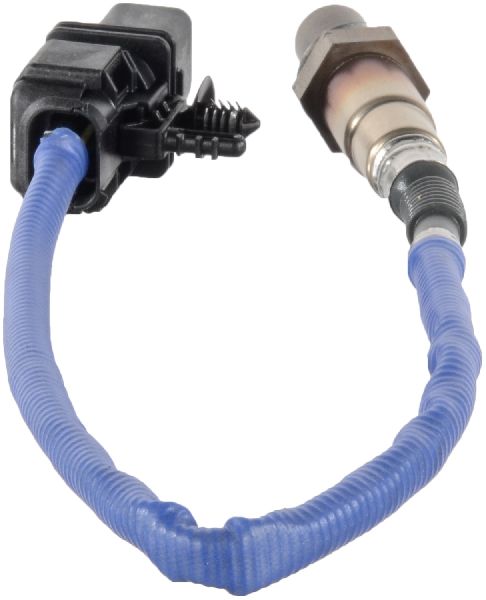
- Downstream Oxygen Sensor
(OEM #Motorcraft DY-1158 (replaces CJ5Z-9G444-B, superseded by AE8Z-9G444-B))— This is the component that has become slow to respond. It is a standard wear-and-tear part that eventually requires replacement on most vehicles.
Trusted brands: Motorcraft, Bosch, Denso, NGK/NTK
OEM price range: $70-$120
Aftermarket price range: $45-$90
Related Codes That Often Appear With This One
- P0420 — If the O2 sensor is failing, it may not be able to accurately report on the catalytic converter's function, which can sometimes trigger a false catalyst efficiency code (P0420).
- P013A — This code also indicates a slow O2 sensor response (Rich to Lean) for Bank 1 Sensor 2 and is often seen alongside P0139, pointing to the same failing component. 🎬 Watch a mechanic diagnose the related P013A code on this hybrid.
Mechanic-Grade Diagnostic Values
- Downstream O2 Sensor (HO2S12) Voltage - Live Data — expected: A relatively steady voltage fluctuating slowly between 0.45V and 0.8V on a warm, efficiently running engine.. Failure: Voltage is stuck (e.g., at 0.3V), flat, or switches very slowly after a forced rich/lean event (like a throttle snap).
- O2 Sensor Heater Element Resistance — expected: Typically between 2 and 15 ohms when measured across the heater circuit pins on a cold sensor.. Failure: An infinite resistance (open circuit) or a very high resistance reading (e.g., 235 ohms) indicates a failed heater element.
- O2 Sensor Signal Circuit Resistance — expected: Less than 5 ohms from the sensor connector to the corresponding pin at the PCM.. Failure: Resistance values above 5 ohms suggest corrosion in a connector or a damaged wire in the harness, which can delay the signal and trigger P0139.
- PCM O2 Signal Bias Voltage (Sensor Unplugged) — expected: On many Ford systems, unplugging the O2 sensor should result in a bias voltage of around 0.45V to 0.5V on the signal wire coming from the PCM, as read by a scan tool.. Failure: A reading of 0V or a significantly different voltage could indicate a problem with the PCM or the wiring between the PCM and the sensor connector.
Scan Tool Commands That Help
- Ford IDS / FORScan: On-Demand Self-Test — Running the On-Demand Self-Test can sometimes generate more specific codes related to the O2 sensor circuit that may not trigger the MIL on their own, helping to confirm the fault area before replacing parts.
- Ford IDS / FORScan: Graph O2S12 PID — This is the primary diagnostic step. Graphing the sensor's voltage allows you to visually confirm if it is 'lazy' or stuck, compared to the rapid switching of the upstream sensor (O2S11).
Wiring & Ground Locations
- G105 — Right side of the engine compartment.. This is a major engine compartment ground point. A poor connection here can cause various sensor reading issues, including those for the oxygen sensors.
- G108 — Right rear of the engine compartment (for PHEV models, but often shared location).. Another primary ground point for engine and powertrain components. Verifying it is clean and tight is a crucial step in diagnosing any electrical fault.
- G101 / G102 — Left front of the engine compartment, often near the battery jump point.. These grounds are critical for the main vehicle power distribution. While less likely to cause an isolated O2 sensor code, a fault here can create unpredictable electrical problems across the system.
- Downstream O2 Sensor Connector — The connector for the downstream O2 sensor is black and can typically be accessed from the top of the engine bay, near the firewall, towards the back of the engine.. This is the primary point for testing. You can check for power, ground, and signal integrity at this connector, and measure the sensor's internal resistance without having to remove the sensor from the exhaust.
Real Owner Repair Stories
- Reddit user in r/MechanicAdvice (2003 VW Golf 2.0L (similar zirconia sensor technology)) — Check engine light with code P0139, which kept returning after being cleared.
❌ Tried (didn't work) Clearing the code multiple times.
✅ What actually fixed it The user confirmed with a scanner that the sensor voltage was stuck at a constant 0.3V. They replaced the sensor with a universal Bosch O2 sensor, after which the new sensor's voltage correctly fluctuated between 0.2V and 0.7V, resolving the code. - Reddit user in r/fordfusion (2013 Ford Fusion with 187k miles) — Failed emissions test due to Oxygen Sensor and Heater monitors not completing. No specific DTC mentioned initially, but the diagnostic path is identical for P0139.
❌ Tried (didn't work) Replacing both O2 sensors., Driving over 90 miles to complete the drive cycle., Having the dealer reflash the PCM for $180.
✅ What actually fixed it The user discovered the ground control circuit for the O2 heater was not functioning correctly. By manually applying a ground to the appropriate pin on the sensor connector, the O2 sensor and heater monitors passed the self-test immediately. This indicated the final problem was not the sensor itself, but a fault in the PCM's ability to provide a ground for the heater circuit.
OEM Part Supersession History
CJ5Z-9G444-B→AE8Z-9G444-B (packaged as Motorcraft DY-1158)— The supersession to AE8Z-9G444-B was likely for parts consolidation across multiple platforms (including Fiesta/Focus) and potential minor internal revisions for durability. No significant functional differences or incompatibilities have been noted for this specific application.
Model Year Variations Within This Range
- 2013-2020: While the Fusion had cosmetic facelifts in 2017 and 2019 (including an update from MyFord Touch to SYNC 3), the core powertrain, including the 2.0L Atkinson-cycle I4 engine and its emissions control system, remained fundamentally unchanged. The diagnosis and repair for a P0139 code are consistent across the entire 2013-2020 model year range for the hybrid.
Diagnostic Flowchart
Other Known Issues on This Vehicle
Issues unrelated to this code that are worth knowing about as an owner of this generation:
- HF35 Transmission Bearing Failure 🟠 Medium — Common on earlier models (2013-2016), causing a thumping, rubbing, or grinding noise while the vehicle is in motion. (Ref: TSB 19-2391 (supersedes 18-2328))
- Steering Gear Bolt Corrosion 🔴 High — Affects vehicles operated in regions using road salt, which can cause bolts to fracture and lead to a loss of power steering assist. (Ref: Recall 19S26 / NHTSA 19V632000)
- Shifter Cable Bushing Failure 🟡 Low — A small plastic bushing on the 6F35 transmission can fail, preventing the driver from shifting out of Park or another gear. The part is inexpensive but can be labor-intensive to replace.
- Coolant Intrusion (EcoBoost Engines) 🔴 High — This is a notorious issue for the 1.5L and 2.0L *EcoBoost* engines, not the 2.0L *Atkinson-Cycle* engine in the Hybrid. It is a critical distinction for owners, as the Hybrid's naturally aspirated engine is not prone to this specific failure mode. (Ref: TSB 22-2134 (for EcoBoost))
- Hybrid Battery Degradation 🟠 Medium — As with any hybrid, the high-voltage battery pack will lose capacity over time, typically noticeable after 8-10 years. This can reduce fuel economy and eventually require a costly replacement.
Used vs. New Parts: Buying Guide for This Vehicle
When a used part is the smart pick: For this repair, a used part is NOT recommended. Oxygen sensors are wear items with a finite lifespan, similar to spark plugs or brake pads. A used sensor from a junkyard has unknown mileage and exposure to contaminants, and it may fail shortly after installation, wasting time and money.
What to inspect on the donor part:
- Not applicable, as used sensors are not advised.
OEM-only on this vehicle (don't cheap out):
- While not strictly 'OEM-only', using a reputable brand is critical. Cheap, no-name 'universal' sensors are a very common cause of repeat failures or immediate incompatibility issues.
Aftermarket brands forum-validated for this vehicle:
- Motorcraft (OEM)
- NTK/NGK
- Denso
- Bosch
Brands owners have reported issues with on this vehicle:
- Unbranded 'universal' sensors that require splicing wires. While they can work, they introduce multiple points of potential failure and are often not calibrated precisely for the vehicle's PCM, leading to persistent codes.
Real Owner Stories
Aggregated from forums and TSBs cited above. Mileages and costs reflect what owners reported in those sources.
2016 Ford Fusion Hybrid 2.0L
Symptoms: Found a stored P0139 code while testing, but there was no active check engine light or any noticeable drivability problems.
What fixed it: The sensor was identified as borderline slow, illustrating that it can fail to react quickly before triggering a persistent fault.
Source hint: reddit.com/r/Cartalk/comments/17e9h0p/found_a_stored_p0139_on_my_fusion_while_testing/
2013-2020 Lincoln MKZ Hybrid 2.0L
Symptoms: Downstream O2 sensor failure leading to a P0139 code; noted that the downstream sensor was easier to remove than the upstream one.
What fixed it: Replacement of the downstream (post-catalyst) oxygen sensor using a 7/8" O2 socket.
Source hint: YouTube - GMC Lincoln
2019 Ford Fusion Hybrid 2.0L
Symptoms: Check engine light triggered by an O2 sensor circuit issue; technician used the black connector near the back of the engine for diagnosis.
What fixed it: Replacement of the downstream O2 sensor.
Source hint: YouTube - automotive tech-vet
Related OBD-II Codes
Frequently Asked Questions
Does the coolant intrusion issue mentioned in TSB 22-2134 affect my 2013-2020 Fusion Hybrid?
Is there a recall for the steering system on my Fusion Hybrid that I should check while fixing the O2 sensor?
I'm hearing a grinding noise while driving my 2015 Fusion Hybrid; is this related to the P0139 code?
Can I use a universal oxygen sensor to save money on my Fusion Hybrid repair?
Where is the connector for the downstream O2 sensor located on the 2.0L Atkinson engine?
What tools do I need to replace the downstream O2 sensor on my Fusion Hybrid or MKZ Hybrid?
Helpful Videos
We Have This Part in Stock

The information in this article is provided for general reference and educational purposes only. Vehicle specifications, procedures, and part compatibility can vary by production date, trim level, and region. Always consult your vehicle's factory service manual and verify part numbers before purchasing or performing repairs. Safety-critical components such as airbags, seat belts, and braking systems should be installed by a qualified professional.
- Ford Fusion Hybrid:
- 🎬 Helpful Videos
- 🛍️ Shop This Part
- What's Unique About the 2013-2020 Ford Fusion Hybrid
- Symptoms You May Notice
- Most Likely Causes
- Rare But Worth Checking
- Diagnosis Steps
- Parts You'll Likely Need
- Related Codes That Often Appear With This One
- Mechanic-Grade Diagnostic Values
- Scan Tool Commands That Help
- Wiring & Ground Locations
- Real Owner Repair Stories
- OEM Part Supersession History
- Model Year Variations Within This Range
- Diagnostic Flowchart
- Other Known Issues on This Vehicle
- Used vs. New Parts: Buying Guide for This Vehicle
- Real Owner Stories
- 2016 Ford Fusion Hybrid 2.0L
- 2013-2020 Lincoln MKZ Hybrid 2.0L
- 2019 Ford Fusion Hybrid 2.0L
- Related OBD-II Codes
- Frequently Asked Questions
- 🎟️ Get 5% Off