

P0138 on 2009-2012 Toyota RAV4 2.5L: O2 Sensor High Voltage Causes and Fixes
P0138 on a 2009-2012 RAV4 2.5L usually means the downstream oxygen sensor (Bank 1, Sensor 2) has failed. However, a Toyota Technical Service Bulletin (TSB) states it can also be caused by a faulty upstream Air/Fuel Ratio sensor. Expect to pay $60-$120 for an aftermarket sensor or $150+ for OEM.
- P0138 on a 2009-2012 RAV4 indicates a high voltage signal from the rear (downstream) oxygen sensor.
- While the downstream sensor itself may have failed, a known issue documented by Toyota is that a faulty *upstream* Air/Fuel Ratio sensor can also trigger this code.
- Diagnosis should involve checking live sensor data with a scan tool. If the downstream sensor voltage is stuck high (>0.9V), it's a strong indicator of a fault.
- Before replacing parts, always inspect the sensor's wiring and connector for physical damage.
- If replacing the downstream sensor doesn't fix the issue, the upstream A/F sensor is the next most likely cause.
What's Unique About the 2006-2012 Toyota RAV4
This guide focuses on the 2009-2012 RAV4, which uses the 2.5L 2AR-FE engine. While a failed downstream O2 sensor is a common cause for P0138, Toyota issued a specific Technical Service Bulletin (T-SB-0151-18) for this engine in the RAV4 and the 2010-2011 Camry. The bulletin states that an "incorrect air fuel ratio sensor response" from the *upstream* sensor (Bank 1, Sensor 1) can falsely trigger the P0138 code for the *downstream* sensor. This makes diagnosis more complex than on other vehicles where the downstream sensor is almost always the direct cause. The TSB outlines a procedure to test the A/F sensor response and, if it fails, replace it and update the ECM software.
Symptoms You May Notice
- Check Engine Light is on
- VSC and 4WD warning lights may also illuminate on the dashboard; this is a common Toyota behavior to draw attention to any engine-related fault code.
- Reduced fuel economy
- Vehicle may fail an emissions test
- Rough idle or hesitation in rare cases, though many owners report no drivability issues other than the warning lights.
- Replacing the catalytic converter. A P0138 code points to a sensor or circuit issue, not a bad converter. A failing converter would typically set a P0420 code.
- Immediately replacing the downstream O2 sensor without considering that the upstream A/F sensor could be the root cause, as documented in Toyota's TSB T-SB-0151-18.
- Replacing the wrong sensor. Bank 1 on an inline-four engine is the only bank, and Sensor 2 is always the one *after* the catalytic converter.
Most Likely Causes
- Failed Downstream Oxygen Sensor (Bank 1, Sensor 2) 🔴 High Probability Oxygen sensors are wear-and-tear items that degrade over time from extreme heat and contaminants in the exhaust. They have a finite lifespan and are a common failure point on most vehicles.
How to confirm: Use a scan tool to monitor the live data for the B1S2 voltage. If it is stuck high (e.g., >0.8V) and does not fluctuate, the sensor has likely failed. You can also test the sensor's internal heater resistance and circuit continuity with a multimeter. The heater resistance should be between 11-16 ohms at 68°F (20°C) for many Toyota sensors.
Typical fix: Replace the Bank 1, Sensor 2 oxygen sensor. It is located in the exhaust pipe after the catalytic converter. An O2 sensor socket is recommended for removal.
Est. part cost: $60-$150 - Faulty Upstream Air/Fuel Ratio Sensor (Bank 1, Sensor 1) 🟡 Medium Probability A specific Toyota TSB (T-SB-0151-18) identifies that a poor response from the upstream A/F sensor can cause the ECM to set a P0138 code for the downstream sensor on this exact engine. The downstream sensor is essentially reporting a problem caused by the upstream sensor's incorrect signaling.
How to confirm: This is difficult to confirm without advanced diagnostics. A technician with a Toyota Techstream scan tool can perform an Active Test to check the A/F sensor's response as outlined in the TSB. Many owners on forums have confirmed that replacing the downstream sensor did not fix the code, but replacing the upstream A/F sensor did.
Typical fix: Replace the Air/Fuel Ratio sensor (Bank 1, Sensor 1) and, if applicable, have the dealer reprogram the ECM per TSB T-SB-0151-18.
Est. part cost: $100-$220 - Damaged Wiring or Corroded Connector ⚪ Low Probability The sensor wiring runs under the vehicle and is exposed to road debris, moisture, and heat, which can cause damage over time. The connector itself can also accumulate dirt and moisture, leading to corrosion.
How to confirm: Visually inspect the wiring harness and connector for the downstream O2 sensor. Look for frayed wires, melted insulation, or green/white corrosion on the connector pins. Test for a short to power in the signal wire using a multimeter.
Typical fix: Repair the damaged section of wiring or clean/replace the connector. A bad ground connection can also cause erroneous voltage readings.
Est. part cost: $5-$50
Rare But Worth Checking
- Exhaust Leak: An exhaust leak before the O2 sensor can introduce extra air into the exhaust stream, causing incorrect sensor readings. The TSB for this code lists checking for exhaust leaks as the first step.
- Engine Control Module (ECM) Fault: While rare, an internal ECM failure can cause a P0138 code. This is sometimes seen with a P0606 (ECM/PCM Processor) code, but often the P0606 is a phantom code that disappears after fixing the primary sensor issue. The TSB also mentions an ECM logic update to prevent this code from occurring, implying the original software was too sensitive.
- Rich Running Condition: A legitimate rich condition (too much fuel) from leaking fuel injectors or high fuel pressure can cause the downstream O2 sensor to read high voltage. This would typically be accompanied by other codes (like fuel trim codes) and more severe drivability symptoms.
Diagnosis Steps
- Read all fault codes with an OBD-II scanner. Note any other codes present, especially P0606.
- Use the scanner's live data function to observe the voltage for 'O2S B1S2'. A healthy sensor on a warm engine at idle should have a relatively stable voltage, typically between 0.5V and 0.8V. If it is stuck above 0.9V and unresponsive, there is a problem.
- Visually inspect the wiring harness and connector for the downstream O2 sensor. Look for any signs of physical damage, melting on the exhaust, or corrosion in the plug.
- Check for exhaust leaks between the engine and the downstream O2 sensor. A leak can skew sensor readings.
- If wiring looks good and live data points to a bad sensor, replace the Bank 1 Sensor 2 oxygen sensor. An O2 sensor socket is highly recommended.
- If the code returns after replacing the downstream sensor, the upstream Air/Fuel Ratio sensor is the next likely culprit, per TSB T-SB-0151-18.
- If the upstream sensor is replaced, an ECM software update may also be required as per the TSB to fully resolve the issue.
- After any repair, clear the codes and perform a drive cycle to confirm the fix.
Parts You'll Likely Need
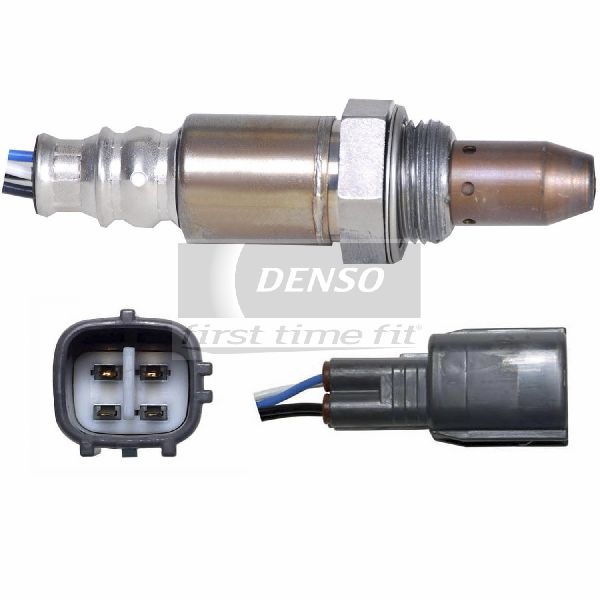
- Downstream Oxygen Sensor (Bank 1, Sensor 2)
(OEM #89465-42170)— This is the most common direct cause for a P0138 code. It is a standard maintenance item that fails over time.
Trusted brands: Denso (OEM supplier), Bosch, NGK/NTK
OEM price range: $120-$180
Aftermarket price range: $60-$120 - Upstream Air/Fuel Ratio Sensor (Bank 1, Sensor 1)
(OEM #89467-42120)— A Toyota TSB specifically calls out this part as a potential root cause for a P0138 code on this vehicle, even though the code points to the downstream sensor.
Trusted brands: Denso (OEM supplier)
OEM price range: $150-$220
Aftermarket price range: $100-$160
Related Codes That Often Appear With This One
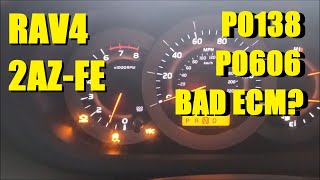
- P0606 — This ECM/PCM Processor code sometimes appears alongside P0138 on Toyotas. In many cases, it is a 'ghost' code that resolves after the O2 sensor or circuit fault is corrected, as seen in owner repair videos.
- P0137 — This code is for 'O2 Sensor Circuit Low Voltage' for the same sensor. Seeing both intermittently could point to a wiring issue or a failing sensor that is fluctuating between open and shorted states.
Technical Service Bulletins (TSBs) & Recalls
- T-SB-0151-18: Notes that on 2009-2012 RAV4s (2AR-FE) and 2010-2011 Camrys, DTC P0138 can be caused by an incorrect air-fuel ratio sensor response, requiring A/F sensor replacement and an ECM update.
- T-SB-0001-10 Rev: A more general bulletin mentioning that P0138 can occur on 'some vehicles', sometimes along with A/F sensor codes like P2195 or P2197.
Platform-Specific Known Issues
- TSB T-SB-0151-18: For 2009-2012 RAV4s with the 2AR-FE engine, a P0138 code may be caused by an incorrect response from the upstream Air/Fuel Ratio sensor. The fix involves replacing the A/F sensor (P/N 89467-42120) and reprogramming the ECM.
Mechanic-Grade Diagnostic Values
- Upstream Air/Fuel (A/F) Sensor Heater Resistance — expected: 0.8 - 1.4 ohms at 20°C (68°F). Failure: Resistance outside of this range indicates a faulty heater element in the sensor.
- Downstream Heated Oxygen Sensor (HO2S) Heater Resistance — expected: 11 - 16 ohms at 20°C (68°F). Failure: An open circuit or resistance outside this range points to a failed heater.
- Downstream HO2S (B1S2) Voltage during A/F Active Test — expected: Voltage should switch above and below 0.45V as injection volume is changed from -12.5% to +25%.. Failure: If voltage remains high (e.g. > 0.69V) when the mixture is commanded lean, it confirms the fault condition described in T-SB-0151-18.
- Live Data: Upstream A/F Sensor Voltage (B1S1) — expected: Around 3.3V - 3.4V when lean.. Failure: A reading stuck lean (e.g., 3.4V) while the downstream sensor (B1S2) is stuck rich (e.g., >0.8V) strongly suggests the upstream A/F sensor is faulty and causing the P0138 code.
Hidden / Shadow Codes Worth Checking
- Mode $06, TID $05, CID $01-$04: This refers to the onboard monitor test results for the Bank 1 Oxygen Sensors. A technician can view the raw sensor voltage readings and test limits stored by the ECM. For P0138, the value for the downstream sensor (Sensor 2) would likely be at or exceeding its maximum threshold. (see via An advanced OBD-II scan tool with Mode $06 functionality.)
Scan Tool Commands That Help
- Toyota Techstream: Active Test: 'Control the Injection Volume for A/F sensor' — This is the specific test called for in TSB T-SB-0151-18. It allows a technician to manually force the fuel mixture rich or lean and observe the downstream O2 sensor's (O2S B1S2) reaction. If the downstream sensor voltage stays high when commanded lean, it confirms the upstream A/F sensor is not responding correctly, causing the P0138.
Wiring & Ground Locations
- Engine Control Module (ECM) — For the 2009-2012 RAV4, the ECM is located under the hood, on the driver's side, inside a black plastic box in front of the battery and above the headlight.. The ECM receives the voltage signals from both the upstream and downstream oxygen sensors and provides the ground and reference voltage. A poor connection at the ECM is a rare but possible cause.
- Heated Oxygen Sensor (Bank 1 Sensor 2) Connector — The connector for the downstream sensor is typically located on the vehicle's underbody, clipped to the chassis near where the sensor is installed in the exhaust pipe, after the catalytic converter.. This connector is exposed to the elements and is a common point for corrosion or damage, which can cause a high resistance or short in the signal wire, triggering P0138.
- Engine Harness Ground — A key engine harness ground point is located on the side of the cylinder head, directly underneath the throttle body. Another is on the valve cover.. The oxygen sensor circuit relies on a clean ground connection. A loose or corroded engine ground can introduce voltage offsets and cause incorrect sensor readings, potentially leading to a P0138 code.
Real Owner Repair Stories
- Reddit user in r/rav4club (2011 RAV4 2.4L FWD (Note: 2.4L engine, but diagnostic logic is similar to 2.5L)) — P0138 code appeared.
❌ Tried (didn't work) Replaced the downstream O2 sensor (Bank 1, Sensor 2).
✅ What actually fixed it The P0138 code was ultimately resolved by replacing the upstream Air/Fuel Ratio sensor. After replacing the downstream sensor, a P0136 code appeared intermittently, further pointing to an issue with the upstream sensor's influence. - YouTube channel 'Voltage Drop Diagnostics' (2006 RAV4 (Note: Earlier model but demonstrates the TSB principle)) — P0138 code (downstream sensor stuck high) present even after another shop had already replaced the downstream O2 sensor.
❌ Tried (didn't work) Replacing the downstream oxygen sensor.
✅ What actually fixed it Diagnosis using live data showed the upstream A/F sensor was stuck lean (3.4V), causing the ECM to dump fuel. This created a genuinely rich condition that the new downstream sensor correctly reported as high voltage. The root cause was the failed upstream Air/Fuel sensor.
OEM Part Supersession History
Unknown→89467-42120— Standard part evolution and updates. This is the current part number for the upstream Air/Fuel Ratio sensor specified in TSB T-SB-0151-18.
Heads up: An eBay listing shows 89467-42120 supersedes several other numbers like 89467-48120 and 89467-0E090, but these may be for different applications. For this specific RAV4 repair, stick to 89467-42120 or a cross-referenced Denso equivalent.Unknown→89465-42170— Standard part evolution. This is the current OEM part number for the downstream oxygen sensor.
Heads up: This part number fits the 2009-2012 RAV4 with the 2.5L engine. Be aware that some parts catalogs may also list it for the 2006-2008 2.4L models, but always verify fitment for your specific year and engine.
Diagnostic Flowchart
Other Known Issues on This Vehicle
Issues unrelated to this code that are worth knowing about as an owner of this generation:
- Torque Converter Shudder 🟠 Medium — Common enough on 2013-2015 models to warrant a TSB (T-SB-0023-15) and a warranty extension program (ZH1). Less documented but still possible on earlier models. Occurs under light load between 25-50 mph. (Ref: T-SB-0023-15)
- Clunking Intermediate Steering Shaft 🟡 Low — A common and annoying issue where a clunk or knock is heard/felt in the steering wheel when turning. It is caused by wear in the intermediate steering shaft. (Ref: T-SB-0318-08 (applies to 2006-2008, but issue is known to persist))
- Minor Oil Consumption 🟡 Low — Unlike the severe oil consumption of the earlier 2AZ-FE engine, the 2AR-FE is generally reliable but can start to consume some oil at higher mileage (over 100k miles), often due to low-tension piston rings. Consumption of up to 1 quart per 1,200 miles is considered within spec by Toyota.
- Ignition Coil Failure 🟡 Low — Ignition coils can fail over the life of the vehicle, leading to a misfire (rough running, flashing check engine light). This is a common maintenance item on many modern engines.
Used vs. New Parts: Buying Guide for This Vehicle
When a used part is the smart pick: For this repair, using used parts is not recommended. Oxygen and A/F sensors are wear-and-tear items with a finite lifespan determined by heat cycles and contamination. A used sensor from a junkyard has unknown remaining life and could fail shortly after installation, wasting time and money.
Donor-vehicle mileage cap: roughly under 30000 miles for the part to have meaningful remaining life.
What to inspect on the donor part:
- If buying used is unavoidable, source from a very low-mileage vehicle.
- Inspect the sensor tip for heavy carbon deposits (black, sooty) or contamination (white, chalky), which indicate a hard life.
- Ensure the wiring and connector are free of any cuts, melting, or corrosion.
OEM-only on this vehicle (don't cheap out):
- While not strictly 'OEM-only', using the OEM supplier (Denso) for sensors is highly recommended for Toyotas. Many owners report issues with universal or off-brand sensors not performing to the ECM's expectations, leading to persistent codes.
Aftermarket brands forum-validated for this vehicle:
- Denso (OEM supplier)
- NGK/NTK
- Bosch
Brands owners have reported issues with on this vehicle:
- Generic, unbranded 'white-box' sensors from online marketplaces should be avoided. They often use lower-quality materials and may not be calibrated correctly for the vehicle's specific requirements, leading to repeat failures.
Real Owner Stories
Aggregated from forums and TSBs cited above. Mileages and costs reflect what owners reported in those sources.
2006 Toyota RAV4
Symptoms: Check engine light is on along with VSC and 4WD lights; code appeared after a cold snap.
What fixed it: Replacement of the upstream A/F sensor, as the code appearing after extreme cold can indicate the sensor finally failed.
Source hint: Reddit - r/rav4club - 'P0138' (Feb 2025)
2011 Toyota RAV4
Symptoms: VSC, 4WD, and Check Engine Light all on.
What fixed it: The owner initially replaced the downstream sensor for $150 but the lights returned, suggesting the upstream A/F sensor was the actual culprit.
Cost: $150-$150
Source hint: Toyota Nation Forum - 'VSC, 4WD, Check Engine Light All On?' (July 2013)
2009-2012 Toyota RAV4 2AR-FE
Symptoms: DTC P0138 stored in the ECM due to incorrect air-fuel ratio sensor response.
What fixed it: Replacing the A/F sensor (P/N 89467-42120) and reprogramming the ECM.
Source hint: T-SB-0151-18
Related OBD-II Codes
Frequently Asked Questions
Does TSB T-SB-0151-18 apply to my 2010 Toyota RAV4 with the 2.5L engine?
Why are my VSC and 4WD lights on when the code is for an oxygen sensor?
I replaced the downstream O2 sensor but the P0138 code came back. What is the next step for a 2AR-FE engine?
What is the specific part number for the Air/Fuel Ratio sensor mentioned in the Toyota TSB?
Can I test the downstream oxygen sensor on my RAV4 with a multimeter?
Helpful Videos
We Have This Part in Stock


The information in this article is provided for general reference and educational purposes only. Vehicle specifications, procedures, and part compatibility can vary by production date, trim level, and region. Always consult your vehicle's factory service manual and verify part numbers before purchasing or performing repairs. Safety-critical components such as airbags, seat belts, and braking systems should be installed by a qualified professional.
- Toyota RAV4:
- 🎬 Helpful Videos
- 🛍️ Shop This Part
- What's Unique About the 2006-2012 Toyota RAV4
- Symptoms You May Notice
- Most Likely Causes
- Rare But Worth Checking
- Diagnosis Steps
- Parts You'll Likely Need
- Related Codes That Often Appear With This One
- Technical Service Bulletins (TSBs) & Recalls
- Platform-Specific Known Issues
- Mechanic-Grade Diagnostic Values
- Hidden / Shadow Codes Worth Checking
- Scan Tool Commands That Help
- Wiring & Ground Locations
- Real Owner Repair Stories
- OEM Part Supersession History
- Diagnostic Flowchart
- Other Known Issues on This Vehicle
- Used vs. New Parts: Buying Guide for This Vehicle
- Real Owner Stories
- 2006 Toyota RAV4
- 2011 Toyota RAV4
- 2009-2012 Toyota RAV4 2AR-FE
- Related OBD-II Codes
- Frequently Asked Questions
- 🎟️ Get 5% Off