

P0138 on 2007-2011 Toyota Camry Hybrid: O2 Sensor High Voltage Causes & Fixes
On a 2007-2011 Toyota Camry Hybrid, code P0138 almost always indicates a failed downstream oxygen sensor (Bank 1, Sensor 2). This is the sensor located after the catalytic converter. Replacing it is a common DIY fix, with the preferred aftermarket brand being Denso, the Original Equipment Manufacturer (OEM). The part costs between $60 for a Denso aftermarket part and $150 for an OEM part from a dealer.
- P0138 on your Camry Hybrid points directly to the downstream oxygen sensor (Bank 1, Sensor 2).
- The most probable cause is simply a worn-out sensor that needs to be replaced.
- Before buying a new sensor, perform a quick visual inspection of the wiring harness for any obvious damage like melting or corrosion.
- This is a manageable DIY repair for most home mechanics with the right tool (an O2 sensor socket).
- Always use a quality replacement sensor, like one from OEM supplier Denso, to avoid premature failure or incompatibility issues.
What's Unique About the 2007-2011 Toyota Camry
While P0138 is a generic code, Toyota has issued Technical Service Bulletins (TSBs) for this issue on the Camry platform. For non-hybrid 2010-2011 models with the 2AR-FE engine, a TSB suggests the cause could be incorrect air/fuel ratio sensor response, fixed with an ECM update. However, for the 2.4L 2AZ-FE Hybrid engine covered here, the problem is more straightforward and almost always traces back to the downstream O2 sensor itself or its wiring, rather than complex software issues. Owner forums overwhelmingly confirm that a sensor replacement is the definitive fix.
Symptoms You May Notice
- Check Engine Light is on
- Poor fuel economy
- Rough idling or engine hesitation
- Failed emissions test
- Replacing the Catalytic Converter: P0138 indicates a problem with the sensor reading, not necessarily the converter's performance. The sensor should always be diagnosed and replaced first.
- Replacing the Upstream Air/Fuel Ratio Sensor (Sensor 1): This code is specific to Sensor 2, which is located after the catalytic converter. Replacing the wrong sensor will not fix the issue.
Most Likely Causes
- Failed Downstream Oxygen Sensor (Bank 1, Sensor 2) 🔴 High Probability Oxygen sensors are wear-and-tear items that degrade over time from constant exposure to high-temperature exhaust gases. After many years and miles, their internal components can fail, leading to a short or incorrect voltage output. This is the most common failure for P0138 on this vehicle.
How to confirm: Use an OBD-II scanner to monitor the live data for the B1S2 O2 sensor. If the voltage is stuck high (e.g., >0.9V) and does not fluctuate, the sensor is likely faulty. A video from YouTuber 'Car Medic' shows the sensor on a 2007 Camry Hybrid giving a constant high reading, confirming the failure before replacement.
Typical fix: Replace the downstream oxygen sensor. This requires a 22mm O2 sensor socket and penetrating oil to loosen the old sensor. The torque spec for the new sensor is 32 ft-lbs.
Est. part cost: $60 - $150 - Damaged Wiring or Connector 🟡 Medium Probability The sensor's wiring harness runs underneath the vehicle and is exposed to road debris, moisture, and extreme heat from the exhaust, which can cause wires to melt, corrode, or break over time. A short to power in the signal wire will cause a persistent high voltage reading.
How to confirm: Visually inspect the wiring harness leading to the downstream O2 sensor for any signs of melting, chafing, or corrosion at the connector. Use a multimeter to check for a short to power in the signal wire. On some Toyota models, owners have reported accidentally swapping the connectors for the two downstream sensors after a transmission repair, which can also cause this code.
Typical fix: Repair or replace the damaged section of the wiring harness or clean the connector terminals.
Est. part cost: $10 - $100 - Engine Running Rich ⚪ Low Probability Issues like a leaking fuel injector or a faulty fuel pressure regulator can cause too much fuel to enter the engine. This unburnt fuel travels down the exhaust, causing the downstream O2 sensor to correctly read a high voltage (rich condition).
How to confirm: Look for other diagnostic trouble codes related to the fuel system or air/fuel ratio sensors (e.g., P2195, P2197). Check long-term and short-term fuel trim values with a scan tool; consistently negative values indicate the ECM is trying to correct a rich condition.
Typical fix: Diagnose and repair the root cause of the rich condition, such as replacing a faulty fuel injector.
Est. part cost: $100 - $400
Rare But Worth Checking
- Faulty Engine Control Module (ECM): While uncommon, the ECM itself can fail. A TSB for the non-hybrid Camry with the 2AR-FE engine points to ECM logic as a potential cause, requiring a software update. This is a last-resort diagnosis after ruling out the sensor and wiring.
- Exhaust Leak: An exhaust leak *before* the upstream Air/Fuel Ratio sensor can trick the ECM into adding too much fuel, causing a genuinely rich condition that the downstream sensor detects. This would typically set other codes as well.
Diagnosis Steps
- Confirm the code P0138 is present using an OBD-II scanner.
- Access the live data stream on the scanner and observe the voltage for 'O2S B1S2' (Oxygen Sensor, Bank 1, Sensor 2).
- Confirm the voltage is stuck high, typically above 0.8V or 0.9V, and does not fluctuate during normal operation.
- Visually inspect the downstream O2 sensor's wiring harness and connector for any signs of melting, corrosion, or physical damage. The sensor is located after the flex pipe on the exhaust.
- If the wiring appears intact, the most likely cause is a failed sensor.
- To be certain, you can unplug the sensor. If the voltage on the scan tool drops to a low, default value, it confirms the sensor was sending the high voltage signal and should be replaced. If the voltage stays high, there is a short to power in the vehicle's wiring harness that needs to be found and repaired.
- If replacing the sensor does not resolve the code, further investigation into a rich running condition or a potential ECM issue is needed.
Parts You'll Likely Need
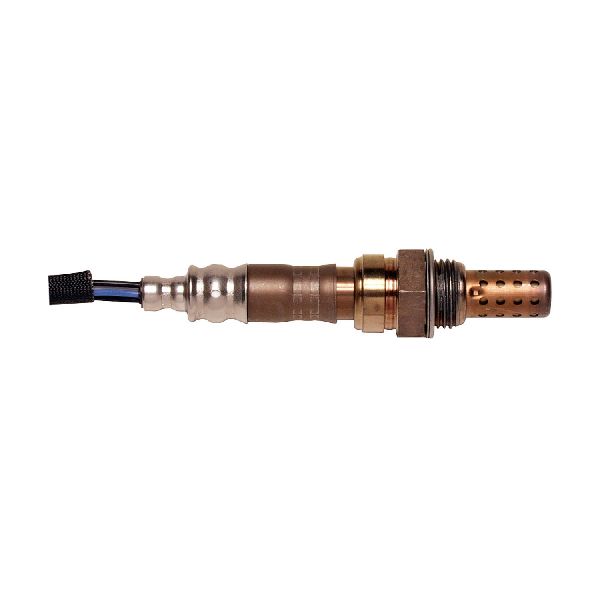
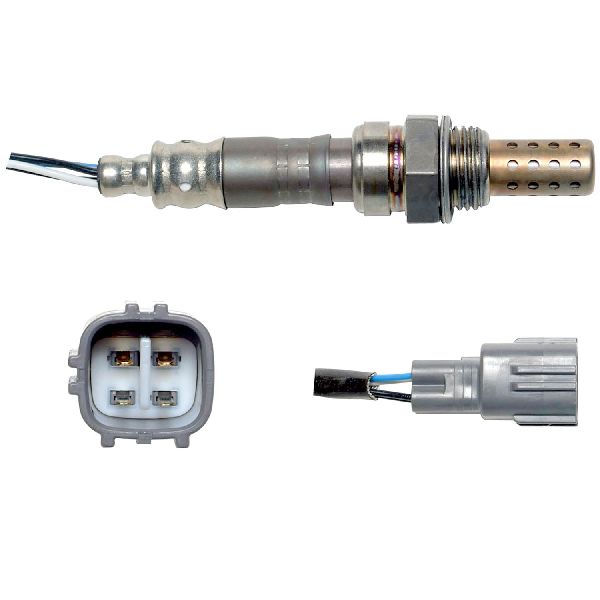
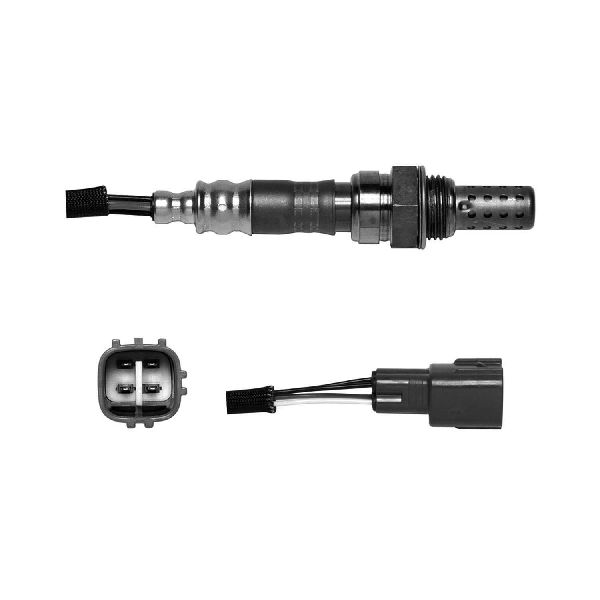
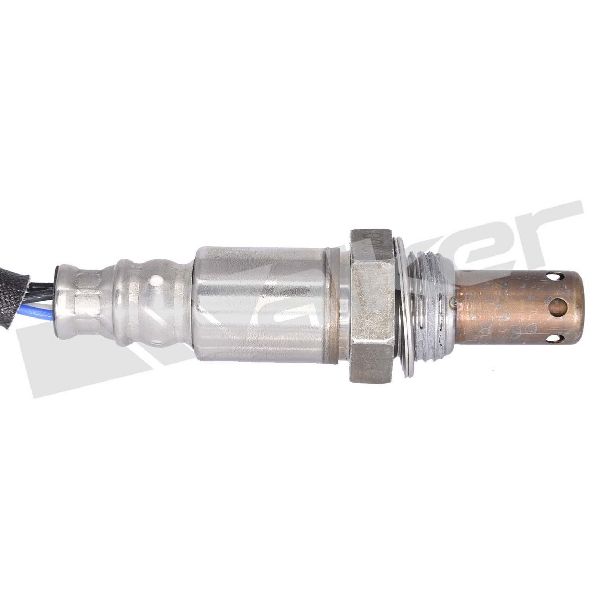
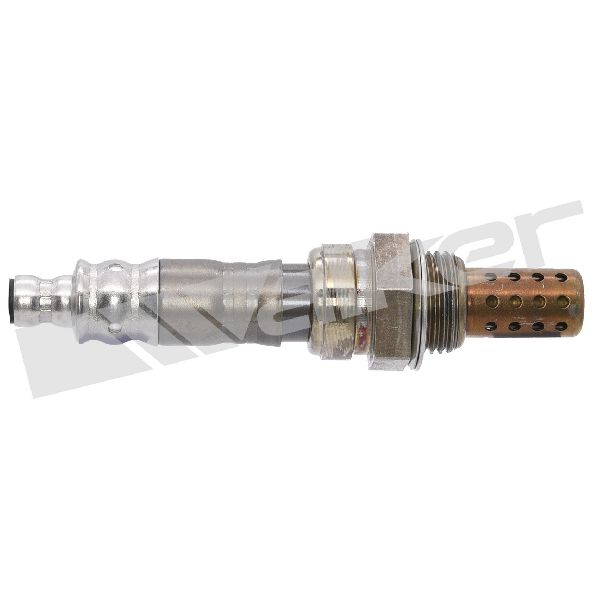
- Downstream Oxygen Sensor (Bank 1, Sensor 2)
(OEM #89465-06150)— This sensor is the most common failure point for code P0138. It is a standard maintenance item that wears out over time. This part number is confirmed by multiple Toyota parts dealers.
Trusted brands: Denso (OEM), Bosch
OEM price range: $100-$150
Aftermarket price range: $60-$90
Related Codes That Often Appear With This One
- P0137 — O2 Sensor Circuit Low Voltage. Seeing both high and low voltage codes can indicate an intermittently failing sensor or wiring.
- P2195 — A/F Sensor Signal Stuck Lean (Bank 1, Sensor 1). As mentioned in TSB T-SB-0001-10 Rev, a problem with the upstream sensor can cause fuel trim issues that lead to a P0138 code downstream.
- P0031 — Oxygen (A/F) Sensor Heater Control Circuit Low (Bank 1, Sensor 1). A user on a Toyota forum reported having both P0138 and P0031 intermittently, pointing to a more complex electrical issue or multiple failing components.
Technical Service Bulletins (TSBs) & Recalls
- T-SB-0151-18: Mentions P0138 on 2010-2011 Camry with 2AR-FE (non-hybrid) engine, caused by incorrect air-fuel ratio sensor response requiring an ECM logic update.
- T-SB-0001-10 Rev: Notes that P0138 can occur on some vehicles, sometimes along with A/F sensor codes.
Platform-Specific Known Issues
- Toyota issued TSB T-SB-0151-18 for P0138 on 2010-2011 Camrys, but it applies to the non-hybrid 2AR-FE engine and points to an ECM logic issue. While not directly applicable to the 2AZ-FE Hybrid, it shows a history of P0138-related issues on the Camry platform.
- TSB T-SB-0001-10 Rev also notes that P0138 can appear on some Toyota vehicles, sometimes in conjunction with A/F sensor codes like P2195 or P2197.
Mechanic-Grade Diagnostic Values
- Downstream O2 Sensor (B1S2) Voltage at Idle (Warm Engine) — expected: Relatively stable voltage, drifting lazily above 0.5V.. Failure: Voltage is stuck high, at or above 0.8V - 0.9V, and does not fluctuate.
- Long Term Fuel Trim (LTFT) — expected: Should average near 0%.. Failure: Consistently positive values (e.g., +10% or more) can indicate the ECM is compensating for a perceived lean condition, which might be caused by a faulty upstream A/F sensor, leading to a genuinely rich exhaust that the downstream sensor correctly reads as high voltage.
- O2 Sensor Heater Resistance — expected: Typically between 11 and 16 Ohms at room temperature, but varies by specific sensor model.. Failure: An open circuit (infinite resistance) or a short (near zero resistance) indicates a failed heater element, which can affect sensor performance but usually sets a different DTC (e.g., P0141).
Scan Tool Commands That Help
- Techstream: Active Test: Control the Injection Volume for A/F sensor — This test, described in TSB T-SB-0151-18 for the non-hybrid, can be used to manually force the engine rich or lean. While performing this, you can monitor the B1S2 voltage to see if it responds accordingly. If the voltage stays high even when forcing a lean condition, it strongly points to a faulty sensor or a circuit short.
Wiring & Ground Locations
- Engine Control Module (ECM) — Located behind the right side of the dashboard.. The ECM receives the voltage signal from the O2 sensor. A poor connection at the ECM pin for the O2 sensor signal could cause a high voltage reading, though this is rare.
- Engine to Chassis Ground — There are multiple grounds. A key one runs from the chassis to the transmission housing, located under the airbox. Another runs from the negative battery terminal to the chassis.. A poor engine or sensor ground can cause floating voltages and erratic sensor readings, potentially leading to a P0138 code.
- A/F Sensor Fuse — In the engine compartment fuse box (also called Engine Room R/B), located on the driver's side by the fender.. The O2 sensor heater circuit is protected by a fuse, often labeled 'A/F HEATER' or similar. While a blown fuse typically causes a heater circuit code (P0141), it's a good practice to check all related fuses when diagnosing electrical faults.
Real Owner Repair Stories
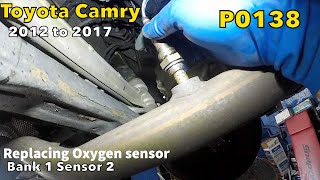
- YouTube user 'Repairs and Reviews' (2007 Toyota Camry Hybrid) — Check engine light with code P0138.
✅ What actually fixed it The owner replaced the downstream oxygen sensor (Bank 1, Sensor 2) located after the flex pipe. The video shows the old sensor was a Denso part, and it was replaced with a new Denso sensor. This resolved the check engine light.
OEM Part Supersession History
89465-33440→89465-06150— Standard part number update by Toyota.
Heads up: The new part number (89465-06150) is the correct and current replacement for the original.
Diagnostic Flowchart
Other Known Issues on This Vehicle
Issues unrelated to this code that are worth knowing about as an owner of this generation:
- Excessive Oil Consumption 🔴 High — Very common on 2007-2009 models with the 2AZ-FE engine due to a piston ring design flaw. Can require adding a quart of oil every 1,000-1,200 miles. (Ref: T-SB-0094-11 (later superseded by T-SB-0030-15) detailed a repair procedure involving replacing the pistons and piston rings. A warranty enhancement program existed but has since expired.)
- Brake Actuator Assembly Failure 🔴 High — Common across the 2007-2011 Camry Hybrid range. Failure results in multiple brake-related warning lights and can cause inconsistent or jerky braking. (Ref: Toyota issued a Warranty Enhancement Program (ZE1 / ZJB) extending coverage for the brake actuator and skid control ECU for 10 years or 150,000 miles, but this has now expired for all affected model years.)
- Melting/Sticky Dashboard 🟡 Low — Widespread issue where sun and heat cause the dashboard material to become soft, shiny, and sticky, creating glare on the windshield. (Ref: A previous Customer Support Program to replace the dashboards existed but has long since expired.)
- Clogged HV Battery Cooling Filter/Fan 🟠 Medium — Common over the life of the vehicle, especially for owners with pets. Debris clogs the intake filter for the hybrid battery, reducing cooling and potentially causing 'Check Hybrid System' warnings and loud fan noise. (Ref: T-SB-0062-20 Rev1 provides a maintenance procedure for inspecting and cleaning the filter and fan assembly.)
- Water Pump Leak 🟠 Medium — A potential failure point as the vehicle ages. Leaks are typically slow and identified by a coolant smell or dried pink/orange residue near the front of the engine.
Used vs. New Parts: Buying Guide for This Vehicle
When a used part is the smart pick: A used oxygen sensor is almost never a good choice. It is a wear-and-tear item with a finite lifespan. The cost savings are minimal compared to the risk of the used part failing shortly after installation, requiring you to perform the labor again.
Donor-vehicle mileage cap: roughly under 50000 miles for the part to have meaningful remaining life.
What to inspect on the donor part:
- If considering used, only pull from a very low-mileage wreck.
- Inspect the wiring for any signs of brittleness, melting, or damage.
- Check the sensor tip for heavy carbon deposits or white, chalky contamination, which indicates a poor-running donor engine.
OEM-only on this vehicle (don't cheap out):
- Oxygen Sensor
Aftermarket brands forum-validated for this vehicle:
- Denso (OEM manufacturer). The Denso aftermarket part (e.g., 234-4622) is widely reported by owners and mechanics to be identical to the Toyota-branded OEM part and is the most recommended choice.
Brands owners have reported issues with on this vehicle:
- While brands like Bosch are reputable, many Toyota specialists and forum users report a higher incidence of compatibility issues, premature failure, or slightly different voltage readings with non-Denso sensors on Toyota platforms. It is strongly recommended to stick with Denso.
Real Owner Stories
Aggregated from forums and TSBs cited above. Mileages and costs reflect what owners reported in those sources.
2007 Toyota Camry Hybrid 2.4L
Symptoms: The vehicle had a constant high voltage reading on the B1S2 sensor during a live data scan.
What fixed it: Replacement of the downstream oxygen sensor with a Denso part (234-4622).
Cost: $60 - $70
Source hint: YouTube - 'Toyota Camry P0138 Oxygen Sensor High Voltage' by Car Medic
2008 Toyota Camry 2.4L
Symptoms: The owner was diagnosing a P0138 code and determined that if it is the only code present, it is likely the sensor or wiring rather than a rich fuel condition.
What fixed it: Replacing the downstream Denso O2 sensor.
Source hint: Toyota Forum - 'O2 Sensor PO 138' (Feb 3, 2012) / ToyotaNation Forums
Related OBD-II Codes
Frequently Asked Questions
Does TSB T-SB-0151-18 apply to my 2010 Camry Hybrid with the P0138 code?
Is there a specific brand of oxygen sensor recommended for the 2007-2011 Camry Hybrid?
Can the excessive oil consumption issue on my 2AZ-FE engine cause the P0138 code?
Where is the Bank 1, Sensor 2 oxygen sensor located on my Camry Hybrid?
What is the correct torque specification for the new O2 sensor on this vehicle?
Could a recent transmission repair be related to my P0138 code?
Helpful Videos
We Have This Part in Stock


The information in this article is provided for general reference and educational purposes only. Vehicle specifications, procedures, and part compatibility can vary by production date, trim level, and region. Always consult your vehicle's factory service manual and verify part numbers before purchasing or performing repairs. Safety-critical components such as airbags, seat belts, and braking systems should be installed by a qualified professional.
- Toyota Camry:
- 🎬 Helpful Videos
- 🛍️ Shop This Part
- What's Unique About the 2007-2011 Toyota Camry
- Symptoms You May Notice
- Most Likely Causes
- Rare But Worth Checking
- Diagnosis Steps
- Parts You'll Likely Need
- Related Codes That Often Appear With This One
- Technical Service Bulletins (TSBs) & Recalls
- Platform-Specific Known Issues
- Mechanic-Grade Diagnostic Values
- Scan Tool Commands That Help
- Wiring & Ground Locations
- Real Owner Repair Stories
- OEM Part Supersession History
- Diagnostic Flowchart
- Other Known Issues on This Vehicle
- Used vs. New Parts: Buying Guide for This Vehicle
- Real Owner Stories
- 2007 Toyota Camry Hybrid 2.4L
- 2008 Toyota Camry 2.4L
- Related OBD-II Codes
- Frequently Asked Questions
- 🎟️ Get 5% Off