

P0138 on 2005-2010 Scion tC: O2 Sensor High Voltage Causes and Fixes
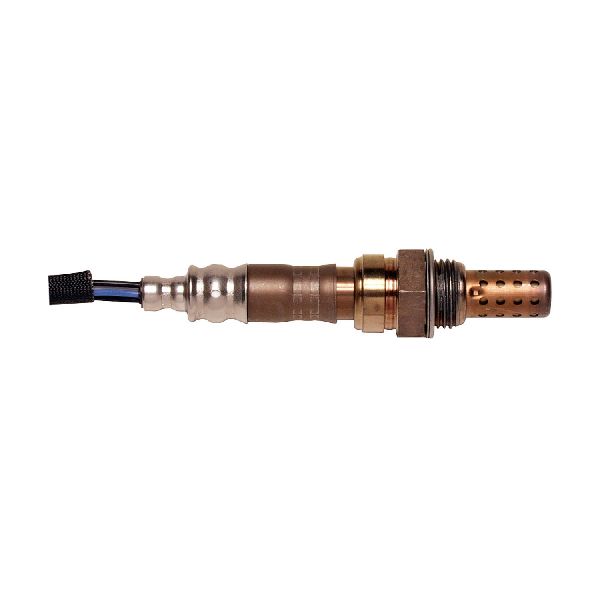
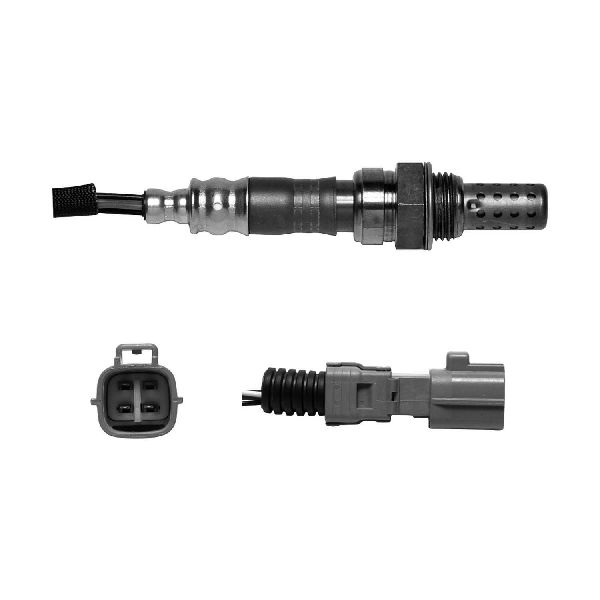
On a 2005-2010 Scion tC, code P0138 almost always points to a faulty downstream oxygen sensor (Bank 1, Sensor 2). Replacing this sensor is the most common fix. Expect to pay around $50-$100 for an aftermarket part (Denso 234-4149 is the recommended direct-fit part) or more for OEM. It's a straightforward DIY job for many, though a rusted sensor may require heat to remove.
- P0138 on your Scion tC means the downstream (post-catalytic converter) oxygen sensor is sending a high voltage signal.
- The most probable cause is a failed oxygen sensor. It's a common issue for this vehicle.
- Before replacing the sensor, perform a quick visual check of the wiring underneath the car for any obvious damage and ensure your gas cap is tight.
- Use a quality replacement sensor (Denso 234-4149 is the recommended direct fit) to avoid the code returning. This is a manageable DIY repair, but be prepared for a potentially stuck sensor.
- If you also have a P0606 or P0607 code, do not panic. It is very likely a 'ghost code' that will disappear after you fix the P0138 issue.
What's Unique About the 2005-2010 Scion tC
The first-generation Scion tC with the 2AZ-FE engine is generally reliable, but this P0138 code is a very common and well-documented issue. The downstream O2 sensor is exposed under the car, making its wiring susceptible to damage from road debris and heat. Owners consistently report that replacing the downstream O2 sensor is the definitive fix. Using a high-quality replacement brand like Denso (the original equipment manufacturer) is strongly advised, as forum members frequently report that cheaper, universal sensors often fail to resolve the code or cause it to return.
Symptoms You May Notice
- Check Engine Light is on
- Decreased fuel economy
- Rough or poor idling in some cases
- Failed emissions test
- No noticeable drivability issues other than the Check Engine Light
- Replacing the upstream oxygen sensor (Sensor 1) instead of the downstream one (Sensor 2).
- Replacing the catalytic converter when the issue is just the downstream O2 sensor.
- Using a cheap, low-quality universal oxygen sensor which fails to meet the ECM's specific parameters, causing the code to return.
- Replacing the ECM when a P0606 code appears alongside P0138, without first replacing the O2 sensor.
Most Likely Causes
- Faulty Downstream Oxygen Sensor (Bank 1, Sensor 2) 🔴 High Probability The sensor is a normal wear-and-tear item that eventually fails from age and constant exposure to high-temperature exhaust gases. It is the most frequent point of failure for this code on the 2AZ-FE engine.
How to confirm: After visually inspecting the wiring, the most practical step is replacement. The recommended aftermarket part is Denso 234-4149. Testing the sensor is possible but often more time-consuming than replacing the likely failed part.
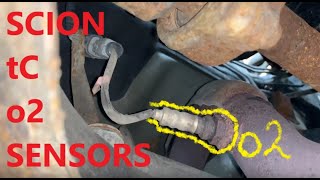
Typical fix: Replace the Bank 1, Sensor 2 oxygen sensor. It is located under the vehicle, screwed into the exhaust pipe just after the catalytic converter. 🎬 Watch: See exactly where both O2 sensors are located under your Scion.
Est. part cost: $50-$120 - Damaged O2 Sensor Wiring or Connector 🟡 Medium Probability The sensor and its wiring are located under the car and are exposed to road debris, water, and exhaust heat, which can cause wires to fray, break, or short circuit. The plastic connector clip can also become brittle and break.
How to confirm: Visually inspect the entire length of the wiring harness from the O2 sensor to its connection point. Look for any signs of melting, chafing, corrosion, or breaks. Check the connector for damage or corrosion.
Typical fix: Repair the damaged section of wiring or replace the connector pigtail. Ensure the repair is sealed from moisture.
Est. part cost: $10-$30 - Exhaust Leak ⚪ Low Probability Rust can cause leaks to form in the exhaust system, particularly at gaskets or weld points. A leak before the O2 sensor can allow outside air to enter the exhaust stream, confusing the sensor.
How to confirm: Listen for hissing or ticking sounds from the exhaust, especially when the engine is cold. A professional can perform a smoke test to pinpoint the exact location of the leak.
Typical fix: Replace the leaking gasket or repair the damaged section of the exhaust pipe.
Est. part cost: $20-$100
Rare But Worth Checking
- Faulty Engine Control Module (ECM): This is very rare. Before suspecting the ECM, all other possibilities (sensor, wiring, exhaust leaks) should be exhaustively ruled out. Often a P0606 or P0607 code may appear alongside P0138, but fixing the O2 sensor issue often resolves both, indicating the ECM was not actually faulty.
- Rich Fuel Condition: Issues like a leaking fuel injector or a faulty fuel pressure regulator can cause a rich condition that might trigger the code. This is less common than a direct sensor or wiring failure.
- Loose or Faulty Gas Cap: In at least one documented case for a Scion tC, a combination of codes including P0138 was resolved simply by replacing a faulty gas cap. This can trigger various EVAP and fuel system codes. Always ensure the gas cap is tight and the seal is intact as a first step.
Diagnosis Steps
- Confirm the code is P0138 using an OBD-II scanner.
- As a preliminary check, ensure your gas cap is tightened correctly and the rubber seal is not cracked or damaged.
- Visually inspect the downstream (post-catalytic converter) O2 sensor and its wiring harness for any obvious damage, such as frayed wires, melting, or corrosion.
- Check the connector for the sensor to ensure it is securely plugged in and the terminals are clean.
- If the wiring looks good, the most likely cause is the sensor itself. Replacement is often the most direct diagnostic step.
- DIY Tip: The sensor can be very tight or rusted into the exhaust pipe. Liberally apply a penetrating oil like PB Blaster and let it soak. If it's still stuck, heating the exhaust bung (not the sensor itself) with a propane torch can help break it free. Use a special O2 sensor socket for best results.
- Check for any exhaust leaks between the engine and the downstream O2 sensor. Listen for unusual noises or use a smoke machine for a more thorough check.
- After replacing the sensor, clear the code with the OBD-II scanner and perform a drive cycle to ensure the code does not return.
Parts You'll Likely Need
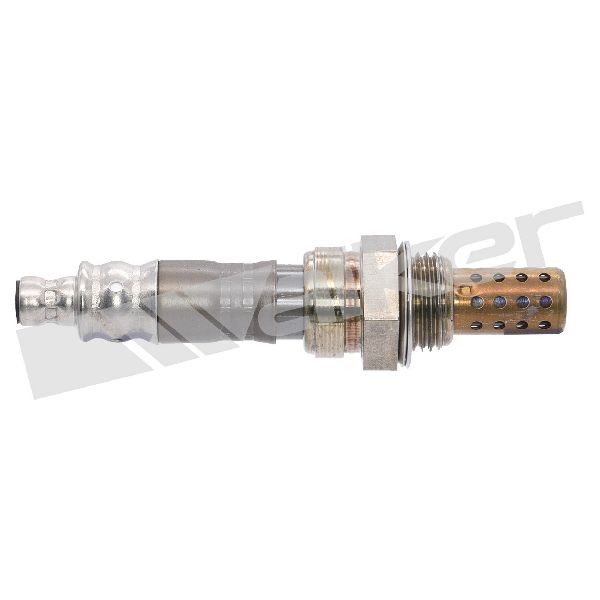
- Downstream Oxygen Sensor (Bank 1, Sensor 2)
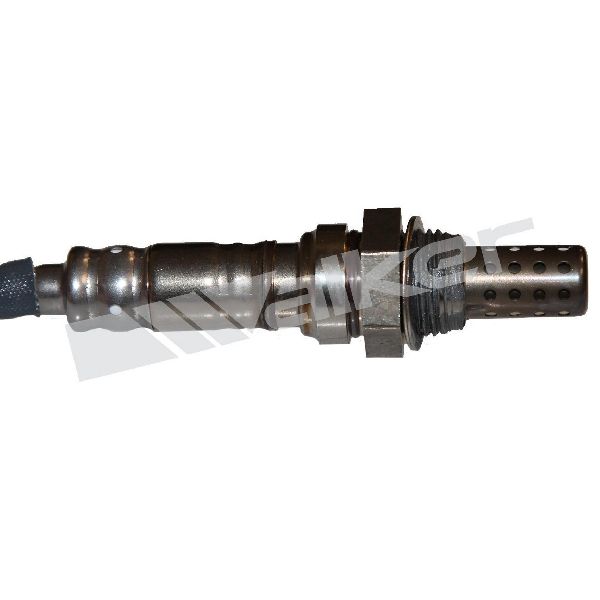
(OEM #89465-21040)— This is the most common failure item for code P0138. It is a standard wear part that degrades over time. Using the OEM manufacturer (Denso) is highly recommended for a lasting repair.
Trusted brands: Denso, NGK/NTK, Bosch
OEM price range: $120-$180
Aftermarket price range: $50-$100
Related Codes That Often Appear With This One
- P0606 / P0607 — On many Toyota/Scion models with the 2AZ-FE engine, a critical sensor fault like P0138 can trigger a generic 'ECM/PCM Processor Fault' code as a secondary effect. Forum discussions and repair videos consistently show that replacing the faulty O2 sensor for P0138 will clear the P0606/P0607 code.
- P0420 — While P0138 is for a sensor circuit fault, P0420 ('Catalyst System Efficiency Below Threshold') can sometimes be related. A failing downstream O2 sensor can't properly report on the catalyst's function, potentially leading to a misdiagnosis of a bad catalytic converter. In some cases, a P0420 code appears first, and replacing the upstream sensor fixes it, only to have a P0138 appear immediately after.
Technical Service Bulletins (TSBs) & Recalls
- Toyota T-SB-0151-18 (For related 2AR-FE Engine): While not for the 2AZ-FE, Toyota released a TSB for the successor 2AR-FE engine in 2009-2012 RAV4s and 2010-2011 Camrys. It states that a P0138 code may be caused by incorrect air-fuel ratio sensor response logic. The prescribed fix is to reprogram the ECM, not replace the sensor. This shows that on some Toyota platforms, an ECM flash can be the required solution.
Platform-Specific Known Issues
- Real Owner Repair Story: The Stuck Sensor: A user on the r/SciontC subreddit reported having the P0138 code and confirmed the fix was a new downstream sensor. However, they noted that the old sensor was seized in the exhaust pipe and would not come off until they heated the bung with a torch for a few minutes. This is a common reality for DIYers, especially in areas with rust.
- Real Owner Repair Story: The Ghost Code: In a ScionLife forum thread from 2010, an owner with an aftermarket header received codes P0138 and P0606. Other members advised that the P0606 (PCM Processor Fault) was likely a 'ghost code' caused by the out-of-range voltage from the O2 sensor circuit, and that fixing the O2 sensor issue would resolve both, which is a common pattern for this engine family.
Mechanic-Grade Diagnostic Values
- Downstream O2 Sensor (B1S2) Heater Resistance — expected: 11 - 16 Ω at 68°F (20°C) for some Toyota applications. Another source cites 5-6 ohms.. Failure: A reading of 0 Ω indicates a short, and an infinite reading (OL) indicates an open circuit in the heater element. A reading outside the specified range indicates a faulty heater.
- Downstream O2 Sensor (B1S2) Signal Voltage — expected: Should be relatively stable, drifting lazily around 0.5 - 0.7 volts on a warm, running engine with a healthy catalytic converter.. Failure: A voltage signal stuck high (above 0.9V, and especially above 1.1V) for an extended period is what triggers the P0138 code.
- Voltage at ECM Pin OX1B (or equivalent for B1S2) — expected: Should mirror the sensor's output, typically 0.1V - 0.9V.. Failure: If the voltage is high at the sensor connector but low or zero at the ECM pin, it indicates an open or short in the wiring harness between the two points. If the voltage is high at both locations, it confirms the sensor is outputting high voltage.
Scan Tool Commands That Help
- Toyota Techstream: Live Data / Data List — To monitor the 'O2S B1S2' voltage in real-time. This is the primary method to confirm if the sensor is reading consistently high, as the code suggests. It can also be used to observe the behavior of the upstream A/F sensor ('A/F Sensor B1S1') to ensure it is functioning correctly, which can affect the downstream reading.
- Toyota Techstream: Active Test — Some Toyota ECMs allow for an 'A/F Control' active test, which forces the fuel mixture rich or lean. While this primarily tests the upstream sensor's response, observing the downstream sensor's reaction (or lack thereof) can provide diagnostic clues. A healthy B1S2 should react slowly to these changes; a faulty one may show no change or remain stuck high.
Wiring & Ground Locations
- ECM (Engine Control Module) — Located behind the right side of the dashboard, often accessible by removing the glove box.. This is the destination for the O2 sensor's signal. Testing voltage at the ECM pins (specifically OX1B for the signal and E2 for sensor ground) can definitively rule out wiring issues between the sensor and the computer.
- Ground Point E3 / E4 — Located in the engine harness, near the top rear of the engine.. These are primary ground points for the engine harness. A corroded or loose ground at these locations can introduce electrical noise or voltage offsets, potentially affecting sensor readings throughout the system.
- Ground Point EC — Located at the left front corner of the engine compartment.. This is a major chassis ground point for the engine room. A poor connection here can cause a variety of seemingly unrelated electrical issues, including sensor circuit faults.
- B1S2 Connector Pins — On the sensor pigtail and the corresponding harness connector under the vehicle.. The four pins are typically: Heater Power (+B), Heater Control (HT1B), Sensor Signal (OX1B), and Sensor Ground (E2). Testing for battery voltage at +B (with key on) and checking for continuity to the ECM on the other wires is a key diagnostic step.
Real Owner Repair Stories
- ScionLife.com user 'excessads' (Scion xB (with 2AZ-FE engine, similar architecture)) — P0138 and P0607 codes returned 5 miles after repair attempt.
❌ Tried (didn't work) Replacing the downstream O2 sensor (B1S2)., Replacing the ECM with a remanufactured unit., Replacing spark plugs.
✅ What actually fixed it The user later suspected the *upstream* sensor was the root cause after testing it and finding no resistance. The final resolution was not posted in the thread, but the diagnostic path shifted away from the downstream sensor and ECM, highlighting that a failed upstream sensor can sometimes cause downstream codes. - ScionLife.com user 'backroad101' (Scion tC 1st Gen) — P0138 code appeared immediately after fixing a P0420 code by replacing the upstream (Bank 1, Sensor 1) O2 sensor.
❌ Tried (didn't work) Replacing the downstream O2 sensor (which had already been replaced 6 months prior)., Clearing codes (code returned after 10 minutes of driving).
✅ What actually fixed it The thread concluded with advice to use a high-quality OEM/Denso sensor, as aftermarket sensors are a common cause for the code returning. The user confirmed they were not having any drivability issues, just the persistent code. The implied fix is that a low-quality replacement sensor was the likely culprit.
OEM Part Supersession History
89465-21040→N/A— This part number appears to be the consistent OEM number for the specified vehicle range.
Heads up: While the part number itself has not been superseded, it is critical to use a high-quality Denso or OEM sensor. Cheaper aftermarket or 'universal' sensors are widely reported on forums to not work correctly, causing the P0138 code to persist or return quickly.
Model Year Variations Within This Range
- 2005-2006 vs. 2007-2010: While the external sensors and P0138 diagnosis remain largely the same, there are internal differences in the 2AZ-FE engine between these year groups. The 2007+ engines feature a slightly higher compression ratio (9.8:1 vs 9.6:1) and added piston oil squirters for better cooling. These changes do not directly affect the P0138 cause but are important to note for engine replacement or internal work, as the ECUs may have slightly different fuel maps.
Diagnostic Flowchart
Real Owner Stories
Aggregated from forums and TSBs cited above. Mileages and costs reflect what owners reported in those sources.
Scion tC 1st Gen
Symptoms: Check Engine Light with code P0138. No other driveability issues, odors, or misfires observed. Originally started with a P0420 code. Replaced the upper O2 sensor, which cleared P0420, but then P0138 appeared.
What fixed it: The user did not report a final fix, but other forum members strongly suggested replacing the aftermarket sensor with an OEM Denso sensor, as non-OEM sensors frequently fail to clear the code.
Source hint: ScionLife.com forum thread
Scion tC (2AZ-FE)
Symptoms: Received codes P0138 and P0606 after installing an aftermarket header.
What fixed it: Determined that the P0606 was a 'ghost code' caused by the O2 sensor's out-of-range voltage. Fixing the O2 sensor issue resolves both codes.
Source hint: ScionLife.com: 'Got a CEL (Codes are P0138 and P0606)' (June 27, 2010)
Scion tC (2AZ-FE)
Symptoms: Check engine light on with codes P0138 and P0607.
What fixed it: Replaced the downstream O2 sensor. The old sensor was seized in the exhaust pipe and required heating the bung with a torch for a few minutes to remove.
Source hint: Reddit (r/SciontC): 'Check engine light' (approx. Nov 2023)
Related OBD-II Codes
Frequently Asked Questions
Does the Toyota TSB T-SB-0151-18 for code P0138 apply to my 2005-2010 Scion tC?
I have a P0138 code and a P0606 code at the same time on my tC. Do I need a new PCM?
What is the recommended replacement oxygen sensor for the 2AZ-FE engine to fix P0138?
My downstream O2 sensor is completely stuck in the exhaust pipe. How can I get it out?
Can an aftermarket header cause the P0138 code on my Scion tC?
I replaced my lower O2 sensor but the P0138 code won't clear. What else could it be?
Helpful Videos
We Have This Part in Stock



The information in this article is provided for general reference and educational purposes only. Vehicle specifications, procedures, and part compatibility can vary by production date, trim level, and region. Always consult your vehicle's factory service manual and verify part numbers before purchasing or performing repairs. Safety-critical components such as airbags, seat belts, and braking systems should be installed by a qualified professional.
- Scion tC:
- 🎬 Helpful Videos
- 🛍️ Shop This Part
- What's Unique About the 2005-2010 Scion tC
- Symptoms You May Notice
- Most Likely Causes
- Rare But Worth Checking
- Diagnosis Steps
- Parts You'll Likely Need
- Related Codes That Often Appear With This One
- Technical Service Bulletins (TSBs) & Recalls
- Platform-Specific Known Issues
- Mechanic-Grade Diagnostic Values
- Scan Tool Commands That Help
- Wiring & Ground Locations
- Real Owner Repair Stories
- OEM Part Supersession History
- Model Year Variations Within This Range
- Diagnostic Flowchart
- Real Owner Stories
- Scion tC 1st Gen
- Scion tC (2AZ-FE)
- Scion tC (2AZ-FE)
- Related OBD-II Codes
- Frequently Asked Questions
- 🎟️ Get 5% Off