

P0138 on 2007-2014 Mercedes-Benz C-Class: O2 Sensor High Voltage Causes and Fixes
This code almost always means the downstream oxygen sensor on the passenger side (Bank 1, Sensor 2) has failed. Expect to pay $70-$150 for a quality aftermarket sensor (Bosch, NTK) and $150-$250 for an OEM part. It's a straightforward DIY replacement for those comfortable working under the car, though accessing the electrical connector can be tight.
- P0138 on your C-Class points to the downstream O2 sensor on the passenger side.
- The most likely cause is simply a failed sensor, which is a common wear-and-tear item.
- Before replacing the sensor, visually inspect its wiring for any melting or damage, as this is the second most likely cause.
What's Unique About the 2007-2014 Mercedes-Benz C-Class
For the W204 C-Class with the M272 V6, this code is a very common and straightforward issue. Unlike the more complex engine-specific problems this platform can have (like balance shaft or intake manifold issues), P0138 is typically an isolated component failure. The downstream O2 sensors are exposed to road debris and heat cycles, making eventual failure a near certainty. The most frequent cause is simply an aged sensor, followed by damage to its exposed wiring under the car. Access to the sensor itself is easy, but the electrical connector is located high on the transmission bell housing and can be difficult to reach without lowering the exhaust slightly.
Symptoms You May Notice
- Check Engine Light (CEL) is illuminated.
- Increased fuel consumption.
- Vehicle will fail an emissions test.
- In some cases, a slightly rough idle or a faint exhaust odor may be noticeable.
- Black soot on the tailpipe if the issue is caused by an underlying rich running condition.
- Replacing the upstream (pre-catalyst) O2 sensor. P0138 is specific to the downstream sensor (Sensor 2).
- Replacing the wrong side (Bank 2 / driver's side) sensor. P0138 is specific to Bank 1 (passenger side).
- Immediately replacing the catalytic converter. While a bad converter can cause O2 sensor codes, P0138 (high voltage) is much more likely to be the sensor itself or its wiring.
Most Likely Causes
- Failed Downstream Oxygen Sensor (Bank 1, Sensor 2) 🔴 High Probability Oxygen sensors are wear items with a finite lifespan of around 60,000 to 90,000 miles. Contamination from combustion byproducts, internal heater failure, and constant heat cycles eventually cause them to fail.
How to confirm: Use an OBD-II scanner to monitor live data for 'O2S12' (O2 Sensor, Bank 1, Sensor 2). If the voltage is stuck high (e.g., >0.9V) and does not fluctuate with the engine warm, the sensor is very likely bad. You can also test the sensor's internal heater circuit with a multimeter; it should have a specific resistance value (e.g., 2-15 ohms), and an open circuit indicates failure.
Typical fix: Replace the Bank 1, Sensor 2 oxygen sensor. This is the downstream sensor on the passenger side. A 22mm (or 7/8") offset oxygen sensor socket is requ 🎬 Watch this step-by-step W204 oxygen sensor replacement walkthrough.ired.
Est. part cost: $70-$250 - Damaged Wiring or Connector 🟡 Medium Probability The sensor wiring runs underneath the car and is susceptible to damage from road debris, speed bumps, or corrosion. The wires can also become brittle and break from constant exposure to exhaust heat, sometimes shorting to the exhaust pipe itself, causing a high voltage reading.
How to confirm: Visually inspect the entire wiring harness from the O2 sensor to its connection point on the bell housing. Look for frayed wires, melted insulation, corrosion in the connector pins, or any area where the wire might be touching the exhaust. Check for continuity and shorts using a multimeter.
Typical fix: Repair the damaged section of the wiring harness or replace the connector pigtail. Ensure the repair is properly insulated with heat-shrink tubing and secured away from heat sources.
Est. part cost: $15-$50
Rare But Worth Checking
- Exhaust Leak: An exhaust leak before or near the sensor can sometimes allow outside air to enter the exhaust stream, which can, in some circumstances, cause an unusual reading and trigger this code.
- Engine Running Excessively Rich: A rich condition (caused by a leaking fuel injector, high fuel pressure, or faulty Mass Airflow sensor) can overwhelm the catalytic converter, leading to a high voltage reading from the downstream O2 sensor. This is usually accompanied by other codes (e.g., P0172 - System Too Rich) and symptoms like black smoke or a strong fuel smell.
- Faulty Engine Control Module (ECM/PCM): This is extremely rare. The ECM itself could have a faulty driver circuit for the O2 sensor. This should only be considered after all other possibilities have been exhaustively ruled out.
Diagnosis Steps
- Connect an OBD-II scanner and confirm P0138 is the active code. 🎬 See these two quick DIY methods to fix code P0138. Check for any other codes, especially fuel trim codes like P0172.
- Access the live data stream on the scanner. Graph the voltage for 'O2S12' (Bank 1, Sensor 2).
- Observe the voltage with the engine running and fully warmed up. If it is stuck high (consistently above 0.9V) and does not show the slow, lazy switching of a healthy downstream sensor, the sensor or its circuit is faulty.
- Safely raise and support the vehicle on jack stands.
- Locate the Bank 1 (passenger side) downstream (post-catalytic converter) O2 sensor.
- Thoroughly inspect the sensor's wiring harness for any signs of melting, chafing, corrosion, or physical damage. Follow it all the way to the connector, which is typically mounted high on the transmission bell housing and may be difficult to see.
- If wiring looks good, disconnect the sensor. Test the sensor's heater circuit for resistance with a multimeter. An open or out-of-spec reading (outside 2-15 Ohms) confirms a bad sensor.
- If the wiring and sensor test good, investigate other causes like exhaust leaks or a rich running condition before suspecting the ECM.
- If the sensor is confirmed bad, use a 22mm (7/8") O2 sensor socket to remove and replace it. Applying anti-seize compound to the threads of the new sensor is recommended.
- Clear the codes with the scanner and perform a drive cycle (a mix of city and highway driving) to ensure the code does not return.
Parts You'll Likely Need
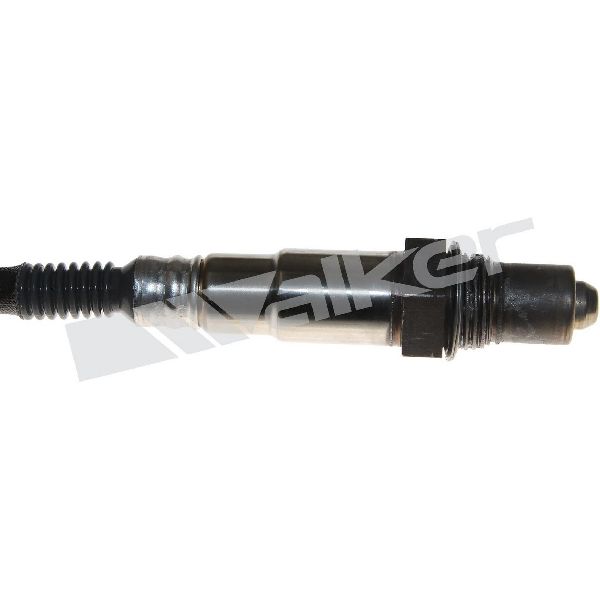
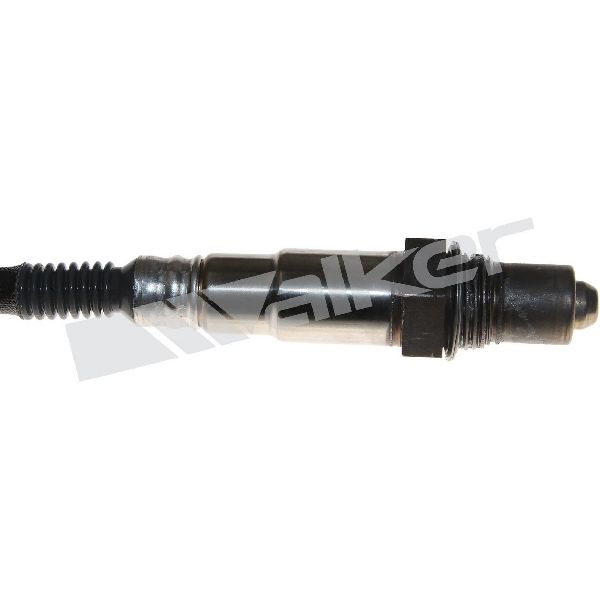
- Downstream Oxygen Sensor (Bank 1, Sensor 2)
(OEM #A0045421600)— This is the component that fails in the vast majority of P0138 cases on this vehicle due to age and heat exposure.
Trusted brands: Bosch (often the OEM supplier), NTK, Denso, Walker
OEM price range: $150-$250
Aftermarket price range: $70-$150
Related Codes That Often Appear With This One
- P0141 — P0141 refers to a malfunction in the heater circuit of the same sensor (Bank 1, Sensor 2). These codes often appear together as a complete failure of the sensor unit.
- P0172 — If the engine is running rich on Bank 1, the P0172 (System Too Rich Bank 1) code may appear. The P0138 could be a symptom of this, as the downstream sensor is correctly detecting the unburned fuel exiting the catalyst.
Platform-Specific Known Issues
- Accessing the electrical connector for the downstream sensor can be challenging. It is located high up on the transmission bell housing. Some technicians recommend dropping the rear of the exhaust system slightly to gain better access and avoid scraped hands.
Mechanic-Grade Diagnostic Values
- Downstream O2 Sensor (G3/6) Heater Circuit Resistance — expected: 2-15 Ohms when measured across the two heater pins on a cold sensor.. Failure: An open circuit ('OL' on multimeter) or resistance far outside the expected range indicates a failed internal heater.
- Downstream O2 Sensor (G3/6) Signal Voltage at ECU — expected: Slowly fluctuating between 0.1V and 0.9V with the engine at operating temperature.. Failure: A sustained voltage reading above 1.1V for an extended period will trigger the P0138 code.
Hidden / Shadow Codes Worth Checking
- e.g., 0420, 0425, etc.: Mercedes-Benz diagnostic tools like XENTRY/DAS display manufacturer-specific event codes alongside generic P-codes. For P0138, the description would be similar to 'Signal voltage of component G3/6 (Right O2 sensor, after TWC [KAT]) is too high'. For the related heater code P0141, it would be 'Heating of component G3/6... Short circuit to positive'. These descriptions can provide more pointed diagnostic information than the generic P-code alone. (see via Mercedes-Benz STAR/XENTRY/DAS diagnostic system.)
Scan Tool Commands That Help
- Mercedes-Benz XENTRY/DAS: Start Quick Test — This is the initial step to scan all vehicle modules for current and stored faults, providing a complete picture of any related issues beyond just the P0138 code.
- Mercedes-Benz XENTRY/DAS: Actual Values (for ME 9.7 Control Unit) — To monitor the live voltage, heater status, and operational readiness of the specific oxygen sensor (G3/6) in real-time, which is essential for confirming a stuck-high voltage condition.
- Mercedes-Benz XENTRY/DAS: Clear Fault Memory — After performing a repair, this function is used to erase all stored fault codes across all modules. A subsequent Quick Test after a drive cycle will confirm if the fix was successful.
Wiring & Ground Locations
- W10 — The main battery ground point, located on the right front (passenger side) strut tower in the engine bay.. A corroded or loose main ground can cause floating voltages and erratic behavior in multiple sensor circuits, including the O2 sensors. This should be inspected for corrosion, which can act as a water funnel.
- W11 — The ground point for the Engine Control Module (ECM/ECU) wiring assembly.. This is the specific ground return path for the ECM, which processes the O2 sensor signals. A fault here can directly impact the voltage readings the ECM interprets from the sensor.
- Transmission Bell Housing Ground — A large ground strap connecting the engine/transmission assembly to the vehicle chassis, often near the starter motor.. This is a primary engine ground. While less likely to cause an isolated O2 sensor code, a poor connection here can lead to a variety of electrical issues and is a critical point to check for tightness and corrosion.
Model Year Variations Within This Range
- 2012-2014 (C350 model only): For the 2012 model year facelift, the C350 model's 3.5L V6 was changed from the M272 (port injection) to the M276 (direct injection). While the P0138 code's meaning is the same, the engine, ECU, and potentially the specific part numbers for the O2 sensors are different. The C300 model retained the 3.0L M272 engine for all years in the North American market, so its diagnosis is consistent across the 2007-2014 range.
Diagnostic Flowchart
Other Known Issues on This Vehicle
Issues unrelated to this code that are worth knowing about as an owner of this generation:
- M272 Balance Shaft Sprocket Wear 🔴 High — Common on engines built before ~2008 (specifically, M272 engines up to Serial No. 2729..30 468993). Can occur from 60k-100k miles. Causes timing correlation codes (P0016, P0017) and engine rattle. (Ref: Mercedes TSB S-B-03.30/08i describes the issue and repair procedure.)
- Intake Manifold Swirl Flap Lever Failure 🟠 Medium — Very common across all years of the M272 engine, typically after 80,000 miles. The plastic lever that actuates the intake runner flaps breaks, causing a loss of power and fault codes like P2004, P2005, or P2006. (Ref: No recall, but aftermarket metal repair kits are widely available as an alternative to replacing the entire manifold.)
- Rear Subframe Corrosion/Rust 🔴 High — Affects W204 models, especially in regions that use road salt. Corrosion can perforate the subframe, leading to structural failure. (Ref: Mercedes-Benz has extended the warranty on the rear subframe to 20 years/unlimited miles for replacement if perforation (holes) from corrosion occurs.)
- Electronic Steering Lock (ESL) Failure 🔴 High — A notorious W204 platform issue. The ESL motor fails, preventing the key from being recognized and the car from starting. Can happen at any mileage.
- Camshaft Adjuster Solenoid Oil Leak 🟡 Low — Common but minor issue. The electrical connectors for the camshaft adjuster magnets leak oil, which can wick up the engine wiring harness. If caught early, it's a simple fix. (Ref: Mercedes offers inexpensive 'pigtail' harnesses to be installed as a sacrificial part to prevent oil from contaminating the main engine harness.)
Used vs. New Parts: Buying Guide for This Vehicle
When a used part is the smart pick: For this specific repair, obtaining a used part is strongly discouraged. The oxygen sensor is a wear-and-tear component with a finite lifespan. A used sensor from a salvage yard has unknown remaining life and may fail shortly after installation, wasting time and money.
What to inspect on the donor part:
- Not applicable as used sensors are not recommended.
OEM-only on this vehicle (don't cheap out):
- Catalytic Converter: If diagnosis leads to a failed catalytic converter, using an OEM part is highly recommended. Aftermarket converters for this platform are known to be less efficient and may not satisfy the ECU's monitoring parameters, leading to recurring catalyst efficiency codes (e.g., P0420).
Aftermarket brands forum-validated for this vehicle:
- Bosch (often the original equipment manufacturer for Mercedes-Benz)
- NTK
- Denso
Brands owners have reported issues with on this vehicle:
- Unbranded 'eBay special' sensors
- Universal 'cut-and-splice' sensors (these introduce a potential point of failure in the wiring and are not recommended over a direct-fit part)
Real Owner Stories
Aggregated from forums and TSBs cited above. Mileages and costs reflect what owners reported in those sources.
2008-2012 Mercedes-Benz C-Class M272
Symptoms: The user noted the difficulty of accessing the electrical connectors for the downstream sensors compared to the front sensors.
What fixed it: Following technician advice to drop the rear of the exhaust system slightly to gain better access to the connectors mounted high on the transmission bell housing.
🎬 Watch: How to locate the O2 sensor fuses and relays.Source hint: mbworld.org (W204 Oxygen Sensor thread)
2007-2014 Mercedes-Benz C-Class M272
Symptoms: P0138 code present, pointing to the post-cat O2 sensor.
What fixed it: Replacement of the post-catalytic (downstream) oxygen sensor.
Source hint: mbclub.co.uk
Related OBD-II Codes
Frequently Asked Questions
Which side of my Mercedes V6 engine is Bank 1 for the P0138 code?
Is there a TSB for the rear subframe corrosion mentioned in the known issues for my C-Class?
I'm having trouble reaching the O2 sensor connector; is there a trick for the W204 platform?
Can I use a used oxygen sensor from a salvage yard to fix P0138?
Does TSB S-B-03.30/08i relate to my P0138 oxygen sensor code?
What size socket do I need to replace the downstream sensor on my C300/C350?
Helpful Videos
![How to Fix P0138 Engine Code in 3 Minutes [2 DIY Methods / Only $8.99]](https://img.youtube.com/vi/xhP3cILng74/mqdefault.jpg)
Used OEM Parts in Stock

New Aftermarket Parts Available

The information in this article is provided for general reference and educational purposes only. Vehicle specifications, procedures, and part compatibility can vary by production date, trim level, and region. Always consult your vehicle's factory service manual and verify part numbers before purchasing or performing repairs. Safety-critical components such as airbags, seat belts, and braking systems should be installed by a qualified professional.
- Mercedes-Benz C-Class:
- 🎬 Helpful Videos
- 🛍️ Shop This Part
- What's Unique About the 2007-2014 Mercedes-Benz C-Class
- Symptoms You May Notice
- Most Likely Causes
- Rare But Worth Checking
- Diagnosis Steps
- Parts You'll Likely Need
- Related Codes That Often Appear With This One
- Platform-Specific Known Issues
- Mechanic-Grade Diagnostic Values
- Hidden / Shadow Codes Worth Checking
- Scan Tool Commands That Help
- Wiring & Ground Locations
- Model Year Variations Within This Range
- Diagnostic Flowchart
- Other Known Issues on This Vehicle
- Used vs. New Parts: Buying Guide for This Vehicle
- Real Owner Stories
- 2008-2012 Mercedes-Benz C-Class M272
- 2007-2014 Mercedes-Benz C-Class M272
- Related OBD-II Codes
- Frequently Asked Questions
- 🎟️ Get 5% Off