

P0138 on 2010-2024 Lexus RX350: O2 Sensor High Voltage Causes and Fixes
P0138 on a Lexus RX350 most often means the Bank 1, Sensor 2 oxygen sensor has failed. This is the downstream sensor on the firewall side of the engine. A replacement sensor is the most common fix, costing around $70-$130 for an aftermarket part or more for OEM. However, water intrusion into the cabin electrics, specifically the driver's side kick panel, is a notable alternate cause that can mimic sensor failure and must be investigated.
- P0138 on an RX350 points to the downstream O2 sensor on the firewall side (Bank 1).
- The most common fix is replacing the sensor itself.
- Before replacing parts, always check for water leaks in the driver's side footwell, as this is a known issue that can cause this code.
- Using a quality direct-fit sensor from a brand like Denso is recommended over a universal sensor.
- If you also have codes like P0158 or P0607, the likelihood of a systemic issue like water damage or a wiring problem increases.
What's Unique About the 2010-2024 Lexus RX350

For the 2010-2015 RX350, this code is common enough that Lexus issued a Technical Service Bulletin (TSB L-SB-0109-09) for it, indicating a known issue with the original downstream O2 sensors. A more unusual but significant issue for the RX350 platform is water intrusion from clogged sunroof drains, which can leak 🎬 Watch this guide to find and clear clogged sunroof drains. into the driver-side kick panel. This can saturate electrical connectors, including the one for the Bank 1 Sensor 2 O2 sensor (often a large white connector labeled AF2), causing this code and other bizarre electrical problems like ABS, VSC, and 'Check AWD' warnings. This water issue is so prevalent that it's a primary suspect anytime P0138 appears after a heavy rain.
Generation note: This guide covers the 3rd (2010-2015), 4th (2016-2022), and 5th (2023-2024) generations of the Lexus RX350. The 3rd and 4th generations use a 3.5L V6 (2GR-FE/FKS), where Bank 1 is the rear bank (firewall side). The 5th generation uses a 2.4L Turbo I4, which only has one bank, simplifying the location. The diagnosis and primary causes remain similar across generations, but the water intrusion issue is particularly well-documented in 3rd generation models.
Symptoms You May Notice
- Check Engine Light is on.
- VSC and/or TRAC OFF lights may also illuminate.
- 'Check AWD System' warning may appear on the dash.
- Reduced fuel economy.
- Rough or unstable idle.
- Vehicle may fail an emissions test.
- Strong or rotten egg smell from the exhaust.
- Replacing the wrong oxygen sensor (e.g., the upstream Air/Fuel ratio sensor or a sensor on Bank 2).
- Replacing the O2 sensor repeatedly without checking for the underlying water intrusion issue, leading to recurring codes. One owner in a forum replaced the sensor, only for the code to return, pointing to a deeper issue. 🎬 Watch this first to avoid replacing the wrong parts.
Most Likely Causes

- Faulty Bank 1, Sensor 2 Oxygen Sensor 🔴 High Probability Sensors wear out over time from heat and contaminants. A TSB (L-SB-0109-09) was issued for 2007-2010 models for this specific issue, indicating a higher-than-normal failure rate on early 3rd-gen models. Denso is the OEM supplier, and using Denso or another high-quality brand like NTK is highly recommended over cheaper alternatives.
How to confirm: Use an OBD-II scanner to monitor the live data for the B1S2 voltage. If it is stuck high (e.g., >0.9V) and does not fluctuate with engine speed changes, the sensor is likely bad. Before replacing, rule out the water intrusion issue.
Typical fix: Replace the Bank 1, Sensor 2 oxygen sensor. This sensor is located downstream of the catalytic converter on the firewall side of the engine. The wiring runs up through the floor into the driver's side footwell area.
Est. part cost: $70-$180 - Water Intrusion in Driver-Side Kick Panel 🟡 Medium Probability Clogged front sunroof drains are the most common culprit, causing water to run down the A-pillar and soak the electrical junction block and connectors in the driver's side footwell. This issue is well-documented in forum threads and repair videos.
How to confirm: Check for dampness, water stains, or a musty smell on the driver's side carpet and under the kick panel. Pull back the carpet and inspect the large electrical connectors (especially the O2 sensor connector, AF2) for moisture or blue/green corrosion. The issue often appears after a heavy rainstorm.
Typical fix: Dry out all affected connectors using compressed air and clean any corrosion with an electrical contact cleaner. Apply dielectric grease to the connectors before reassembly to prevent future moisture damage. The root cause (clogged sunroof drains) must be cleared using compressed air (gently, under 30 psi) or a flexible tool like a long weed trimmer line to prevent recurrence.
Est. part cost: $5-$20 for cleaning supplies and dielectric grease; sensor cost if needed. - Wiring or Connector Damage ⚪ Low Probability The wiring harness runs under the vehicle and is exposed to road debris and corrosion, which can cause an open or short circuit. The harness also runs through the floorboard into the wet-prone kick panel area.
How to confirm: Visually inspect the wiring harness from the sensor to where it enters the cabin. Check for breaks, melting, or corrosion on the connector pins, both under the car and inside the kick panel.
Typical fix: Repair the damaged section of the wire or replace the connector pigtail.
Est. part cost: $10-$50
Rare But Worth Checking
- Exhaust Leak: An exhaust leak before the O2 sensor can introduce extra oxygen, but this typically causes a low voltage code (P0137), not a high voltage one. However, it's worth a quick inspection.
- Failing Catalytic Converter: A failing catalytic converter can sometimes cause erratic O2 sensor readings, but it would more commonly be associated with a P0420 code.
- Engine Control Module (ECM) Fault: This is very rare. All other possibilities, especially the sensor, wiring, and water intrusion, should be exhaustively ruled out before considering the ECM as the cause. Sometimes the P0138 code appears with P0607 (Control Module Performance), which can be triggered by the water leak affecting the junction block.
Diagnosis Steps

- Confirm the code P0138 is present using an OBD-II scanner.
- Check for any other stored codes that could provide clues (e.g., P0158, P0607, C1241).
- CRITICAL STEP: Inspect the driver's side footwell and kick panel area for any signs of dampness or water. Pull back the carpet. This is a very common issue on the RX platform.
- If water is found, disconnect the battery. Unplug the affected electrical connectors (especially the large white ones), dry them thoroughly (using compressed air is effective), clean any corrosion with electrical contact cleaner, and apply dielectric grease before reconnecting. 🎬 See how to clean and dry water-damaged electrical connectors. Find and clear the clogged sunroof drains to prevent recurrence.
- If no water is present, use the scanner's live data function to observe the voltage for 'O2S B1S2'.
- With the engine warm and running, the voltage should fluctuate slowly. If it is stuck high (above 0.9V), it confirms the fault condition.
- Visually inspect the oxygen sensor's wiring harness and connector under the vehicle for any physical damage, melting, or corrosion.
- If the wiring appears intact and no water intrusion is found, the Bank 1 Sensor 2 oxygen sensor is the most likely cause and should be replaced. Use an OEM Denso part for best results.
- After replacement, clear the codes and perform a drive cycle to ensure the fault does not return.
Parts You'll Likely Need

- Oxygen Sensor (Bank 1, Sensor 2)
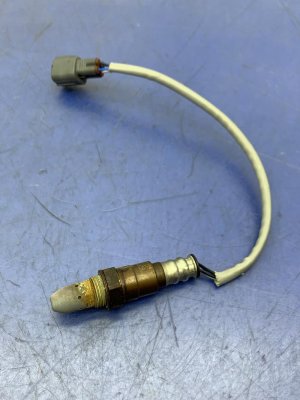
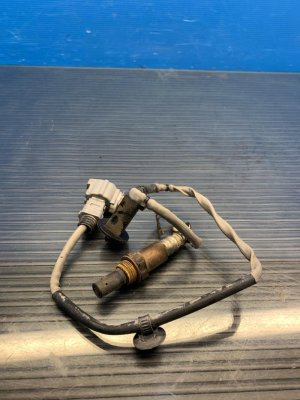
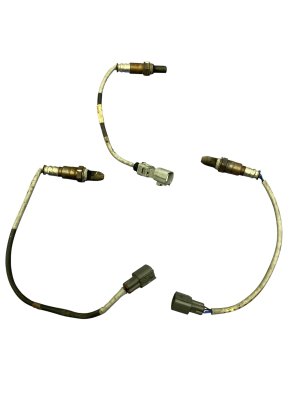
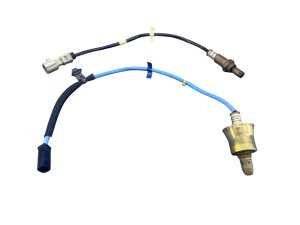
(OEM #89465-0E050 (for 2010-early 2014 models, replaces 89465-48240). Part numbers vary by production date and specific model year, always verify with VIN.)— This is the most common component to fail or be damaged by water, triggering the P0138 code. It is located on the firewall side of the engine, after the catalytic converter.
Trusted brands: Denso (OEM Supplier), NTK/NGK
OEM price range: $150-$250
Aftermarket price range: $70-$130
Related Codes That Often Appear With This One
- P0158 — This is the same fault (O2 Sensor Circuit High Voltage) but for Bank 2, Sensor 2. Seeing both P0138 and P0158 together could point to a systemic issue like a fuel pressure problem or a wiring harness issue common to both sensors.
- P0607 — This code means "Control Module Performance". It can appear alongside P0138 when water intrusion is the cause, as the water can affect multiple systems connected to the ECM and main junction block in the kick panel. A TSB (L-SB-0023-10) specifically addresses the combination of P0138 and P0607, directing technicians to check for water damage at connector AF2.
- C1241 — This ABS code for 'Low Battery Positive Voltage' can appear with P0138. While it can indicate a weak battery, it can also be another phantom code triggered by the electrical chaos from water intrusion in the kick panel.
Technical Service Bulletins (TSBs) & Recalls
- L-SB-0109-09: Addresses MIL ON with DTC P0138 or P0158 for some 2007-2010 RX350 models.
- L-SB-0023-10: For 2010 RX350, directs technicians to inspect connector AF2 for moisture when P0138 and P0607 are present.
- L-SB-0012-10: Referenced by other TSBs as the main guide for repairing water intrusion from a faulty A-pillar seam sealer, another potential source of the leak.
Platform-Specific Known Issues
- TSB L-SB-0109-09 was issued for 2007-2010 RX350 models for P0138/P0158, indicating a known problem with the downstream O2 sensors.
- TSB L-SB-0023-10 specifically addresses P0138 and P0607 appearing together on 2010 RX350s, pointing directly to checking connector AF2 in the driver's kick panel for water intrusion.
- Clogged sunroof drains are a very common cause of water leaking into the driver-side kick panel, shorting out the O2 sensor circuit and other electronics, leading to P0138 and other codes.
Mechanic-Grade Diagnostic Values
- Downstream O2 Sensor (B1S2) Voltage — expected: Should fluctuate slowly, typically between 0.1V and 0.9V. A stable voltage around 0.4V to 0.6V at idle is normal for a healthy catalytic converter.. Failure: The ECM sets P0138 if the sensor voltage remains above 1.2V for more than 10 seconds, or if it reads above 0.59V during an active lean command test.
- Downstream O2 Sensor (B1S2) Voltage during Fuel Cut — expected: During deceleration in gear (fuel cut-off), the sensor voltage should drop to near 0V.. Failure: If the voltage does not drop below 0.2V during fuel cut, it can indicate a lazy or failing sensor.
Scan Tool Commands That Help
- Toyota Techstream: Active Test: 'Control the Injection Volume' — This function allows a technician to manually make the fuel mixture richer or leaner (-12% to +25%) and observe the O2 sensor's reaction. For P0138, a technician would command a lean mixture and watch if the B1S2 voltage correctly drops. If it stays high (e.g., above 0.59V), it confirms a fault in the sensor or its circuit.
Wiring & Ground Locations

- AF2 — A large, multi-pin connector located in the driver's side kick panel, near the floor. The B1S2 oxygen sensor wiring harness plugs into this connector.. This connector is the primary point of failure when water intrusion from clogged sunroof drains occurs. TSB L-SB-0023-10 specifically directs technicians to check AF2 for moisture when P0138 and P0607 are present.
Real Owner Repair Stories
- ClubLexus Forum user 'LMC133' (Lexus RX350 (year not specified, but 3rd gen implied)) — Check Engine Light, 'Check AWD', and 'Trac off' warnings appeared simultaneously after a heavy rainstorm. Scanned codes P0138 and P0607. A wet area was noted on the driver's side floor.
❌ Tried (didn't work) Replacing the Bank 1 Sensor 2 oxygen sensor and resetting the codes by disconnecting the battery. All warning lights returned immediately upon restart.
✅ What actually fixed it The confirmed root cause was water intrusion from a clogged sunroof drain. The fix was to clear the drain using weed wacker line and thoroughly dry the carpet and electrical components in the driver's side footwell. The codes were expected to clear once everything was completely dry. - YouTube channel 'TS Mobile Mechanic' (2015 Lexus RX350) — P0138 (O2 Sensor Circuit High Voltage Bank 1 Sensor 2) along with erratic ABS and traction control warnings.
❌ Tried (didn't work) The video focuses on the correct fix, highlighting that simply replacing the sensor often fails.
✅ What actually fixed it The root cause was confirmed to be water intrusion from the sunroof drain system. The fix involved pulling back the driver's side kick panel, identifying the wet O2 sensor connector (and others), blowing out all moisture with compressed air, cleaning the sunroof drains, and applying dielectric grease to the connectors to prevent future corrosion.
OEM Part Supersession History
89465-48240→89465-0E050— Updated part from manufacturer, likely for improved reliability or performance.
Heads up: The Denso aftermarket equivalent is often listed as 234-4509. While this part is listed as compatible with many Toyota/Lexus vehicles, it's crucial to verify fitment by VIN as wire harness length can vary.89465-0E050→89465-0E080— Further part revision by the manufacturer.
Model Year Variations Within This Range
- 2010-2015 (3rd Gen) vs 2016-2022 (4th Gen): While the fundamental cause (water intrusion, sensor failure) is the same, the interior trim and kick panel design may have slight differences, affecting access to the AF2 connector. The engine was updated from the 2GR-FE to the 2GR-FKS, but the Bank 1 firewall-side location for this sensor remains consistent.
- 2023-2024 (5th Gen): The 5th generation RX350 uses a 2.4L turbocharged 4-cylinder engine. This engine only has one bank, so the sensor is simply referred to as the 'downstream' or 'Sensor 2' oxygen sensor, eliminating any Bank 1 vs. Bank 2 confusion.
Diagnostic Flowchart
Used vs. New Parts: Buying Guide for This Vehicle
When a used part is the smart pick: A used part is a smart choice for the wiring connector pigtail if it has been damaged by water corrosion or physical impact. Sourcing a clean, corrosion-free connector from a junkyard vehicle is an effective and inexpensive repair.
Donor-vehicle mileage cap: roughly under 150000 miles for the part to have meaningful remaining life.
What to inspect on the donor part:
- For a connector pigtail, inspect for any signs of blue or green corrosion on the pins.
- Check that the plastic is not brittle or cracked.
- Ensure the locking tab is intact and functional.
- Verify there is enough wire length on the pigtail for splicing.
OEM-only on this vehicle (don't cheap out):
- Oxygen Sensor: While not strictly 'OEM-only', using the OEM supplier (Denso) or a top-tier equivalent like NTK is highly recommended. Cheaper, no-name aftermarket sensors are notorious for failing prematurely or having incorrect voltage outputs, leading to the code returning.
Aftermarket brands forum-validated for this vehicle:
- Denso (OEM supplier)
- NTK / NGK
Brands owners have reported issues with on this vehicle:
- Unnamed or 'white-box' brands from online marketplaces are a significant risk and often do not perform to OE specifications, causing persistent issues.
Real Owner Stories
Aggregated from forums and TSBs cited above. Mileages and costs reflect what owners reported in those sources.
2010 RX350 — 68666 miles
Symptoms: The owner reported sudden error messages for 'Check AWD System', check engine, and traction control. The scanner showed codes P0138 and C1241.
What fixed it: The owner did not report the final fix but noted that resetting the codes only provided a temporary solution, with P0138 returning as a 'permanent' code.
Source hint: ClubLexus.com thread titled '2010 RX350 P0138 and C1241 codes - ClubLexus'
2010-2015 RX350
Symptoms: After a heavy rainstorm, the Check Engine, Check AWD, and Trac Off lights all came on. The driver's side floor was noticeably wet. Scanned codes were P0138 and P0607.
What fixed it: The owner first replaced the O2 sensor, but the lights returned immediately. The problem was caused by water intrusion in the driver's side footwell from clogged sunroof drains, which needed to be dried out and the drains cleared.
Source hint: ClubLexus.com thread titled 'P0138, P0607 -- RX350, Check AWD, CEL and Trac off'
Related OBD-II Codes
Frequently Asked Questions
My 2010 RX350 has a P0138 code. Are there any official Lexus service bulletins for this?
Why is my driver's side floor wet and my Check Engine Light on with a P0138 code?
Where is the Bank 1, Sensor 2 oxygen sensor located on my RX350?
What brand of oxygen sensor is best for my Lexus RX350?
My 'Check AWD System' and VSC lights came on with the Check Engine Light for P0138. Is this normal?
I have both P0138 and P0607 codes. What's the most likely cause?
Helpful Videos
We Have This Part in Stock

The information in this article is provided for general reference and educational purposes only. Vehicle specifications, procedures, and part compatibility can vary by production date, trim level, and region. Always consult your vehicle's factory service manual and verify part numbers before purchasing or performing repairs. Safety-critical components such as airbags, seat belts, and braking systems should be installed by a qualified professional.
- Lexus RX350:
- 🎬 Helpful Videos
- 🛍️ Shop This Part
- What's Unique About the 2010-2024 Lexus RX350
- Symptoms You May Notice
- Most Likely Causes
- Rare But Worth Checking
- Diagnosis Steps
- Parts You'll Likely Need
- Related Codes That Often Appear With This One
- Technical Service Bulletins (TSBs) & Recalls
- Platform-Specific Known Issues
- Mechanic-Grade Diagnostic Values
- Scan Tool Commands That Help
- Wiring & Ground Locations
- Real Owner Repair Stories
- OEM Part Supersession History
- Model Year Variations Within This Range
- Diagnostic Flowchart
- Used vs. New Parts: Buying Guide for This Vehicle
- Real Owner Stories
- 2010 RX350 — 68666 miles
- 2010-2015 RX350
- Related OBD-II Codes
- Frequently Asked Questions
- 🎟️ Get 5% Off