

P0138 on 2016-2018 Kia Optima 2.4L: O2 Sensor High Voltage Causes and Fixes
This code almost always means the downstream oxygen sensor (Bank 1, Sensor 2) has failed. Replacing this sensor, which is located after the catalytic converter, is the most common fix. Expect to pay $50-$100 for an aftermarket sensor or $140-$220 for an OEM part. It's a manageable DIY job for those comfortable working under the car, though the sensor can sometimes be difficult to remove without a special socket and penetrating fluid.
- P0138 on your Optima points directly to a problem with the downstream oxygen sensor (Bank 1, Sensor 2).
- The most likely fix is to replace the sensor itself. This is a common failure item, with forum reports suggesting an 80%+ probability.
- Before buying a new sensor, always perform a quick visual inspection of the wiring and connector for obvious damage, as this can save you money.
- Use an O2 sensor socket tool for removal and installation; the sensor can be seized, so penetrating fluid is also recommended.
- Always resolve a P0138 code before addressing any P0420 catalyst codes, as the former prevents the latter from being diagnosed correctly.
What's Unique About the 2016-2018 Kia Optima

The 2.4L GDI 'Theta II' engine used in the fourth-generation (2016-2020) Kia Optima is known for having its downstream oxygen sensors fail with age. While the code's meaning is standard, owners of this specific platform report a very high likelihood that the sensor itself is the culprit, rather than more complex wiring or fuel system issues. The repair is straightforward, but accessing the downstream sensor requires safely lifting the vehicle and sometimes dealing with a sensor that is seized in the exhaust pipe. This engine platform is also shared with the Hyundai Sonata, which exhibits the same common failure of the downstream O2 sensor leading to a P0138 code.
Symptoms You May Notice
- Check Engine Light is on
- Decreased fuel efficiency
- Rough or unstable idle
- Slight reduction in engine performance or hesitation
- Strong smell from the exhaust due to a rich fuel mixture
- Flickering check engine light in some cases before the code sets permanently.
- Replacing the upstream (Bank 1, Sensor 1) oxygen sensor. This sensor is located before the catalytic converter and will not fix a P0138 code.
- Replacing the catalytic converter. A P0138 code must be resolved first, as the computer cannot accurately test the converter's efficiency with a faulty downstream sensor. If P0420 is present, fix P0138 first, clear the codes, and see if P0420 returns.
Most Likely Causes

- Failed Downstream Oxygen Sensor (Bank 1, Sensor 2) 🔴 High Probability These sensors have a finite lifespan and are known to fail on the 2.4L GDI engine due to age, heat cycles, and contamination from oil or coolant residue. Forum consensus suggests this is the cause in over 80% of cases for this platform.
How to confirm: Use an OBD-II scanner to monitor live data for 'O2S B1S2'. If the voltage is stuck high (e.g., 0.9V or more) and doesn't fluctuate after the engine is warm, the sensor has failed. One owner reported their voltage was stuck at 0.92V, confirming the failure.
Typical fix: Replace the Bank 1, Sensor 2 oxygen sensor. Applying penetrating fluid before attempting removal is recommended as they can be seized.
Est. part cost: $50-$100 - Damaged Wiring or Connector 🟡 Medium Probability The sensor wiring runs under the vehicle and is exposed to road debris, heat, and moisture, which can cause corrosion, breaks, or shorts in the circuit. The connector is often located near the firewall or above the transmission and should be checked for integrity.
How to confirm: Visually inspect the entire wiring harness from the O2 sensor to the main loom. Check the connector for corrosion, bent pins, or melting. Test the signal wire for a short to power using a multimeter with the sensor disconnected and the key on, engine off.
Typical fix: Repair the damaged section of the wiring harness or clean/replace the connector.
Est. part cost: $5-$50
Rare But Worth Checking
- Engine Control Module (ECM) Fault: This is very uncommon. Before suspecting the ECM, all other possibilities, especially the sensor and its wiring, must be thoroughly ruled out.
- Exhaust Leak Before the Sensor: An exhaust leak typically causes a low voltage code (P0137), but a significant leak could potentially cause erratic readings that might be misinterpreted. It's worth a quick inspection of the exhaust system for soot or audible leaks.
- Blown O2 Sensor Heater Fuse: The O2 sensor has a heater circuit that helps it reach operating temperature quickly. A blown fuse for this circuit can cause sensor performance issues. On many Kia models, this fuse may be labeled 'Sensor 1' in the engine bay fuse box, which can be confusing.
- Excessive Oil Consumption: The Theta II 2.4L GDI engine has known issues with oil consumption which can lead to long-term contamination and failure of O2 sensors and catalytic converters. While not a direct cause of the P0138 electrical fault, it's a common underlying reason for the sensor's failure.
Diagnosis Steps
- Connect an OBD-II scanner and confirm P0138 is the active code. Check for any other related codes like P0137 or P0038.
- View live data on the scanner. Focus on the 'O2S B1S2' (Bank 1, Sensor 2) voltage. Confirm it is stuck at a high value, typically over 0.9 volts, and does not fluctuate much after the engine is warm.
- Safely raise and support the vehicle on jack stands.
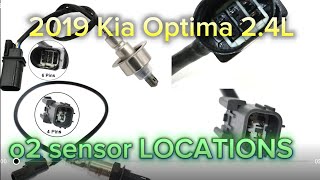
- Locate the downstream O2 sensor. 🎬 Watch: See exactly where both sensors are located on this engine. It is installed in the exhaust pipe just after the catalytic converter.
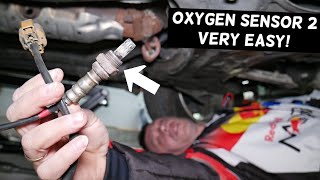
- Thoroughly inspect the sensor's wiring harness and connector. Look for any signs of melting, chafing, corrosion, or loose pins. The harness often has a mounting bracket above the transmission. 🎬 Watch: A quick guide to finding the Bank 1 Sensor 2.
- Check the O2 sensor fuse in the engine compartment fuse box. It may be labeled 'Sensor 1' or similar.
- If the wiring and fuse are intact, the most probable cause is a failed sensor. It's common for these sensors to become seized in the exhaust pipe; apply penetrating fluid and let it soak before attempting removal with a proper O2 sensor socket.
- For advanced diagnosis: Disconnect the sensor and use a multimeter to check for a short to power on the signal wire in the vehicle's harness (with the key on, engine off).
- If no wiring faults are found, replace the Bank 1, Sensor 2 oxygen sensor.
Parts You'll Likely Need
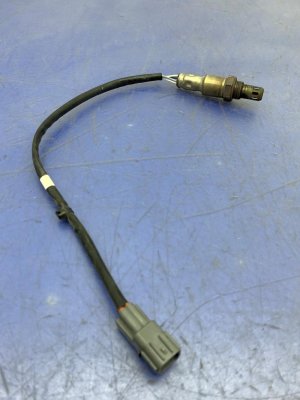
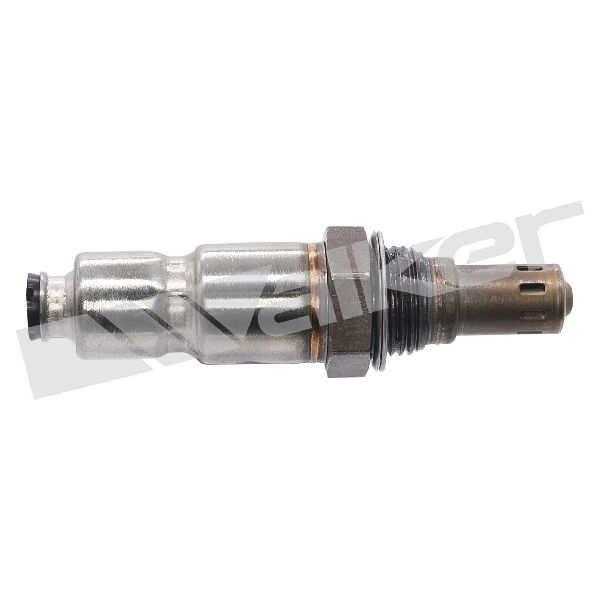
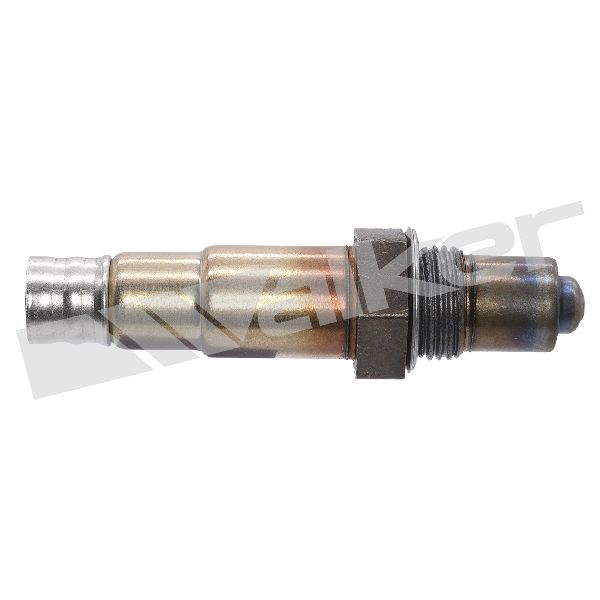
- Downstream Oxygen Sensor (Bank 1, Sensor 2)
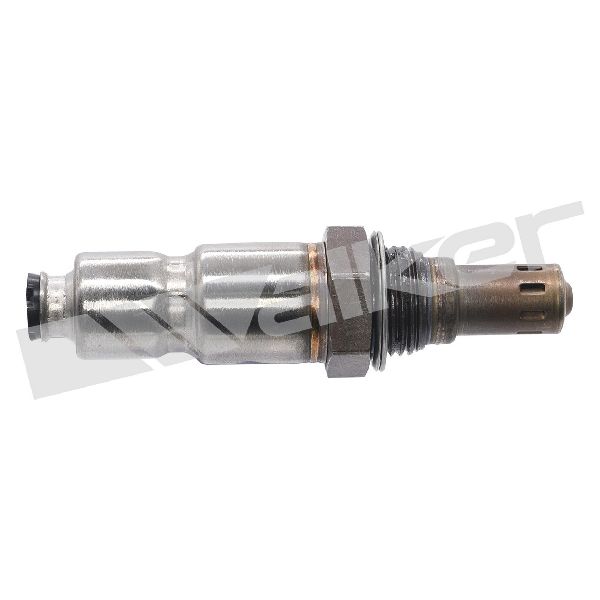
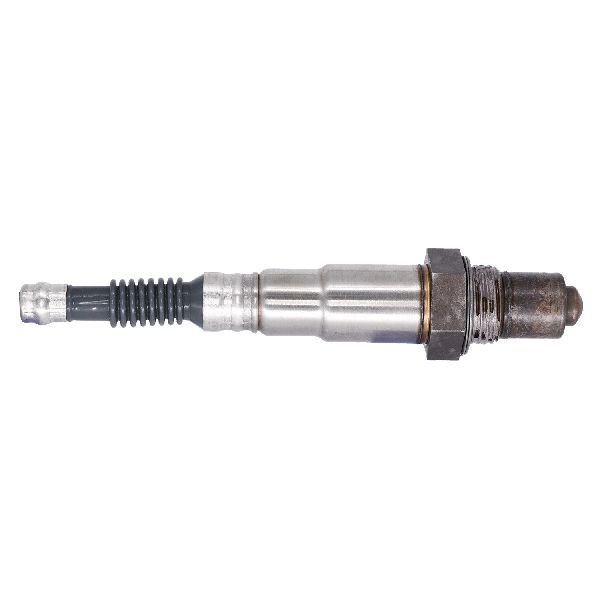
(OEM #39210-2G260)— This is the component that fails in the vast majority of P0138 cases on this vehicle. It is responsible for monitoring catalytic converter efficiency.
Trusted brands: Kia (Genuine OEM), NGK/NTK, Denso, Bosch
OEM price range: $140-$220
Aftermarket price range: $50-$100
Related Codes That Often Appear With This One
- P0137 — If P0137 (O2 Sensor Circuit Low Voltage) appears intermittently with P0138, it strongly suggests a wiring problem where the signal wire is shorting to both ground and power at different times, or a completely failed sensor.
- P0420 — A P0420 (Catalyst System Efficiency Below Threshold) code may be stored but is untrustworthy until the P0138 code is fixed. The downstream O2 sensor is required to diagnose the catalytic converter. Some older Kia models had a TSB (ENG160R1) for false P0420 codes due to overly sensitive ECU logic, highlighting the importance of fixing sensor codes first.
- P0038 — This code indicates a fault in the heater circuit of the same sensor (Bank 1, Sensor 2). If you see both P0138 and P0038, it points more strongly to a failed sensor assembly or a wiring/fuse issue related to the sensor's heater.
Technical Service Bulletins (TSBs) & Recalls
- While no TSBs directly address P0138 on this specific model, TSB ENG160R1 was issued for older models (up to 2016) with the 2.4L GDI engine to correct overly sensitive ECU logic that could cause a false P0420 code. This highlights the importance of addressing O2 sensor codes first.
- TSB ENG222 (Rev 7) addresses excessive oil consumption on various Kia engines, including the Theta GDI. This is a relevant underlying issue that can lead to premature O2 sensor and catalytic converter failure.
Platform-Specific Known Issues
- Owner Experience: Sensor Replacement Fix: An owner of a 2017 Kia Optima with 98,000 miles reported a recurring P0138 code with a live data reading stuck at 0.92V. The vehicle ran fine otherwise. Replacing the downstream O2 sensor with an aftermarket part resolved the issue permanently after two drive cycles. 🎬 See this step-by-step walkthrough for replacing the sensor yourself.
- DIY Repair Difficulty: While replacing the sensor is mechanically simple, a DIY video on a 2013 Optima showed the sensor can be very difficult to remove ('stuck'). The mechanic had to cut the sensor wire to fit a standard socket over it after the O2 sensor socket started to strip the nut. Using plenty of penetrating oil beforehand is highly recommended.
Mechanic-Grade Diagnostic Values

- Downstream O2 Sensor (B1S2) Voltage via Live Data — expected: Relatively steady voltage, typically between 0.5V and 0.8V on a healthy, warm engine.. Failure: Voltage is stuck high, consistently above 0.8V or 0.9V, and does not fluctuate. A flat line on a graph is a key sign of failure.
- O2 Sensor Heater Circuit Resistance — expected: Approximately 3 to 15 Ohms when measured at room temperature with the sensor disconnected. A real-world good reading was 5.5 Ohms.. Failure: An infinite resistance reading (Open Loop / OL) indicates a broken heater element inside the sensor. A reading of zero ohms indicates a short circuit.
Scan Tool Commands That Help
- Kia GDS (Global Diagnostic System): Resetting Adaptive Values — After replacing the O2 sensor, this function, found under 'Vehicle S/W Management' or 'Special Function', should be performed to clear the old learned fuel trim and sensor behavior from the ECM, allowing it to adapt to the new sensor more quickly.
Wiring & Ground Locations

- SENSOR 1 Fuse — In the engine compartment fuse box. It is a 15A fuse.. This fuse provides power to the heater circuits for both the upstream and downstream oxygen sensors. A blown fuse will disable the heater, causing performance issues and potentially triggering codes for both sensors.
- Chassis Grounding Bolt — A common grounding point on many Kia models is a bolt with multiple ground wires attached, located to the right of the interior fuse panel behind the driver's side lower dash.. A poor ground connection for the O2 sensor circuit can cause erratic or incorrect voltage readings, potentially leading to a P0138 code. While the sensor has its own ground wire in the harness, that circuit must eventually connect to a solid chassis ground.
- Sensor Connector Pinout — At the 4-wire connector for the downstream O2 sensor.. Knowing the wire functions allows for advanced testing. On many compatible aftermarket sensors, the pinout is: Signal (white wire), Ground (black wire), Heater Positive (red wire), and Heater Negative (gray wire). This helps a technician test for voltage, ground, and signal integrity at the harness.
Real Owner Repair Stories
- AliExpress Product Review / Forum-style post (2017 Kia Optima, 98,000 miles) — Recurring P0138 code every ~300 miles, occasional check engine light flickering. No noticeable performance issues.
❌ Tried (didn't work) Clearing the code without repair.
✅ What actually fixed it The owner confirmed via live data that the B1S2 voltage was stuck at 0.92V. Replacing the downstream oxygen sensor with a new, direct-fit aftermarket part permanently resolved the code within two drive cycles.
Diagnostic Flowchart
Used vs. New Parts: Buying Guide for This Vehicle
When a used part is the smart pick: For this repair, a used part is NOT recommended. Oxygen sensors are wear-and-tear items with a finite lifespan, typically 60,000 to 100,000 miles. Installing a used sensor is likely to result in another failure in a short time.
What to inspect on the donor part:
- Not applicable as used sensors are not advised.
OEM-only on this vehicle (don't cheap out):
- Catalytic Converter: While not the cause of P0138, if a P0420 code appears after fixing P0138, using an OEM catalytic converter is strongly advised. Aftermarket converters for this platform are known to have a shorter lifespan and may not meet the ECU's strict efficiency monitoring, causing the P0420 code to return.
Aftermarket brands forum-validated for this vehicle:
- NTK (also branded as NGK)
- Denso
- Bosch
Brands owners have reported issues with on this vehicle:
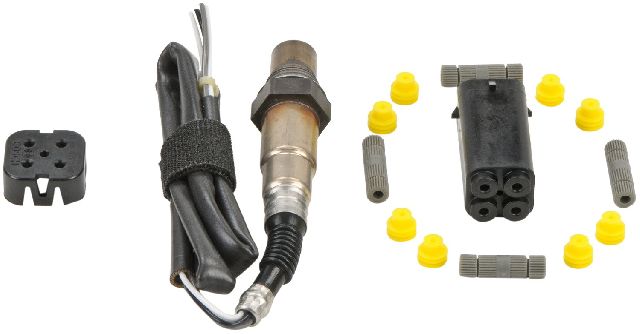
- Unbranded 'universal' sensors that require splicing wires. These often have incorrect resistance values or wire lengths and are a common source of repeat failures.
Real Owner Stories
Aggregated from forums and TSBs cited above. Mileages and costs reflect what owners reported in those sources.
2017 Kia Optima — 98000 miles
Symptoms: P0138 code with occasional check engine light flickering. The vehicle ran fine otherwise—no loss of power, no rough idle. The code would return every 300 miles after being cleared.
What fixed it: Swapped out the downstream O2 sensor with a direct-fit replacement. The code cleared permanently within two drive cycles.
Source hint: AliExpress Product Page
2013 Optima
Symptoms: The sensor was very difficult to remove ('stuck'). The O2 sensor socket started to strip the nut.
What fixed it: The mechanic had to cut the sensor wire to fit a standard socket over it for removal. Using plenty of penetrating oil beforehand is highly recommended to avoid this.
Source hint: DIY video on a 2013 Optima
Related OBD-II Codes
Frequently Asked Questions
Where is the Bank 1, Sensor 2 oxygen sensor located on my 2016-2018 Optima?
What is the most common cause of a P0138 code on this specific Kia Optima?
What should I look for in my OBD-II scanner's live data to confirm the O2 sensor has failed?
How difficult is it to replace the downstream O2 sensor myself on the 2.4L GDI engine?
Are there any Kia Technical Service Bulletins (TSBs) that apply to the P0138 code on my Optima?
Are there any recommended aftermarket brands for the replacement oxygen sensor?
Helpful Videos
Used OEM Parts in Stock
New Aftermarket Parts Available

The information in this article is provided for general reference and educational purposes only. Vehicle specifications, procedures, and part compatibility can vary by production date, trim level, and region. Always consult your vehicle's factory service manual and verify part numbers before purchasing or performing repairs. Safety-critical components such as airbags, seat belts, and braking systems should be installed by a qualified professional.
- Kia Optima:
- 🎬 Helpful Videos
- 🛍️ Shop This Part
- What's Unique About the 2016-2018 Kia Optima
- Symptoms You May Notice
- Most Likely Causes
- Rare But Worth Checking
- Diagnosis Steps
- Parts You'll Likely Need
- Related Codes That Often Appear With This One
- Technical Service Bulletins (TSBs) & Recalls
- Platform-Specific Known Issues
- Mechanic-Grade Diagnostic Values
- Scan Tool Commands That Help
- Wiring & Ground Locations
- Real Owner Repair Stories
- Diagnostic Flowchart
- Used vs. New Parts: Buying Guide for This Vehicle
- Real Owner Stories
- 2017 Kia Optima — 98000 miles
- 2013 Optima
- Related OBD-II Codes
- Frequently Asked Questions
- 🎟️ Get 5% Off