

P0138 on 1999-2004 Jeep Grand Cherokee 4.7L: O2 Sensor High Voltage Causes and Fixes
On a 1999-2004 Grand Cherokee with the 4.7L V8, code P0138 almost always means the downstream oxygen sensor on the driver's side has failed or its wiring is damaged. The wiring is known to get damaged by the front driveshaft or melt on the exhaust. A replacement sensor is the most common fix, costing around $35-$80 for a quality aftermarket part like NTK or Denso.
- P0138 on your 4.7L Grand Cherokee points to the downstream O2 sensor on the driver's side.
- The most likely fix is replacing the sensor itself, but you must inspect the wiring harness for melting or damage first, as this is a common issue on this vehicle.
- Use a quality replacement sensor from a brand like NTK or Denso to avoid compatibility problems.
- This issue will cause an emissions test failure but is unlikely to cause serious drivability problems in the short term.
What's Unique About the 1999-2004 Jeep Grand Cherokee
The 1999-2004 (WJ) Grand Cherokee is notorious for having its O2 sensor wiring exposed to damage from road debris, heat from the exhaust, and especially chafing against the front driveshaft. While the sensor itself is a common failure item, owners and mechanics on forums like JeepForum.com frequently report that inspecting the wiring harness for shorts or melting is a critical first step that can prevent a misdiagnosis. These Jeeps are also known to be sensitive to the brand of O2 sensor used, with many owners recommending sticking to OEM-equivalent brands like NTK or Denso to avoid compatibility issues and repeat failures.
Symptoms You May Notice
- Check Engine Light is on
- Failure to pass an emissions inspection
- Slightly reduced fuel economy (often not noticeable by the driver)
- In rare cases, a sporadic rough idle or strong exhaust odor if the code is caused by an underlying rich condition
- Replacing the catalytic converter. A P0138 code points to a sensor circuit issue, not converter efficiency. A bad converter typically sets a P0420 code.
- Replacing the wrong O2 sensor. This code is specific to Bank 1 (driver's side) and Sensor 2 (downstream). Replacing the upstream sensor (Sensor 1) will not fix this code.
- Using a cheap, universal O2 sensor. These Jeeps are known to be sensitive to sensor brands. Using off-brand or universal-fit sensors that require splicing can lead to persistent codes or new issues.
Most Likely Causes
- Failed Downstream Oxygen Sensor (Bank 1, Sensor 2) 🔴 High Probability Oxygen sensors are wear items with a finite lifespan, typically lasting around 100,000 miles. Contamination from exhaust gases, internal heater failure, or internal short circuits are common failure modes with age and mileage.
How to confirm: Using a scan tool, observe the live data for the B1S2 O2 sensor. If the voltage is stuck high (e.g., >0.9V) and does not fluctuate, and the wiring is confirmed to be intact, the sensor has failed. A bench test with a multimeter and a propane torch can also confirm failure, though replacement is often faster.
Typical fix: Replace the Bank 1, Sensor 2 (downstream, driver's side) oxygen sensor. A 22mm or 7/8" O2 sensor socket or wrench is required. Soaking the old sensor in penetrating oil is highly recommended.
Est. part cost: $35-$80 - Damaged Wiring Harness or Connector 🟡 Medium Probability The wiring for the downstream O2 sensor on the WJ platform is routed underneath the vehicle, where it is highly susceptible to melting on the hot exhaust pipe or chafing against the spinning front driveshaft, especially on lifted vehicles. A short to a voltage source in the harness will cause a P0138 code.
How to confirm: Visually inspect the entire length of the O2 sensor wiring harness from the sensor to where it enters the main loom. Look for melted plastic, bare wires, or physical damage, paying close attention to the area above the front driveshaft. Disconnect the sensor and check the signal wire in the vehicle-side connector for any voltage with the key on; there should be none.
Typical fix: Repair the damaged section of the wiring harness using solder and heat-shrink tubing. Secure the repaired harness away from heat sources or moving parts with zip ties. Replace the connector if it is corroded or damaged.
Est. part cost: $5-$50 - Rich Running Condition ⚪ Low Probability While less common to be the primary cause for a downstream-only sensor code, issues like a leaking fuel injector or a faulty fuel pressure regulator can create a rich condition so severe that it overwhelms the catalytic converter, causing the downstream sensor to read a legitimately high voltage.
How to confirm: Check long-term and short-term fuel trims with a scan tool. Significantly negative numbers (e.g., -15% or more) indicate the PCM is trying to correct a rich condition. Check for other codes related to the fuel system (e.g., P0172 Rich Condition Bank 1) or upstream O2 sensors.
Typical fix: Diagnose and repair the root cause of the rich condition, such as replacing a leaking fuel injector.
Est. part cost: $50-$200
Rare But Worth Checking
- Powertrain Control Module (PCM) Fault: This is very uncommon. Before suspecting the PCM, all other possibilities, especially the sensor and its wiring, must be exhaustively ruled out. A faulty driver circuit in the PCM can cause erroneous readings. Sometimes a PCM software update can resolve the issue, as noted in TSB 25-001-03 for some models.
- Exhaust Leak: An exhaust leak before the catalytic converter can, in some cases, draw in outside air and alter the exhaust gas composition enough to affect the downstream sensor reading, though this more commonly causes other codes.
Diagnosis Steps
- Connect an OBD-II scanner and confirm that P0138 is the active code. Check for any other codes, like P0141, which often appears with it.
- Using the scanner's live data function, monitor the voltage for 'O2S B1S2' (Bank 1, Sensor 2). Confirm if it is stuck at a high voltage (e.g., above 0.9V) and does not fluctuate during engine operation.
- Perform a thorough visual inspection of the Bank 1, Sensor 2 oxygen sensor and its wiring harness. It is located on the driver's side, in the exhaust pipe after the catalytic converter.
- Pay extremely close attention to the wiring harness where it passes over the front driveshaft. Look for shiny, clean spots on the driveshaft and corresponding damage to the wire loom. Also check for any signs of the harness being melted on the exhaust pipe.
- If the wiring appears intact, disconnect the O2 sensor connector. With the ignition on (engine off), use a multimeter to check the vehicle-side harness connector. Probe the signal wire terminal. If you read significant voltage (e.g., 5V or 12V), there is a short to power in the harness that must be located and repaired.
- If the wiring and connector are in good condition and there is no short to voltage, the oxygen sensor itself has most likely failed internally.
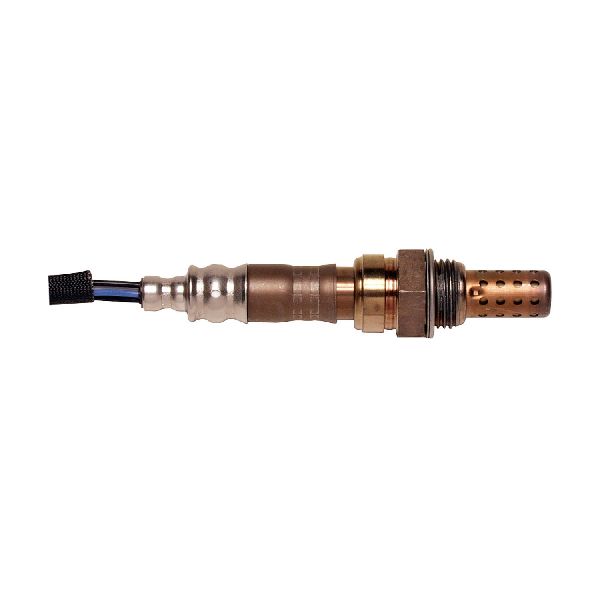
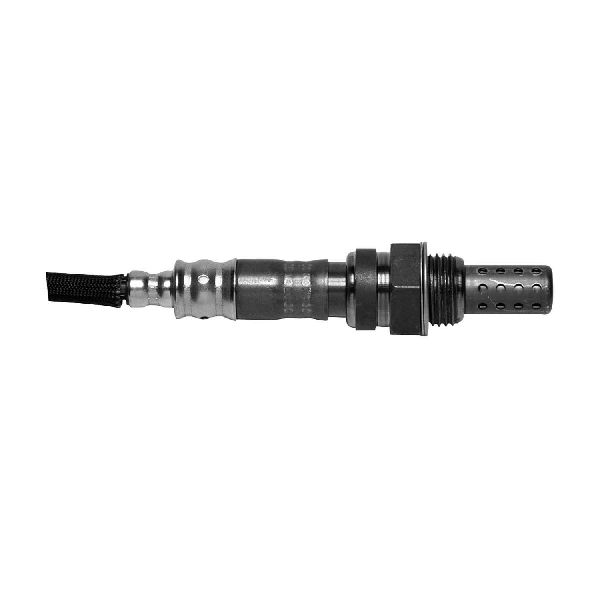
- Replace the Bank 1, Sensor 2 oxygen sensor. Use a quality brand like NTK (P/N: 23137) or Denso (P/N: 234-4587).
- After replacement, clear the codes with the scanner and perform a drive cycle to ensure the code does not return.
Parts You'll Likely Need
- Downstream Oxygen Sensor (Bank 1, Sensor 2)
(OEM #56041213AB)— This is the most common point of failure for a P0138 code due to age, contamination, or internal shorting.
Trusted brands: NTK (P/N: 23137), Denso (P/N: 234-4587)
OEM price range: $100-$150
Aftermarket price range: $35-$80
Related Codes That Often Appear With This One
- P0141 — This code indicates a failure in the heater circuit for the same sensor (Bank 1, Sensor 2). It is very common to see both codes together, as a wiring issue (like a melted or chafed harness) or an internal sensor failure can affect both the heater and signal circuits simultaneously.
- P0132 — This code is for 'O2 Sensor Circuit High Voltage (Bank 1, Sensor 1)'. Seeing both P0132 and P0138 together could point to a systemic issue like high fuel pressure affecting the entire bank, or a shared wiring problem.
Technical Service Bulletins (TSBs) & Recalls
- TSB 18-24-98 REV A
- TSB 25-001-03 - 'Flash: Oxygen Sensor Slow Response'
Platform-Specific Known Issues
- A Technical Service Bulletin for the subsequent model year (TSB 18-24-98 REV A for 1999 WJ) noted issues with O2 sensor wires chafing on the transfer case. While not directly for this code, it highlights a history of Mopar acknowledging wiring harness routing issues near the drivetrain for this platform, reinforcing the need to inspect wiring first.
- TSB 25-001-03 was released for some 2003 models, addressing false O2 sensor codes that could be fixed with a PCM software update.
Mechanic-Grade Diagnostic Values
- O2 Sensor Heater Element Resistance — expected: 4 to 7 Ohms at room temperature (approx. 70°F).. Failure: A reading of 'OL' (infinite resistance) or near 0 Ohms indicates a failed heater element.
- O2 Sensor Signal Voltage (Normal Operation) — expected: Fluctuating between approximately 0.1V and 0.9V.. Failure: Voltage stuck high (above 0.9V) for an extended period.
- Heater Circuit Power Supply (at harness connector) — expected: 10 to 12 Volts DC with Key On, Engine Off (KOEO).. Failure: No voltage or significantly low voltage points to a problem with the fuse, Auto Shutdown (ASD) relay, or wiring.
Scan Tool Commands That Help
- DRB III: O2 Sensor Test — The DRB III scan tool, used by dealers for this vehicle generation, has a specific O2 sensor test function. This test forces the engine to run rich and lean, allowing a technician to actively monitor the sensor's response time and voltage switching capability, which is more definitive than passively watching live data.
Wiring & Ground Locations
- G104 — On the left side of the 4.7L engine block.. This ground point serves the A/C compressor clutch as well as the Bank 1 Upstream (1/1) and Downstream (1/2) oxygen sensors. A corroded or loose G104 ground can cause erratic sensor readings, including a high voltage fault for P0138.
- O2 Sensor Connector (Bank 1, Sensor 2) — On the driver's side, connected to the O2 sensor located after the catalytic converter.. The 4-wire connector pinout is critical for testing. A typical configuration is: Pin 1 - Heater Control (from PCM), Pin 2 - Heater Ground, Pin 3 - O2 Signal (to PCM), Pin 4 - Sensor Ground (from PCM). A short between the heater power wire and the signal wire within the harness is a common cause of P0138.
- PCM Connector C1 (Black) — On the Powertrain Control Module, located on the passenger side of the firewall.. The O2 sensor signal and ground wires terminate here. For example, on some models, a critical PCM ground is at pin #31 (Black/White wire). A backed-out pin or corrosion at the PCM connector can cause a P0138 code that is difficult to diagnose.
Real Owner Repair Stories
- RamForum.com user (2003 Ram 1500 4.7L, 65k miles) — P0138 code present at purchase, later joined by P0172 (System Too Rich).
❌ Tried (didn't work) Replacing both O2 sensors, Replacing the MAP sensor, Replacing the catalytic converter
✅ What actually fixed it The root cause was a faulty K&N cold air intake that was causing a rich condition, which in turn made the downstream O2 sensor read high voltage. The sensor was correctly reporting a problem that originated upstream. - Jeep Cherokee Forum user (Jeep Cherokee XJ (similar wiring)) — Persistent P0138 code.
❌ Tried (didn't work) Visual wiring inspection appeared okay.
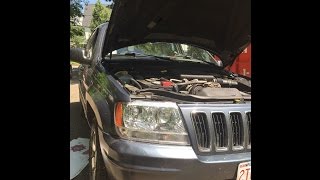
✅ What actually fixed it The previous owner had replaced the O2 sensor and used unsealed crimp connectors to splice the wires. Corrosion developed in the splices, causing a voltage drop that the PCM interpreted as a fault. The fix was to cut out the crimps, solder the wires properly, and seal them with heat-shrink tubing. - YouTube channel 'youfixnsave' (2001 Jeep Grand Cherokee) — P0138 code appeared shortly after fixing a P0455 (EVAP leak) code.
❌ Tried (didn't work) Initially suspected the EVAP repair was related.
✅ What actually fixed it Upon physical inspection under the car, the owner discovered the body of the O2 sensor itself was physically broken and cracked. Replacing the broken sensor resolved the code.
OEM Part Supersession History
56041213AB→This part number is still listed as active by Mopar for many applications, but aftermarket manufacturers have their own supersession lists.— N/A
Heads up: The key incompatibility is not with supersessions but with controller type. Early WJ models (approx. 1999-2001) used a JTEC controller, while later models (approx. 2002-2004) used an NGC (Next Generation Controller). The sensors for these systems may look identical but can have different internal characteristics and are not always interchangeable. Always verify the part by VIN and controller type.
Model Year Variations Within This Range
- 1999-2001 vs 2002-2004: The Powertrain Control Module (PCM) changed from the JTEC (3 connectors) to the NGC (4 connectors) around the 2002 model year. This change also affected the crankshaft position sensor tone wheel (16-tooth vs 32-tooth) and potentially the O2 sensors. While the P0138 code's meaning is the same, the specific sensors and diagnostic procedures may differ slightly. It is critical to order parts specific to the vehicle's year and VIN to ensure compatibility with the correct engine controller.
Diagnostic Flowchart
Other Known Issues on This Vehicle
Issues unrelated to this code that are worth knowing about as an owner of this generation:
- HVAC Blend Door Failure 🟠 Medium — Extremely common. The plastic doors or the actuator motors fail, resulting in an inability to control air temperature or distribution (e.g., stuck on heat, no defrost). (Ref: Multiple TSBs exist, including one for a blend door repair kit. Repair often requires dashboard removal.)
- Dropped Intake Valve Seats 🔴 High — A known catastrophic failure, often triggered by an overheating event. The powdered metal valve seats can dislodge from the aluminum cylinder head, causing a loss of compression and potentially destroying the piston and cylinder head. (Ref: No official recall, but it is a widely documented engine failure mode for the 4.7L PowerTech.)
- Window Regulator Failure 🟡 Low — Very common. The plastic clips holding the window to the regulator break, or the cable mechanism fails, causing the window to fall into the door. (Ref: null)
- Warped Front Brake Rotors 🟡 Low — Common, especially on early (1999-2001) models with Teves calipers. Owners report a pulsing or vibration when braking. Upgrading to the later Akebono-style calipers is a common fix. (Ref: null)
- Transfer Case Viscous Coupler Failure (Quadra-Trac II) 🟠 Medium — Common on models with the NV247 transfer case. The viscous coupler fails, causing the front and rear driveshafts to bind during turns on high-traction surfaces, resulting in tire skipping and chirping. (Ref: null)
Used vs. New Parts: Buying Guide for This Vehicle
When a used part is the smart pick: For this repair, using a used part is almost never a smart choice. The primary failure items are the oxygen sensor itself (a wear item) and the wiring harness. A used sensor has an unknown lifespan and may fail shortly after installation. A used wiring harness pigtail from a junkyard can be a viable option if your connector is damaged, but it must be spliced in carefully.
Donor-vehicle mileage cap: roughly under 20000 miles for the part to have meaningful remaining life.
What to inspect on the donor part:
- If sourcing a connector pigtail, inspect for any signs of melting, brittleness, or corrosion on the pins.
- Ensure the locking tab on the connector is intact.
- Verify the wire colors match your vehicle's harness exactly, as variations exist.
OEM-only on this vehicle (don't cheap out):
- While not strictly 'OEM-only', this platform is notoriously sensitive to O2 sensor brands. Using a cheap, no-name sensor is a common cause of repeat failures or new, different codes.
Aftermarket brands forum-validated for this vehicle:
- NTK (often the OEM supplier)
- Denso
Brands owners have reported issues with on this vehicle:
- Universal sensors that require splicing wires.
- Unbranded or 'white box' parts from online marketplaces are frequently cited in forums as problematic.
Real Owner Stories
Aggregated from forums and TSBs cited above. Mileages and costs reflect what owners reported in those sources.
2001 Jeep Grand Cherokee 4.7L V8
Symptoms: Check Engine Light on for code P0138.
What fixed it: The owner performed a visual inspection and discovered a physically broken O2 sensor; replacing the sensor fixed the issue.
Source hint: YouTube - 'Check Engine code P0138 Jeep Grand Cherokee, Fixed!' by youfixnsave
Jeep Cherokee (XJ/WJ Platform)
Symptoms: P0138 and P0141 codes present.
What fixed it: A visual inspection revealed the O2 sensor wires were completely severed by contact with the driveshaft.
Source hint: YouTube - 'Heated O2 Sensor Diagnostics - P0138 & P0141 | XJ Jeep Cherokee #6' by GearHeads
Jeep Grand Cherokee (WJ)
Symptoms: P0138 code; concern about whether to replace the sensor immediately.
What fixed it: Investigation of the wiring harness above the front driveshaft for chafing or damage to the wire loom, as many owners found this to be the primary cause before replacing the sensor.
Source hint: CherokeeForum.com thread titled 'If you have ever had a P0138 code click here!'
Related OBD-II Codes
Frequently Asked Questions
I have a 2003 Grand Cherokee with a P0138 code; is there a software fix for this?
Where is the Bank 1, Sensor 2 O2 sensor located on my 4.7L V8 WJ?
Could my lifted Grand Cherokee be causing this O2 sensor code?
What specific replacement O2 sensors are recommended for the 4.7L PowerTech engine?
Is there a TSB regarding wiring issues for the 1999 model year Grand Cherokee?
What size tool do I need to remove the O2 sensor on my Jeep?
Helpful Videos
We Have This Part in Stock

The information in this article is provided for general reference and educational purposes only. Vehicle specifications, procedures, and part compatibility can vary by production date, trim level, and region. Always consult your vehicle's factory service manual and verify part numbers before purchasing or performing repairs. Safety-critical components such as airbags, seat belts, and braking systems should be installed by a qualified professional.
- Jeep Grand Cherokee:
- 🎬 Helpful Videos
- 🛍️ Shop This Part
- What's Unique About the 1999-2004 Jeep Grand Cherokee
- Symptoms You May Notice
- Most Likely Causes
- Rare But Worth Checking
- Diagnosis Steps
- Parts You'll Likely Need
- Related Codes That Often Appear With This One
- Technical Service Bulletins (TSBs) & Recalls
- Platform-Specific Known Issues
- Mechanic-Grade Diagnostic Values
- Scan Tool Commands That Help
- Wiring & Ground Locations
- Real Owner Repair Stories
- OEM Part Supersession History
- Model Year Variations Within This Range
- Diagnostic Flowchart
- Other Known Issues on This Vehicle
- Used vs. New Parts: Buying Guide for This Vehicle
- Real Owner Stories
- 2001 Jeep Grand Cherokee 4.7L V8
- Jeep Cherokee (XJ/WJ Platform)
- Jeep Grand Cherokee (WJ)
- Related OBD-II Codes
- Frequently Asked Questions
- 🎟️ Get 5% Off