

P0138 on 1993-1998 Jeep Grand Cherokee: O2 Sensor High Voltage Causes and Fixes
This code almost always points to a failed downstream (post-catalytic converter) oxygen sensor or damaged wiring. On the ZJ Grand Cherokee, it's critical to inspect the wiring harness for melting or chafing against the driveshaft or exhaust before replacing the sensor. A new, quality NTK or Denso sensor costs between $35 and $80.
- P0138 means the downstream O2 sensor (after the catalytic converter) is sending a constant high voltage signal.
- On a 1993-1998 Grand Cherokee, this is caused by either a failed sensor or, just as likely, a wiring harness that has melted on the exhaust or been damaged by the front driveshaft.
- Always inspect the wiring harness thoroughly before replacing the O2 sensor.
- Use a quality NTK or Denso replacement sensor to avoid compatibility issues.
What's Unique About the 1993-1998 Jeep Grand Cherokee
For the first-generation (ZJ) Grand Cherokee, the P0138 code is straightforward but has a key diagnostic wrinkle. While the O2 sensor itself is a common failure point, these Jeeps are notorious for having the downstream sensor's wiring harness get damaged. The harness is routed over the transmission crossmember, in close proximity to the hot exhaust pipe and the rotating front driveshaft. It is extremely common for the plastic harness loom to break or fall, allowing the wires to rub through on the driveshaft or melt on the exhaust, causing a short circuit that triggers the code. Owners and mechanics familiar with this platform strongly recommend a thorough wiring inspection before spending money on a new sensor.
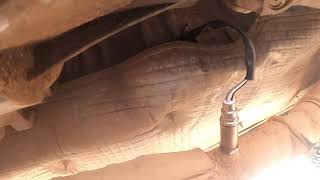
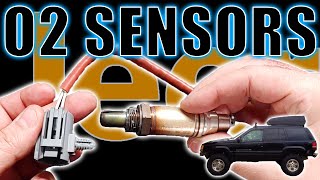
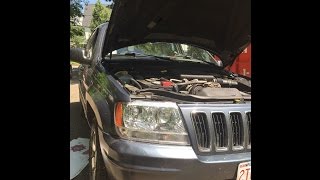
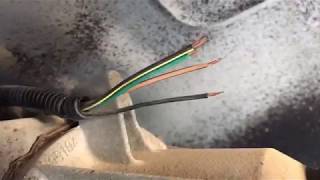
🎬 Watch: This video shows how to fix a P0138 code.Symptoms You May Notice
- Check Engine Light is on
- Failure to pass an emissions inspection
- Slight decrease in fuel economy (less common, as the downstream sensor has minimal impact on fuel trim)
- Rough idle or hesitation (rare, but reported by some owners)
- Strong exhaust odor due to a potential rich running condition that the PCM cannot properly monitor.
- Replacing the catalytic converter. A P0138 code indicates a problem with the sensor circuit, not necessarily the converter itself. A bad converter typically sets a P0420 code.
- Replacing the upstream O2 sensor. P0138 specifically refers to Sensor 2, which is the downstream sensor.
- Using a cheap, universal O2 sensor. These Jeeps are known to be sensitive to the sensor brand, and using off-brand sensors can lead to persistent codes.
Most Likely Causes
- Failed Downstream Oxygen (O2) Sensor 🔴 High Probability Oxygen sensors are wear items with a finite lifespan, typically around 100,000 miles. Heat cycles, contamination, and internal shorts eventually cause them to fail, often by getting stuck at a high voltage reading.
How to confirm: After confirming the wiring is intact, watch the live data stream from Bank 1 Sensor 2 on an OBD-II scanner. If the voltage is stuck high (e.g., above 0.9V) and does not fluctuate, the sensor has likely failed internally.
Typical fix: Replace the Bank 1, Sensor 2 (downstream) oxygen sensor. It is located just after the catalytic converter. A 7/8-inch or 22mm oxygen sensor socket is required. 🎬 See this replacement walkthrough and the specific tools you'll need.
Est. part cost: $35-$80 for a quality aftermarket sensor. - Damaged O2 Sensor Wiring or Connector 🔴 High Probability The wiring harness for the downstream sensor is routed near the hot exhaust and rotating front driveshaft. It is extremely common for the harness to melt, chafe, or for the connector pins to corrode, causing a short to voltage. This is considered an equally likely cause as a failed sensor on this platform.
How to confirm: Visually inspect the entire length of the wiring from the sensor to where it enters the main harness above the transmission. Look for melted plastic, bare wires, or shiny, clean spots on the driveshaft where rubbing has occurred. 🎬 Watch: A mechanic shows common O2 sensor wiring damage points. Check the 4-pin connector for corrosion or backed-out pins.
Typical fix: Repair the damaged section of wire, ensuring the connection is soldered and sealed with heat-shrink tubing to prevent future corrosion. Secure the repaired harness away from the exhaust and driveshaft using zip ties. Replace the connector pigtail if it is damaged.
Est. part cost: $5-$25 - Exhaust Leak ⚪ Low Probability Exhaust components on older vehicles can rust and develop leaks at gaskets or welds. An exhaust leak *before* the catalytic converter can introduce oxygen, causing the upstream sensor to command a rich mixture, which can sometimes affect downstream readings.
How to confirm: Listen for a ticking or puffing sound from the exhaust system, especially when the engine is cold. Visually inspect the exhaust manifold, pipes, and catalytic converter for black soot trails, which indicate a leak.
Typical fix: Replace the leaking gasket or repair the cracked pipe. This is a less common cause for a high voltage code compared to a low voltage code.
Est. part cost: $10-$150
Rare But Worth Checking
- Faulty Powertrain Control Module (PCM): This is very uncommon. All other possibilities, especially the sensor and its wiring, should be exhaustively ruled out before considering a PCM failure. A failed driver circuit in the PCM could theoretically cause a high voltage reading, but it is far more likely to be a wiring or sensor issue.
Diagnosis Steps
- Read the code with an OBD-II scanner to confirm P0138 is present.
- Thoroughly inspect the wiring. This is the most critical step on a ZJ. Follow the harness from the downstream O2 sensor up and over the transmission crossmember. Look for any signs of contact with the front driveshaft or exhaust pipe. Check for melted plastic, chafed wires, or broken retaining clips.
- Check the O2 sensor heater fuse. On many 1997-1998 models, this is a 15A fuse in the Power Distribution Center (PDC) under the hood. A shorted harness can blow this fuse, often triggering a P0141 as well.
- If the wiring looks good, use a scan tool to monitor the live voltage from the B1S2 O2 sensor. A reading that is stuck high (above 0.9V) points towards a bad sensor or a short to voltage in the signal wire.
- To confirm a wiring short, disconnect the sensor. With the key on, engine off, probe the signal wire in the vehicle-side harness connector. For a '98 ZJ, the signal wire is typically Tan/White. There should be no significant voltage present. If you read 5V or 12V, there is a short to a power source in the harness that must be found and repaired.
- If the wiring, fuse, and signal wire test are all good, the O2 sensor itself has failed internally and is the most likely cause.
Parts You'll Likely Need
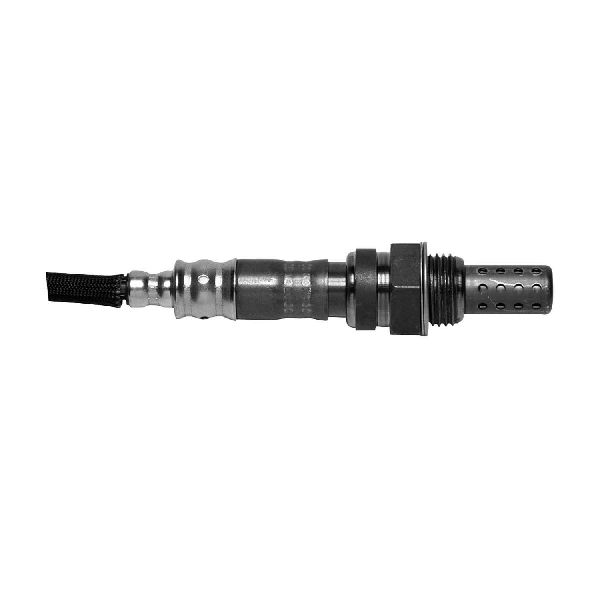
- Downstream Oxygen Sensor (Bank 1, Sensor 2)
(OEM #56041213AB)— This sensor is the most common point of failure for a P0138 code due to age, contamination, or internal shorting.
Trusted brands: NTK (OEM Supplier), Denso
OEM price range: $100-$150
Aftermarket price range: $35-$80
Related Codes That Often Appear With This One
- P0141 — P0141 indicates a failure in the heater circuit for the same O2 sensor (Bank 1, Sensor 2). It is very common to see both codes together, as a wiring issue (like a melted harness) or internal sensor failure can affect both the heater and signal circuits simultaneously.
Technical Service Bulletins (TSBs) & Recalls
- While no TSB is specific to P0138 on the ZJ, TSB 18-24-98 REV A was issued for 1999 WJ Grand Cherokees regarding O2 sensor wire chafing on the transfer case, causing shorts. This indicates a history of Mopar acknowledging wiring harness routing issues near the drivetrain for this model line, reinforcing the need to inspect wiring first.
Platform-Specific Known Issues
- Jeep forums frequently note that ZJ and XJ models of this era are sensitive to the brand of O2 sensor used. NTK is consistently cited as the preferred OEM-equivalent brand that avoids compatibility issues sometimes seen with other aftermarket brands like Bosch.
- The routing of the downstream O2 sensor harness makes it uniquely vulnerable to damage from the front driveshaft, a very common point of failure that should be the first thing inspected.
Mechanic-Grade Diagnostic Values
- Downstream O2 Sensor Heater Element Resistance — expected: 4 to 7 Ohms. Failure: A reading of OL (Open Loop) or significantly outside the 4-7 Ohm range indicates a failed heater element within the sensor.
- Downstream O2 Sensor Live Data Voltage (Scan Tool) — expected: A lazy, relatively stable voltage slightly above 0.5V on a warm, running engine with a healthy catalytic converter.. Failure: The voltage is stuck at a high value, typically 0.9V or greater, and does not fluctuate.
- O2 Sensor Heater Power Supply (at harness connector) — expected: 12V (Battery Voltage) with key on.. Failure: No voltage indicates a blown fuse (often shared with the fuel pump relay) or a break in the power wire.
Wiring & Ground Locations
- Downstream O2 Sensor Connector (Vehicle Side, ~1998 4.0L) — The 4-pin round connector is located above the transmission crossmember.. Knowing the wire colors is essential for testing. For a '98 XJ (similar to ZJ): Black/Dark Green is the signal wire, Brown/Yellow is the sensor ground, and the other two are for the heater circuit. A short in the signal wire to the heater power wire is a common cause of the P0138 code.
- G104 (on similar models) — On the similar WJ platform, this ground is on the right rear of the engine block.. On the 4.0L engine in the next-generation Grand Cherokee (WJ), ground G104 serves the oxygen sensors. A poor ground connection at this point on a ZJ could cause erratic sensor readings, although it's less likely to cause a stuck high voltage than a short circuit.
- Engine Dipstick Tube Stud Ground — A main engine ground point is located on the engine block at the dipstick tube mounting stud.. This is a critical ground point for the engine management system. While not specific to the O2 sensor circuit, a compromised main ground can cause a host of unpredictable electrical issues, and should be cleaned and secured as part of any electrical diagnosis.
Real Owner Repair Stories
- CherokeeForum user 'Apostle2' (Jeep Cherokee (XJ), similar 4.0L powertrain) — P0138 code present.
❌ Tried (didn't work) Initial diagnosis showed a small voltage swing, suggesting the sensor was trying to work.
✅ What actually fixed it The previous owner had replaced the sensor using unsealed crimp connectors. Corrosion developed in the splices, causing a voltage drop that triggered the code. The final fix was to cut out the corroded splices, solder the wires properly, and seal them with heat-shrink tubing. - CherokeeForum user 'J20jeepster' (Jeep Cherokee (XJ) with 102,000 miles) — P0138 code, sporadic rough idle.
❌ Tried (didn't work) Replacing the downstream O2 sensor initially fixed the Check Engine Light for several thousand miles, but the code eventually returned.
✅ What actually fixed it After the code returned, the user inspected further and found an exhaust manifold leak. The suspected root cause was that the exhaust leak was creating a bad reading and potentially damaging the O2 sensors over time. The final plan was to repair the exhaust leak. - YouTube channel 'youfixnsave' (2001 Jeep Grand Cherokee (WJ, similar issue)) — P0138 and a P0455 (EVAP leak).
❌ Tried (didn't work) Initially thought the EVAP leak might be causing a rich condition and triggering the O2 code.
✅ What actually fixed it Upon physical inspection of the downstream O2 sensor wiring, the sensor itself was found to be physically broken. Replacing the sensor resolved the P0138 code.
OEM Part Supersession History
56041213AB→56041213AB (current)— N/A
Heads up: No supersession found for this Mopar part number. It remains the specified part.
Model Year Variations Within This Range
- 1996-1998: These OBD-II models feature the downstream (Bank 1, Sensor 2) oxygen sensor that this code refers to. Earlier 1993-1995 OBD-I models do not have this sensor and cannot set this specific code.
- 1993-1998: The primary difference between upstream and downstream NTK sensors for this platform is often just the length of the wire pigtail. The sensor element itself is functionally the same. For example, NTK 23179 has an 18-inch wire, making it suitable for applications requiring a longer reach.
- 1996-1998: The connector for the O2 sensors changed around 1996 with the transition to OBD-II. While the sensor function is similar, the physical plug is different from earlier years, requiring a year-specific part.
Diagnostic Flowchart
Real Owner Stories
Aggregated from forums and TSBs cited above. Mileages and costs reflect what owners reported in those sources.
1998 Jeep Grand Cherokee 6 cylinder — 120000 miles
Symptoms: Check Engine Light with P0138 code.
What fixed it: Replaced the downstream O2 sensor.
Source hint: Car Talk Community
1998 Jeep Grand Cherokee (ZJ) — ~100000 miles
Symptoms: Code P0138 triggered.
What fixed it: Changed the O2 sensor.
Source hint: NAXJA Forums - North American XJ Association
1993-2001 Jeep Cherokee (XJ) 4.0L
Symptoms: P0138 code triggered by the wiring harness rubbing on the front driveshaft.
What fixed it: Repaired the wiring harness and installed an NTK sensor.
Source hint: NAXJA Forums (naxja.org)
Jeep Cherokee (XJ)
Symptoms: P0138 code active due to the wiring harness chafing against the transmission.
What fixed it: Repaired the shorted wiring.
Source hint: Reddit (r/CherokeeXJ)
Jeep Cherokee
Symptoms: Recurring P0138 code.
What fixed it: Traced the issue to an exhaust leak and repaired the leak.
Source hint: Jeep Cherokee Forum (cherokeeforum.com)
Related OBD-II Codes
Frequently Asked Questions
Why is the wiring harness so prone to failing and causing P0138 on my 1993-1998 Grand Cherokee?
Which brand of oxygen sensor should I use to replace the bad one on my ZJ?
Does TSB 18-24-98 REV A apply to my 1993-1998 Grand Cherokee?
What color is the O2 sensor signal wire I need to test on my 1998 Grand Cherokee?
I have a P0138 and a P0141 code at the same time. What does this mean for my ZJ?
Can an exhaust leak cause a P0138 on my 4.0L engine?
Helpful Videos
We Have This Part in Stock


The information in this article is provided for general reference and educational purposes only. Vehicle specifications, procedures, and part compatibility can vary by production date, trim level, and region. Always consult your vehicle's factory service manual and verify part numbers before purchasing or performing repairs. Safety-critical components such as airbags, seat belts, and braking systems should be installed by a qualified professional.
- Jeep Grand Cherokee:
- 🎬 Helpful Videos
- 🛍️ Shop This Part
- What's Unique About the 1993-1998 Jeep Grand Cherokee
- Symptoms You May Notice
- Most Likely Causes
- Rare But Worth Checking
- Diagnosis Steps
- Parts You'll Likely Need
- Related Codes That Often Appear With This One
- Technical Service Bulletins (TSBs) & Recalls
- Platform-Specific Known Issues
- Mechanic-Grade Diagnostic Values
- Wiring & Ground Locations
- Real Owner Repair Stories
- OEM Part Supersession History
- Model Year Variations Within This Range
- Diagnostic Flowchart
- Real Owner Stories
- 1998 Jeep Grand Cherokee 6 cylinder — 120000 miles
- 1998 Jeep Grand Cherokee (ZJ) — ~100000 miles
- 1993-2001 Jeep Cherokee (XJ) 4.0L
- Jeep Cherokee (XJ)
- Jeep Cherokee
- Related OBD-II Codes
- Frequently Asked Questions
- 🎟️ Get 5% Off