

P0136 on 2009-2017 Ford Fiesta: O2 Sensor Circuit Fixes and Causes
This code almost always means the downstream oxygen sensor (Bank 1, Sensor 2) has failed. Before replacing, visually check the wiring harness for melting or corrosion. Expect to pay $40-$80 for an aftermarket sensor or $90-$150 for an OEM Motorcraft part. It's a straightforward DIY replacement for most owners.
- P0136 on a Ford Fiesta almost always points to a bad downstream O2 sensor.
- Before buying a new sensor, always inspect the wiring harness for melting or physical damage, as this is a common point of failure.
- This is a DIY-friendly repair that requires an O2 sensor socket. The car is safe to drive in the short term, but you won't pass an emissions test.
- If you have a 2011-2013 model with an automatic transmission, double-check your existing part number before ordering a replacement to avoid fitment issues.
What's Unique About the 2009-2017 Ford Fiesta
For the 2009-2017 Ford Fiesta, particularly models with the 1.6L non-turbo engine, the P0136 code is a very common and straightforward issue. The wiring for the downstream sensor is routed underneath the car, making it susceptible to damage from road debris, water, and especially heat from the exhaust. While the sensor itself is the most frequent culprit, a visual inspection of the harness for melting or corrosion is a critical first step that can save you from a misdiagnosis. Some owners report the code appearing intermittently before the sensor fails completely.
Generation note: The 2009-2017 year range covers the sixth generation (often called Mk6, or Mk7 in the UK) of the Ford Fiesta. North American sales began with the 2011 model year. The causes and fixes for P0136 are consistent across this entire generation for the specified 1.6L Ti-VCT engine.
Symptoms You May Notice
- Check Engine Light is on
- Failed emissions test
- Slightly decreased fuel economy
- Rough idling or engine hesitation in some cases
- Intermittent illumination of the Check Engine Light before it stays on permanently
- Replacing the catalytic converter. P0136 is a sensor *circuit* code, not a catalyst efficiency code (like P0420). Always diagnose the sensor and wiring first before suspecting the expensive converter.
Most Likely Causes
- Failed Downstream Oxygen Sensor (Bank 1, Sensor 2) 🔴 High Probability Oxygen sensors are wear-and-tear items that degrade over time from constant exposure to hot exhaust gases. It is the most common reason for this code, with failures often occurring after 80,000-90,000 miles.
How to confirm: After confirming the wiring is intact, test the sensor's output using a scan tool with live data. A healthy downstream sensor should show a relatively stable voltage. If the voltage is stuck high (near 0.9V), low (near 0.1V), or not reading at all, the sensor has failed.
Typical fix: Replace the downstream (post-catalytic converter) oxygen sensor. Using a direct-fit OEM (Motorcraft) or high-quality aftermarket (Bosch, Denso) sensor is highly recommended over universal splice-in types.
Est. part cost: $40-$150 - Damaged Wiring or Connector 🟡 Medium Probability The sensor's wiring harness runs under the vehicle and is exposed to heat from the exhaust, moisture, and potential damage from road debris. This can lead to frayed wires, melted insulation, or green corrosion on the connector pins, causing a short or open circuit.
How to confirm: Visually inspect the entire wiring harness from the O2 sensor to where it connects to the main loom. Look for any signs of melting, chafing, breaks, or corrosion on the connector pins. A multimeter can be used to check for continuity and shorts in the circuit.
Typical fix: Repair the damaged section of the wire or replace the connector pigtail. In some cases, securing the harness away from the hot exhaust pipe is also necessary.
Est. part cost: $15-$60 - Exhaust System Leak ⚪ Low Probability Rust can cause leaks in the exhaust pipe or at the flange gaskets near the sensor, especially in regions that use road salt in the winter. A leak can introduce outside oxygen into the exhaust stream, skewing the sensor's readings.
How to confirm: Listen for hissing or ticking sounds from the exhaust when the engine is running. A mechanic can perform a smoke test to pinpoint the exact location of a small leak.
Typical fix: Repair the leak. Small holes can be patched with exhaust putty, while larger holes or failed gaskets will require cutting and welding or replacing the affected pipe section.
Est. part cost: $10-$300
Rare But Worth Checking
- Faulty Powertrain Control Module (PCM): This is very rare. The PCM should only be considered after all other possibilities (sensor, wiring, exhaust leaks) have been definitively ruled out.
- Blown Fuse: While more common for heater circuit codes like P0031, a related fuse issue could potentially affect the sensor circuit. For the upstream sensor, fuse F17 (15A) in the engine bay is a known culprit; it's worth checking related fuses when diagnosing P0136.
- Severe Engine Mechanical Failure: In a documented NHTSA complaint for a Ford vehicle, code P0136 appeared alongside other codes as a result of coolant intrusion into the engine block. If P0136 is present with multiple other unrelated engine codes, it could be a symptom of a much larger problem.
Diagnosis Steps
- Read the code with an OBD-II scanner to confirm P0136 is present.
- Perform a thorough visual inspection of the downstream O2 sensor's wiring harness and connector. Look for any signs of melting, chafing, corrosion, or loose connections. This is a critical step on the Fiesta.
- Inspect the exhaust system for any leaks, cracks, or holes, especially around the sensor and catalytic converter. Listen for any unusual exhaust noises.
- Use a scan tool with live data capabilities to observe the voltage from Bank 1 Sensor 2. A good downstream sensor on a warm, running engine should show a steady voltage, typically between 0.5 and 0.8 volts. If the voltage is stuck low (near 0.1V), high (near 0.9V), or is not changing at all, the sensor is likely bad.
- If the sensor signal looks normal, test the heater circuit for the sensor. A failed heater can also cause this code, often accompanied by P0054.
- If the sensor and wiring test good, the final, though unlikely, possibility is a fault within the Powertrain Control Module (PCM).
Parts You'll Likely Need
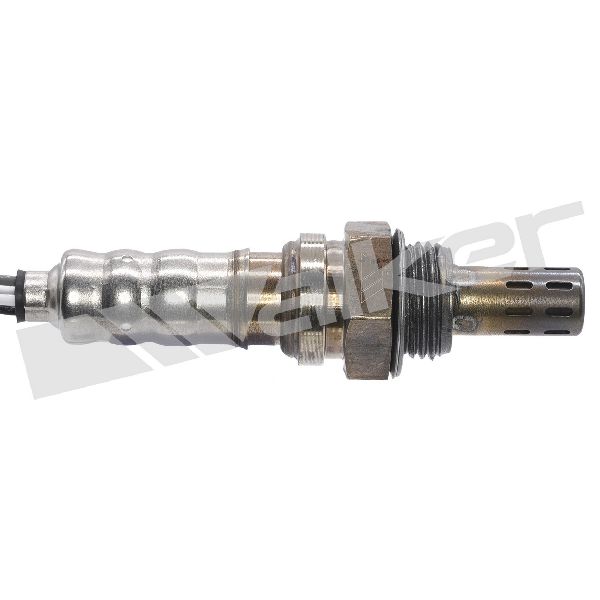
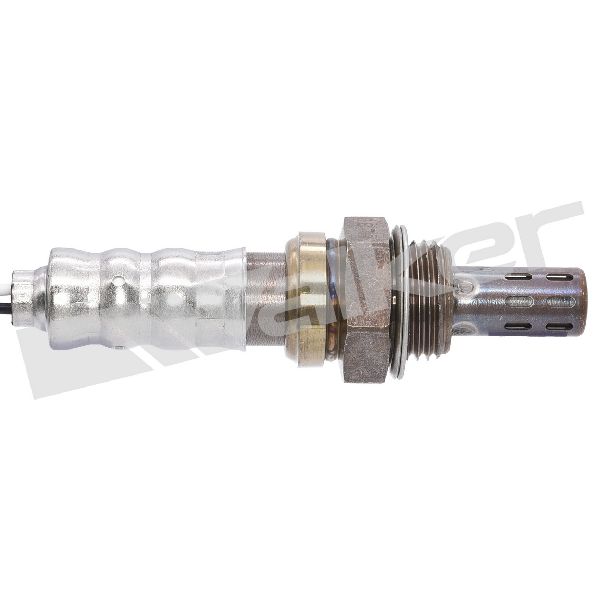
- Downstream Oxygen Sensor (Bank 1, Sensor 2)
(OEM #AE8Z-9G444-C)— This is the most common component to fail, triggering the P0136 code. It is a standard maintenance part that wears out over time. The original part may be AE8Z-9G444-B, which was superseded by AE8Z-9G444-C.
Trusted brands: Motorcraft (DY-1152), Denso (234-4555), Bosch (18124), Walker Products, NGK (22152)
OEM price range: $90-$150
Aftermarket price range: $40-$80
Related Codes That Often Appear With This One
- P0140 — P0140 indicates 'O2 Sensor Circuit No Activity Detected (Bank 1 Sensor 2)'. It often appears with P0136 and points strongly to a dead sensor or a complete break in the wiring.
- P0138 — P0138 indicates 'O2 Sensor Circuit High Voltage'. Seeing P0136 and P0138 together strongly suggests a faulty sensor or a short in the wiring harness.
- P0420 — A faulty downstream O2 sensor can sometimes incorrectly trigger a P0420 'Catalyst System Efficiency Below Threshold' code because it can't properly report on the converter's status. If you have both codes, fixing P0136 first may resolve P0420.
- P0054 — This code points to a failure in the sensor's internal heater resistance. It frequently appears with other Sensor 2 codes like P0136 and P0140, reinforcing that the sensor assembly itself has failed.
- P0756, P1450, P0102 — In a rare but severe case reported to the NHTSA involving a Ford, P0136 was diagnosed alongside these codes when coolant had leaked into the engine, indicating a catastrophic failure.
Technical Service Bulletins (TSBs) & Recalls
- As of mid-2026, there are no specific recalls or Technical Service Bulletins (TSBs) from Ford directly for P0136 or premature O2 sensor failure on the Fiesta. Failures are considered normal wear and tear.
Platform-Specific Known Issues
- For 2011-2013 models with an automatic transmission, there can be fitment variations. It is highly recommended to verify your specific part number before ordering a replacement sensor to ensure compatibility. One parts supplier notes a fitment cutoff for automatic transmission models up to December 3, 2012 for part DY-1152.
Mechanic-Grade Diagnostic Values
- Downstream O2 Sensor (B1S2) Voltage at Idle (Warm Engine) — expected: Relatively stable voltage between 0.5V and 0.8V.. Failure: Voltage is stuck low (near 0.1V), stuck high (near 0.9V), or does not produce a reading.
- O2 Sensor Heater Circuit Resistance — expected: Typically between 4 and 25 Ohms, measured across the two heater wires (often same color) on the sensor connector.. Failure: An open circuit (infinite resistance) or a reading outside the specified range indicates a failed heater element within the sensor.
Wiring & Ground Locations
- Fuse F17 — In the engine compartment fuse box (Battery Junction Box), often the sixth 15A fuse down in the left-hand row on 2011 models.. This 15A fuse provides the 12V power supply for the oxygen sensor heater circuits (both upstream and downstream). A blown fuse will disable the heater, which can trigger circuit-related codes like P0136, P0054, or P0140.
- C142 (Downstream O2 Sensor Connector) — Underneath the vehicle, on the exhaust pipe after the catalytic converter. The connector is often mounted to the vehicle body and may be blue or purple.. This is the primary connection point for all testing of the downstream O2 sensor. Damage or corrosion here is a common cause of P0136.
- C142 Pin 2 (Heater Power) — Yellow/Violet wire on some diagrams.. This pin receives 12V+ power from fuse F17 to power the sensor's internal heater. A break in this wire will cause the heater to fail.
- C142 Pin 3 (Heater Control) — White/Orange wire on some diagrams.. This wire is the ground control for the heater, switched by the PCM. A break in this wire will prevent the heater from operating.
- C142 Pin 4 (Signal Return) — Green wire on some diagrams.. This is the signal wire that sends the sensor's voltage reading back to the PCM. A short or open on this wire is a direct cause of P0136.
- G105 / G106 — Located on the left rear of the engine compartment.. These are major ground points for the Powertrain Control Module (PCM). A poor ground connection here can cause a wide range of erratic sensor readings and codes, including O2 sensor faults.
Real Owner Repair Stories
- The Fixit Shed YouTube Channel (2011 Ford Fiesta) — Check Engine Light with code P0054 (HO2S Heater Resistance Bank 1 Sensor 2).
❌ Tried (didn't work) The owner first checked fuse F17 in the under-hood fuse box, which was found to be good.
✅ What actually fixed it The downstream (post-catalytic converter) oxygen sensor was replaced. After driving for approximately 50 miles, the Check Engine Light turned off on its own, confirming the fix.
OEM Part Supersession History
AE8Z-9G444-B→AE8Z-9G444-C— Standard part revision/update.
Heads up: The service part number is DY-1152. While generally compatible from 2011-2019, some parts suppliers note a fitment change for automatic transmission models around December 3, 2012. It is critical to verify fitment with a VIN.
Model Year Variations Within This Range
- 2011-2013 (Auto Trans): There is a potential part variation for the downstream O2 sensor (DY-1152) for automatic transmission models built on or before December 3, 2012. Manual transmission models and later automatic models appear to have consistent fitment.
- All: The color of the downstream O2 sensor electrical connector can vary. It is often cited as being blue, purple, or having an orange wire loom, while the upstream sensor connector is typically black or grey. This can be a helpful visual aid during diagnosis.
Diagnostic Flowchart
Other Known Issues on This Vehicle
Issues unrelated to this code that are worth knowing about as an owner of this generation:
- DPS6 PowerShift Automatic Transmission Failure 🔴 High — Extremely common on 2011-2016 models with the automatic transmission. Symptoms include shuddering, hesitation, jerking, and complete transmission failure. (Ref: Multiple lawsuits, warranty extensions (e.g., 10yr/150k miles), and service campaigns were issued, but the fundamental design flaw was never fully resolved.)
- Faulty Door Latch Mechanism 🔴 High — Widespread on 2011-2014 models. A spring tab inside the latch breaks, preventing the door from latching or, in dangerous cases, allowing it to open while driving. (Ref: Ford Safety Recalls 15S16, 20S15, and 20S30 were issued to replace all four door latches.)
- Clicking HVAC Blend Door Actuator 🟡 Low — Very common across many Ford models of this era. A plastic gear inside the actuator strips, causing a repetitive clicking or tapping sound from behind the dashboard upon startup or when changing HVAC settings. (Ref: No recall, but it's a well-documented failure. There are multiple actuators; one is easy to access behind the glovebox, while another is difficult to reach behind the steering column.)
- Failing CV Axle Shafts 🟠 Medium — Commonly reported failure, especially on vehicles with the automatic transmission. Symptoms include a clicking or popping noise during slow, sharp turns. (Ref: No specific recall, but TSB 14M01 addresses related transmission fluid leaks that can damage other components.)
Used vs. New Parts: Buying Guide for This Vehicle
When a used part is the smart pick: For this repair, a used part is NOT recommended. Oxygen sensors are wear-and-tear items with a finite lifespan. Installing a used sensor is risky as it may have very little life left or could be faulty from the start, wasting time and money.
What to inspect on the donor part:
- Not applicable as used sensors are not advised.
OEM-only on this vehicle (don't cheap out):
- While not strictly OEM-only, using the OEM Motorcraft sensor (DY-1152) is highly recommended for guaranteed compatibility and performance. Some aftermarket sensors may not meet the precise calibration requirements, leading to persistent or recurring codes.
Aftermarket brands forum-validated for this vehicle:
- Denso
- Bosch
- NGK/NTK
Brands owners have reported issues with on this vehicle:
- Unnamed 'universal' or 'splice-in' type sensors should be avoided. The cost savings are minimal compared to the high probability of incorrect readings, poor fitment, and premature failure.
Real Owner Stories
Aggregated from forums and TSBs cited above. Mileages and costs reflect what owners reported in those sources.
2012 Ford Fiesta
Symptoms: The owner reported a P0136 code appearing alongside P0140 and P0054 during an emissions test.
What fixed it: The codes pointed to a failed downstream sensor or its circuit, requiring replacement of the Bank 1 Sensor 2 unit.
Source hint: Ford Fiesta Forum thread titled 'emissions-test.6965/'
2009 Ford Fiesta (MK7)
Symptoms: An intermittent P0136 code that would appear and disappear over short distances before eventually staying on permanently.
What fixed it: The sensor was failing gradually and required replacement.
Source hint: Reddit r/MechanicAdvice thread 'Ford Fiesta MK7 2009'
2009-2017 Ford Fiesta — ~85000 miles
Symptoms: Check Engine Light on, slightly decreased fuel economy, and failed emissions test.
What fixed it: Replacement of the downstream (post-catalytic converter) oxygen sensor after it reached its typical wear-and-tear limit.
Source hint: Article Context: Common Causes (Failed Downstream Oxygen Sensor)
Related OBD-II Codes
Frequently Asked Questions
Are there any Ford TSBs or recalls for the P0136 code on my 2009-2017 Fiesta?
I have a 2012 Fiesta automatic; is there a specific oxygen sensor part I need?
Can I use a universal splice-in oxygen sensor to fix this code on my Fiesta?
My Fiesta has a clicking sound in the dash and a P0136 code; are they related?
Could the shuddering in my 2014 Fiesta's automatic transmission cause the P0136 code?
We Have This Part in Stock

The information in this article is provided for general reference and educational purposes only. Vehicle specifications, procedures, and part compatibility can vary by production date, trim level, and region. Always consult your vehicle's factory service manual and verify part numbers before purchasing or performing repairs. Safety-critical components such as airbags, seat belts, and braking systems should be installed by a qualified professional.
- Ford Fiesta:
- 🛍️ Shop This Part
- What's Unique About the 2009-2017 Ford Fiesta
- Symptoms You May Notice
- Most Likely Causes
- Rare But Worth Checking
- Diagnosis Steps
- Parts You'll Likely Need
- Related Codes That Often Appear With This One
- Technical Service Bulletins (TSBs) & Recalls
- Platform-Specific Known Issues
- Mechanic-Grade Diagnostic Values
- Wiring & Ground Locations
- Real Owner Repair Stories
- OEM Part Supersession History
- Model Year Variations Within This Range
- Diagnostic Flowchart
- Other Known Issues on This Vehicle
- Used vs. New Parts: Buying Guide for This Vehicle
- Real Owner Stories
- 2012 Ford Fiesta
- 2009 Ford Fiesta (MK7)
- 2009-2017 Ford Fiesta — ~85000 miles
- Related OBD-II Codes
- Frequently Asked Questions
- 🎟️ Get 5% Off