

P0135 on 2003-2008 Toyota Matrix 1.8L: O2 Sensor Heater Circuit Causes and Fixes
On a 2003-2008 Toyota Matrix with the 1.8L engine, code P0135 almost always points to a failed heater element inside the upstream oxygen sensor (Bank 1, Sensor 1). Replacing the sensor is the most common fix, costing around $55-$80 for a quality aftermarket part (like Denso) and is a straightforward DIY job. Before replacing, always check the 15A A/F Heater or EFI fuse.
- P0135 on your Matrix almost certainly means you need a new upstream oxygen sensor.
- This is a common DIY repair that requires basic tools and an O2 sensor socket.
- Always check the 15A 'EFI' or 'A/F Heater' fuse in the engine bay before buying parts.
- Use a quality Denso (specifically 234-9052 for 05-08 models) or NGK replacement sensor for best results and to avoid future issues.
- The vehicle is safe to drive, but you should fix it before your next emissions test to avoid failure and restore optimal fuel economy.
What's Unique About the 2003-2008 Toyota Matrix
The 1ZZ-FE engine used in the first-generation Toyota Matrix is known for its reliability, but like any vehicle, its components age. The oxygen sensor's heater element is a common failure point after many years and countless heat cycles. Denso is the Original Equipment Manufacturer (OEM) for Toyota, and while other brands are available, using a direct-fit Denso sensor often prevents compatibility issues. The diagnostic process is straightforward as the sensor is easily accessible on the front of the exhaust manifold, requiring only basic tools and an O2 sensor socket.
Symptoms You May Notice
- Check Engine Light is on.
- Vehicle will not pass an emissions test.
- Slightly reduced fuel economy.
- Rough idle or hesitation on a cold start that improves as the engine warms up.
- In some cases, a faint smell of gasoline or black smoke from the exhaust on startup.
- Replacing the downstream (Bank 1, Sensor 2) oxygen sensor. P0135 specifically refers to Sensor 1, which is the upstream sensor before the catalytic converter.
- Assuming any brand of sensor will work. Owners report that using off-brand or 'universal' sensors can sometimes lead to persistent codes or other issues. Sticking with Denso is highly recommended.
Most Likely Causes
- Failed Upstream Oxygen Sensor (Bank 1, Sensor 1) 🔴 High Probability The internal heater element is a common point of failure due to age and repeated heat cycles. This is a widely reported issue for this vehicle generation.
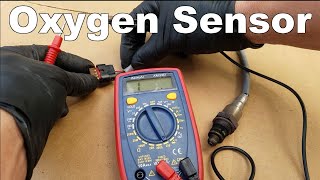
How to confirm: Disconnect the sensor and measure the resistance across the two heater circuit pins (usually the two wires of the same color, often black). For the 1ZZ-FE, a good sensor should have a resistance between 1.8 and 3.4 ohms when cold (at 68°F/20°C). An infinite reading (open circuit) or a zero reading (short circuit) confirms the heater has failed.
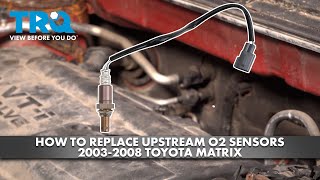
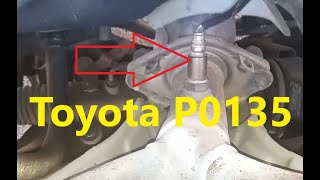
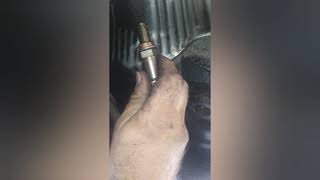
Typical fix: Replace the upstream oxygen sensor. 🎬 Watch: Step-by-step guide to replacing the upstream O2 sensor. A special O2 sensor socket is often required for removal and installation.
Est. part cost: $55-$165 - Blown A/F Heater or EFI Fuse ⚪ Low Probability
How to confirm: Check the 15A 'EFI' fuse or 'A/F Heater' fuse in the engine compartment fuse box. A visual inspection will show if the internal wire is broken. Use a multimeter or test light to confirm if the fuse is blown.
Typical fix: Replace the blown 15A fuse. If it blows again immediately, this indicates a short circuit in the wiring that must be traced.
Est. part cost: $1-$5 - Damaged Wiring or Connector ⚪ Low Probability Wiring is exposed to high heat in the engine bay and can become brittle, melted, or damaged over time. The connector pins can also corrode.
How to confirm: Visually inspect the wiring harness and connector for the upstream O2 sensor. Look for any signs of melting, chafing, corrosion in the connector pins, or breaks in the wires.
Typical fix: Repair the damaged section of the wiring harness or replace the connector pigtail.
Est. part cost: $10-$30
Rare But Worth Checking
- Faulty Engine Control Module (ECM): This is extremely rare for this specific code. The ECM should only be considered after all other possibilities, including the sensor, fuse, and wiring, have been thoroughly tested and ruled out. However, a recall was issued for some 2005-2008 models for improperly manufactured ECMs that could develop cracks at solder points, though this typically caused other codes.
Diagnosis Steps
- Verify the code with an OBD-II scanner.
- Visually inspect the upstream oxygen sensor's wiring and connector for any obvious damage, melting, or corrosion.
- Locate the fuse box in the engine compartment and check the 15A 'EFI' or 'A/F Heater' fuse. Replace if blown.
- If the fuse is good, disconnect the upstream O2 sensor electrical connector. It is located on the front of the engine, attached to the exhaust manifold.
- Using a multimeter set to Ohms (Ω), measure the resistance between the two heater pins on the sensor side of the connector (these are typically the two black wires).
- Compare the reading to the specification of 1.8-3.4 Ohms at 68°F. If the reading is OL (infinite) or 0, the sensor's heater is bad and the sensor must be replaced.
- If the resistance is within spec, check for 12V power at one of the heater pins on the vehicle's harness connector with the ignition key in the 'ON' position. If there is no power, there is a wiring issue between the fuse box/relay and the sensor.
- If power is present and the sensor resistance is good, the issue may be in the ground control side of the circuit leading back to the ECM, which could indicate a wiring or ECM fault (rare).
Parts You'll Likely Need
- Upstream Oxygen Sensor / Air-Fuel Ratio Sensor
(OEM #89465-12710 (for 2003-2004), 89467-12010 (for 2005-2008))— The internal heater element fails over time, which is the direct cause of the P0135 code.
Trusted brands: Denso (OEM), NGK/NTK
OEM price range: $120-$165
Aftermarket price range: $55-$85
Related Codes That Often Appear With This One
- P0171 — A P0171 (System Too Lean) code can sometimes appear alongside heater circuit codes if the sensor is slow to respond due to not heating up properly, causing incorrect fuel trim adjustments. A leaking intake manifold gasket is also a common cause of P0171 on this engine.
- P0141 — This code indicates a heater circuit malfunction for the downstream sensor (Bank 1, Sensor 2). It's not uncommon for both sensor heaters to fail around the same time due to age.
Platform-Specific Known Issues
- The upstream O2 sensor is very accessible on the front of the engine's exhaust manifold, making this a relatively easy DIY job.
- An O2 sensor socket (a 7/8" or 22mm socket with a slot for the wire) is highly recommended to make removal easier. 🎬 Watch: How to remove a stuck O2 sensor on a Matrix.
- Owners on forums for the Matrix, Vibe, and Corolla almost universally report that replacing the upstream Denso sensor resolves the P0135 code immediately.
Mechanic-Grade Diagnostic Values
- A/F Sensor Heater Current Draw — expected: 0.2 A to 1.2 A at idle. Failure: The ECM sets P0135 if current is < 0.2 A (open circuit) or > 8.0 A (short circuit).
- Live Data: A/F Sensor Heater Duty Ratio (B1S1) — expected: 19% to 51% at warm idle. Failure: A value of 0% or 100% indicates a fault in the circuit or sensor.
- Voltage at Sensor Harness Connector Pin 1 (+B) — expected: 9 - 14 Volts (Battery Voltage) with ignition ON. Failure: 0 Volts indicates a problem with the A/F HTR fuse, relay, or wiring from the relay.
- Voltage at Sensor Harness Connector Pin 2 (HA1A) — expected: Pulsing voltage (duty cycle) when engine is running. Failure: No voltage or a constant voltage suggests a wiring issue to the ECM or a faulty ECM driver.
Hidden / Shadow Codes Worth Checking
- Mode 6, Test ID $81, Comp ID $01: Represents the diagnostic test results for the Bank 1 Sensor 1 heater circuit monitor. (see via A professional scan tool capable of viewing Mode 6 data. The tool will display a measured value against a min/max threshold. A failing value confirms the fault that triggered the P-code.)
Scan Tool Commands That Help
- Toyota Techstream: Active Test: 'Control the A/F Sensor Heater (Bank 1 Sensor 1)' — Use this after confirming the sensor's resistance is good. It manually commands the heater ON, allowing you to check for voltage/current changes. If the command is sent but the circuit doesn't respond (and wiring is good), it points towards a rare ECM failure.
Wiring & Ground Locations
- A/F HTR Relay — In the engine compartment fuse and relay box.. This relay supplies power to the A/F sensor's heater circuit. A failure of this relay will cut power and trigger P0135, even if the fuse and sensor are good.
- ECM Connector E5, Pin 18 — At the Engine Control Module (ECM), typically located behind the glove box.. This is the specific pin for the heater control wire (HA1A) for the upstream A/F sensor. It's the final destination for checking continuity from the sensor connector to rule out a wiring break.
- A/F Sensor Connector — On the front of the engine, clipped to a bracket near the exhaust manifold.. This is the primary test point. Pin 1 (Black/Red wire) is 12V power. Pin 2 (White wire) is the control signal from the ECM.
Real Owner Repair Stories
- ToyotaNation Forums (2005 Toyota Corolla 1.8L 1ZZ-FE, ~150,000 miles) — P0135 Check Engine Light.
❌ Tried (didn't work) Clearing the code without repairs.
✅ What actually fixed it Replaced the upstream Air/Fuel ratio sensor with a new Denso part. The owner noted that using penetrating oil on the old sensor's threads was crucial for removal. - GenVibe Forums (2006 Pontiac Vibe 1.8L 1ZZ-FE) — P0135 and P0141 codes appeared together.
✅ What actually fixed it Owner tested resistance on the upstream sensor and found it was an open circuit (infinite ohms). Replacing the sensor with a Denso 234-9052 and clearing the codes resolved the P0135 issue. The user specifically warned against using Bosch sensors for this application. - Corolla Forum (2007 Toyota Corolla 1.8L 1ZZ-FE) — Persistent P0135 code.
❌ Tried (didn't work) Replacing the upstream A/F sensor.
✅ What actually fixed it After the new sensor did not fix the issue, a mechanic traced the wiring harness. They found a corroded wire inside the insulation about 6 inches back from the sensor connector. The corrosion was not visible externally. Repairing this section of the wire finally resolved the code.
When the Usual Fixes Don't Work
- While a failed sensor is the cause over 90% of the time, there are documented cases where the P0135 code persisted after sensor replacement. The most common alternative cause found by owners was a break or corrosion in the wiring harness between the sensor connector and the main engine harness. In these cases, the sensor itself would test good when disconnected, but the circuit was incomplete. A full continuity test from the sensor connector to the ECM is the only way to definitively rule this out.
OEM Part Supersession History
89465-12710→N/A, still active for specified years— Original part for 2003-2004 models.
Heads up: This part (and its Denso 234-4800 equivalent) is for 2003-2004 models only. It is not compatible with 2005-2008 models.89467-12010→N/A, still active for specified years— Original part for 2005-2008 models, which use a different wideband A/F sensor technology for ULEV II emissions.
Heads up: This part (and its Denso 234-9052 equivalent) is for 2005-2008 models only. It will not work on 2003-2004 models due to differences in sensor technology and ECM programming.
Model Year Variations Within This Range
- 2003-2004 vs 2005-2008: The upstream oxygen sensor is fundamentally different. The 2005-2008 models use a wideband Air/Fuel Ratio sensor to meet stricter ULEV II emissions standards, while the earlier models use a conventional O2 sensor. The part numbers are not interchangeable. Always verify the correct part for your specific model year.
Diagnostic Flowchart
Other Known Issues on This Vehicle
Issues unrelated to this code that are worth knowing about as an owner of this generation:
- Excessive Oil Consumption 🔴 High — Very common, especially on pre-2006 models. Caused by carbon buildup clogging oil return holes in the pistons. Can start as early as 50,000 miles. (Ref: Toyota addressed the issue with redesigned pistons in mid-2005 but no formal recall was issued for older models, though warranty was extended for some.)
- Leaking Intake Manifold Gasket 🟠 Medium — Common failure, especially in colder climates. The gasket shrinks and allows unmetered air to enter, often causing a P0171 (System Too Lean) code. (Ref: Toyota issued TSB EG045-07 for this issue.)
- Faulty Drive Belt Tensioner 🟡 Low — Can fail and cause squealing or rattling noises from the engine bay. An updated part is available.
- Failing Starter Motor 🟡 Low — A number of reports of starter failure, resulting in a no-start condition with a single click.
- ECM Failure (2005-2008) 🟠 Medium — A crack can develop on certain solder points on the circuit board, leading to various issues including harsh shifting. (Ref: NHTSA Campaign ID: 10V036000)
Used vs. New Parts: Buying Guide for This Vehicle
When a used part is the smart pick: For a P0135 repair, a used part is only recommended for passive components like the sensor's connector pigtail (if yours is damaged) or the A/F heater relay from the fuse box. Never buy a used oxygen/AF sensor itself.
Donor-vehicle mileage cap: roughly under 50000 miles for the part to have meaningful remaining life.
What to inspect on the donor part:
- For a connector pigtail: Ensure there is no green or white corrosion on the pins and that the plastic isn't brittle or cracked.
- For a relay: Check that the plastic casing has no signs of melting or heat stress. Avoid parts from vehicles with flood or fire damage.
- Inspect wiring for any signs of previous repairs, brittleness, or melted insulation.
Aftermarket brands forum-validated for this vehicle:
- Denso (OEM manufacturer, highly recommended)
- NTK / NGK
Brands owners have reported issues with on this vehicle:
- Bosch (many forum users report incompatibility issues with Toyota A/F sensor systems)
- Universal-fit sensors (require splicing wires, which is a common failure point)
Real Owner Stories
Aggregated from forums and TSBs cited above. Mileages and costs reflect what owners reported in those sources.
2003 Pontiac Vibe GT
Symptoms: Check Engine Light on with codes P0135 and P0141. Also had a separate exhaust leak.
What fixed it: The user was advised to check the harness connectors for corrosion first before replacing sensors.
Source hint: GenVibe.com - Ok, CEL p0135 and p0141 and exhaust leak next.
Vibe GT
Symptoms: Check Engine Light with code P0135.
What fixed it: Replaced the upstream O2 sensor with an NTK (NGK) Part 21547, but the P0135 code immediately returned.
Source hint: GenVibe.com - O2 sensor help
Related OBD-II Codes
Frequently Asked Questions
Is there a specific brand of oxygen sensor recommended for the 2003-2008 Toyota Matrix to fix P0135?
Can I check the O2 sensor heater myself on my 1ZZ-FE engine?
Which fuse should I check for a P0135 code on my Matrix?
Does the 2005-2008 Matrix have any specific electrical issues that could cause sensor codes?
Could my Matrix's rough idle on cold starts be related to P0135?
Are there any other common 1ZZ-FE engine issues I should look out for while fixing this?
Helpful Videos

We Have This Part in Stock


The information in this article is provided for general reference and educational purposes only. Vehicle specifications, procedures, and part compatibility can vary by production date, trim level, and region. Always consult your vehicle's factory service manual and verify part numbers before purchasing or performing repairs. Safety-critical components such as airbags, seat belts, and braking systems should be installed by a qualified professional.
- Toyota Matrix:
- 🎬 Helpful Videos
- 🛍️ Shop This Part
- What's Unique About the 2003-2008 Toyota Matrix
- Symptoms You May Notice
- Most Likely Causes
- Rare But Worth Checking
- Diagnosis Steps
- Parts You'll Likely Need
- Related Codes That Often Appear With This One
- Platform-Specific Known Issues
- Mechanic-Grade Diagnostic Values
- Hidden / Shadow Codes Worth Checking
- Scan Tool Commands That Help
- Wiring & Ground Locations
- Real Owner Repair Stories
- When the Usual Fixes Don't Work
- OEM Part Supersession History
- Model Year Variations Within This Range
- Diagnostic Flowchart
- Other Known Issues on This Vehicle
- Used vs. New Parts: Buying Guide for This Vehicle
- Real Owner Stories
- 2003 Pontiac Vibe GT
- Vibe GT
- Related OBD-II Codes
- Frequently Asked Questions
- 🎟️ Get 5% Off