

P0135 on 2003-2008 Pontiac Vibe: O2 Sensor Heater Circuit Causes and Fixes
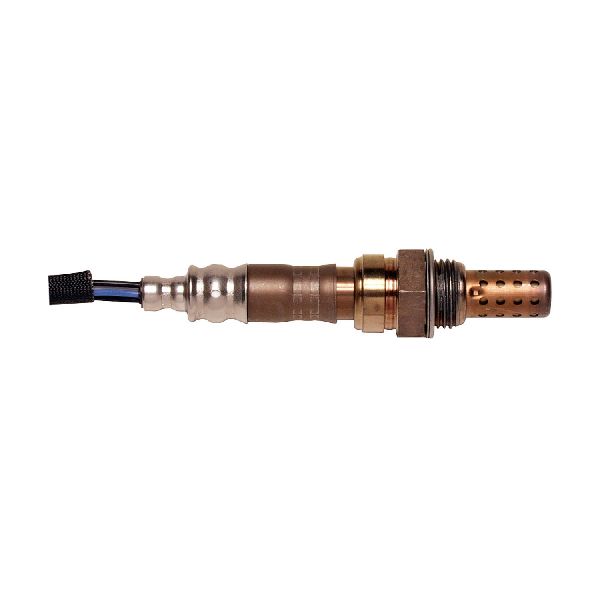
On a 2003-2008 Pontiac Vibe, code P0135 almost always means the heater inside the upstream oxygen sensor (Bank 1, Sensor 1) has failed. This is a very common failure due to the age of the vehicle. Replacing the sensor with a Denso-branded part is the most common and recommended fix. Before replacing, it's wise to check the 15A 'EFI' or 'A/F HEATER' fuse. Expect to pay $60-$150 for the part, and the repair is a straightforward DIY job (2/5 difficulty).
- P0135 on your Vibe means the heater in your front oxygen sensor has failed.
- This is a very common problem on older vehicles and is not a serious threat to the engine.
- The most reliable fix is to replace the upstream oxygen sensor (Bank 1, Sensor 1).
- Because your Pontiac Vibe has a Toyota engine, use a Denso brand sensor. Use part #234-9052 for 2005-2008 models or #234-9049 for 2003-2004 models.
- This is a DIY-friendly repair that requires a special O2 sensor socket but is otherwise straightforward. Always check the 15A 'A/F HEATER' or 'EFI' fuse first.
What's Unique About the 2003-2008 Pontiac Vibe
The 2003-2008 Pontiac Vibe is a unique collaboration between GM and Toyota, as it's mechanically identical to the Toyota Matrix and built on the Toyota Corolla platform. It uses Toyota's reliable 1ZZ-FE engine and a Toyota/Denso electrical system. This means that when diagnosing P0135, you are essentially working on a Toyota. Parts like the oxygen sensor (also called an Air/Fuel Ratio sensor on these models) are supplied by Denso from the factory, and using a Denso replacement is highly recommended by owners on forums for a reliable, first-time fix. The issue is very common due to the age of these vehicles, but it's almost always the sensor itself and not a more complex electrical problem.
Symptoms You May Notice
- Check Engine Light is on
- Slightly decreased fuel economy
- Failure to pass an emissions inspection
- Rough idle on cold starts.
- Faint smell of gasoline from the exhaust on startup in some cases.
- Replacing the downstream (Bank 1, Sensor 2) oxygen sensor. P0135 specifically refers to the upstream sensor (Sensor 1).
- Assuming any brand of sensor will work. Owners on GenVibe and Toyota forums strongly advise against using universal or off-brand sensors, as they can cause the code to return or introduce new issues. Sticking with Denso is the consensus.
Most Likely Causes
- Failed Upstream Oxygen Sensor (Air/Fuel Ratio Sensor) 🔴 High Probability The internal heater element is a common failure point on high-mileage sensors. As these vehicles are now 15-20+ years old, the original sensor is simply at the end of its service life. The heater element is a thin wire that burns out over time, creating an open circuit.
How to confirm: Unplug the sensor and measure the resistance between the two heater wires 🎬 Watch: How to test the sensor heater with a multimeter (typically the two black wires). A reading of 'OL' (over-limit) or infinite resistance on a multimeter indicates a broken heater element. A good heater should have a low resistance, typically between 1.8 and 3.4 ohms when at room temperature (68°F/20°C) for this specific engine family.
Typical fix: Replace the upstream oxygen sensor (Bank 1, Sensor 1). Using a Denso brand direct-fit sensor is strongly recommended by Vibe and Matrix owners to avoid compatibility issues.
Est. part cost: $70-$150 - Blown Fuse ⚪ Low Probability
How to confirm: Check the fuse box in the engine bay for a blown fuse. The fuse is often a 15A fuse labeled 'A/F HEATER' or 'EFI'. A visual inspection or a continuity test with a multimeter will confirm if the fuse is blown. This should be the first check before ordering parts.
Typical fix: Replace the blown fuse. If the new fuse blows immediately, it indicates a short circuit in the wiring or the sensor itself that needs to be diagnosed further.
Est. part cost: $1-$5 - Damaged Wiring or Connector ⚪ Low Probability The wiring harness is in the engine bay and exposed to high heat and vibration, which can cause it to become brittle, melt, or chafe over time. The connector pins can also suffer from corrosion.
How to confirm: Visually inspect the wiring harness leading to the upstream O2 sensor for any signs of melting, chafing, or breaks. Check the connector for corrosion, moisture, or bent/damaged pins. One owner on a GenVibe forum was advised to check for corrosion before replacing any parts.
Typical fix: Repair the damaged section of wire or clean/replace the connector.
Est. part cost: $5-$25
Rare But Worth Checking
- Faulty Engine Control Module (ECM): This is extremely rare. Before condemning the ECM, all other possibilities (sensor, fuse, wiring) must be exhaustively ruled out. One user on a forum reported this issue even after replacing the PCM. A known issue on 2005-2008 models involves potential ECM failures due to solder point cracks, though this usually presents with more codes than just P0135.
Diagnosis Steps
- Read the code with an OBD-II scanner to confirm P0135 is present.
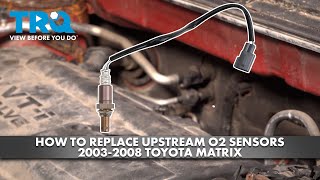
- Locate the upstream oxygen sensor (Bank 1, Sensor 1). It is on the front of the engine, screwed into the exhaust manifold, making it very accessible. 🎬 See this walkthrough on how to replace the upstream sensor
- Check the fuse for the oxygen sensor heater circuit. It is a 15A fuse, typically in the engine compartment fuse box and may be labeled 'A/F HEATER' or 'EFI'. This is a critical first check.
- If the fuse is good, inspect the sensor's wiring harness and connector for any obvious damage, melting, or corrosion.
- Disconnect the sensor's electrical connector.
- Using a multimeter set to Ohms (Ω), measure the resistance across the two heater pins on the sensor side of the connector (these are typically the two black wires).
- A reading of infinite resistance (Open Loop) or a value significantly outside the 1.8-3.4 ohm range indicates the heater element is broken and the sensor must be replaced.
- If resistance is within spec, check for 12V power at the corresponding pins on the harness side of the connector with the ignition key in the 'ON' position. The computer typically controls the ground side to activate the heater.
- If power is present and the sensor's heater element has proper resistance, the issue may be in the ground control side of the circuit leading back to the ECM, but this is uncommon. The most likely culprit remains a faulty sensor that fails intermittently under load.
Parts You'll Likely Need
- Upstream Oxygen Sensor / Air-Fuel Ratio Sensor
(OEM #89467-12010)— This is the component that contains the heater element that fails, which is the direct cause of the P0135 code in over 90% of cases for this vehicle.
Trusted brands: Denso (OEM), NGK/NTK
OEM price range: $140-$185
Aftermarket price range: $70-$120
Related Codes That Often Appear With This One
- P0171 — A failing or slow-to-respond oxygen sensor can provide incorrect lean readings to the ECM. However, on the 1ZZ-FE engine, P0171 is very frequently caused by a leaking intake manifold gasket, which is a well-documented, separate common issue on these cars. If you have both codes, the intake gasket should be investigated.
- P0031 — P0031 (HO2S Heater Control Circuit Low) is a very similar code that also points to a problem in the heater circuit, often a short or low voltage condition, and is frequently caused by the same failed sensor.
- P0141 — This code indicates a heater circuit malfunction for the *downstream* sensor (Bank 1, Sensor 2). It's common to see P0135 and P0141 together, which could point to a shared power or ground issue, like a blown 'A/F HEATER' fuse that supplies power to both sensor heaters.
Platform-Specific Known Issues
- Part Number Split: The upstream O2 sensor is different for 2003-2004 models versus 2005-2008 models. Owners must verify the correct part number for their specific year. Using the wrong sensor can result in persistent codes. The Denso 234-9052 is for 2005-2008 models, while the 234-9049 is for 2003-2004.
- Owner Experience: Denso is Key: A user on GenVibe forums with a 2006 Vibe confirmed that replacing the sensor with a Denso 234-9052 resolved their P0135 code and specifically warned against using Bosch sensors for this application. 🎬 Watch: A quick look at the Vibe's upstream sensor location
Mechanic-Grade Diagnostic Values
- A/F Sensor Heater Resistance — expected: 1.8 - 3.4 Ohms at 68°F (20°C). Failure: Infinite resistance (OL) indicates an open circuit; near-zero resistance indicates a short. Both require sensor replacement.
- Voltage at Harness Connector (Heater Power Pin) — expected: 9 - 14 Volts with Key On, Engine Off (KOEO). Failure: 0 Volts indicates a problem upstream, likely the A/F HEATER fuse or the EFI Main Relay.
- Heater Circuit Current Draw (Monitored by ECM) — expected: 0.2 A to 2.0 A during operation. Failure: Current less than 0.2 A triggers a DTC for an open circuit; current greater than 2.0 A (or 8A in some service manuals) triggers a DTC for a short circuit.
- Voltage at ECM Connector (Terminal AFHT to Body Ground) — expected: 9 - 14 Volts with Ignition Switch ON. Failure: 0 Volts indicates an open or short in the harness between the EFI main relay and the ECM.
Scan Tool Commands That Help
- Toyota Techstream: Active Test: 'Control the Injection Volume' — While not a direct heater test, a technician can use this to force a rich or lean condition. By observing the A/F sensor's response in the live data list, they can confirm if the sensor is functioning correctly after the heater issue is resolved.
Wiring & Ground Locations
- A/F HEATER Fuse — In the engine compartment fuse and relay box, typically on the left side next to the battery.. This 15A or 20A fuse provides 12V power to the heater circuit for both the upstream and downstream oxygen sensors. If it's blown, P0135 and P0141 will often appear together.
- EFI Main Relay — Also located in the engine compartment fuse and relay box.. This relay, when activated by the ignition, sends power to the A/F HEATER fuse. A failure in this relay would cut power to the entire heater circuit.
- ECM Connector (HT Pin) — At the Engine Control Module (ECM), typically located behind the glove compartment. The specific pin is labeled 'HT' or 'AFHT' in service manuals.. This is the terminal where the ECM provides the pulse-width modulated ground to control the heater element. Advanced diagnosis involves back-probing this pin to check for the control signal from the ECM, confirming the ECM driver is functioning.
Real Owner Repair Stories
- 2CarPros Forum User (2005 Pontiac Vibe) — Persistent P0031 code (Heater Control Circuit Low), which is closely related to P0135.
❌ Tried (didn't work) Replaced oxygen sensor (Bank 1, Sensor 1), Replaced PCM (ECM) with a new dealer unit and reflashed, Verified all PCM power and grounds, Cleaned and created all new body, chassis, and PCM grounds
✅ What actually fixed it After extensive diagnosis, the user found a single electrical pin had backed out of the sensor-side of the harness connector. Pushing the pin firmly back into the connector resolved the issue completely. - AutoZone Reviewer (2005 Toyota Matrix (1ZZ-FE)) — Check Engine Light with P0135.
❌ Tried (didn't work) Replacing the sensor with a cheap, $25 aftermarket part.
✅ What actually fixed it The code was only resolved after installing the correct, more expensive Denso (234-9052) sensor.
OEM Part Supersession History
89467-12010 (Toyota)→N/A - Still a valid part number.— N/A
Heads up: This OEM part number is often cross-referenced to the Denso 234-9052, which is specified for 2005-2008 models. The Denso 234-9049 is for 2003-2004 models and has a different wire harness length (20.08" vs 14.80"), making it physically incompatible without modification.
Model Year Variations Within This Range
- 2003-2004 vs 2005-2008: The primary difference is the upstream A/F sensor part number and its associated wire harness length. 2003-2004 models use Denso 234-9049 (approx. 20-inch harness), while 2005-2008 models use Denso 234-9052 (approx. 15-inch harness). While electrically similar, using the wrong part will lead to fitment issues.
- 2005-2008: These model years are noted to have a higher potential for ECM failure due to manufacturing defects (cracked solder joints). While P0135 alone is unlikely to be caused by this, if it is accompanied by other seemingly unrelated codes, harsh shifting, or stalling, the ECM becomes a more plausible, albeit still rare, suspect.
Diagnostic Flowchart
Other Known Issues on This Vehicle
Issues unrelated to this code that are worth knowing about as an owner of this generation:
- Excessive Oil Consumption (pre-2006 models) 🔴 High — Very common on 2003-2005 models. Caused by a design flaw in the pistons/rings allowing oil to burn. Toyota addressed the issue in mid-2005. (Ref: Toyota issued TSB EG013-05 (and later updates) for Corollas/Matrixes, which also applies to the Vibe. It involved an updated dipstick and, in severe cases, piston replacement.)
- Leaking Intake Manifold Gasket 🟠 Medium — Common across all years, but especially on earlier models. The original black gasket fails, causing a vacuum leak, rough idle (especially in cold weather), and often a P0171 code.
- Manual Transmission Bearing Failure 🔴 High — A known weakness in the 5-speed manual transmissions where input shaft bearings can fail, leading to noise and eventual transmission failure.
- Window Regulator Bolt Failure 🟡 Low — Common on 2003-2004 models. The bolts holding the window glass to the regulator can loosen and fall out, causing the window to drop into the door or shatter. (Ref: NHTSA recall 08V236000 was issued for this problem.)
- Timing Chain Tensioner O-Ring Leak 🟡 Low — A very common, minor oil leak develops from the O-ring that seals the timing chain tensioner on the back of the engine as the vehicle ages.
- Failing Radio Display Lights 🟡 Low — Extremely common on first-generation models. The small incandescent bulbs that illuminate the factory radio display burn out, making the display unreadable at night.
Used vs. New Parts: Buying Guide for This Vehicle
When a used part is the smart pick: For this specific repair (P0135), a used part is NEVER a smart choice. The failure is a wear-and-tear item (a burnt-out heating element) inside the sensor. A used sensor from a junkyard has an unknown amount of life left and is very likely to fail soon, if it hasn't already.
What to inspect on the donor part:
- Not applicable. Do not buy a used oxygen sensor for this repair.
OEM-only on this vehicle (don't cheap out):
- Air/Fuel Ratio Sensor (Bank 1, Sensor 1)
Aftermarket brands forum-validated for this vehicle:
- Denso (OEM supplier, highly recommended)
- NGK/NTK
Brands owners have reported issues with on this vehicle:
- Bosch (specifically mentioned by owners as problematic for this application)
- Unbranded or generic 'universal' sensors that require splicing.
Real Owner Stories
Aggregated from forums and TSBs cited above. Mileages and costs reflect what owners reported in those sources.
2006 Pontiac Vibe 1.8L 1ZZ-FE
Symptoms: P0135 and P0141 codes appeared together.
What fixed it: Tested resistance on the upstream sensor, found an open circuit, and replaced it with a Denso 234-9052 sensor.
Source hint: GenVibe Forums
2005 Pontiac Vibe 1.8L 1ZZ-FE
Symptoms: Check Engine Light with P0135 code.
What fixed it: Replaced the upstream oxygen sensor (Bank 1, Sensor 1) located on the exhaust manifold.
Source hint: YouTube - derf
Related OBD-II Codes
Frequently Asked Questions
Which Denso part number should I use for my 2006 Pontiac Vibe to fix P0135?
Is there a specific fuse I should check on my Vibe before replacing the O2 sensor?
My 2003 Vibe has P0135; is the sensor the same as the later 2005-2008 models?
What resistance reading should I see on a good 1ZZ-FE heater element?
Does the Toyota TSB for oil consumption (EG013-05) apply to my Pontiac Vibe?
Is the P0135 code related to the window regulator recall on my 2003 Vibe?
Helpful Videos
We Have This Part in Stock


The information in this article is provided for general reference and educational purposes only. Vehicle specifications, procedures, and part compatibility can vary by production date, trim level, and region. Always consult your vehicle's factory service manual and verify part numbers before purchasing or performing repairs. Safety-critical components such as airbags, seat belts, and braking systems should be installed by a qualified professional.
- Pontiac Vibe:
- 🎬 Helpful Videos
- 🛍️ Shop This Part
- What's Unique About the 2003-2008 Pontiac Vibe
- Symptoms You May Notice
- Most Likely Causes
- Rare But Worth Checking
- Diagnosis Steps
- Parts You'll Likely Need
- Related Codes That Often Appear With This One
- Platform-Specific Known Issues
- Mechanic-Grade Diagnostic Values
- Scan Tool Commands That Help
- Wiring & Ground Locations
- Real Owner Repair Stories
- OEM Part Supersession History
- Model Year Variations Within This Range
- Diagnostic Flowchart
- Other Known Issues on This Vehicle
- Used vs. New Parts: Buying Guide for This Vehicle
- Real Owner Stories
- 2006 Pontiac Vibe 1.8L 1ZZ-FE
- 2005 Pontiac Vibe 1.8L 1ZZ-FE
- Related OBD-II Codes
- Frequently Asked Questions
- 🎟️ Get 5% Off