

P0135 on 1998-2012 Nissan Sentra: O2 Sensor Heater Failure Causes and Fixes
On a 1998-2012 Nissan Sentra, code P0135 almost always means the heating element inside the upstream oxygen sensor (Bank 1, Sensor 1) has failed. This is a common wear item. Replacing the sensor is the typical fix, costing around $40-$90 for a quality aftermarket part (Denso or NTK are preferred) and is a straightforward DIY job. Before replacing, it's wise to check the 10A or 15A fuse for the heater circuit.
- P0135 on a Sentra is a very common and simple code, pointing to a failed heater in the front (upstream) oxygen sensor.
- The most likely fix is replacing the Bank 1, Sensor 1 oxygen sensor. This is a beginner-friendly DIY repair.
- Before buying a new sensor, take 5 minutes to check the corresponding fuse. For 2000-2006 models, it's likely in the cabin; for 2007-2012, it's under the hood.
- Ensure you are buying the 'upstream' or 'Sensor 1' part. The downstream sensor is a different part and will not fix this code.
- Using a direct-fit sensor from a reputable brand like Denso or NGK/NTK is highly recommended over a universal 'splice-in' type, as forum users report better long-term reliability.
What's Unique About the 1998-2012 Nissan Sentra
Across the three generations of Sentra covered (B14, B15, B16), the P0135 code is a very common and straightforward issue. There are no significant platform-specific complexities; the cause is almost universally the O2 sensor itself wearing out. The primary difference between generations is the specific part number for the sensor due to engine changes over the years. Unlike some other manufacturers, there are no widespread reports of this code being caused by complex ECU or software issues on these Sentra models. The repair is consistently simple across all listed powertrains.
Generation note: The 1998-2012 year range covers three Nissan Sentra generations: - B14 (1998-1999): Engines include the 1.6L GA16DE and 2.0L SR20DE. - B15 (2000-2006): Engines include the 1.8L QG18DE and 2.5L QR25DE. The upstream O2 sensor for the 1.8L QG18DE is often cited with OEM part number 22693-8U300. - B16 (2007-2012): Engines include the 2.0L MR20DE and 2.5L QR25DE. The upstream sensor for the 2.0L MR20DE is commonly listed as OEM part number 22693-ET000.
Symptoms You May Notice
- Check Engine Light is on.
- Slightly reduced fuel economy, potentially by 10-20%.
- Vehicle may have difficulty passing an emissions test.
- Potentially rough idling or running, especially when the engine is cold, though many drivers notice no difference in performance.
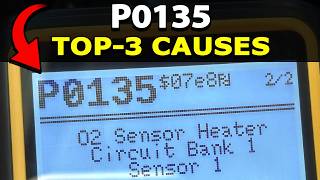
- Replacing the downstream (Bank 1, Sensor 2) oxygen sensor. The code P0135 specifically points to Sensor 1, which is the upstream sensor before the catalytic converter. 🎬 See this walkthrough for fixing the P0135 code.
- Assuming the sensor is bad without checking the fuse first. A blown fuse is a quick, cheap fix that should always be the first check.
Most Likely Causes
- Failed Oxygen Sensor (Bank 1, Sensor 1) 🔴 High Probability The internal heating element of the sensor has a finite lifespan and simply burns out over time and with high mileage, typically between 60,000 and 100,000 miles. This is a normal wear-and-tear item.
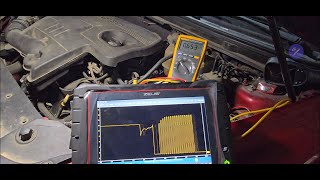
How to confirm: Disconnect the sensor and measure the resistance across the two heater circuit pins (often two wires of the same color) with a multimeter. 🎬 Watch: A pro guide on testing O2 sensor heater circuits. A healthy sensor should have a low resistance, typically between 2.5 and 20 Ohms depending on the specific sensor. An open circuit (infinite resistance) or a reading far outside this range confirms a failed heater.
Typical fix: Replace the upstream oxygen sensor (Bank 1, Sensor 1). Using a special O2 sensor socket with a slit for the wire is highly recommended.
Est. part cost: $40-$120 - Blown Fuse for O2 Sensor Heater Circuit ⚪ Low Probability
How to confirm: Locate the fuse box. For B15 models (2000-2006), check fuse #8 (15A) in the interior fuse panel, labeled for 'Heated Oxygen Sensor'. For B16 models (2007-2012), check fuse #51 (10A) in the under-hood fuse box (IPDM E/R), labeled 'Heated oxygen sensor'. Visually inspect the fuse or test it for continuity.
Typical fix: Replace the blown fuse. If the new fuse blows immediately, it indicates a short circuit in the wiring that must be diagnosed.
Est. part cost: $1-$5 - Damaged Wiring or Connector ⚪ Low Probability The wiring harness is close to the hot exhaust manifold and can become brittle, melt, or chafe over time. The connector can also accumulate moisture and corrosion.
How to confirm: Visually inspect the wiring harness leading to the upstream O2 sensor for any signs of melting, chafing, breaks, or corrosion on the connector pins. Check for secure connection.
Typical fix: Repair the damaged section of wiring or clean/replace the connector.
Est. part cost: $5-$50
Rare But Worth Checking
- Faulty Engine Control Module (ECM): This is extremely rare. The ECM's driver circuit for the O2 sensor heater can fail. This should only be considered after all other possibilities (sensor, fuse, wiring) have been definitively ruled out.
Diagnosis Steps
- Read the code with an OBD-II scanner to confirm P0135 is present.
- Locate Bank 1, Sensor 1. On all Sentra inline-4 engines, this is the 'upstream' sensor located on the exhaust manifold, easily visible in the engine bay, before the catalytic converter.
- Check the fuse for the O2 sensor heater circuit. For B15 (2000-2006), check interior fuse #8 (15A). For B16 (2007-2012), check under-hood fuse #51 (10A). If it's blown, replace it and see if the code returns. If it blows again, a short circuit exists.
- Inspect the wiring and connector leading to the sensor. Look for any obvious damage, melting on the exhaust, or corrosion in the connector pins.
- If the wiring and fuse are good, test the sensor's heater element. Disconnect the sensor and use a multimeter set to Ohms. Probe the two wires for the heater circuit (often two black wires). A healthy sensor should have a low resistance (typically under 20 Ohms, with some service manuals specifying a tighter range like 2.5-4 Ohms). An infinite reading (OL) means the heater is broken and the sensor must be replaced.
- If the heater element resistance is good, you can then check for 12V power at the harness-side connector with the key on, engine off. If power is missing, the problem is upstream in the wiring, fuse, or relay.
- If all other steps pass, the most likely cause is a faulty sensor, even if its resistance tests okay cold. Replace the Bank 1 Sensor 1. A special O2 sensor socket is recommended for removal and installation.
Parts You'll Likely Need
- Upstream Oxygen Sensor / Air-Fuel Ratio Sensor
(OEM #22693-ET000 (B16 2.0L), 22693-8U300 (B15 1.8L))— This is Bank 1, Sensor 1. Its internal heating element fails with age, which is the direct cause of the P0135 code. 🎬 Watch: How to address a heater circuit malfunction. The provided OEM part numbers are examples; always verify the correct part for your specific year and engine.
Trusted brands: Denso, Bosch, NGK/NTK
OEM price range: $150-$230
Aftermarket price range: $40-$90
Platform-Specific Known Issues
- Fuse Location Varies by Generation: For the B15 generation (2000-2006), the relevant 15A fuse is in the interior fuse box. For the B16 generation (2007-2012), it is a 10A fuse located in the under-hood fuse box (IPDM E/R). Always check the fuse before replacing the sensor.
Mechanic-Grade Diagnostic Values
- A/F Sensor 1 Heater Resistance — expected: 2.5 - 4.0 Ohms at 77°F (25°C). Failure: An open circuit (infinite resistance / OL) or a reading significantly outside the specified range. One documented failure showed a reading of 235 kOhms.
- Voltage at A/F Sensor 1 Harness Connector (Heater Power) — expected: Battery Voltage (approx. 12V) with ignition switch ON. Failure: 0V or significantly less than battery voltage, indicating a problem with the fuse, relay, or wiring from the power source.
- Voltage at ECM terminal for A/F Sensor 1 Heater Control — expected: Approximately 7.0V with engine running at 2,000 rpm (warm).. Failure: Voltage that is stuck high (Battery Voltage) or low (0V), indicating a potential ECM driver failure or a short/open in the control wire.
Scan Tool Commands That Help
- Manual Procedure (No Scan Tool): IPDM E/R Auto-Active Test (Self-Test) — For B16 models (2007-2012), this test helps verify the functionality of the Intelligent Power Distribution Module. If you suspect a power supply issue to multiple components (lights, wipers, A/C compressor) in addition to the P0135 code, running this test can confirm if the IPDM is sending power correctly. It does not directly test the O2 heater circuit but can rule out a faulty IPDM as the source of the power failure.
Wiring & Ground Locations
- ECM Terminal 103 (QG18DE) — On the Engine Control Module (ECM) connector, which is located behind the glove box on B15 models.. This is the specific pin for the Heated Oxygen Sensor 1 Heater control signal. The wire color is typically White/Blue (W/L). Probing this pin can confirm if the ECM is commanding the heater to operate.
- Heater Power Wire (QG18DE) — At the sensor harness connector.. Power for the heater element is typically supplied on a Black/Yellow (B/Y) wire that comes from the main relay and fuse. This wire should have battery voltage with the key on.
- Ground Points E9, E15 (B16) — General engine bay body grounds.. While not exclusively for the O2 sensor, poor engine or body grounds can cause a variety of electrical issues, including incorrect sensor readings or fault codes. Ensuring main ground connections are clean and tight is a critical step in diagnosing any electrical fault.
- IPDM E/R (B16) — The Intelligent Power Distribution Module Engine Room is the main fuse/relay box in the engine compartment, typically near the battery.. On B16 models, this module contains the fuse (Fuse #51, 10A) and potentially the relay that supplies power to the O2 sensor heater circuit. Failure of this module is a known, if rare, cause of electrical issues.
Real Owner Repair Stories
- HVAC Mechanic YouTube Channel Commenter (Unspecified Nissan) — P0135 code persisted even after replacing the oxygen sensor.
❌ Tried (didn't work) Replacing the O2 sensor.
✅ What actually fixed it The commenter realized they needed to check the wiring, fuses, and relays, which is the next logical step after a part replacement fails to resolve the issue. - r/Xterra Reddit Post (2007 Nissan Xterra (shares IPDM architecture with B16 Sentra)) — Sudden loss of power, chugging, followed by a crank-but-no-start condition. Flashing brake and battery lights with no codes.
❌ Tried (didn't work) Replacing Camshaft Position Sensors., Replacing Crankshaft Position Sensor., Swapping the ECM relay.
✅ What actually fixed it The owner suspected a faulty IPDM, as the original white-colored modules are known to fail. This is a documented issue where the internal fuel pump relay or ECM relay fails, leading to stalling or no-start conditions that can be misdiagnosed as sensor issues.
Model Year Variations Within This Range
- 2007-2012 (B16 Generation): These models use an Intelligent Power Distribution Module (IPDM E/R) in the engine bay which contains the O2 heater fuse and related power relays. Early versions of this module were made of white plastic and are known to be prone to failure from water intrusion or internal relay faults. The updated OEM replacement part is made of black plastic.
- 2000-2006 (B15) vs 2007-2012 (B16): The fuse for the heater circuit is in a different location. B15 models have it in the interior fuse panel, while B16 models have it in the under-hood IPDM E/R.
Diagnostic Flowchart
Used vs. New Parts: Buying Guide for This Vehicle
When a used part is the smart pick: For this specific code, a used part only makes sense if the diagnosis points to a failed IPDM E/R on a B16 model. A used IPDM from a reputable salvage yard can be a cost-effective solution, but it MUST be inspected for corrosion.
Donor-vehicle mileage cap: roughly under 100000 miles for the part to have meaningful remaining life.
What to inspect on the donor part:
- For an IPDM: Part number MUST match your original unit exactly.
- For an IPDM: Open the casing and inspect the circuit board for any white or green powdery residue, which indicates water damage. Do not buy if corrosion is present.
- For an IPDM: If possible, source the updated black plastic version, not the original white one.
OEM-only on this vehicle (don't cheap out):
- Oxygen Sensor: While not strictly 'OEM-only', using the OEM supplier brand (Denso or NTK/NGK) is strongly recommended by vehicle owners for compatibility and longevity.
Aftermarket brands forum-validated for this vehicle:
- Denso (for O2 Sensor)
- NTK / NGK (for O2 Sensor)
Brands owners have reported issues with on this vehicle:
- Bosch: While a major brand, many Nissan owners in forums report mixed results and potential incompatibility issues with Bosch O2 sensors on this platform compared to Denso or NTK.
- Universal / Splice-in O2 Sensors: These are generally not recommended due to a higher chance of installation error and failure.
Real Owner Stories
Aggregated from forums and TSBs cited above. Mileages and costs reflect what owners reported in those sources.
2012 Nissan Sentra 2.0L
Symptoms: Persistent check engine light, poor fuel economy that dropped from 32.5 to 28 mpg, rough starts in cold weather, and an unstable idle.
What fixed it: Replaced the upstream oxygen sensor with part number 226A04M811.
Source hint: AliExpress - Oxygen Sensor 226A04M811 for Nissan Sentra: A Deep Dive into Performance, Compatibility, and Real-World Reliability
2007 Nissan Sentra 2.0L-L4 — ~140000 miles
Symptoms: Check engine light was on.
What fixed it: Replaced the oxygen sensor with part number 22693 1AA0B.
Source hint: AliExpress
2008 Nissan Sentra
Symptoms: Check Engine Light with code P0135.
What fixed it: Replacement of the front A/F sensor resolved the code immediately.
Source hint: nissanclub.com discussion
Nissan Sentra (B15, 2000-2006)
Symptoms: P0135 code was present; testing the old sensor confirmed the heater circuit was open.
What fixed it: A new Denso sensor fixed the P0135 code.
Source hint: b15sentra.net thread titled 'p0135-o2-sensor-heater-circuit-malfunction-bank-1-sensor-1'
Related OBD-II Codes
Frequently Asked Questions
Where is the fuse for the P0135 oxygen sensor heater on my Nissan Sentra?
Are there any recommended brands for the replacement oxygen sensor on my Sentra?
How can I test the Bank 1 Sensor 1 on my Sentra to confirm it's bad before buying a new one?
Where is the Bank 1, Sensor 1 located on my Nissan Sentra?
Is it safe to drive my Sentra with the P0135 code and Check Engine Light on?
Do I need any special tools to replace the oxygen sensor on my Sentra?
Helpful Videos

We Have This Part in Stock


The information in this article is provided for general reference and educational purposes only. Vehicle specifications, procedures, and part compatibility can vary by production date, trim level, and region. Always consult your vehicle's factory service manual and verify part numbers before purchasing or performing repairs. Safety-critical components such as airbags, seat belts, and braking systems should be installed by a qualified professional.
- Nissan Sentra:
- 🎬 Helpful Videos
- 🛍️ Shop This Part
- What's Unique About the 1998-2012 Nissan Sentra
- Symptoms You May Notice
- Most Likely Causes
- Rare But Worth Checking
- Diagnosis Steps
- Parts You'll Likely Need
- Platform-Specific Known Issues
- Mechanic-Grade Diagnostic Values
- Scan Tool Commands That Help
- Wiring & Ground Locations
- Real Owner Repair Stories
- Model Year Variations Within This Range
- Diagnostic Flowchart
- Used vs. New Parts: Buying Guide for This Vehicle
- Real Owner Stories
- 2012 Nissan Sentra 2.0L
- 2007 Nissan Sentra 2.0L-L4 — ~140000 miles
- 2008 Nissan Sentra
- Nissan Sentra (B15, 2000-2006)
- Related OBD-II Codes
- Frequently Asked Questions
- 🎟️ Get 5% Off