

P0135 on 2020-2025 Kia Telluride: O2 Sensor Heater Circuit Causes and Fixes
This code means the heater inside the upstream oxygen sensor on the rear exhaust manifold (Bank 1) has failed. The most common fix is to replace the Bank 1, Sensor 1 O2 sensor. Expect to pay $70-$180 for the part, with a DIY difficulty of 2/5.
- P0135 points directly to a problem with the heater circuit for the upstream O2 sensor on the rear exhaust manifold (Bank 1).
- The most likely cause is a failed oxygen sensor that needs to be replaced. The OEM part number is 39210-3L110.
- Before buying a new sensor, always check the 'SENSOR 1' and 'SENSOR 4' fuses in the engine bay fuse box—it's a cheap and easy check.
- Also, visually inspect the sensor's wiring for any signs of melting or damage, as it is close to the hot exhaust.
- This is a DIY-friendly repair for those with basic tools, but you will need a special slotted socket to remove and install the oxygen sensor.
What's Unique About the 2020-2025 Kia Telluride
For the Kia Telluride, the P0135 code does not indicate a unique platform-specific defect but rather a common type of oxygen sensor failure. The Lambda II 3.8L V6 is a modern GDI engine, but the diagnostic process for this heater circuit code follows standard automotive troubleshooting. Bank 1 is the cylinder bank closer to the firewall (the rear bank), and Sensor 1 is the upstream sensor located in the exhaust manifold before the catalytic converter. Its platform-mate, the Hyundai Palisade, shares the same engine and experiences the same P0135 failures.
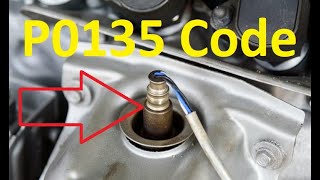
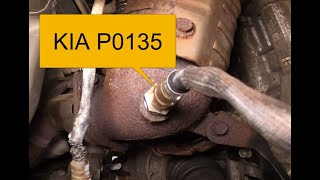
🎬 Watch: A detailed breakdown of the P0135 code on Kia vehicles.Symptoms You May Notice
- Check Engine Light is on.
- Decreased fuel economy.
- Vehicle may run slightly rough or hesitate during the first minute after a cold start.
- Failing an emissions test.
- Replacing the wrong oxygen sensor (e.g., Bank 2 sensor on the front manifold, or the downstream Sensor 2 after the catalytic converter).
- Replacing the oxygen sensor without first checking for a blown fuse or inspecting the wiring for damage.
Most Likely Causes
- Failed Bank 1, Sensor 1 Oxygen Sensor 🔴 High Probability The internal heater element is a common failure point in all modern oxygen sensors due to constant, rapid heat cycles. This is the most frequent cause for P0135.
How to confirm: After confirming power and ground at the sensor connector, test the resistance across the two heater circuit pins on the sensor itself using a multimeter. An infinite reading (open circuit) or a reading far outside the typical 2-20 ohm range confirms failure.
Typical fix: Replace the Bank 1, Sensor 1 (rear, upstream) oxygen sensor. A special slotted oxygen sensor socket is often required for removal and installation. 🎬 Watch: How to replace an upstream oxygen sensor step-by-step.
Est. part cost: $70-$180 - Damaged Wiring or Connector 🟡 Medium Probability The sensor wiring is located near the hot exhaust manifold, making it susceptible to heat damage, melting, or becoming brittle over time. Road debris can also physically damage the harness.
How to confirm: Visually inspect the wiring harness and connector leading to the sensor for any signs of melting, chafing, corrosion in the pins, or loose connections. Check for continuity on the heater circuit wires between the ECM and the sensor connector.
Typical fix: Repair the damaged section of wiring or replace the connector pigtail.
Est. part cost: $15-$50 - Blown Fuse ⚪ Low Probability An electrical short in the heater circuit can cause the corresponding fuse to blow as a protective measure. This is often a symptom of a failed sensor shorting out.
How to confirm: Locate the fuse for the O2 sensor heater circuit in the vehicle's engine compartment fuse box. On the Telluride, this is labeled 'SENSOR 1' (10A) or 'SENSOR 4' (15A), which powers multiple sensors. Visually inspect if it is blown.
Typical fix: Replace the blown fuse. If the new fuse blows immediately, it indicates a persistent short circuit in the wiring or within the oxygen sensor itself that must be found and fixed.
Est. part cost: $1-$5
Rare But Worth Checking
- Faulty Engine Control Module (ECM): This is extremely rare. The ECM's internal driver for the heater circuit can fail. This should only be considered after all other possibilities (sensor, wiring, fuse) have been definitively ruled out by testing.
Diagnosis Steps
- Connect an OBD-II scanner to confirm P0135 is the active code. 🎬 See these easy first checks to diagnose the heater circuit.
- Consult a fuse diagram to locate and inspect the fuse for the O2 sensor heater circuit in the engine compartment fuse box. On the Telluride, check the 'SENSOR 1' (10A) and 'SENSOR 4' (15A) fuses. Replace if blown.
- Safely raise the vehicle and locate the Bank 1, Sensor 1 oxygen sensor on the rear exhaust manifold (closer to the firewall).
- Visually inspect the sensor's wiring harness and connector for any signs of melting, chafing, corrosion, or loose pins.
- Disconnect the sensor. With the key on and engine off, use a multimeter to verify there is 12-volt power and a good ground connection on the harness-side of the connector (on the two heater circuit pins).
- Using the multimeter, measure the resistance between the two heater circuit pins on the sensor itself. A reading of infinite ohms indicates an open circuit and a failed sensor. A reading between 2.5-20 ohms is typically considered normal for Kia/Hyundai vehicles.
- If the fuse, wiring, power, ground, and sensor resistance all check out, the problem may lie in the wiring between the connector and the ECM, or (rarely) the ECM itself.
- After repair, clear the code with the scanner and perform a test drive, including a cold start, to ensure the code does not return.
Parts You'll Likely Need
- Bank 1, Sensor 1 Oxygen Sensor
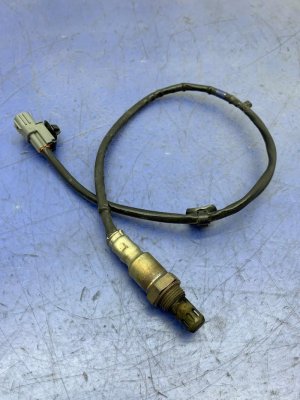
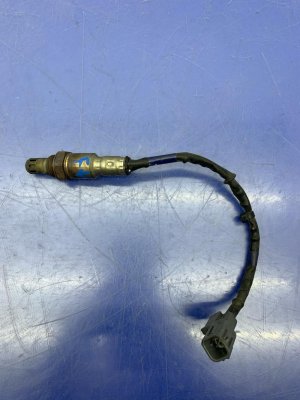
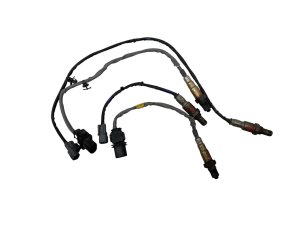
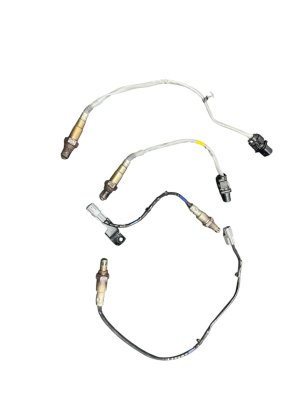
(OEM #39210-3L110)— This is the upstream oxygen sensor for the rear cylinder bank (Bank 1). Its internal heater element is the most common failure point that triggers code P0135. This part is also referred to as the Front Left sensor.
Trusted brands: Genuine Kia/Hyundai, NGK/NTK, Denso, Bosch
OEM price range: $120-$200
Aftermarket price range: $70-$150
Mechanic-Grade Diagnostic Values
- O2 Sensor Heater Element Resistance — expected: 2.5 to 20 Ω (Ohms). Failure: A reading of infinite ohms (open circuit) or a value significantly outside the expected range.
- Heater Circuit Power Supply — expected: 12V (Battery Voltage) with Key On, Engine Off. Failure: 0V or significantly low voltage, indicating a wiring or fuse issue before the sensor.
Scan Tool Commands That Help
- Kia GDS (Global Diagnostic System): O2 Sensor Data / Heater Circuit Test — The GDS tool can be used to monitor live data from the oxygen sensor and may offer a specific function to actively test the heater circuit, confirming if the ECM is commanding the heater on and if the sensor is responding. This is useful for differentiating between a sensor failure and a control-side (ECM/wiring) issue.
Wiring & Ground Locations
- Engine Compartment Fuse Box — Located in the engine bay, typically on the driver's side.. This box contains the fuses that supply power to the oxygen sensor heater circuits. For the P0135 code, the 'SENSOR 1' (10A) and 'SENSOR 4' (15A) fuses are the primary ones to inspect, as a blown fuse will cut power to the heater and trigger the code.
- Bank 1 Sensor 1 Connector — Attached to the upstream oxygen sensor on the rear exhaust manifold (closest to the firewall).. This is the primary point for electrical testing. The connector for this specific sensor is a 5-pin, oblong shape with a flat side. Technicians test for 12V power, ground, and signal at this connector's harness side, and test for resistance on the sensor side pins.
OEM Part Supersession History
39210-3L110→No known supersession.— N/A
Heads up: No supersession is noted in parts catalogs. When ordering, it is critical to ensure the part is 39210-3L110 for Bank 1 (Left/Rear) and not 39210-3L100, which is for Bank 2 (Right/Front).
Model Year Variations Within This Range
- 2023-2025: The Kia Telluride received a cosmetic facelift for the 2023 model year, including new grille, lighting, and interior screens. However, the core powertrain, the 3.8L Lambda II GDI V6 and 8-speed automatic transmission, remained unchanged. Therefore, the causes, diagnosis, and repair for a P0135 code are identical across the entire 2020-2025 model year range.
Diagnostic Flowchart
Other Known Issues on This Vehicle
Issues unrelated to this code that are worth knowing about as an owner of this generation:
- Spontaneously Cracking Windshields 🟠 Medium — Widespread complaints across 2020-2023+ model years. Hundreds of complaints filed with the NHTSA. A class-action lawsuit has been filed regarding this issue. (Ref: Kia issued a 'goodwill' customer satisfaction initiative to replace some windshields but has not issued a formal recall.)
- Tow Hitch Harness Fire Risk 🔴 High — Affects 2020-2022 models equipped with the genuine Kia 4-pin tow hitch harness. (Ref: NHTSA Recall 22V-626 (Kia Campaign SC247). Debris and moisture can short the harness module, causing a fire even when the vehicle is parked and off. Owners were advised to park outside until the repair was completed.)
- Transmission Hesitation and Failure 🟠 Medium — Owners report harsh shifting, hesitation, getting stuck in gear, and in some cases, needing a full transmission replacement at low mileage. (Ref: No specific recall, but numerous owner complaints on forums and Reddit describe dealer diagnoses ranging from software updates to full transmission replacement under warranty.)
- Excessive Oil Consumption 🟠 Medium — Some owners of the 3.8L V6 report consuming as much as one quart of oil per 1,000-2,500 miles. This can lead to low oil levels between changes, as the vehicle lacks a low oil level warning light. (Ref: No recall, but this is a documented issue with the Lambda II GDI engine family. Dealers may perform an oil consumption test.)
- Blank or Flickering Instrument/AVM Screens 🟡 Low — Affects some 2020-2021 models. Can cause flickering or blank camera displays. (Ref: TSB ELE213 provides a procedure to repair coaxial cable terminals to fix intermittent camera image issues. Recalls were issued for 2022-2023 models for similar screen failures due to software or manufacturing defects.)
- Smart Key Malfunction / Battery Drain 🟡 Low — Affects some 2023 models, causing the lock/unlock function to fail and potentially draining the 12V battery. (Ref: TSB ELE302 involves a software update for the Integrated Body Control Unit (IBU) to correct the logic.)
Used vs. New Parts: Buying Guide for This Vehicle
When a used part is the smart pick: It is almost never a smart choice to buy a used oxygen sensor. It is a wear-and-tear component with a finite lifespan, and its remaining life is impossible to determine. The labor to install the part is the same whether it's new or used, making a new part with a warranty a much better value.
Donor-vehicle mileage cap: roughly under 10000 miles for the part to have meaningful remaining life.
What to inspect on the donor part:
- If forced to use a used part in an emergency, source it from the lowest-mileage vehicle possible.
- Inspect the wiring pigtail for any signs of brittleness, melting, or cracking.
- Ensure the connector is free of corrosion and the locking tab is intact.
OEM-only on this vehicle (don't cheap out):
- While not strictly OEM-only, it is highly recommended to use either a Genuine Kia/Hyundai sensor or a top-tier OE manufacturer like NTK, Denso, or Bosch. Cheaper, no-name aftermarket sensors are a common cause of immediate or premature failure.
Aftermarket brands forum-validated for this vehicle:
- NTK (often the original OE supplier)
- Denso
- Bosch
Brands owners have reported issues with on this vehicle:
- Avoid generic, unbranded sensors from online marketplaces. While they may be cheap, they often have incorrect resistance values or use lower-quality materials that lead to repeat failures.
Related OBD-II Codes
Frequently Asked Questions
Where is the Bank 1 Sensor 1 oxygen sensor located on my Kia Telluride 3.8L V6?
Which fuse should I check for a P0135 code on my Telluride?
Can I use a generic aftermarket oxygen sensor to fix this code?
Is there a TSB for the P0135 code on the 2020-2025 Telluride?
Will a failed O2 sensor heater affect how my Telluride drives?
What resistance reading should I see when testing the Telluride's O2 sensor heater?
Helpful Videos

We Have This Part in Stock

The information in this article is provided for general reference and educational purposes only. Vehicle specifications, procedures, and part compatibility can vary by production date, trim level, and region. Always consult your vehicle's factory service manual and verify part numbers before purchasing or performing repairs. Safety-critical components such as airbags, seat belts, and braking systems should be installed by a qualified professional.
- Kia Telluride:
- 🎬 Helpful Videos
- 🛍️ Shop This Part
- What's Unique About the 2020-2025 Kia Telluride
- Symptoms You May Notice
- Most Likely Causes
- Rare But Worth Checking
- Diagnosis Steps
- Parts You'll Likely Need
- Mechanic-Grade Diagnostic Values
- Scan Tool Commands That Help
- Wiring & Ground Locations
- OEM Part Supersession History
- Model Year Variations Within This Range
- Diagnostic Flowchart
- Other Known Issues on This Vehicle
- Used vs. New Parts: Buying Guide for This Vehicle
- Related OBD-II Codes
- Frequently Asked Questions
- 🎟️ Get 5% Off