

P0135 on 1998-2011 Ford Ranger 2.3L: O2 Sensor Heater Failure Causes and Fixes
P0135 on a Ford Ranger with the 2.3L engine almost always means the heater element inside the upstream oxygen sensor (Bank 1, Sensor 1) has failed. Replacing the sensor is the most common fix. Expect to pay $40-$80 for an aftermarket sensor and $90-$150 for an OEM Motorcraft part. Before replacing, check the 20A fuse for the HO2S circuit as a shorted wire can also cause this code.
- P0135 points to a problem with the heater in the upstream O2 sensor (before the catalytic converter).
- The most likely fix is replacing the upstream O2 sensor itself.
- Before buying parts, always check the fuse for the O2 heaters in the engine bay fuse box.
- Carefully inspect the sensor's wiring harness for any signs of melting or damage, as this is a common secondary cause.
- This is a DIY-friendly repair with a difficulty of 2 out of 5, usually requiring a special O2 sensor socket.
What's Unique About the 1998-2011 Ford Ranger

For the 2.3L Duratec I4 engine in the Ford Ranger, this is a straightforward and very common code. Unlike V6 models, the 4-cylinder engine only has one bank, so "Bank 1" is the only bank. Sensor 1 is the upstream sensor, located in the exhaust manifold before the catalytic converter. The most frequent point of failure is simply the heater element inside the sensor burning out from age and countless heat cycles. Wiring issues are the next most likely cause, often due to the harness being damaged or melting from contact with hot exhaust components. A shorted wire can blow the fuse that powers the heater circuit.
Generation note: The specified year range (1998-2011) covers two main generations of the Ford Ranger in North America. However, the Duratec 2.3L DOHC I4 engine was introduced in mid-2001, replacing the previous Lima 2.3L/2.5L SOHC engines. Therefore, this guide is specifically applicable to Ford Rangers from 2001.5 through 2011.
Symptoms You May Notice
- Check Engine Light is on
- Reduced fuel economy
- Rough idle, especially when cold
- Failing a vehicle emissions test
- Slightly rough or hesitant performance before the engine is fully warm
- Replacing the downstream (Bank 1, Sensor 2) oxygen sensor. P0135 specifically refers to Sensor 1, which is the upstream sensor before the catalytic converter.
- Replacing the O2 sensor without first checking the fuse and wiring. If a shorted wire blew the fuse, a new sensor will not fix the problem.
Most Likely Causes

- Failed Oxygen Sensor Heater Element 🔴 High Probability The internal heating element is a common wear item that fails from repeated heating and cooling cycles over many years. It is the most frequent cause for P0135.
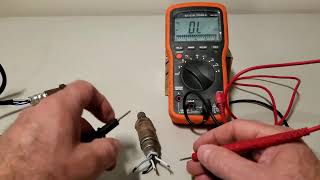
How to confirm: Disconnect the sensor and use a multimeter to measure the resistance between the two heater circuit pins (usually the two wires of the same color). An open circuit (infinite resistance) or a reading outside of the manufacturer's specification confirms a bad heater element. For this Ford sensor, the expected resistance is typically between 3 and 29 Ohms. A good resistance reading is often between 4 and 8 ohms.
Typical fix: Replace the Bank 1, Sensor 1 (upstream) oxygen sensor. A specialized O2 sensor socket is highly recommended for removal.
Est. part cost: $40-$150 - Damaged Wiring or Connector 🟡 Medium Probability The wiring harness for the O2 sensor can be susceptible to melting if it comes into contact with the hot exhaust manifold or pipes. Connectors can also accumulate dirt, moisture, or corrosion, leading to a poor connection. The provided TSBs for other Ford trucks (TSB 21-2090, TSB 20-2380) indicate water intrusion into O2 sensor connectors is a known issue on Ford vehicles.
How to confirm: Visually inspect the entire length of the wiring harness from the sensor to the main loom for any signs of melting, chafing, or broken wires. Check the connector pins for corrosion or damage. A voltage drop test can confirm high resistance in the circuit.
Typical fix: Repair the damaged section of wire or replace the connector pigtail.
Est. part cost: $15-$30 - Blown Fuse ⚪ Low Probability A short in the heater circuit wiring, often from melting on the exhaust, can cause the associated fuse to blow.
How to confirm: Locate the fuse for the 'Heated Oxygen Sensors' (HO2S) in the power distribution box in the engine compartment. On 2001-2003 models, this is often fuse #41 (20A). For other years, consult your owner's manual. Visually inspect the fuse or test it for continuity with a multimeter.
Typical fix: Replace the blown fuse. If the new fuse blows immediately, it indicates a persistent short circuit in the wiring that must be found and repaired.
Est. part cost: $1-$5
Rare But Worth Checking
- Faulty Powertrain Control Module (PCM): This is very rare. Before suspecting the PCM, all other possibilities (sensor, wiring, fuse) must be exhaustively ruled out. A Reddit user and a forum user both reported that after extensive troubleshooting of simultaneous P0135 and P0141 codes, a faulty PCM was the ultimate cause. This should be the absolute last component to consider replacing.
Diagnosis Steps
- Read the code with an OBD-II scanner to confirm P0135 is present.
- Check for a blown fuse. In the engine compartment power distribution box, locate the fuse for the HO2S (Heated Oxygen Sensors). On many 2001-2003 Rangers, this is a 20A fuse in position 41. If it's blown, replace it and see if the code returns. If it blows again, you have a short circuit to find.
- Visually inspect the upstream O2 sensor's wiring harness and connector. It is located on the passenger side, in the exhaust manifold. Look for any signs of melting, chafing, or corrosion. Ensure the connector is securely plugged in.
- If the wiring looks good, test the sensor's heater element. Disconnect the sensor and use a multimeter set to Ohms. Probe the two wires for the heater circuit (typically the two wires of the same color, often white). A good sensor should have a resistance between 3 and 29 Ohms. If you get an open loop (OL) reading, the heater is broken and the sensor must be replaced.
- If the sensor's resistance is good, check for power at the harness connector. With the key on and engine off, use a multimeter to check for 12V at one of the heater circuit pins on the vehicle-side of the connector. On many Rangers, this is a Light Blue/Orange wire.
- If power and the sensor are good, the final check is the ground circuit, which is controlled by the PCM. A failure here is rare and may indicate a wiring break between the connector and the PCM, or a faulty PCM driver.
Parts You'll Likely Need
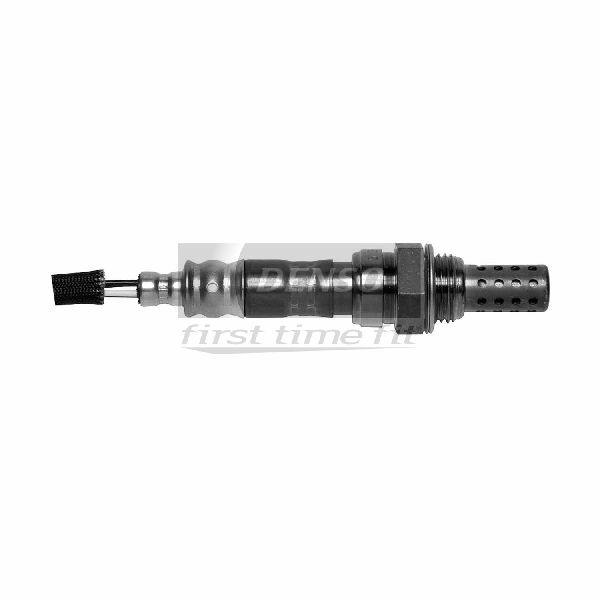
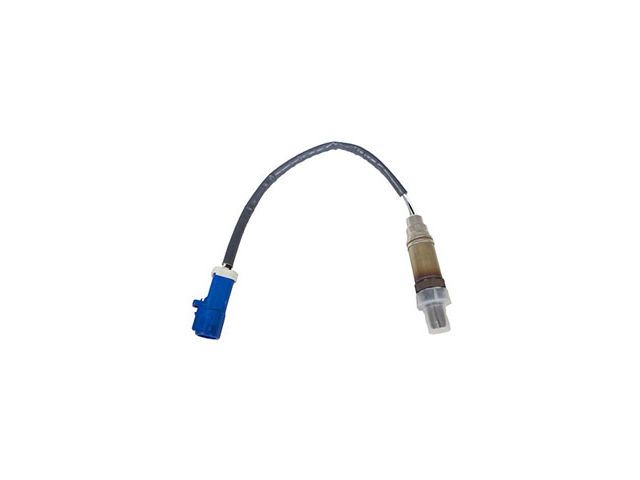
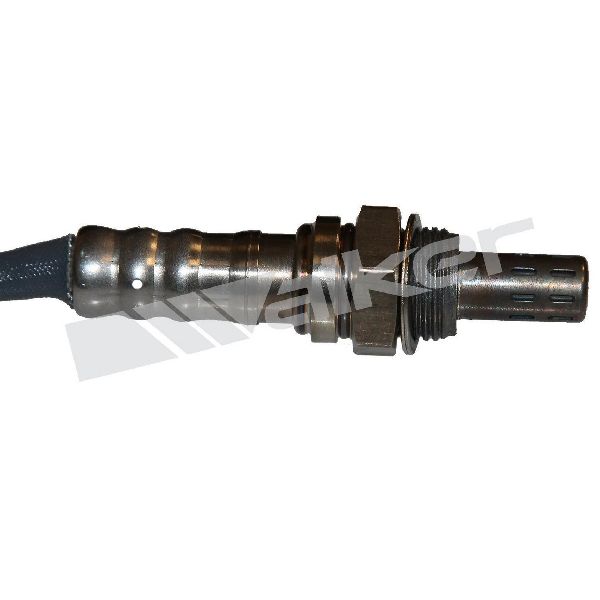
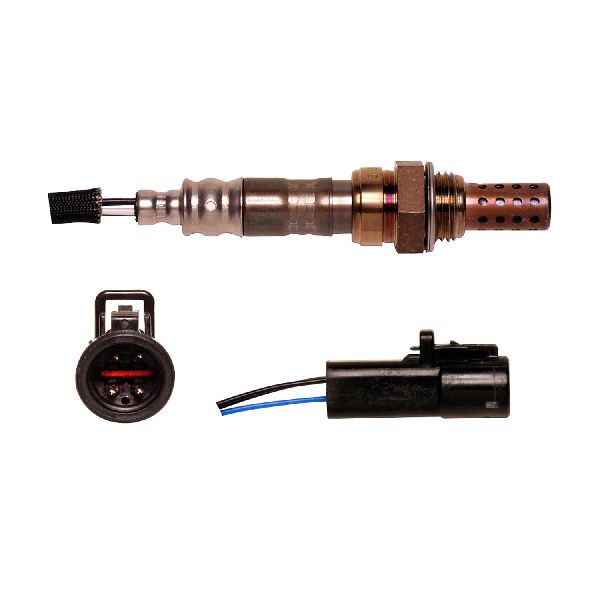
- Upstream Oxygen Sensor (Bank 1, Sensor 1)
(OEM #5L8Z-9G444-A (also listed as Motorcraft DY1093))— This is the most common failure point for code P0135, as the internal heater element burns out over time.
Trusted brands: Motorcraft, Bosch, Denso, NGK/NTK
OEM price range: $90-$150
Aftermarket price range: $40-$80
Related Codes That Often Appear With This One
- P0141 — This code is for the 'O2 Sensor Heater Circuit Malfunction (Bank 1, Sensor 2)'. If both appear together, it often points to a common power or ground issue, like a blown fuse that supplies power to both sensor heaters, or in rare cases, a failing PCM.
- P1131 / P1132 — These Ford-specific codes indicate the sensor is stuck lean or rich. If the heater is not working, the sensor may not provide accurate readings, which can lead to these codes being set as a secondary fault.
Technical Service Bulletins (TSBs) & Recalls
- TSB 21-2090: While for a newer F-450, it notes P0135 can be caused by water intrusion into the heated oxygen sensor connector, indicating a potential pattern for Ford trucks.
- TSB 20-2380: Similar to the above, this TSB for the F-550 also links P0135 to water intrusion in the O2 sensor connector.
- TSB 16-0163 & TSB-14-0129: These bulletins for other Ford models also list P0135 in a group of DTCs that can be caused by wiring harness issues, reinforcing the need to inspect wiring carefully.
Platform-Specific Known Issues
- The wiring for the upstream O2 sensor is routed near the exhaust manifold and can be prone to melting if not properly secured, leading to a short circuit that blows the fuse and triggers P0135.
- On 2001-2003 models, fuse #41 (20A) in the engine bay fuse box is the common power source for the O2 sensor heaters. A short in either the upstream or downstream sensor circuit can blow this fuse and cause heater codes for both.
Mechanic-Grade Diagnostic Values

- O2 Sensor Heater Element Resistance — expected: 3 to 29 Ohms, with many known-good sensors measuring between 4 and 8 Ohms.. Failure: An open circuit (OL or infinite resistance) or a reading far outside the expected range.
- Voltage at O2 Sensor Harness Connector (Heater Power Pin) — expected: Battery voltage (~12V) with Key On, Engine Off.. Failure: 0 volts or significantly less than battery voltage, indicating a blown fuse or wiring issue.
- Mode $06, Test ID $80, Monitor ID $01 — expected: This test checks the HO2S11 voltage amplitude. The value should be within the manufacturer's specified min/max range.. Failure: A value outside the calibrated range can indicate a slow or failing sensor, even if it hasn't yet set a P0133 'slow response' code.
Hidden / Shadow Codes Worth Checking
- P0053: O2 Heater Resistance (Bank 1, Sensor 1). While P0135 is a general circuit malfunction, P0053 is a more specific code indicating the PCM has detected the heater's resistance is out of the expected range. It may be set in conjunction with P0135. (see via Standard OBD-II scanner.)
Scan Tool Commands That Help
- Ford IDS / FORScan: HO2S Heater Live Data PID — After confirming power and ground with a multimeter, you can monitor the specific PID for the Bank 1 Sensor 1 heater status (e.g., 'ON'/'OFF') and fault detection. This helps confirm if the PCM is commanding the heater on and if it is detecting the fault in real-time.
Wiring & Ground Locations

- G100 — On 2002+ models, located in the LH front of the engine compartment. On some earlier models, it may be below the battery. This is a primary engine bay ground.. A corroded or loose main engine ground can cause a variety of floating voltages and intermittent electrical issues, including problems with sensor circuits that rely on a stable ground reference through the PCM.
- G101 — On 2.3L models, this ground is often located at the starter motor. On other models, it's on the LH side of the upper radiator support. Verifying the correct location for the specific year is crucial.. This is a critical engine ground. Poor connection here can lead to the PCM seeking alternative ground paths, potentially through sensor circuits, causing erratic behavior and fault codes.
- HO2S11 Connector Pin B — On the vehicle-side harness connector for the upstream O2 sensor.. This pin should have ~12V with the key on. It is the power supply for the heater element, typically from a Light Blue/Orange wire. No voltage here points directly to a fuse or wiring problem upstream.
Real Owner Repair Stories
- Reddit user /u/Michael7S (1997 Ford Ranger 2.3L, 150k miles) — Simultaneous P0135 and P0141 codes, usually appearing 3-12 miles into a drive cycle.
❌ Tried (didn't work) Replacing both O2 sensors (twice), Confirming 12V power at sensors, Confirming heater resistance was in spec (4-8 ohms), Checking for voltage drops, Checking engine grounds, Running secondary power wires to the rear O2 sensor
✅ What actually fixed it Replacing the Powertrain Control Module (PCM). The user confirmed that after 18 failed drive cycles, replacing the PCM finally resolved the issue and allowed the truck to pass a smog test. - Ranger-Forums user 'michaels' (1997 Ford Ranger 2.3L 4x2) — P0135 & P0141 codes appearing at the same time, with a slightly rough idle.
❌ Tried (didn't work) Checked all fuses, Replaced both O2 Sensors, Confirmed voltage and switched grounds at each sensor, Confirmed ohms and load for each heater circuit, Checked engine grounds, Performed thorough voltage drop tests
✅ What actually fixed it Replacing the PCM was the final step that solved the problem after over 18 test drives failed to keep the codes from returning.
When the Usual Fixes Don't Work
- While P0135 is most commonly a simple sensor failure, there are well-documented cases where the root cause is much more complex. Multiple owners have gone through exhaustive diagnostics, replacing sensors and checking all wiring, only to find the issue was a faulty PCM. This is especially true when P0135 appears simultaneously with P0141 (the downstream heater code). If both codes appear together and a blown fuse is not the cause, the probability of a PCM fault increases significantly, contradicting the 'it's just the sensor' common wisdom.
OEM Part Supersession History
F85Z-9G444-BD→5L8Z-9G444-A / Motorcraft DY1093— Part number consolidation and updates over the vehicle's long production run.
Heads up: While multiple part numbers exist, the key is ensuring the replacement is a direct-fit, 4-wire, narrow-band heated sensor with the correct connector. Universal sensors requiring splicing are not recommended due to potential for poor connections.
Model Year Variations Within This Range
- 2001-2003: On many early Duratec 2.3L Rangers, the O2 sensor heater fuse is located in the engine compartment power distribution box at position #41 and is rated for 20A.
- 2004+: The fuse location and numbering may have changed. For 2004 and newer models, it is critical to consult the owner's manual for the correct fuse position for the 'HO2S Heater' circuit, as Ford frequently updated wiring layouts. For example, some '97 models used fuse #20 (15A) in the engine bay box.
Diagnostic Flowchart
Other Known Issues on This Vehicle
Issues unrelated to this code that are worth knowing about as an owner of this generation:
- Cracked/Leaking Plastic Thermostat Housing 🔴 High — Very common failure item. The plastic becomes brittle with age and heat cycles, leading to coolant leaks and potential overheating. Often occurs after 100,000 miles.
- Intake Manifold Runner Control (IMRC) Failure 🟠 Medium — Common on 2001-2003 models which used this system. Failure can occur due to a faulty solenoid, vacuum leaks in the actuator lines, or broken internal components.
- Timing Chain Rattle/Tensioner Wear 🟠 Medium — Can occur at higher mileage (150,000+ miles). Not as common as other issues but can be catastrophic if ignored.
- RPM Hang During Shifting (Manual Transmission) 🟡 Low — This is a characteristic of the factory PCM tuning, not a failure. It is present on all manual transmission models.
Used vs. New Parts: Buying Guide for This Vehicle
When a used part is the smart pick: For this repair, sourcing used parts is generally not recommended for the sensor itself. However, obtaining a used connector pigtail from a junkyard harness is a smart choice if only the connector is damaged. A used PCM from a matching vehicle (same year, engine, transmission) is a viable cost-saving option if the original PCM is confirmed to be faulty.
Donor-vehicle mileage cap: roughly under 80000 miles for the part to have meaningful remaining life.
What to inspect on the donor part:
- For a connector pigtail: Ensure there are several inches of wire, no signs of brittleness or cracking, and the locking tab is intact.
- For a PCM: Match part numbers exactly. Inspect connector pins for any corrosion or damage. Check the donor vehicle's history for flood or fire damage if possible.
OEM-only on this vehicle (don't cheap out):
- While not strictly 'OEM-only', sticking to OEM (Motorcraft) or the original OE manufacturer (Bosch) for the O2 sensor itself is highly recommended to avoid compatibility and performance issues.
Aftermarket brands forum-validated for this vehicle:
- Bosch (often the OE supplier)
- NGK/NTK
- Denso
Brands owners have reported issues with on this vehicle:
- Generic, unbranded 'universal' sensors that require splicing wires. These are a common source of future failures due to improper connections.
Real Owner Stories
Aggregated from forums and TSBs cited above. Mileages and costs reflect what owners reported in those sources.
2001 Ford Ranger 2.3L
Symptoms: Fuse #41 in the engine bay keeps blowing repeatedly.
What fixed it: Identified a shorted wire rubbing against a metal component in the oxygen sensor heater circuit.
Source hint: Ford Forum: 2001 Ford Ranger #41 Fuse
1997 Ford Ranger
Symptoms: Simultaneous P0135 and P0141 codes; owner verified all wiring, power, and replaced sensors but the codes persisted.
What fixed it: Replacing the PCM (Powertrain Control Module) resolved the heater circuit failure.
Source hint: Reddit r/MechanicAdvice: Can Ford Ranger PCM cause O2 heater circuit failure?
2001-2003 Ford Ranger 2.3L
Symptoms: Exhaustive diagnostic process for P0135 and P0141 appearing together, including checking fuses, voltages, and grounds.
What fixed it: PCM replacement to solve the issue after all other components tested good.
Source hint: Ranger-Forums: Simultaneous 02 Sensor Heater Circuit Failure P0135 & P0141
Related OBD-II Codes
Frequently Asked Questions
Where is the fuse for the oxygen sensor heater on my 2002 Ford Ranger?
I have a Mazda B2300 with the 2.3L engine; does this P0135 diagnostic apply to my truck?
What resistance should I see when testing the upstream O2 sensor on my 2.3L Ranger?
Could a leak in my plastic thermostat housing cause this O2 sensor code?
Which wire should I probe to check for power at the O2 sensor connector?
My Ranger is blowing fuse #41 repeatedly. What is the most likely cause?
Helpful Videos
We Have This Part in Stock


The information in this article is provided for general reference and educational purposes only. Vehicle specifications, procedures, and part compatibility can vary by production date, trim level, and region. Always consult your vehicle's factory service manual and verify part numbers before purchasing or performing repairs. Safety-critical components such as airbags, seat belts, and braking systems should be installed by a qualified professional.
- Ford Ranger:
- 🎬 Helpful Videos
- 🛍️ Shop This Part
- What's Unique About the 1998-2011 Ford Ranger
- Symptoms You May Notice
- Most Likely Causes
- Rare But Worth Checking
- Diagnosis Steps
- Parts You'll Likely Need
- Related Codes That Often Appear With This One
- Technical Service Bulletins (TSBs) & Recalls
- Platform-Specific Known Issues
- Mechanic-Grade Diagnostic Values
- Hidden / Shadow Codes Worth Checking
- Scan Tool Commands That Help
- Wiring & Ground Locations
- Real Owner Repair Stories
- When the Usual Fixes Don't Work
- OEM Part Supersession History
- Model Year Variations Within This Range
- Diagnostic Flowchart
- Other Known Issues on This Vehicle
- Used vs. New Parts: Buying Guide for This Vehicle
- Real Owner Stories
- 2001 Ford Ranger 2.3L
- 1997 Ford Ranger
- 2001-2003 Ford Ranger 2.3L
- Related OBD-II Codes
- Frequently Asked Questions
- 🎟️ Get 5% Off