

P0135 on 2005-2010 Ford Mustang 4.0L V6: Causes and Fixes for the O2 Sensor Heater
On a 2005-2010 Ford Mustang with the 4.0L V6, code P0135 almost always points to a failed heater element inside the Bank 1, Sensor 1 oxygen sensor. This is the upstream sensor on the passenger side. Replacing the sensor is the most common fix, costing around $40-$80 for an aftermarket part or $90-$150 for an OEM Motorcraft part. Before replacing, check fuse #47 in the under-hood fuse box.
- P0135 on a 2005-2010 Mustang V6 points to a problem with the heater in the passenger-side upstream O2 sensor.
- The most likely fix is replacing the Bank 1, Sensor 1 O2 sensor itself.
- Before buying a new sensor, always check fuse #47 (15A) in the under-hood fuse box and perform a quick visual inspection of the wiring for melting or damage.
- This is a DIY-friendly repair that can be done with basic tools and an O2 sensor socket.
- Ignoring this code will lead to poor gas mileage, failed emissions tests, and potentially damage the catalytic converter over time.
What's Unique About the 2005-2010 Ford Mustang
The 4.0L Cologne V6 used in the S197 Mustang is a straightforward engine, and P0135 is a very common and typically simple code to resolve. Unlike some platforms where this code might suggest complex wiring or software issues, on this Mustang, it's overwhelmingly likely the sensor itself has simply worn out from age and countless heat cycles. The sensor is also relatively easy to access on the passenger-side exhaust manifold before the catalytic converter. A notable vulnerability on this platform is the wiring harness routing over the top of the transmission bellhousing, where it can get pinched or chafed, causing a short that blows fuse #47 and triggers this code, often along with others.
Symptoms You May Notice
- Check Engine Light is on
- Reduced fuel economy
- Failing a smog or emissions test
- Rough idle or hesitation, especially when the engine is cold
- Smell of unburnt fuel from the exhaust on startup.
- Replacing the wrong O2 sensor. P0135 is specifically for Bank 1 (passenger side) and Sensor 1 (upstream, before the catalytic converter). It is easy to mix up the sensor locations.
- Replacing the sensor when the actual fault is a blown fuse or damaged wire. Always check the fuse and wiring before buying parts.
Most Likely Causes

- Failed Oxygen Sensor (Bank 1, Sensor 1) 🔴 High Probability The internal heater element is a common failure point due to age and constant temperature changes. It's the most likely component to fail in this circuit.
How to confirm: Unplug the sensor and measure the resistance between the two heater circuit wires (often two wires of the same color, e.g., white or black). An infinite resistance reading (open circuit) or zero resistance (short circuit) confirms the heater has failed. A good heater should have a low resistance, typically between 3-10 ohms.
Typical fix: Replace the Bank 1, Sensor 1 (passenger side, upstream) oxygen sensor. 🎬 Watch this walkthrough for replacing sensors on 05-14 Mustangs.
Est. part cost: $40-$150 - Damaged Wiring or Connector 🟡 Medium Probability The wiring harness is close to the hot exhaust manifold, which can make wires brittle or melt them over time. A known issue is the harness getting pinched between the engine and transmission bellhousing, causing a short.
How to confirm: Visually inspect the wiring harness and connector for the Bank 1, Sensor 1 O2 sensor. Look for melted plastic, frayed or broken wires, and corrosion on the connector pins. Check for battery voltage on the power wire (often Red/Yellow) with the key on.
Typical fix: Repair the damaged section of the wiring harness or clean/replace the connector.
Est. part cost: $5-$50 - Blown Fuse ⚪ Low Probability The O2 sensor heater circuits are protected by a fuse. While not a common failure, a short circuit in the wiring or sensor can cause this fuse to blow. This fuse often powers other components, so its failure may trigger multiple codes.
How to confirm: Locate and check fuse #47 (a 15A fuse) in the Battery Junction Box (the fuse box under the hood). If it is blown, the heater circuit will not have power.
Typical fix: Replace the blown fuse. If the new fuse blows immediately, it indicates a persistent short circuit in the wiring or sensor that must be found and repaired.
Est. part cost: $1-$5
Rare But Worth Checking
- Powertrain Control Module (PCM) Fault: This is extremely rare. The PCM's internal driver for the heater circuit can fail, but this should only be considered after all other possibilities (sensor, wiring, fuse) have been exhaustively ruled out.
Diagnosis Steps

- Confirm the code P0135 is present using an OBD-II scanner.
- Check fuse #47 (15A) in the under-hood Battery Junction Box. If it's blown, replace it and see if the code returns. If it blows again, you have a short circuit.
- Locate the Bank 1, Sensor 1 oxygen sensor. On the 4.0L V6 Mustang, this is on the passenger side of the engine, in the exhaust manifold before the catalytic converter.
- Visually inspect the sensor's wiring harness and connector for any signs of melting, chafing, or corrosion. Pay close attention to where the harness runs near the exhaust and over the transmission bellhousing.
- If the wiring and fuse are okay, disconnect the sensor. Use a multimeter to test the resistance of the heater circuit on the sensor side (between the two same-colored wires). A reading outside the 3-10 ohm range (especially infinite resistance) means the sensor is bad and needs replacement.
- If the sensor's resistance is within spec, test the vehicle's wiring harness. With the key on and engine off, check for battery voltage (12V+) on one of the heater circuit pins (often a Red/Yellow wire) and a good ground on the other (often controlled by the PCM).
- If voltage is missing, trace the wiring back from the connector to find the break. If voltage and ground are present and the sensor tested good, there may be an intermittent connection issue.
- If all tests pass but the code persists, the issue may be a faulty PCM, but this is highly unlikely.
Parts You'll Likely Need
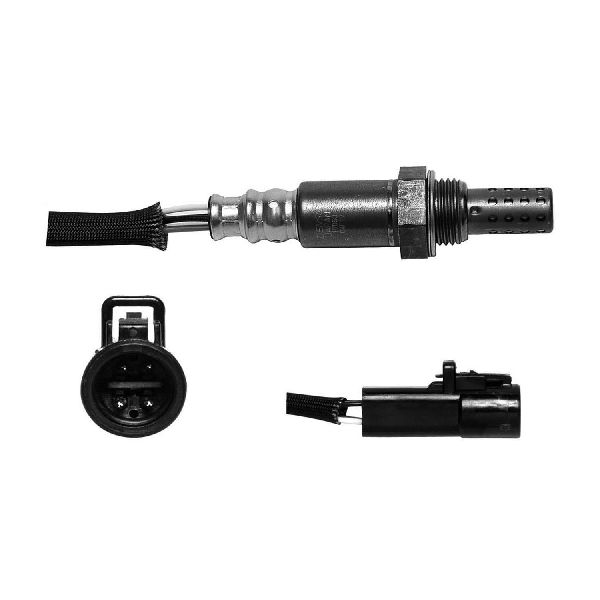
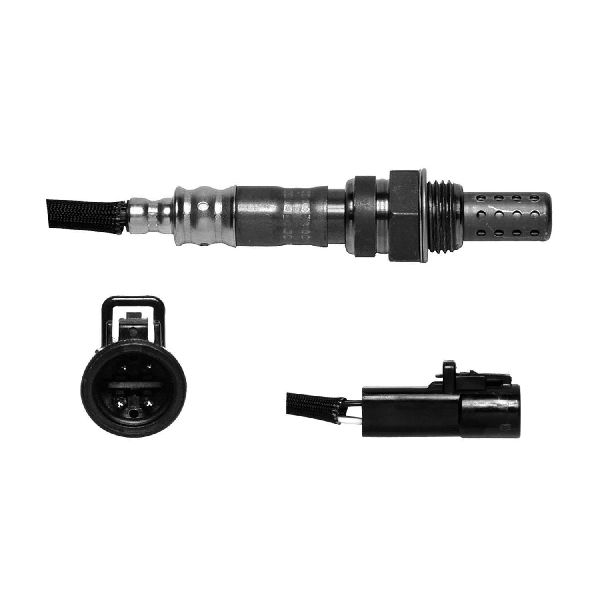
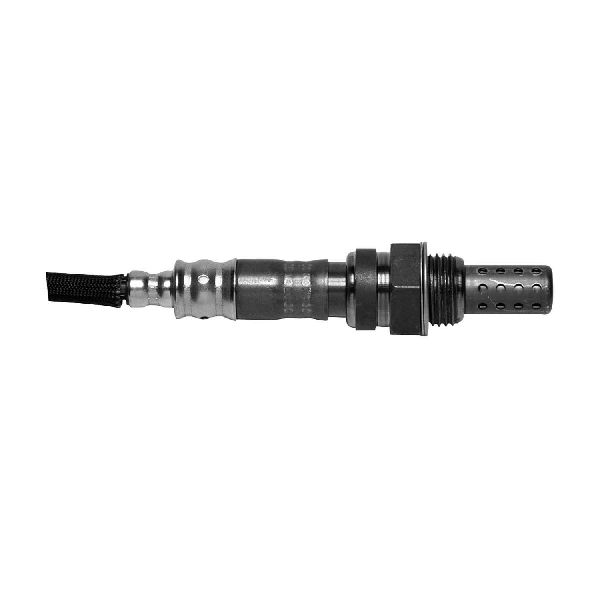
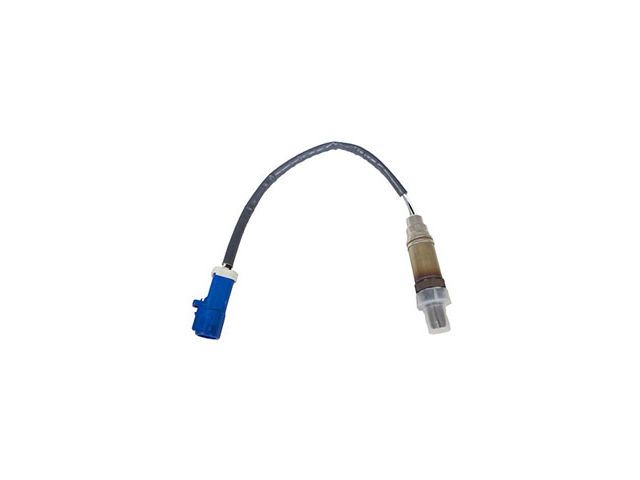
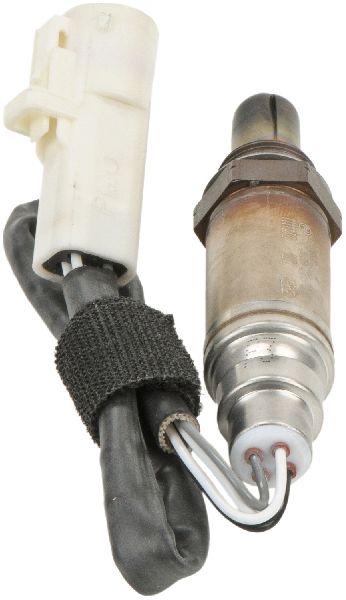
- Upstream Oxygen Sensor (Bank 1, Sensor 1)
(OEM #GU2Z-9G444-A)— This is the most common failure point for code P0135, as the internal heater element burns out over time.
Trusted brands: Motorcraft (GU2Z-9G444-A / DY-1401), Bosch (15717), Denso (234-4301), NGK/NTK
OEM price range: $90-$150
Aftermarket price range: $40-$80
Related Codes That Often Appear With This One
- P0155: O2 Sensor Heater Circuit Malfunction (Bank 2, Sensor 1). If both P0135 and P0155 appear simultaneously, it strongly suggests a common problem like a blown fuse or a wiring issue related to the shared power supply for both sensor heaters.
- Multiple other circuit codes (e.g., for EVAP components). If fuse #47 blows, it will cut power to several systems, not just the O2 heaters, resulting in a cluster of seemingly unrelated trouble codes.
Technical Service Bulletins (TSBs) & Recalls
- TSB 21-2090 / TSB 20-2380: While for F-Series trucks, these bulletins show a history of Ford vehicles experiencing P0135 due to water intrusion into O2 sensor connectors, highlighting the importance of checking for corrosion and moisture.
Platform-Specific Known Issues

- On some Mustangs, especially those modified with long-tube headers, the O2 sensor wires can be stretched or come into contact with the hot exhaust, causing them to melt and short out, triggering a P0135 code.
- A known failure point is the main wiring harness getting pinched between the engine block and the transmission bellhousing during assembly or service. This can chafe wires, cause a short to ground, and repeatedly blow fuse #47, which powers the O2 heaters and other components.
Mechanic-Grade Diagnostic Values
- O2 Sensor Heater Element Resistance — expected: 3 to 10 Ohms. Failure: Infinite resistance (open circuit) or near-zero resistance (short circuit).
- Heater Circuit Power Supply Voltage (KOEO) — expected: 10V to 12V+ (Battery Voltage). Failure: 0V indicates a blown fuse or an open in the power wire.
- PCM Ground Control for Heater — expected: The PCM supplies a pulse-width modulated ground to control the heater once the engine is running. A test light connected to battery positive should flash or illuminate when connected to the ground wire with the engine running.. Failure: No ground signal from the PCM could indicate a wiring issue or a rare PCM fault.
Hidden / Shadow Codes Worth Checking
- Mode $06, TID $83, CID $01: This refers to the on-board diagnostic monitor for the Bank 1 Sensor 1 O2 sensor heater. A scan tool capable of reading Mode $06 data can show the results of the PCM's self-test for this component, sometimes before a full-blown DTC like P0135 is stored. (see via A professional scan tool or an advanced consumer OBD-II scanner with Mode $06 capabilities.)
Scan Tool Commands That Help
- Ford IDS (Integrated Diagnostic System): HO2S Heater Test — This is a bidirectional control function that allows a technician to command the O2 sensor heaters on and off directly. It is used to verify PCM control and wiring integrity after confirming the sensor itself has the correct resistance. If the heater can be commanded on with IDS, it rules out a PCM or wiring fault.
- Advanced OBD-II Scanner: Live Data PID for O2 Heater Status — Monitoring the PID for 'O2HTR11' (or similar) can show the status (On/Off) or fault state as detected by the PCM. This helps confirm if the PCM is attempting to activate the heater and if it's detecting a fault in real-time.
Wiring & Ground Locations
- Fuse F2.47 (15A) — In the Battery Junction Box (fuse box) under the hood.. This fuse provides the 12V+ power to the heater elements for the oxygen sensors, as well as other components like the EVAP canister purge valve. A short in any of these circuits can blow this fuse, cutting power to the B1S1 heater.
- Bank 1 Sensor 1 Connector — On the passenger side, at the top of the transmission bellhousing, connected to the upstream O2 sensor in the exhaust manifold.. The Red/Yellow wire in this connector should have 12V+ with the key on. The other heater wire (color varies, often paired) is the ground controlled by the PCM. The connector itself and the harness leading to it are prone to heat damage or chafing.
- G104 — On the left (driver's side) front fender apron, often behind the battery tray area.. This is a primary chassis and PCM ground point. While not directly for the heater circuit, a poor connection here can cause myriad electrical issues and unpredictable behavior from the PCM and its controlled sensors.
- Engine-to-Firewall Ground Strap — Typically runs from the back of the driver's side cylinder head to the firewall.. This is a critical engine ground. A loose or corroded strap can cause the engine block to have a poor ground reference, potentially affecting sensor readings and PCM function.
Real Owner Repair Stories
- S197Forum.com user (2005 Ford Mustang 4.0L V6 5-speed) — Check engine light with codes for all four O2 sensor heater circuits, EVAP purge/vent circuits, and EGR circuit open.
❌ Tried (didn't work) Replacing the blown fuse #47, which immediately blew again upon key-on.
✅ What actually fixed it The user discovered the main wiring harness had been pinched between the engine and transmission. Multiple wires, including the shared Red/Yellow 12V+ power wire for the O2 heaters and EVAP system, were cut and shorted to ground. The fix required pulling the harness up, identifying all 9 damaged wires, and repairing the harness section by section. - StangNet forum user (2008 Ford Mustang) — Fuse #47 kept blowing when the key was turned.
❌ Tried (didn't work) Initial visual inspection of easily accessible wiring.
✅ What actually fixed it After extensive searching, the owner found that the main wiring harness had been trapped between the transmission and the engine, likely from a previous repair. The harness was severely damaged ('eaten up'). Repairing the damaged wires resolved the short circuit and the car ran perfectly.
OEM Part Supersession History
5C5Z-9F472-BA, 5W6Z-9G444-AA, XR3Z-9G444-AA, and others→GU2Z-9G444-A (Motorcraft DY-1401)— Part consolidation and design updates over many years and vehicle models.
Heads up: GU2Z-9G444-A is the current recommended OEM replacement for a wide range of Ford vehicles, including the 2005-2010 Mustang. Using older, superseded part numbers is not advised.
Diagnostic Flowchart
Other Known Issues on This Vehicle
Issues unrelated to this code that are worth knowing about as an owner of this generation:
- 4.0L SOHC Timing Chain Rattle 🔴 High — Very common, especially on earlier models. Noise is most apparent on cold starts and can occur between 2500-3500 RPM. Failure of the plastic guides/tensioners can lead to catastrophic engine damage. (Ref: Multiple TSBs exist, including 04-15-04, 05-10-10, and 05-21-8, addressing noise and repair procedures.)
- Cracked Plastic Thermostat Housing 🟠 Medium — Extremely common failure point. The OEM plastic housing becomes brittle with age and heat cycles, developing cracks that lead to coolant leaks. Often occurs after 60,000 miles. (Ref: No specific TSB, but it is a widely documented problem. Aftermarket aluminum housings are a popular and permanent fix.)
- Cabin Water Leak (Passenger Footwell) 🟠 Medium — Common issue caused by clogged cowl drains under the windshield wipers. Water overflows through the cabin air filter inlet and drips onto the passenger floorboard, potentially damaging the Smart Junction Box (SJB) and causing widespread electrical problems.
Used vs. New Parts: Buying Guide for This Vehicle
When a used part is the smart pick: For this repair, using used parts is NOT recommended. A used oxygen sensor has unknown life and has been subjected to the same heat cycles that cause failure. A used wiring harness pigtail could be a viable option if the connector is damaged, but the wiring itself must be pristine.
What to inspect on the donor part:
- For a connector pigtail, ensure there is no melting, cracking, or corrosion on the pins.
- Ensure the locking tab is intact.
- Ensure there is at least 6 inches of clean, flexible wire attached.
OEM-only on this vehicle (don't cheap out):
- While not strictly 'OEM-only', using a Motorcraft sensor (GU2Z-9G444-A) is highly recommended for guaranteed fit and electronic compatibility. Some aftermarket sensors can have slightly different resistance values or response times that can cause subtle issues.
Aftermarket brands forum-validated for this vehicle:
- Bosch
- Denso
- NGK / NTK
Brands owners have reported issues with on this vehicle:
- Unnamed or generic 'no-brand' sensors from online marketplaces are a significant risk and often fail prematurely or are dead on arrival.
Real Owner Stories
Aggregated from forums and TSBs cited above. Mileages and costs reflect what owners reported in those sources.
2005-2010 Ford Mustang 4.0L V6
Symptoms: The user replaced the Bank 1 Sensor 1 with a new Motorcraft sensor but the P0135 code returned immediately.
What fixed it: The troubleshooting procedure confirmed the fault could be in the wiring or a fuse rather than just the sensor itself.
Source hint: TheMustangSource.com - P0135 code
1994-2004 Ford Mustang V6
Symptoms: The vehicle experienced both P0135 and P0155 codes at the same time.
What fixed it: The issue was identified as a shared problem, most likely a blown fuse or a break in the common power supply wire (Red/Yellow wire).
Source hint: MustangForums.com - DTC P0135 & P0155
2015+ Ford Mustang (6G)
Symptoms: After installing aftermarket headers, an O2 sensor wire melted. Even after replacing the sensor, the P0135 code remained.
What fixed it: The short circuit caused damage further up the wiring harness that required repair.
Source hint: Mustang6G.com - Code P0135 O2 sensor heater circuit
2005-2010 Ford Mustang 4.0L V6
Symptoms: P0135 code appeared immediately after an x-pipe exhaust modification.
What fixed it: Checking the heater circuit fuse (powered by the EEC) and testing the resistance of the heater element via the two white wires on the sensor.
Source hint: StangNet.com - P0135 code after x-pipe install
Related OBD-II Codes
Frequently Asked Questions
Where is the Bank 1, Sensor 1 oxygen sensor located on my 4.0L V6 Mustang?
Which fuse should I check for a P0135 code on my Mustang?
I have aftermarket long-tube headers and just got a P0135; what is the likely cause?
Can a problem with my transmission installation cause an O2 sensor code?
What should the resistance be for a healthy O2 sensor heater on the Cologne 4.0L?
Does TSB 21-2090 apply to my Mustang's P0135 code?
Helpful Videos

We Have This Part in Stock


The information in this article is provided for general reference and educational purposes only. Vehicle specifications, procedures, and part compatibility can vary by production date, trim level, and region. Always consult your vehicle's factory service manual and verify part numbers before purchasing or performing repairs. Safety-critical components such as airbags, seat belts, and braking systems should be installed by a qualified professional.
- Ford Mustang:
- 🎬 Helpful Videos
- 🛍️ Shop This Part
- What's Unique About the 2005-2010 Ford Mustang
- Symptoms You May Notice
- Most Likely Causes
- Rare But Worth Checking
- Diagnosis Steps
- Parts You'll Likely Need
- Related Codes That Often Appear With This One
- Technical Service Bulletins (TSBs) & Recalls
- Platform-Specific Known Issues
- Mechanic-Grade Diagnostic Values
- Hidden / Shadow Codes Worth Checking
- Scan Tool Commands That Help
- Wiring & Ground Locations
- Real Owner Repair Stories
- OEM Part Supersession History
- Diagnostic Flowchart
- Other Known Issues on This Vehicle
- Used vs. New Parts: Buying Guide for This Vehicle
- Real Owner Stories
- 2005-2010 Ford Mustang 4.0L V6
- 1994-2004 Ford Mustang V6
- 2015+ Ford Mustang (6G)
- 2005-2010 Ford Mustang 4.0L V6
- Related OBD-II Codes
- Frequently Asked Questions
- 🎟️ Get 5% Off