

P0135 on 2005-2010 Chrysler 300C 6.1L Hemi: O2 Heater Circuit Causes and Fixes
For the 6.1L Hemi, code P0135 almost always means the upstream oxygen sensor on the driver's side has failed. The internal heater element burns out, triggering the Check Engine Light. The most likely fix is replacing the Bank 1, Sensor 1 O2 sensor, which costs about $50-$90 for a quality aftermarket part (NTK is the OEM supplier) or $100-$150 for an OEM Mopar part. Before replacing, check the O2 sensor fuse in the front fuse box (TIPM).
- P0135 points to the heat
What's Unique About the 2005-2010 Chrysler 300C
The most critical detail for any V8-powered Chrysler 300 is correctly identifying 'Bank 1' as the driver's side. Many owners and even some generic guides mistakenly assume it's the passenger side. On these Hemi engines, the fix is straightforward once the correct sensor is located. While wiring or PCM issues can occur, the vast majority of P0135 codes on this platform are resolved by simply replacing the original sensor, which has a finite lifespan. Owners strongly recommend using OEM Mopar or the original supplier, NTK, as Chrysler electronics can be sensitive to aftermarket brands like Bosch.
Symptoms You May Notice
- Check Engine Light is on
- Reduced fuel economy
- Failing a vehicle emissions test
- Rough idling or poor performance, especially when the engine is cold
- Replacing the wrong sensor (e.g., replacing the passenger side sensor or the downstream sensor instead of the driver's side, upstream sensor).
- Replacing the oxygen sensor without first checking the fuse, which can lead to the new sensor also not working.
- Using an incompatible aftermarket sensor brand (e.g., Bosch) which may not work correctly with the Chrysler PCM, leading to the code returning.
Most Likely Causes
- Failed Bank 1, Sensor 1 Oxygen Sensor 🔴 High Probability The internal heater element is a common failure point due to constant heat cycles over many years and miles. It's considered a wear-and-tear item. NTK is the OEM supplier, and using other brands (especially Bosch) is known to cause issues on Chrysler platforms.
How to confirm: After verifying the fuse is good, test the resistance of the heater circuit pins on the sensor itself using a multimeter. A good sensor typically has a resistance between 4-20 ohms. An open circuit (infinite resistance) or a short (zero resistance) confirms the internal heater has failed.
Typical fix: Replace the Bank 1, Sensor 1 (driver's side, upstream) oxygen sensor with a Mopar or NTK part.
Est. part cost: $50-$150 - Damaged Wiring or Connector 🟡 Medium Probability The wiring harness is routed near hot exhaust components and can become brittle, melted, or chafed over time. The connector can also accumulate moisture and corrode, leading to a poor connection.
How to confirm: Visually inspect the wiring harness from the sensor to the main loom for any signs of melting, cracking, or physical damage. Check the connector pins for corrosion, moisture, or damage. A common failure point is the wire melting against the exhaust manifold.
Typical fix: Repair the damaged section of wire or clean/replace the connector pigtail.
Est. part cost: $10-$40 - Blown Fuse or Faulty Relay ⚪ Low Probability
How to confirm: Check the fuse box (Totally Integrated Power Module - TIPM) in the engine bay. While specific fuse numbers can vary, check fuses related to O2 sensors or the ASD (Auto Shutdown) relay. If other heater codes (P0141, P0155, P0161) are also present, a shared power supply issue is highly likely.
Typical fix: Replace the blown fuse. If the fuse blows again, it indicates a short circuit in the wiring that must be found and repaired.
Est. part cost: $1-$15
Rare But Worth Checking
- Powertrain Control Module (PCM) Failure: This is extremely rare. The PCM's internal driver for the O2 sensor heater can fail. This should only be considered after all other possibilities (sensor, wiring, fuses) have been exhaustively ruled out by a qualified technician. A sign of this could be a low voltage reading (e.g., 4-10V instead of 12V) on the heater control wire directly at the PCM.
Diagnosis Steps
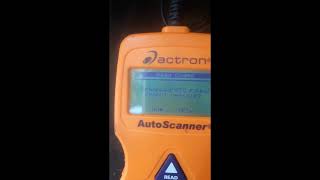
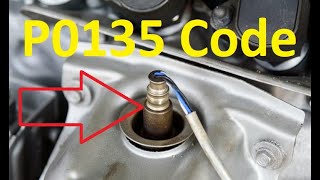
- Scan for Codes: Use an OBD-II scanner to confirm P0135 is present 🎬 Watch: A breakdown of P0135 causes and common fixes. and check for any other codes. Multiple heater codes (P0141, P0155, P0161) suggest a shared power problem.
- Inspect Fuse: Locate and inspect the fuse for the O2 sensor heater circuit in the engine bay fuse box (TIPM). Consult the owner's manual or the diagram on the fuse box lid for the correct fuse. Replace if blown.
- Locate Sensor: Identify Bank 1, Sensor 1. On the 6.1L Hemi, this is the upstream sensor (before the catalytic converter) on the DRIVER'S side.
- Visual Inspection: Inspect the sensor's wiring harness and connector for any signs of melting, chafing, corrosion, or loose connections.
- Test the Sensor: Disconnect the sensor. Use a multimeter to measure the resistance between the two heater circuit pins on the sensor side (often the two same-colored wires). A healthy sensor will have low resistance (typically 4-20 ohms). An open circuit (infinite resistance) means the sensor's heater is broken and the sensor must be replaced.
- Test the Circuit: With the key on and engine off, use a multimeter to check for 12V power on the supply wire at the vehicle-side connector. The PCM supplies a pulse-width modulated ground, so you should see battery voltage on the power feed wire. If power is missing, the problem is upstream in the wiring, fuse, or ASD relay.
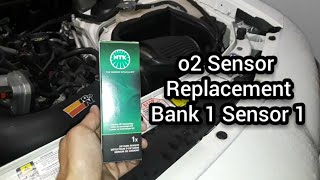
- Replace the Sensor: If the fuse is good, the wiring appears intact, and the sensor's heater circuit tests open, the sensor itself is faulty. Replace it with a Mopar or NTK-branded part. 🎬 Watch: Step-by-step 5.7L Hemi O2 sensor replacement guide.
Parts You'll Likely Need
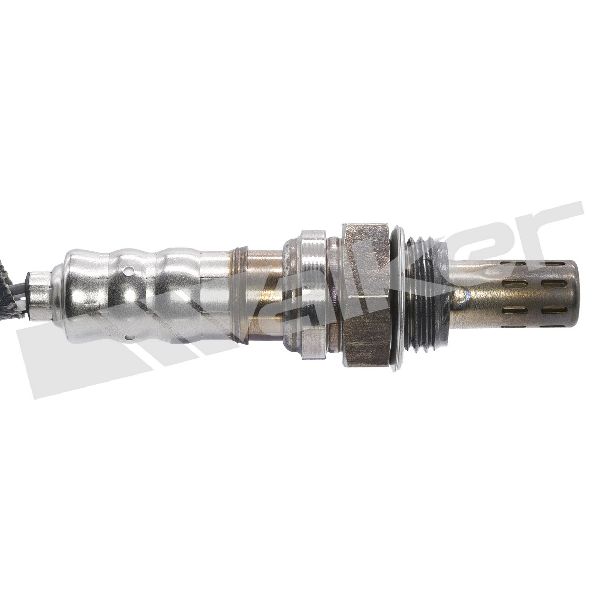
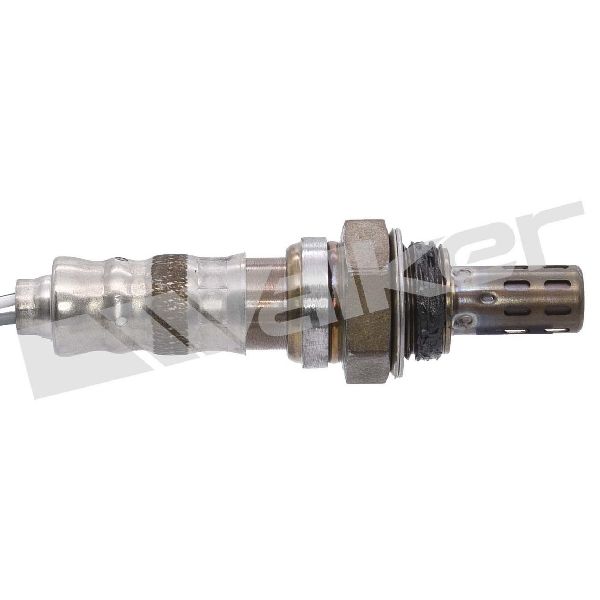
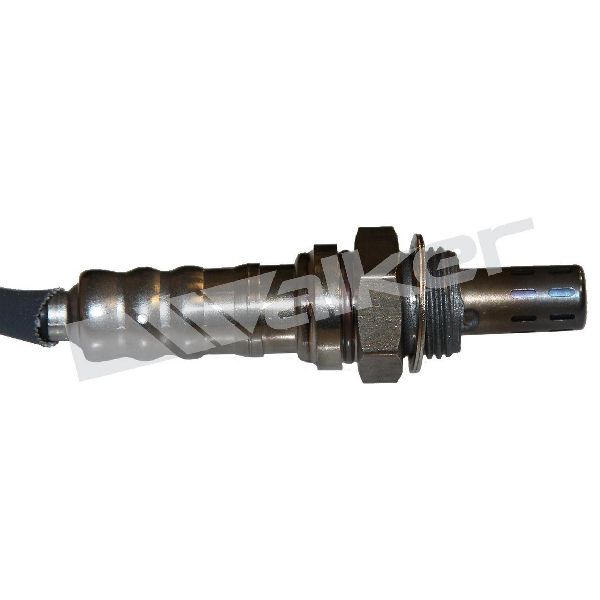
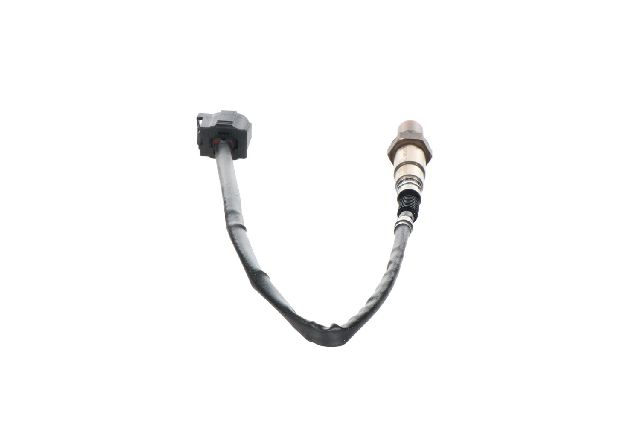
- Bank 1 Sensor 1 Oxygen Sensor (Upstream, Driver's Side)
(OEM #56029049AA)— This is the direct cause of the P0135 code in over 90% of cases for this vehicle. The internal heating element fails from age and heat cycles.
Trusted brands: Mopar (OEM), NTK (OEM Supplier, p/n 23159), Denso (p/n 234-4274)
OEM price range: $100-$150
Aftermarket price range: $50-$90
Related Codes That Often Appear With This One
- P0155 — This is the same heater circuit failure code but for Bank 2, Sensor 1 (passenger side). If both appear together, it strongly points to a shared power issue, like a fuse or relay, rather than two failed sensors.
Technical Service Bulletins (TSBs) & Recalls
- TSB 25-004-12: While not directly for the 2005-2010 300C, this TSB for other Chrysler vehicles lists P0135 as a code that can be addressed by a PCM software update. It highlights that software can sometimes be a factor in these codes.
- TSB 18-059-16: This TSB for 2011 models with the 3.6L engine involves a PCM update to correct false O2 heater codes. While not for the 6.1L Hemi, it demonstrates a history of Chrysler using software flashes to resolve erroneous O2 sensor faults.
Mechanic-Grade Diagnostic Values
- O2 Sensor Heater Element Resistance — expected: 4.0 to 6.0 Ohms at ambient temperature (approx. 70°F/21°C).. Failure: A reading of 'OL' (Open Loop/infinite resistance) or near zero ohms (short circuit) indicates a failed sensor heater.
- Heater Control Wire Voltage (at sensor connector, unplugged) — expected: Battery Voltage (12V+) when the heater is commanded on by the PCM (typically for a short period after startup).. Failure: 0V indicates a problem upstream (wiring, fuse, PCM). A voltage significantly below battery voltage (e.g., 10V) could indicate a failing PCM driver.
- Heater Control Wire Voltage (at sensor connector, plugged in/loaded) — expected: Battery Voltage (or a rapidly pulsing voltage if viewed on a scope) when commanded on.. Failure: A significant voltage drop compared to the unplugged reading (e.g., dropping from 10V to 4V) strongly suggests a weak PCM driver that cannot supply the required current.
Scan Tool Commands That Help
- Chrysler DRBIII, StarSCAN, or WiTech: O2 Heater Test (Actuator Test) — This bidirectional command allows a technician to manually activate the O2 sensor heater circuit with the engine off. It is used to verify that the PCM can command the circuit and that the wiring can carry the load, isolating the fault between the PCM, wiring, and sensor without needing to run the engine.
Wiring & Ground Locations
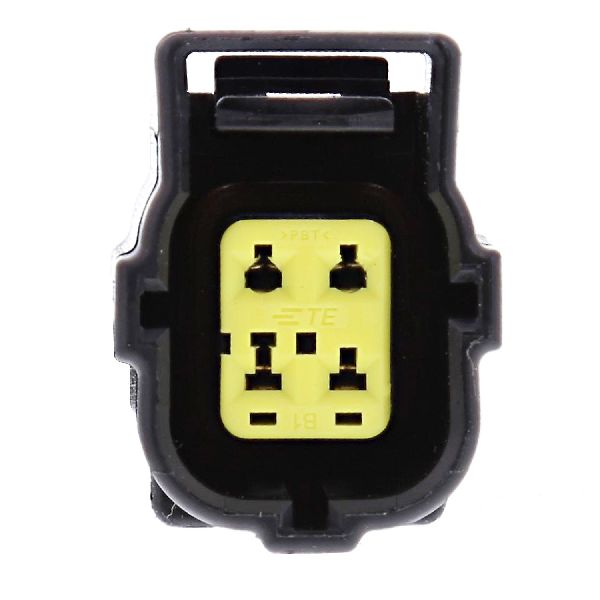
- Bank 1 Sensor 1 Connector (Upstream/Driver's Side) — On the driver's side of the transmission bell housing area, connecting the engine harness to the O2 sensor.. This is the primary connector to test for power, ground, and sensor resistance. The pins for the heater circuit are typically the two same-colored wires. On these models, the PCM supplies PWM power on one pin, and the other is a constant ground.
- G102 — On the right side of the engine compartment, near the shock tower or front control module.. This is a major engine and PCM ground point. While the O2 sensor heater has its own ground path, a poor G102 connection can cause erratic PCM behavior and various electrical faults, including O2 sensor codes.
- PCM (Powertrain Control Module) — Located at the right-rear of the engine compartment.. The PCM directly controls the power feed to the O2 sensor heater. In rare cases of failure, the heater driver circuit inside the PCM can fail, requiring testing at the PCM connector itself.
Real Owner Repair Stories
- ScannerDanner Forum, user 'chris.arriazola' (2006 Chrysler 300 (2.7L, but same power-side switched heater control)) — P0135 and multiple cylinder misfires.
❌ Tried (didn't work) Swapping the Bank 1 and Bank 2 O2 sensors; the fault did not move., Checking wiring resistance/continuity, which tested good.
✅ What actually fixed it The final diagnosis was a faulty Powertrain Control Module (PCM). The technician confirmed this by measuring the heater control wire voltage. The good bank (Bank 2) showed battery voltage, while the bad bank (Bank 1) only showed 10V unplugged, which dropped to 4V when connected to the sensor (under load). This indicated a weak driver inside the PCM.
OEM Part Supersession History
56029049AA→56029049AA (current)— No supersession found. This part number remains the active OEM part for the specified application.
Diagnostic Flowchart
Other Known Issues on This Vehicle
Issues unrelated to this code that are worth knowing about as an owner of this generation:
- Front Suspension Clunk/Rattle 🟠 Medium — Very common, typically appears after 60,000 miles. Caused by worn tension struts, sway bar bushings, or tie rod ends.
- Shifter Stuck in Park ('Pink Thingy' Failure) 🟠 Medium — Extremely common across all 2005-2007 LX platform vehicles with a console shifter. Can happen at any mileage.
- Lifter Roller Failure ('Hemi Tick') 🔴 High — A known potential issue for Gen 3 Hemi engines, including the 6.1L. Often occurs between 70,000 and 120,000 miles, especially with poor maintenance history.
- Alternator Failure 🟠 Medium — Common failure item, particularly on higher-mileage vehicles. Can fail without much warning.
- Moderate Oil Consumption 🟡 Low — Commonly reported, especially on engines over 100,000 miles. Not typically a sign of major failure if monitored.
Used vs. New Parts: Buying Guide for This Vehicle
When a used part is the smart pick: For this P0135 fault, a used part is almost never recommended for the oxygen sensor itself, as it is a wear item. A used wiring harness pigtail is a good option if only the connector is damaged. A used PCM is a cost-effective choice ONLY after a rare PCM failure has been definitively diagnosed, but it will require programming to the vehicle's VIN.
Donor-vehicle mileage cap: roughly under 150000 miles for the part to have meaningful remaining life.
What to inspect on the donor part:
- For wiring pigtails: Check for flexible, non-brittle insulation and clean, uncorroded connector pins.
- For a PCM: Inspect the case for any signs of physical damage or water intrusion. Ensure all connector pins are straight and clean.
OEM-only on this vehicle (don't cheap out):
- Oxygen Sensor: While not strictly 'OEM-only', it is highly recommended to use the Mopar part or the direct OEM supplier (NTK) to avoid compatibility issues common with this platform.
Aftermarket brands forum-validated for this vehicle:
- NTK (p/n 23159)
- Denso (p/n 234-4274)
Brands owners have reported issues with on this vehicle:
- Bosch: Frequently cited in owner forums as causing persistent or returning codes on Chrysler vehicles of this era.
Real Owner Stories
Aggregated from forums and TSBs cited above. Mileages and costs reflect what owners reported in those sources.
2006 Chrysler 300 6.1L Hemi
Symptoms: The owner experienced a P0135 code and found lower-than-expected voltage on the heater control wire during a technical deep-dive.
What fixed it: In this specific rare case, the PCM driver was found to be at fault for the heater control circuit failure.
Source hint: ScannerDanner Forum thread titled '06 Chrysler 300 with p0135'
2005-2010 Chrysler 300C 6.1L Hemi
Symptoms: Check engine light with P0135; forum members discussed the heater function and the importance of correct parts.
What fixed it: Replacing the driver's side upstream sensor with an NTK or Denso part; members specifically warned against using Bosch sensors.
Source hint: ChryslerForum.com thread titled 'P0135 code'
Related OBD-II Codes
Frequently Asked Questions
Which oxygen sensor do I need to replace for a P0135 code on my 6.1L Hemi?
Can I use a Bosch oxygen sensor to fix the P0135 code on my Chrysler 300C?
Does TSB 25-004-12 apply to my 2005-2010 Chrysler 300C SRT-8?
What should the resistance be for a healthy O2 sensor heater on this vehicle?
If I have P0135 along with P0141, P0155, and P0161, is the sensor still the likely culprit?
Helpful Videos
We Have This Part in Stock


The information in this article is provided for general reference and educational purposes only. Vehicle specifications, procedures, and part compatibility can vary by production date, trim level, and region. Always consult your vehicle's factory service manual and verify part numbers before purchasing or performing repairs. Safety-critical components such as airbags, seat belts, and braking systems should be installed by a qualified professional.
- Chrysler 300C:
- 🎬 Helpful Videos
- 🛍️ Shop This Part
- What's Unique About the 2005-2010 Chrysler 300C
- Symptoms You May Notice
- Most Likely Causes
- Rare But Worth Checking
- Diagnosis Steps
- Parts You'll Likely Need
- Related Codes That Often Appear With This One
- Technical Service Bulletins (TSBs) & Recalls
- Mechanic-Grade Diagnostic Values
- Scan Tool Commands That Help
- Wiring & Ground Locations
- Real Owner Repair Stories
- OEM Part Supersession History
- Diagnostic Flowchart
- Other Known Issues on This Vehicle
- Used vs. New Parts: Buying Guide for This Vehicle
- Real Owner Stories
- 2006 Chrysler 300 6.1L Hemi
- 2005-2010 Chrysler 300C 6.1L Hemi
- Related OBD-II Codes
- Frequently Asked Questions
- 🎟️ Get 5% Off