

P0135 on 2008-2016 Audi A4 2.0T: Causes and Fixes for O2 Sensor Heater Fault
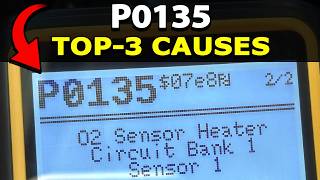
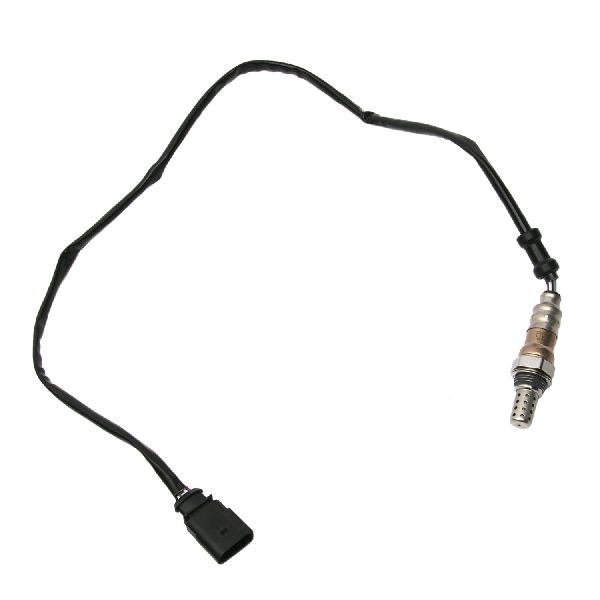
On a 2008-2016 Audi A4 2.0T, code P0135 almost always means the internal heating element in the upstream oxygen sensor has failed. The fix is to replace the sensor (Bank 1, Sensor 1), which is located on the exhaust downpipe just after the turbocharger. Before replacing, it's wise to check the associated fuse. Expect to pay $70-$150 for a quality aftermarket sensor (like Bosch or NTK) and $180-$250 for an OEM part.
- P0135 on a 2008-2016 Audi A4 almost always means the upstream oxygen sensor (before the catalytic converter) has failed.
- Always check the fuse before replacing the sensor to avoid unnecessary expense.
- Use a high-quality OEM or OEM-equivalent (e.g., Bosch) replacement sensor to ensure a lasting repair.
What's Unique About the 2008-2016 Audi A4
On the Audi A4 B8 platform with the 2.0T engine, the P0135 code is very direct. Because the engine is an inline-four, there is only one exhaust bank, which simplifies diagnosis as 'Bank 1' is the only bank. Unlike some other vehicles where this code might point to complex electrical issues, on this A4, the failure is almost always the sensor itself due to normal wear from thousands of heat cycles in the high-heat environment right after the turbocharger. The ECM triggers this specific code when it detects the sensor's heater circuit is not performing as expected, for instance, if the sensor's temperature has not reached 715°C within 40 seconds after the heater has been commanded on.
Generation note: The 2008-2016 model years cover the Audi A4 B8 generation, which includes the 2013-2016 facelift (often called B8.5). The 2.0T TFSI engine (primarily the EA888 Gen 2, engine code CAEB) and its emissions control system are fundamentally the same regarding this fault code, so the diagnosis and repair are consistent across this entire year range.
Symptoms You May Notice
- Check Engine Light is on
- Reduced fuel economy
- Possible rough idle, especially on cold starts
- Failing an emissions test
- A distinct gasoline smell from the exhaust when the engine is cold due to a rich fuel mixture.
- Replacing the downstream (post-catalyst) oxygen sensor instead of the upstream (pre-catalyst) one.
- Replacing the oxygen sensor without first checking the fuse for the heater circuit.
- Assuming a cheap, universal oxygen sensor will work. Many owners report issues with non-OEM or non-OEM-equivalent sensors, leading to the code returning.
Most Likely Causes
- Failed Oxygen Sensor Internal Heater 🔴 High Probability Oxygen sensors are wear-and-tear items that operate in a harsh exhaust environment right after the turbocharger. The internal heater element is often the first part to fail after many heat cycles, typically around 80,000-100,000 miles.
How to confirm: Disconnect the sensor and use a multimeter to measure the resistance between the two heater pins (often the same color wires). A reading of 'OL' or infinite resistance means the heater is burned out. A good sensor should have a low resistance, typically between 2.5-20 ohms.
Typical fix: Replace the Bank 1, Sensor 1 (upstream) oxygen sensor. A specialized 22mm (or 7/8") oxygen sensor socket is recommended for removal.
Est. part cost: $70-$250 - Blown Fuse for Heater Circuit ⚪ Low Probability A short circuit in the sensor's heater element can cause the corresponding fuse to blow as a protective measure. While less common, it's a critical check before replacing parts.
How to confirm: Check the fuse panels. The B8 A4 has multiple fuse box locations: on both the driver's and passenger's sides of the dashboard, and in the trunk. The specific fuse for the lambda sensor heater may also be in the engine bay plenum chamber (E-box). Consult the vehicle's manual or an online diagram for the exact location, as it can vary. Visually inspect the fuse or test for continuity with a multimeter.
Typical fix: Replace the blown fuse. If the new fuse blows immediately, it indicates a short circuit in the wiring or the sensor itself that needs to be found.
Est. part cost: $1-$5 - Damaged Wiring or Connector ⚪ Low Probability The sensor wiring is located near the hot turbocharger and exhaust components, making it susceptible to melting, chafing, or heat-related degradation over time. The plastic connector can also become brittle and crack.
How to confirm: Visually inspect the entire wiring harness for the upstream O2 sensor, from the sensor connector back to the engine bay. Look for any signs of melting, fraying, or corrosion in the connector pins. Pay close attention to where the harness may contact hot engine parts.
Typical fix: Repair the damaged section of wiring or replace the connector pigtail.
Est. part cost: $10-$50
Rare But Worth Checking
- Faulty Engine Control Module (ECM): This is extremely rare. The ECM should only be considered a potential cause after all other possibilities (sensor, fuse, and wiring) have been definitively ruled out.
Diagnosis Steps
- Read the fault codes with an OBD-II scanner to confirm P0135 is present.
- Check the fuse for the O2 sensor heater circuit. This is a critical first step. Check fuse panels on the sides of the dashboard and potentially in the engine bay E-box.
- If the fuse is good, perform a visual inspection of the Bank 1, Sensor 1 (upstream) oxygen sensor's wiring and connector. It is located on the exhaust pipe right after the turbocharger, accessible from the top of the engine bay. Look for any signs of melting, fraying, or corrosion.
- If the wiring appears intact, disconnect the sensor's electrical connector. Use a multimeter to test the resistance of the heater element within the sensor itself. An open circuit (infinite resistance) or a dead short (zero resistance) confirms the sensor has failed. A good sensor should read between 2.5-20 ohms.
- If the sensor's resistance is within spec, test for 12V power at the vehicle's harness connector (on the heater circuit pins) with the ignition on. If there is no power, there is a wiring issue between the fuse box and the sensor.
- If all wiring and fuses are good, but the sensor's heater element shows an open circuit, replace the upstream oxygen sensor.
- After replacement, clear the fault codes and perform a drive cycle to ensure the Check Engine Light does not return.
Parts You'll Likely Need
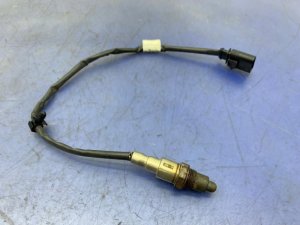
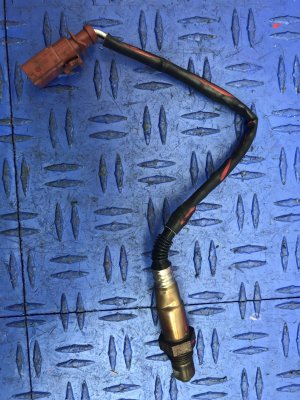
- Upstream Oxygen Sensor (Bank 1, Sensor 1)
(OEM #8K0906262C, 06J906262AA)— This is the most common failure point for code P0135 on this vehicle, as the internal heater element wears out over time.
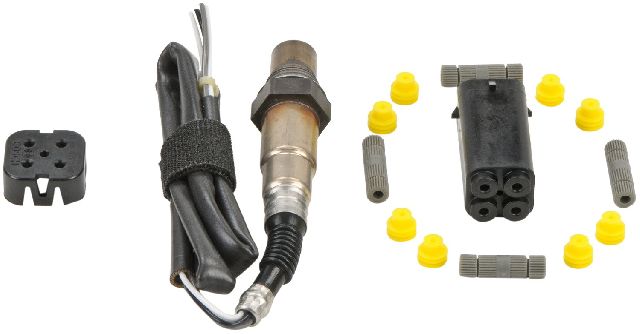
Trusted brands: Bosch (OEM supplier, part #17321 is a widely cited direct-fit replacement), NTK/NGK, Denso
OEM price range: $180-$250
Aftermarket price range: $70-$150
Related Codes That Often Appear With This One
- P0134 — P0134 means 'O2 Sensor Circuit No Activity Detected'. Since a failed heater (P0135) prevents the sensor from warming up and showing activity, these two codes often appear together and strongly point to a failed sensor.
- P0031 — P0031 is 'HO2S Heater Control Circuit Low'. It is very similar to P0135 and points to the same problem with the heater element or its circuit. Seeing them together reinforces the diagnosis of a failed sensor.
- P0132 — P0132 indicates 'O2 Sensor Circuit High Voltage'. If both P0132 and P0135 are present, it strongly suggests an internal failure of the oxygen sensor itself, affecting both the heater and the sensing element.
Technical Service Bulletins (TSBs) & Recalls
- 01139020337671: '01 MIL on (DTC P1196/P1197/P0135, heater circuit fault lambda sensor) - Repair Authorization' (2013-05-02)
Platform-Specific Known Issues
- The TSB #01139020337671, while for a different model (S5), indicates that heater circuit faults including P0135 were common enough for Audi to issue a bulletin regarding repair authorization, suggesting a known failure pattern.
- Forum discussions on AudiWorld and Audizine consistently highlight the importance of using a quality OEM or OEM-supplier (like Bosch) replacement sensor. Owners report that cheap generic parts from sources like eBay can be faulty out of the box or fail quickly, causing the P0135 code to return immediately.
- The physical location of the sensor, right on the downpipe after the turbo, makes it relatively easy to access from above but also exposes it to extreme heat, which is the primary cause of failure.
Mechanic-Grade Diagnostic Values
- O2 Sensor Heater Element Resistance — expected: 2.5 to 20 Ohms when cold. A new sensor often measures around 2.6 Ohms.. Failure: An open circuit ('OL' or infinite resistance) or a direct short (near 0 Ohms) indicates a failed heater element.
- O2 Sensor Heater Power Supply Voltage — expected: Approximately 12V (or battery voltage) at the harness-side connector's power pin with Key On, Engine Off.. Failure: 0V indicates a blown fuse, bad relay, or a break in the power supply wire from the fuse box.
- VCDS Measuring Block Group 036 (Heater Status) — expected: The status should read 'B1-S1 Htg. ON' during the engine warm-up phase.. Failure: A status of 'Htg. OFF' or a test failure message when the heater should be active points to a fault in the circuit or the ECM's control.
- Engine-to-Chassis Ground Voltage Drop — expected: Less than 0.15 volts at idle, measured between the engine block and a chassis ground point.. Failure: Higher readings indicate a degraded main engine ground strap, which can cause various electrical issues, including sensor faults.
Scan Tool Commands That Help
- VCDS (VAG-COM): Generic OBD-II Mode > Mode 6 — To check the test results of non-continuously monitored components, which includes the heated oxygen sensor test (Test-ID 01). This can confirm if the system has run and passed or failed the internal heater test.
- VCDS (VAG-COM): Measuring Value Blocks (MVB) - Group 034, 036 — To monitor the live status of the O2 sensor heater ('Htg. ON'/'Htg. OFF') and the sensor aging test. This helps verify if the ECM is commanding the heater to turn on and if the circuit is responding as expected during warm-up.
Wiring & Ground Locations
- Fuse SB7 — In the fuse holder B (black carrier) located in the electronics box (E-box) in the engine bay plenum chamber, under the windshield.. This 15A fuse is often the power supply for the oxygen sensor heater circuit. A blown fuse will cause P0135. The location is also prone to water ingress, which can cause corrosion on the fuse terminals, leading to an open circuit even if the fuse isn't blown.
- Ground Point G105 / G106 — G105 is the engine block-to-firewall ground strap. G106 is on the left side of the engine bay.. While the O2 sensor heater is grounded through the ECM, the ECM itself relies on solid chassis and engine grounds. A degraded main engine ground strap is a common issue on B8 models and can cause a variety of seemingly unrelated electrical faults and sensor errors due to unstable voltage references.
Real Owner Repair Stories
- Audi S5 owner (similar VAG electrical architecture) (2007-2012 Audi S5 4.2L V8) — Check Engine Light with heater codes for both banks (P0135 & P0155).
❌ Tried (didn't work) Initial diagnosis pointed towards replacing the sensors.
✅ What actually fixed it The fuses for the O2 sensor circuits, located in the engine compartment plenum box, were not blown but were heavily corroded on the contacts. Cleaning the corrosion from the fuse legs and terminals and reinstalling the original fuses resolved the codes. - AudiWorld Forum User (2014 Audi A4 2.0TDI (B8.5)) — Check Engine Light and DPF light on, with code P0135.
❌ Tried (didn't work) Replacing the upstream O2 sensor with a part from eBay did not fix the issue and resulted in a 'no signal' reading from VAG-COM.
✅ What actually fixed it The user was advised that the generic eBay sensor was likely the problem and that a proper OEM or OEM-equivalent (Bosch) sensor was required. The final fix was not posted, but the strong implication was the incorrect part was the cause of the continued failure.
OEM Part Supersession History
06F906262R, 06F906262AC→06J906262AA— Part has been updated by the manufacturer over time.
Heads up: While the base part number is 06J906262AA, it's critical to verify fitment with the vehicle's VIN. Different engine codes (e.g., CAEB vs. CNC) and model years may use sensors that are physically identical but have different cable lengths or internal calibrations.
Model Year Variations Within This Range
- 2008-2016: Fuse box layouts and specific fuse numbering for the O2 sensor heater circuit can vary slightly between the B8 (2008-2012) and B8.5 (2013-2016) facelift models. Always consult the owner's manual or a model-year-specific diagram for the exact fuse location.
Diagnostic Flowchart
Other Known Issues on This Vehicle
Issues unrelated to this code that are worth knowing about as an owner of this generation:
- Excessive Oil Consumption 🔴 High — Very common, especially on 2009-2011.5 models with engine code CAEB. Can start as early as 60,000 miles. Some owners report adding a quart of oil every 300-500 miles. (Ref: Audi TSB 2027731 / 17 13 43 addresses this. The fix involves a multi-stage approach, starting with a new PCV valve and crank seal, and potentially escalating to piston and ring replacement.)
- Timing Chain Tensioner Failure 🔴 High — A critical issue primarily affecting pre-2013 models with the original plastic tensioner design. Failure can occur without warning, often between 70,000-120,000 miles, leading to catastrophic engine damage. (Ref: Subject of multiple class-action lawsuits. An updated metal tensioner was introduced to fix the problem. A rattling noise on cold starts is a key warning sign.)
- PCV Valve Failure 🟠 Medium — Common across all years. The internal diaphragm tears, causing a large vacuum leak, which can lead to a rough idle, lean codes (P2187), and increased oil consumption. (Ref: Part of the first stage of the oil consumption TSB. The part has been revised multiple times; the latest version (e.g., 06H103495AK) should be used for replacement.)
- Water Pump Failure 🟠 Medium — The OEM water pump has a plastic housing that is prone to cracking or developing leaks from its gasket, often between 60,000-100,000 miles. Symptoms include coolant leaks and overheating warnings. (Ref: No specific recall, but it is a widely acknowledged failure. Many owners opt for an aftermarket replacement with a more durable all-aluminum housing.)
- Carbon Buildup on Intake Valves 🟠 Medium — An inherent issue with all direct-injection (FSI/TFSI) engines. Over time (typically every 50,000-80,000 miles), carbon deposits restrict airflow, causing power loss, hesitation, and misfires. (Ref: No TSB or recall. The standard repair is a manual cleaning process, often referred to as 'walnut blasting'.)
Used vs. New Parts: Buying Guide for This Vehicle
When a used part is the smart pick: Never. Oxygen sensors are wear-and-tear items with a finite lifespan, heavily affected by heat cycles and exhaust contaminants. A used sensor has unknown mileage and remaining life, making it a poor value proposition. The labor to install it is the same, and the risk of it failing shortly after installation is very high.
What to inspect on the donor part:
- Not applicable as used sensors are not recommended.
OEM-only on this vehicle (don't cheap out):
- While not strictly 'OEM-only', using a sensor from the Original Equipment Manufacturer (OEM) supplier is highly recommended. For this vehicle, that is Bosch.
Aftermarket brands forum-validated for this vehicle:
- Bosch (OEM supplier, part #17321 is a common direct-fit replacement)
- NTK/NGK
- Denso
Brands owners have reported issues with on this vehicle:
- Generic, unbranded sensors from online marketplaces like eBay or Amazon are frequently reported to be faulty out-of-the-box, have incorrect resistance values, or fail prematurely, causing the P0135 code to return.
Real Owner Stories
Aggregated from forums and TSBs cited above. Mileages and costs reflect what owners reported in those sources.
2014 Audi A4 TDI
Symptoms: Experienced a P0135 code and attempted to use a generic sensor from eBay which did not solve the problem.
What fixed it: The discussion confirmed the sensor location is just after the turbo and highlighted the need for a quality sensor over a faulty generic one.
Source hint: AudiWorld Forums - Thread 'O2 Sensor Heater Circuit Bank 1 Sensor 1 Location'
Audi TT (2.0T)
Symptoms: Check engine light with code P0135.
What fixed it: Replacement of the front oxygen sensor located in the downpipe just past the turbo outlet.
Source hint: AudiForums.com - Thread 'code P0135'
Related OBD-II Codes
Frequently Asked Questions
Where is the Bank 1, Sensor 1 oxygen sensor located on my 2008-2016 Audi A4 2.0T?
Does Audi have a Technical Service Bulletin (TSB) for P0135 heater circuit faults?
What resistance should I see when testing the O2 sensor heater on my A4?
Can I use a generic oxygen sensor from eBay to fix the P0135 code?
Where should I look for a blown fuse related to the O2 sensor heater on a B8 A4?
Why did my O2 sensor fail at only 90,000 miles?
Helpful Videos

Used OEM Parts in Stock

New Aftermarket Parts Available

The information in this article is provided for general reference and educational purposes only. Vehicle specifications, procedures, and part compatibility can vary by production date, trim level, and region. Always consult your vehicle's factory service manual and verify part numbers before purchasing or performing repairs. Safety-critical components such as airbags, seat belts, and braking systems should be installed by a qualified professional.
- Audi A4:
- 🎬 Helpful Videos
- 🛍️ Shop This Part
- What's Unique About the 2008-2016 Audi A4
- Symptoms You May Notice
- Most Likely Causes
- Rare But Worth Checking
- Diagnosis Steps
- Parts You'll Likely Need
- Related Codes That Often Appear With This One
- Technical Service Bulletins (TSBs) & Recalls
- Platform-Specific Known Issues
- Mechanic-Grade Diagnostic Values
- Scan Tool Commands That Help
- Wiring & Ground Locations
- Real Owner Repair Stories
- OEM Part Supersession History
- Model Year Variations Within This Range
- Diagnostic Flowchart
- Other Known Issues on This Vehicle
- Used vs. New Parts: Buying Guide for This Vehicle
- Real Owner Stories
- 2014 Audi A4 TDI
- Audi TT (2.0T)
- Related OBD-II Codes
- Frequently Asked Questions
- 🎟️ Get 5% Off