

P0134 on 2019-2024 Genesis G70 3.3T: O2 Sensor No Activity Causes and Fixes
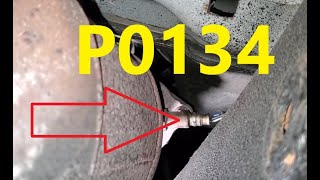
This code means the primary oxygen sensor on the passenger side of the engine isn't working. The most common fix is to replace the Bank 1, Sensor 1 oxygen sensor. Before replacing, check the sensor's fuse and inspect the wiring for heat damage. Expect to pay around $180-$280 for an OEM sensor and about an hour of labor if done at a shop.
- P0134 on your G70 3.3T points to a dead upstream oxygen sensor on the passenger side.
- Before buying a new sensor, perform a quick visual inspection of the wiring for heat damage and check the O2 sensor fuse in the engine bay fuse box.
- Use an OBD-II scanner's live data function to confirm a flatlined voltage from Bank 1, Sensor 1, which is a definitive sign of a bad sensor.
- Replacing the sensor is a DIY-friendly job for those with basic tools, including a special 22mm (7/8") O2 sensor socket.
- The Kia Stinger GT and Genesis G80/G90 with the 3.3T engine share this exact component and issue, making their forums valuable resources.
What's Unique About the 2019-2024 Genesis G70
On the Genesis G70 with the 3.3L twin-turbo V6 (Lambda II T-GDi), this code points specifically to the passenger side (Bank 1) upstream oxygen sensor. Access to this sensor is relatively straightforward from the top of the engine bay. The platform does not have a widely documented history of premature or unusual failures related to this code; the issue is typically a standard wear-and-tear failure of the sensor itself. Diagnosis and repair follow standard procedures for a modern gasoline direct injection (GDI) engine. The OEM sensor brand is typically NTK or Denso, supplied through Hyundai Mobis.
Generation note: The 2019-2024 model years cover the first generation (IK) of the Genesis G70. While a significant facelift occurred for the 2022 model year, the 3.3T engine, exhaust layout, and sensor systems remained fundamentally the same, so the causes and fixes for P0134 are consistent across this entire year range.
Symptoms You May Notice
- Check Engine Light is on
- Reduced fuel economy
- Rough or unstable idle
- Slight engine hesitation or stumbling on acceleration
- Failing an emissions test
- Black smoke from the exhaust (in rare cases of a very rich condition)
- Replacing the O2 sensor without first checking the wiring and fuses. A simple blown fuse or damaged wire can mimic a failed sensor.
- Replacing the wrong sensor. P0134 is for Bank 1, Sensor 1 (Upstream), not the downstream sensor (Sensor 2) or the sensor on the driver's side (Bank 2).
Most Likely Causes
- Failed Bank 1, Sensor 1 Oxygen Sensor 🔴 High Probability Oxygen sensors are wear-and-tear items that operate in a high-heat exhaust environment. Over time, the internal sensing element or heater can fail, which is the most common reason for this code. Contamination from oil or coolant can also lead to premature failure.
How to confirm: Use an OBD-II scanner to monitor live data for 'O2S B1S1'. The voltage should fluctuate rapidly between approximately 0.1V and 0.9V on a warm engine. If the voltage is stuck (e.g., flat at 0.45V) or shows no reading, the sensor has failed.
Typical fix: Replace the Bank 1, Sensor 1 (passenger side, upstream) oxygen sensor. This requires a 22mm (or 7/8") oxygen sensor socket.
Est. part cost: $180-$280 - Damaged Wiring or Connector 🟡 Medium Probability The sensor wiring is located in the hot engine bay and can be susceptible to heat damage, abrasion, or corrosion at the connector pins. Wires can melt if they come into contact with the exhaust manifold.
How to confirm: Visually inspect the wiring harness leading to the sensor for any signs of melting, chafing, or breaks. Unplug the connector and check for corrosion, moisture, or bent pins. Use a multimeter to check for continuity on the signal wire and power/ground on the heater circuit wires.
Typical fix: Repair the damaged section of the wire or replace the connector pigtail.
Est. part cost: $10-$50 - Blown O2 Sensor Heater Fuse ⚪ Low Probability A short in the sensor's internal heater circuit or its wiring can cause the corresponding fuse to blow. The sensor cannot operate correctly until it reaches operating temperature (around 600°F), which the heater facilitates. If the heater is inoperative, the sensor may not send a signal, triggering P0134.
How to confirm: Locate the fuse box in the engine compartment and check the fuse labeled for O2 sensors or 'Sensor 1'. Visually inspect if the fuse is blown or test for continuity with a multimeter. The specific fuse may be labeled 'SNSR 1' or similar.
Typical fix: Replace the blown fuse. If it blows again immediately, there is a short circuit in the heater wiring or the sensor itself that must be diagnosed and repaired.
Est. part cost: $1-$5 - Exhaust Leak ⚪ Low Probability A leak in the exhaust manifold or at the turbocharger flange before the O2 sensor can allow outside air into the exhaust stream. This unmetered oxygen can skew the sensor's readings, making it appear inactive to the ECU.
How to confirm: Listen for a ticking or hissing sound from the passenger side of the engine, especially when the engine is cold. A mechanic can use a smoke machine to pressurize the exhaust system and visually identify the source of any leaks.
Typical fix: Replace the leaking gasket (e.g., exhaust manifold gasket) or tighten the loose bolts.
Est. part cost: $20-$100
Rare But Worth Checking
- Faulty Powertrain Control Module (PCM): This is extremely rare. The PCM should only be considered after all other possibilities, including the sensor, wiring, and fuses, have been thoroughly tested and ruled out. Sometimes a PCM software update from the dealer can resolve logic-related issues.
Diagnosis Steps
- Connect an OBD-II scanner and confirm that P0134 is present. Note any other codes, especially P0135.
- Access the live data stream on the scanner and monitor the voltage for 'O2S B1S1' (Bank 1, Sensor 1).
- With the engine warm and idling, observe the voltage. A healthy sensor will show voltage fluctuating rapidly between about 0.1V and 0.9V. If the voltage is static (often around 0.45V), very low, or absent, this confirms the 'no activity' fault.
- Turn off the engine and allow it to cool. Locate the Bank 1 Sensor 1 on the passenger side exhaust manifold, just before the catalytic converter.
- Visually inspect the sensor's wiring harness and connector for any signs of melting, fraying, or physical damage. Ensure the connector is securely plugged in.
- Check the fuse box (typically in the engine bay) for a blown fuse related to the oxygen sensors (e.g., 'SNSR 1'). Replace if blown.
- If wiring and fuses are intact, start the engine and listen for any audible exhaust leaks near the passenger-side manifold or turbocharger.
- If no other issues are found, the oxygen sensor itself is the most likely culprit and should be replaced using a 22mm or 7/8" O2 sensor socket.
- After replacement, clear the code with the scanner and perform a test drive to ensure the code does not return.
Parts You'll Likely Need
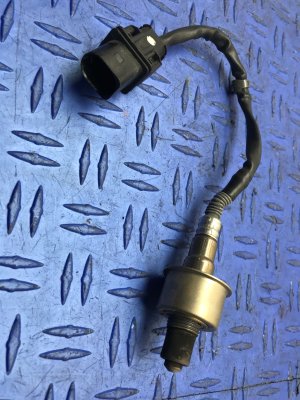
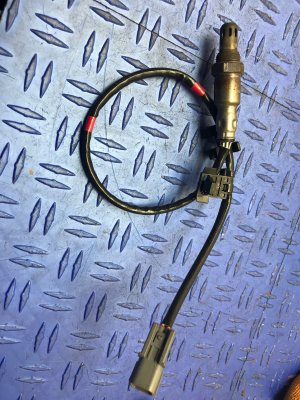
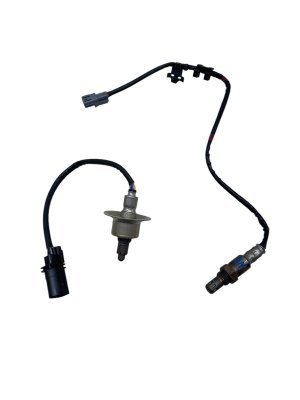
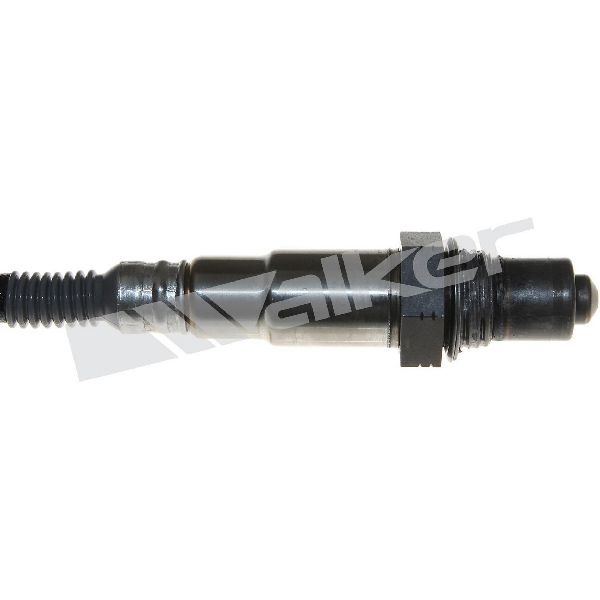
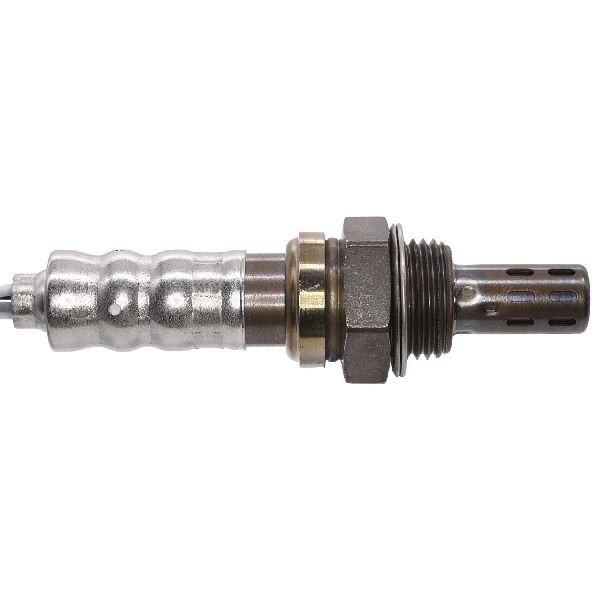
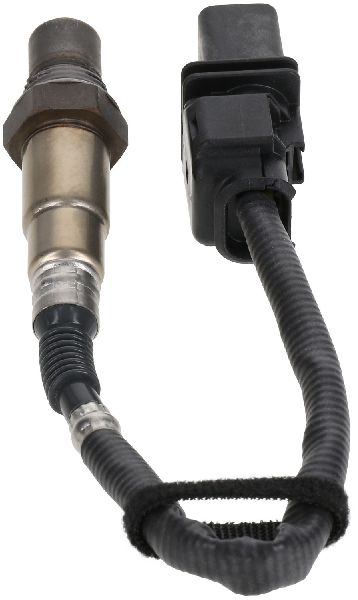
- Oxygen Sensor (Bank 1, Sensor 1)
(OEM #39210-3L000)— This is the upstream sensor for the passenger side (Bank 1) that directly causes the P0134 code when it fails. Always verify the part number with a dealer using your VIN before purchasing, as revisions can occur.
Trusted brands: Hyundai/Genesis (OEM), NTK, Denso
OEM price range: $270-$380
Aftermarket price range: $90-$180
Related Codes That Often Appear With This One
- P0135 — P0135 indicates a fault in the heater circuit for the same sensor (Bank 1, Sensor 1). If the heater fails, the sensor may not warm up properly, leading to the P0134 'No Activity' code. It's common to see both codes together.
Technical Service Bulletins (TSBs) & Recalls
- NHTSA #24V191000 / Genesis Recall 019G: Addresses a leaking left-hand turbocharger oil feed pipe which can cause oil loss and risk of fire.
- TSB 25-BE-004G: Pertains to a warranty extension for blower motor front wiring on 2019 models.
- TSB 23-BD-002G: Addresses headlight fogging/condensation issues.
Mechanic-Grade Diagnostic Values
- O2 Sensor Heater Circuit Resistance — expected: Typically between 2 and 30 Ohms when measured across the two same-colored wires on the sensor connector.. Failure: A reading of infinity (Open Loop) or near zero Ohms (short circuit) indicates a failed heater element.
- KOEO (Key On, Engine Off) Bias Voltage — expected: Approximately 450 mV (0.45V).. Failure: A reading of 0V or significantly different from 450mV can indicate a wiring issue or a problem with the PCM's reference voltage supply.
Scan Tool Commands That Help
- Hyundai GDS (Global Diagnostic System): Actuation Test for O2 Sensor Heater — This function allows a technician to command the O2 sensor heater circuit on and off to verify its operation. While monitoring live data for the heater duty cycle and sensor voltage, this test can confirm if the heater is responding to ECU commands, helping to isolate a faulty heater from a wiring or ECU driver issue.
- Hyundai GDS (Global Diagnostic System): Resetting Adaptive Values — After replacing an O2 sensor, it can be beneficial to reset the engine's adaptive fuel trim values. This forces the ECU to relearn the fuel mixture strategy with the new, correctly functioning sensor, potentially improving performance more quickly. This is found under 'Vehicle Software Management'.
Wiring & Ground Locations
- GC102 — Likely located on the engine block or cylinder head near the main engine harness.. A partial engine control pinout for the Lambda II 3.3L T-GDi lists 'GC102' as a primary ground for the Engine Control System. A poor or corroded ground at this location could introduce electrical noise or incorrect reference points for various sensors, including the O2 sensors, potentially causing erratic behavior or fault codes.
- Bank 1 Sensor 1 Connector Pins — On the sensor pigtail and corresponding harness connector.. For a typical 4-wire sensor, two same-colored wires are for the heater circuit (power and ground), one is the signal wire, and one is the signal ground. Testing for battery voltage at the heater power pin (with key on) and continuity to ground on the heater ground pin is a critical diagnostic step before condemning the sensor.
OEM Part Supersession History
39210-3L000→39210-3L000— No supersession found.
Heads up: This part number appears to be consistent for the G70, G80, and G90 models with the 3.3L engine across the specified model years.
Model Year Variations Within This Range
- 2022-2024: For the 2022 facelift, 3.3T models with the Sport package received a new Variable Exhaust Valve System. This adds 3 horsepower but does not change the fundamental operation, location, or part number of the upstream O2 sensors. The core engine and emissions control system relevant to P0134 remained the same.
Diagnostic Flowchart
Other Known Issues on This Vehicle
Issues unrelated to this code that are worth knowing about as an owner of this generation:
- Leaking Turbocharger Oil Feed Pipe 🔴 High — Common enough to warrant a recall. Affects the left-hand (driver's side) turbo. (Ref: NHTSA #24V191000 / Genesis Recall 019G / TSB 24-01-032G for 2019-2022 models.)
- Wastegate Actuator Rattle/Squeak 🟠 Medium — Frequently discussed by owners. A squeak on startup, shutdown, or light throttle can be a precursor to failure.
- Intake Valve Carbon Buildup 🟠 Medium — A common long-term issue for all Gasoline Direct Injection (GDI) engines, including the Lambda II. Typically becomes noticeable after 60,000+ miles, causing rough idle or misfires.
- Sunroof and Interior Rattles 🟡 Low — Very common complaint from owners, especially from the sunroof/headliner area, often worsening in hot weather. (Ref: Multiple TSBs have been issued to address sunroof noise with updated procedures or parts.)
- Jerky/Harsh Downshifts 🟡 Low — A common complaint regarding the 8-speed automatic transmission, particularly harsh shifts from 3-2 and 2-1 when coming to a stop.
- Blower Motor/Fuse Box Failure 🟠 Medium — Affects certain 2019 models, leading to an inoperative HVAC blower fan. (Ref: Warranty Extension Z02G (TSB 25-BE-004G) extends coverage for the front wiring harness to 10 years/120,000 miles.)
Used vs. New Parts: Buying Guide for This Vehicle
When a used part is the smart pick: For this specific repair, using a used part is not recommended. However, if the issue is a damaged connector, sourcing a used connector pigtail from a junkyard harness is a viable and cost-effective repair.
Donor-vehicle mileage cap: roughly under 50000 miles for the part to have meaningful remaining life.
What to inspect on the donor part:
- For a connector pigtail, ensure the plastic is not brittle or cracked.
- Check for any signs of corrosion or moisture inside the connector.
- Verify the locking tab is intact and functional.
- Ensure there is at least 4-6 inches of wire attached to allow for proper splicing.
OEM-only on this vehicle (don't cheap out):
- Oxygen Sensor
Aftermarket brands forum-validated for this vehicle:
- NTK (often the OEM supplier)
- Denso
- Bosch
Brands owners have reported issues with on this vehicle:
- No-name, unbranded sensors sold on marketplaces are frequently reported by mechanics to have high failure rates, incorrect calibration, or short service life.
Real Owner Stories
Aggregated from forums and TSBs cited above. Mileages and costs reflect what owners reported in those sources.
2019 Genesis G70 3.3L T-GDi
Symptoms: Check engine light on, rough or unstable idle, and a slight hesitation during acceleration.
What fixed it: Replacement of the Bank 1, Sensor 1 oxygen sensor using a 22mm socket after live data showed the voltage was stuck at 0.45V.
Source hint: Reddit r/GenesisG70
2018 Kia Stinger GT 3.3T
Symptoms: The owner noted the car was failing an emissions test and noticed reduced fuel economy.
What fixed it: Found a blown 'SNSR 1' fuse in the engine compartment fuse box caused by a short in the sensor's internal heater circuit.
Source hint: Kia Stinger Forum
Related OBD-II Codes
Frequently Asked Questions
Is there a recall for my 2019-2022 Genesis G70 that might be related to exhaust or sensor issues?
My 2019 G70 has an inoperative heater fan and now a P0134 code; are they related?
Which oxygen sensor do I need to replace for a P0134 code on the 3.3T engine?
Can I use a sensor from a Kia Stinger GT to fix my G70?
Could a ticking sound from the passenger side be causing my P0134 code?
Will carbon buildup cause this 'no activity' code on my high-mileage G70?
Helpful Videos
Used OEM Parts in Stock
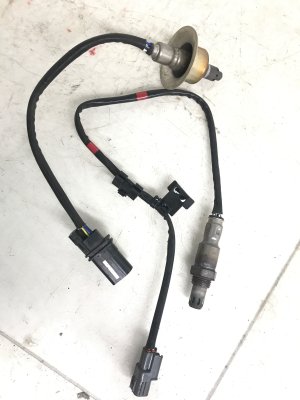
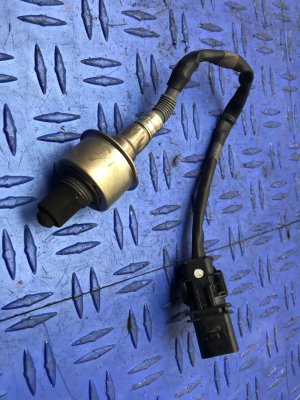
New Aftermarket Parts Available
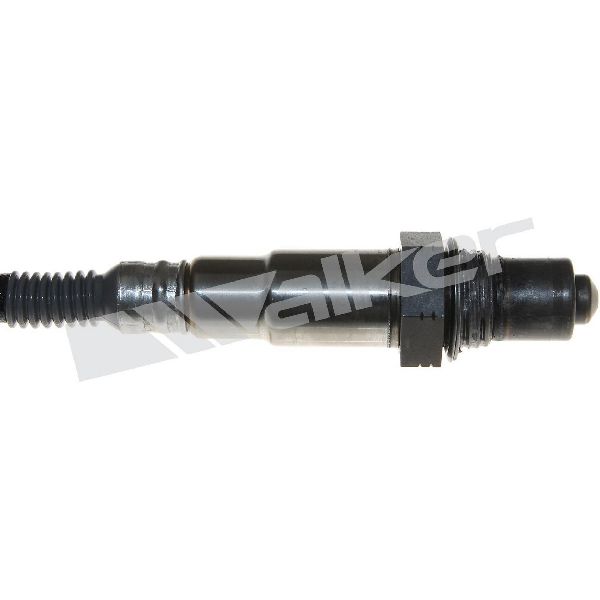

The information in this article is provided for general reference and educational purposes only. Vehicle specifications, procedures, and part compatibility can vary by production date, trim level, and region. Always consult your vehicle's factory service manual and verify part numbers before purchasing or performing repairs. Safety-critical components such as airbags, seat belts, and braking systems should be installed by a qualified professional.
- Genesis G70:
- 🎬 Helpful Videos
- 🛍️ Shop This Part
- What's Unique About the 2019-2024 Genesis G70
- Symptoms You May Notice
- Most Likely Causes
- Rare But Worth Checking
- Diagnosis Steps
- Parts You'll Likely Need
- Related Codes That Often Appear With This One
- Technical Service Bulletins (TSBs) & Recalls
- Mechanic-Grade Diagnostic Values
- Scan Tool Commands That Help
- Wiring & Ground Locations
- OEM Part Supersession History
- Model Year Variations Within This Range
- Diagnostic Flowchart
- Other Known Issues on This Vehicle
- Used vs. New Parts: Buying Guide for This Vehicle
- Real Owner Stories
- 2019 Genesis G70 3.3L T-GDi
- 2018 Kia Stinger GT 3.3T
- Related OBD-II Codes
- Frequently Asked Questions
- 🎟️ Get 5% Off