

P0133 on 2003-2008 Toyota Corolla: O2 Sensor Slow Response Causes and Fixes
On a 2003-2008 Toyota Corolla, code P0133 almost always points to a failing upstream oxygen (O2) sensor, which is more accurately called an Air/Fuel Ratio (A/F) sensor on this vehicle. Replacing this sensor is the most common fix. Expect to pay around $45-$75 for an aftermarket sensor and $120-$180 for an OEM Denso part. It's a straightforward DIY job for many owners, though sometimes an intake manifold gasket leak can be the true culprit, especially if code P0171 is also present.
- P0133 on a 2003-2008 Corolla almost always means the upstream Air/Fuel Ratio sensor (Bank 1, Sensor 1) is failing OR the intake manifold gasket is leaking.
- If you also have a P0171 code, the intake manifold gasket is the most likely culprit. A smoke test is the best way to confirm.
- Before buying parts, perform a visual check for obvious exhaust leaks around the manifold and check for vacuum leaks.
- Use a quality OEM brand like Denso for the replacement A/F sensor to ensure compatibility and longevity; the recommended part for 2005-2008 models is Denso 234-9052.
- If replacing the intake gasket, ensure you get the updated orange version (P/N 17171-22060) as the original black one is prone to failure.
- Replacing the sensor is a manageable DIY job that requires removing a heat shield and using a special O2 sensor socket or a 22mm wrench.
What's Unique About the 2003-2008 Toyota Corolla

For the ninth-generation Toyota Corolla (E130) and its platform mates (Toyota Matrix, Pontiac Vibe) with the 1ZZ-FE engine, this code is extremely common. The upstream sensor is a wideband Air/Fuel Ratio (A/F) sensor, not a traditional narrowband O2 sensor. This means it operates differently and provides more precise feedback to the ECU. While the sensor itself is a primary failure point, these engines are also known for intake manifold gasket leaks that allow unmetered air into the engine, causing both a slow sensor response and a lean condition (P0171). Toyota even issued a Technical Service Bulletin (TSB EG045-07) regarding this specific issue.
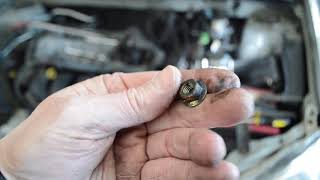
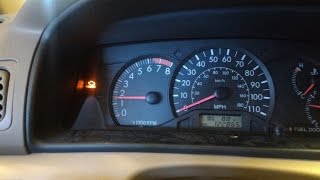
🎬 Watch: Diagnosing P0133 and P0171 codes following the Toyota TSB.Symptoms You May Notice

- Check Engine Light is on
- Decreased fuel economy
- Rough or uneven idle, especially when cold
- Engine hesitation or misfires
- Slower than normal acceleration
- Failure to pass an emissions test
- Replacing the catalytic converter. P0133 indicates a problem with the upstream sensor's *response time*, not the efficiency of the converter (which is typically code P0420).
- Replacing fuel injectors or the fuel pump. While fuel system issues can cause performance problems, they are not a primary cause of a slow A/F sensor response code on this vehicle.
- Replacing the A/F sensor when the true cause is an intake manifold gasket leak. This is very common, especially when P0171 is also present.
Most Likely Causes

- Failing Upstream Air/Fuel Ratio (A/F) Sensor 🔴 High Probability The A/F sensor is a consumable part that degrades from heat, age, and contaminants over many years and miles. It's the most frequent failure point for this code on this vehicle.
How to confirm: Use a scan tool to graph the live data for 'O2S B1S1'. Unlike a traditional O2 sensor, a healthy A/F sensor's voltage on a Toyota should remain relatively stable around 3.3V at idle. Its response is checked by snapping the throttle; the voltage should change quickly. A slow sensor will show a sluggish reaction to throttle changes. A faulty heater circuit within the sensor can also cause slow response.
Typical fix: Replace the Bank 1, Sensor 1 Air/Fuel Ratio Sensor. This sensor is located in the exhaust manifold, accessible from the engine bay after removing a heat shield. Using a Denso sensor is highly recommended for compatibility.
Est. part cost: $45-$180 - Intake Manifold Gasket Leak 🔴 High Probability The original black intake manifold gasket on the 1ZZ-FE engine is known to fail, especially in colder temperatures, causing a vacuum leak. This is a well-documented issue covered by TSB EG045-07. The leak allows unmetered air into the engine, which makes the A/F sensor's readings appear slow and often triggers a P0171 (System Too Lean) code alongside P0133.
How to confirm: A smoke test is the most definitive method; smoke will be seen escaping from the gasket area between the intake manifold and the cylinder head. You can also spray carburetor cleaner around the gasket with the engine running and listen for a change in engine RPM, though this is less precise. The issue is often worse on a cold engine.
Typical fix: Replace the intake manifold gasket with the updated, orange-colored version 🎬 See this walkthrough on replacing the intake manifold gasket. (OEM Part #17171-22060).
Est. part cost: $10-$40 - Exhaust System Leak 🟡 Medium Probability Gaskets and welds in the exhaust manifold can degrade over time, allowing outside air to enter the exhaust stream before the A/F sensor. This unmetered air skews the sensor's readings, causing it to react slowly.
How to confirm: Perform a visual inspection of the exhaust manifold and gaskets for black soot trails, indicating a leak. Listen for a ticking or puffing noise, especially when the engine is cold. A smoke test is the most definitive diagnostic method.
Typical fix: Replace the leaking gasket (e.g., exhaust manifold gasket) or repair the cracked exhaust component.
Est. part cost: $15-$50
Rare But Worth Checking
- Damaged Wiring or Connectors: Check the wiring harness leading to the A/F sensor for any signs of melting, chafing, or corrosion at the connector pins, especially since it's in a high-heat area. A poor connection can disrupt the signal.
- Dirty or Failing Mass Airflow (MAF) Sensor: A dirty MAF sensor can under-report the amount of air entering the engine, leading to an incorrect air-fuel mixture that can affect the A/F sensor's readings. Cleaning the MAF sensor with a dedicated cleaner is a simple and inexpensive diagnostic step.
- Contaminated Sensor: An internal engine issue like burning oil or a coolant leak can contaminate the sensor tip with soot or other deposits, insulating it and slowing its response time. A visual inspection of the removed sensor tip can reveal this; a white, ashy coating suggests coolant contamination, while a black, oily coating suggests oil burning.
Diagnosis Steps

- Connect an OBD-II scanner and confirm P0133 is present. Note any other codes, paying close attention to P0171, which strongly suggests an intake leak.
- Perform a thorough visual inspection. Look for cracks in the intake air tube, disconnected vacuum hoses, and black soot marks around the exhaust manifold indicating a leak.
- If P0171 is present or a vacuum leak is suspected, perform a smoke test on the intake system. Focus on the intake manifold gasket area. This is the most reliable way to confirm the common gasket failure.
- If no vacuum leaks are found, inspect the exhaust system for leaks between the cylinder head and the A/F sensor.
- Using a scanner's live data function, graph the voltage for 'A/F B1S1'. At operating temperature, the voltage should be steady (around 3.3V for Toyota). Snap the throttle; the voltage should react instantly. A slow, lazy change points to a bad sensor.
- Inspect the A/F sensor's wiring harness and connector for any signs of melting, fraying, or corrosion.
- If all other tests pass, the upstream A/F sensor is the most probable cause and should be replaced.
Parts You'll Likely Need

- Upstream Air/Fuel Ratio Sensor
(OEM #89467-12030)— This is the primary cause of code P0133. The sensor wears out and becomes slow to react. It is critical to use a quality part, as these vehicles can be 'finicky' with aftermarket sensors.
Trusted brands: Denso (OEM Manufacturer), NGK/NTK
OEM price range: $120-$180
Aftermarket price range: $45-$75 - Intake Manifold Gasket
(OEM #17171-22060 (Updated Orange Version))— A very common failure point on the 1ZZ-FE engine that directly causes P0133 and P0171 codes. The original black gasket (17171-0D020) is prone to leaking.
Trusted brands: Toyota (OEM), Fel-Pro
OEM price range: $15-$25
Aftermarket price range: $5-$15
Related Codes That Often Appear With This One
- P0171 — This code for 'System Too Lean' is a major clue. It frequently appears with P0133 when the root cause is a vacuum leak from a failed intake manifold gasket. The unmetered air causes both a lean condition and a slow A/F sensor reading.
- P0135 — This code indicates a failure in the A/F sensor's internal heater circuit. A sensor that can't heat up to its operational temperature of around 1200°F will be slow to respond, often triggering P0133 as a direct result.
Technical Service Bulletins (TSBs) & Recalls

- TSB EG045-07: Addresses MIL ON for DTC P0171, P0133, and/or misfire codes in sub-freezing temperatures on 2003-2008 Corolla and Matrix models. The bulletin points to a leaking intake manifold gasket and provides the part number for an updated gasket.
Platform-Specific Known Issues
- A cracked or leaking intake manifold gasket is a known issue on the 1ZZ-FE engine and can cause P0133, often accompanied by P0171. Toyota TSB EG045-07 addresses this, recommending replacement with an updated orange gasket (P/N 17171-22060).
- These vehicles can be sensitive to non-OEM sensors. Some owners have reported getting new codes or persistent issues after installing aftermarket A/F sensors, with the problem being resolved only by using a genuine Denso or Toyota-branded part.
Mechanic-Grade Diagnostic Values
- A/F Sensor Heater Resistance — expected: 1.8 to 3.4 Ω at 20°C (68°F). Failure: Resistance outside of this range indicates a faulty heater element within the sensor.
- A/F Sensor Heater Circuit Current (via Scan Tool) — expected: 0.9 to 9.9 A. Failure: Current less than 0.8 A may set a P0031; current more than 10 A may set a P0032. Both indicate a heater circuit fault which can cause a slow response.
- ECM Voltage to A/F Sensor (KOEO, Connector Unplugged) — expected: 3.0V on the AF1 wire and 3.3V on the AF2 wire (vehicle harness side).. Failure: If these reference voltages from the ECM are missing, it points to a wiring or ECM issue, not a sensor failure.
- A/F Sensor Voltage Response during Active Test — expected: Fluctuates below 3.0V (rich command) and above 3.35V (lean command) within 1.1 seconds.. Failure: A slow or non-responsive voltage change during the test confirms the sensor is 'lazy' and needs replacement.
Scan Tool Commands That Help

- Toyota Techstream: Active Test: 'A/F Control' — This is a definitive bidirectional test to confirm a slow sensor. The software commands the engine to run rich (+25% fuel) and lean (-12.5% fuel). You can then graph the A/F sensor's voltage to see if it responds quickly to these commands. A healthy sensor will show an immediate voltage change, while a failing one will be sluggish, directly confirming the P0133 condition.
Wiring & Ground Locations
- A/F Sensor Connector (B7) — On the back of the engine, near the firewall, attached to a bracket. The sensor wire runs up from the exhaust manifold.. This is the primary connection point for all voltage and resistance tests. It is in a high-heat area and can become brittle or corroded, causing signal integrity issues that mimic a failed sensor.
- ECM Connector E3 (2003-2004) / B30 (2005+) — Located behind the glove box. The specific pin numbers for the A/F sensor wires (A1A+, A1A-, +B, HA1A) can be found in the vehicle's EWD (Electrical Wiring Diagram).. Allows for end-to-end continuity testing of the A/F sensor harness between the sensor connector and the ECM. This is crucial for ruling out a wiring fault before condemning the sensor or ECM.
- Engine Ground Points — Multiple ground points exist on the 1ZZ-FE engine block and cylinder head. A key ground strap is typically located from the chassis to the engine or transmission.. A poor engine ground can cause electrical noise and voltage offsets, potentially affecting the sensitive readings of the A/F sensor and leading to various fault codes, including P0133.
Real Owner Repair Stories
- YouTube - Pinoy Mechanic Canada (2004 Toyota Corolla) — Check Engine Light on, high idle. Codes P0171 (System Too Lean) and P0133 (O2 Sensor Slow Response) were present.
❌ Tried (didn't work) The video focuses on the correct repair from the start, based on the TSB.
✅ What actually fixed it The mechanic followed the Toyota TSB and replaced the intake manifold gasket. After replacing the gasket and clearing the codes, the idle returned to a normal 800 RPM and the check engine light was resolved. - Reddit - r/MechanicAdvice (2004 Toyota Corolla) — Check Engine Light with codes P0171 and P0133. The light would sometimes go away after filling the gas tank and reappear as the tank got closer to empty.
❌ Tried (didn't work) The user was asking for advice before starting repairs.
✅ What actually fixed it The consensus from commenters pointed strongly to the intake manifold gasket as the primary suspect due to the combination of P0171 and P0133, a classic symptom for this specific vehicle and engine. The temporary disappearance of the light after refueling was likely coincidental.
"I Checked Everything" — The Actual Cause
- While rare for this specific code/vehicle combination due to the high probability of an intake gasket leak, a P0133 with a clean smoke test could point to a failing PCV valve. A stuck-open PCV valve can create a small, unmetered vacuum leak that may not be significant enough to show on a smoke test but can still be sufficient to lean out the mixture and cause the A/F sensor to respond slowly.
OEM Part Supersession History
17171-0D020 (Black Gasket)→17171-22060 (Orange Gasket)— The original black intake manifold gasket was made of a material that would shrink and harden, especially in cold weather, leading to vacuum leaks. The updated orange gasket is made of a more durable material to resolve this issue.
Model Year Variations Within This Range
- 2005-2008: In 2005, the 1ZZ-FE engine switched from a mechanical throttle cable to an electronic drive-by-wire system. Additionally, post-2005 models received updated piston rings to address oil consumption issues found in earlier years. While these changes don't directly alter the cause of P0133, the move to drive-by-wire means throttle body diagnostics are different.
- 2003-2004 vs 2005-2008: The specific Denso A/F sensor part number can vary. For example, Denso 234-9041 is often listed for 2003-2004 models, while Denso 234-9052 is listed for 2005-2008 models. While they may look identical, using the wrong year-specific sensor can cause persistent issues. Always verify the part number for the specific vehicle's VIN.
Diagnostic Flowchart
Real Owner Stories
Aggregated from forums and TSBs cited above. Mileages and costs reflect what owners reported in those sources.
2004 Toyota Corolla CE (manual)
Symptoms: Check engine light with codes P0133 and P0134.
What fixed it: Replaced the upstream O2 sensor after an initial attempt to clean and sand the old sensor failed to keep the code away.
Source hint: Practical Mechanic forum post titled 'Error Codes p0133 and p0134 – How to Replace O2 Sensor (Upstream)'
2004 Toyota Corolla
Symptoms: Check engine light illuminated with both P0133 and P0171 codes present.
What fixed it: Followed TSB EG045-07 and replaced the old black intake manifold gasket with the updated orange one, which resolved the codes.
Source hint: YouTube - John Briggs (John C. Briggs)
2004 Toyota Matrix XR FWD (Platform Mate)
Symptoms: Had a P0133 code, replaced the upstream O2 sensor, but then immediately received a new P0032 code.
What fixed it: A repair shop advised that the Matrix/Corolla platform is finicky and requires an OEM sensor from the Toyota dealership to work correctly.
Source hint: Reddit r/MechanicAdvice thread '2004 Toyota Matrix XR FWD had P0133 OBDII code'
Related OBD-II Codes
Frequently Asked Questions
Does Toyota TSB EG045-07 apply to my 2003-2008 Corolla for code P0133?
Why did my Corolla get a new code (like P0032) after I replaced the A/F sensor for P0133?
I have both P0133 and P0171 on my 1.8L 1ZZ-FE engine. What does this mean?
What voltage should a healthy upstream A/F sensor show on my Corolla?
Can I just clean the A/F sensor on my Corolla to fix P0133?
Helpful Videos
Used OEM Parts in Stock

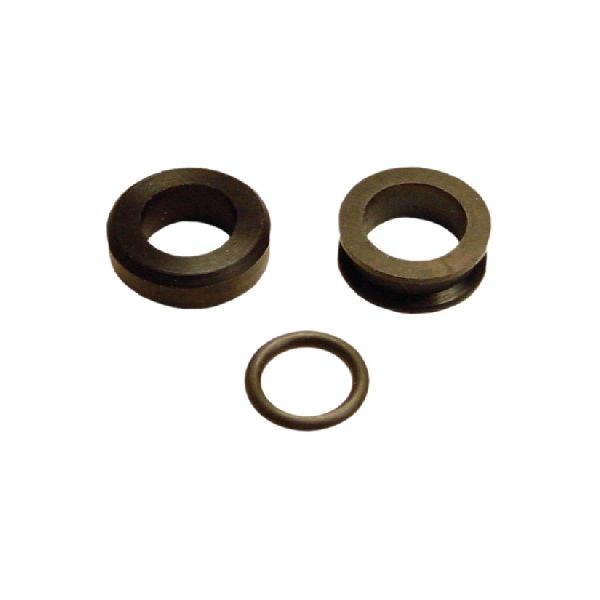
New Aftermarket Parts Available


The information in this article is provided for general reference and educational purposes only. Vehicle specifications, procedures, and part compatibility can vary by production date, trim level, and region. Always consult your vehicle's factory service manual and verify part numbers before purchasing or performing repairs. Safety-critical components such as airbags, seat belts, and braking systems should be installed by a qualified professional.
- Toyota Corolla:
- 🎬 Helpful Videos
- 🛍️ Shop This Part
- What's Unique About the 2003-2008 Toyota Corolla
- Symptoms You May Notice
- Most Likely Causes
- Rare But Worth Checking
- Diagnosis Steps
- Parts You'll Likely Need
- Related Codes That Often Appear With This One
- Technical Service Bulletins (TSBs) & Recalls
- Platform-Specific Known Issues
- Mechanic-Grade Diagnostic Values
- Scan Tool Commands That Help
- Wiring & Ground Locations
- Real Owner Repair Stories
- "I Checked Everything" — The Actual Cause
- OEM Part Supersession History
- Model Year Variations Within This Range
- Diagnostic Flowchart
- Real Owner Stories
- 2004 Toyota Corolla CE (manual)
- 2004 Toyota Corolla
- 2004 Toyota Matrix XR FWD (Platform Mate)
- Related OBD-II Codes
- Frequently Asked Questions
- 🎟️ Get 5% Off