

P0133 on 2014-2021 Ram 1500: O2 Sensor Slow Response Causes & Fixes
This code means the upstream oxygen sensor on Bank 1 is not responding quickly enough. The most common fix is replacing the Bank 1, Sensor 1 O2 sensor. However, several Technical Service Bulletins (TSBs) for this truck also point to required powertrain software updates, so checking for available updates before replacing parts is crucial. On Hemi engines, a cracked exhaust manifold is also a very common underlying cause.
- P0133 means the Bank 1 (passenger side), Sensor 1 (upstream) O2 sensor is responding too slowly.
- Before replacing the sensor, check for available PCM software updates from a Ram dealer, as this is a common fix specified in multiple TSBs.
- If no software update is needed, the most likely cause is a failed O2 sensor.
- Always check for exhaust leaks between the engine and the sensor, as this can also trigger the code.
- Replacing the sensor is a DIY-friendly job, but a special O2 sensor socket is recommended.
What's Unique About the 2014-2021 Ram 1500

For the 2014-2021 Ram 1500, code P0133 is notable because it's addressed in multiple manufacturer TSBs for both gasoline and diesel engines. These bulletins frequently point to the need for a Powertrain Control Module (PCM) software update as a primary fix, not just a faulty sensor. [1814522, 18-069-20 REV. A, 18-021-15 REV. E] For example, TSB 18-069-20 REV. A specifically applies to the 3.0L EcoDiesel engine for this code. [18-069-20 REV. A] TSB 1814522 covers gasoline engines and lists P0133 along with lean codes. This suggests the factory calibration for monitoring the sensor's response time may be too sensitive in some software versions, making a trip to the dealer for a potential reflash a wise first step before replacing hardware.
Diagnostic Flowchart
Tap your situation to follow the diagnostic path that matches what you're seeing on this vehicle.
Generation note: This year range covers the end of the fourth-generation Ram 1500 (2014-2018, and 'Classic' models thereafter) and the beginning of the fifth-generation (2019-2021). While the fundamental cause of P0133 is the same, specific part numbers for O2 sensors and the location of exhaust components may differ slightly between the generations and engine types (3.6L V6, 5.7L V8, 3.0L EcoDiesel). The 5th generation Hemi engines, in particular, are frequently cited by owners for cracked exhaust manifolds. The 4th gen 'Classic' and 5th gen trucks have different body styles and some different technologies (like the optional eTorque on the 5th gen Hemi), but the core engine and exhaust principles related to this code remain similar.
Symptoms You May Notice
- Check Engine Light is on
- Reduced fuel economy, sometimes by 5-10%.
- Rough or unstable idle
- Engine hesitation or slower acceleration.
- Failing an emissions test
- Black smoke from the exhaust in some cases.
- Immediately replacing the O2 sensor without checking for TSBs. On this platform, a software update is a very common fix and should be investigated first.
- Replacing the O2 sensor without first checking for exhaust leaks. A cracked manifold on a Hemi engine is a frequent cause of P0133 and will not be fixed by a new sensor.
- Replacing the wrong O2 sensor. P0133 is specifically for Bank 1, Sensor 1 (upstream, pre-catalytic converter). Bank 1 is the passenger side on V8/V6 engines. Do not confuse it with Sensor 2 (downstream) or any sensor on Bank 2 (driver's side).
Most Likely Causes

- Failing or Aged Upstream O2 Sensor (Bank 1, Sensor 1) 🔴 High Probability O2 sensors are wear-and-tear items that degrade over time from heat and contaminants. They are a common failure point on most vehicles, including the Ram 1500. Contamination from oil, coolant, or soot can clog the sensor's protective shield, slowing its response time.
How to confirm: Use an OBD-II scanner with live data capability to graph the voltage of the Bank 1 Sensor 1 O2 sensor. A healthy sensor's voltage will switch rapidly and frequently between approximately 0.1V and 0.9V. A slow, lazy, or flat-lining signal confirms the sensor is bad. A healthy sensor should complete a rich-to-lean (or vice-versa) transition in under 100 milliseconds, while a slow sensor might take several hundred milliseconds or more.
Typical fix: Replace the Bank 1, Sensor 1 oxygen sensor. This requires a 22mm or 7/8" oxygen sensor socket.
Est. part cost: $40-$120 - Outdated Powertrain Control Module (PCM) Software 🔴 High Probability Multiple TSBs (e.g., #1814522 for gas, #18-069-20 REV. A for 3.0L diesel) have been issued by the manufacturer for this exact code, indicating the fix is a software update to adjust the PCM's monitoring parameters. [1814522, 18-069-20 REV. A]
How to confirm: A Ram dealership or a well-equipped independent shop can check your vehicle's VIN against their database for any open TSBs, RRTs (Rapid Response Transmittals), or available PCM updates.
Typical fix: Update or 'reflash' the PCM with the latest software version. This must be done by a dealer or a shop with a subscription to FCA's wiTECH diagnostic application.
Est. part cost: $0-$250 - Exhaust System Leak 🟡 Medium Probability Leaks from cracked exhaust manifolds (a widely-known issue on 5.7L Hemi engines, often called the 'Hemi tick') or failed gaskets can allow outside oxygen into the exhaust stream before the O2 sensor. This extra oxygen causes the sensor to send inaccurate (lean) readings, and the PCM may interpret the slow reaction to actual mixture changes as a sensor fault. Owners on forums frequently report this as the true cause after replacing sensors didn't fix the code.
How to confirm: Listen for a 'ticking' or 'puffing' sound from the engine bay on a cold start, which often goes away as the metal expands and seals the crack. Visually inspect the exhaust manifold (passenger side for P0133) and all piping before the sensor for cracks or black soot trails indicating a leak. A smoke test is the most definitive way to find small leaks.
Typical fix: Repair the leak by replacing the cracked manifold or failed gasket. Many owners opt for aftermarket headers to prevent recurrence.
Est. part cost: $20-$700+ - Damaged Wiring or Connector ⚪ Low Probability The O2 sensor wiring harness is located under the vehicle and is exposed to heat, moisture, and potential physical damage, which can lead to corrosion, breaks, or short circuits. High resistance in the harness can dampen the signal, causing the PCM to see a slow response.
How to confirm: Visually inspect the wiring harness and connector for the Bank 1, Sensor 1 O2 sensor. Look for any signs of melting, chafing, corrosion in the pins, or loose connections. Use a multimeter to check for continuity and resistance between the PCM connector and the sensor connector.
Typical fix: Repair the damaged section of the wiring harness or clean/replace the connector.
Est. part cost: $10-$100
Rare But Worth Checking
- Engine Vacuum Leak: A significant vacuum leak from a line or intake gasket can introduce unmetered air, causing a lean condition that the O2 sensor struggles to report correctly, sometimes triggering a slow response code.
- Low or Incorrect Fuel Pressure: If fuel pressure is too low, the engine will run lean. The O2 sensor will report this, but if the condition is persistent, the PCM's diagnostic logic can sometimes misinterpret it as a slow sensor.
- Contaminated Sensor: An internal engine leak (coolant or oil) can foul the tip of the O2 sensor, insulating it from the exhaust gas and causing it to respond slowly. This usually points to a more severe underlying engine problem.
Diagnosis Steps
- Connect an OBD-II scanner and confirm that P0133 is the active code. Note any other codes present, as they can provide valuable clues (e.g., P0171, P0153).
- Check with a dealer or online for any Technical Service Bulletins (TSBs) related to your VIN and P0133. A software update may be the required fix.
- On a cold engine, start the vehicle and listen carefully for any exhaust leak 'ticking' sounds from the passenger side engine area. The sound may disappear as the engine warms up.
- Perform a thorough visual inspection of the exhaust system from the engine manifold to the catalytic converter on Bank 1 (passenger side). Look for soot, cracks, or listen for audible leaks. A smoke test is highly recommended to find hairline cracks common in Hemi manifolds.
- Inspect the O2 sensor's wiring harness and connector for any signs of melting, corrosion, or physical damage.
- Using the live data function on your scanner, graph the voltage for 'O2S11' (Oxygen Sensor Bank 1 Sensor 1). At a steady operating temperature and RPM (around 2000 RPM), the voltage should fluctuate rapidly between ~0.1V and ~0.9V multiple times within a few seconds.
- If the voltage is slow to change, is stuck high or low, or shows a flat line, the sensor has likely failed. Replace it using a 22mm or 7/8" O2 sensor socket.
- If the sensor signal appears normal but the code persists, the issue is more likely an exhaust leak, vacuum leak, or a software problem.
Parts You'll Likely Need
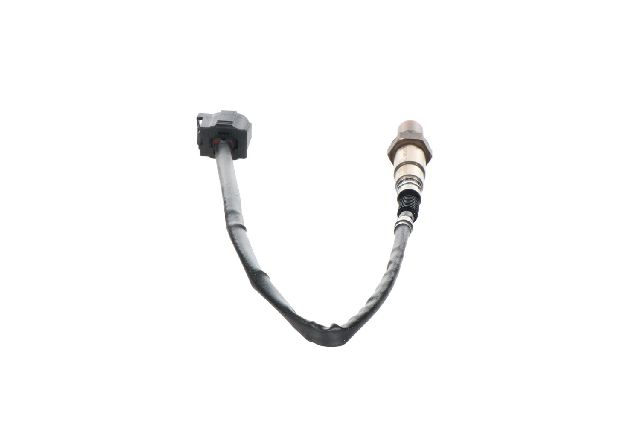
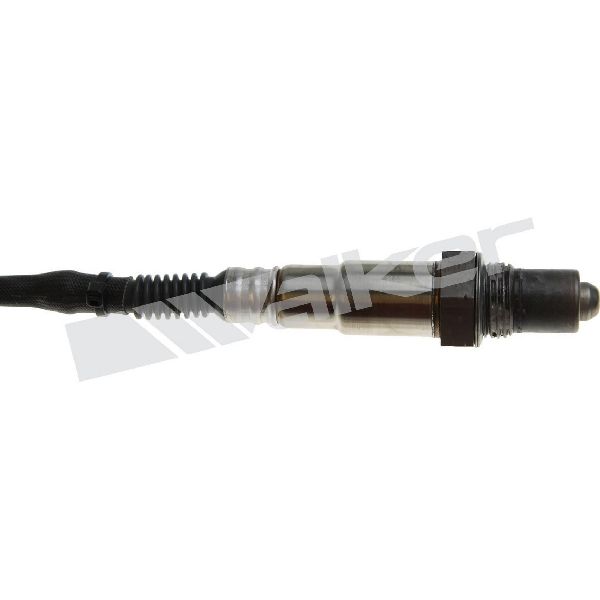
- Upstream Oxygen Sensor (Bank 1, Sensor 1)
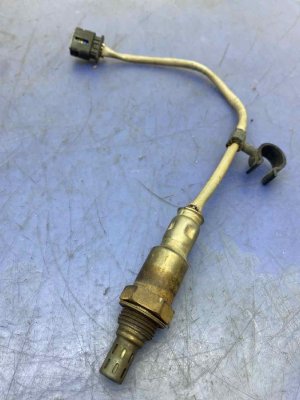
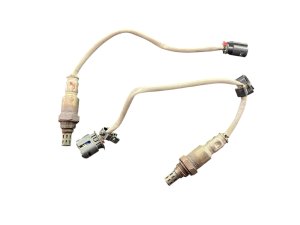
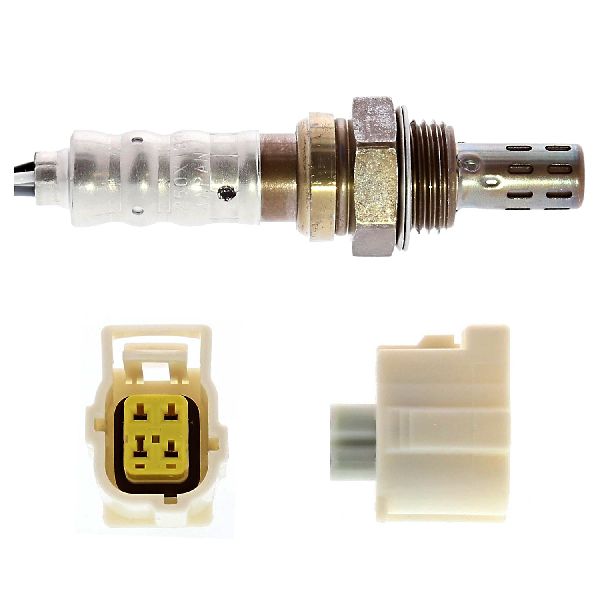
(OEM #Mopar 56029049AA (For 5.7L Hemi), Mopar 68144248AA (For 3.6L Pentastar) - Note: Always verify with VIN.)— This is the component identified by the code. It is a common wear item and the most frequent hardware failure causing P0133.
Trusted brands: Mopar, NTK, Denso
Related Codes That Often Appear With This One
- P0153 — This is the same 'slow response' code but for Bank 2, Sensor 1. Seeing both together often points to a systemic issue like a software problem (as noted in TSB #1814522), vacuum leak, or fuel delivery issue affecting both sides of the engine.
- P0171 — This code means 'System Too Lean (Bank 1)'. An exhaust leak or a failing O2 sensor can cause a lean reading, so these codes often appear together. TSB #1814522 and #18-021-15 REV. E both list these codes together as being resolved by a software update. [1814522, 18-021-15 REV. E]
- P0174 — This is 'System Too Lean (Bank 2)'. If seen with P0133 and P0171, it strongly suggests a problem affecting the whole engine, like a major vacuum leak or fuel pressure issue.
- P0300 — This indicates a 'Random/Multiple Cylinder Misfire'. A poor air/fuel mixture caused by a slow O2 sensor can lead to misfires. TSB #1814522 also groups this code with P0133.
Technical Service Bulletins (TSBs) & Recalls
- Bulletin #1814522 (2021 Gas): Mentions P0133 with other lean and misfire codes, fixed by a software update.
- Bulletin #18-069-20 REV. A (2018 3.0L Diesel): Lists P0133 as a code fixed by a PCM reflash.
- Bulletin #18-068-20 REV. B (2017 3.0L Diesel): Also lists P0133 as a code addressed by a PCM software update.
- Bulletin #18-021-15 REV. E (2014 3.0L Diesel): Includes P0133 in a list of codes fixed by a PCM update. [18-021-15 REV. E]
Platform-Specific Known Issues

- A significant number of TSBs have been issued for the 2014-2021 Ram 1500 across multiple engines (gasoline and diesel) where P0133 is listed as a primary code fixed by a PCM software update. [1814522, 18-069-20 REV. A, 18-068-20 REV. B, 18-021-15 REV. E]
- Cracked exhaust manifolds on the 5.7L Hemi engine are a very common failure. This leak introduces oxygen into the exhaust before the O2 sensor, often causing a P0133 code. Many owners on forums report this as the root cause.
Mechanic-Grade Diagnostic Values

- Upstream O2 Sensor Signal Voltage (Live Data) — expected: Rapidly fluctuating sine wave between ~0.1V (lean) and ~0.9V (rich) at operating temperature and steady RPM.. Failure: A slow, lazy wave, or a signal that is stuck at a specific voltage (e.g., flat-lined at 0.45V). The switch from rich to lean should take less than 100ms.
- O2 Sensor Heater Circuit Resistance — expected: A low resistance value, typically between 2 and 30 ohms, depending on the specific sensor. This test is performed with the sensor disconnected.. Failure: An infinite resistance reading (open circuit) or zero resistance (short circuit) indicates a failed heater element, which will cause the sensor to warm up too slowly.
- O2 Sensor Heater Circuit Voltage — expected: Approximately battery voltage (12V) should be present at the heater power wire in the harness connector with the key on, engine off.. Failure: No voltage indicates a problem with the power supply from the PCM or TIPM, such as a blown fuse or relay issue.
Scan Tool Commands That Help
- wiTECH (or equivalent advanced scan tool): O2 Sensor Heater Test — To command the O2 sensor's internal heater on and off to verify the integrity of the heater circuit and the PCM's ability to control it.
- wiTECH (or equivalent advanced scan tool): Clear KAM and Adaptations — After replacing a sensor or fixing a leak, it's important to reset the PCM's learned fuel trim adaptations. Some forum users report this is a critical step to prevent the code from returning.
Wiring & Ground Locations

- Engine to Chassis/Firewall Ground Strap — On 5.7L Hemi engines, a critical ground strap runs from the back of the cylinder head (often the passenger side) to the firewall or the PCM bracket.. A corroded, loose, or broken main engine ground can cause erratic behavior in all engine sensors, including the O2 sensors. It creates a floating ground, leading to incorrect voltage readings that the PCM can misinterpret as a slow sensor response.
- O2 Sensor Connector — For Bank 1 Sensor 1, the connector is typically clipped to the engine block or a bracket above the sensor, following the wire up from the passenger-side exhaust manifold.. This connector is a common point of failure due to heat and vibration. Inspecting for corrosion, pushed-out pins, or a loose connection is a key diagnostic step.
Real Owner Repair Stories
- RamForum.com user (2014 Ram 1500 5.7L Hemi) — P0133 code, check engine light.
❌ Tried (didn't work) Replacing the Bank 1 Sensor 1 O2 sensor did not fix the issue.
✅ What actually fixed it The user found the main engine ground strap, which connects to the back of the head, had rotted and broken off. Replacing the ground strap resolved the code.
OEM Part Supersession History
68144248AA→68144248AD— Part revision by manufacturer. This part is listed for the 3.6L V6 engine as well as some V8 applications in other Chrysler vehicles.
Heads up: Always verify the correct part number for your specific VIN, as upstream/downstream and bank-to-bank sensors can differ.56029049AA→Current— This part number is commonly listed for the 5.7L Hemi engine across many model years.
Heads up: This is a widely used Mopar sensor. While it fits many 5.7L applications, it's crucial to confirm with a VIN as variations exist.
Model Year Variations Within This Range
- 2019-2021: The introduction of the 5th generation (DT) Ram 1500 alongside the continued production of the 4th generation as the 'Ram 1500 Classic' (DS). While engines are similar, body-related components, wiring harnesses, and some interior tech (like the large Uconnect screen) are different. When ordering parts, it is critical to distinguish between a '2019 Ram 1500' (5th gen) and a '2019 Ram 1500 Classic' (4th gen).
Helpful Videos


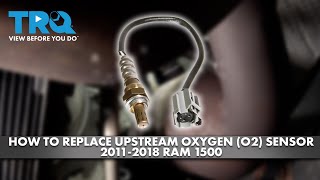
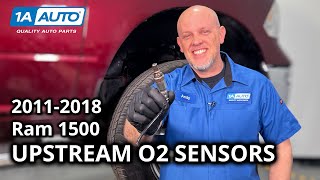
Used OEM Parts in Stock
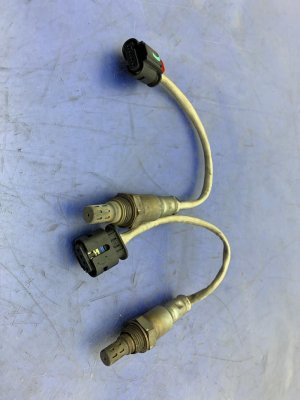
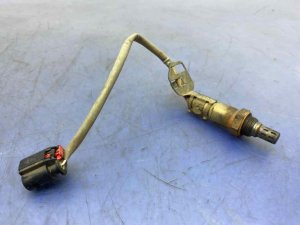

New Aftermarket Parts Available

The information in this article is provided for general reference and educational purposes only. Vehicle specifications, procedures, and part compatibility can vary by production date, trim level, and region. Always consult your vehicle's factory service manual and verify part numbers before purchasing or performing repairs. Safety-critical components such as airbags, seat belts, and braking systems should be installed by a qualified professional.
- Ram 1500:
- 🎬 Helpful Videos
- 🛍️ Shop This Part
- What's Unique About the 2014-2021 Ram 1500
- Diagnostic Flowchart
- Symptoms You May Notice
- Most Likely Causes
- Rare But Worth Checking
- Diagnosis Steps
- Parts You'll Likely Need
- Related Codes That Often Appear With This One
- Technical Service Bulletins (TSBs) & Recalls
- Platform-Specific Known Issues
- Mechanic-Grade Diagnostic Values
- Scan Tool Commands That Help
- Wiring & Ground Locations
- Real Owner Repair Stories
- OEM Part Supersession History
- Model Year Variations Within This Range
- 🎟️ Get 5% Off