

P0133 on 2018-2025 Jeep Wrangler: O2 Sensor Slow Response Causes & Fixes
This code typically means the upstream oxygen sensor (Bank 1, Sensor 1) is failing and needs replacement. It's a common DIY repair with parts costing between $40 and $150. However, on the Wrangler JL/JT platform, this code is frequently caused by PCM software in need of an update or an oil leak from the passenger side valve cover dripping onto an O2 sensor, as noted in official Jeep TSBs.
- P0133 on a Jeep Wrangler most often points to a failing upstream O2 sensor (Bank 1, Sensor 1), which is a common wear item.
- Before replacing the sensor, check for exhaust leaks between the engine and the sensor, as this is a frequent cause.
- Check with a dealer for any open recalls or TSBs; a simple software update could fix the problem without replacing any parts.
- Inspect the passenger side valve cover for oil leaks, as this is a known, albeit less common, cause for this code on Wranglers.
- Do not use an O2 sensor spacer; it will not fix a P0133 code and will likely cause other issues.
What's Unique About the 2018-2025 Jeep WRANGLER

For the 2018-2025 Jeep Wrangler (JL) and Gladiator (JT), the P0133 code is a known issue addressed by several Technical Service Bulletins (TSBs). These bulletins often point towards required PCM software updates to correct overly sensitive diagnostic parameters. [TSB #23-019-25 REV. B, TSB #18-011-25 REV. A] Additionally, a specific and well-documented TSB highlights a unique potential cause: an oil leak from the Bank 1 (passenger side) valve cover gasket dripping onto an O2 sensor, which can lead to contamination and failure. [TSB #S1918000008RevC] Forum discussions confirm owners have experienced this exact failure mode, where oil contaminates the sensor and causes various codes, including P0133.
Diagnostic Flowchart

Tap your situation to follow the diagnostic path that matches what you're seeing on this vehicle.
Symptoms You May Notice
- Check Engine Light (Malfunction Indicator Lamp) is on
- Reduced fuel economy
- Possible rough or hesitant engine performance, though many drivers notice no change.
- Failing an emissions test.
- Slightly uneven or rough idle.
- Replacing the catalytic converter when the issue is only a slow O2 sensor.
- Replacing the downstream (Sensor 2) O2 sensor when the code is for the upstream (Sensor 1).
- Using an O2 sensor spacer to try and fix the code, which often leads to other codes like P0420 or makes the P0133 worse. One user reported clearing a P0420 with a spacer, only to then trigger a P0133.
- Immediately replacing the O2 sensor without first checking for required PCM software updates, which is a very common fix for this specific vehicle.
Most Likely Causes

- Failing Upstream Oxygen Sensor (Bank 1, Sensor 1) 🔴 High Probability O2 sensors are wear-and-tear items that degrade over time from heat and contaminants. This is the most common reason for a P0133 code on any vehicle.
How to confirm: Use a scan tool to graph the live data for the B1S1 O2 sensor. A healthy sensor's voltage will switch rapidly and consistently between approximately 0.1V and 0.9V. A slow, lazy, or flat-lined signal confirms the sensor is bad. A healthy sensor should respond within 100-200 milliseconds.
Typical fix: Replace the Bank 1, Sensor 1 oxygen sensor. This is the sensor located on the exhaust manifold or downpipe before the catalytic converter, on the passenger side for V6 models.
Est. part cost: $40-$150 - Outdated Powertrain Control Module (PCM) Software 🔴 High Probability Jeep has issued multiple TSBs for this code that are resolved with a software update. [TSB #23-019-25 REV. B, TSB #18-011-25 REV. A] The factory calibration may be too sensitive, falsely triggering the code. This is a very common issue for this platform.
How to confirm: A Jeep dealership or a well-equipped independent shop can check your vehicle's software version (VIN) against the latest available updates. Owners have reported being notified of these updates via the Mopar app or by mail.
Typical fix: The dealer reprograms or 'reflashes' the PCM with the updated software. This is often covered under warranty or a specific campaign.
Est. part cost: $0-$200 - Exhaust System Leak 🟡 Medium Probability Leaks from cracked exhaust manifolds or failed gaskets are not uncommon. Off-road use can also stress exhaust components, leading to leaks. A leak before the sensor allows unmetered air into the exhaust, which slows the sensor's ability to read the true air-fuel mixture.
How to confirm: Visually inspect the exhaust manifold and downpipe for cracks or black soot trails indicating a leak. A smoke test is the most effective way to find small leaks. Some owners suggest a DIY method using a shop-vac in 'blow' mode at the tailpipe to feel for leaks by hand.
Typical fix: Repair the leak. This may involve replacing a gasket, welding a crack, or replacing the leaking component (e.g., exhaust manifold).
Est. part cost: $10-$500+ - Damaged Wiring or Connectors ⚪ Low Probability The O2 sensor harness is close to hot exhaust components and can be damaged by heat or debris, especially during off-roading. Oil saturation from a valve cover leak is also a known cause of wiring/connector failure.
How to confirm: Visually inspect the wiring harness and connector for the B1S1 O2 sensor. Look for melted plastic, chafed wires, corrosion in the connector, or oil saturation. High resistance in the harness can dampen the signal and cause a slow response code.
Typical fix: Repair the damaged section of the harness or clean/replace the connector.
Est. part cost: $5-$100
Rare But Worth Checking
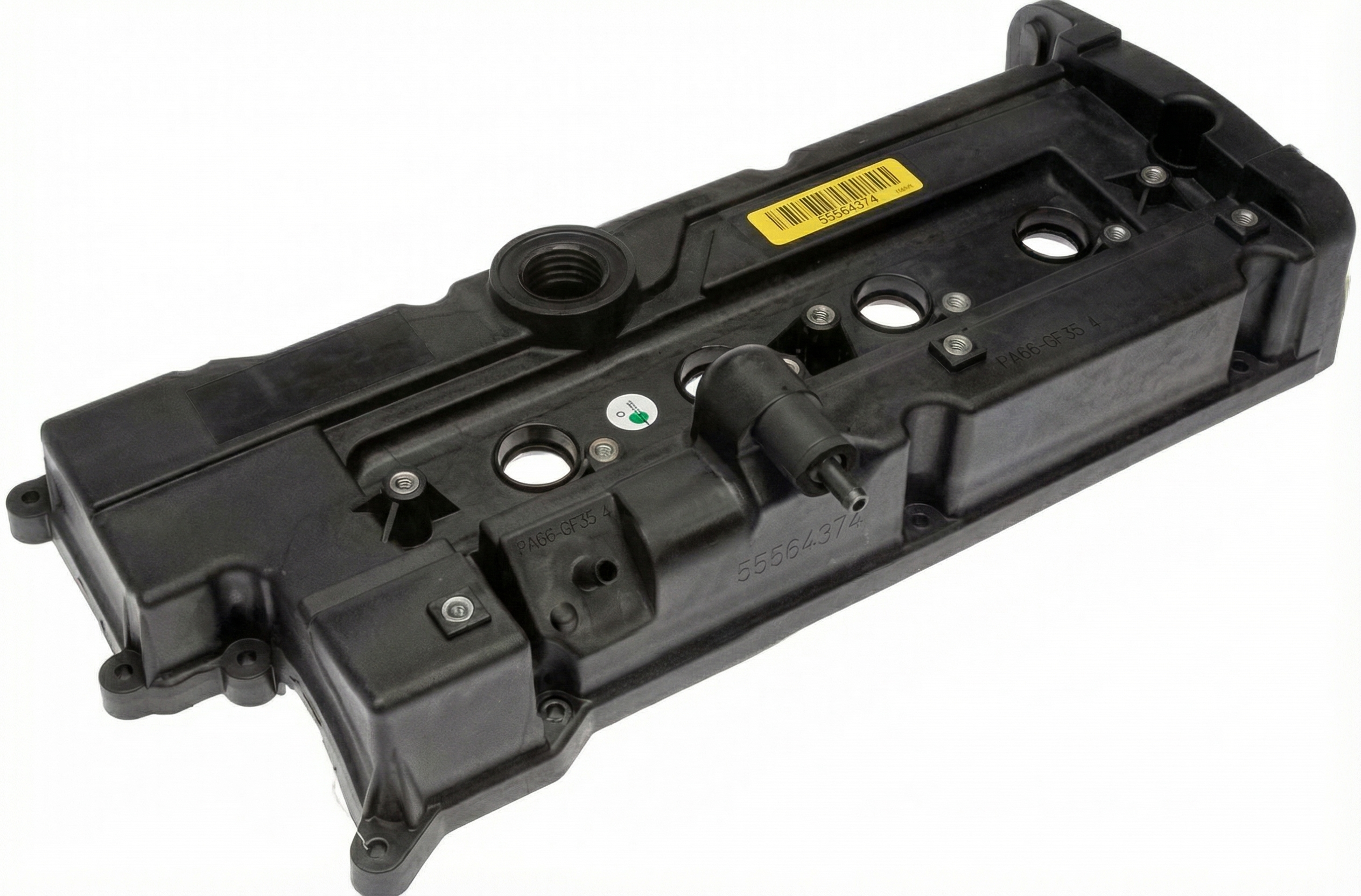
- Valve Cover Gasket Oil Leak: TSB #S1918000008RevC specifically notes that an oil leak from the Bank 1 (passenger side) valve cover can drip onto the O2 sensor(s), causing contamination and a pattern of codes that includes P0133. Owners on forums for both the Wrangler JL and Gladiator JT have confirmed this exact scenario, where a leaking valve cover caused O2 sensor codes and required replacement of both the gasket and the oil-fouled sensor.
- Vacuum Leaks: A significant vacuum leak from a cracked hose or bad intake gasket can lean out the air-fuel mixture to a point where it affects O2 sensor readings, potentially triggering a slow response code.
- Contaminated Fuel or Fuel Injector Issues: Poor quality fuel or a malfunctioning fuel injector can lead to incomplete combustion, which can foul the O2 sensor over time and slow its response.
Diagnosis Steps
- Read the code with an OBD-II scanner and confirm P0133 is present. Note any other codes, as they can point to a root cause like an oil leak (P0171, P2096, P0300).
- Contact a Jeep dealership with your VIN to check for open recalls or TSBs related to PCM software updates for P0133. This is a crucial first step for this platform.
- Visually inspect the Bank 1 (passenger side on V6) valve cover for any signs of an oil leak dripping down towards the exhaust manifold and O2 sensors.
- Inspect the exhaust system from the engine to the catalytic converter for cracks, holes, or black soot indicating a leak. Pay close attention to the manifold-to-head gasket.
- Inspect the B1S1 oxygen sensor's wiring harness and connector for any signs of melting, chafing, corrosion, or oil saturation.
- Use a scan tool to monitor live data for the 'O2 Sensor Voltage B1S1'. At a steady operating temperature, the voltage should fluctuate rapidly between ~0.1 and ~0.9 volts. A slow or non-responsive graph indicates a bad sensor.
- If the sensor appears to be working correctly and no leaks are found, a professional smoke test is the most definitive way to find hard-to-see vacuum or exhaust leaks.
Parts You'll Likely Need
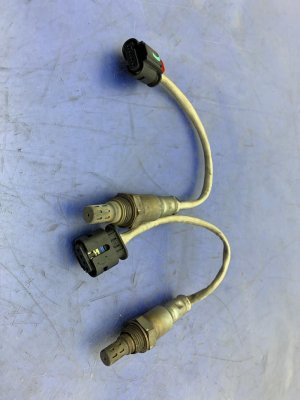
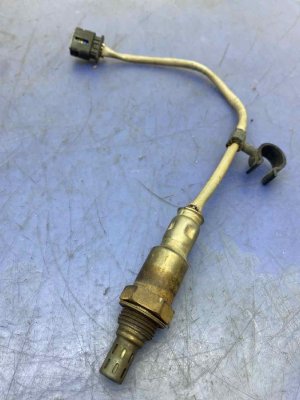
- Upstream Oxygen Sensor (Bank 1, Sensor 1)
(OEM #68217019AA (for 2.0L Turbo), 05149180AB (for 3.6L V6))— This is the most frequent cause of P0133. The sensor degrades over time or gets contaminated, losing its ability to respond quickly.
Trusted brands: Mopar, NTK, Denso, Bosch
OEM price range: $90-$150
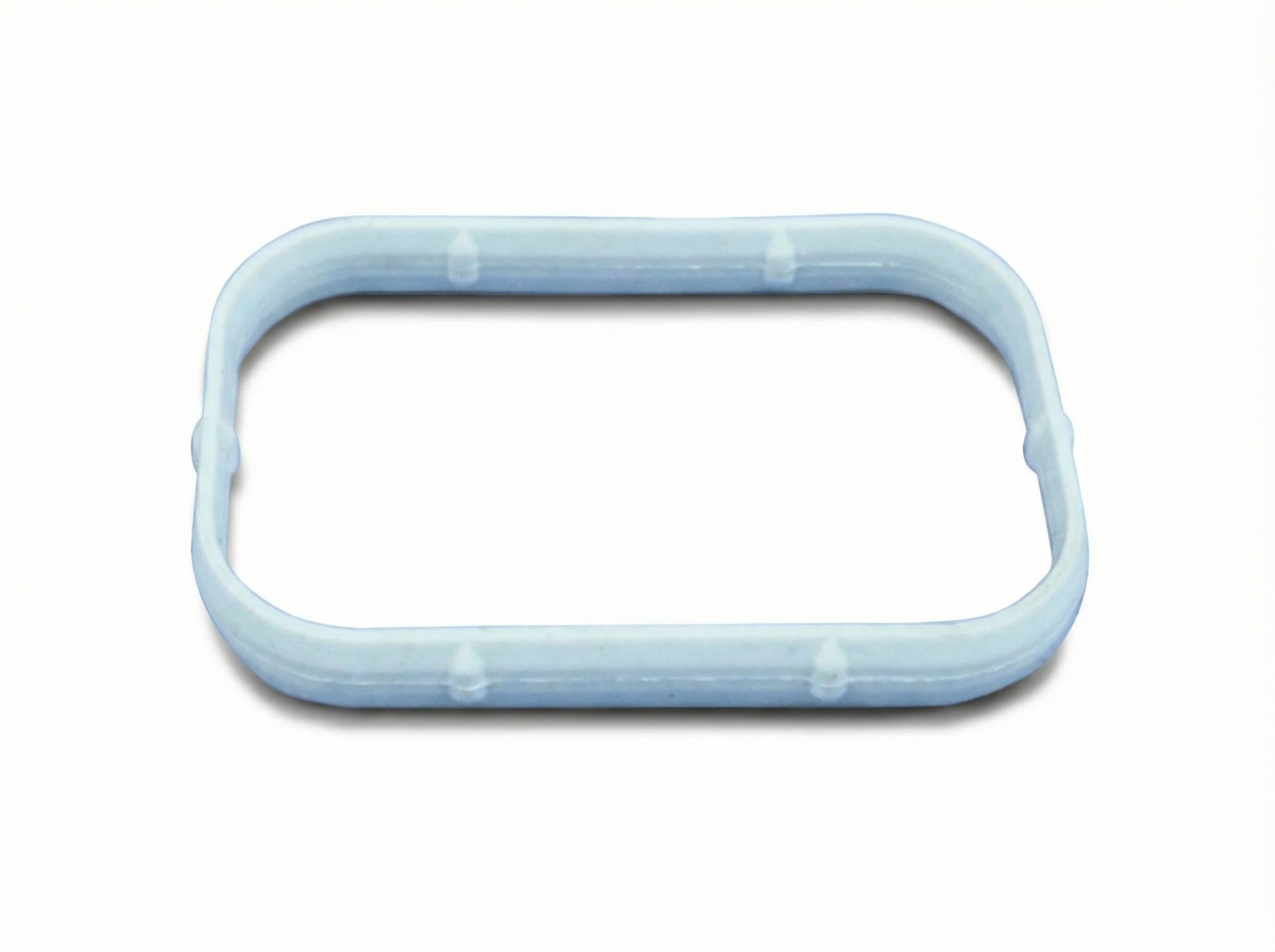
Aftermarket price range: $40-$90 - Valve Cover Gasket (Bank 1 / Passenger Side) — If an oil leak from the valve cover is found to be the cause (per TSB S1918000008RevC), the gasket must be replaced to prevent the new O2 sensor from being contaminated again.
Trusted brands: Mopar, Fel-Pro
OEM price range: $30-$60
Aftermarket price range: $15-$35 - Exhaust Manifold Gasket — If an exhaust leak is found at the manifold, this gasket will need t
Related Codes That Often Appear With This One
- P0171 — System Too Lean (Bank 1). An exhaust leak, vacuum leak, or failing sensor can cause a lean reading. This code is explicitly mentioned alongside P0133 in TSB S1918000008RevC.
- P0300 — Random/Multiple Misfire Detected. Both codes are mentioned in TSB S1918000008RevC, suggesting a common cause like an oil or vacuum leak. A Gladiator owner reported a valve cover leak causing a misfire.
- P2096 — Post Catalyst Fuel Trim System Too Lean (Bank 1). This points to an issue with the downstream sensor, but can be triggered along with P0133 by a shared problem like an exhaust leak or the oil leak mentioned in TSB S1918000008RevC. An owner experienced this code after their valve cover leaked onto the O2 sensor.
- P0137 — O2 Sensor Circuit Low Voltage (Bank 1, Sensor 2). Also mentioned in TSB S1918000008RevC as part of a potential pattern of codes resulting from the valve cover oil leak.
Technical Service Bulletins (TSBs) & Recalls
- 23-019-25 REV. B: Mentions P0133 as a DTC that may be resolved by a software update.
- 18-011-25 REV. A: Lists P0133 as a DTC that may be resolved by a software update.
- S1918000008RevC: Links P0133 to a potential root cause of an oil leak from the valve cover onto the downstream O2 sensor.
Platform-Specific Known Issues
- A recurring P0133 code after an emissions recall (like Y81 for the 3.0L Diesel) was performed has been reported by at least one owner, suggesting potential issues with the recall's software or replacement parts. [ODI #11635988, 24]
- TSB #S1918000008RevC identifies a specific failure mode where oil leaking from the Bank 1 valve cover gasket can contaminate the downstream O2 sensor, leading to a variety of codes including P0133 for the upstream sensor. This has been confirmed by owners on forums.
- Multiple TSBs (#23-019-25 REV. B, #18-011-25 REV. A) indicate that a PCM software update may be required to fix a P0133 code, implying the original diagnostic logic was too sensitive. This is a primary diagnostic step before replacing parts.
Mechanic-Grade Diagnostic Values
- Upstream O2 Sensor (B1S1) Voltage — expected: Rapidly fluctuating signal between ~0.1V (lean) and ~0.9V (rich) when the engine is warm.. Failure: A slow, lazy, or flat-lined voltage signal on a scan tool graph. The switch from below 400mV to above 450mV should take less than 100 milliseconds.
- O2 Sensor Heater Element Resistance — expected: Between 2.0 and 30.0 ohms when measured at room temperature (approx. 70°F). Many healthy sensors read between 4 and 7 ohms.. Failure: A reading of infinite resistance (open circuit) or significantly outside the expected range.
- O2 Sensor Heater Circuit Voltage — expected: Approximately 12V (battery voltage) at the sensor's connector when the PCM commands the heater on (e.g., during cold start).. Failure: No voltage, indicating a wiring issue, blown fuse, or PCM driver fault.
- Mode 6 Data — expected: Test IDs and component IDs related to the O2 sensor should be well within the minimum and maximum parameter limits.. Failure: A test result that is near or has exceeded the manufacturer's limit, even if it hasn't triggered a code yet.
Scan Tool Commands That Help
- wiTECH (or equivalent full-function scan tool): O2 Heater Test / Actuation — To manually command the O2 sensor heater circuit on and verify its operation. On some Chrysler applications, the heater can be duty-cycled up to 25% to test the circuit's integrity and the PCM's ability to control it.
- N/A - Manual Procedure: PCM Reset / Capacitive Discharge — After replacing an oxygen sensor, a PCM reset is recommended as the O2 heater is a learned value. Disconnecting the battery for 10-15 minutes is the most definitive way to clear these learned adaptations and prevent a recurring heater code on the new sensor.
Wiring & Ground Locations
- G903A, G904A, G905A — These are major ground points for the Transmission, Dash, and Instrument Panel harnesses on the Jeep Wrangler JL. Their specific locations can be found on wiring diagrams.. The O2 sensor signal is a low-voltage signal that is highly sensitive to poor grounding. A corroded or loose ground at any of these major chassis points can introduce noise or a voltage offset, potentially causing the PCM to misinterpret the sensor's response time.
- O2 Sensor Harness Connector — On the exhaust pipe, before the catalytic converter. For the 3.6L V6, Bank 1 Sensor 1 is on the passenger side.. The connector itself is a common failure point. Per TSB S1918000008, it is susceptible to oil contamination from a leaking valve cover. Technicians should inspect for oil saturation, melted plastic from exhaust heat, or corrosion.
Real Owner Repair Stories
- Jeep Gladiator Forum user (2020 Jeep Gladiator Sport S (3.6L V6)) — Smell of burnt oil, visible oil leak dripping onto the catalytic converter and upstream O2 sensor.
✅ What actually fixed it The dealer replaced a defective right side valve cover (Part #4893800AI), the valve cover gasket, and the oil-contaminated upstream O2 sensor (Part #68224424AA) under warranty. - Jeep Gladiator Forum user (2021 Jeep Gladiator (3.6L V6) with ~600 miles) — Misfire codes and ESS (Engine Stop-Start) light.
❌ Tried (didn't work) Replacing the PCM, Replacing O2 sensors initially
✅ What actually fixed it A technician found a very small oil leak from the valve cover dripping onto the O2 sensor wire harness. The final fix was a new valve cover, a new gasket, cleaning the harness, and replacing the O2 sensor again. The vehicle had no more issues after 15,000 miles. - NHTSA ODI Complaint #11635988 (2021 Jeep Wrangler (likely 3.0L EcoDiesel)) — Check engine light with P0133.
❌ Tried (didn't work) Having the Y81 Emissions recall performed.
✅ What actually fixed it The issue was not resolved. The check engine light for P0133 came on six times after the recall was performed, indicating the recall did not fix the issue or introduced a new problem. This highlights that for 3.0L diesel models, the P0133 code may be linked to DEF system software issues.
"I Checked Everything" — The Actual Cause
- In one documented case on a Wrangler, a persistent P0133 code was not caused by a faulty sensor or a typical exhaust leak. After extensive diagnosis, a smoke test revealed a significant vacuum leak at the throttle body gasket. This allowed unmetered air into the engine, leaning out the mixture and causing the O2 sensor to have delayed readings, which the PCM interpreted as a slow response. Replacing the throttle body gasket resolved the code.
When the Usual Fixes Don't Work
- While a PCM software update or sensor replacement are the most common fixes, they are not guaranteed solutions. The NHTSA complaint for a 2021 Wrangler (ODI #11635988) shows a case where the P0133 code repeatedly returned six times even after the vehicle was brought to a dealership for a related emissions recall (Y81). This suggests that in some instances, the root cause can be more complex, potentially involving intermittent wiring issues, a persistent undiscovered leak (vacuum or exhaust), or a faulty PCM that isn't being properly diagnosed.
OEM Part Supersession History
5149180AA→05149180AB— Standard part revision or improvement by the manufacturer.
Heads up: The new part number (05149180AB) is the correct replacement for the 3.6L V6 engine and should be used.
Model Year Variations Within This Range
- 2020-2021: For models equipped with the 3.0L EcoDiesel engine, the P0133 code may be related to the Y81 Emissions Recall. This recall involves a software update for the Diesel Exhaust Fluid (DEF) system. Owners have reported the P0133 code appearing after this recall was performed, indicating a potential software conflict or a separate underlying issue.
- 2021-2022: Forum discussions suggest a known issue with the right-side (Bank 1) valve cover itself on some 2021-2022 models, leading to oil leaks that can cause P0133. In some cases, simply replacing the gasket is not enough, and a revised valve cover may be required to permanently fix the leak.
Helpful Videos

We Have This Part in Stock


The information in this article is provided for general reference and educational purposes only. Vehicle specifications, procedures, and part compatibility can vary by production date, trim level, and region. Always consult your vehicle's factory service manual and verify part numbers before purchasing or performing repairs. Safety-critical components such as airbags, seat belts, and braking systems should be installed by a qualified professional.
- Jeep WRANGLER:
- 🎬 Helpful Videos
- 🛍️ Shop This Part
- What's Unique About the 2018-2025 Jeep WRANGLER
- Diagnostic Flowchart
- Symptoms You May Notice
- Most Likely Causes
- Rare But Worth Checking
- Diagnosis Steps
- Parts You'll Likely Need
- Related Codes That Often Appear With This One
- Technical Service Bulletins (TSBs) & Recalls
- Platform-Specific Known Issues
- Mechanic-Grade Diagnostic Values
- Scan Tool Commands That Help
- Wiring & Ground Locations
- Real Owner Repair Stories
- "I Checked Everything" — The Actual Cause
- When the Usual Fixes Don't Work
- OEM Part Supersession History
- Model Year Variations Within This Range
- 🎟️ Get 5% Off