

P0133 on 2007-2017 Jeep Wrangler: O2 Sensor Slow Response Causes and Fixes
For a 2007-2017 Jeep Wrangler, code P0133 usually means the upstream oxygen sensor on the passenger side (Bank 1, Sensor 1) is failing or there's an exhaust leak. Before replacing the sensor, thoroughly check for cracks in the exhaust manifold and leaks at the gaskets, as this is a very common cause on Wranglers. For 3.6L models, also check for oil leaks from the passenger side valve cover dripping onto the sensor. A new sensor costs about $50-$150.
- P0133 points to the upstream oxygen sensor on the passenger side (Bank 1, Sensor 1).
- Before buying a new sensor, always check for exhaust leaks between the engine and the sensor; this is a very common cause on Wranglers.
- Symptoms are usually mild, mainly a check engine light and worse fuel economy, but the issue should be fixed to prevent potential catalytic converter damage.
- The repair is DIY-friendly, typically requiring the removal of the passenger-side inner fender liner for best access.
- Ensure you purchase the correct sensor for your specific engine (3.8L for 2007-2011, 3.6L for 2012-2017).
What's Unique About the 2007-2017 Jeep Wrangler

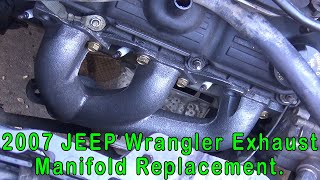
On the Jeep Wrangler JK platform, the P0133 code is a very common issue with distinct patterns for its two engines. For the 2007-2011 3.8L V6, the code is frequently caused by cracks in the notoriously brittle exhaust manifolds. 🎬 Watch: Step-by-step 3.8L exhaust manifold replacement guide. For the 2012-2017 3.6L V6 Pentastar, while sensor failure is common, the code can also be triggered by oil leaks from the passenger side valve cover or PCV system dripping onto the O2 sensor and its wiring. Unlike some newer vehicles where software is the primary suspect, on the JK, a physical inspection for leaks is the most critical first step.
Generation note: The 2007-2017 year range covers the Jeep Wrangler 'JK' generation, but it includes two different V6 engines. The 2007-2011 models have the 3.8L V6, which is known for cracked exhaust manifolds causing this code. The 2012-2017 models have the 3.6L V6 Pentastar engine, where oil leaks onto the sensor are a more specific concern. The location of Bank 1 (passenger side) is the same for both, but the specific oxygen sensor and exhaust gasket part numbers are different.
Symptoms You May Notice
- Check Engine Light is on
- Reduced fuel economy
- Rough or uneven idle
- Slight hesitation during acceleration
- Potential to fail an emissions test
- Audible ticking or hissing sound from the engine bay, especially when cold, indicating an exhaust leak
- Replacing the oxygen sensor without first checking for exhaust leaks. An exhaust leak will cause a new sensor to produce the same P0133 code.
- Replacing the wrong oxygen sensor. This code is for Bank 1 (passenger side) and Sensor 1 (upstream, before the catalytic converter). Do not replace the driver's side or downstream sensor.
- Replacing the catalytic converter. This code points to the sensor monitoring the exhaust *before* the converter, not the converter itself.
- Using a cheap, universal oxygen sensor. Jeep PCMs can be sensitive and often work best with OEM (Mopar) or high-quality OEM-equivalent (like NTK).
Most Likely Causes

- Failing Upstream Oxygen Sensor (Bank 1, Sensor 1) 🔴 High Probability Oxygen sensors are wear-and-tear items with a finite lifespan. On the 3.8L, they can be damaged by rich conditions from other issues. On the 3.6L, they are susceptible to contamination from oil leaks from the passenger-side valve cover gasket.
How to confirm: Use a scan tool to graph the sensor's voltage. A healthy sensor's voltage will switch rapidly between ~0.1V and ~0.9V. A slow, lazy waveform that takes longer than 100-200ms to switch indicates a failing sensor.
Typical fix: Replace the Bank 1, Sensor 1 oxygen sensor. This is the upstream sensor on the passenger side.
Est. part cost: $50-$150 - Exhaust Leak (Cracked Manifold or Failed Gasket) 🔴 High Probability The 3.8L V6 exhaust manifolds are well-known in the Jeep community for cracking due to thermal stress, causing a pre-sensor leak. Both engines can also develop leaks at the manifold-to-head or manifold-to-pipe flange gaskets from vibration and off-road use.
How to confirm: Visually inspect the passenger-side exhaust manifold for cracks, often visible as thin black lines. Check for black soot trails at gasket mating surfaces. A definitive method is to perform a smoke test on the exhaust system to pinpoint the source of the leak.
Typical fix: Repair the leak. This may involve replacing a cracked exhaust manifold, replacing the manifold gaskets, or tightening loose flange bolts.
Est. part cost: $20-$300 - Damaged Wiring or Connector ⚪ Low Probability The O2 sensor wiring harness runs close to hot exhaust components and the front driveshaft. It can be melted by exhaust heat or chafed by contact with the driveshaft, especially on lifted vehicles. On the 3.6L, oil from a valve cover leak can saturate and ruin the connector.
How to confirm: Visually inspect the wiring harness from the sensor to the main loom. Look for any signs of melting, chafing against the driveshaft, corrosion in the connector pins, or oil saturation.
Typical fix: Repair the damaged section of the wiring harness or clean/replace the oil-soaked connector.
Est. part cost: $10-$50
Rare But Worth Checking
- Intake Vacuum Leak: A significant leak in the intake manifold, throttle body gasket, or a vacuum hose can allow unmetered air into the engine, affecting the air-fuel ratio and causing the O2 sensor to respond slowly. This would likely be accompanied by other codes like P0171 (System Too Lean). A smoke test of the intake system is the best way to confirm.
- Low Fuel Pressure: A weak fuel pump or clogged filter can lead to a lean running condition, which can sometimes manifest as a slow O2 sensor response. This is less common and would typically present with other drivability issues like hesitation under load.
- PCM Software Calibration: While less common on the JK than on newer Jeeps, some platform mates with the 3.6L engine have TSBs for P0133 caused by overly sensitive PCM software. If no physical faults can be found, checking with a dealer for available PCM updates is a valid last step.
Diagnosis Steps

- Confirm the code P0133 is present using an OBD-II scanner.
- With the engine cold, start it and listen for any ticking or hissing noises from the passenger side of the engine bay, which would indicate an exhaust manifold leak.
- Identify Bank 1 (passenger side) and Sensor 1 (upstream, before the catalytic converter).
- Perform a thorough visual inspection of the exhaust manifold for cracks and the gasket connections for black soot trails.
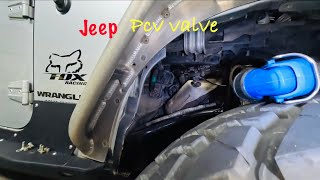
- For 3.6L models, inspect the rear of the passenger side valve cover for any signs of an oil leak that could be dripping down onto the O2 sensor 🎬 See how to fix passenger side valve cover leaks. or its wiring.
- Inspect the O2 sensor's wiring harness and connector for any signs of melting, corrosion, or chafing, particularly near the front driveshaft.
- Using a scan tool with live data, graph the voltage for 'O2S B1S1'. At operating temperature and a steady 2000 RPM, the voltage should switch rapidly and consistently between approximately 0.1V and 0.9V. A slow, lazy, or flat-lined signal points to a bad sensor.
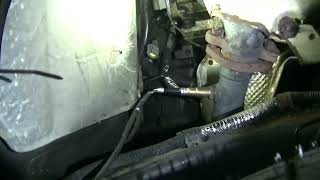
- If an exhaust leak is found, repair it first, clear the codes, and re-test. If no leak is found and the wiring is intact, but the sensor signal is slow, replace the Bank 1 Sensor 1 oxygen sensor 🎬 Watch: How to replace the Bank 1 Sensor 1 O2 sensor. with an OEM or quality aftermarket part.
Parts You'll Likely Need

- Upstream Oxygen Sensor (Bank 1, Sensor 1)
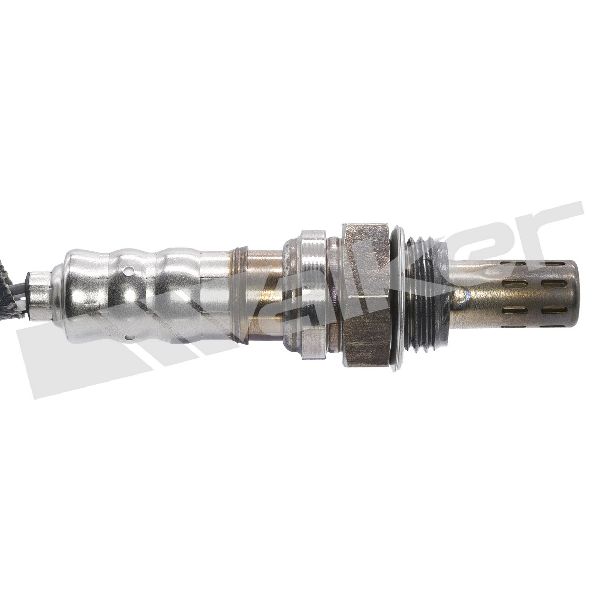
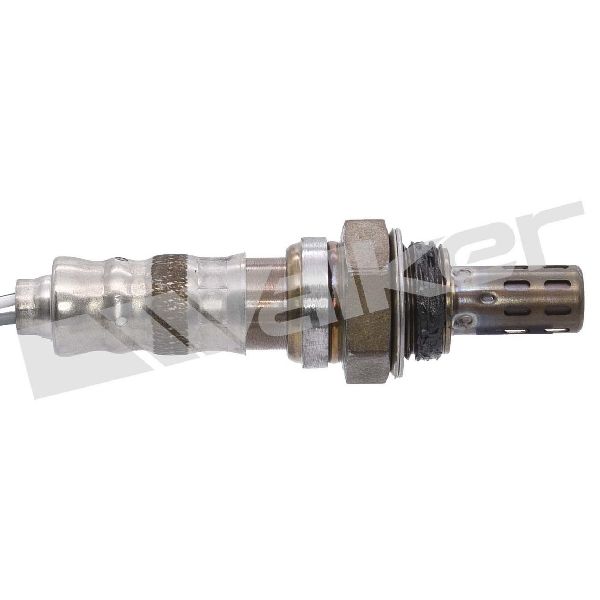
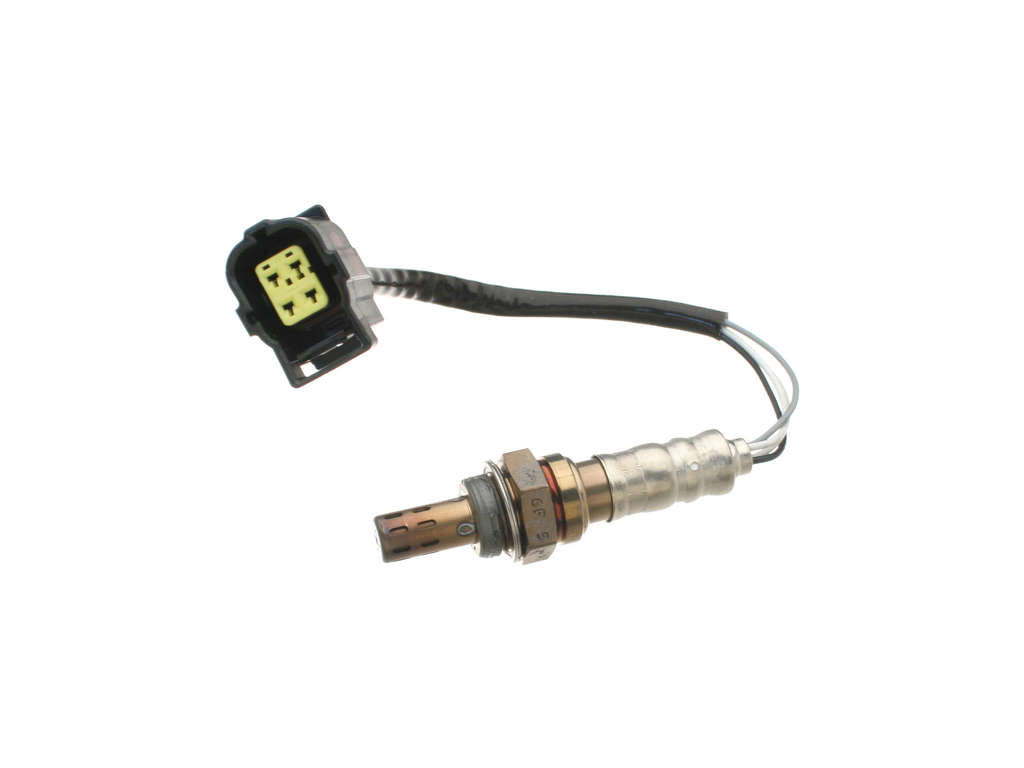
(OEM #Mopar 56029049AA (3.8L V6), Mopar 68144248AA (3.6L V6 - verify by VIN))— This is the most common direct cause of the code when exhaust leaks are not present. The sensor is a wear item that degrades over time or gets contaminated.
Trusted brands: Mopar (OEM), NTK (often the OEM supplier), Denso, Bosch
OEM price range: $100-$180
Aftermarket price range: $50-$120 - Exhaust Manifold Gasket
(OEM #Fel-Pro MS96908 (3.8L V6), Fel-Pro MS96677 (3.6L V6))— If an exhaust leak is found at the manifold-to-head or manifold-to-pipe connection, this gasket will need to be replaced to seal it.
Trusted brands: Fel-Pro, Mahle, Mopar (OEM)
OEM price range: $20-$40
Aftermarket price range: $10-$25 - Exhaust Manifold — Specifically for the 3.8L V6, the factory manifolds are prone to cracking and may need to be replaced entirely, not just resealed.
Trusted brands: Dorman, AP Exhaust Technologies, Mopar (OEM)
OEM price range: $130-$200
Aftermarket price range: $80-$150
Related Codes That Often Appear With This One
- P0171 — If an exhaust or vacuum leak is the root cause, it allows unmetered air into the system. This creates a lean condition (P0171) and also makes the O2 sensor's readings slow and erratic (P0133).
- P0153 — This is the same 'Slow Response' code but for Bank 2 (driver's side). Seeing both codes together might suggest a systemic issue like low fuel pressure, a major vacuum leak, or a required PCM software update, rather than two simultaneously failed sensors.
- P0300 — A random misfire code can occur if the slow O2 sensor response leads to an improper air-fuel mixture, causing poor combustion.
Technical Service Bulletins (TSBs) & Recalls
- While no specific TSB for the Wrangler JK and P0133 was found, a relevant bulletin for a platform-mate exists: Ram TSB #18-033-16 Rev. A for the 2015-2016 ProMaster with the same 3.6L engine. It states the PCM software could be overly sensitive and cause P0133, requiring a reflash. This indicates a potential for software-related issues on the Wrangler as well.
Platform-Specific Known Issues
- Cracked Exhaust Manifolds on 3.8L V6 (2007-2011): The cast iron exhaust manifolds on the 3.8L engine are notorious for developing cracks due to repeated heat cycles. This creates an exhaust leak before the O2 sensor, drawing in fresh air and causing the sensor to read incorrectly, which triggers P0133. A ticking sound, especially on a cold start, is a classic symptom. Forum users on JK-Forum.com frequently discuss this exact failure mode.
- Oil Leak Contamination on 3.6L V6 (2012-2017): On the 3.6L Pentastar engine, a common source of P0133 is an oil leak from the passenger side (Bank 1) valve cover gasket or the PCV valve at the rear of the cover. The leaking oil drips directly onto the upstream and/or downstream O2 sensors and their wiring connectors, fouling the sensor and damaging the connection. Owners on JLwranglerforums.com (for the next generation, but same engine issue) confirm this requires replacing the gasket and the oil-soaked sensor.
Mechanic-Grade Diagnostic Values
- O2 Sensor Heater Element Resistance — expected: Between 2.0 and 30.0 ohms at room temperature (~70°F). A healthy sensor often reads between 4 and 7 ohms.. Failure: An infinite resistance reading (open circuit) or a value significantly outside the expected range.
- O2 Sensor Response Time (Cross-Count) — expected: The switch from below 400mV to above 450mV should take less than 100 milliseconds.. Failure: A response time greater than 100-200 milliseconds indicates a sluggish sensor.
- Engine Vacuum at Idle — expected: 19 to 20 inches of mercury (inHg) at a steady idle.. Failure: Significantly lower vacuum can indicate a vacuum leak (intake, throttle body, etc.) which can cause a P0133 code.
Scan Tool Commands That Help
- wiTECH or equivalent full-function scan tool: O2 Heater Test / Actuation — This bidirectional command allows a technician to manually energize the O2 sensor's heater circuit. It's used to verify that the PCM is capable of sending the command and that the wiring to the sensor is intact. If the heater can be commanded on, it helps isolate the fault to the sensor itself rather than a wiring or PCM driver issue.
Wiring & Ground Locations

- G104 — On the engine block, shared by multiple components.. All four oxygen sensors can share the same ground point, G104. A loose or corroded ground at this location can cause intermittent and difficult-to-diagnose heater circuit codes and slow response codes for multiple sensors simultaneously.
- O2 Sensor Connector Pins (Heater Circuit) — At the O2 sensor electrical connector.. When testing, the two same-colored wires (often white or black) are for the heater element. Measuring resistance across these pins tests the integrity of the heater. One pin should have 12V+ with the key on, and the other is the ground control from the PCM.
Real Owner Repair Stories
- Reddit user on r/AskAMechanic (2003 Jeep Liberty (similar PCV/O2 interaction to Wrangler)) — P0171 and P0133 codes.
❌ Tried (didn't work) Initial inspection for vacuum leaks.
✅ What actually fixed it The user found oil getting past a faulty PCV valve. After replacing the broken PCV valve and overdue, worn spark plugs (one bank was black and sooty), the issue was resolved. This suggests oil contamination and poor combustion were the root cause.
"I Checked Everything" — The Actual Cause
- In a documented case, a persistent P0133 was not resolved by replacing the sensor or finding an exhaust leak via a smoke test. The actual cause was a significant vacuum leak at the throttle body gasket, found only when a smoke test was performed on the intake system. This unmetered air leaned out the mixture and caused the PCM to interpret the O2 sensor's delayed reaction as a slow sensor.
OEM Part Supersession History
68144248AA→68144248AD— Standard part revision by the manufacturer for improvements or supplier changes.
Diagnostic Flowchart
Real Owner Stories
Aggregated from forums and TSBs cited above. Mileages and costs reflect what owners reported in those sources.
2007-2011 Jeep Wrangler 3.8L V6
Symptoms: Ticking noises, especially on cold starts, accompanied by exhaust-related codes.
What fixed it: Replacing the cracked cast iron exhaust manifold.
Source hint: JK-Forum.com thread titled 'Exhaust Manifold...Problem for many!!'
2012-2017 Jeep Wrangler 3.6L V6
Symptoms: O2 sensor failure on the passenger side caused by an active oil leak.
What fixed it: Replacing the passenger side PCV/valve cover gasket and the oil-soaked O2 sensor.
Source hint: JLwranglerforums.com thread titled '3.6L Oxygen Sensors'
Jeep Wrangler
Symptoms: Triggered a P0133 error code and considered cleaning the O2 sensor.
What fixed it: Diagnosing for exhaust leaks first, then replacing the failed O2 sensor, as cleaning was confirmed to be an ineffective repair.
Source hint: Jeepz.com thread titled 'Happy new year.... and I've got a P0133 error code (O2 sensor)'
Related OBD-II Codes
Frequently Asked Questions
I have a 2008 Wrangler 3.8L with a P0133 code and a ticking noise on cold starts. What is the likely cause?
My 2014 Wrangler 3.6L has a P0133 code. Could an oil leak cause this?
Is there a PCM software update for the Jeep Wrangler that fixes P0133?
Can I just clean the Bank 1 Sensor 1 oxygen sensor to clear the P0133 code on my Jeep?
I have a lifted Wrangler. Could my suspension modifications be related to the P0133 code?
Helpful Videos


We Have This Part in Stock

The information in this article is provided for general reference and educational purposes only. Vehicle specifications, procedures, and part compatibility can vary by production date, trim level, and region. Always consult your vehicle's factory service manual and verify part numbers before purchasing or performing repairs. Safety-critical components such as airbags, seat belts, and braking systems should be installed by a qualified professional.
- Jeep Wrangler:
- 🎬 Helpful Videos
- 🛍️ Shop This Part
- What's Unique About the 2007-2017 Jeep Wrangler
- Symptoms You May Notice
- Most Likely Causes
- Rare But Worth Checking
- Diagnosis Steps
- Parts You'll Likely Need
- Related Codes That Often Appear With This One
- Technical Service Bulletins (TSBs) & Recalls
- Platform-Specific Known Issues
- Mechanic-Grade Diagnostic Values
- Scan Tool Commands That Help
- Wiring & Ground Locations
- Real Owner Repair Stories
- "I Checked Everything" — The Actual Cause
- OEM Part Supersession History
- Diagnostic Flowchart
- Real Owner Stories
- 2007-2011 Jeep Wrangler 3.8L V6
- 2012-2017 Jeep Wrangler 3.6L V6
- Jeep Wrangler
- Related OBD-II Codes
- Frequently Asked Questions
- 🎟️ Get 5% Off