

P0133 on 2001-2005 Hyundai Sonata 2.7L V6: Slow O2 Sensor Causes and Fixes
On a 2001-2005 Sonata with the 2.7L V6, code P0133 almost always means the upstream oxygen sensor on the firewall side (Bank 1) has failed. Access is difficult, but the part is relatively inexpensive (~$60 for a quality aftermarket sensor, ~$85-$310 OEM). Before replacing, check for exhaust leaks and ensure the upstream/downstream sensor connectors are not swapped. DIY difficulty is high due to tight access.
- P0133 on this Sonata V6 almost always means the firewall-side upstream O2 sensor is bad.
- Before buying a part, check your vehicle's production date (on the driver's door jamb sticker) to get the correct O2 sensor; there is a part changeover in mid-2002.
- Accessing this sensor is very difficult and requires patience and specialized tools like an O2 sensor socket and universal joint.
- Always inspect for exhaust leaks at the rear manifold before replacing the sensor, as a leak can cause the same code.
- Using a quality OEM, NTK, or Denso sensor is highly recommended to prevent the code from returning.
What's Unique About the 2001-2005 Hyundai Sonata
The key challenge with the P0133 code on the 2.7L V6 Sonata is physical access. Bank 1 is positioned against the firewall, making the upstream O2 sensor notoriously difficult to reach and replace. Furthermore, the 2001-2005 year range spans a critical mid-generation change; Hyundai switched from Titanium-style O2 sensors to Zirconium-style sensors around the 2002-2003 model year. These sensor types are not interchangeable, making it crucial to verify the vehicle's production date before purchasing a replacement part.
Generation note: The 2001-2005 range covers the end of the 4th generation (EF, facelifted model) and the beginning of the 5th generation (NF, from 2005 model year). A key difference is the type of oxygen sensor used, with a changeover occurring around the 2002/2003 model year. Part numbers are often split by a production date of August 16, 2002.
Symptoms You May Notice
- Check Engine Light is on
- Reduced fuel economy
- Rough or unstable idle
- Hesitation or slower acceleration
- Bad smelling exhaust or black smoke
- Engine misfires
- Replacing the wrong oxygen sensor (e.g., the easily accessible Bank 2 sensor on the radiator side, or the downstream Sensor 2 after the catalyst).
- Replacing the catalytic converter, which is monitored by the downstream sensor (Sensor 2) and is not the cause of a P0133 code.
- Ignoring a small exhaust leak, which can perfectly mimic the symptoms of a bad sensor.
- Repeatedly replacing the O2 sensor without checking for swapped upstream/downstream connectors.
Most Likely Causes
- Failed Bank 1, Sensor 1 Oxygen Sensor 🔴 High Probability Oxygen sensors are wear items that degrade over time due to constant exposure to high heat and exhaust gases. Contamination from oil, coolant, or excessive carbon can foul the sensing element and cause it to become 'lazy' or slow to respond.
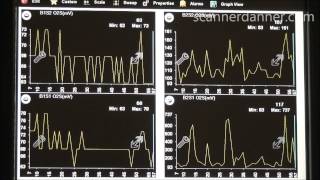
How to confirm: Use a scan tool to monitor the live data for the Bank 1, Sensor 1 voltage. A healthy sensor will show rapid fluctuations (frequency) between approximately 0.1V and 0.9V. A slow or lazy sensor will switch much less frequently and may appear as a flattened or sluggish waveform compared to the sensor on Bank 2.
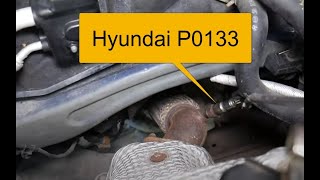
Typical fix: Replace the Bank 1, Sensor 1 oxygen sensor. This sensor is on the rear exhaust manifold against the firewall. Access is very tight and will likely require a specialized 22mm (7/8") O2 sensor socket, extensions, and a universal joint.
Est. part cost: $50-$120 - Exhaust Leak 🟡 Medium Probability Exhaust manifold gaskets can fail or the manifold itself can develop hairline cracks, allowing outside air to enter the exhaust stream before the O2 sensor. This unmetered oxygen makes the sensor's readings inaccurate and can slow its perceived response, triggering a P0133 code even with a good sensor.
How to confirm: Visually inspect the rear exhaust manifold and the connection to the downpipe for black soot marks, which indicate a leak. You may also hear a ticking or hissing sound that is more pronounced when the engine is cold. A shop can use a smoke machine to definitively pinpoint small leaks that are not visible.
Typical fix: Replace the leaking gasket or the cracked exhaust manifold. This is often a labor-intensive repair due to the manifold's location.
Est. part cost: $20-$300 - Damaged Wiring or Connector ⚪ Low Probability The wiring for the rear O2 sensor is routed in a high-heat area near the exhaust. Over time, the harness can become brittle, melt, or chafe against other components, causing a short or open circuit. A failure in the sensor's internal heater circuit, or its wiring, can also cause a slow response code, as the sensor needs to reach a high temperature to function correctly.
How to confirm: Visually inspect the wiring harness from the sensor up to the main engine harness. Look for any signs of melting, chafing, or corrosion on the connector pins. Check for continuity and shorts using a multimeter, paying special attention to the heater circuit wires.
Typical fix: Repair the damaged section of the wiring harness or replace the connector pigtail.
Est. part cost: $15-$50
Rare But Worth Checking
- Swapped Upstream/Downstream O2 Sensor Connectors: On the 2.7L V6, the connectors for the upstream (Sensor 1) and downstream (Sensor 2) sensors on Bank 1 are located near each other and can be accidentally swapped during a previous repair (like a transmission or exhaust replacement). The PCM will receive an illogical signal from the post-catalyst sensor and set a P0133 code. This has been documented in detail where multiple new sensors failed to fix the code until the connectors were corrected.
- Engine Vacuum Leak: A significant vacuum leak from a cracked hose (like the air intake boot) or bad intake gasket can introduce unmetered air, causing the engine to run lean. This can sometimes be misinterpreted by the PCM as a slow sensor and may be accompanied by a P0171 (System Too Lean) code.
- Contaminated or Failing Fuel Injectors: Leaking or clogged fuel injectors can alter the air/fuel ratio in a way that may contribute to a P0133 code, although this is less common and would likely be accompanied by other codes or symptoms like misfires.
Diagnosis Steps
- Confirm the code P0133 is present using an OBD-II scanner.
- Using the scanner's live data function, observe the voltage graph for 'O2S11' (Oxygen Sensor Bank 1 Sensor 1). Confirm it is switching slowly compared to 'O2S21' (Bank 2 Sensor 1). A healthy sensor should switch rapidly.
- Diagnostic Tip: To confirm which sensor is which, unplug the connector for the sensor you believe is Bank 1, Sensor 1. The corresponding data PID on your scan tool should go flat or read a fixed bias voltage. This confirms you are testing the correct sensor and that the wiring is not swapped.
- Carefully inspect the rear exhaust manifold (firewall side) for any signs of an exhaust leak, such as black soot or an audible ticking noise, especially when the engine is cold.
- Trace the wiring harness from the Bank 1 Sensor 1 and inspect for any visible damage, melting, or corrosion at the connector. Check the integrity of the heater circuit wires.
- Check the fuse for the O2 sensor heater circuit, typically labeled 'SENSOR 1' in the engine bay fuse box.
- If no leaks or wiring damage are found, the most likely cause is a failed oxygen sensor.
- After replacement, clear the codes and perform a drive cycle, monitoring the live sensor data to ensure it is now switching correctly and the fix was successful.
Parts You'll Likely Need
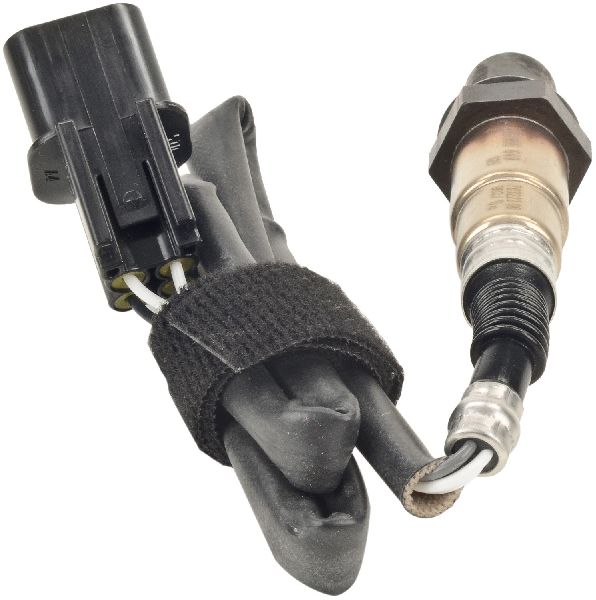
- Bank 1 Sensor 1 Oxygen Sensor
(OEM #39210-3712A (for production up to 8/16/2002) or 39210-37530 (from 8/16/2002 to 9/15/2004))— This is the component that the code directly identifies as slow to respond. It is a common wear item and the most frequent cause of P0133.
Trusted brands: Hyundai (OEM), NGK/NTK, Denso, Bosch
OEM price range: $85-$310
Aftermarket price range: $50-$120
Related Codes That Often Appear With This One
- P0153 — This is the same 'Slow Response' code but for Bank 2 (radiator side). They can appear together if both sensors are failing due to age, or if there's a systemic issue like low fuel pressure. TSB 04-36-009 specifically links these two codes on 2004 models.
- P0171 — This 'System Too Lean (Bank 1)' code can appear if the root cause of the P0133 is an exhaust leak or a vacuum leak, as both allow unmetered air into the system.
Technical Service Bulletins (TSBs) & Recalls
- 04-36-009: Addresses MIL ON with DTCs P0133 and/or P0153 on 2004 Sonata 2.7L vehicles. This TSB is also noted as being relevant to the 2001-2006 Santa Fe with the same engine.
- 03-36-003: Clarifies that for V6 engines, Bank 1 is the 'dash panel side' (firewall).
- TSB superseding 02-36-333: Notes the change from Titanium to Zirconium type O2 sensors for 2003+ models, stating they are not interchangeable.
Platform-Specific Known Issues
- Due to the difficult access to the Bank 1 sensor, some shops may quote high labor costs. It is a known 'book time' vs. 'real time' challenge for technicians.
- There is a production split for the correct O2 sensor part number. Vehicles built up to August 16, 2002, use a different part than those built after. Verifying the vehicle's build date is essential.
- The upstream and downstream O2 sensor connectors on Bank 1 are physically close and can be swapped by mistake during other repairs, which will cause a persistent P0133 code even with a new sensor.
Mechanic-Grade Diagnostic Values
- O2 Sensor Heater Circuit Resistance — expected: 2 to 10 Ohms. Failure: An open circuit (infinite resistance) or a value significantly outside the expected range. A new sensor was measured at 2.9 Ohms in one case.
- ECM Ground Circuit Resistance — expected: 1Ω or less. Failure: Resistance higher than 1Ω indicates a poor ground connection for the ECM, which can cause incorrect sensor readings and trigger false codes.
- O2 Sensor Signal Wire (Bank 1 Sensor 1) — expected: Blue/White wire. Failure: N/A - for identification purposes when testing.
Scan Tool Commands That Help
- Hyundai GDS (Global Diagnostic System): DTC Guide & Analysis — After retrieving code P0133, this function in the factory scan tool can provide a guided diagnostic procedure, offering step-by-step checks and known issue information specific to the vehicle and code.
- Generic OBD-II Scanner with Live Data: Graphing O2S11 vs O2S21 — To visually compare the switching frequency of the suspect Bank 1 sensor against the known-good Bank 2 sensor. A lazy sensor will have a much slower, less frequent waveform.
Wiring & Ground Locations
- G16 / G17 — On the center of the firewall.. These are primary ground points for the 2.7L engine harness. A corroded or loose ground at this location can cause erratic sensor readings and phantom codes, including P0133. A poor ground can mimic a slow sensor response.
- Bank 1 Sensor 1 Connector — Located near the firewall, below the air intake boot and brake fluid reservoir.. This is the connector for the sensor in question. It is physically close to the Bank 1 Sensor 2 (downstream) connector, leading to common swaps during repairs. Unplugging this connector should cause the 'O2S11' PID on a scan tool to go flat, confirming you have the right one.
Real Owner Repair Stories
- ScannerDanner on YouTube (Hyundai (specific model not named, but with identical 2.7L V6 setup)) — Persistent P0133 Check Engine Light.
❌ Tried (didn't work) Replacing the Bank 1 Sensor 1 oxygen sensor three or four times with aftermarket parts.
✅ What actually fixed it The connectors for the upstream (Sensor 1) and downstream (Sensor 2) on Bank 1 had been accidentally swapped during a previous exhaust repair. Correcting the connectors so the upstream sensor plugged into the upstream harness connector resolved the code immediately. - RedBeardAutoHub on YouTube (2004 Hyundai Tucson 2.0L (similar platform, demonstrates a common P0133 diagnostic trap)) — P0133 code returned after a new oxygen sensor was installed by another shop.
❌ Tried (didn't work) Replacing the upstream oxygen sensor.
✅ What actually fixed it A smoke test revealed an exhaust leak at the exhaust manifold gasket. Even though a new sensor was installed, the leak allowed unmetered air into the exhaust, causing the new sensor to read incorrectly and trigger the slow response code. Replacing the manifold gasket fixed the issue. - ScannerDanner Forum user (2003 Hyundai Elantra GLS) — Persistent P0133 code.
❌ Tried (didn't work) Replacing the O2 sensor twice., Replacing a missing exhaust manifold stud and a new manifold gasket.
✅ What actually fixed it The user noted that after trying multiple fixes, the issue was still present. A senior forum member suggested checking for poor ground connections (battery and block grounds) and also observing the downstream O2 sensor's behavior, as some vehicles compare upstream and downstream sensors, and a faulty downstream sensor could potentially trigger an upstream code. The final resolution was not posted, but these advanced diagnostic steps were the recommended path forward after common fixes failed. - NHTSA ODI #11415689 — An owner of a similar Hyundai platform reported that issues began with various check engine light codes, including P0133, as well as codes for the mass air flow sensor and oxygen sensors.
When the Usual Fixes Don't Work
- While P0133 is overwhelmingly caused by a failed sensor, there are numerous documented cases on this specific vehicle where the true cause was either an exhaust leak near the manifold or swapped upstream/downstream sensor connectors. One owner on a Reddit forum went through multiple aftermarket sensors and even an OEM sensor before realizing the issue was elsewhere in the system, highlighting that repeatedly replacing the sensor without a deeper diagnosis can be a costly mistake.
OEM Part Supersession History
39210-37120, 39210-37125→39210-3712A— Standard part revision and consolidation.
Heads up: This earlier Titanium-style sensor is not compatible with later Zirconium-style sensor systems.
Model Year Variations Within This Range
- 2001-2002 (up to 8/16/2002): Uses Titanium-style oxygen sensor, OEM Part No. 39210-3712A.
- 2002 (from 8/16/2002) - 2005: Uses Zirconium-style oxygen sensor, OEM Part No. 39210-37530. These two sensor types are electronically incompatible and cannot be interchanged.
Diagnostic Flowchart
Other Known Issues on This Vehicle
Issues unrelated to this code that are worth knowing about as an owner of this generation:
- Crankshaft Position Sensor (CPS) Failure 🔴 High — Very common failure item. Often presents as the engine stalling when hot and refusing to restart until it has cooled down. Can cause a crank-no-start condition.
- Valve Cover Gasket Leaks 🟠 Medium — Extremely common for the rubber gaskets to become brittle and leak oil. This causes a burning oil smell and can lead to oil filling the spark plug tubes, causing misfires.
- Timing Belt Hydraulic Tensioner Failure 🔴 High — The Delta V6 is an interference engine. While the timing belt itself has a standard service interval (e.g., 60,000 miles), the hydraulic tensioner is a known weak point that can fail, causing the belt to jump time or break, resulting in catastrophic engine damage.
- Intake Manifold Swirl Flap Bolt Ingestion 🔴 High — A known, though less frequent, issue where the small bolts securing the swirl flaps inside the variable intake manifold can loosen and fall into the combustion chamber, causing severe engine damage.
Used vs. New Parts: Buying Guide for This Vehicle
When a used part is the smart pick: A used part is generally not recommended for the oxygen sensor itself, as it is a wear-and-tear item with a finite lifespan. However, obtaining a used wiring harness pigtail from a junkyard is a smart choice if your original connector is melted or damaged. A used exhaust manifold can also be a cost-effective option if yours is cracked, provided the used one is inspected for cracks and warping.
Donor-vehicle mileage cap: roughly under 100000 miles for the part to have meaningful remaining life.
What to inspect on the donor part:
- For an exhaust manifold: Check for hairline cracks, especially around the welds and mounting flanges. Ensure all studs are intact and the flange surface is flat (not warped).
- For a wiring connector: Ensure the plastic is not brittle or cracked, the locking tab is intact, and the internal pins are clean and not corroded.
OEM-only on this vehicle (don't cheap out):
- While not strictly 'OEM-only', many professional mechanics and forum users strongly advise against using no-name, ultra-cheap aftermarket oxygen sensors. Sticking to OEM or reputable OE-equivalent brands is highly recommended to avoid repeat failures.
Aftermarket brands forum-validated for this vehicle:
- NTK (also known as NGK)
- Denso
Brands owners have reported issues with on this vehicle:
- Unbranded, generic 'eBay' or 'Amazon' sensors that are significantly cheaper than reputable brands have a high failure rate and can cause diagnostic frustration.
Real Owner Stories
Aggregated from forums and TSBs cited above. Mileages and costs reflect what owners reported in those sources.
2001-2005 Hyundai Sonata 2.7L V6
Symptoms: Multiple new oxygen sensors failed to fix the P0133 code; the sensor readings remained incorrect despite replacement.
What fixed it: The technician discovered that the upstream and downstream O2 sensor connectors had been swapped during a previous repair.
Source hint: ScannerDanner on YouTube: P0133 O2 Slow Response (reversed O2 connectors) - Hyundai
Related OBD-II Codes
Frequently Asked Questions
Where is the Bank 1 Sensor 1 oxygen sensor located on my 2.7L V6 Sonata?
Does TSB 04-36-009 apply to my 2004 Hyundai Sonata?
I replaced my O2 sensor but the P0133 code won't go away. Could the connectors be the problem?
Are the oxygen sensors for a 2002 Sonata the same as a 2003 model?
Can an exhaust leak cause a P0133 code on the Delta 2.7L engine?
Is there a specific fuse I should check for the O2 sensor heater?
Helpful Videos


We Have This Part in Stock



The information in this article is provided for general reference and educational purposes only. Vehicle specifications, procedures, and part compatibility can vary by production date, trim level, and region. Always consult your vehicle's factory service manual and verify part numbers before purchasing or performing repairs. Safety-critical components such as airbags, seat belts, and braking systems should be installed by a qualified professional.
- Hyundai Sonata:
- 🎬 Helpful Videos
- 🛍️ Shop This Part
- What's Unique About the 2001-2005 Hyundai Sonata
- Symptoms You May Notice
- Most Likely Causes
- Rare But Worth Checking
- Diagnosis Steps
- Parts You'll Likely Need
- Related Codes That Often Appear With This One
- Technical Service Bulletins (TSBs) & Recalls
- Platform-Specific Known Issues
- Mechanic-Grade Diagnostic Values
- Scan Tool Commands That Help
- Wiring & Ground Locations
- Real Owner Repair Stories
- When the Usual Fixes Don't Work
- OEM Part Supersession History
- Model Year Variations Within This Range
- Diagnostic Flowchart
- Other Known Issues on This Vehicle
- Used vs. New Parts: Buying Guide for This Vehicle
- Real Owner Stories
- 2001-2005 Hyundai Sonata 2.7L V6
- Related OBD-II Codes
- Frequently Asked Questions
- 🎟️ Get 5% Off