

P0133 on 2010-2017 GMC Terrain: Slow O2 Sensor Causes and Fixes
On a 2010-2017 GMC Terrain with the 2.4L engine, P0133 almost always points to a failing upstream oxygen sensor (Bank 1, Sensor 1), a cracked exhaust manifold, or both. High oil consumption on this engine can also foul the sensor, causing it to fail. Always inspect for exhaust leaks before replacing the sensor, as replacing the sensor alone will not fix the code if a leak is present.
- P0133 on your GMC Terrain is most often caused by either a cracked exhaust manifold or a bad upstream O2 sensor.
- Always inspect for an exhaust leak at the manifold BEFORE replacing the oxygen sensor. A new sensor will not fix a code caused by a leak.
- The 2.4L Ecotec engine's tendency to burn oil can destroy oxygen sensors. Monitor your oil level closely.
- If you've had recent exhaust or engine work done, double-check that the upstream and downstream O2 sensor connectors are not swapped, as noted in a GM TSB.
What's Unique About the 2010-2017 GMC Terrain
The 2.4L Ecotec engine in this generation of the GMC Terrain has two well-documented issues that directly cause code P0133. First, these engines are known for excessive oil consumption due to piston ring issues, which can contaminate and destroy the oxygen sensor. Second, the factory exhaust manifold is prone to cracking, which creates an exhaust leak before the O2 sensor, corrupting its readings and causing it to report a slow response. A specific GM Technical Service Bulletin (PIP4699A) also warns that the upstream and downstream O2 sensor connectors can be accidentally swapped during service, leading to this code and/or P1133.
Symptoms You May Notice
- Check Engine Light is on
- Reduced fuel economy
- Rough or uneven idle
- Slower acceleration or hesitation
- Smell of exhaust fumes in the cabin, especially when stopped
- Louder exhaust noise, particularly a 'ticking' sound on a cold start that diminishes as the engine warms up
- Black smoke from the exhaust, particularly on startup
- Replacing the oxygen sensor without first checking for a cracked manifold or exhaust leak. The new sensor will quickly set the same code if the underlying leak is not fixed. This is a very common owner experience reported in forums.
- Replacing the catalytic converter. A P0133 code points to the upstream sensor's response time, not the converter's efficiency (which is typically code P0420). While a bad sensor can eventually harm the converter, it is not the root cause of this specific code.
Most Likely Causes
- Cracked Exhaust Manifold 🔴 High Probability The original equipment cast iron manifold is known to develop cracks from repeated heat cycles. This is an extremely common failure on the 2.4L Ecotec in both the Terrain and its platform-mate, the Chevrolet Equinox. Owners on forums frequently report that this was the ultimate fix for a persistent P0133.
How to confirm: Visually inspect the exhaust manifold for cracks, often near the oxygen sensor bung or between the runners. Look for fine black soot marks, which are definitive proof of a leak. A ticking noise from the engine bay on a cold start that quiets down as the engine warms up is a classic symptom. A smoke test can also reveal leaks.
Typical fix: Replace the exhaust manifold and both the manifold-to-head gasket and the manifold-to-catalytic-converter gasket. It is highly recommended to replace the manifold studs and nuts at the same time. Many aftermarket replacements are available, such as from Dorman.
Est. part cost: $100-$250 - Failing/Fouled Upstream Oxygen Sensor 🔴 High Probability Besides normal wear, the sensor is often fouled by burnt oil due to the engine's known oil consumption issues from faulty piston rings. An exhaust leak from a cracked manifold can also throw off sensor readings, leading to a P0133 code even if the sensor itself is functional.
How to confirm: Use a scan tool to graph the B1S1 voltage. A healthy sensor's voltage will fluctuate rapidly between rich (~0.9V) and lean (~0.1V). A slow, lazy wave pattern confirms a bad sensor. Visually inspect the sensor tip when removed; if it's coated in white or black ash-like deposits, it's fouled by oil or fuel additives.
Typical fix: Replace the Bank 1, Sensor 1 oxygen sensor. This is often done at the same time as an exhaust manifold replacement. Using an OEM ACDelco or a quality aftermarket brand like Denso or NGK is recommended.
Est. part cost: $50-$150 - Exhaust Gasket Leak 🟡 Medium Probability The gasket between the cylinder head and the exhaust manifold can fail over time, creating a leak that introduces oxygen into the exhaust stream before the sensor.
How to confirm: Look for black soot trails around the manifold where it meets the cylinder head. A smoke test is the most definitive way to confirm a leak. This is often misdiagnosed as a cracked manifold.
Typical fix: Replace the exhaust manifold gasket. This is included with most aftermarket manifold kits.
Est. part cost: $20-$40 - Swapped Oxygen Sensor Connectors ⚪ Low Probability GM Technical Service Bulletin (PIP4699A) specifically calls this out as a possible cause, especially after recent engine or exhaust work. The upstream (pre-catalyst) and downstream (post-catalyst) sensor connectors are similar and can be accidentally swapped, which will cause codes P0133 and/or P1133.
How to confirm: Trace the wiring from the upstream (on the manifold) and downstream (after the catalytic converter) sensors to their connectors. Ensure the correct sensor is plugged into the correct harness-side connector. The upstream sensor is closer to the engine.
Typical fix: Swap the connectors to their correct positions.
Est. part cost: $0
Rare But Worth Checking
- Damaged Wiring or Connector: The wiring harness can get brittle from heat or be damaged during other repairs. Check for melted wires, corrosion in the connector pins, or loose connections.
- PCM Software Issue: In very rare cases, the Powertrain Control Module (PCM) may have outdated software with incorrect parameters for monitoring the sensor. A dealer or qualified shop can check for available updates.
- Intake Vacuum Leak: A significant vacuum leak from a hose or the intake manifold gasket can lean out the air-fuel mixture to a point that it affects the O2 sensor's readings and may trigger a P0133 code.
Diagnosis Steps
- Check for other stored trouble codes to see if they provide more context (e.g., P1133, P0420).
- Visually inspect the exhaust manifold for obvious cracks. Pay close attention to the area around the O2 sensor bung and between the exhaust runners. Use a flashlight and mirror.
- Listen for a ticking exhaust leak noise when the engine is started cold. The noise often fades as the metal expands with heat.
- Inspect the oxygen sensor wiring harness for any signs of melting, chafing, or corrosion at the connector.
- If any recent repairs were performed, verify the upstream and downstream oxygen sensor connectors are not swapped, per TSB PIP4699A.
- Use a scan tool with live data capability to graph the voltage of 'O2 Sensor B1S1'. A healthy sensor will show rapid fluctuations between approximately 0.1V and 0.9V. A slow, lazy waveform indicates a problem.
- If a leak is suspected but not visible, perform an exhaust system smoke test to pinpoint its location. This is the most definitive way to find small cracks or gasket leaks.
- If no exhaust leaks are found and the wiring is intact, the oxygen sensor itself is the most likely culprit and should be replaced.
Parts You'll Likely Need
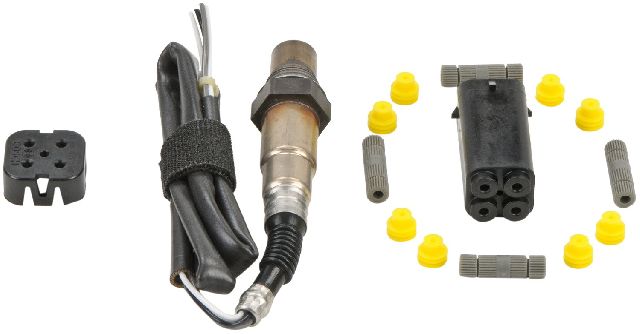
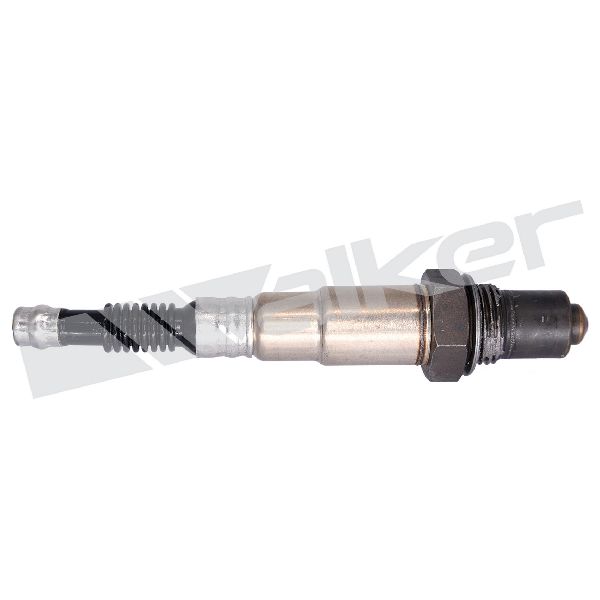
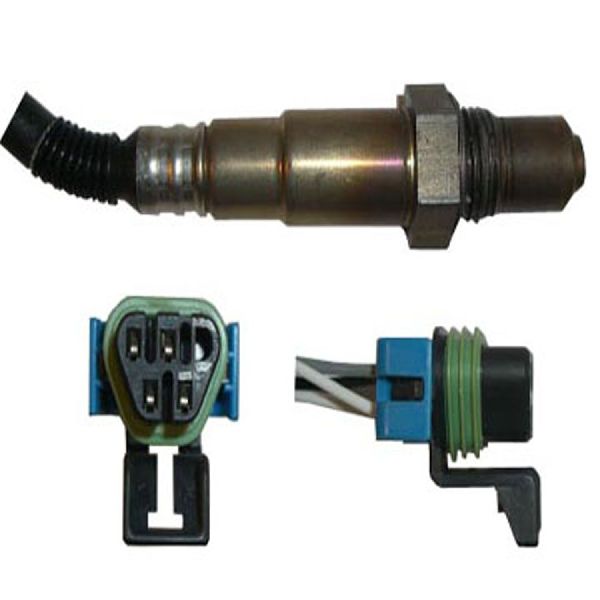
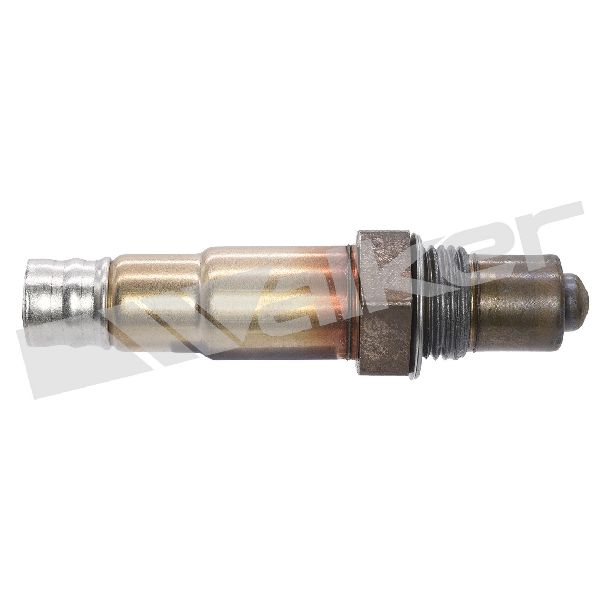
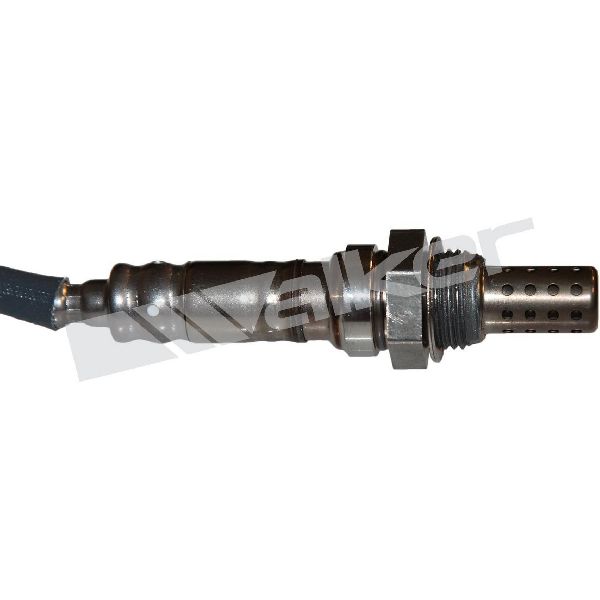
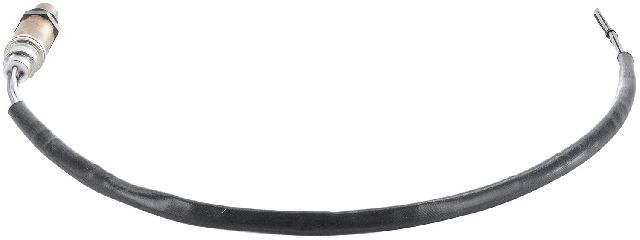
- Upstream Oxygen Sensor (Bank 1, Sensor 1)
(OEM #12643709)— This is the sensor that measures the exhaust gas and is the subject of the code. It frequently fails from age, heat, or contamination from oil burning.
Trusted brands: ACDelco, Denso, NGK, Bosch
OEM price range: $80-$120
Aftermarket price range: $50-$90 - Exhaust Manifold
(OEM #12631021)— The factory manifold is a common failure point on this engine and is a primary cause of P0133. Replacing a cracked manifold is a permanent fix for the associated exhaust leak. Aftermarket versions like the Dorman 674-940 (2010-12) or 674-561 (2013-14) are common replacements.
Trusted brands: GM Genuine, Dorman
OEM price range: $200-$300
Aftermarket price range: $100-$180 - Exhaust Manifold Gasket
(OEM #12609878)— This gasket must be replaced any time the exhaust manifold is removed. It is almost always included in manifold replacement kits.
Trusted brands: ACDelco, Fel-Pro
OEM price range: $25-$40
Aftermarket price range: $15-$25
Related Codes That Often Appear With This One
- P0420 — A slow O2 sensor provides inaccurate data to the catalyst monitor, causing it to fail its efficiency test and set a P0420 code. Fixing the P0133 issue will often resolve the P0420 as well.
- P1133 — This is a GM-specific code for 'HO2S Insufficient Switching'. TSB PIP4699A explicitly links P0133 and P1133 as having the same potential causes, including swapped connectors and exhaust leaks.
Technical Service Bulletins (TSBs) & Recalls
- PIP4699A: Provides diagnostic steps for P0133 or P1133, highlighting the possibility of swapped pre- and post-oxygen sensor connectors.
Platform-Specific Known Issues
- The 2.4L Ecotec engine has a Special Coverage Adjustment (SCA) from GM for excessive oil consumption. If your vehicle is burning oil, it will repeatedly foul new O2 sensors. Check with a GM dealer with your VIN to see if your vehicle is covered under program 14404 or a related campaign.
- Cracked exhaust manifolds are extremely common and often the true root cause of a persistent P0133, even after the O2 sensor has been replaced.
Mechanic-Grade Diagnostic Values
- Upstream O2 Sensor (B1S1) Voltage — expected: Rapidly fluctuating sine wave between ~0.1V (lean) and ~0.9V (rich) when the engine is warm and at a steady 2000 RPM.. Failure: A slow, lazy, or flat-lined waveform on a scan tool's live data graph.
- Long Term Fuel Trim (LTFT) — expected: Should ideally be between -10% and +10%.. Failure: A sustained positive value greater than +10% (e.g., +13% or higher) suggests the ECU is consistently adding fuel to compensate for a lean condition, which can be caused by an exhaust leak before the O2 sensor. If the value exceeds +/-25%, it will typically trigger a separate code like P0171 (System Too Lean).
- O2 Sensor Fuses — expected: Fuse #43 (15A) for the pre-catalytic converter (upstream) sensor and Fuse #41 (15A) for the post-catalytic converter (downstream) sensor should have continuity.. Failure: A blown fuse will cut power to the sensor's heater circuit, causing it to warm up too slowly and trigger a slow response code.
Wiring & Ground Locations
- G105 / G112 — G105 is on the rear of the engine (left rear for 3.0L). G112 is on the lower left front of the 2.4L engine.. These are primary engine block grounds. A poor connection at these points can cause erratic behavior and incorrect readings from engine-mounted sensors, including the oxygen sensor, by creating an unstable ground reference for the sensor's low-voltage signal.
- G109 / G110 — G109 is on the top rear of the 2.4L engine. G110 is on the right rear of the engine.. These grounds are essential for the engine control module (ECM) and ignition system. A faulty ground here can lead to a variety of sensor codes and drivability issues that could be misdiagnosed as a bad sensor.
- O2 Sensor Fuses (#41, #43) — In the underhood fuse block. Fuse #43 (15A) is for the upstream (pre-cat) sensor, and Fuse #41 (15A) is for the downstream (post-cat) sensor.. The P0133 code relates to the upstream sensor (Fuse #43). A blown fuse for the sensor's heater circuit will prevent it from reaching operating temperature quickly, directly causing a 'slow response' fault.
Real Owner Repair Stories
- YouTube channel Buff Motorsports (2012 GMC Terrain 2.4L Ecotec) — Noise on startup, exhaust fumes in the cabin, odd idle issues, and poor fuel economy (20 MPG vs. a previous 25 MPG).
❌ Tried (didn't work) A recent timing chain replacement did not solve the startup noise or idle issues.
✅ What actually fixed it Replacing the exhaust manifold, which was found to have a significant crack near the collector for cylinders 1 and 2. The crack was allowing fresh air in, causing the O2 sensor to read lean and the ECU to add excess fuel. This resolved the exhaust smell and improved the idle.
Model Year Variations Within This Range
- 2010-2011: These years used the 2.4L LAF engine, which had single variable valve timing (intake only).
- 2012-2017: These years used the 2.4L LEA engine, which was an E85 FlexFuel capable version of the LAF and featured dual variable valve timing (intake and exhaust). While the core engine is the same, aftermarket parts listings sometimes differentiate exhaust manifolds between pre- and post-2013 models, suggesting a possible minor change.
Diagnostic Flowchart
Other Known Issues on This Vehicle
Issues unrelated to this code that are worth knowing about as an owner of this generation:
- Excessive Oil Consumption 🔴 High — Extremely common, especially in 2010-2013 models. Can start as early as 60,000 miles. Caused by poorly designed piston rings. (Ref: GM Special Coverage Adjustment (SCA) #14404 (and others) extended warranty coverage for this issue, but may now be expired.)
- Timing Chain Stretch/Failure 🔴 High — Very common, typically presents as a rattling noise on cold starts between 80,000-120,000 miles. Can lead to catastrophic engine failure if ignored. (Ref: Multiple TSBs exist, but no universal recall was issued. Often associated with codes P0016 and P0017.)
- High-Pressure Fuel Pump (HPFP) Failure 🟠 Medium — Common on 2010-2011 models. The pump can wear and leak fuel into the engine crankcase, thinning the oil and causing engine damage. (Ref: Voluntary Emission Recall #43180 was issued for 2010-2011 models to replace the pump (Part No. 12641847).)
- Clogged PCV Orifice in Intake Manifold 🟠 Medium — The small PCV orifice in the plastic intake manifold can clog. In cold weather, moisture can freeze and block it, causing crankcase overpressure and blowing out the rear main seal, leading to a massive oil leak. (Ref: TSB PI0763C addresses this issue.)
- Faulty VVT Solenoids / Camshaft Actuators 🟠 Medium — The intake and exhaust camshaft position actuator solenoids are a frequent failure item, causing rough idle, stalling, and codes like P0010, P0011, P0013, P0014.
Used vs. New Parts: Buying Guide for This Vehicle
When a used part is the smart pick: A used exhaust manifold from a low-mileage donor vehicle is a viable option, as the failure is due to heat cycles, not just age. It can offer significant savings over a new OEM part. However, buying a used oxygen sensor is never recommended.
Donor-vehicle mileage cap: roughly under 60000 miles for the part to have meaningful remaining life.
What to inspect on the donor part:
- For an exhaust manifold, inspect the donor part meticulously for hairline cracks, especially between the runners and around the O2 sensor bung.
- Check for flatness on the cylinder head mating surface; warping can cause leaks.
- Ensure all studs are intact and not seized or broken off.
- Verify the donor vehicle was not in a front-end collision that could have stressed the manifold.
OEM-only on this vehicle (don't cheap out):
- While not strictly 'OEM-only', using a high-quality OEM (ACDelco) or reputable OE-equivalent (Denso, NGK) oxygen sensor is critical. Cheap, no-name sensors are notorious for failing prematurely or having incorrect response characteristics, causing the code to return.
Aftermarket brands forum-validated for this vehicle:
- Dorman is a widely used and accepted aftermarket brand for the exhaust manifold on this vehicle.
- Denso and NGK/NTK are highly regarded for oxygen sensors.
- Fel-Pro is a trusted brand for exhaust gaskets.
Brands owners have reported issues with on this vehicle:
- Avoid unbranded, ultra-low-cost oxygen sensors from online marketplaces, as they are a common source of repeat failures.
Real Owner Stories
Aggregated from forums and TSBs cited above. Mileages and costs reflect what owners reported in those sources.
2010-2017 GMC Terrain 2.4L Ecotec
Symptoms: Persistent P0133 code even after the oxygen sensor was replaced; owners on forums noted the code would not stay away.
What fixed it: Replacement of the cracked original equipment cast iron exhaust manifold.
Source hint: terrainforum.net / equinoxforum.net
2010-2013 GMC Terrain 2.4L Ecotec — ~60000 miles
Symptoms: Excessive oil consumption and fouled O2 sensors with black or white ash-like deposits on the sensor tip.
What fixed it: Addressing the faulty piston rings under Special Coverage Adjustment #14404 to stop oil from fouling the sensors.
Source hint: Reddit (r/MechanicAdvice)
2010-2017 GMC Terrain 2.4L Ecotec
Symptoms: Ticking noise from the engine bay on a cold start that quiets down as the engine warms up; smell of exhaust fumes in the cabin when stopped.
What fixed it: Replacing the exhaust manifold and both the manifold-to-head and manifold-to-catalytic-converter gaskets.
Source hint: Article Context
Related OBD-II Codes
Frequently Asked Questions
Is there a TSB for the P0133 code on my 2010-2017 GMC Terrain 2.4L?
Why does my Terrain have a ticking sound on cold starts along with the P0133 code?
Could my GMC Terrain's oil consumption issue be causing this oxygen sensor code?
Is the oil consumption issue covered by GMC?
I already replaced the O2 sensor but the P0133 code came back. What else should I check?
What brand of oxygen sensor should I use for the 2.4L Ecotec?
Helpful Videos


We Have This Part in Stock

The information in this article is provided for general reference and educational purposes only. Vehicle specifications, procedures, and part compatibility can vary by production date, trim level, and region. Always consult your vehicle's factory service manual and verify part numbers before purchasing or performing repairs. Safety-critical components such as airbags, seat belts, and braking systems should be installed by a qualified professional.
- GMC Terrain:
- 🎬 Helpful Videos
- 🛍️ Shop This Part
- What's Unique About the 2010-2017 GMC Terrain
- Symptoms You May Notice
- Most Likely Causes
- Rare But Worth Checking
- Diagnosis Steps
- Parts You'll Likely Need
- Related Codes That Often Appear With This One
- Technical Service Bulletins (TSBs) & Recalls
- Platform-Specific Known Issues
- Mechanic-Grade Diagnostic Values
- Wiring & Ground Locations
- Real Owner Repair Stories
- Model Year Variations Within This Range
- Diagnostic Flowchart
- Other Known Issues on This Vehicle
- Used vs. New Parts: Buying Guide for This Vehicle
- Real Owner Stories
- 2010-2017 GMC Terrain 2.4L Ecotec
- 2010-2013 GMC Terrain 2.4L Ecotec — ~60000 miles
- 2010-2017 GMC Terrain 2.4L Ecotec
- Related OBD-II Codes
- Frequently Asked Questions
- 🎟️ Get 5% Off