

P0133 on 2008-2012 Ford Escape 3.0L V6: Slow O2 Sensor Causes and Fixes
For a 2008-2012 Ford Escape with the 3.0L V6, code P0133 is most often caused by a failing upstream oxygen sensor on the rear (firewall side) cylinder bank. This sensor is notoriously difficult to access. Before replacing the sensor, a smoke test for vacuum leaks is mandatory, as this engine is prone to intake gasket and PCV hose leaks that mimic a bad sensor. Expect to pay $40-$80 for an aftermarket sensor or $70-$120 for an OEM Motorcraft part. DIY difficulty is high due to location, requiring
- P0133 points to the upstream oxygen sensor on the REAR (firewall side) of the engine.
- Before replacing the sensor, always check for vacuum and exhaust leaks, as the 3.0L V6 is prone to them.
- This repair is challenging for a DIYer primarily due to the very tight access to the sensor's location.
- Use a quality replacement sensor from a brand like Motorcraft, Bosch, or Denso to avoid the code returning.
- If codes P0171 or P0174 are also present, a vacuum leak is the most likely root cause.
What's Unique About the 2008-2012 Ford Escape
On the 3.0L Duratec V6 in the Ford Escape, Bank 1 is the cylinder bank located against the firewall, not the front of the engine bay. This makes accessing the P0133-related sensor (Bank 1, Sensor 1) notoriously difficult. Furthermore, this engine family is known for developing vacuum leaks from aging intake manifold gaskets and brittle rubber PCV hoses. These leaks introduce unmetered air, which can trigger code P0133 and associated lean codes (P0171/P0174), sometimes misleading technicians into replacing a perfectly good sensor.
Symptoms You May Notice
- Check Engine Light is on
- Reduced fuel economy
- Rough or unstable idle
- Engine hesitation or stumbling during acceleration
- Black smoke from the exhaust in some cases
- Engine surging or bucking
- Replacing the wrong oxygen sensor. Technicians unfamiliar with this platform may mistakenly replace the easily accessible Bank 2 sensor (front of the engine) instead of the correct, difficult-to-reach Bank 1 sensor (rear of the engine).
- Replacing the oxygen sensor when the root cause is a vacuum leak. The 3.0L Duratec's tendency for intake leaks means a smoke test should be a mandatory first step, especially if lean codes P0171 or P0174 are also present.
Most Likely Causes
- Failing or Aged Bank 1, Sensor 1 Oxygen Sensor 🔴 High Probability Oxygen sensors are consumable parts that degrade over time from constant exposure to heat and exhaust gases, typically lasting 60,000 to 100,000 miles. Contamination from oil or coolant can also cause premature failure.
How to confirm: Use a scan tool with live data capability to monitor the Bank 1, Sensor 1 voltage. A healthy sensor's voltage should fluctuate rapidly between approximately 0.1V and 0.9V. A slow or 'lazy' sensor will show slow, rounded transitions or a flat line.
Typical fix: Replace the Bank 1, Sensor 1 oxygen sensor. This sensor is located on the rear exhaust manifold, near the firewall. Access is very tight and may require working from below the vehicle after removing the passenger-side front wheel for better access. A specialized O2 sensor socket, universal joint, and long extensions are highly recommended.
Est. part cost: $40-$120 - Vacuum Leak 🔴 High Probability The 3.0L Duratec V6 is widely known for vacuum leaks from deteriorated PCV hoses (especially the elbow under the intake) and failing upper/lower intake manifold gaskets. These leaks are so common they should be the first suspect, especially if lean codes P0171/P0174 are present.
How to confirm: Perform a smoke test on the intake system. Introduce smoke into a vacuum line and watch for smoke escaping from the intake manifold gaskets, PCV hoses, or other connections. A hissing sound from the engine bay at idle is also a strong indicator.
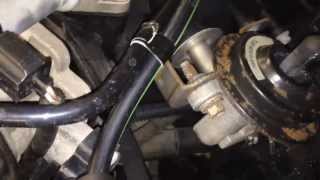
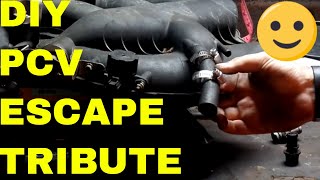
Typical fix: Replace the failed intake manifold gaskets or the cracked vacuum/PCV hoses. The PCV valve and its associated hoses are common failure points and relatively inexpensive to replace. 🎬 Watch: Locate and repair common PCV hose failure points.
Est. part cost: $30-$150 - Exhaust Leak 🟡 Medium Probability Gaskets on the exhaust manifold or the manifold itself can crack and fail over time due to heat cycles, allowing outside air to enter the exhaust stream before the O2 sensor, skewing its readings.
How to confirm: Visually inspect the exhaust manifold and gaskets for black soot trails, which indicate a leak. A smoke test of the exhaust system can also pinpoint the source of a leak. You may also hear a ticking or puffing noise from the engine bay, especially when the engine is cold.
Typical fix: Replace the leaking exhaust manifold gasket or repair/replace the cracked manifold.
Est. part cost: $20-$100
Rare But Worth Checking
- Damaged Wiring or Connector: The wiring harness for the rear O2 sensor is close to hot exhaust components and can become brittle, melted, or damaged over time. Always inspect the wiring and connector for integrity before replacing the sensor.
- Contaminated Sensor: An internal engine leak (e.g., from a valve cover gasket) can drip oil onto the oxygen sensor, contaminating it and causing it to fail prematurely. Coolant contamination from a leaking head gasket can also foul a sensor.
- Low Fuel Pressure: A weak fuel pump or clogged filter can cause a lean condition that the PCM may interpret as a slow sensor response. This is less common and would typically be accompanied by other driveability issues and possibly other codes.
- Faulty Powertrain Control Module (PCM): In very rare cases, the PCM itself can be faulty. This should only be considered after all other possibilities (sensor, wiring, leaks) have been exhaustively ruled out.
Diagnosis Steps
- Verify the code with a scanner. Check for any other pending or active codes, paying close attention to P0171 or P0174, which strongly suggest a vacuum leak.
- Perform a thorough visual inspection. Look for obvious cracks in vacuum lines (especially the PCV system), damage to the O2 sensor wiring harness, and black soot marks around the rear exhaust manifold that would indicate an exhaust leak.
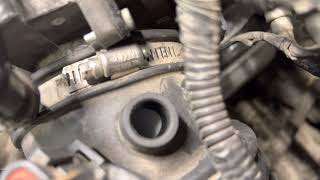
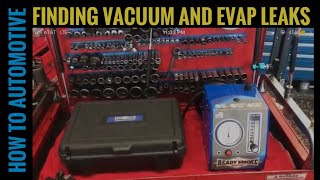
- Perform a smoke test. This is crucial on this engine. Introduce smoke into the intake manifold via a vacuum line to check for leaks from gaskets and hoses. Also, introduce smoke into the tailpipe (with the engine off) to check for exhaust leaks before the sensor. 🎬 Watch: How to perform a smoke test for vacuum leaks.
- Analyze live data. Warm up the engine and use a scan tool to observe the Bank 1, Sensor 1 voltage. It should switch rapidly from ~0.1V to ~0.9V. If it's slow, lazy, or biased high/low, and no leaks were found, the sensor is likely faulty.
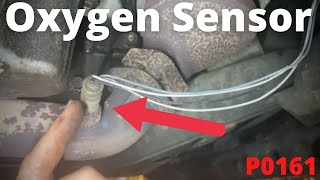
- If all other checks pass, replace the Bank 1, Sensor 1 oxygen sensor. Due to its difficult location, be prepared with penetrating oil, a proper 22mm (or 7/8") O2 sensor socket with a slit for the wire, a universal joint, and various extensions. Access may be improved by working from underneath the vehicle. 🎬 See this walkthrough for replacing the difficult Bank 1 sensor.
- After replacement, clear the codes and perform a drive cycle to ensure the repair was successful.
Parts You'll Likely Need
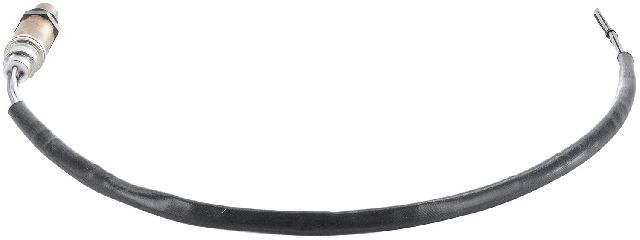
- Bank 1, Sensor 1 Oxygen Sensor (Upstream, Rear)
(OEM #DY-1047)— This is the most common failure point for code P0133. It is a consumable part that wears out over time.
Trusted brands: Motorcraft, Bosch, Denso, NTK
OEM price range: $70-$120
Aftermarket price range: $40-$80 - PCV Valve Hose Assembly
(OEM #Dorman 46078 (example))— A very common source of vacuum leaks on the 3.0L Duratec. The rubber elbows become brittle and crack, causing lean conditions and P0133.
Trusted brands: Dorman, Motorcraft
OEM price range: $30-$50
Aftermarket price range: $20-$40 - Intake Manifold Gasket Set — Another frequent cause of vacuum leaks. If a smoke test indicates a leak at the manifold, these gaskets must be replaced.
Trusted brands: Fel-Pro, Mahle, Motorcraft
OEM price range: $50-$80
Aftermarket price range: $25-$50
Related Codes That Often Appear With This One
- P0171 — System Too Lean (Bank 1). A vacuum leak or exhaust leak affecting Bank 1 will often cause a lean condition that the PCM flags, in addition to noting the slow sensor response.
- P0174 — System Too Lean (Bank 2). If a significant vacuum leak is present at the intake manifold, it can affect both cylinder banks, triggering both P0171 and P0174 along with the P0133.
- P0153 — O2 Sensor Circuit Slow Response (Bank 2, Sensor 1). If both P0133 and P0153 are present, it could point to a systemic issue like low fuel pressure or a large vacuum leak affecting both banks, rather than two simultaneously failed sensors.
Platform-Specific Known Issues
- The location of the Bank 1, Sensor 1 oxygen sensor on the rear cylinder bank (firewall side) makes it extremely difficult to access compared to the Bank 2 sensor. This significantly increases labor time and DIY difficulty.
- The 3.0L Duratec V6 engine is widely known for vacuum leaks from the lower intake manifold gaskets and various PCV hoses, which can be the true underlying cause of this code.
- Owner Experience: The Dreaded Rear Sensor: Forum users on sites like 'escape-city.com' and 'ford-trucks.com' frequently share stories of frustration with the Bank 1 sensor. Many DIYers report needing a combination of long extensions, a universal joint (swivel), and a crow's foot or slotted O2 sensor socket to reach it from below. Some even resort to removing the passenger side front wheel for a better angle of attack from the wheel well.
Mechanic-Grade Diagnostic Values
- Alternator AC Ripple Voltage — expected: < 50mV (0.05V) AC. Failure: A reading consistently above 50mV AC, especially over 100mV, indicates failing alternator diodes which can create electrical noise and interfere with sensor readings.
- Long Term Fuel Trim (LTFT) at idle — expected: Between -10% and +10%. Failure: Sustained values greater than +20% often trigger a lean code (P0171/P0174) and point towards a significant vacuum leak, low fuel pressure, or MAF issue that could also be the root cause of P0133.
- O2 Sensor Signal Voltage (unplugged) — expected: Near 0V. Failure: Unlike many other manufacturers, Ford vehicles of this era do not use a bias voltage on the O2 sensor signal circuit. If you unplug the sensor and see a voltage around 0.45V (450mV), it could indicate a short to another wire, not a healthy circuit. A healthy, unplugged circuit should read near zero.
- O2 Sensor Response Time — expected: 100-200 milliseconds. Failure: A response time significantly slower than this range confirms a 'lazy' sensor, which is the direct trigger for code P0133.
Scan Tool Commands That Help
- Ford IDS / FORScan / Professional Scan Tool: Reset Keep Alive Memory (KAM) — After replacing a component like an O2 sensor, intake gasket, or MAF sensor. This command erases the long-term fuel trim adjustments and other learned values, forcing the PCM to create a new fuel map with the new parts. This helps verify if the repair was successful by observing if the new fuel trims stay within the expected range.
Wiring & Ground Locations
- PCM Location — In a recess on the upper center of the firewall for the 3.0L V6 model.. Knowing the PCM location is critical for advanced diagnostics, such as checking for continuity or shorts on the O2 sensor signal wire directly at the computer's connector.
- G101 / G109 — Located on the firewall at the rear of the engine compartment.. These are primary engine ground points. A corroded or loose connection here can cause floating grounds and erratic voltage readings for multiple sensors, including the oxygen sensors, leading to false codes.
- G108 — Located on the front of the engine.. Another key engine ground. Verifying all major engine-to-chassis grounds are clean and tight is a crucial step before condemning expensive components like a PCM.
- HO2S11 Connector Wires — At the sensor connector for Bank 1, Sensor 1.. On a typical 4-wire Ford sensor, the two wires of the same color (often white or black) are for the heater circuit. The other two are the signal and ground. This allows for testing the heater circuit resistance and checking for power/ground without a wiring diagram.
"I Checked Everything" — The Actual Cause
- If a smoke test for vacuum and exhaust leaks comes back clean, the next steps should be to investigate non-leak-related causes. A common scenario is that the oxygen sensor itself has simply aged and become slow, which a smoke test will not reveal. Other possibilities include a dirty MAF sensor providing incorrect airflow data, or a failing fuel injector on one of the Bank 1 cylinders causing a localized lean condition that the sensor struggles to read correctly.
Model Year Variations Within This Range
- 2008-2012: No significant variations have been identified within this model year range for the 3.0L V6 that would fundamentally change the diagnosis or repair of a P0133 code. Part numbers for the key components (O2 sensor, intake gaskets) are consistent across this period.
Diagnostic Flowchart
Other Known Issues on This Vehicle
Issues unrelated to this code that are worth knowing about as an owner of this generation:
- Transmission Failure (CD4E / 6F35) 🔴 High — Common, especially in earlier 2008-2009 models. Failures can occur under 100,000 miles. Symptoms include hard shifts, slipping, or loss of gears. (Ref: TSB 12-4-8 addresses loss of 2nd and 4th gear in the CD4E transmission. TSB 16-0043 addresses fluid leaks from the axle seal on the 6F35.)
- Rear Shock Tower Rust 🔴 High — Extremely common in regions that use road salt. The upper mount for the rear shock rusts completely, allowing the shock to detach and punch through the cargo area floor. (Ref: No TSB or recall, but aftermarket repair kits (e.g., Dorman 924-358) are widely available due to the frequency of the problem.)
- Electronic Power Steering Failure 🔴 High — Common enough to prompt a recall. Failure results in a sudden loss of power assist, making steering very difficult. (Ref: Recall 14S05. TSB 14-0016 also addresses related diagnostic codes.)
- Leaking Axle Shaft Seal (Left Side) 🟠 Medium — A common source of transmission fluid leaks on 6F35-equipped models. (Ref: TSB 16-0043 provides a service procedure for this specific leak.)
- Throttle Body Failure 🟠 Medium — Can cause stalling, erratic idle, or a 'limp mode' condition. Fairly common around 70,000-100,000 miles.
Used vs. New Parts: Buying Guide for This Vehicle
When a used part is the smart pick: A used part is generally not recommended for this repair, as the primary causes are wear-and-tear items (sensors, gaskets). The only exception might be a used exhaust manifold if the original is cracked, but the labor to install it warrants careful inspection.
Donor-vehicle mileage cap: roughly under 80000 miles for the part to have meaningful remaining life.
What to inspect on the donor part:
- For an exhaust manifold: check mating surfaces for flatness with a straight edge.
- Inspect carefully for hairline cracks, especially near welds and bolt flanges.
- Ensure no bolts are broken off in the stud holes.
OEM-only on this vehicle (don't cheap out):
- Oxygen Sensor: While not strictly 'OEM-only', using a Motorcraft sensor or one from a direct OEM supplier like Bosch, Denso, or NTK is strongly advised. Inexpensive, unbranded online sensors are a frequent cause of repeat failures and compatibility issues.
Aftermarket brands forum-validated for this vehicle:
- NTK (for O2 Sensors)
- Denso (for O2 Sensors)
- Bosch (for O2 Sensors)
- Fel-Pro (for Intake Manifold Gaskets)
Brands owners have reported issues with on this vehicle:
- Unbranded or 'white-box' oxygen sensors from online marketplaces should be avoided due to high reports of premature failure and incorrect readings.
Real Owner Stories
Aggregated from forums and TSBs cited above. Mileages and costs reflect what owners reported in those sources.
2008-2012 Ford Escape 3.0L V6
Symptoms: Frustration with the Bank 1 sensor location; difficult to reach the rear cylinder bank near the firewall.
What fixed it: Used a combination of long extensions, a universal joint, and a slotted O2 sensor socket to replace the sensor from below the vehicle.
Source hint: escape-city.com and ford-trucks.com forum threads described in 'Owner Experience: The Dreaded Rear Sensor'
2008-2012 Ford Escape 3.0L V6
Symptoms: P0133 code appearing alongside P0171 and P0174 lean codes.
What fixed it: Replaced deteriorated PCV hoses and intake manifold gaskets after confirming a vacuum leak.
Source hint: ford-trucks.com forum citations regarding 3.0L Duratec propensity for vacuum leaks
Related OBD-II Codes
Frequently Asked Questions
Where is the Bank 1, Sensor 1 oxygen sensor located on my 3.0L Duratec V6 Escape?
I have P0133 along with P0171 and P0174. Should I replace the O2 sensor first?
Are there any specific brands of O2 sensors recommended for the 2008-2012 Ford Escape?
Does TSB 12-4-8 or TSB 16-0043 relate to my P0133 code?
Is there a recall for the issues causing my engine hesitation and P0133?
What tools do I need to change the rear O2 sensor on my Escape?
Helpful Videos
Used OEM Parts in Stock


New Aftermarket Parts Available


The information in this article is provided for general reference and educational purposes only. Vehicle specifications, procedures, and part compatibility can vary by production date, trim level, and region. Always consult your vehicle's factory service manual and verify part numbers before purchasing or performing repairs. Safety-critical components such as airbags, seat belts, and braking systems should be installed by a qualified professional.
- Ford Escape:
- 🎬 Helpful Videos
- 🛍️ Shop This Part
- What's Unique About the 2008-2012 Ford Escape
- Symptoms You May Notice
- Most Likely Causes
- Rare But Worth Checking
- Diagnosis Steps
- Parts You'll Likely Need
- Related Codes That Often Appear With This One
- Platform-Specific Known Issues
- Mechanic-Grade Diagnostic Values
- Scan Tool Commands That Help
- Wiring & Ground Locations
- "I Checked Everything" — The Actual Cause
- Model Year Variations Within This Range
- Diagnostic Flowchart
- Other Known Issues on This Vehicle
- Used vs. New Parts: Buying Guide for This Vehicle
- Real Owner Stories
- 2008-2012 Ford Escape 3.0L V6
- 2008-2012 Ford Escape 3.0L V6
- Related OBD-II Codes
- Frequently Asked Questions
- 🎟️ Get 5% Off